-
-
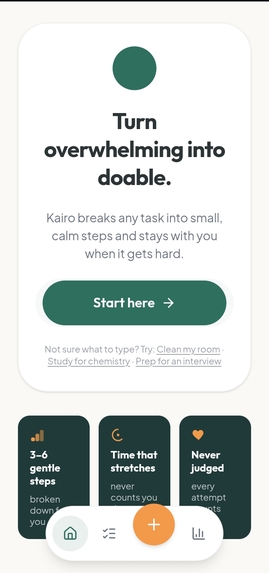
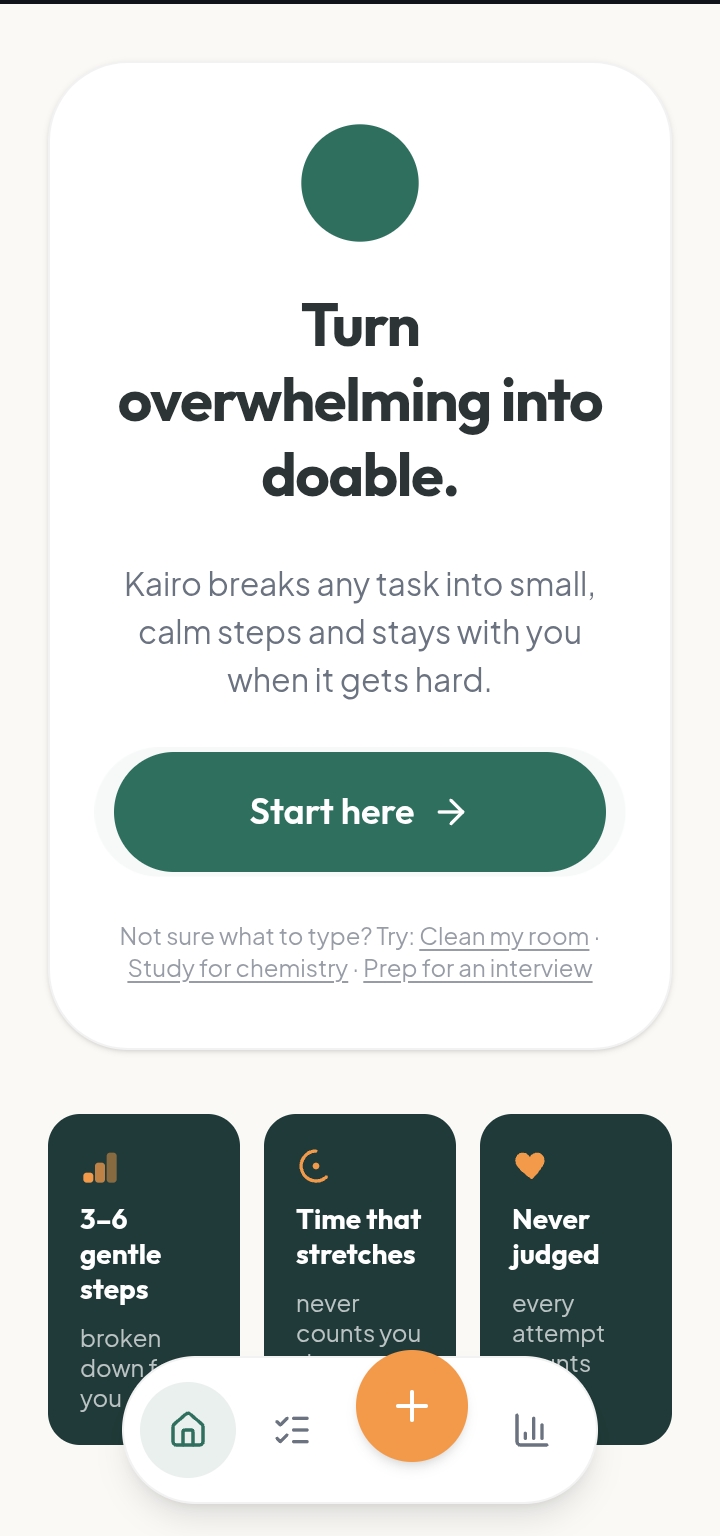
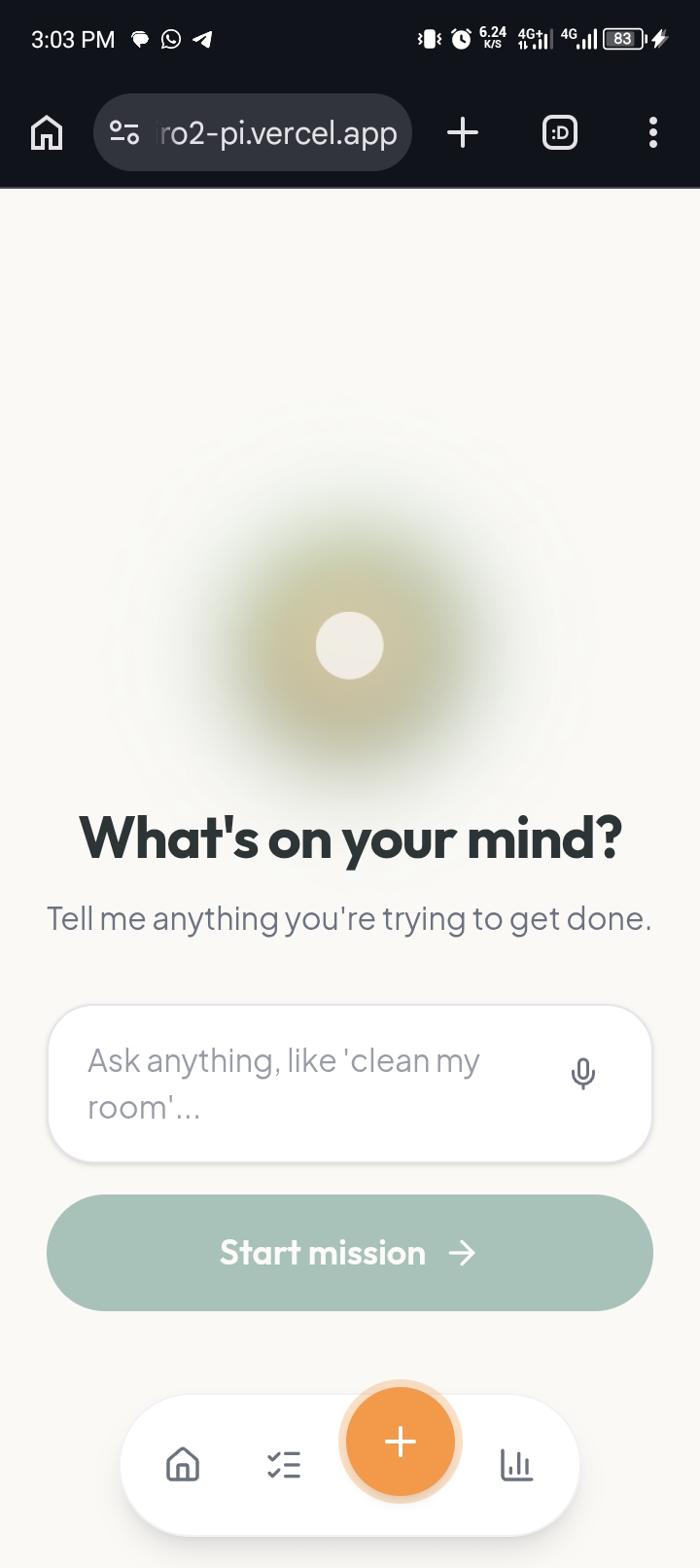
Home page
-
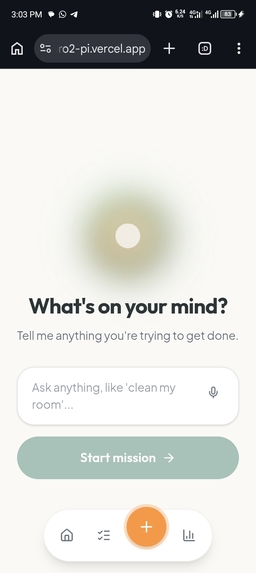
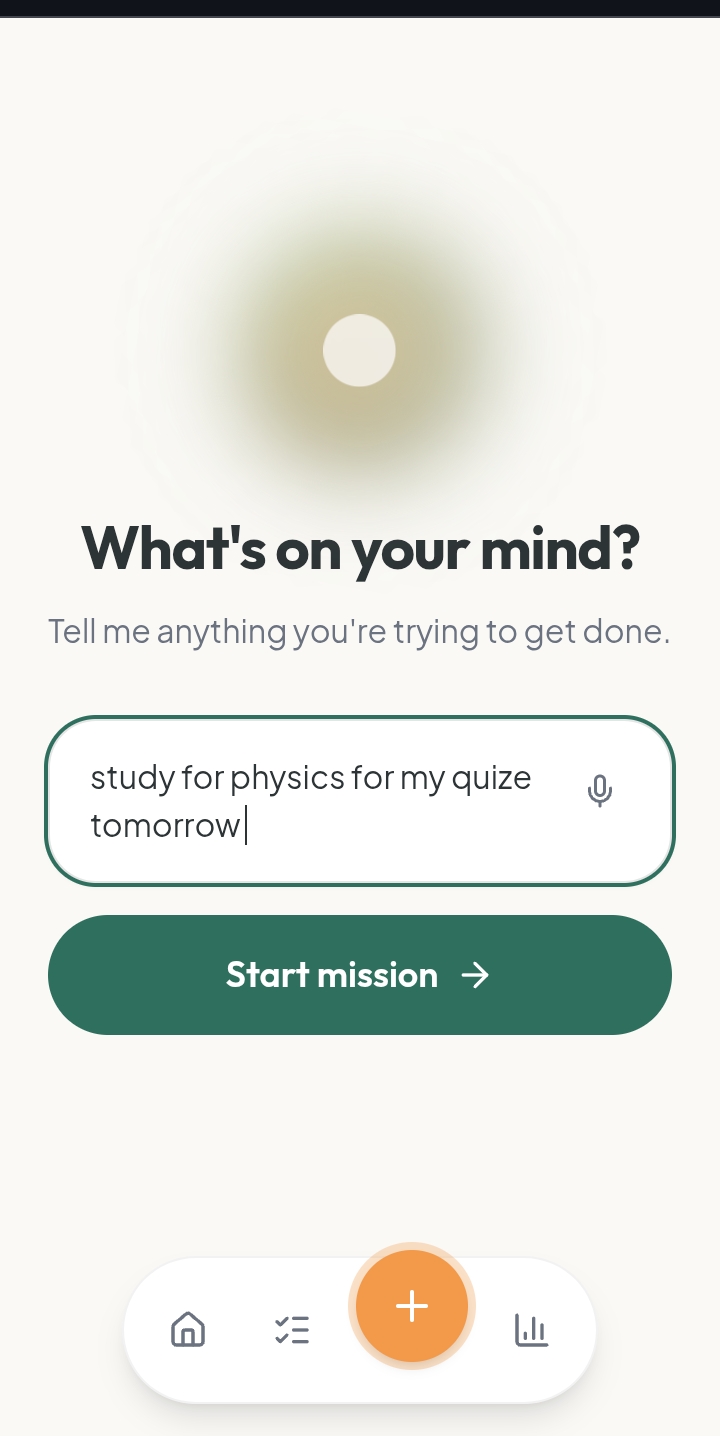
add text or speech area, tell kairo what's on your mind
-
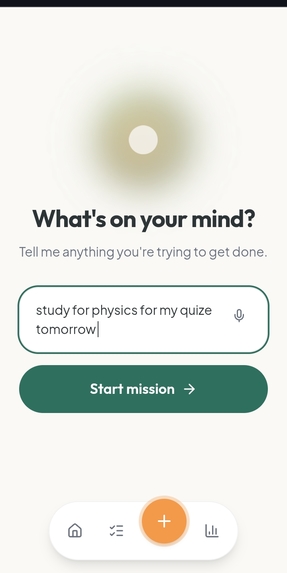
working example
-
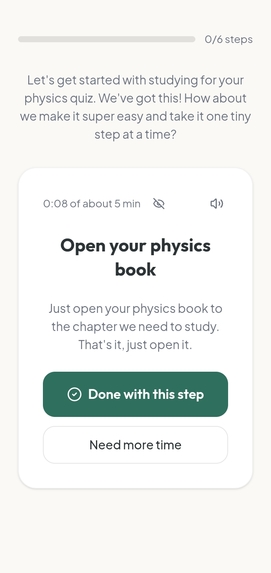
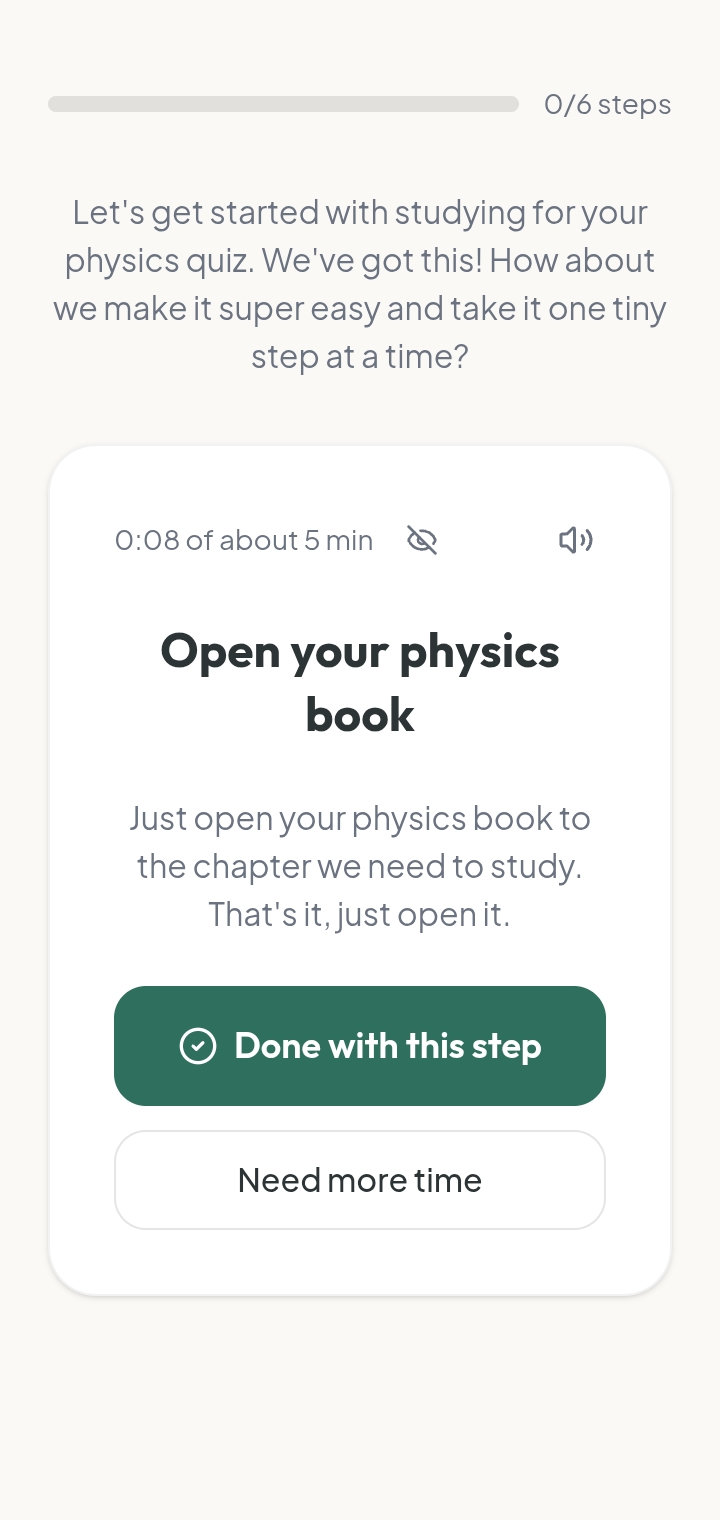
results, step by step guide
-
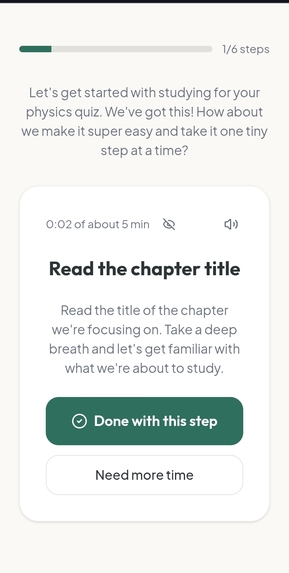
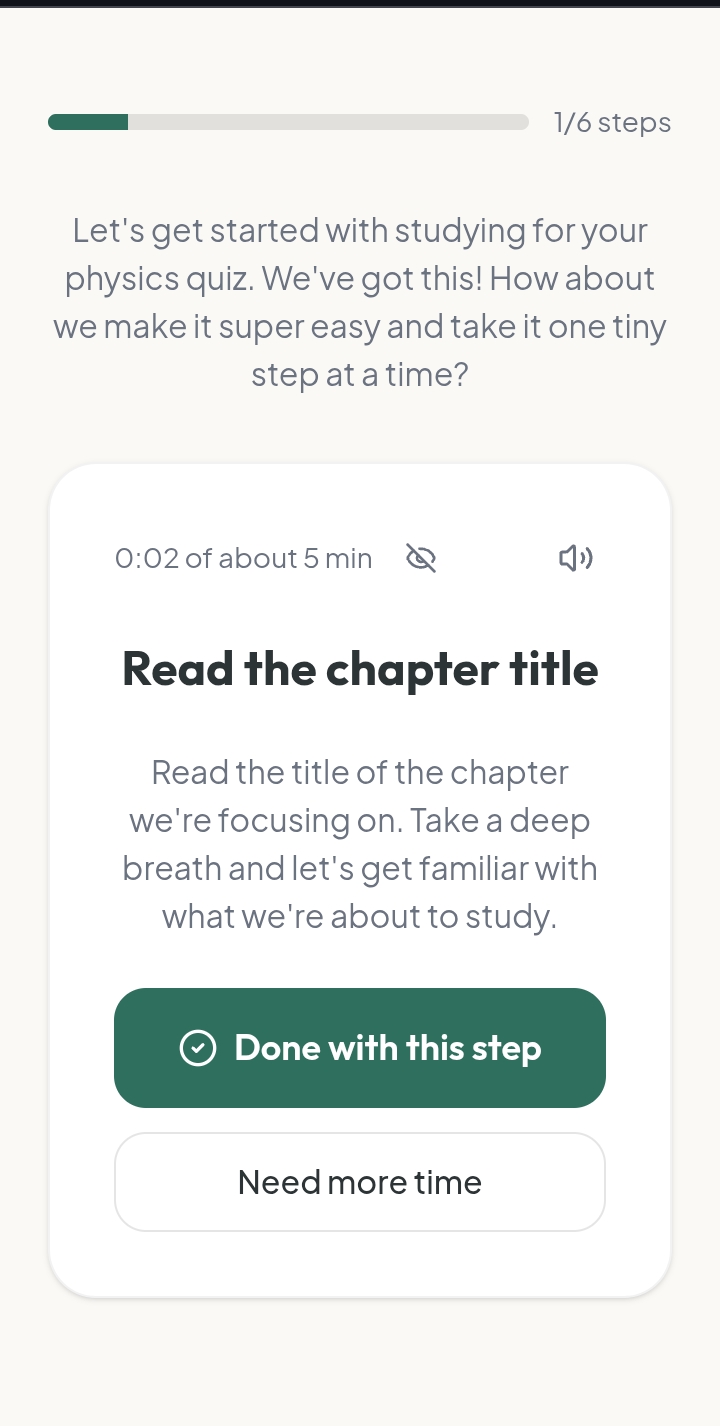
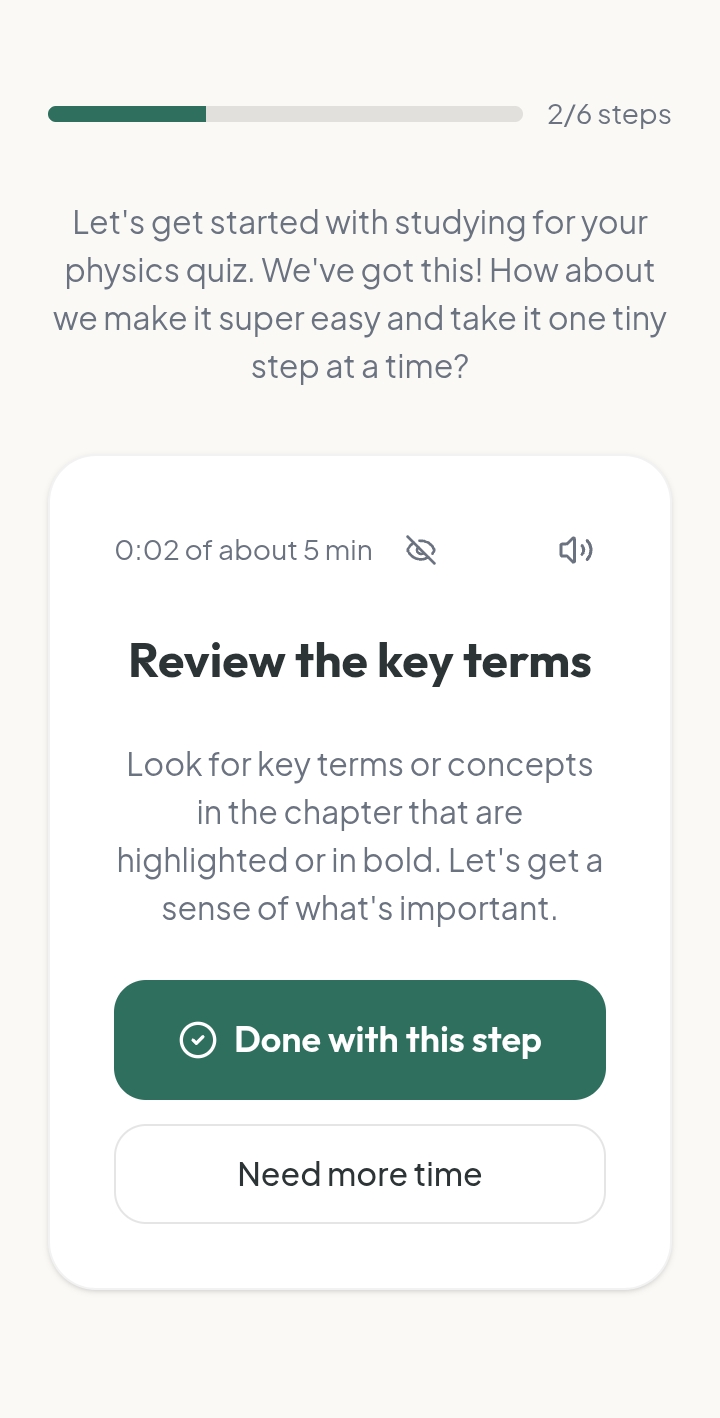
step 2
-
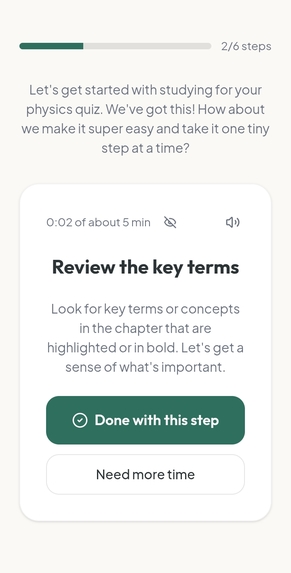
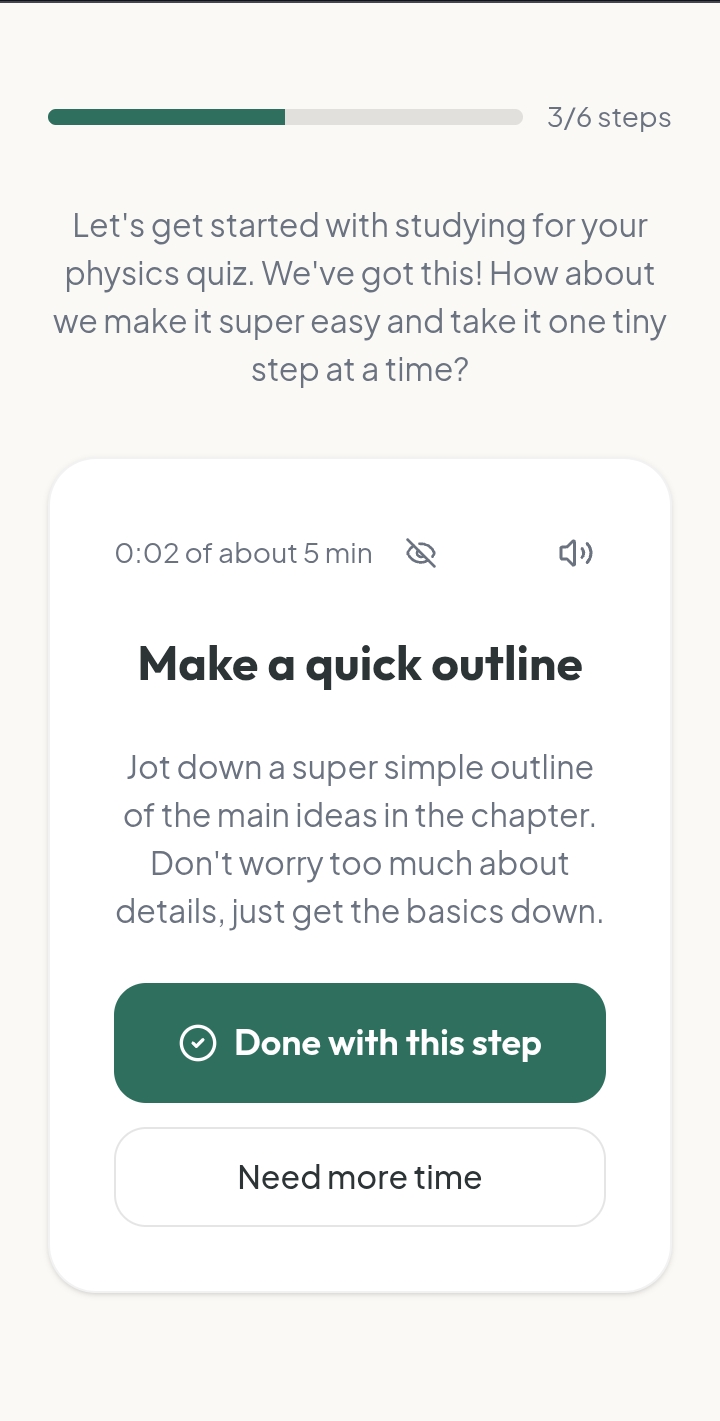
step 3
-
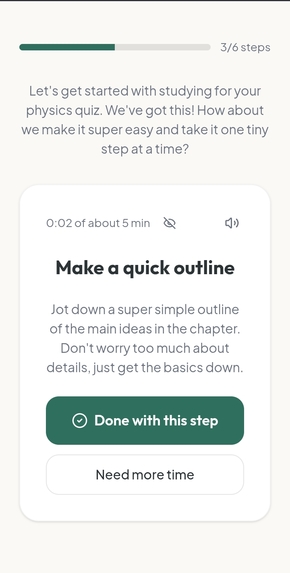
step 4
-
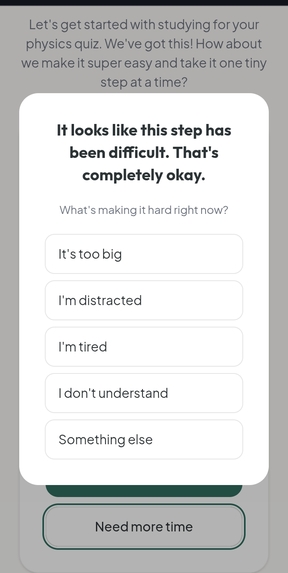
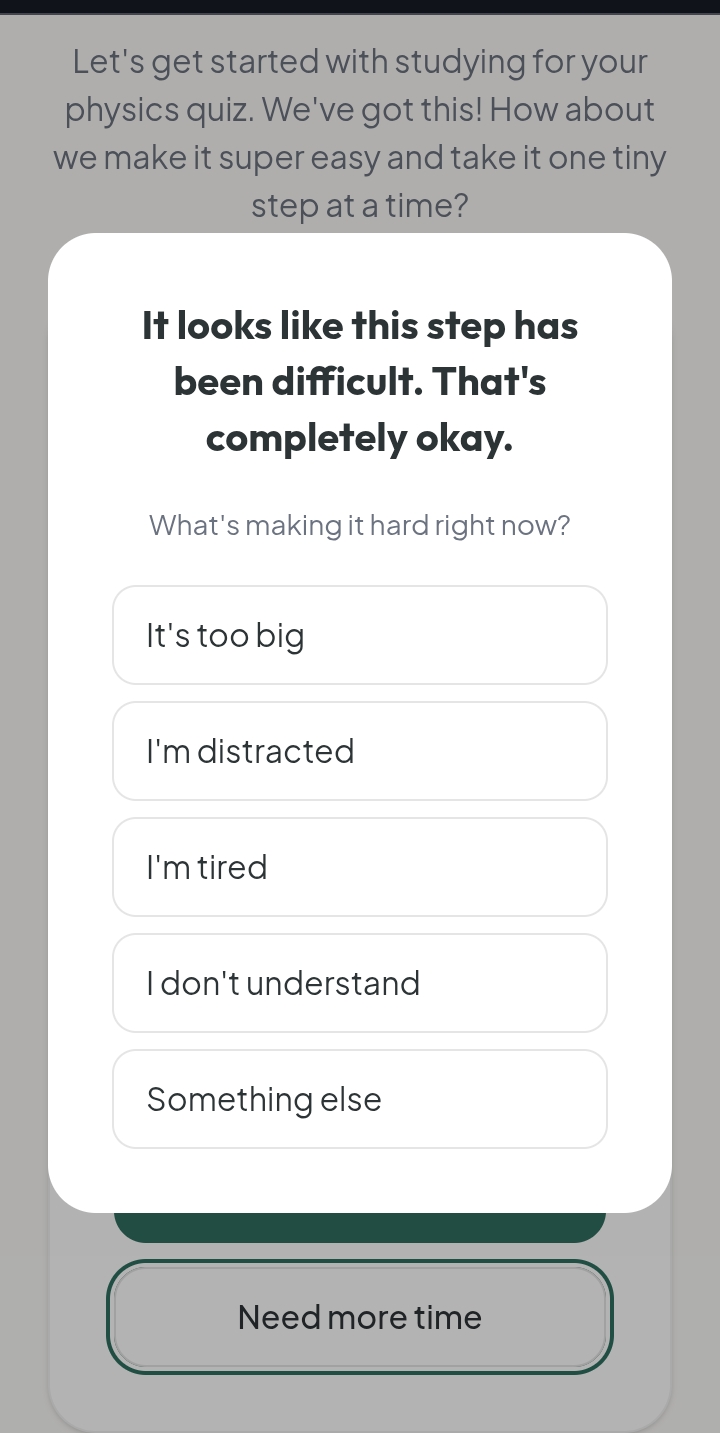
question asked when you click need more time, more than 3 times, to help get better steps to achieve your goal
-
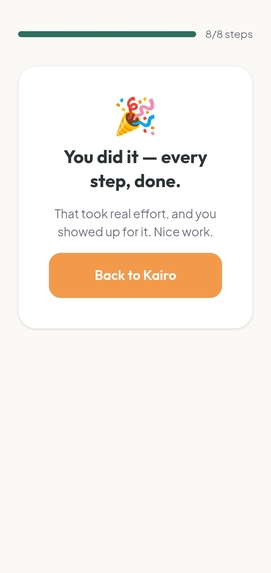
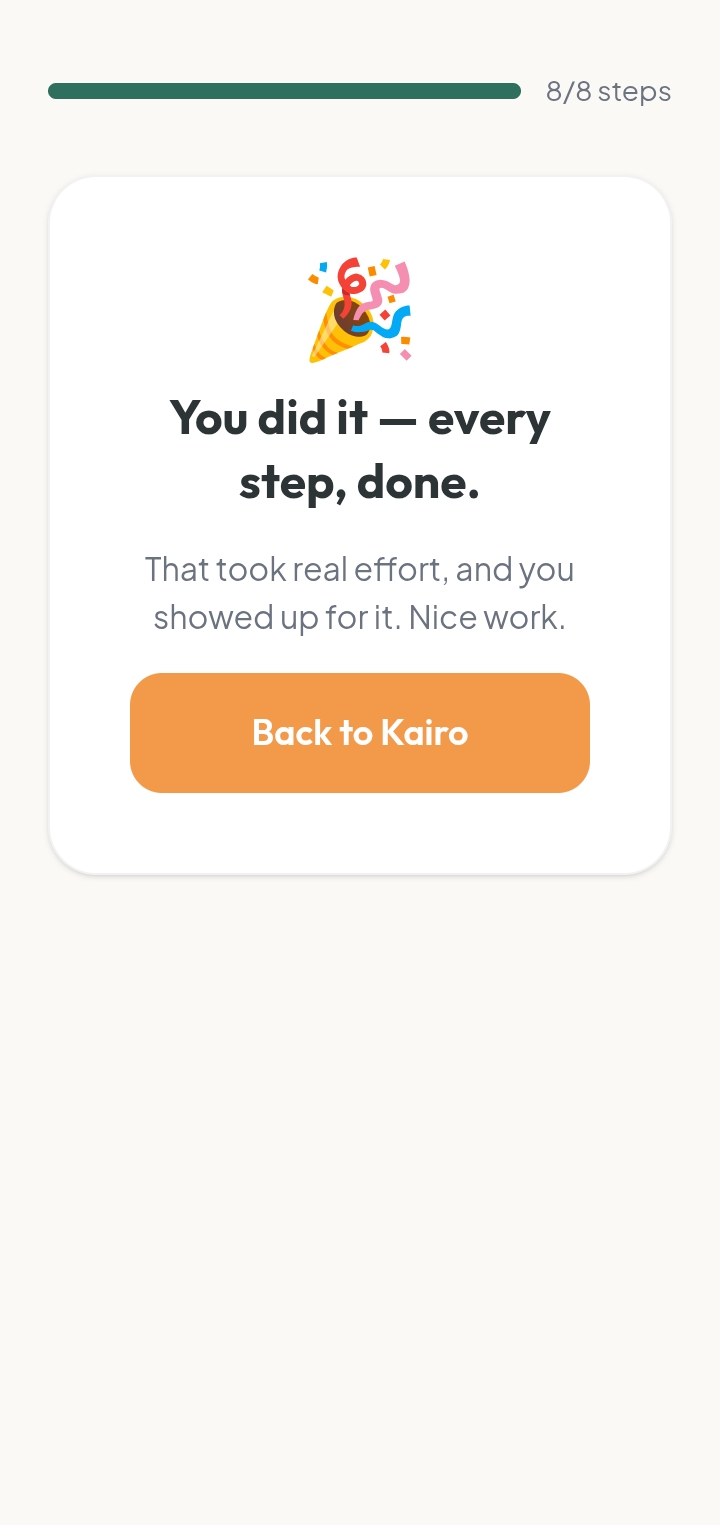
congratulations message on steps completion
-
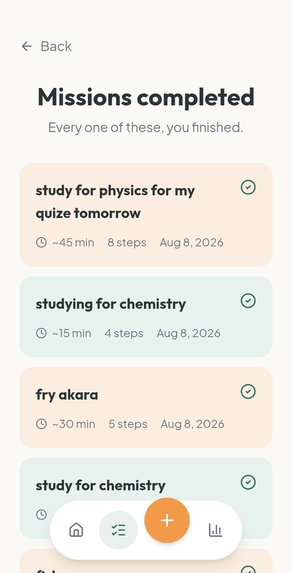
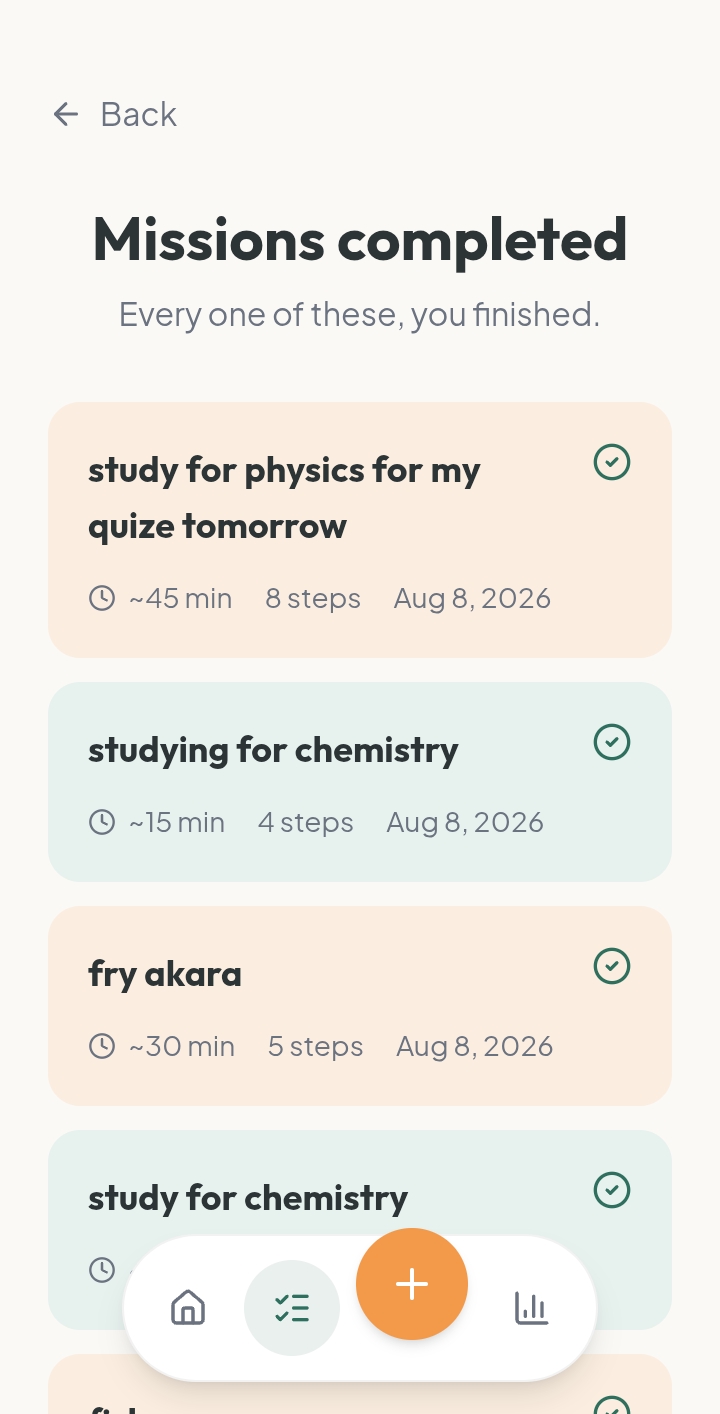
track records of completed tasks
-
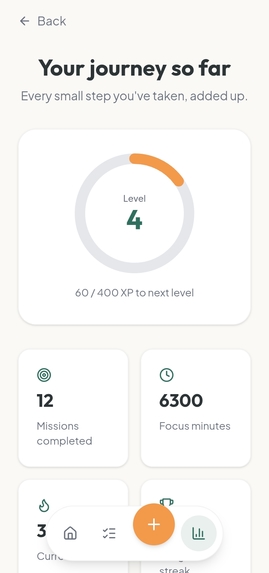
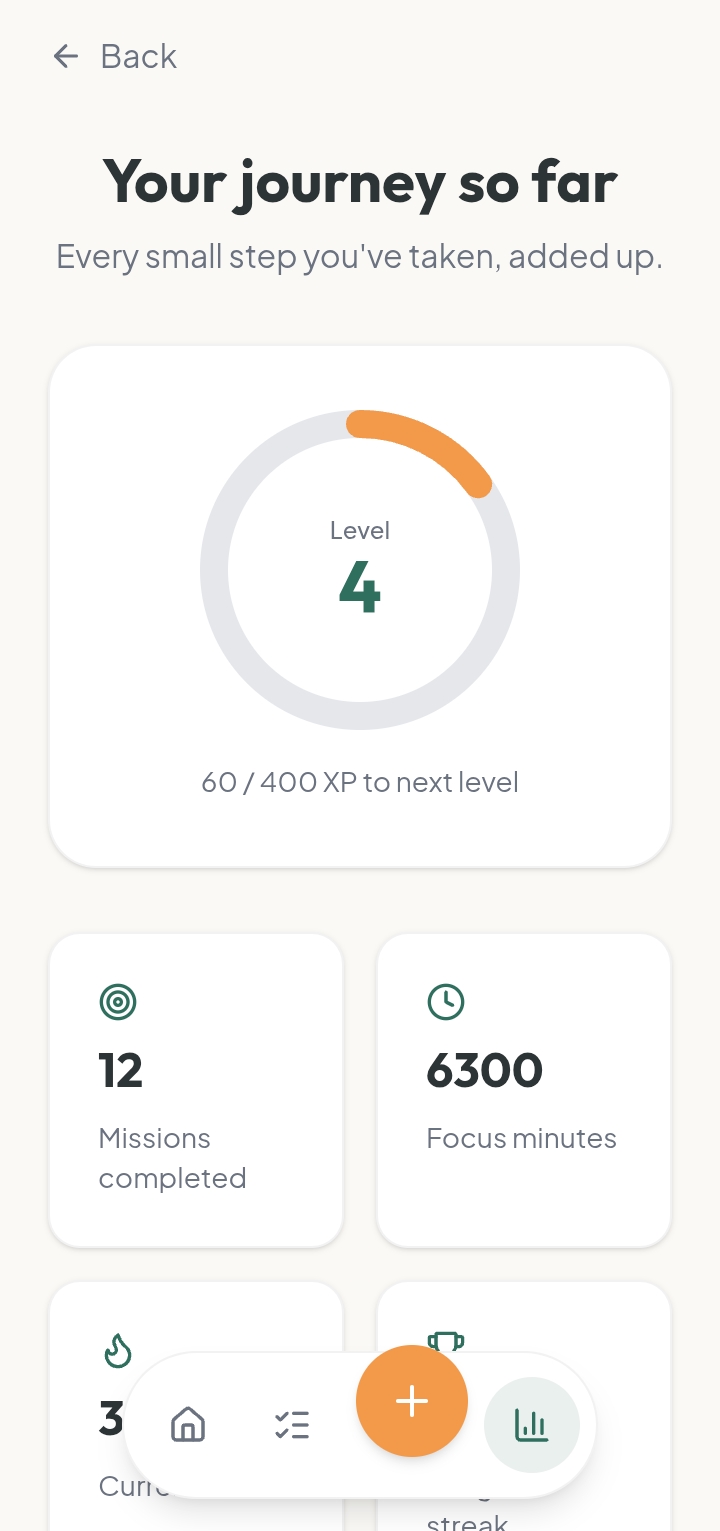
xp, your journey so far with kairo
Inspiration
The IncludAI hackathon's prompt called out task-initiation support for ADHD specifically, and it struck a chord immediately: the hardest part of a task for a lot of ADHD brains isn't finishing it, it's finding the will to start. Tools like Goblin.tools break tasks down, Finch offers warm companion encouragement, and Llama Life and Tiimo nail single-task focus but no single tool combined all three. Kairo set out to be the one that does.
What it does
Kairo is an AI task coach, not a to-do list. You type or speak any task "clean my room," "study for chemistry" and Kairo breaks it into 3–6 small steps, always starting with an almost-effortless first move. Focus Mode shows only one step at a time, with a gentle stopwatch that counts up, never down. If you get stuck, tapping "Need more time" first gently extends the timer with a reassuring message, and after three tries, Kairo asks what's actually making it hard too big, distracted, tired, don't understand, or something else and rebuilds the step around your real answer instead of just nagging you to try again. Completing steps earns XP, levels, streaks, and real achievement badges, and Kairo can read steps aloud in a calm voice for anyone who processes better by ear.
How we built it
Kairo runs on Next.js (App Router) and TypeScript, styled with Tailwind CSS and animated with Framer Motion. The AI layer is abstracted behind a simple provider interface, currently implemented with Groq's Llama 3.3 70B for low-latency responses for someone already on the edge of giving up on a task, even a few seconds of lag matters. A single system prompt drives two distinct AI modes: task breakdown and empathy-based restructuring, both tuned to avoid guilt-inducing language like "must," "should," and "failed." State lives in Zustand, persisted entirely to the browser's local storage — no accounts, no backend database, matching the hackathon's own no-authentication requirement. The whole thing is deployed on Vercel.
Challenges we ran into
The biggest one wasn't code it was environment. Long stretches of this build happened entirely from a phone, editing files through the GitHub mobile app with no terminal access. That surfaced problems a local dev setup would've caught instantly: mismatched file casing (footer.tsx vs Footer.tsx) breaking Vercel's case-sensitive Linux builds, a nested repo folder structure that needed an explicit Root Directory setting, and environment variables that don't carry over when a Vercel project gets recreated from scratch. Getting back into a Codespace terminal and running a local build turned a multi-hour trial-and-error loop into an instant, verifiable answer a good reminder that the fastest debugging loop available is worth switching to, even mid-crisis.
Accomplishments that we're proud of
Shipping a fully working, deployed product with a genuinely non-generic design despite building most of it from a phone. Getting real, concrete feedback from someone in the ADHD community and actually changing the product because of it, rather than treating user testing as a checkbox. And keeping the emotional tone consistent everywhere timer language, error messages, the stuck-flow copy so Kairo never once tells someone they've failed.
What we learned
Small UX decisions carry outsized emotional weight for this audience a countdown timer versus a stopwatch, or "Need more time" versus a rigid deadline, completely changes whether the tool feels supportive or punishing. We also learned that one real conversation with one real user surfaces more actionable insight than a dozen internal assumptions the single biggest UX fix in the whole project (the unclear landing page call-to-action) came directly from a ten-minute async chat, not from design review.
What's next for Kairo
A visual step-roadmap for Focus Mode a gentle path showing progress through a mission without breaking the one-step-at-a-time focus principle. More testing with more neurodivergent users to keep refining the empathy flow's reasoning. A richer voice option for warmer audio. And eventually, optional cloud sync for anyone who wants their progress to follow them across devices, without ever making accounts a requirement to use the core product.
Built With
- groq
- next.js
- react
- tailwindcss
- typescript
- webspeechapi


Log in or sign up for Devpost to join the conversation.