Inspiration
When we joined the blockchain club at UVA, we were surrounded by students who were genuinely excited about crypto and where the space is going. But we noticed a clear problem. Young entrepreneurs have strong ideas, but most of them stay in trading environment because they do not have the technical skills to build real Web3 products. We created Kairo.ai to reduce the barriers of entry to the production side of crypto. Our goal is to give young entrepreneurs the ability to turn an idea into a fully generated decentralized application and to educate them on the technical foundations behind it.
What it does
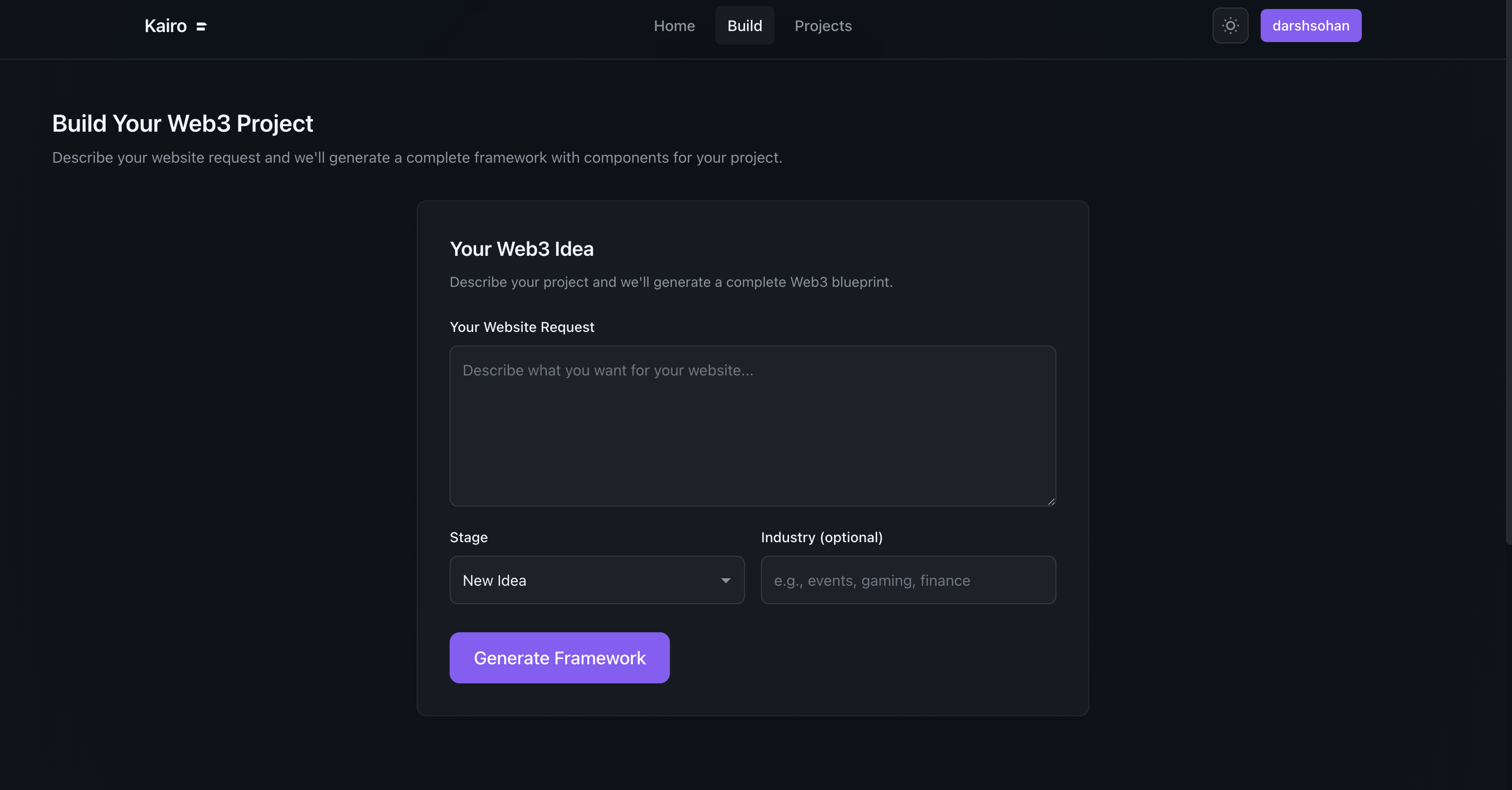
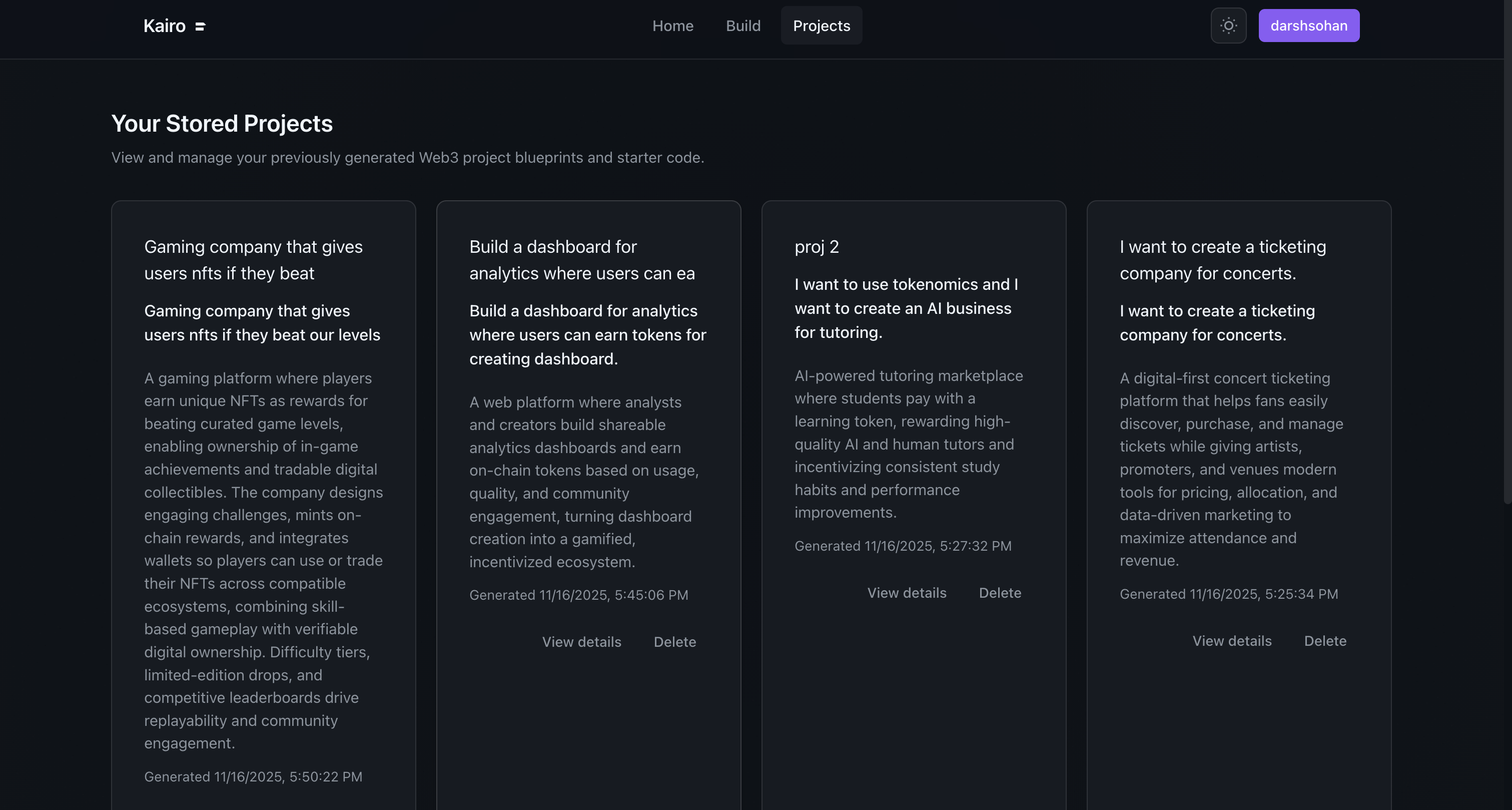
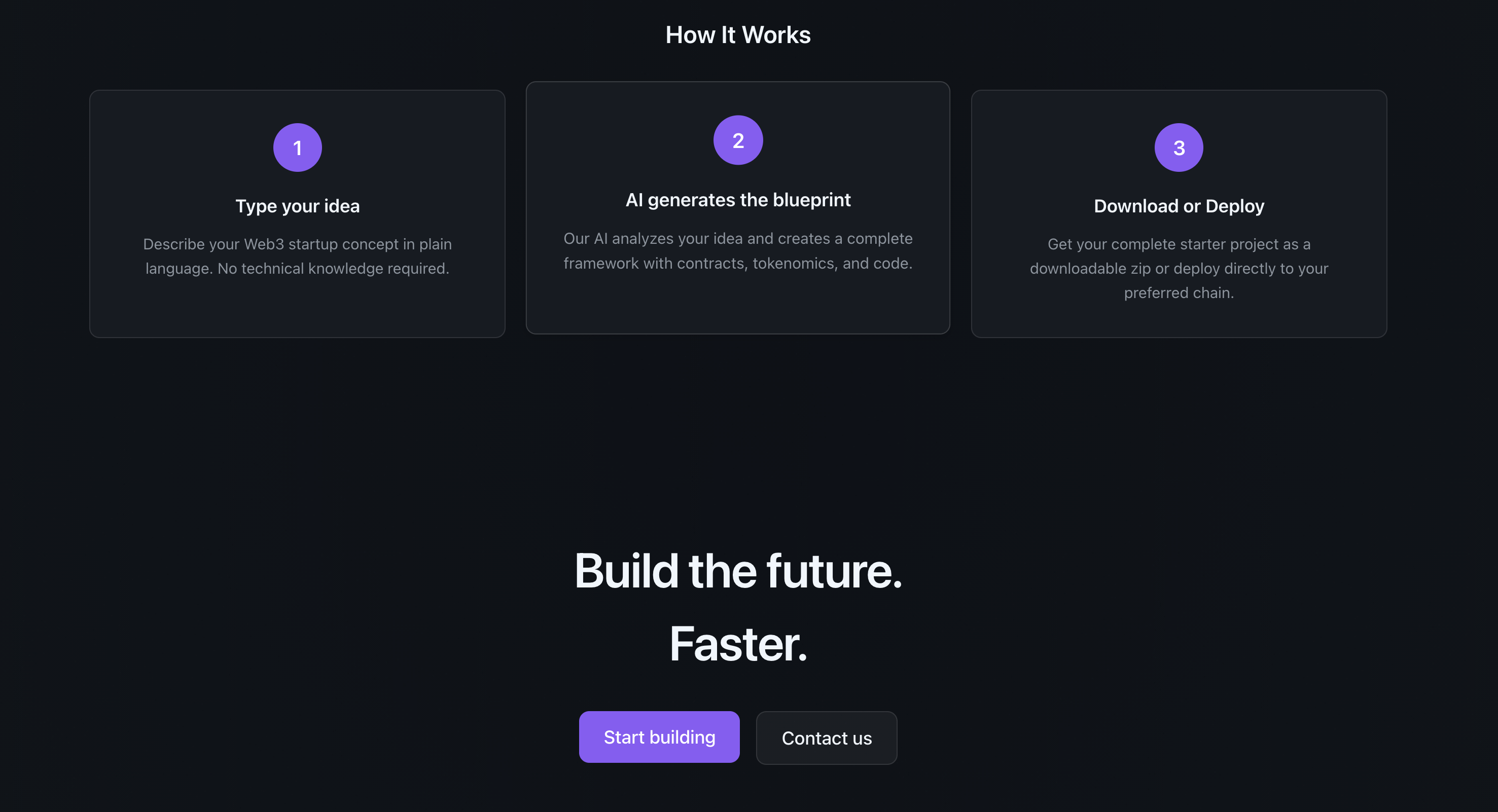
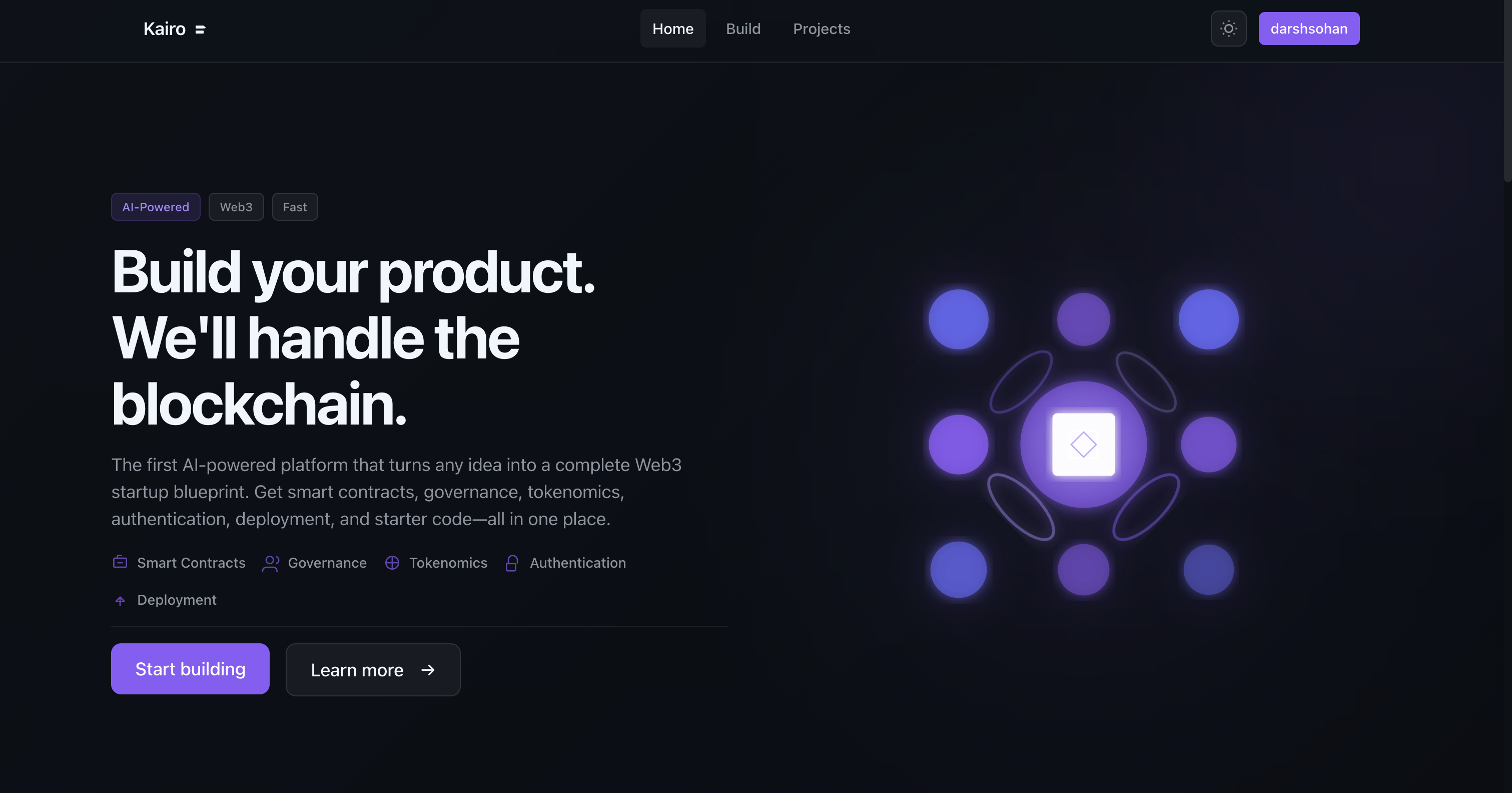
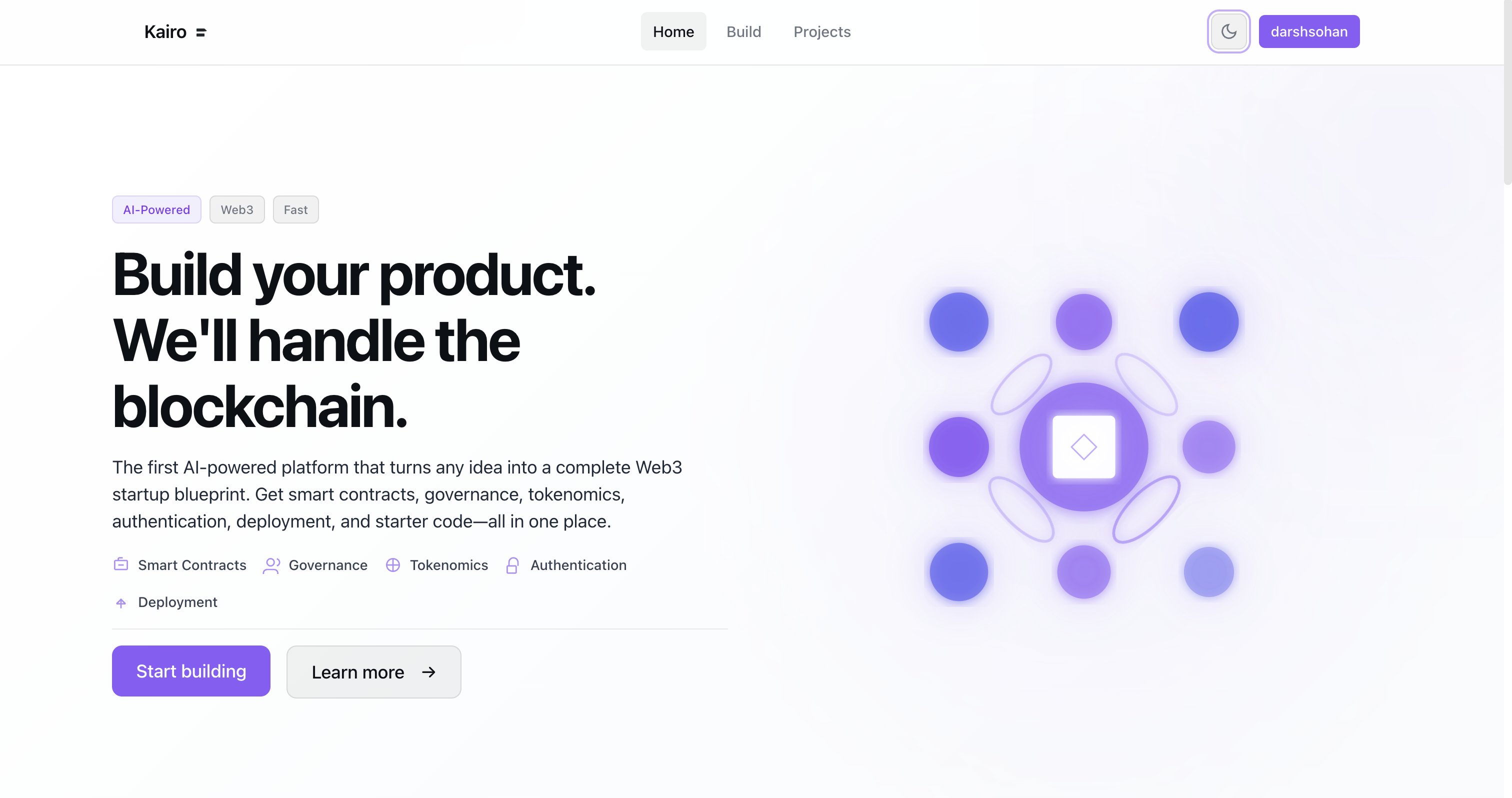
Kairo takes ideas and generates starter files to help launch the idea onto the web3 network. Users describe their business idea to an AI agent, which processes it and generates a complete Web3-ready framework, including architecture, features, a tokenomics chart if needed, and deploys a test smart contract to Sepolia Eth. The generated framework is packaged into a ready-to-use starter kit for users to download and implement on their own. Deploying to a testnet lets users instantly see a real contract address and proves that the generated contract actually compiles, deploys, and functions before the user takes the ZIP and launches their own production version. Kairo can also save the user’s idea generations on their profiles.
How we built it
-We used OpenAI (5.1) to handle all the reasoning, coding, and framework-building. The backend runs one pipeline that takes a user's idea and turns it into a full plan. -We used web3.py on the backend to compile and deploy Solidity contracts to the testnet using the RPC URL and private key from our .env. We package the starter files into a ZIP using Python’s zipfile library so users can download them. -We used Supabase to handle user authentication and store user projects. -The backend was built with Python using Flask, which handles the API routing for generation and smart contract deployment. -The React frontend sends user input to the FastAPI and displays the generated content.
Challenges we ran into
- Integrating Supabase sessions across the backend and frontend proved more challenging than expected, and we had to restructure our approach to handling user state.
- We initially used a linear GPT request through FastAPI, but its limited accuracy and depth pushed us to build an agentic architecture to overcome those constraints, though coordinating multiple agents introduced added complexity and required extensive testing.
- Setting up RPC endpoints, managing private keys, and ensuring reliable contract deployment on Sepolia required extensive debugging.
Accomplishments that we're proud of
- Effectively divided tasks and collaborated well across every merge.
- Providing users with an immediate, in-app proof of concept.
- Developed a product that not only builds Web3 applications but also teaches users how the underlying technology works.
- Designed and connected multiple agents into a cohesive multi-agent architecture.
- Implemented agent traces that made debugging simple and enabled us to build new tools quickly.
What we learned
- Using and developing multi-agentic architecture
- Using web3 libraries to connect to decentralized networks
- Deploying testnet with Sepolia and Ethereum
- Assembling multi-file code outputs into a clean, runnable ZIP package
- GitHub Mermaid workflow
What's next for Kairo.ai
- Maintaining their app within Kairo for continuous adaptation
- Implementing a montecarlo ML model to predict how the business will perform on Web3.
Built With
- css
- fastapi
- javascript
- openapi
- python
- react
- supabase
- tailwind
- web3.py


Log in or sign up for Devpost to join the conversation.