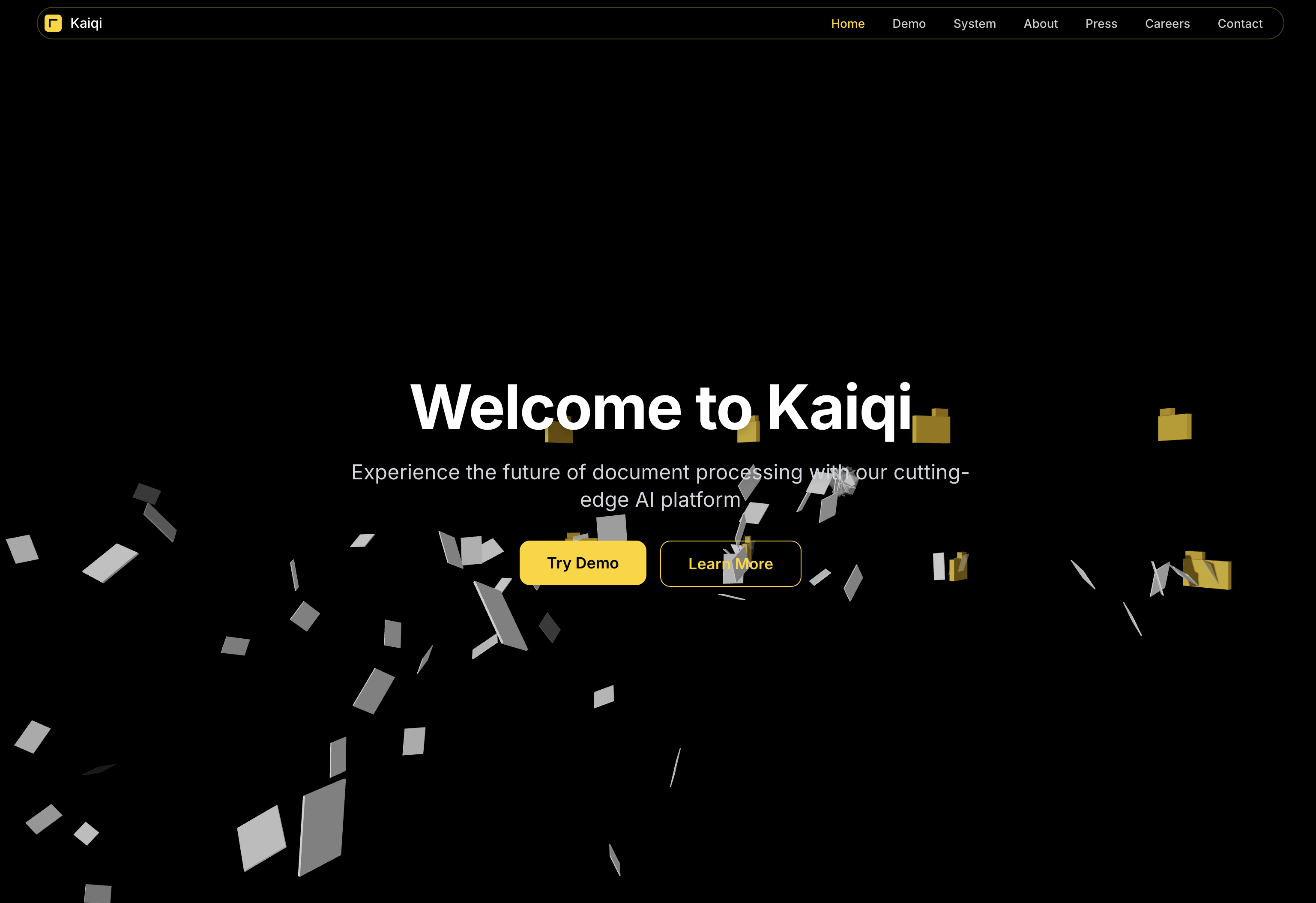
Kaiqi: Transforming Financial Document Chaos into Intelligent Insights
The Inspiration Behind Kaiqi
The inspiration for Kaiqi came from a personal pain point that many of us face daily - the overwhelming amount of financial documents scattered across our digital lives. Receipts, invoices, bank statements, and expense reports pile up in our email inboxes, cloud storage, and physical files, creating a chaotic system that makes financial tracking nearly impossible.
The breakthrough moment came when I realized that while we have powerful AI tools like Google Gemini, most financial document processing solutions still rely on outdated, manual methods. I envisioned a platform that could bridge the gap between unstructured financial chaos and actionable insights - something that could understand context, answer natural language questions, and provide real-time analytics.
The Problem We're Solving
The Financial Document Crisis
Financial document processing is broken at every level:
- Fragmented Storage: Documents scattered across email, cloud storage, physical files, and multiple systems
- Manual Processing: Hours spent manually entering data from receipts and invoices
- Human Errors: 60% of financial errors originate from manual document processing mistakes
- Poor Visibility: No real-time insights into spending patterns, vendor relationships, or financial trends
- Inefficient Reconciliation: Complex processes to match transactions across different sources
Our Solution: Kaiqi
Kaiqi is an intelligent financial document processing platform that transforms unstructured financial documents into actionable insights using AI-powered analysis. The name "Kaiqi" (开齐) means "to open and organize" in Chinese, perfectly capturing our mission to bring order to financial chaos.
Core Innovation
What sets Kaiqi apart is its multi-modal AI approach that combines:
- Intelligent Document Processing: Extract structured data from PDFs, receipts, invoices using Google Gemini Vision
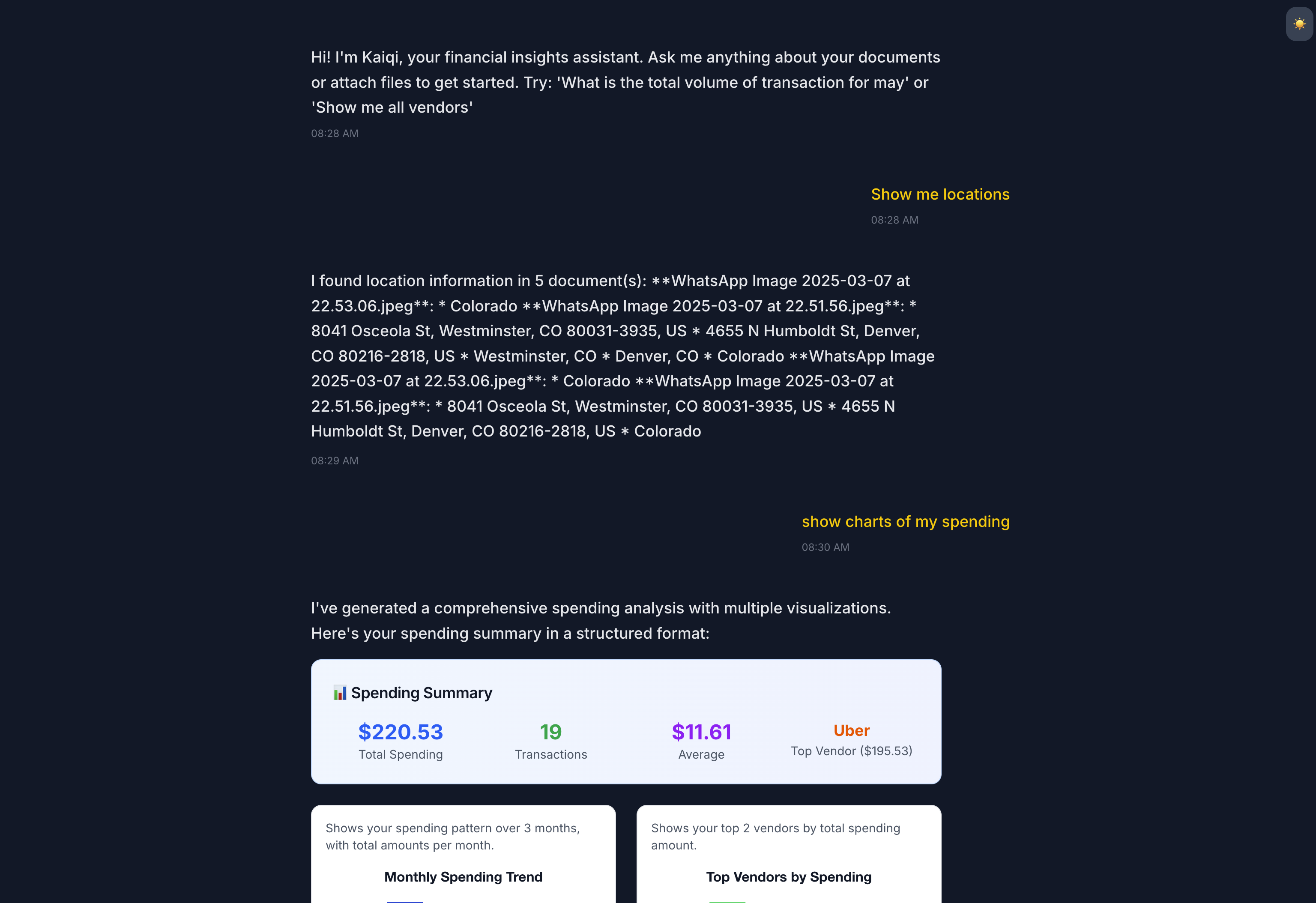
- Natural Language Interface: Ask questions like "What's my total spending with Uber?" or "Show me all transactions from March"
- Context-Aware Analysis: Understand document relationships and provide personalized insights
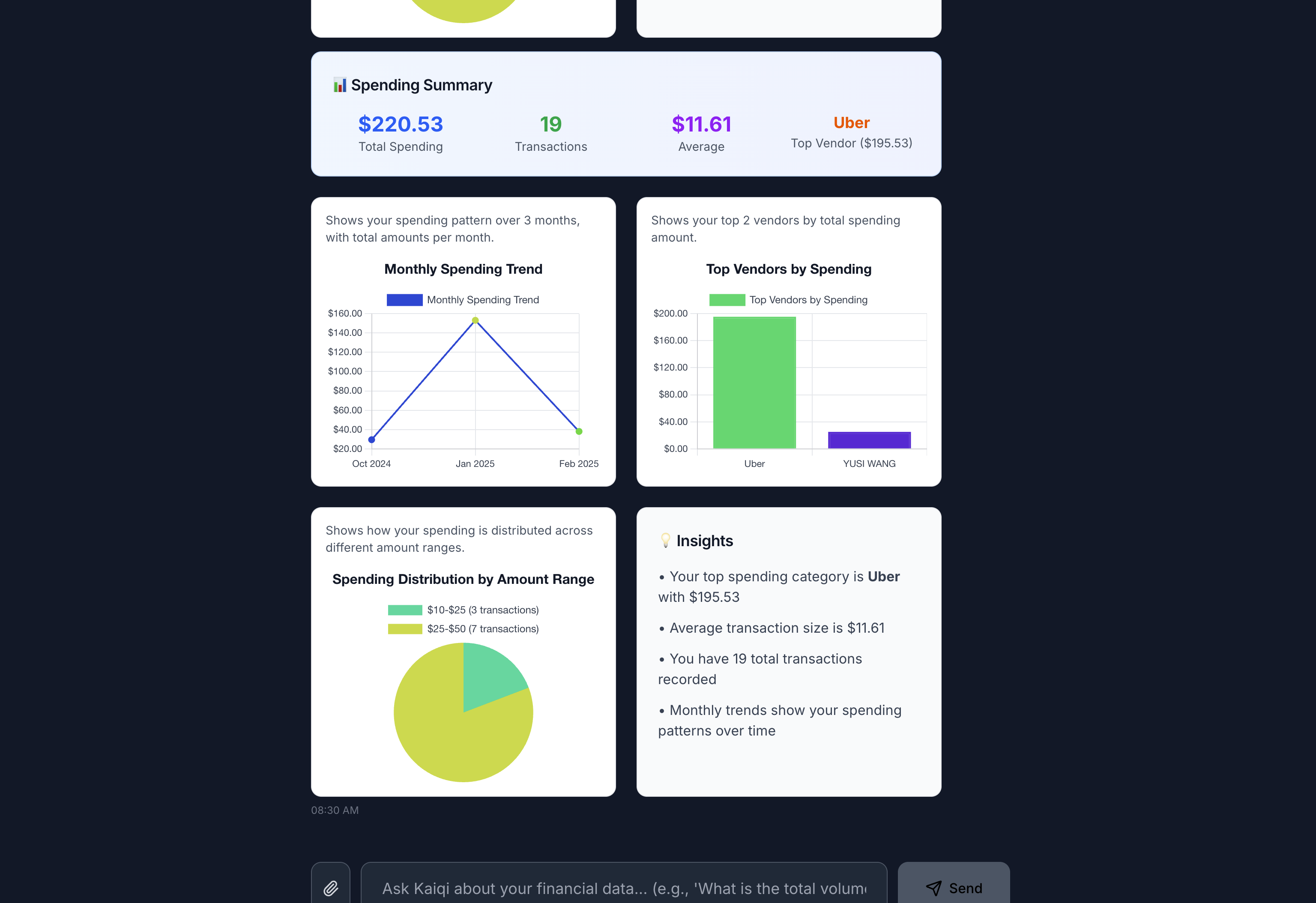
- Real-time Analytics: Generate charts, trends, and spending breakdowns instantly
- Intelligent Query Routing: Automatically determine whether to use SQL, AI analysis, or document parsing
How We Built Kaiqi
Technology Stack
Frontend Architecture:
- Next.js 15 with App Router for modern React development
- TypeScript for type-safe, maintainable code
- Tailwind CSS for responsive, modern UI design
- Framer Motion for smooth animations and transitions
- Chart.js & React-Chartjs-2 for interactive data visualization
AI & Backend:
- Google Gemini API as our core AI engine for document analysis and natural language processing
- Node.js for server-side runtime and API development
- SQLite for lightweight, efficient data storage
- Custom Intelligent Query Processor for routing different types of queries
Document Processing Pipeline:
- Google Gemini Vision for OCR and document understanding
- Custom Parser Engine for structured data extraction
- Rate Limiting & Caching for optimal API usage and performance
- Multi-format Support for PDFs, images, and CSV files
Challenges We Faced
Technical Challenges
1. API Rate Limiting & Optimization
- Challenge: Google Gemini API has strict rate limits that could break the user experience
- Solution: Implemented exponential backoff retry logic, intelligent caching, and batch processing to optimize API usage
2. Query Routing Complexity
- Challenge: Determining whether a query should use SQL, AI analysis, or document parsing
- Solution: Built an intelligent query processor that analyzes user intent and routes queries to the most appropriate handler
3. Document Parsing Accuracy
- Challenge: Extracting accurate data from various document formats and layouts
- Solution: Combined multiple parsing strategies - OCR for text extraction, regex patterns for structured data, and AI for context understanding
4. Real-time Performance
- Challenge: Providing instant responses while processing complex AI operations
- Solution: Implemented intelligent caching, background processing, and optimized database queries
Design Challenges
1. User Experience Complexity
- Challenge: Making complex AI operations feel simple and intuitive
- Solution: Designed a natural language interface that hides technical complexity behind conversational queries
2. Data Visualization
- Challenge: Presenting financial data in meaningful, actionable formats
- Solution: Created multiple visualization types (tables, charts, lists) that adapt based on query type and data structure
What We Learned
Technical Learnings
AI Integration Best Practices:
- Rate limiting and caching are crucial for production AI applications
- Multi-modal approaches (structured + unstructured data) provide better results than single-method solutions
- Context-aware processing significantly improves user experience
Full-Stack Development:
- TypeScript's type safety prevented numerous runtime errors
- Next.js App Router provides excellent developer experience for complex applications
- SQLite is surprisingly powerful for rapid prototyping and small-to-medium applications
System Architecture:
- Intelligent query routing can dramatically improve application performance
- Caching strategies must be designed early in the development process
- Error handling and fallback mechanisms are essential for AI-powered applications
Potential Future Impact
Individual Users:
- Personal finance management becomes effortless
- Real-time spending insights and budget tracking
- Automated expense categorization and reporting
Small Businesses:
- Streamlined invoice processing and vendor management
- Automated expense tracking and reconciliation
- Real-time financial analytics and reporting
Enterprise Applications:
- Integration with existing financial systems
- Advanced fraud detection using AI pattern recognition
- Team collaboration features and audit trails
- Scalable processing for high-volume document workflows
Future Development Plans
Short-term Enhancements (Next 3 months)
- Mobile Application: Native iOS and Android apps for on-the-go financial management
- Banking API Integration: Real-time transaction sync with major banks
- Advanced Analytics: Machine learning models for spending pattern analysis
- Export Features: PDF reports and data export capabilities
Long-term Vision (6-12 months)
- Enterprise Features: Team collaboration, role-based access, and audit trails
- AI-Powered Insights: Predictive analytics and financial recommendations
- Third-party Integrations: QuickBooks, Xero, and other financial software
- Fraud Detection: Advanced pattern recognition for suspicious transactions
Technical Roadmap
- Microservices Architecture: Scalable backend for enterprise deployment
- Advanced AI Models: Fine-tuned models for specific financial document types
- Real-time Processing: WebSocket integration for live document processing
- Security Enhancements: End-to-end encryption and compliance features
Conclusion
Building Kaiqi at HackRice 15 was an incredible journey that taught me the power of combining AI with thoughtful user experience design. The project successfully addresses a real-world problem affecting millions of people and businesses worldwide.
The most rewarding aspect was seeing how AI can transform complex, time-consuming tasks into simple, intuitive experiences. What started as a personal frustration with financial document chaos became a comprehensive solution that could genuinely improve how people manage their finances.
The hackathon experience reinforced my belief that the future of software development lies in creating intelligent systems that understand context, learn from user behavior, and provide meaningful insights. Kaiqi represents just the beginning of what's possible when we combine powerful AI tools with thoughtful design and real-world problem-solving.
The journey from inspiration to implementation taught me that the best solutions often come from understanding real problems deeply and leveraging technology to solve them in ways that feel natural and intuitive. Kaiqi is more than just a hackathon project - it's a vision for how financial technology should work in the AI era.
Built With
- db
- gemini
- javascript
- next.js
- ocr
- sqlite


Log in or sign up for Devpost to join the conversation.