
Inspiration
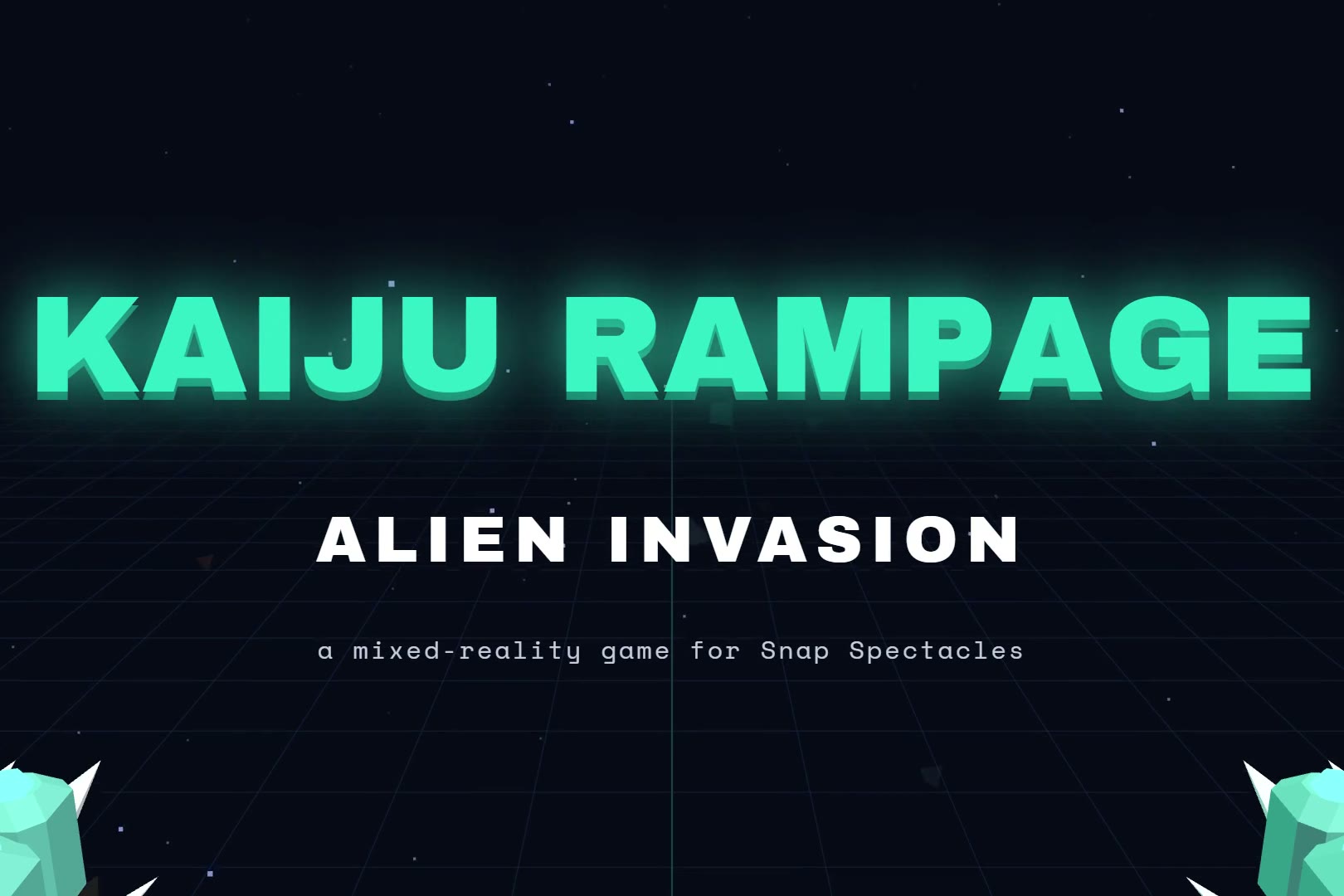
I wondered what it would feel like to own AR glasses and play a game anywhere: in a bedroom, a living room, or a café. I wanted to move my whole body instead of tapping a screen. Kaiju movies always show the monster wrecking the city. I flipped that paradox: you are the giant, and the miniature city at your feet is the thing you protect.
What it does
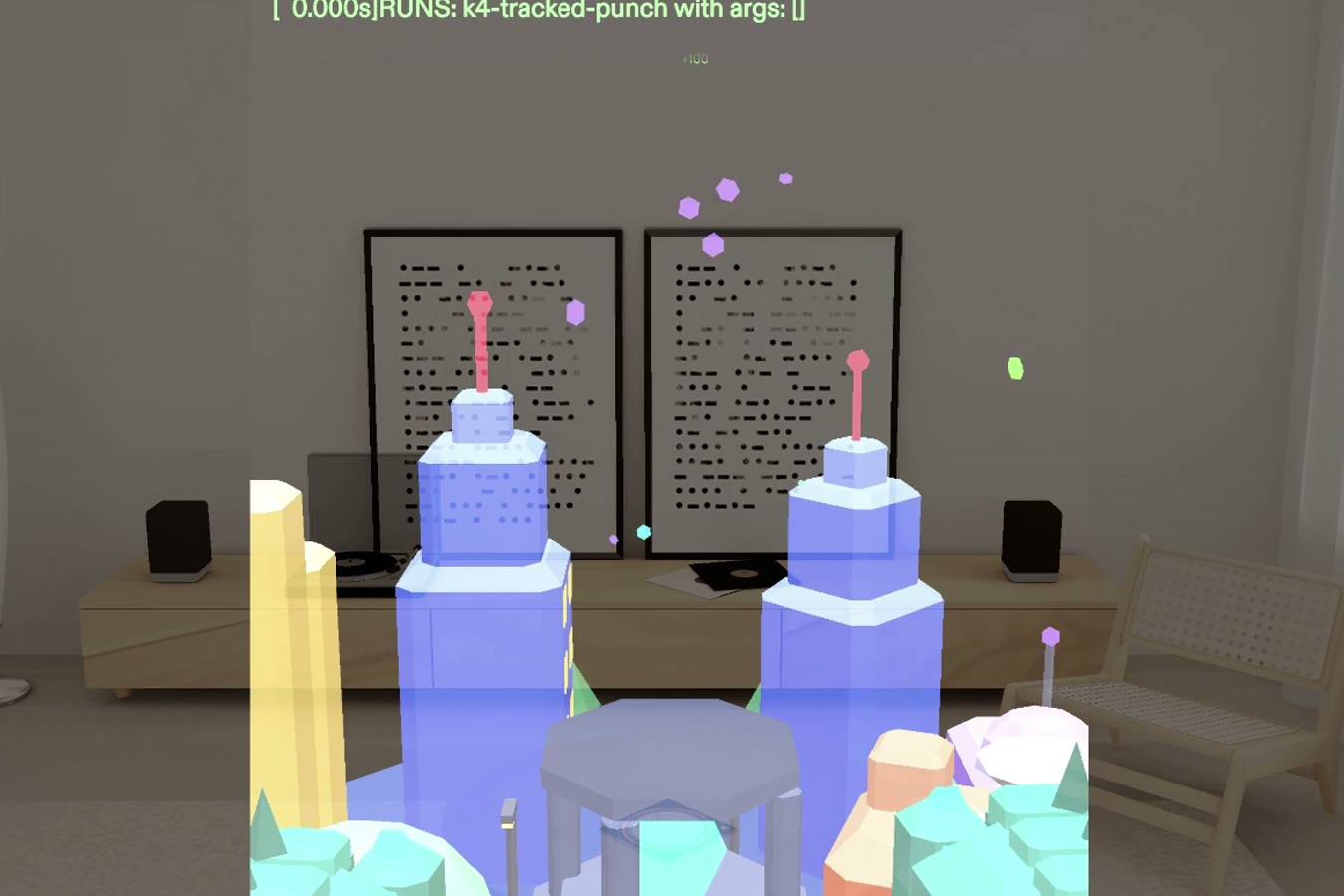
- A low-poly miniature city appears on the floor or table in front of you.
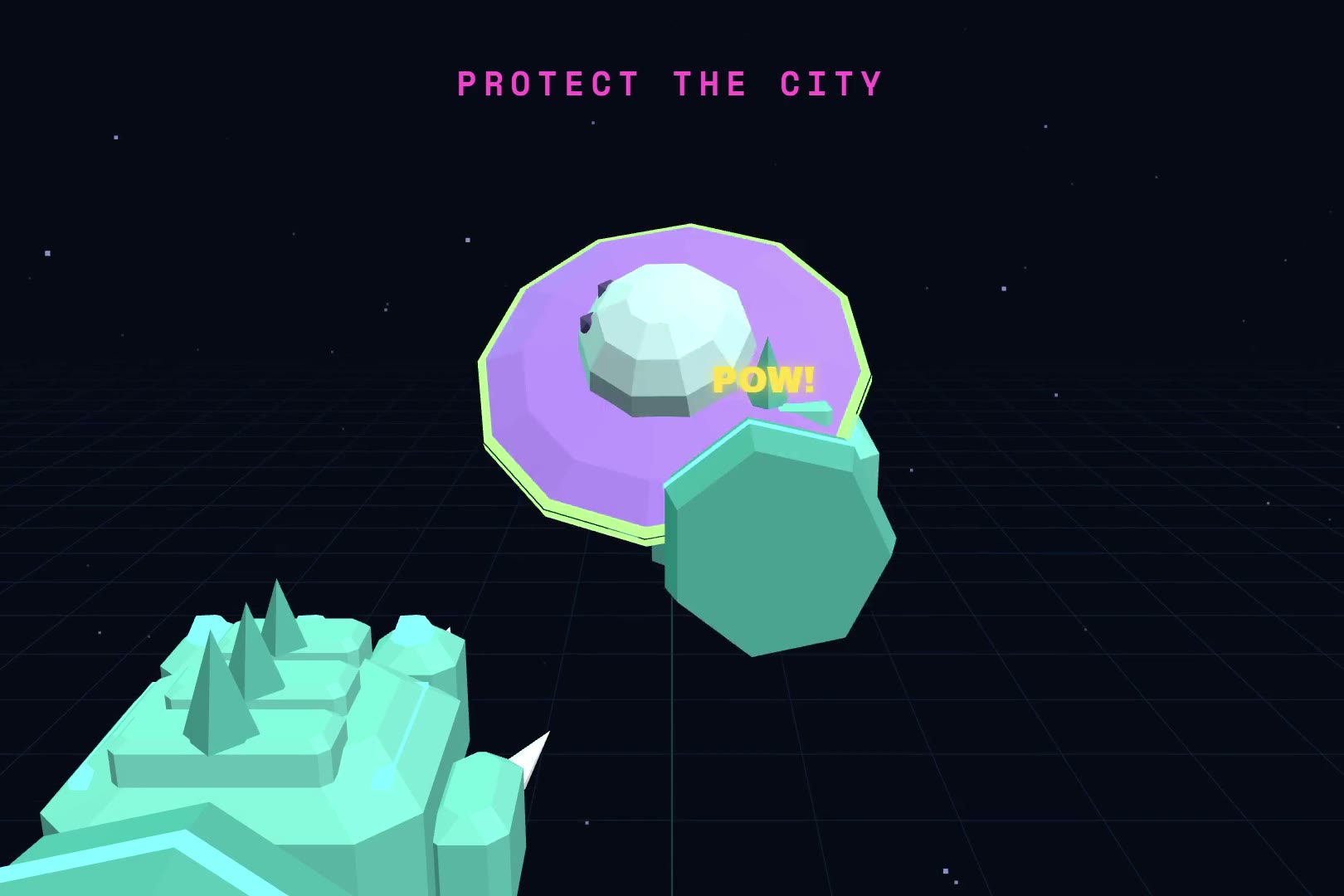
- Alien UFOs fly in from the front and sides, then fire beams at the city from range. They hover high enough that you can punch them without bending down.
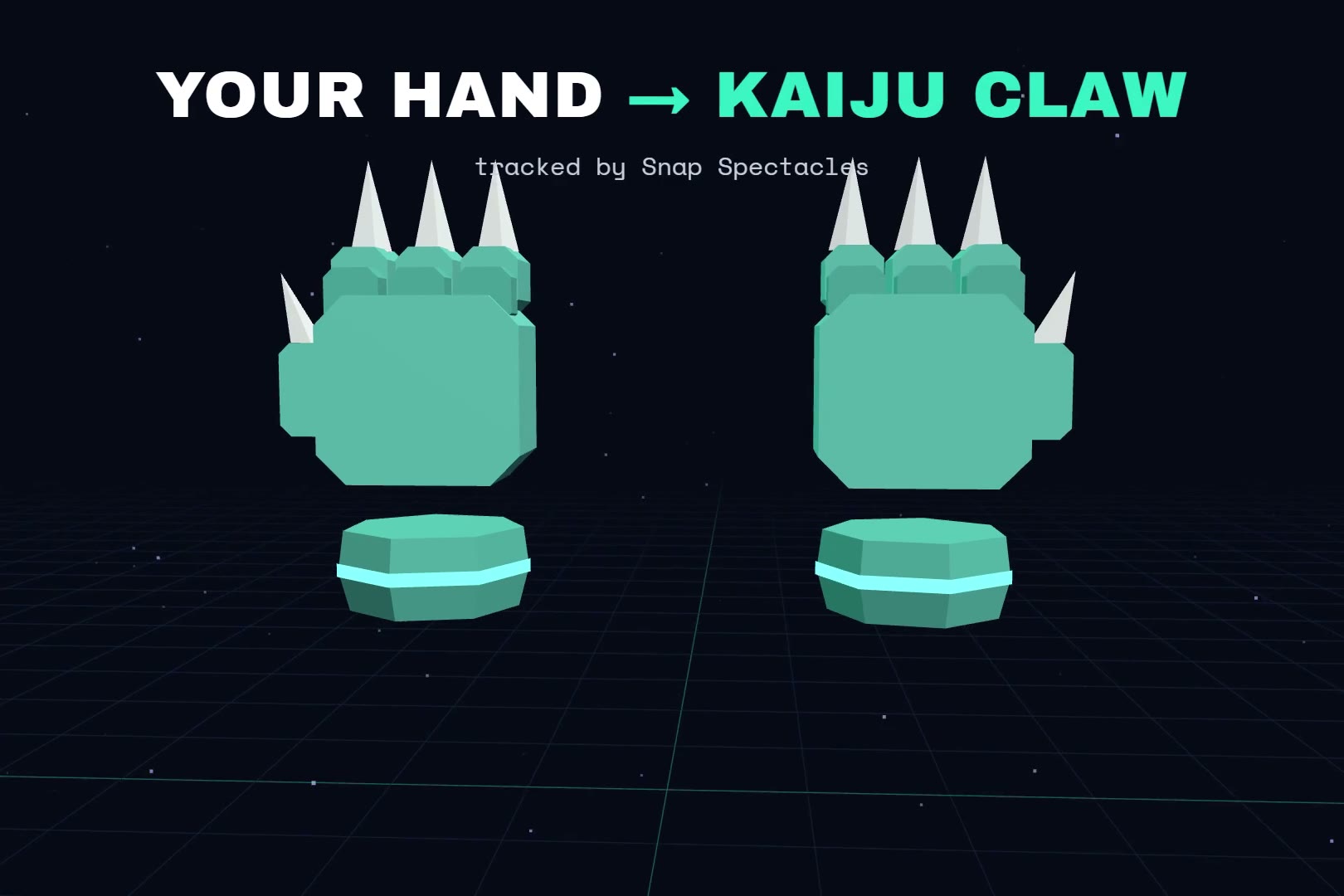
- You smash the UFOs with your Kaiju claws, driven by Spectacles hand tracking. Make a fist and punch.
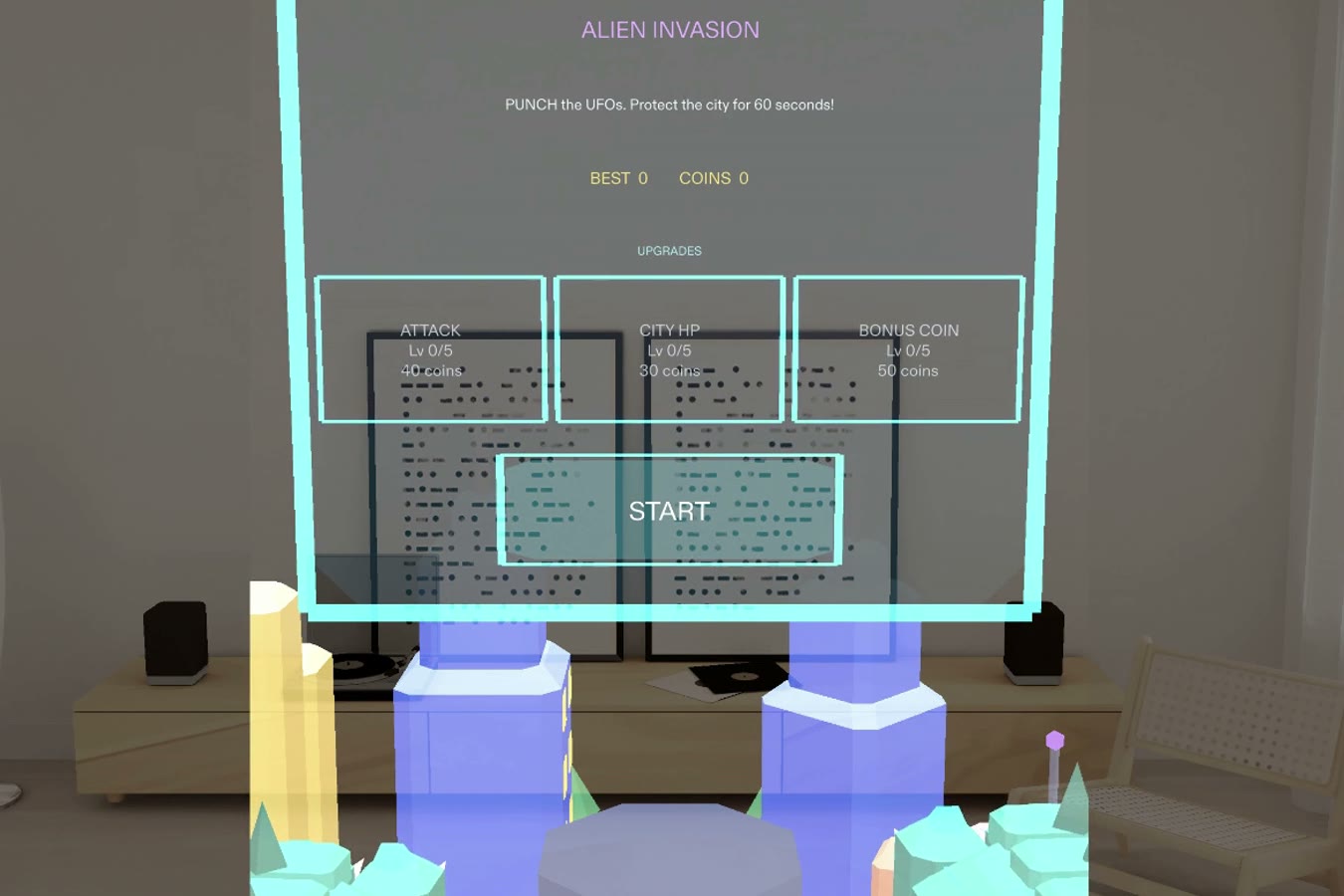
- Main menu: best score, coins and an upgrade shop.
- Rounds: a 3-2-1-SMASH! countdown, then a 60-second round with three waves that get faster and tougher.
- HUD: score, combo multiplier and city health on the right side. A red warning flashes on the side the damage comes from.
- Win or lose screen: score, best combo and coins earned, plus RESTART and MENU.
- Coins: earned every round, win or lose.
- Upgrades: Kaiju Attack, City Health and Bonus Coin chance. Each level costs more than the last, and progress is saved with persistent storage.
How we built it
- Lens Studio and TypeScript: built in Lens Studio 5.23 with TypeScript components. Spectacles Interaction Kit provides hand tracking and the pinch/poke buttons.
- AI-assisted build: the whole project was built through the Lens Studio MCP with Claude Code + CLAD.
- It helped plan the design brief (in
devpost/). - It wrote the scripts and built the scene and prefabs.
- It drove the Preview to play-test and record the demo.
- It helped plan the design brief (in
- Art and sound: all 3D models are procedurally generated low-poly GLBs from a small Python mesh kit, with vertex colors and flat shading. All sound effects and music are synthesized from code.
- Punch detection: a swept fist sphere against the UFO hitboxes, with speed and direction checks. It also uses glasses-safe hand smoothing, a re-acquire warm-up and a tracking-glitch guard.
- Tests: seven LEAF automated test scenarios, one per done criterion in the brief. These include a real SIK tracked-hand punch and an IK-avatar reachability test. All 7 pass in Preview.
Challenges we ran into
- Additive display: Specs' additive display makes dark colors invisible, so the whole palette was redesigned to be bright.
- Narrow field of view: the HUD, the claws and the UFO flight paths all had to fit inside it.
- Fast punches rejected at low frame rates: they were being thrown out as "tracking glitches". The guard now uses speed instead of distance.
- Button bugs found by the LEAF tests:
- a fast reach to pinch START counted as a punch;
- MENU and upgrade buttons never fired at all (keyboard shortcuts had hidden this).
- Package versions: SIK v4 doesn't compile on Lens Studio 5.23, so we used SIK v2.
Accomplishments that we're proud of
- A complete game loop: menu, countdown, waves, win/lose, restart and a persistent upgrade shop.
- Every visual and sound is original and generated from code.
- 7/7 automated LEAF tests pass, and they caught real bugs before a player would.
What we learned
- Designing for an additive see-through display and a narrow field of view.
- How Spectacles hand tracking behaves, and how to make punches feel reliable.
- How to test an AR Lens automatically with LEAF.
- How to drive Lens Studio end-to-end with an AI agent through MCP.
What's next for KAIJU RAMPAGE
- Test and tune on real Spectacles. Hand-tracking feel and surface detection are not yet verified on hardware; the demo was captured in Lens Studio Preview.
- More UFO types and bosses.
- Two-player co-op with Spectacles Sync Kit.
Demo video
The intro and outro are animated with HyperFrames using the game's real claw and UFO meshes. The gameplay was captured in Lens Studio Preview (desktop), not on Specs hardware.
Built With
- clad
- claude-code
- hyperframes
- leaf
- lens-studio
- python
- spectacles
- spectacles-interaction-kit
- typescript
