-
-
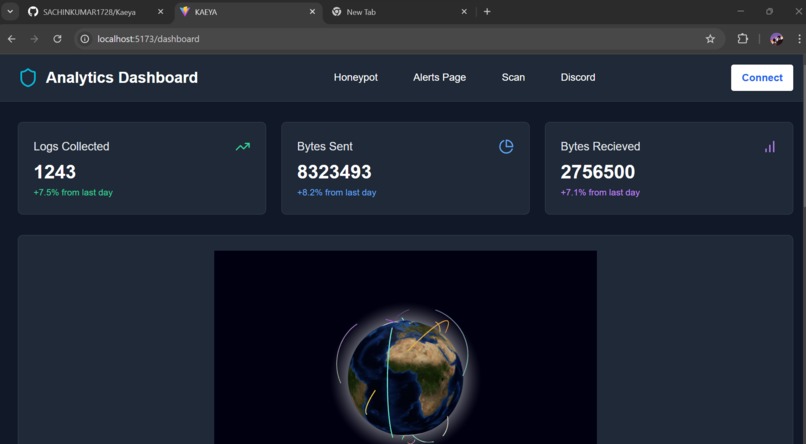
Dashboard
-
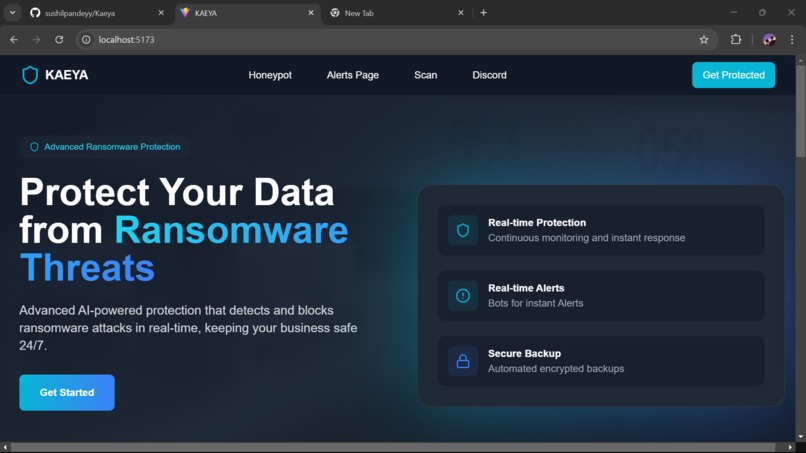
Homepage
-
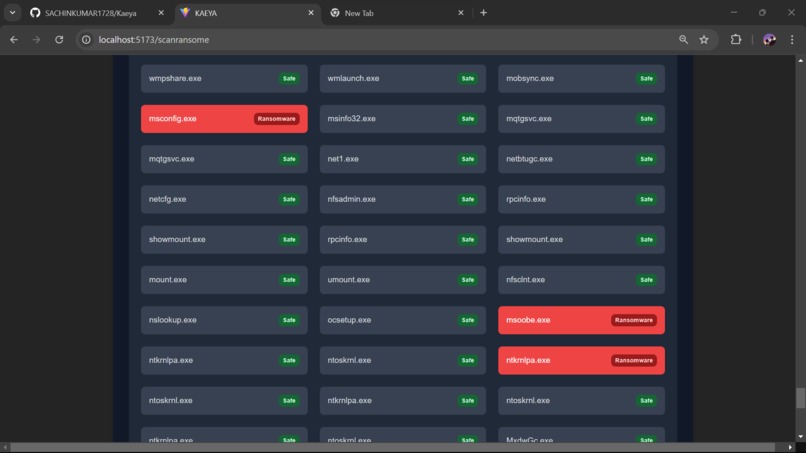
Scan Executables


Kaeya: A Comprehensive Cybersecurity Project
Inspiration
In the modern era of cybersecurity threats, we wanted to create a platform that not only detects malicious activities but also educates and empowers users about security risks. Inspired by real-world attacks, the rise of ransomware, and the need for proactive defense mechanisms, we developed Kaeya—a project combining a honeypot, real-time monitoring, and data visualization.
What it does
Kaeya is a multi-faceted cybersecurity tool designed to:
- Honeypot Simulation: Mimics commonly attacked services (e.g., SSH, HTTP) to detect and log unauthorized access attempts.
- Real-Time Logging: Captures client interactions, including IP addresses, ports accessed, and transmitted data, for further analysis.
- Log Aggregation and Visualization:
- Aggregates logs in Elasticsearch.
- Visualizes data using Kibana for insights into attack patterns and trends.
- Proactive Notifications: Sends alerts (via Discord bot or webhook) for suspicious activities or potential threats.
- Educational Value: Helps users understand cybersecurity risks through interactive data and detailed reports.
How we built it
Components
Honeypot:
- Written in Python using
socketandthreadinglibraries. - Mimics SSH on port
2222and HTTP on port8080with custom responses. - Logs interactions to a file.
- Written in Python using
Log Aggregation:
- Leveraged the ELK Stack:
- Elasticsearch: For storing and querying logs.
- Logstash: For ingesting and processing logs from the honeypot.
- Kibana: For creating visualizations and dashboards.
- Dockerized the ELK stack for easy deployment and scalability.
- Leveraged the ELK Stack:
Backend API:
- A Flask-based backend processes and forwards logs.
- Handles integration with Elasticsearch and external alerting systems.
Frontend Interface:
- Developed a web interface (running on port
5173) to embed Kibana dashboards, display alerts, and provide educational resources. - Built using modern web frameworks (e.g., React or basic HTML/CSS for simplicity).
- Developed a web interface (running on port
Technology Stack
- Python: For the honeypot and backend.
- ELK Stack: For log management and visualization.
- Docker: For containerizing all services (Honeypot, ELK, Backend).
- Threading: For handling multiple connections concurrently.
Challenges we ran into
- Inter-Service Communication:
- Configuring Docker networking to enable seamless interaction between containers.
- Concurrency and Scalability:
- Ensuring the honeypot could handle multiple simultaneous attackers without crashing.
- Data Visualization:
- Designing meaningful and intuitive Kibana dashboards to interpret the data effectively.
- Real-Time Alerts:
- Integrating a real-time notification system (e.g., Discord bot) with minimal latency.
- Mimicking Real Services:
- Crafting convincing responses for SSH, HTTP, and other protocols to attract attackers.
Accomplishments that we're proud of
- Developed a fully functional honeypot with logging and real-time alerts.
- Integrated the ELK stack to aggregate and visualize data effectively.
- Built an intuitive frontend to educate users and present insights.
- Successfully deployed the project in a Dockerized environment, ensuring portability and scalability.
What we learned
- Cybersecurity Fundamentals:
- Understanding how attackers probe open ports and exploit services.
- Networking:
- Managing connections, threading, and multi-port listening in Python.
- Log Management:
- Aggregating, processing, and visualizing logs using Elasticsearch and Kibana.
- Team Collaboration:
- Coordinating frontend, backend, and data pipelines to create a cohesive project.
- Dockerization:
- Containerizing services and orchestrating them with Docker Compose for seamless deployment.
What's next for Kaeya
- Expand Honeypot Functionality:
- Add support for more protocols (e.g., FTP, SMTP) and simulate vulnerabilities.
- AI-Powered Analytics:
- Use machine learning to classify and predict attack patterns from aggregated logs.
- Enhanced Alerts:
- Include geolocation of IPs and integration with email/SMS notifications.
- Interactive Education:
- Provide step-by-step guides and tutorials to teach users about logs, attacks, and responses.
- Open Source Release:
- Share the project with the community for contributions and real-world usage.
- Cloud Integration:
- Deploy on cloud platforms (e.g., AWS, GCP) for wider accessibility and robustness.
Kaeya represents our commitment to cybersecurity awareness and defense, blending technical innovation with educational value. We’re excited to continue its development and make it a powerful tool for users worldwide!

Log in or sign up for Devpost to join the conversation.