-
-
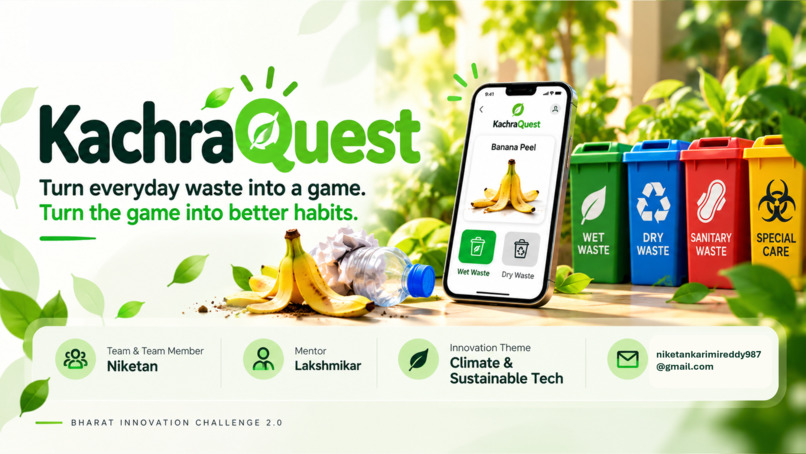
Turning everyday waste sorting into a habit people actually enjoy.
-
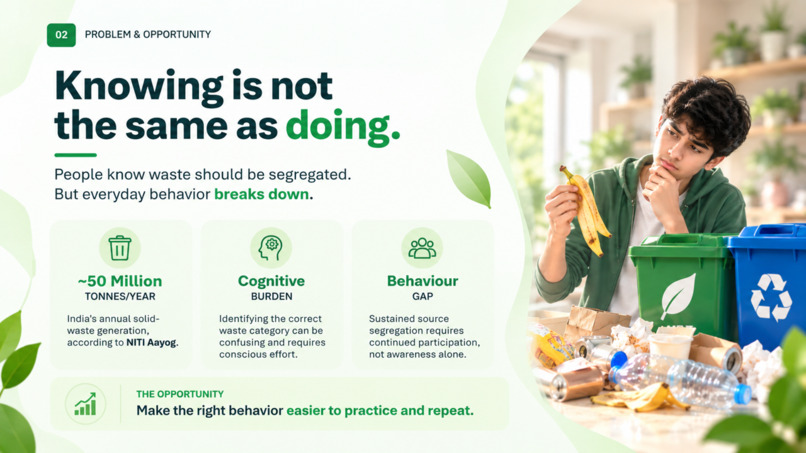
The challenge isn't awareness alone. It's turning knowledge into consistent action.
-
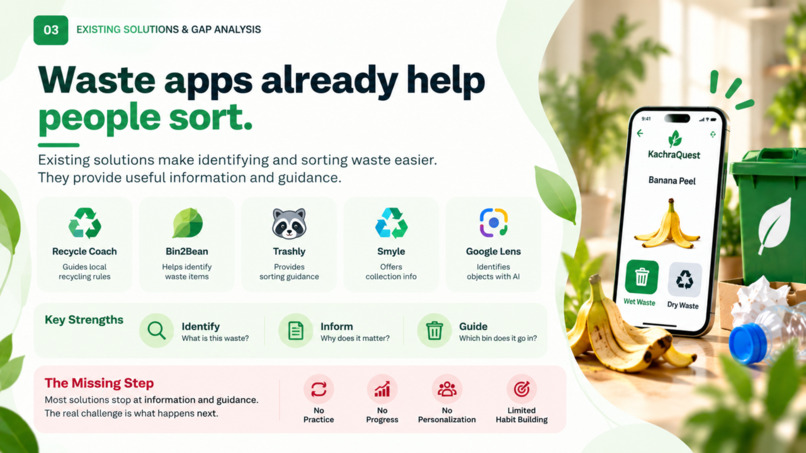
Most solutions tell people what to do. KachraQuest focuses on helping them keep doing it.
-
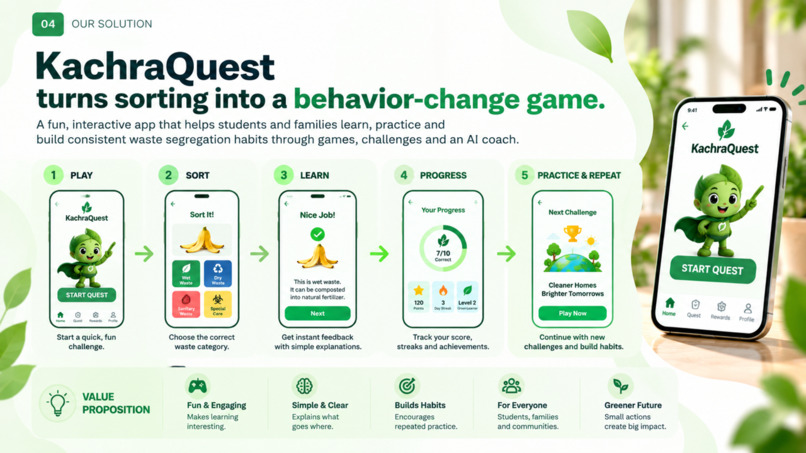
A simple game loop turns every sorting decision into an opportunity to learn, improve and repeat.
-
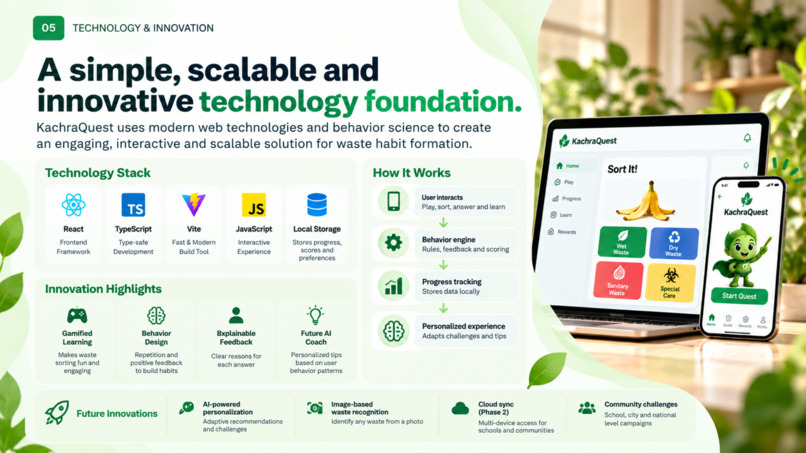
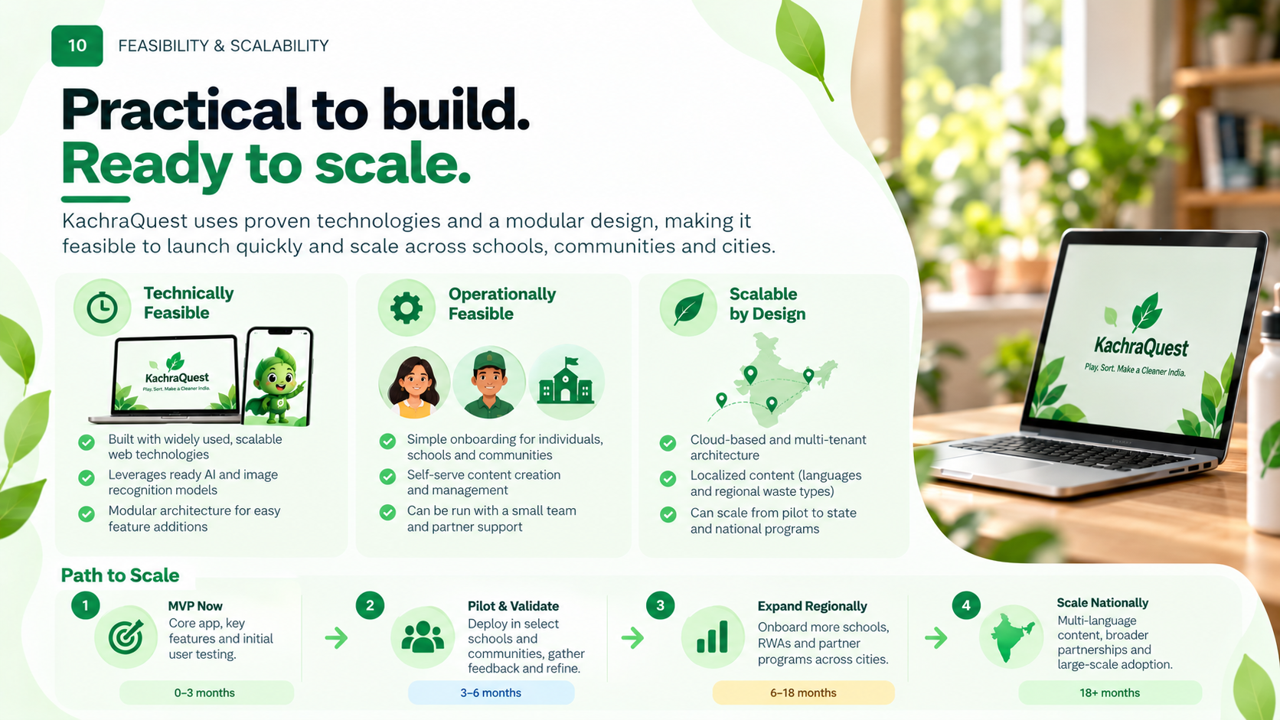
Designed as a lightweight, scalable technology foundation that can evolve with the learner.
-
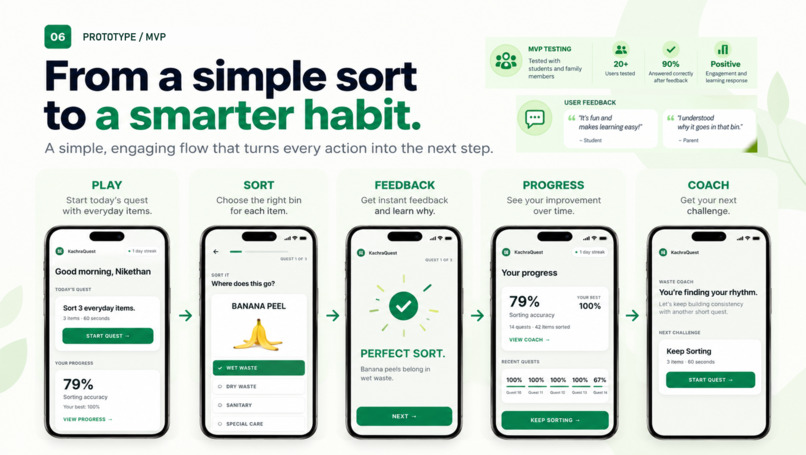
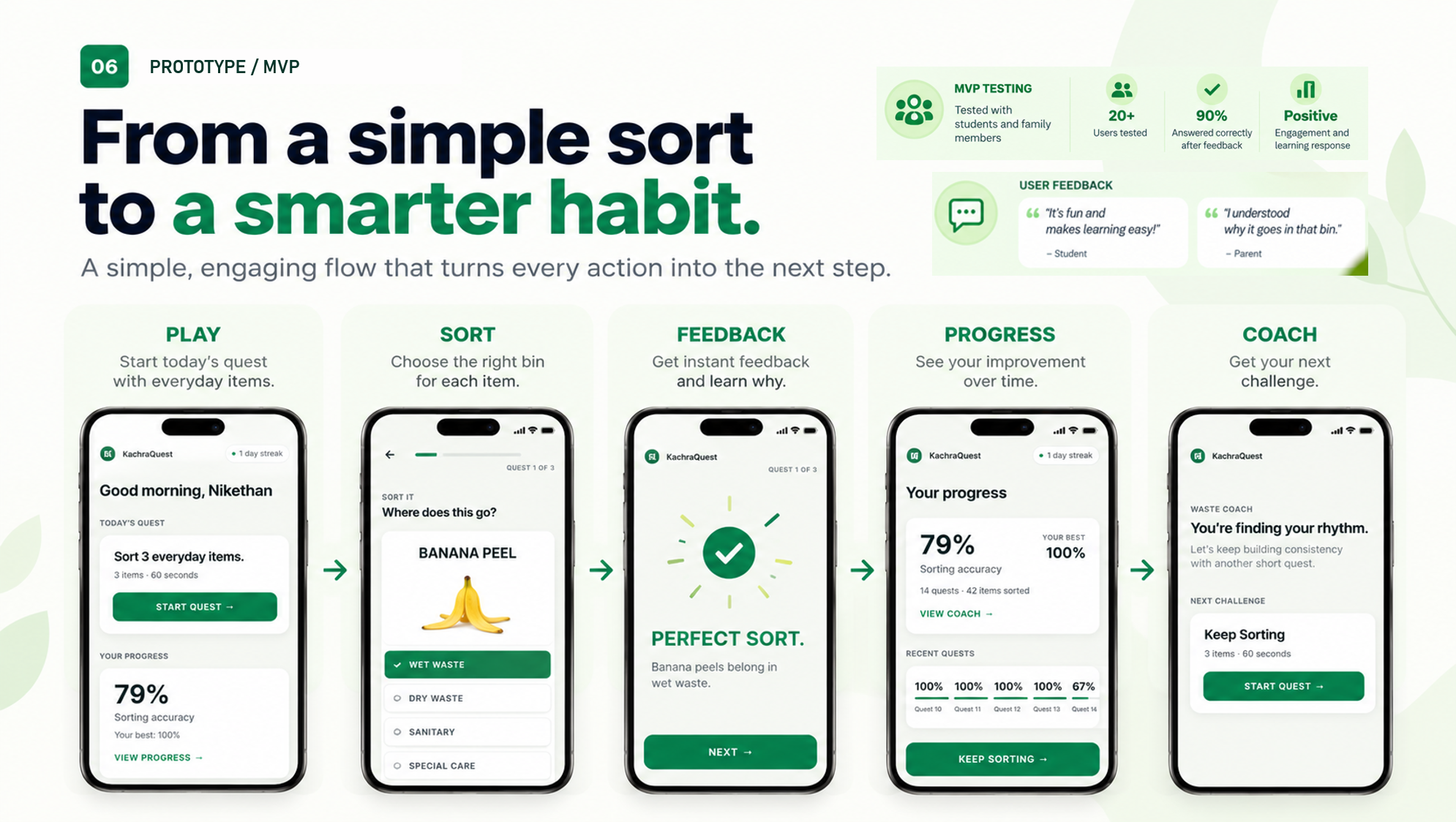
The MVP proves the core loop: play → sort → feedback → progress → practice.
-
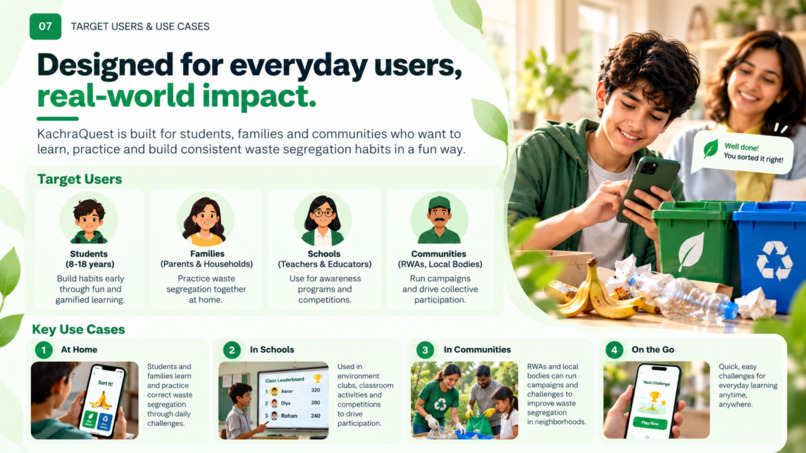
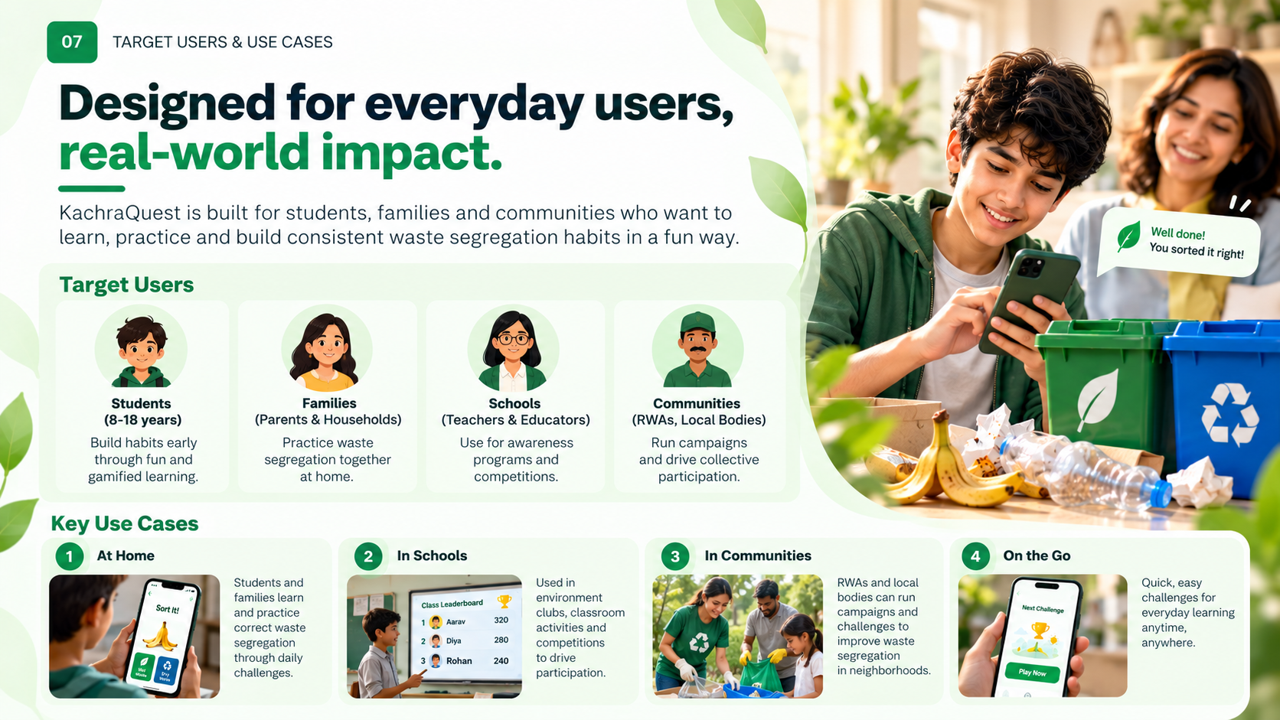
Built for real-life moments - at home, in schools, in communities and on the go.
-
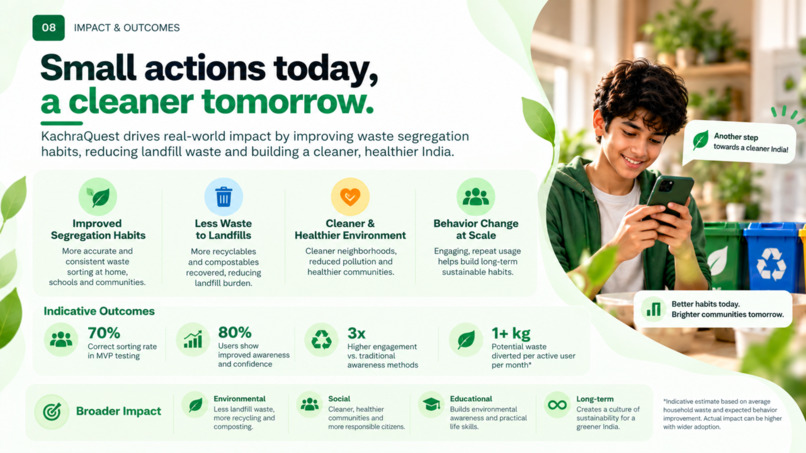
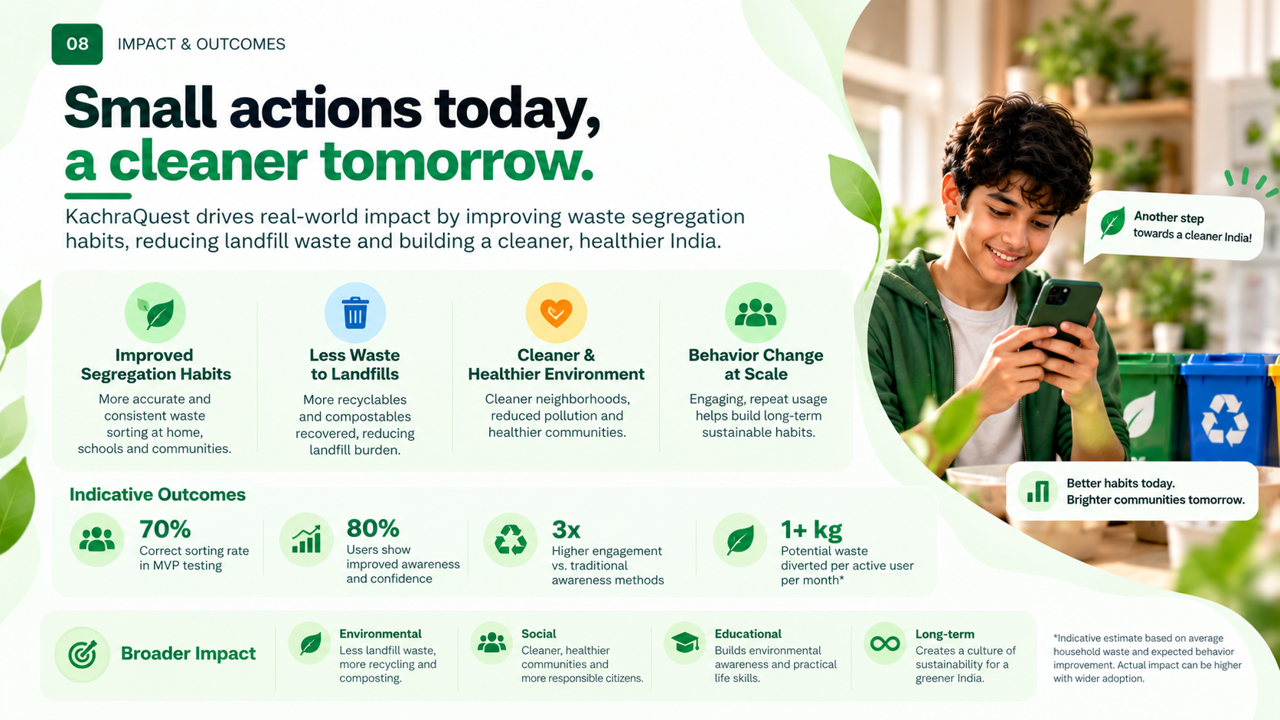
Small, repeated actions can create measurable improvements in segregation habits and community behavior.
-
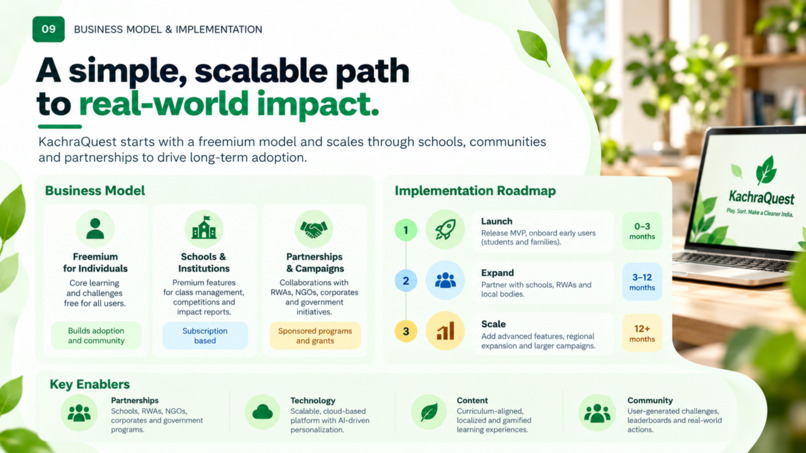
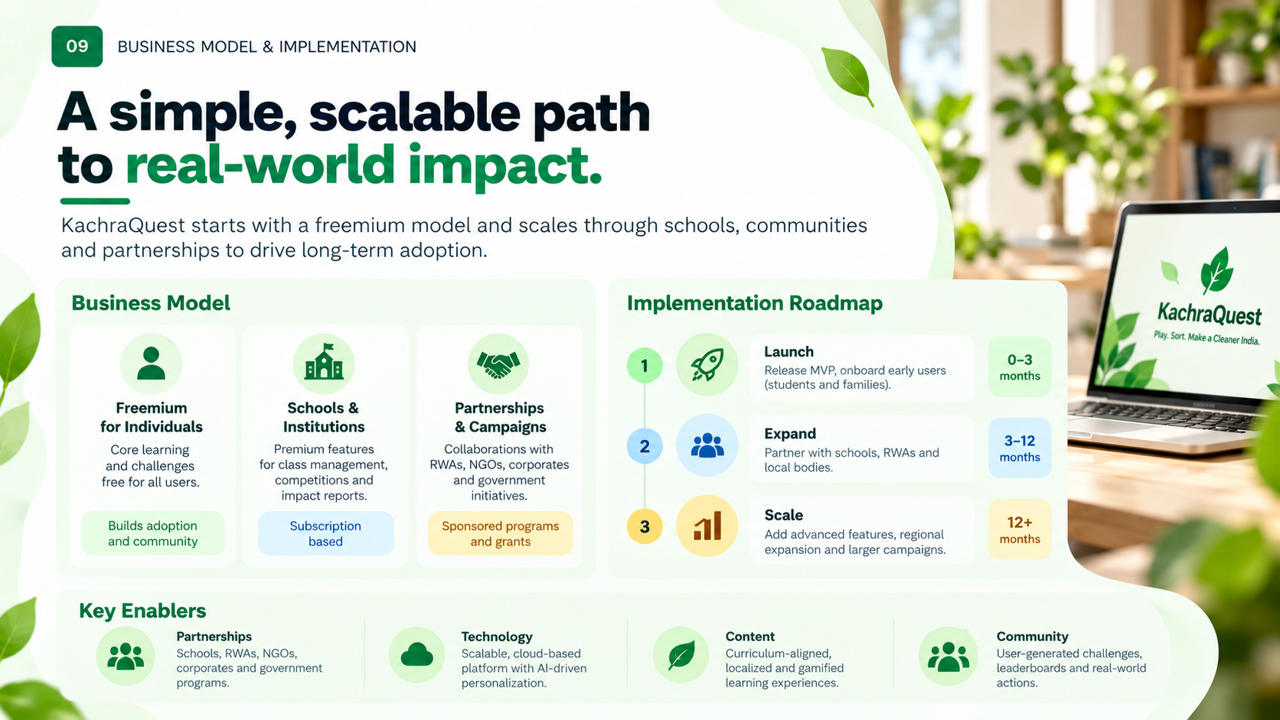
Start with individuals, scale through institutions, and accelerate adoption through partnerships.
-
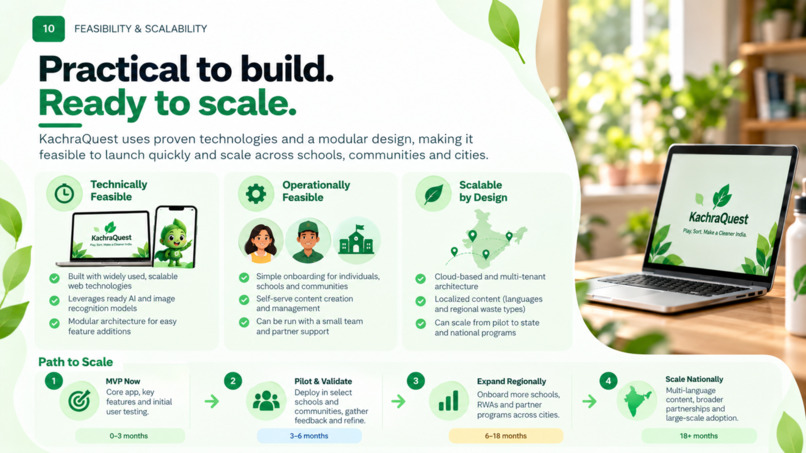
The concept is practical today with a clear path from MVP to multi-city adoption.
-
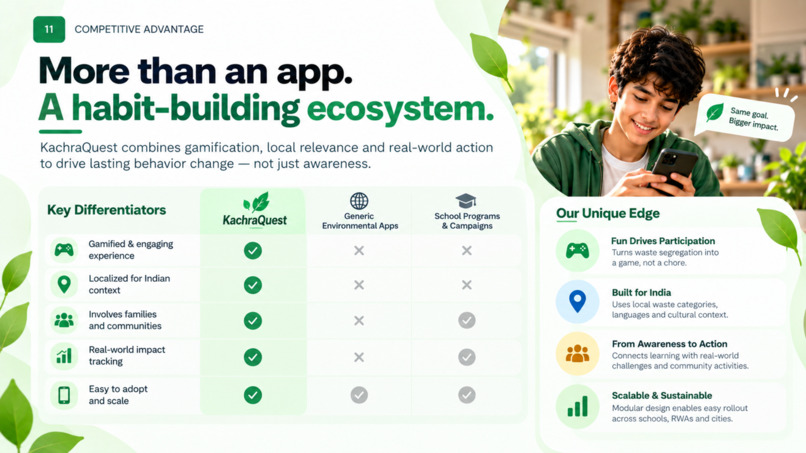
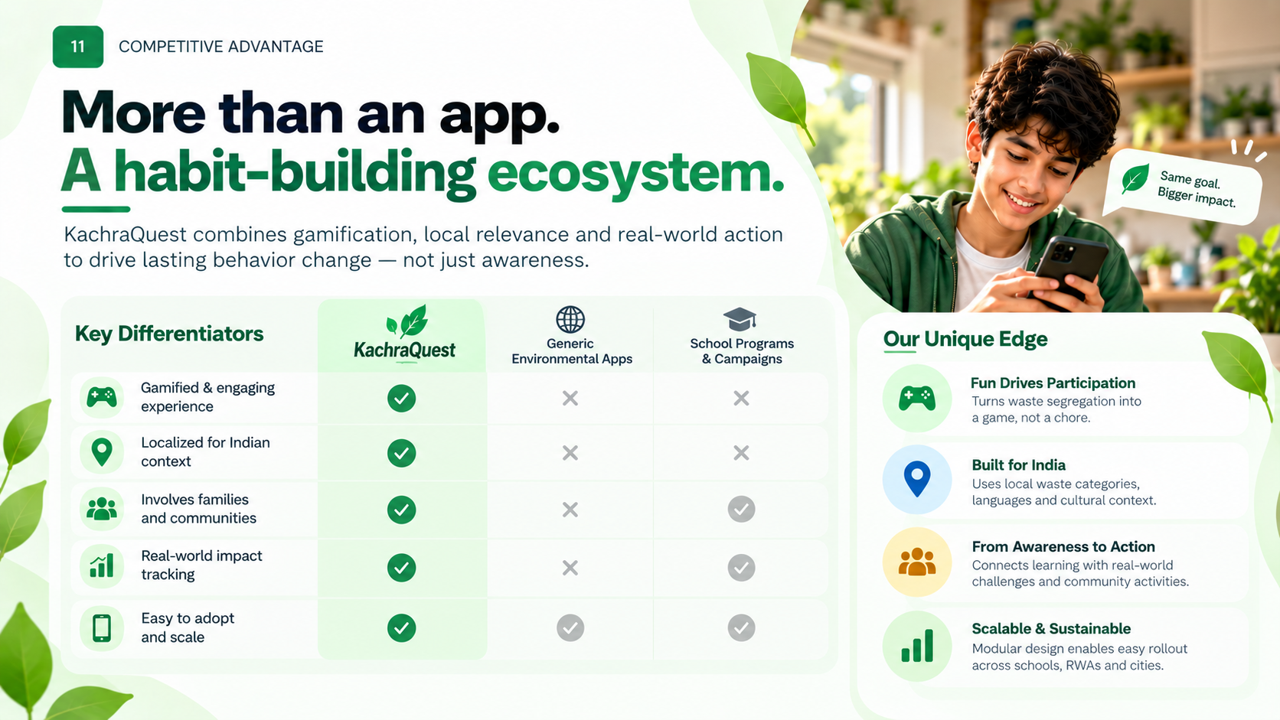
KachraQuest goes beyond information to create a localized, measurable habit-building ecosystem.
-
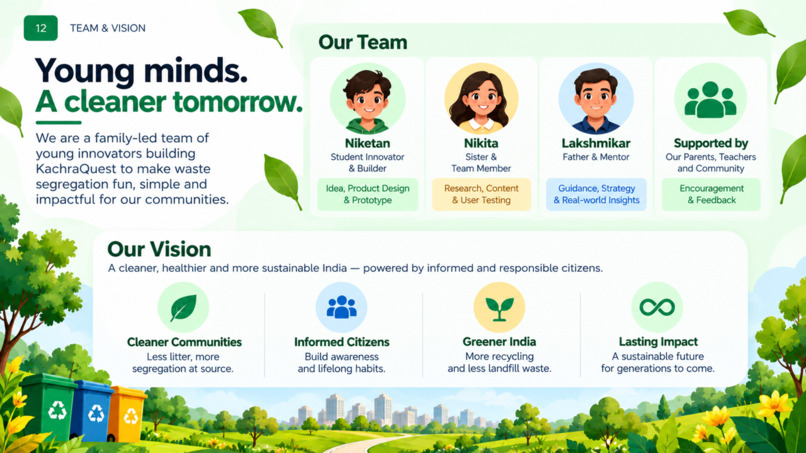
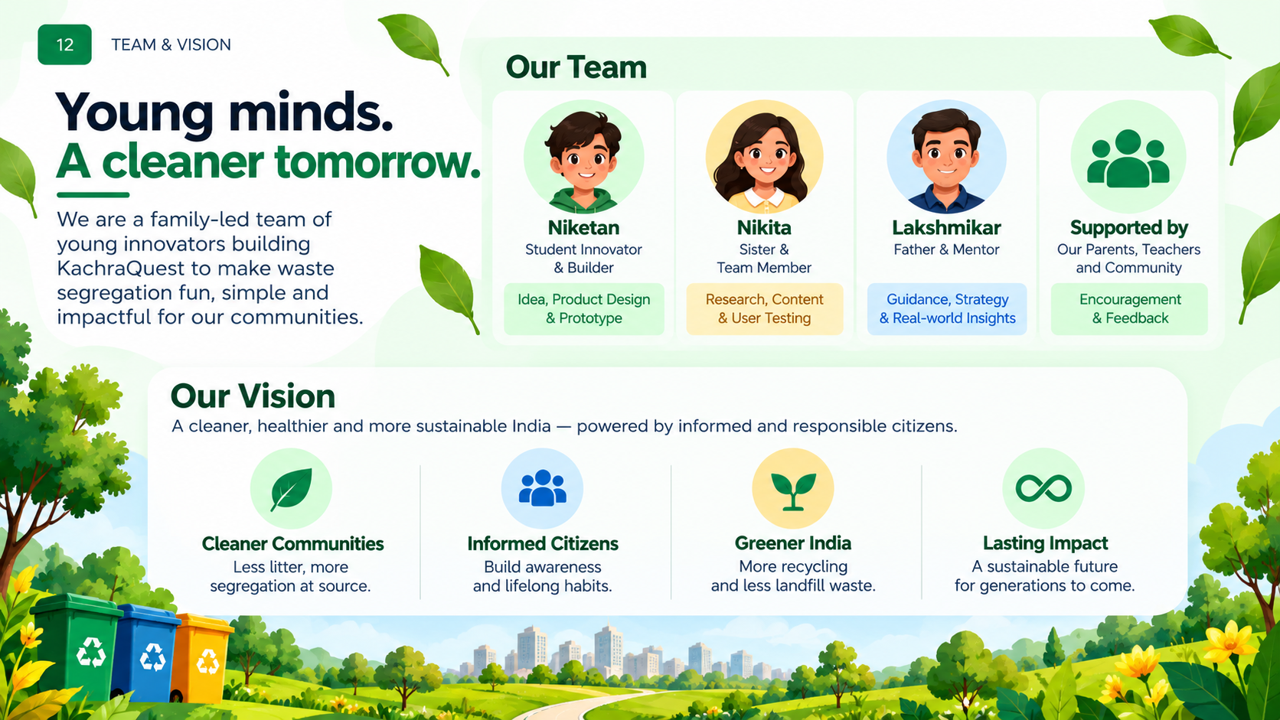
A young innovator, supported by family and educators, building for a cleaner and more sustainable India.
KachraQuest
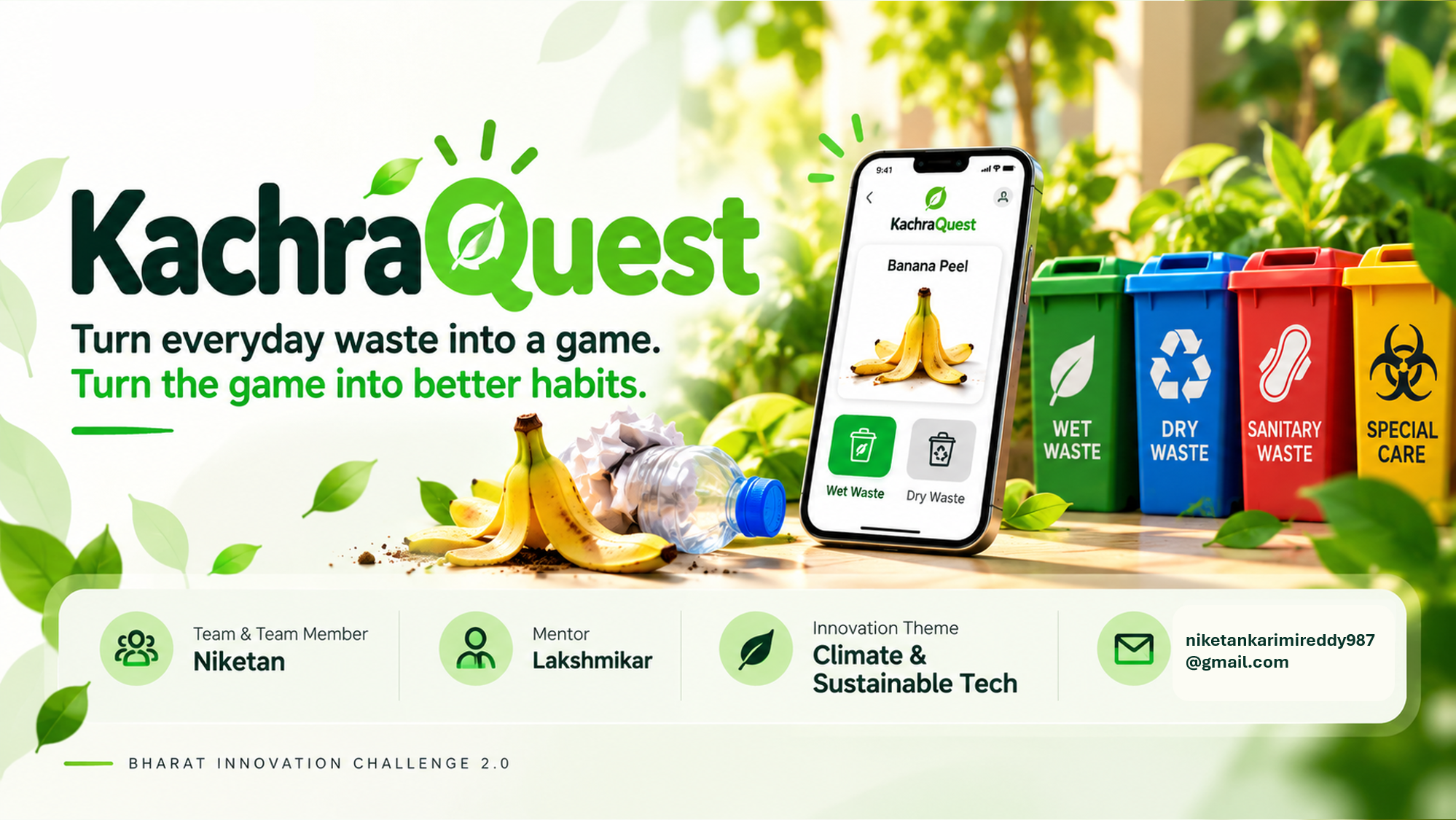
Turn everyday waste into a game. Turn the game into better habits.
It started with a banana peel.
You know the moment.
You have a banana peel in your hand, there are two bins in front of you, and for a second you think:
“Wait… which one?”
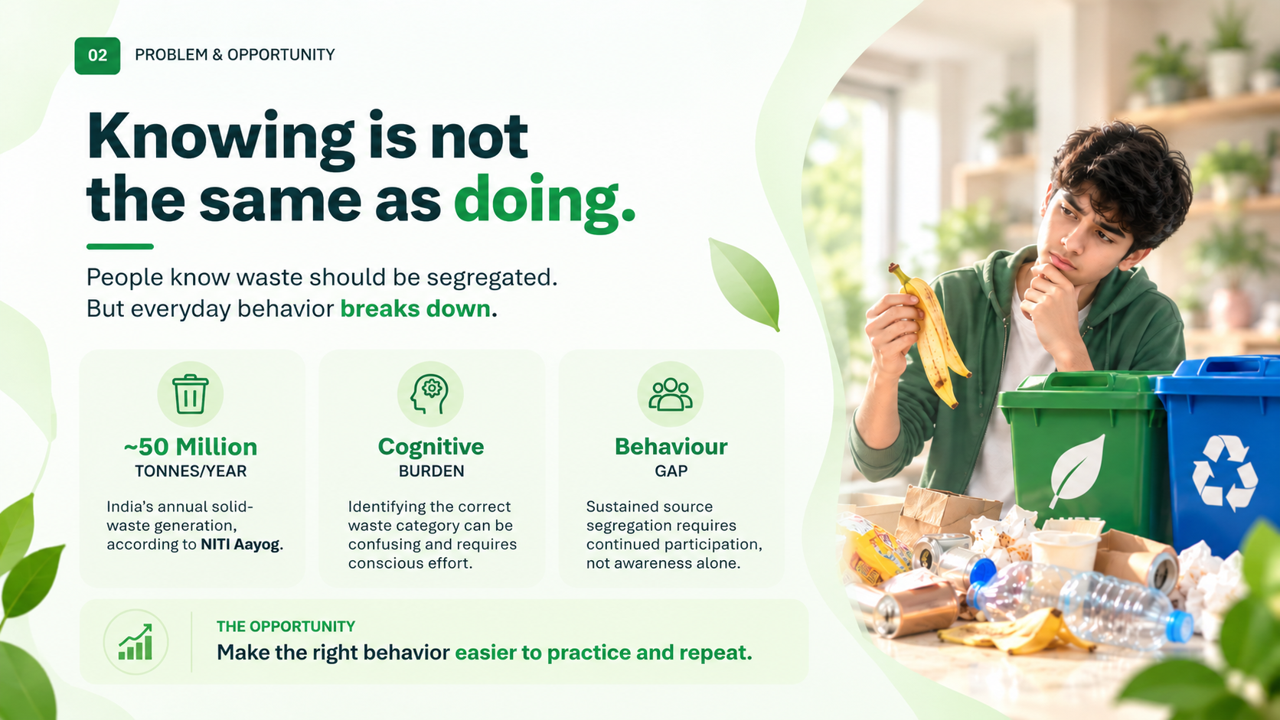
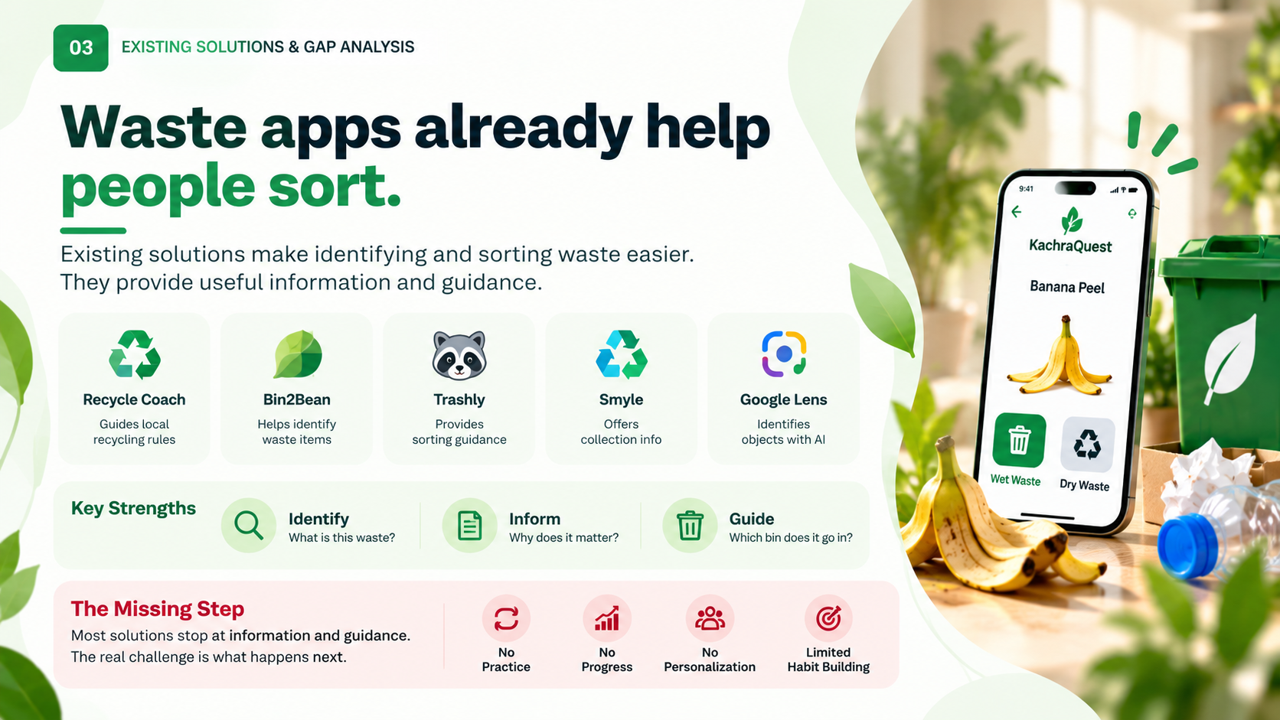
We already have plenty of information telling us how waste should be separated. There are apps that identify waste, tell us which bin to use, and explain why segregation matters.
But I started wondering:
What happens after we learn the answer?
Getting one banana peel into the right bin is useful.
Doing it correctly tomorrow, and the day after that, is much more interesting.
That is where KachraQuest started.
What if waste sorting was a game?
Instead of making another app that tells people what to do, I wanted to make something that lets them practice doing it.
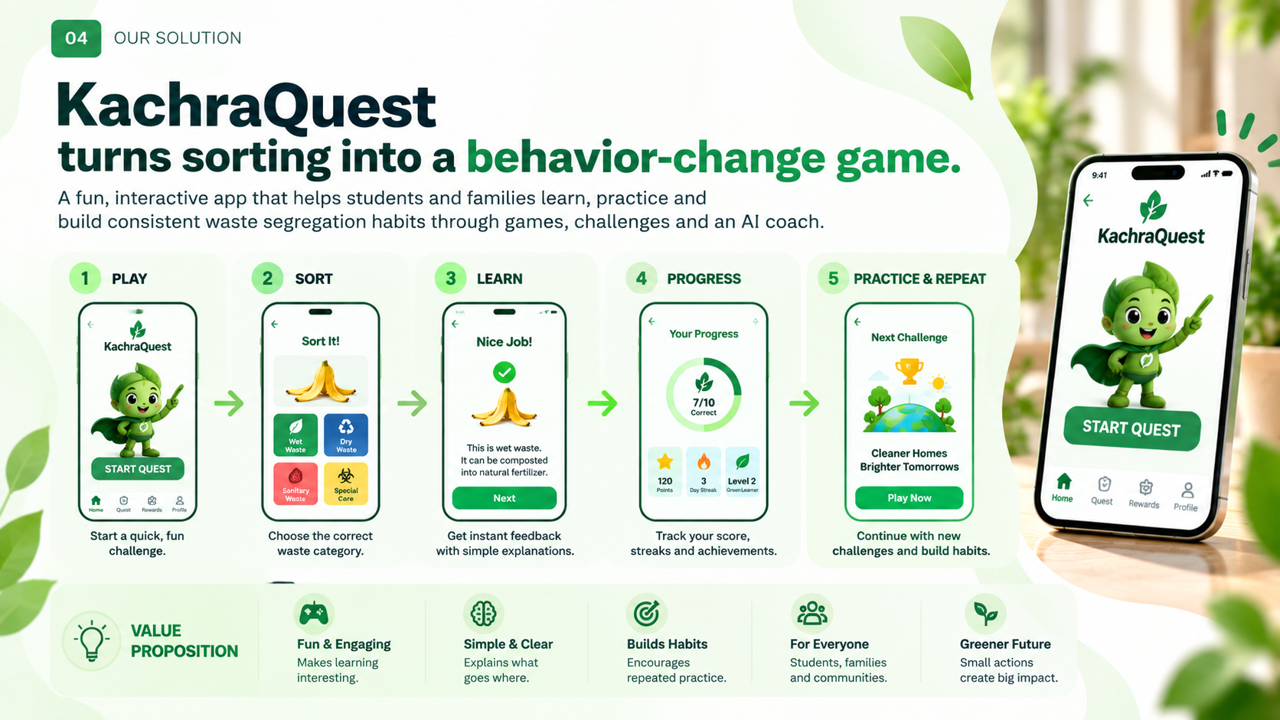
So I designed KachraQuest around a simple loop:
PLAY → SORT → FEEDBACK → PROGRESS → COACH
The user gets a short quest with everyday waste items.
Pick a bin.
Get immediate feedback.
Keep playing.
And as the user improves, the experience changes what it asks them to do next.
The idea is simple:
Don't just teach the answer. Help build the habit.
I built the first version myself
I wanted this to be more than an idea in a presentation, so I built a working web prototype.
The current version has:
- Short waste-sorting quests
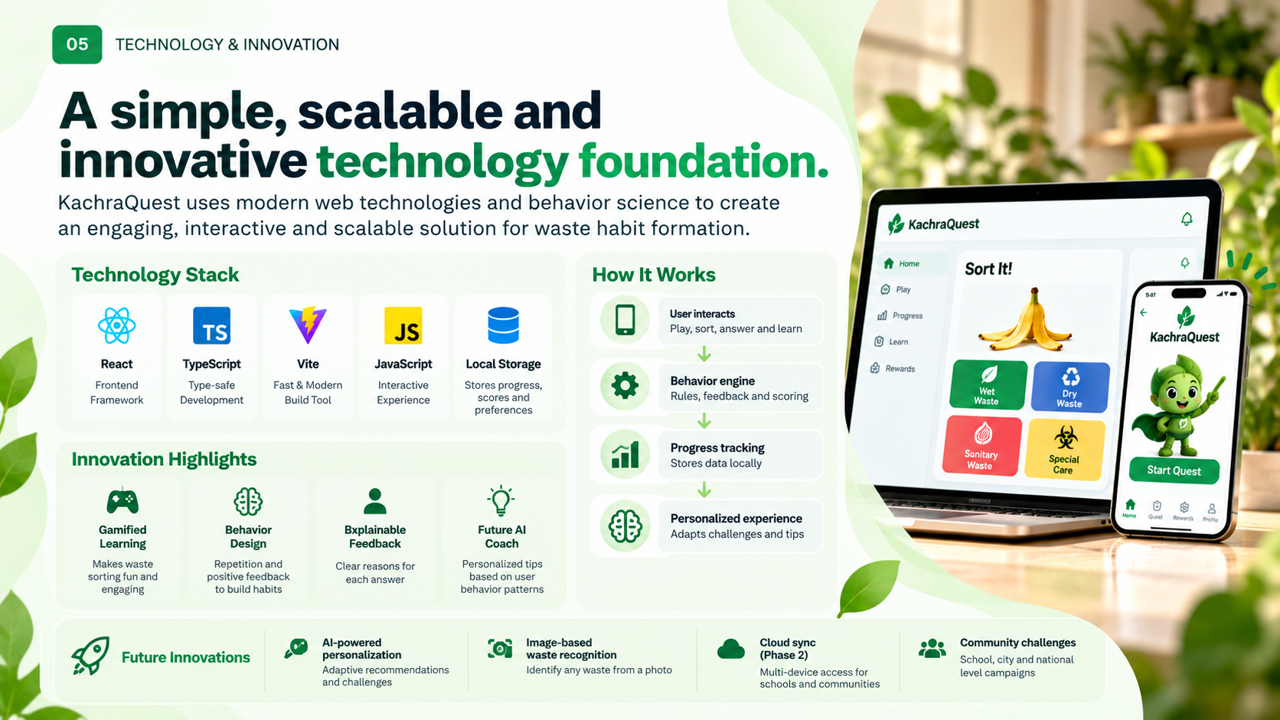
- Wet, Dry, Sanitary and Special Care categories
- Instant feedback after every answer
- Progress and accuracy tracking
- Streak tracking
- A Waste Coach that recommends the next challenge
- A Waste Boss for real-world habit challenges
- A seven-day food-waste challenge
- Responsive layouts for different screen sizes
- Keyboard-accessible interactions
The prototype runs in the browser and stores progress locally.
I built it using React, TypeScript and Vite, with Local Storage for persistence.
The part I found most interesting: the Waste Coach
At first, I thought the game would simply give users questions and scores.
Then I realized that the score itself could be useful.
If someone is struggling, why give them a harder challenge?
If someone is doing really well, why keep giving them the same easy questions?
That led to the Waste Coach.
In the current version, it uses simple, explainable behavior rules:
Doing well → try something harder.
Still learning → keep practicing.
Ready → take the behavior into the real world.
I deliberately kept this version explainable instead of pretending that I had built some magical AI model.
In a future version, these rules could evolve into ML/LLM-based personalization.
Then I had another problem
I didn't want KachraQuest to end when the game ended.
Because getting 3 out of 3 questions right doesn't necessarily mean someone has changed what they do at home.
So I added the Waste Boss.
The first challenge is:
Waste less food.
The goal is to complete seven daily check-ins without leaving avoidable food behind.
That changes the experience from:
“I answered correctly.”
to:
“I actually did something differently.”
That was an important shift for me.
The game is the engagement layer.
The real goal is the habit.
Building it was not as easy as it looked
One of my biggest challenges was actually deciding what not to build.
There are lots of things I could have added:
- Leaderboards
- Badges
- More rewards
- Camera scanning
- More screens
- Chatbots
- Lots of animations
But every time I added something, I asked myself:
“Does this actually help someone build a better waste habit?”
If the answer was no, I left it out.
That helped me arrive at one of the design rules I followed throughout the project:
One screen. One decision. One action.
I also tested the prototype on different screen sizes and made sure the main interactions worked with a keyboard, not just a mouse or touchscreen.
What I learned
This project taught me that building a product is very different from just having an idea.
I learned how to:
- Break a problem into a user journey
- Build interactive screens in React
- Manage state and persistent data
- Design responsive interfaces
- Create feedback and scoring logic
- Think about accessibility
- Test what happens when users make mistakes
- Decide which features are actually useful
- Think about behavior change, not just information
But probably my biggest lesson was this:
A product doesn't become better just because you add more things to it.
Sometimes making something simpler makes it much better.
What's next?
KachraQuest is a working V1, not the finished product.
There is a lot I would like to explore next:
PERSONALIZE
Use more behavior data to make the Waste Coach smarter.
PRACTICE
Add more real-world challenges beyond sorting.
CONNECT
Let families and schools take part in shared challenges.
SCALE
Eventually connect individual habits to measurable community-level impact.
The long-term idea is not to build another app that tells people where their waste belongs.
It is to build something that helps people keep doing the right thing.
One person. One habit. Then a bigger circle.
KachraQuest started with a simple question about a banana peel.
It has turned into a much bigger question:
Can we make better waste habits easier, more engaging and more repeatable?
That's what I'm trying to build.
KachraQuest.
Turn everyday waste into a game.
Turn the game into better habits.
Built With
- css
- education
- gamification
- html
- javascript
- react
- sustainability
- typescript
- vite
- wastemanagement
- webapp

Log in or sign up for Devpost to join the conversation.