-
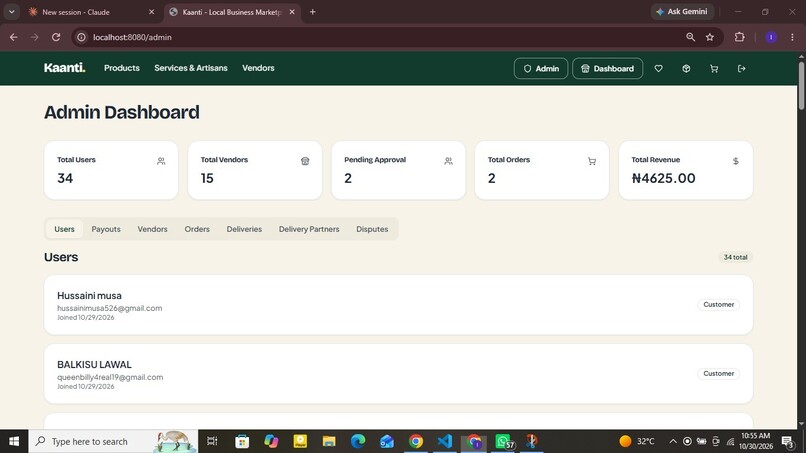
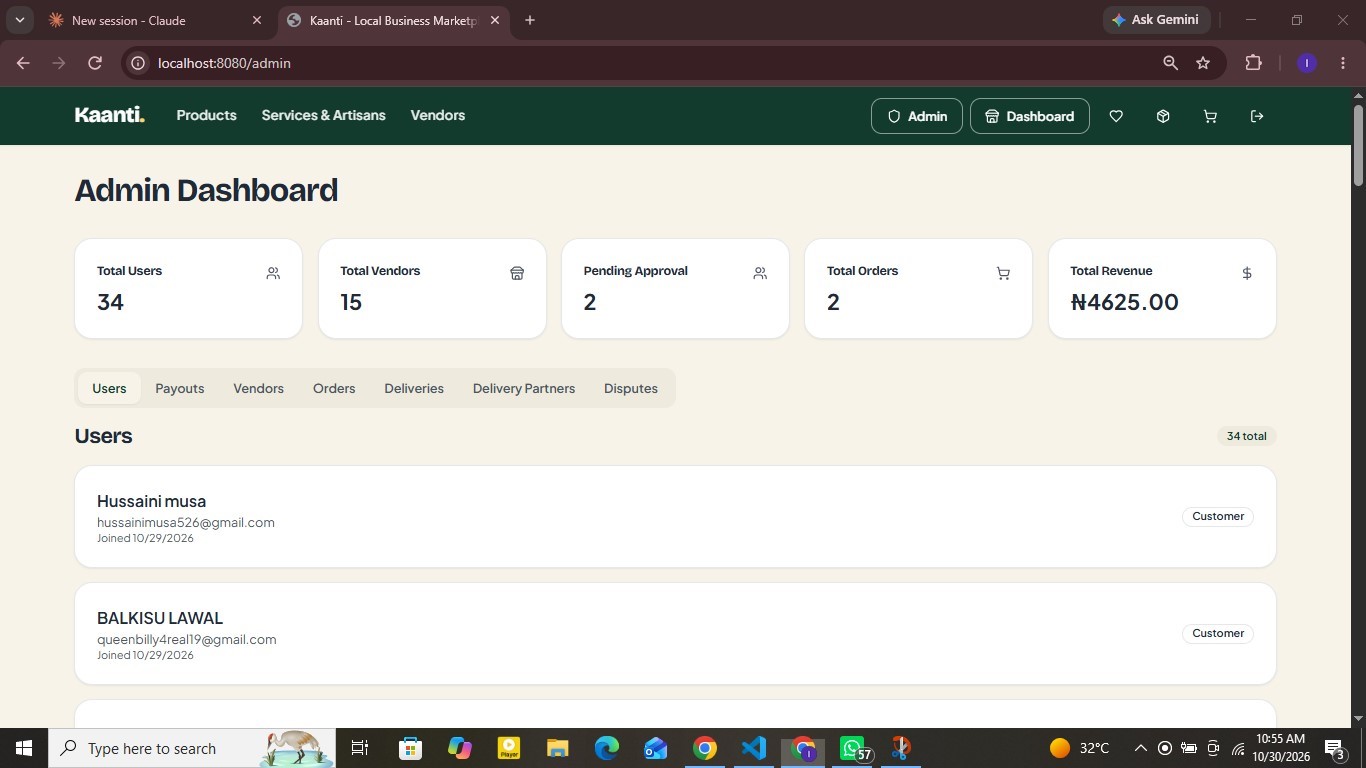
Admin dashboard
-
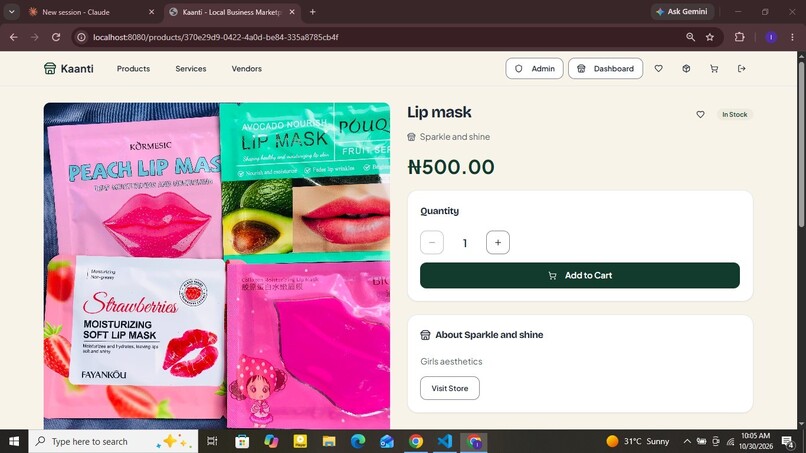
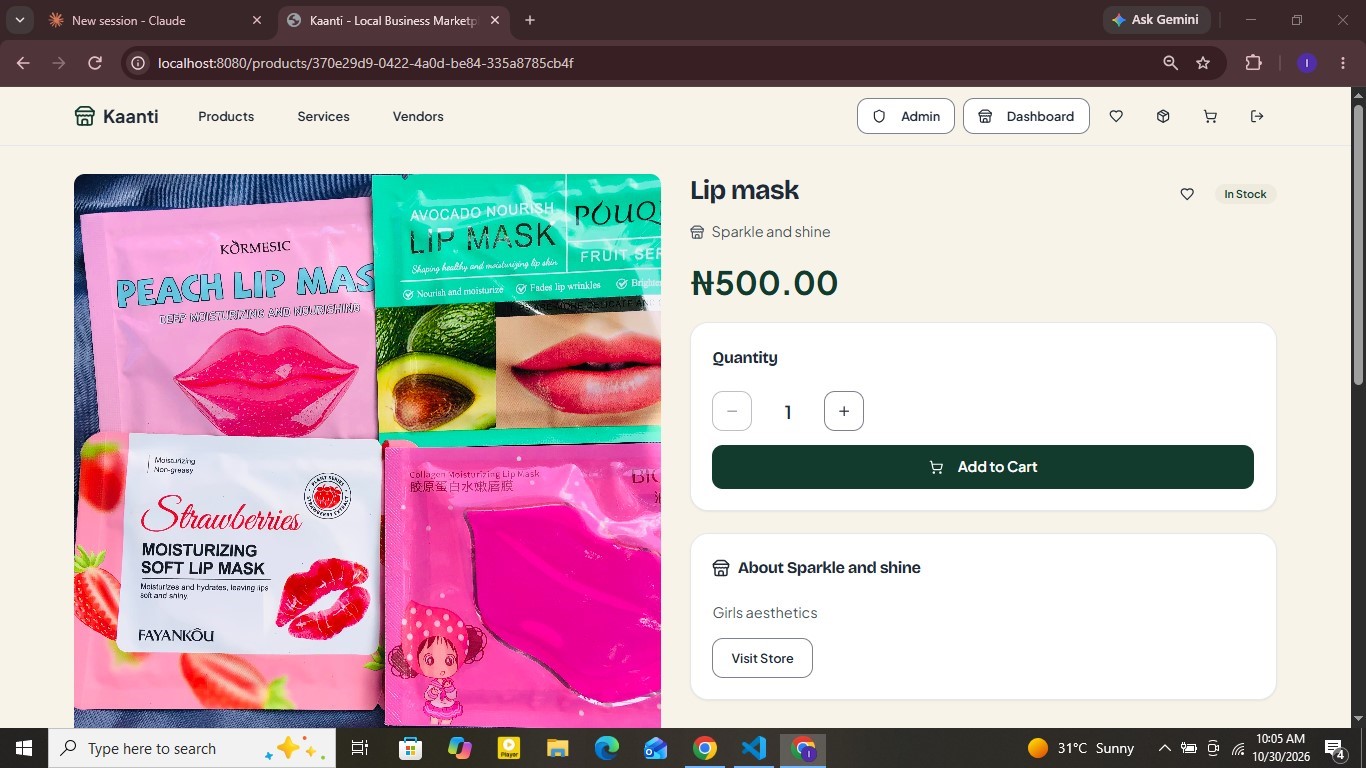
ProductDetailpage
-
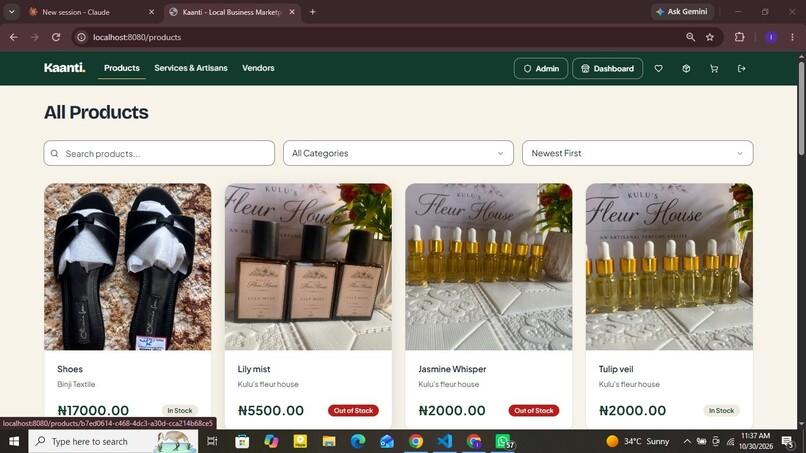
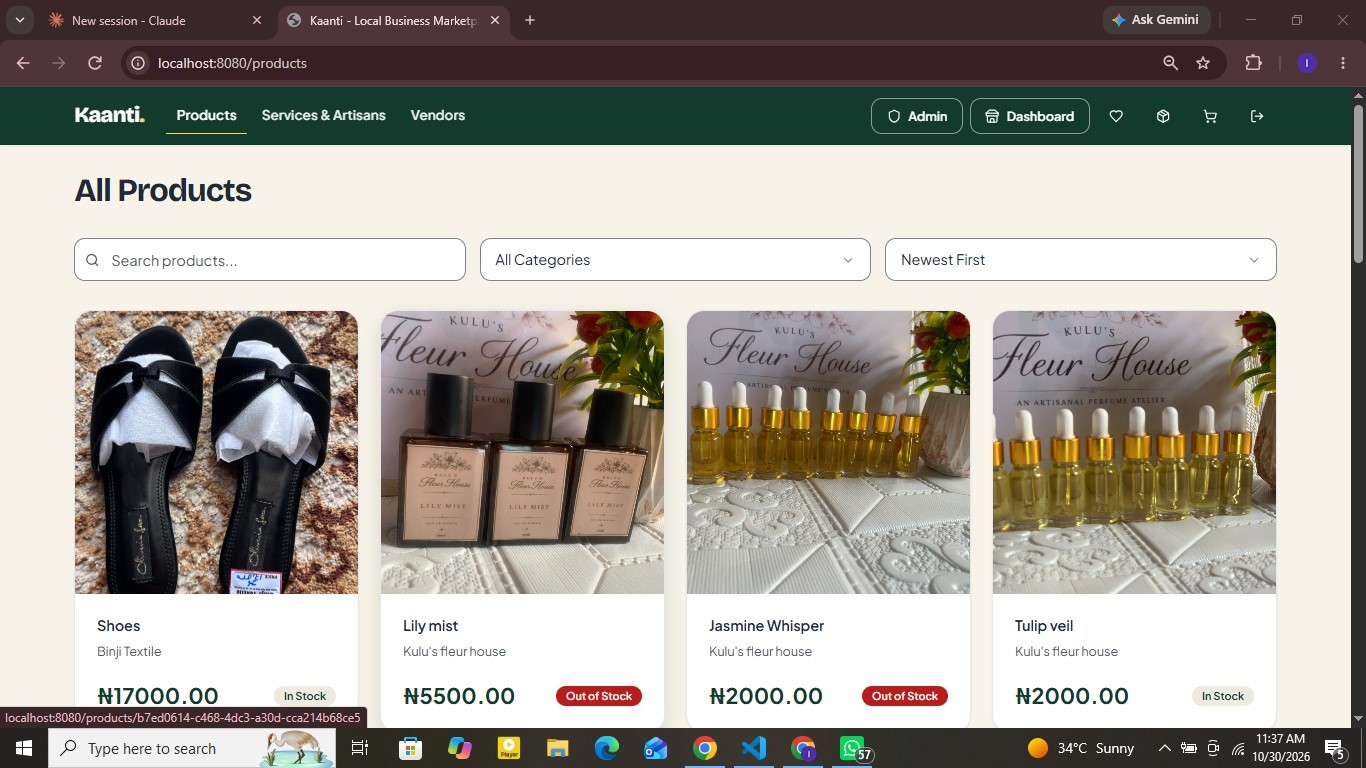
Products page
Inspiration
Kaanti was inspired by the challenges local vendors, artisans, and small businesses face when trying to reach customers beyond their immediate communities. In Nigeria, many businesses rely heavily on word of mouth and scattered social media channels to showcase their products and services. Meanwhile, customers often struggle to discover reliable local businesses and access what they offer.
I wanted to build a platform that brings these opportunities together and makes local commerce more accessible.
What it does
Kaanti is an e-commerce and local services marketplace that connects customers with vendors, artisans, and service providers.
The platform allows users to discover products, explore local services, find vendors, and access delivery-related options. Rather than limiting the experience to traditional online shopping, Kaanti aims to bring product commerce and service discovery together in one platform.
Our broader goal is to help local businesses establish a digital presence, reach more customers, and participate in the growing digital economy.
How we built it
I developed Kaanti as a web-based marketplace, working across the frontend, backend integrations, and overall product experience.
The development process involved designing the marketplace experience, implementing product and service discovery, building vendor-facing functionality, and working on delivery-related workflows.
I focused on making the platform practical for the Nigerian market, with an emphasis on usability, accessibility, and the different needs of customers and local businesses.
Challenges we faced
One of the major challenges was thinking beyond a conventional e-commerce store. A marketplace that supports both physical products and services requires different user journeys, vendor requirements, and operational considerations.
Other challenges included designing a flexible marketplace experience, considering vendor onboarding, handling delivery workflows, and building a product that can evolve as real users interact with it.
What I learned
Building Kaanti has taught me that developing a working product is only one part of building a successful startup. Understanding users, validating assumptions, designing sustainable business models, and continuously improving based on feedback are equally important.
It has strengthened my skills in full-stack development, product thinking, problem-solving, and translating real-world challenges into software solutions.
What's next
I want to continue improving Kaanti, onboard more vendors and service providers, attract early customers, validate the marketplace model, and explore intelligent features that make discovering relevant products and services easier.
Kaanti is an ongoing effort to make local commerce more accessible and create more digital opportunities for African businesses.
Built With
- next.js
- node.js
- react
- supabase
- tailwindcss
- typescript
- vercel

Log in or sign up for Devpost to join the conversation.