Inspiration
Teachers spend a huge amount of time turning real papers, PDFs, and DOCX files into reusable classroom materials. We wanted to make that process safer and faster without losing traceability.
What it does
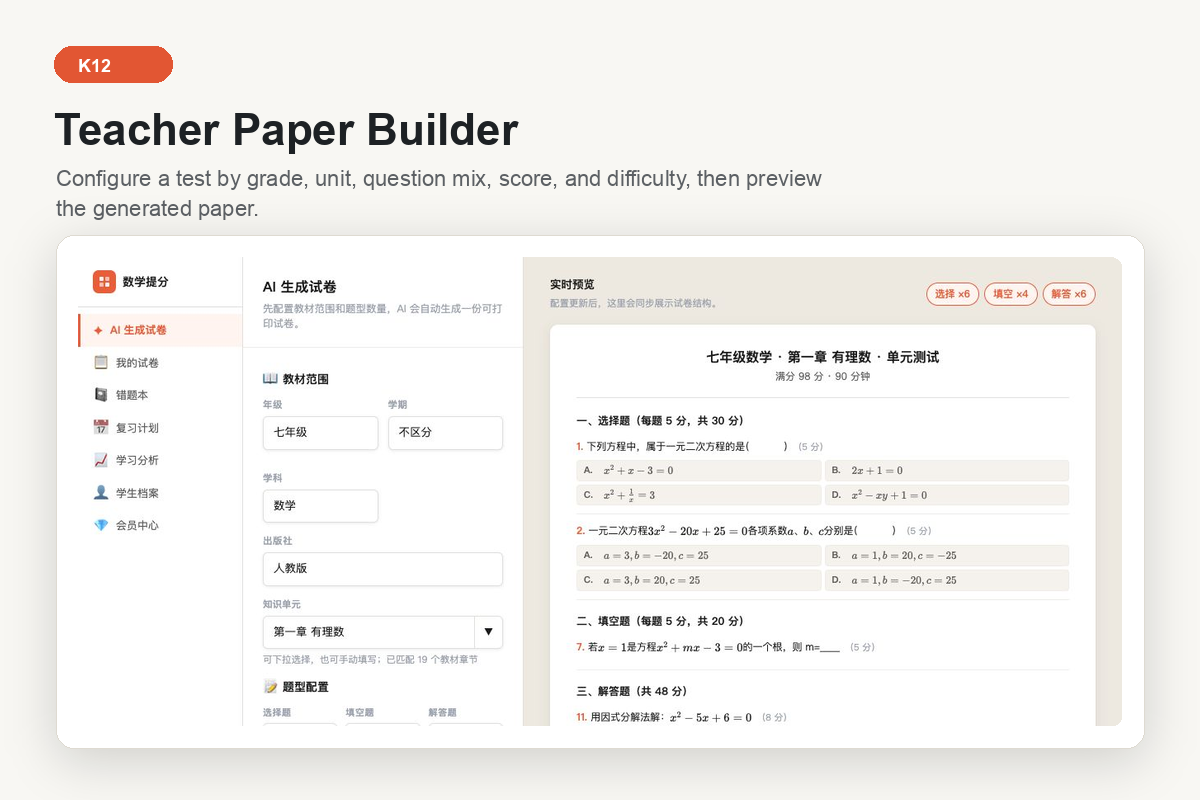
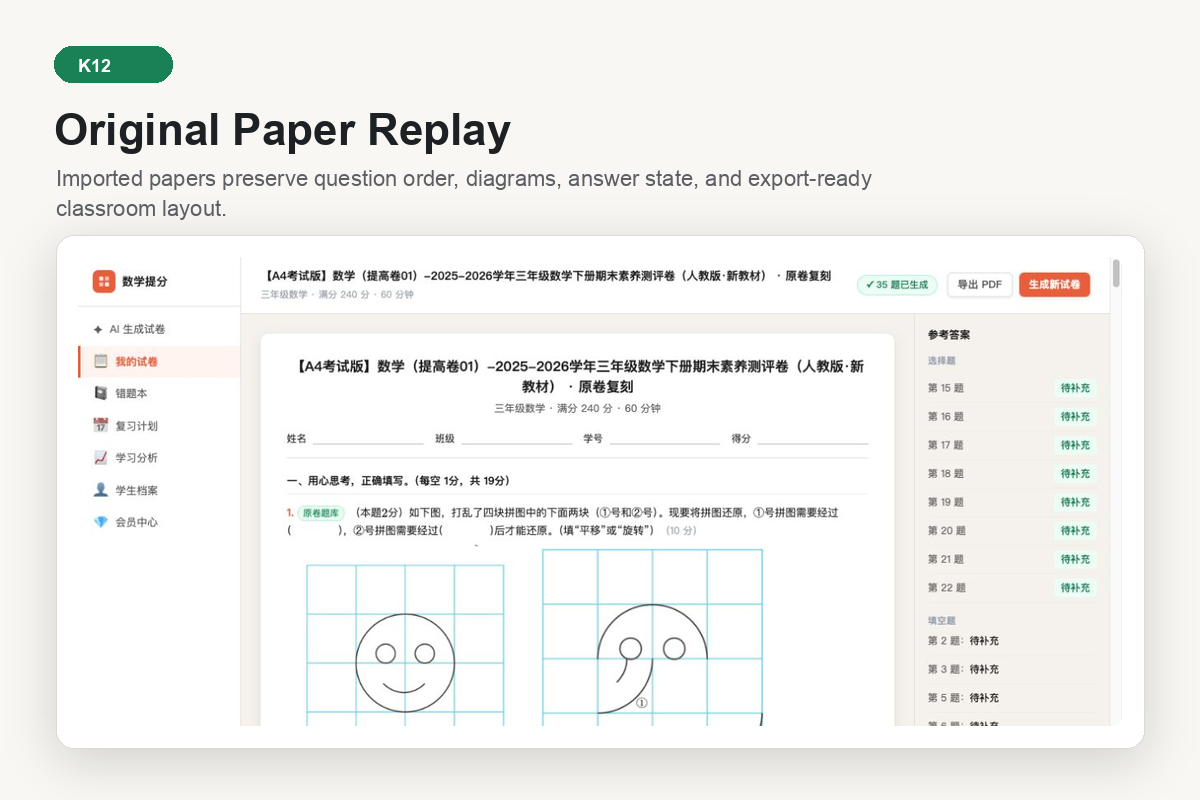
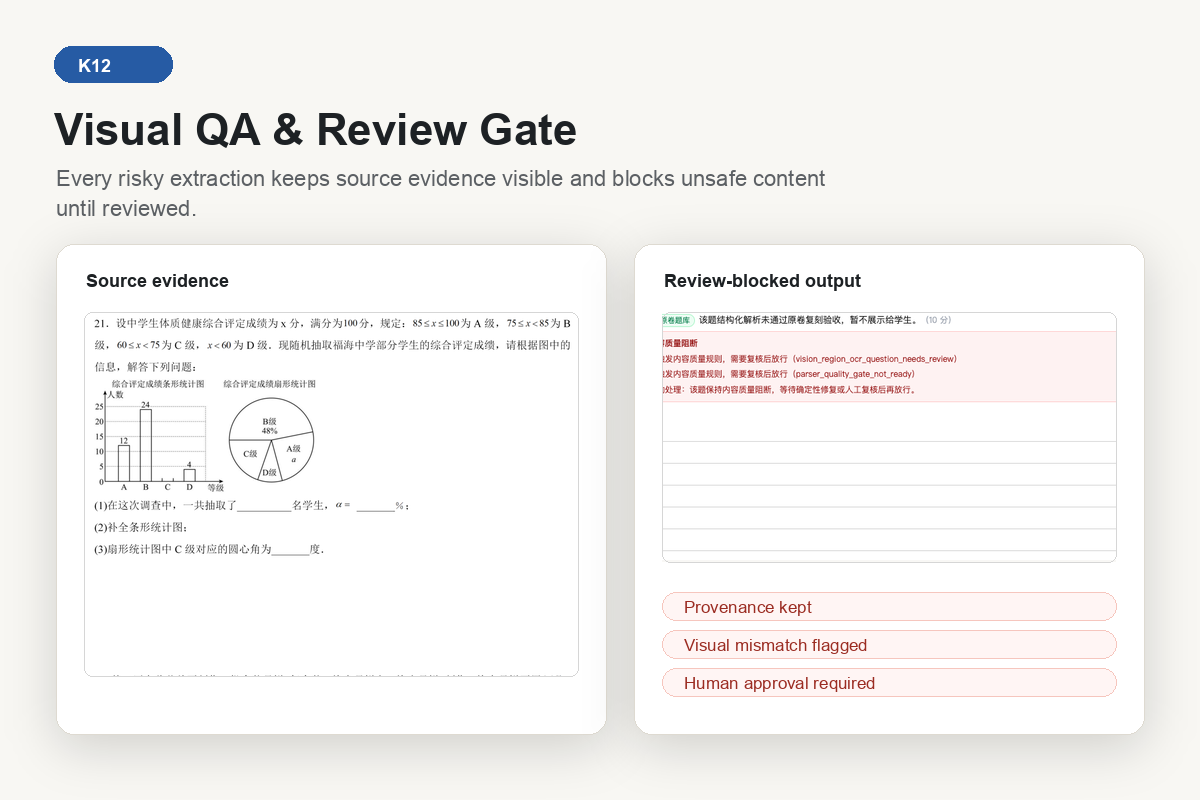
Yuanzhixue K12 converts school papers and teaching materials into structured question banks. It supports OCR, document parsing, visual QA, review queues, and repair workflows so generated content can be checked before teachers use it.
How we built it
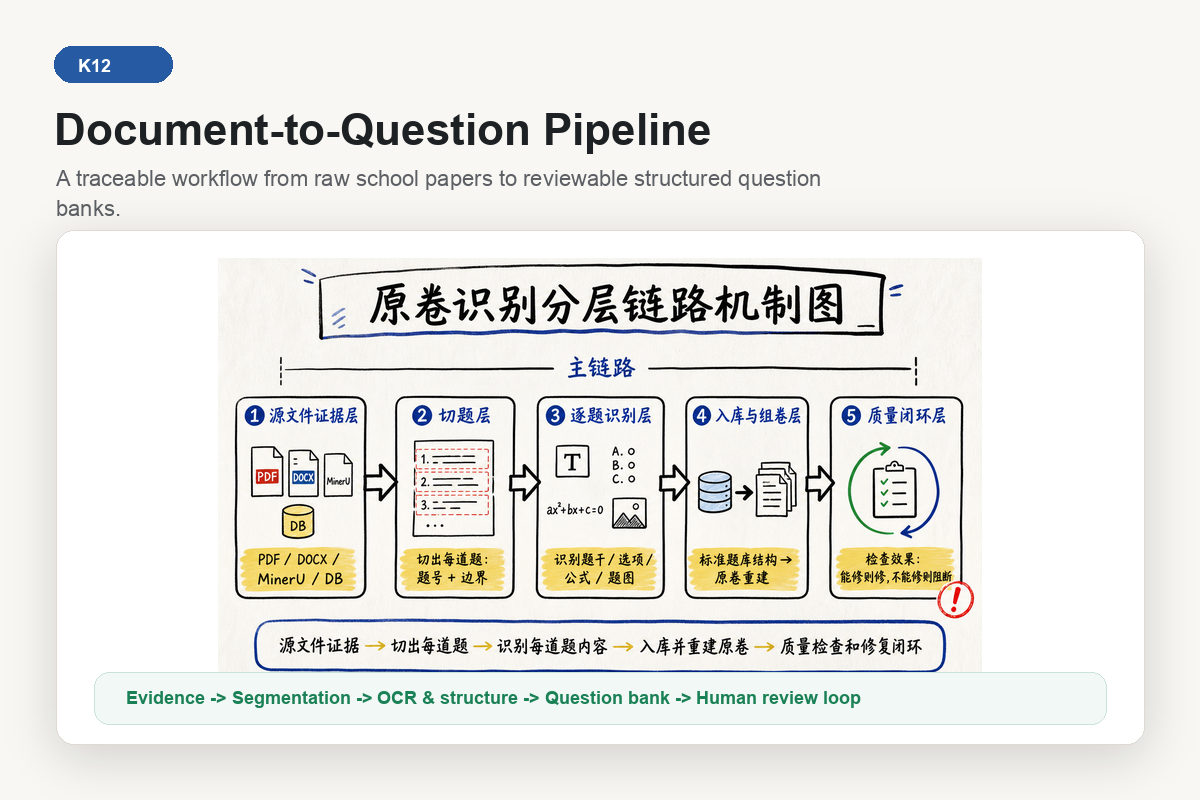
We built a document-to-question pipeline around PDF/DOCX parsing, OCR extraction, structured normalization, image asset handling, and admin review pages. Codex helped us inspect failures, write repair scripts, verify outputs, and improve the workflow iteratively.
Challenges we ran into
Real education documents are messy: formulas, diagrams, page layouts, missing images, and OCR errors all create edge cases. The hardest part was not just extracting content, but making every result auditable and repairable.
Accomplishments that we're proud of
We created a working workflow that turns raw papers into reviewable structured data, with visual evidence and safeguards before content enters the usable question bank.
What we learned
AI is most useful in education workflows when it is paired with verification, human review, and clear provenance.
What's next for K12
Next, we want to improve batch processing, expand subject coverage, strengthen visual QA, and make the teacher-facing workflow smoother.
Built With
- ai-agents
- codex
- docx-parsing
- education
- k12
- next.js
- ocr
- openai
- pdf-parsing
- question-bank
- typescript
- visual

Log in or sign up for Devpost to join the conversation.