
K.U.E.H Tap², nostalgia you can press
Inspiration
Having taken care of our own grandparents, we've noticed a consistent spark: they enjoy board games and love simple memory play. Across Singapore, dementia-friendly neighborhoods use nostalgic wayfinding murals featuring kueh, kopi cups, and shophouse tiles that help people recognize places and feel at home. Research shows that simple memory games and multisensory activities can boost engagement and mood while supporting attention and working memory for people living with dementia. K.U.E.H Tap² brings these elements together: large tactile kueh buttons that light up, inviting a reach-and-press motion with gentle green or soft red feedback. Our aim is active aging through familiarity, gentle movement, and joyful play.
Problem Statement
HMW increase Interest, low-stress engagement for elderly with dementia using familiar cues and simple, tactile interactions?
What it does
K.U.E.H Tap², Kind • Unhurried • Engaging • Hands-on
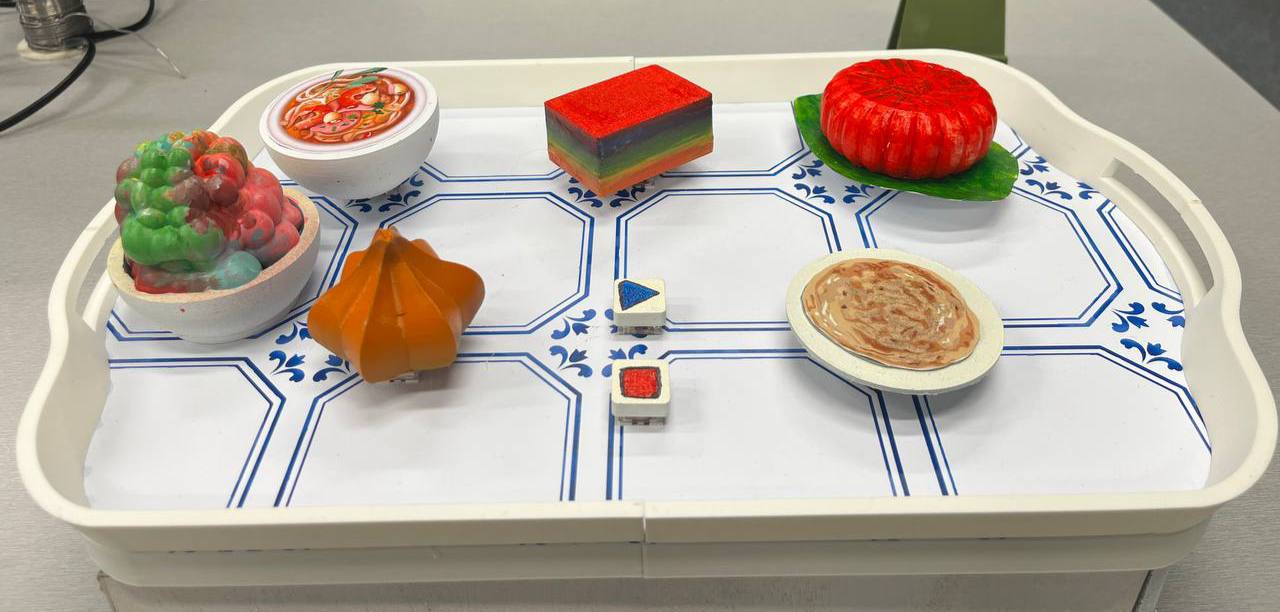
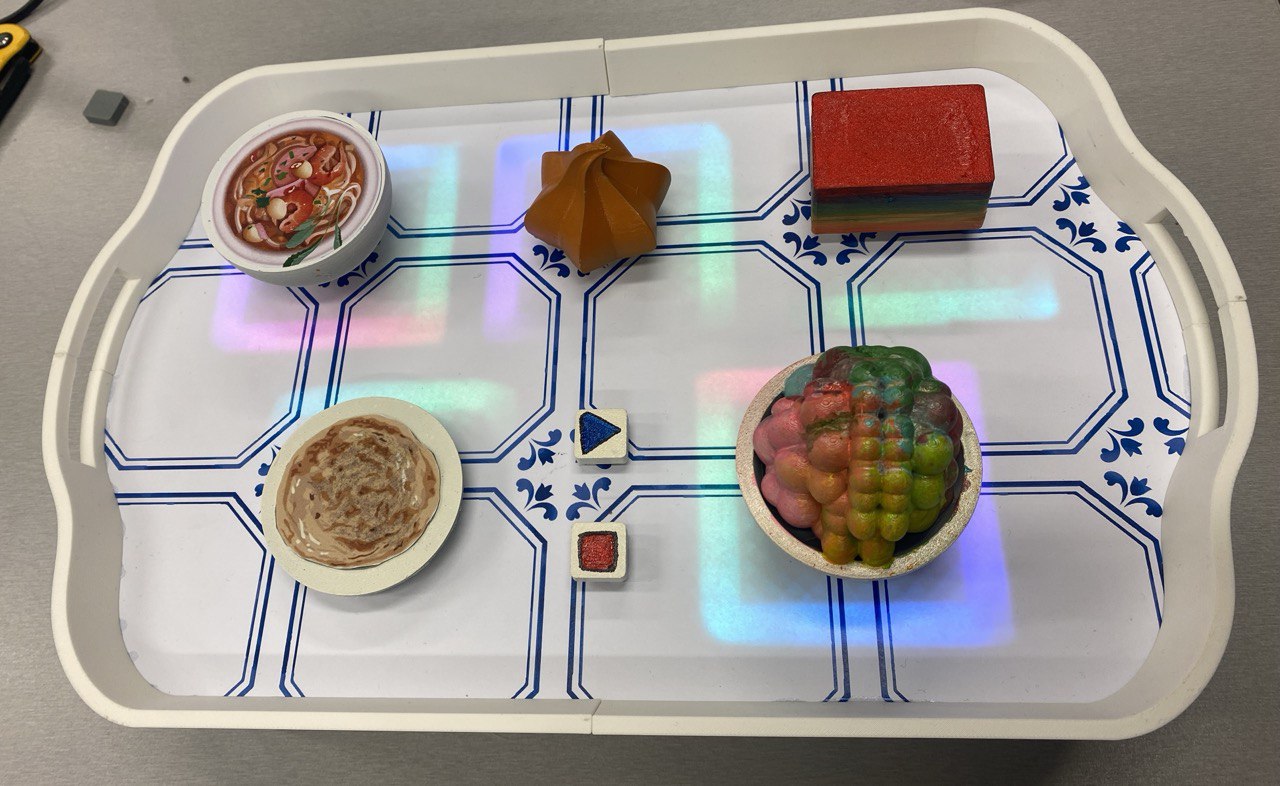
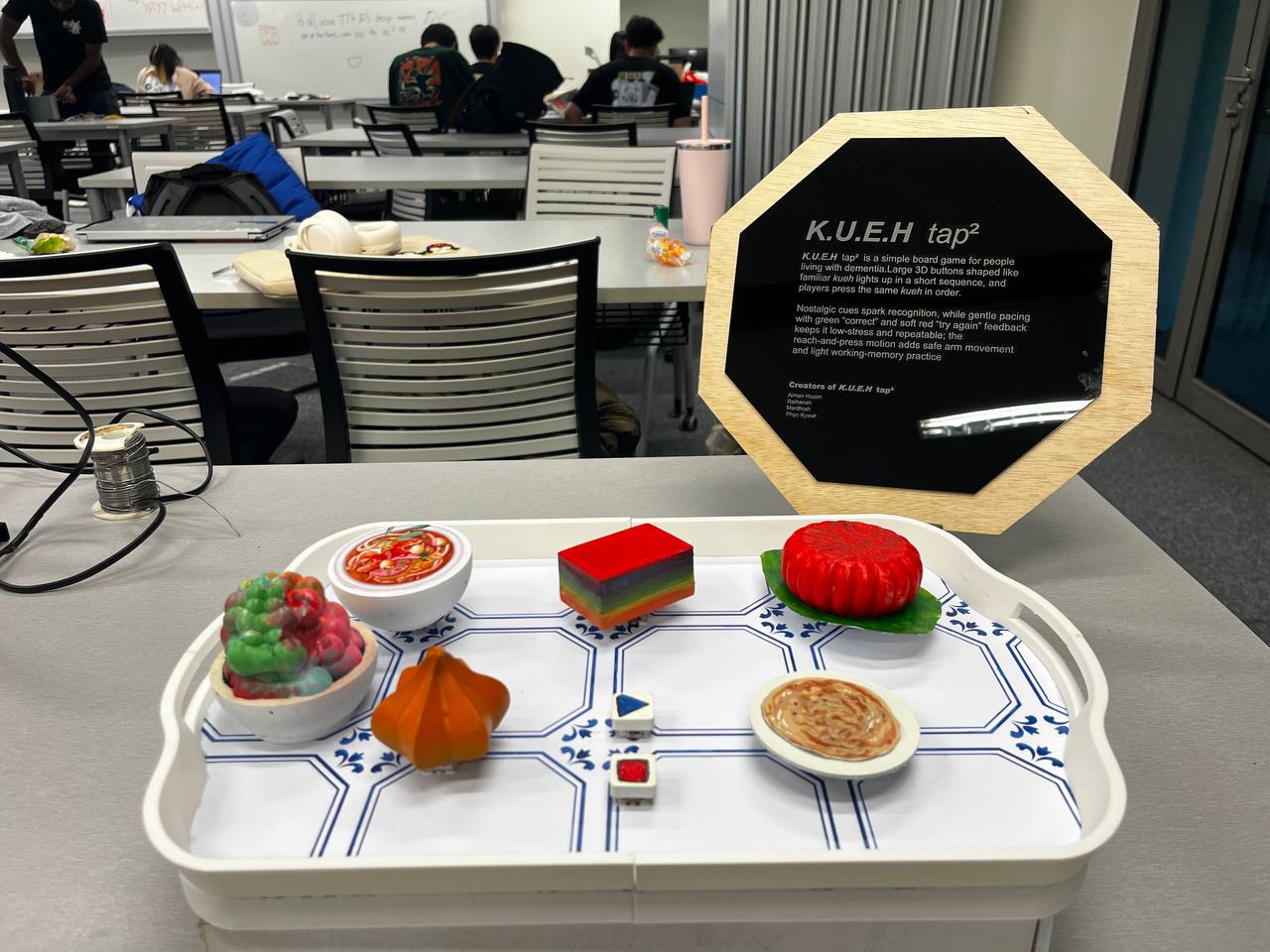
K.U.E.H Tap² is a hands-on, multisensory memory game for people living with dementia. The board has large, high-contrast kueh buttons that light up in a short sequence; the player simply presses the same kueh in order. Design choices keep cognitive load low, encourage gentle movement, and make sessions easy for caregivers to run repeatedly without stress.
1. Familiar kueh cues for instant recognition
Culturally familiar kueh shapes and colors act as memory anchors, helping players orient quickly. The buttons are big, single-purpose and easy to reach.
2. Simple memory play with supportive feedback
The board shows a 3–5 step light pattern. Players repeat it by pressing the matching kueh. A calm green glow confirms “correct,” while a soft red glow invites “try again.” There are no timers or penalties, keeping the experience low-pressure and repeatable.
3. Reach-and-press board for gentle arm movement
The spaced-out and soft-force buttons encourage a comfortable reach and press action that adds safe upper-limb movement to each round. The layout avoids fine motor demands, the base is non-slip, and no set-up is required so caregivers can run short sessions whenever attention is available.
How we built it
Modelled & 3D-printed Designed the kueh buttons and the tray in CAD, 3D-printed, and spray-painted to add vibrant colours.
Assembled the board Mounted the buttons, attached the tray to the board and fixed LED lights around the buttons.
Programmed the firmware Wrote Arduino code for light-sequence generation, input debouncing, Start/Repeat/Stop, and gentle feedback (green “correct,” soft red “try again”), with easy pacing/difficulty tweaks.
Accomplishments that we're proud of
In just two days we took K.U.E.H Tap² from idea to working prototype: we defined the problem, sketched flows, and grounded the concept in quick evidence on multisensory activity and dementia-friendly design. We modelled and 3D-printed kueh caps, wired and assembled a sturdy board, and wrote the firmware for light-sequence play with green “correct” and soft red “try again.” We tuned pacing, button size, and spacing for accessibility, and made setup caregiver-friendly with single-cable power and a simple run sheet.
What's next for K.U.E.H Tap²
- Increase the number of buttons to include a variety of kueh.
- Allow for personalisation of buttons as requested by users.

Log in or sign up for Devpost to join the conversation.