-
-
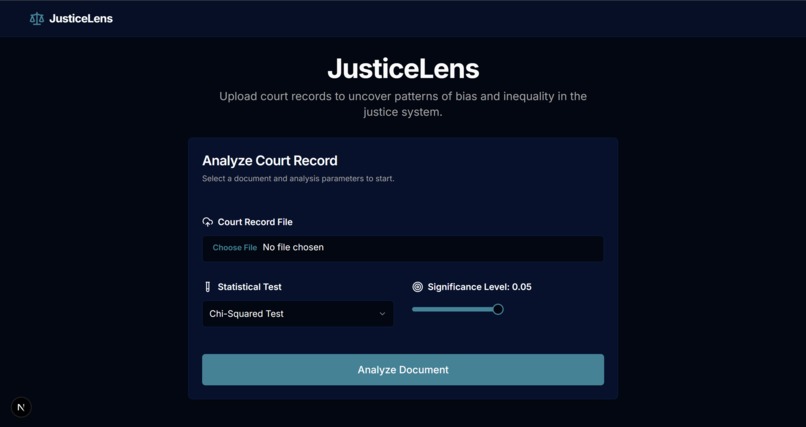
UI
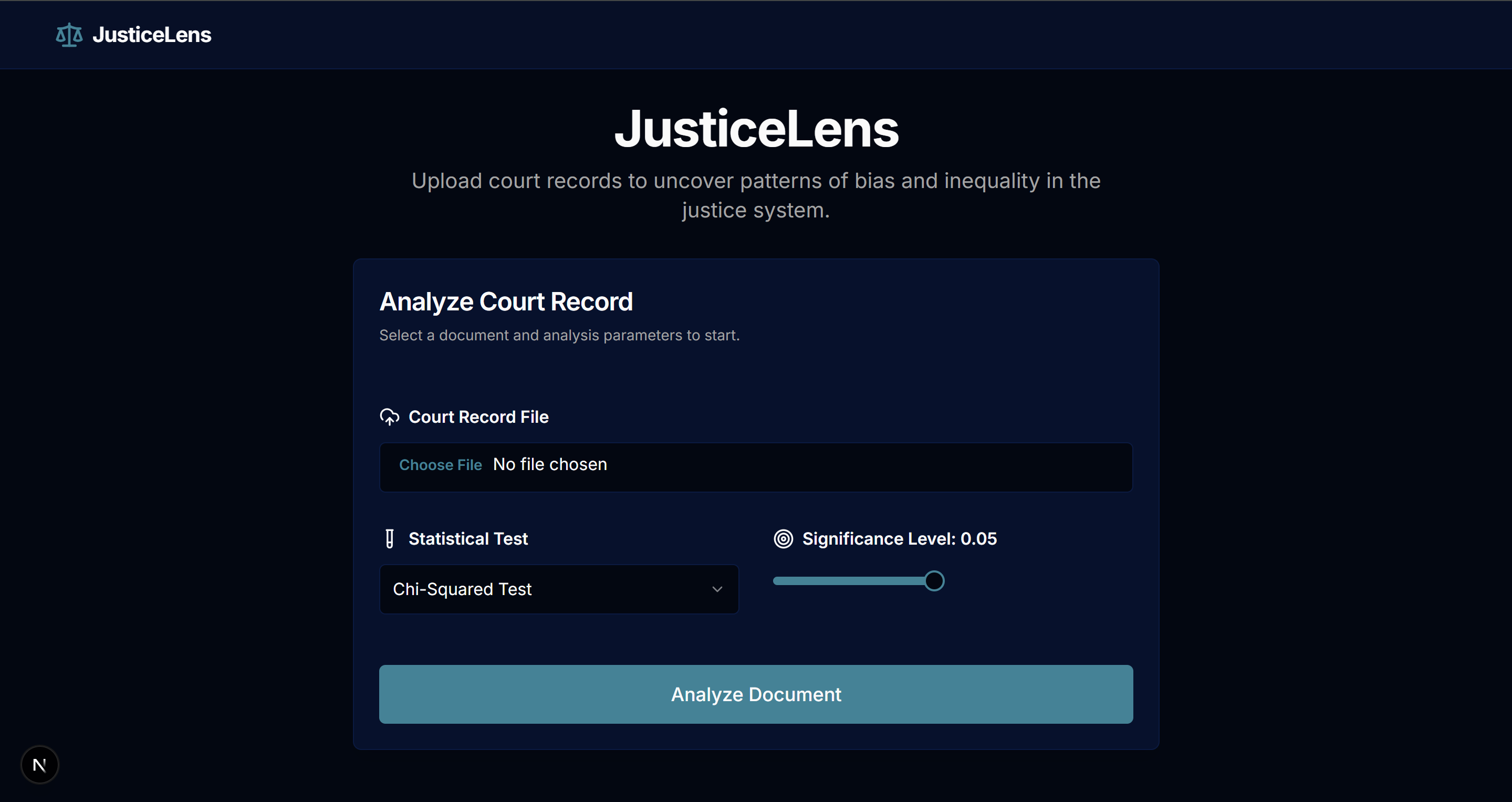
Inspiration
We noticed that biases in the legal system often go unnoticed. Court decisions can vary based on race, gender, or other factors, and it’s hard for people to spot patterns just by reading case files. We wanted to create a tool that makes this visible and easy to understand.
What it does
JusticeLens lets users upload court records and uses AI to analyze them for patterns of bias. It shows results in clear charts and tables, highlights unusual outcomes, and helps anyone explore fairness in the legal system.
How we built it
We built the frontend with HTML, CSS, and JavaScript, and used Firebase for hosting. The AI and statistical analysis run in Python, and we display results with charts and tables to make the data easy to read.
Challenges we ran into
Processing different types of court documents was tricky. Making the AI accurate while keeping the app fast was another challenge. We also had to balance providing detailed analysis with keeping the interface simple and user-friendly.
Accomplishments that we're proud of
We created a working AI-powered tool that can detect patterns in real court records. The app is easy to use and clearly visualizes data that would otherwise be hard to understand.
What we learned
We learned how to combine AI with web development to create a real-world application. We also gained experience in handling data privacy, user interface design, and statistical analysis.
What's next for JusticeLens
We plan to add predictive analytics, more interactive visualizations, and collaboration features. We also want to support more file types and larger datasets to make the app even more useful for legal professionals and researchers.

Log in or sign up for Devpost to join the conversation.