-
-
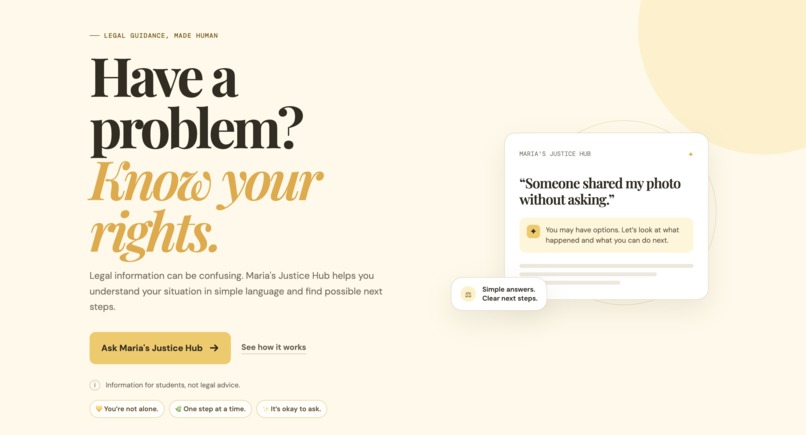
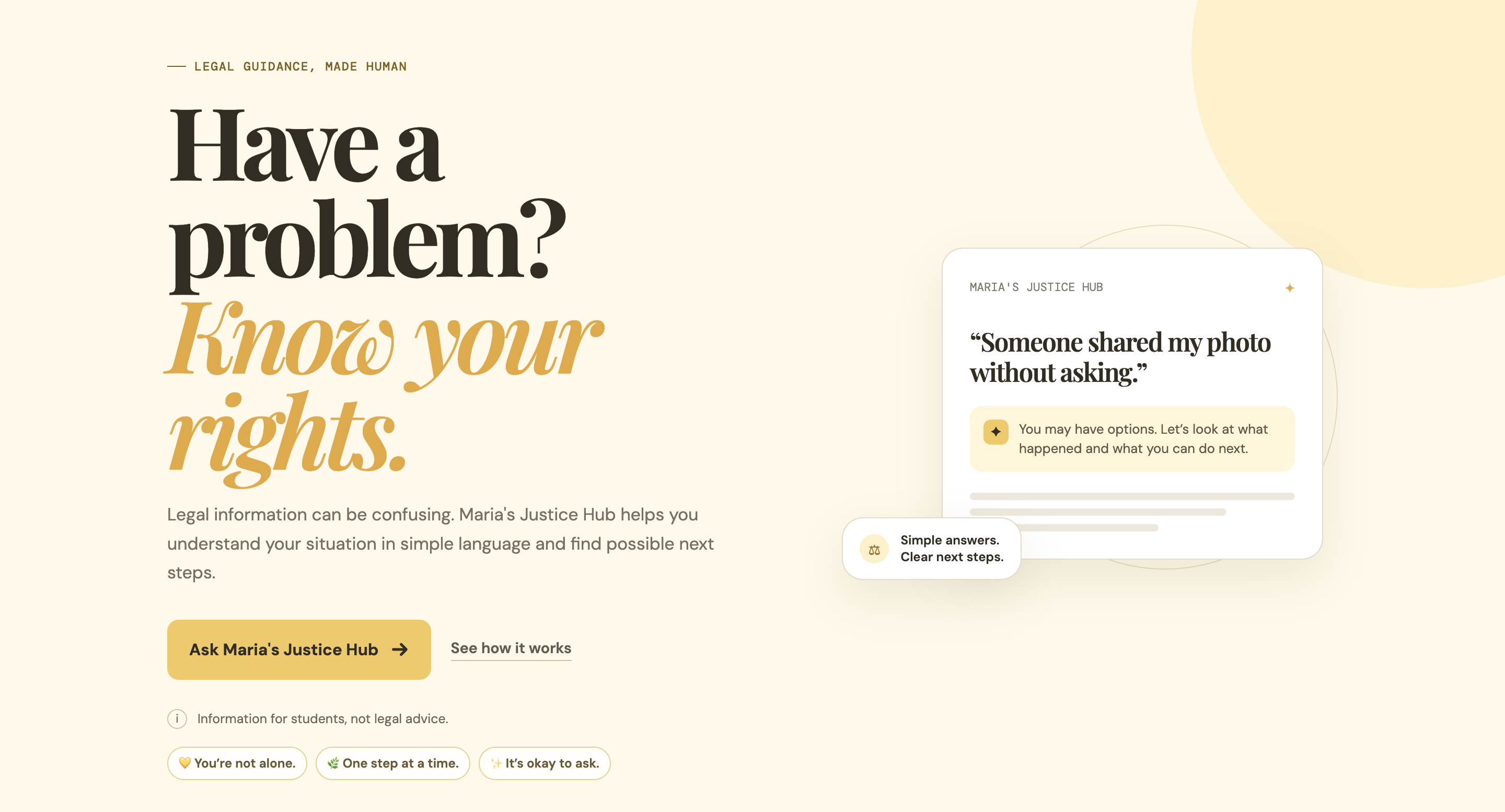
Justice Hub website homepage
-
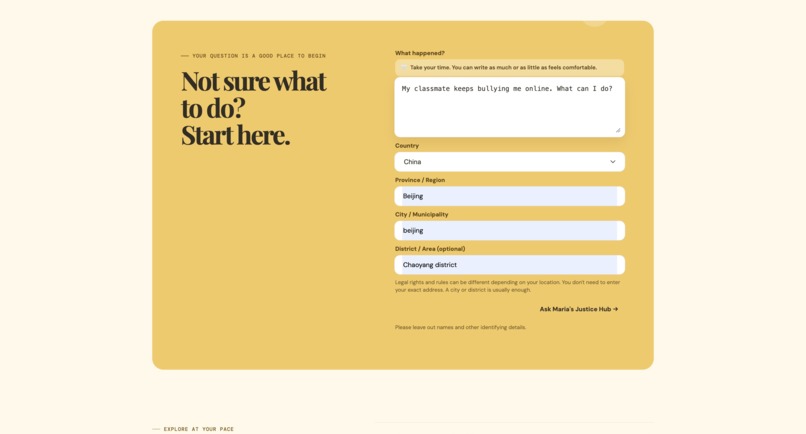
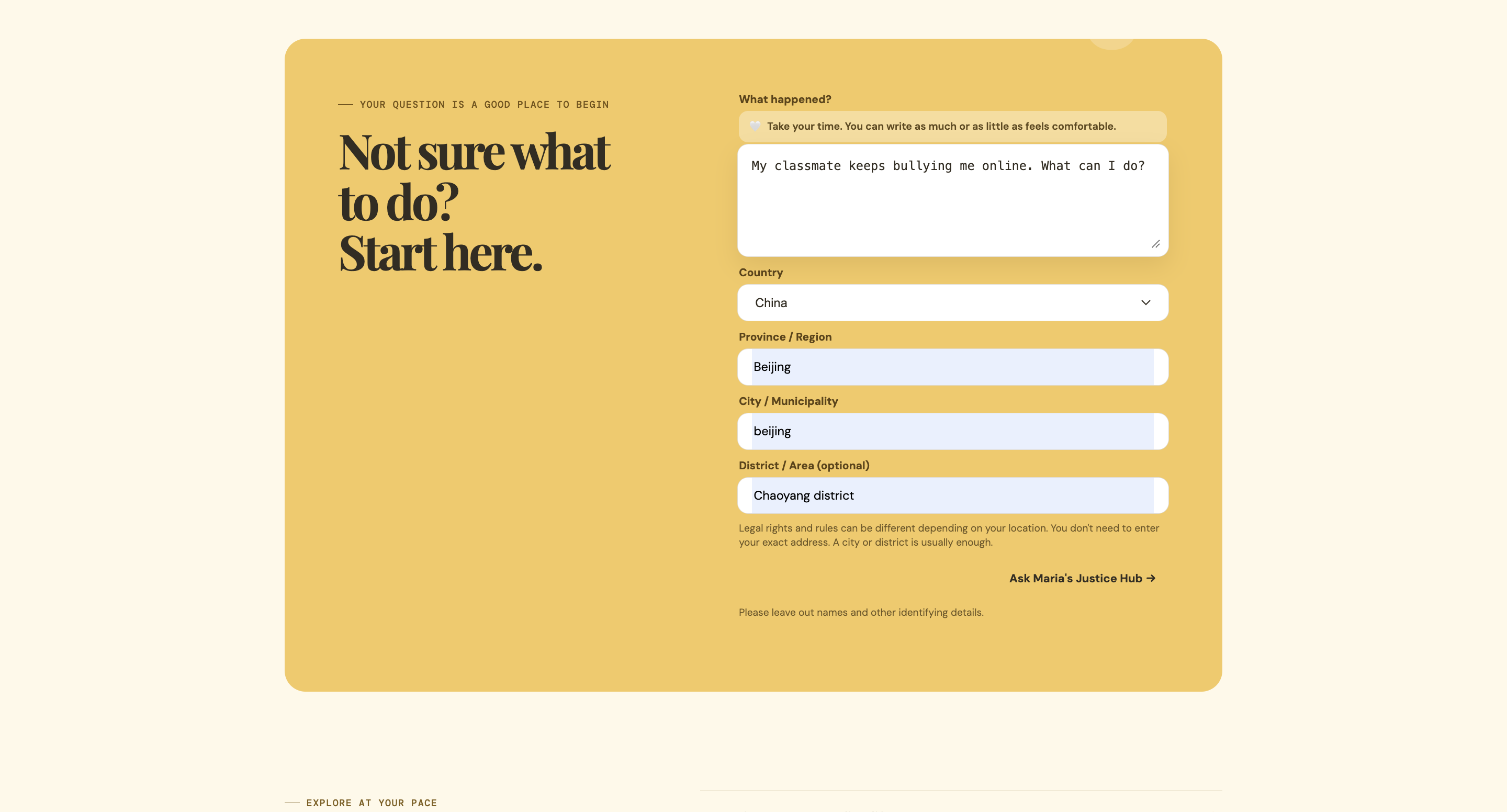
Ask a Question page
-
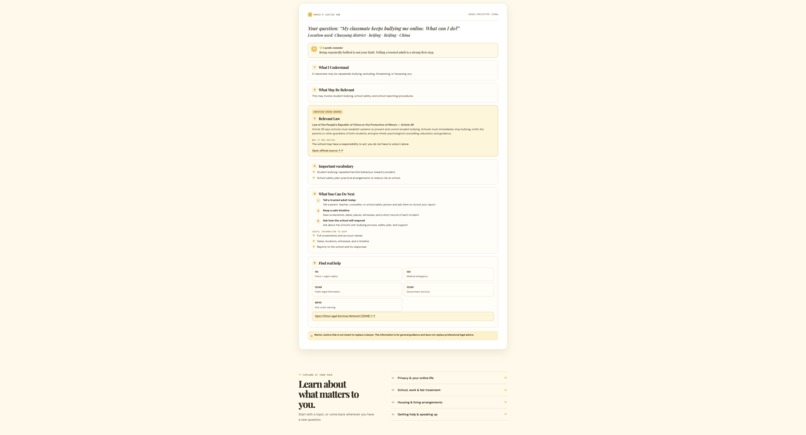
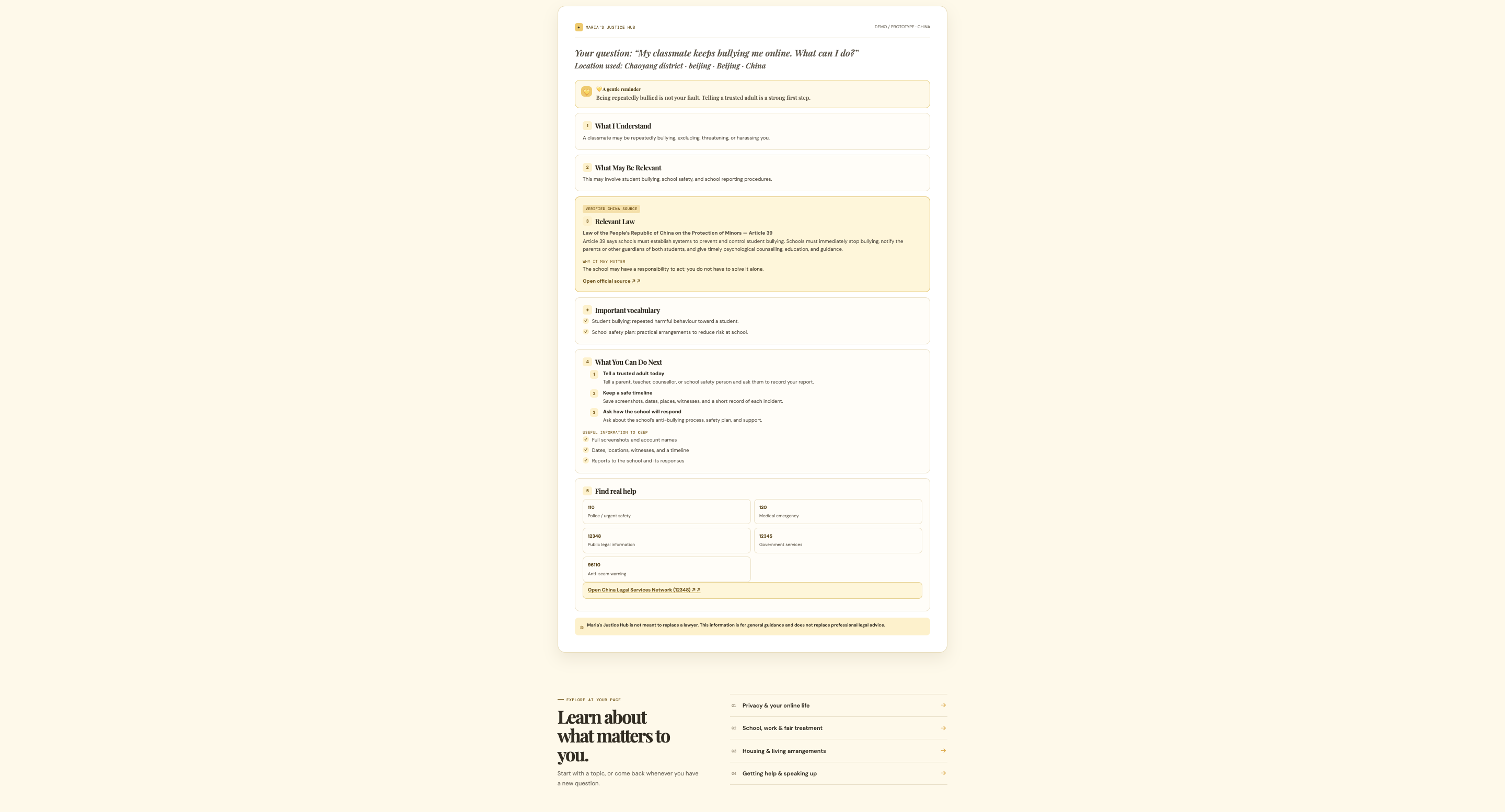
A legal-information answer
-
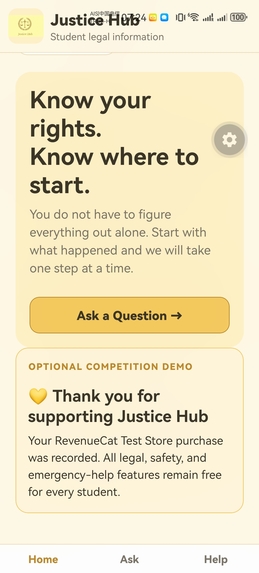
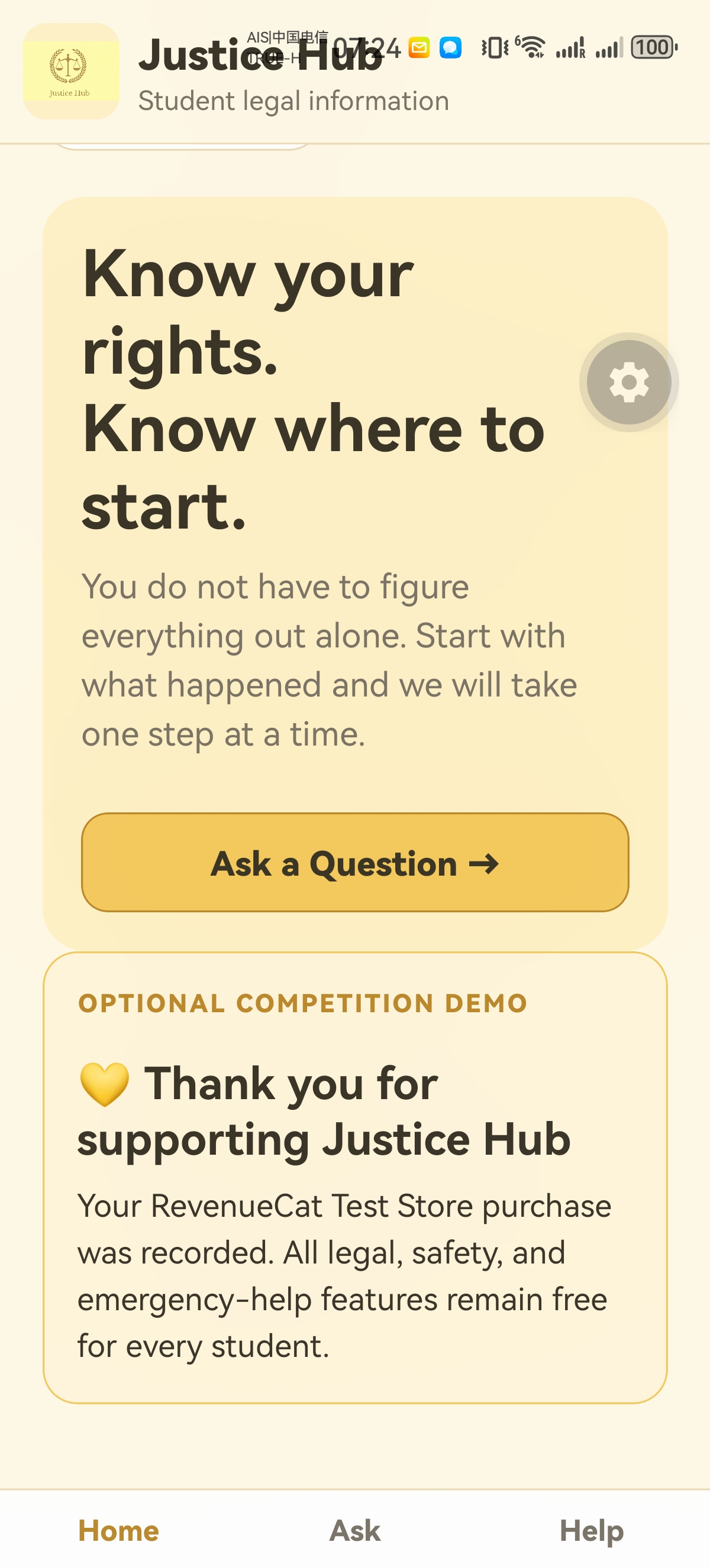
RevenueCat success screenshot
-
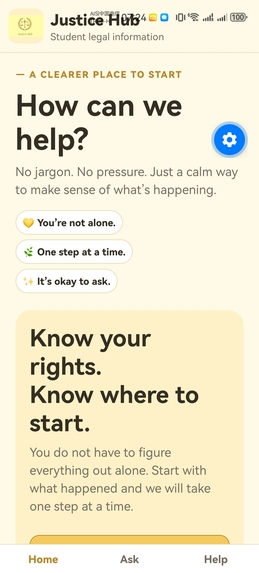
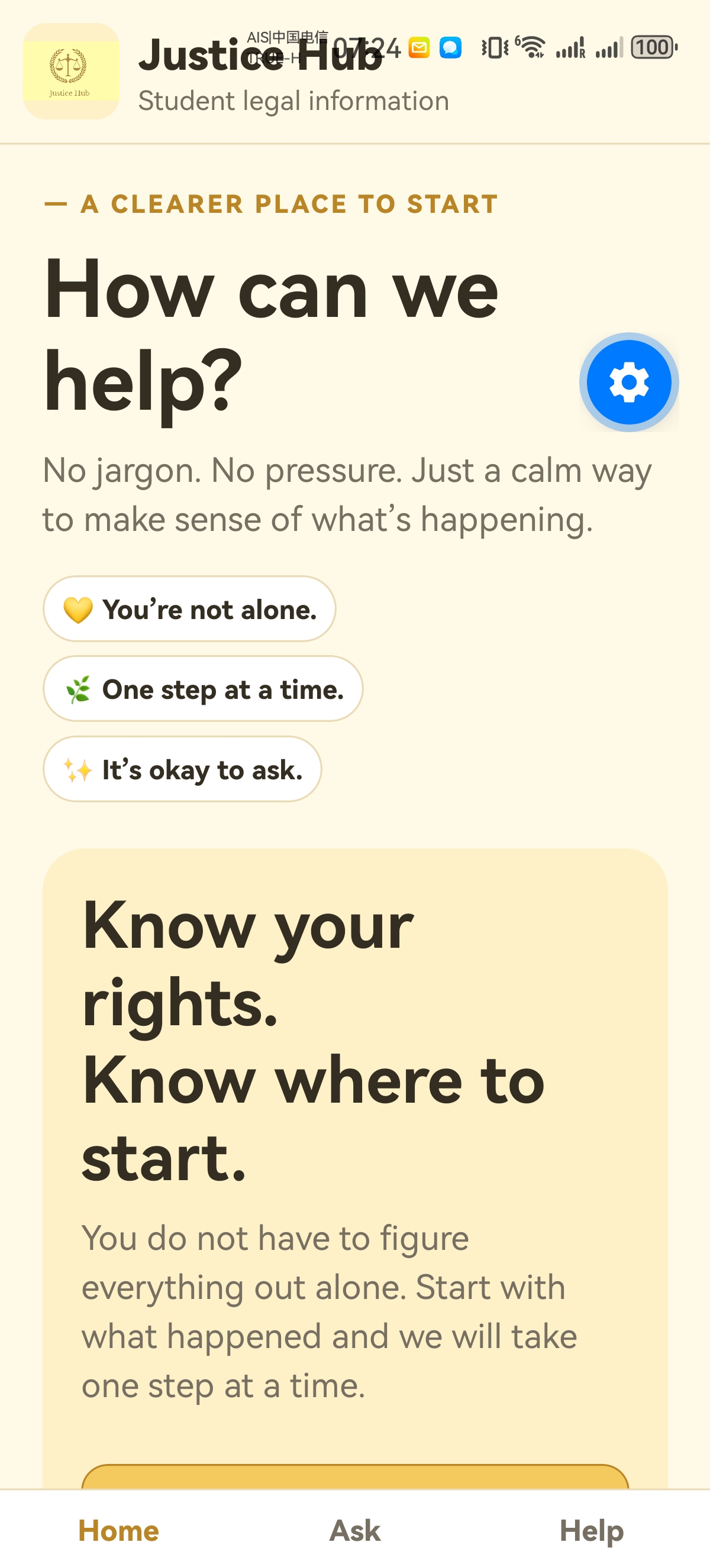
Mobile Justice Hub home screen
Inspiration
When students face serious problems, the hardest question is not always “What happened?” Sometimes it is “What can I do?”
Students may not know how to protect themselves, what their rights are, or where to find reliable information. I have seen people face problems like bullying, unsafe touching, domestic violence, scams, and online problems, but not know what to do next. This is why I created Justice Hub.
I wanted to make something that feels less scary than searching complicated legal websites alone. Justice Hub is meant to be a first step for students who need help and want to understand their situation.
What it does
Justice Hub lets users describe their situation in their own words and choose their location.
The app looks for important words in the user’s question, such as words connected to bullying, harassment, touching, violence, scams, or privacy. It then gives the user a clearer answer with:
What the app understands about the situation
Possible relevant legal information in simple language
Important vocabulary explained clearly
Practical next steps
Evidence-saving guidance when it is appropriate
Emergency and support contact numbers
Links to official or legal sources
The current prototype supports China and Thailand. It includes information for situations such as bullying, unsafe touching, sexual violence, domestic violence, workplace issues, scams, and privacy problems.
For serious situations, Justice Hub focuses on safety first. For example, it reminds users to contact emergency services, go somewhere safe, tell a trusted adult, or seek medical care when needed.
How we built it
I built Justice Hub as both a website and a mobile app.
The website lets people try the legal-information experience in a browser. The mobile app was built with Expo and React Native. I wanted the app to feel warm, calm, and easy to read because someone using it may already feel stressed or scared.
I organized the answers into clear sections like “What I Understand,” “What May Be Relevant,” “Important Vocabulary,” “What You Can Do Next,” and “Find Real Help.” I also added country-based contacts, so the phone numbers are different for China and Thailand.
For the competition, I integrated RevenueCat Test Store into the mobile app. It has an optional supporter-demo purchase, but no real money is charged. Justice Hub’s legal information, safety guidance, and emergency contacts stay free for every student.
Challenges we ran into
One challenge was making sure the app is helpful without acting like a lawyer or making decisions for people. Laws are different depending on the country, location, and exact situation. I needed to make the wording careful and clear.
I tried to solve this by showing possible relevant laws instead of saying that a law definitely applies. I also added official-source links and reminders that Justice Hub gives general information, not legal advice.
Another challenge was testing RevenueCat in a real mobile app. Expo Go was useful for seeing the design, but it could not fully test a native RevenueCat purchase. I learned how to create an Android development build, connect it to RevenueCat Test Store, and complete a successful test purchase without real money.
It was also difficult to organize legal information in a way that students can understand. Legal words can be confusing, so I focused on explaining important vocabulary and giving simple next steps.
Accomplishments that we're proud of
I am proud that Justice Hub became a working project instead of only an idea.
I created:
A working legal-information website
A working Expo / React Native mobile app
China and Thailand legal-information flows
Country-based emergency and support contacts
Safety guidance for serious situations
Important legal vocabulary in simple language
Official-source links
A successful RevenueCat Test Store purchase demo
A public GitHub repository with an MIT license
I am also proud that the app does not put help behind a payment wall. The supporter purchase is only a competition demo. Safety, legal information, and emergency contacts remain free.
What we learned
I learned that creating an app is not only about coding. It is also about thinking carefully about the people who may use it.
I learned how to build a mobile app with Expo and React Native, connect RevenueCat Test Store, create an Android development build, organize legal information by country, and publish code with an open-source license on GitHub.
I also learned that legal technology needs to be responsible. It should not guess too much or make users think it can replace a real professional. It should be clear about its limits and encourage users to contact trusted adults, emergency services, hospitals, or lawyers when they need more help.
What's next for Justice Hub
Next, I want to add more verified legal sources, more countries, and more local support organizations.
I also want to improve translations so users can choose languages more easily. I would like to make the topic matching more accurate and add more resources for students who need help at school, at home, online, or at work.
Justice Hub is for people who need help and want to be understood. Sometimes knowing that something is wrong is not enough if you do not know what to do next.
I hope Justice Hub can make that first step a little clearer.

Log in or sign up for Devpost to join the conversation.