-
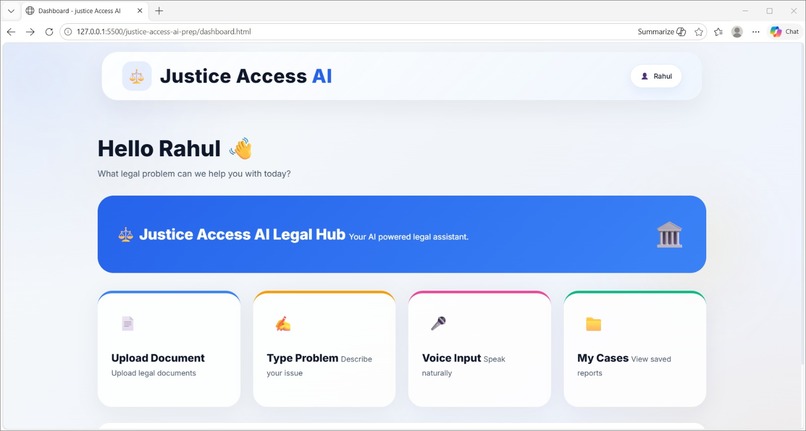
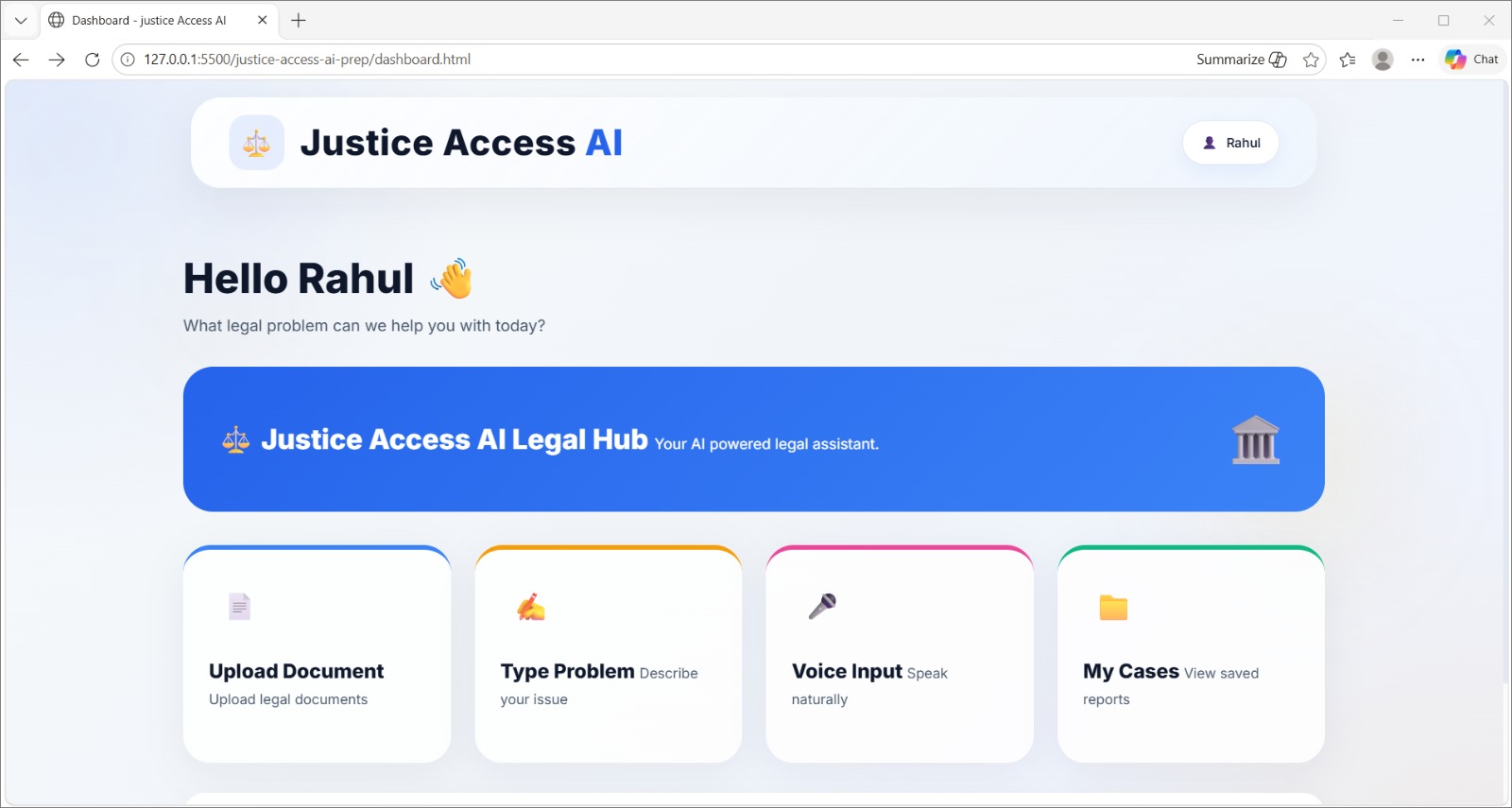
Dashboard
-
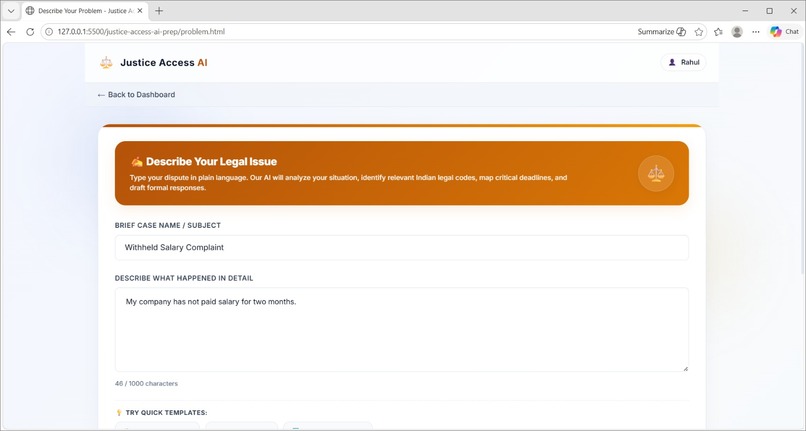
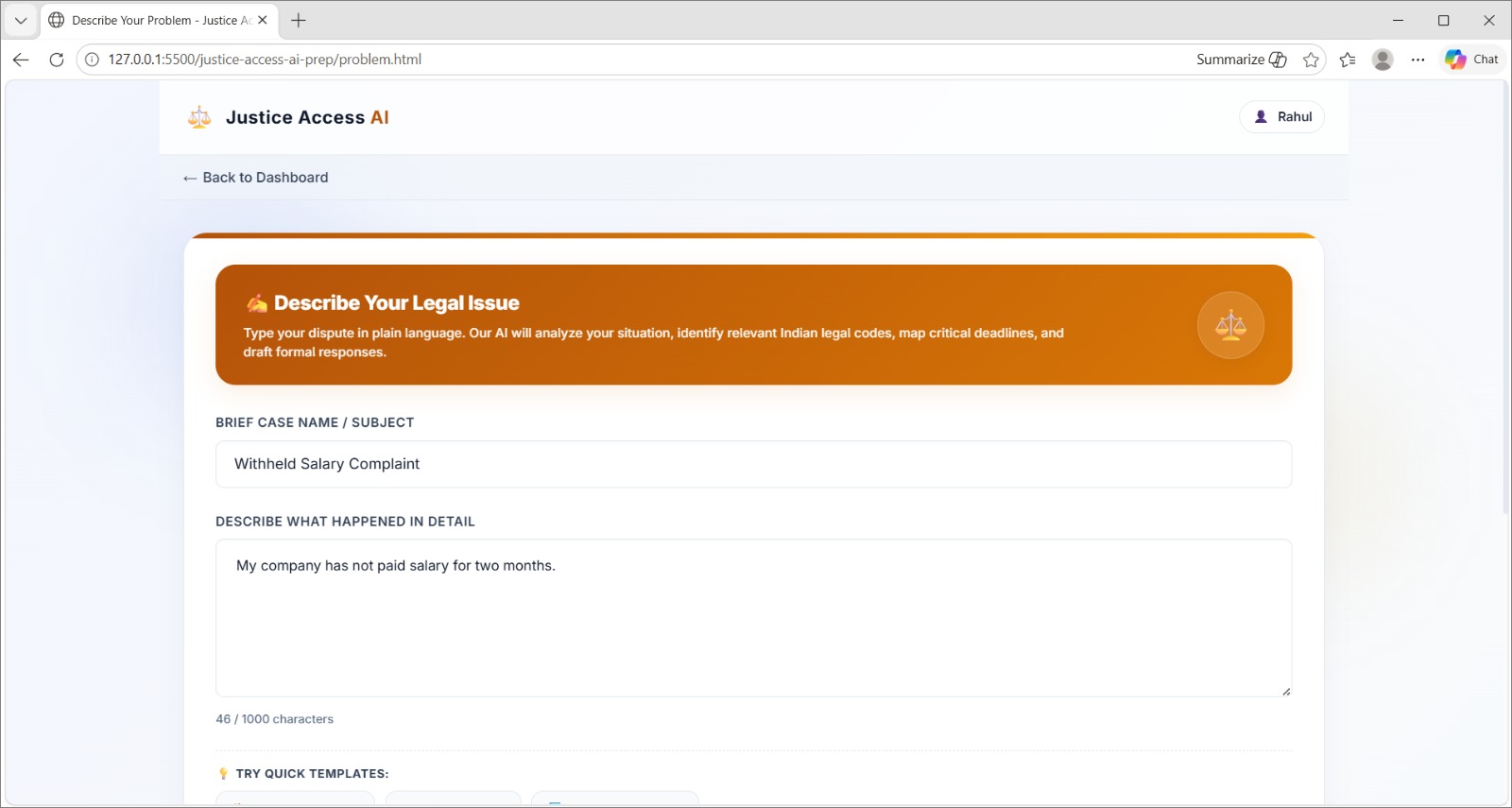
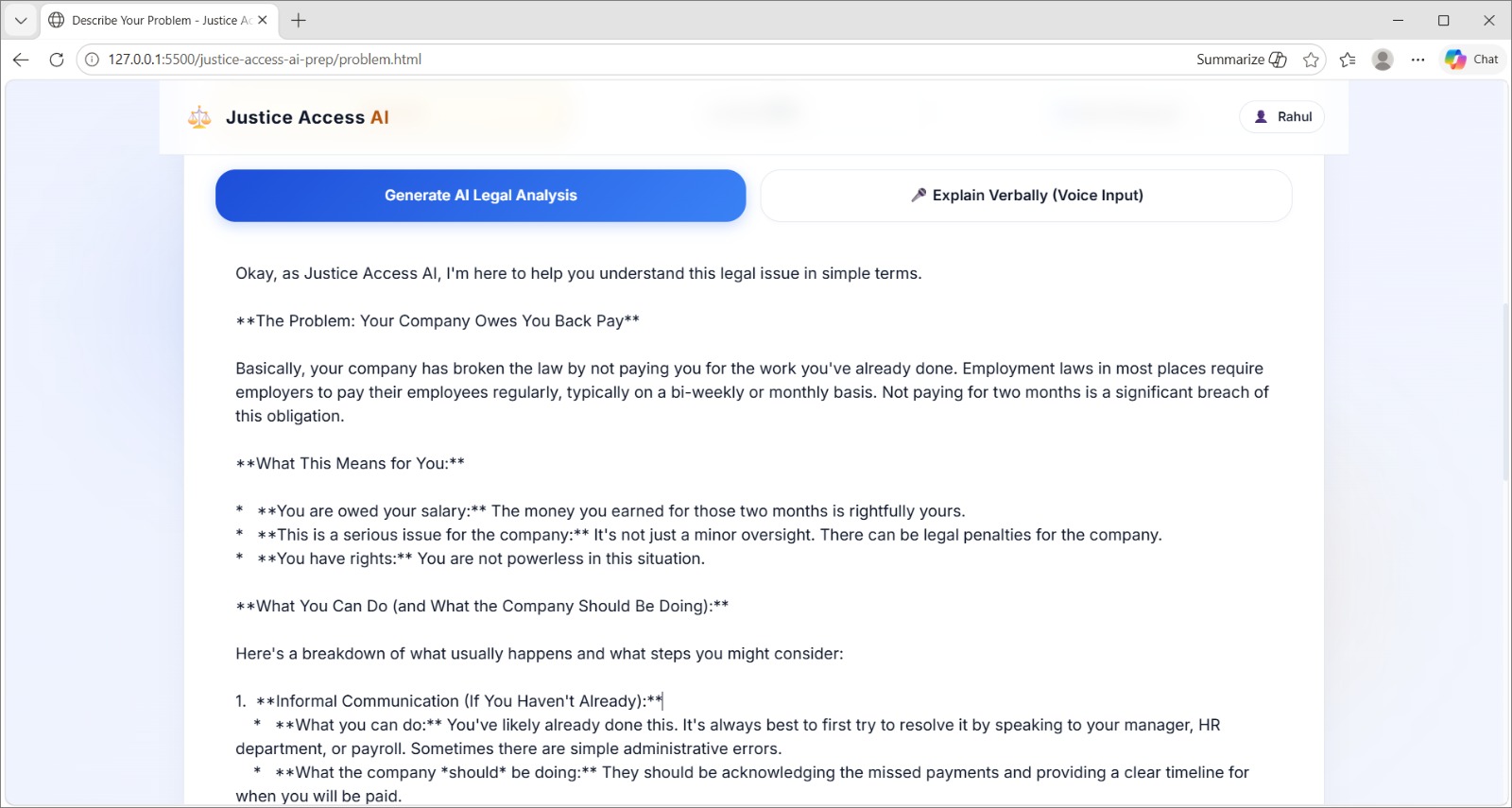
Descripion of problem
-
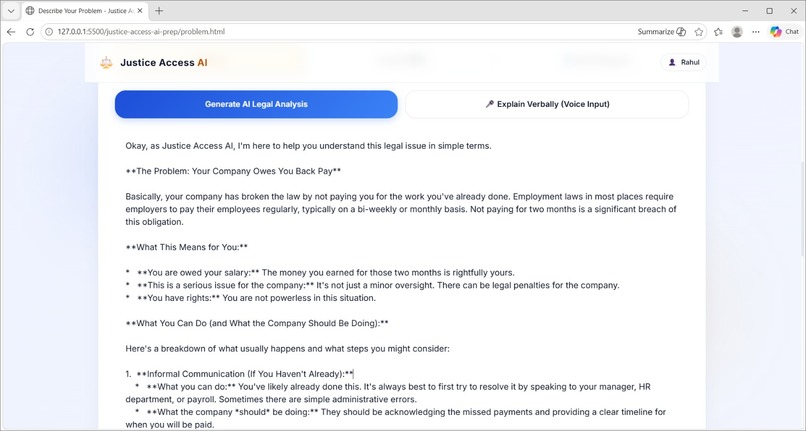
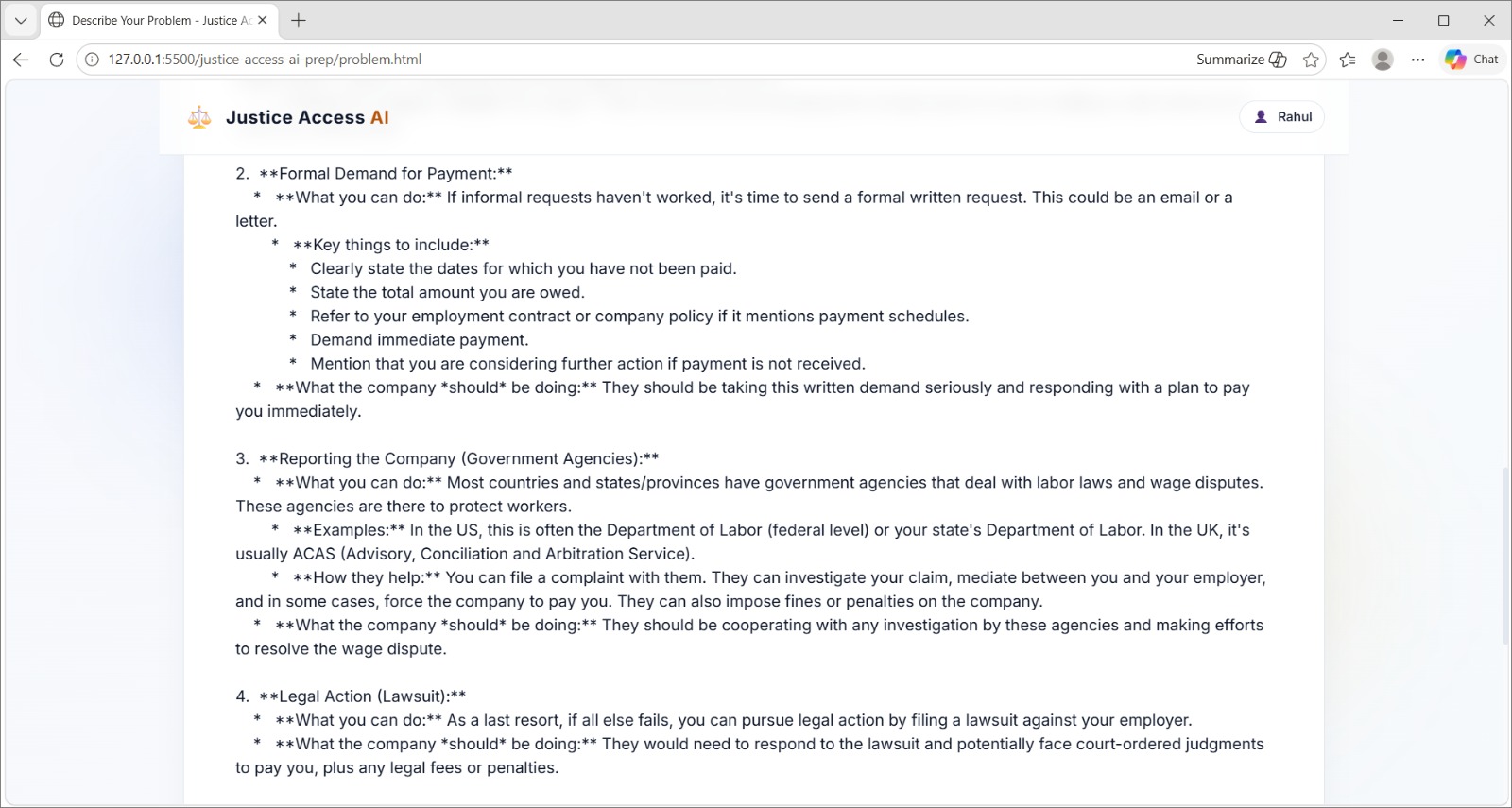
Gemini api analyzing issue
-
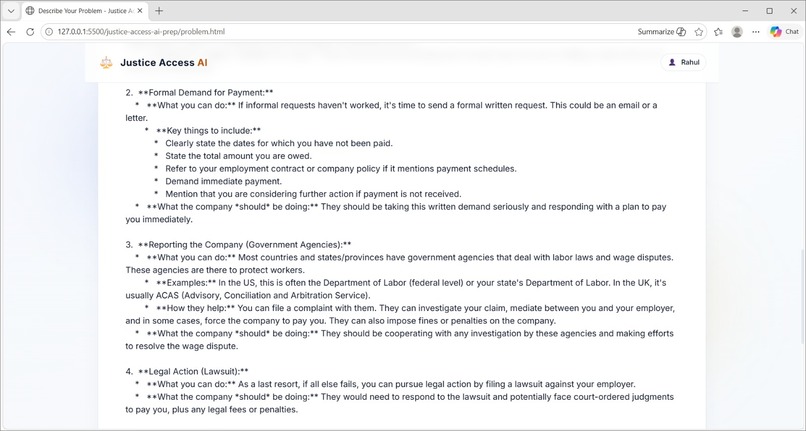
-
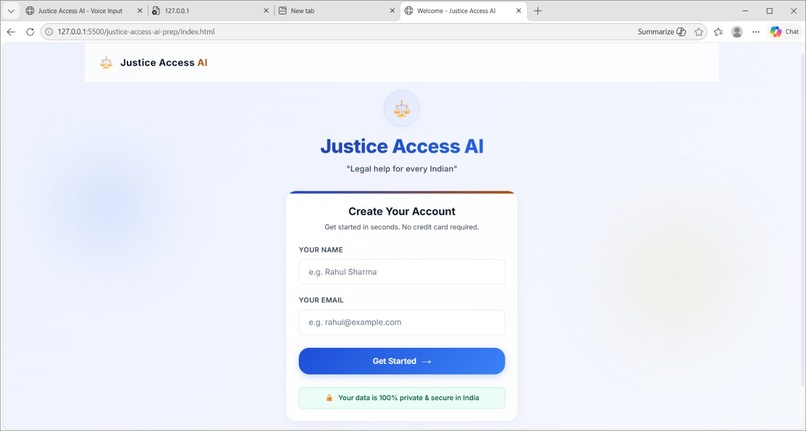
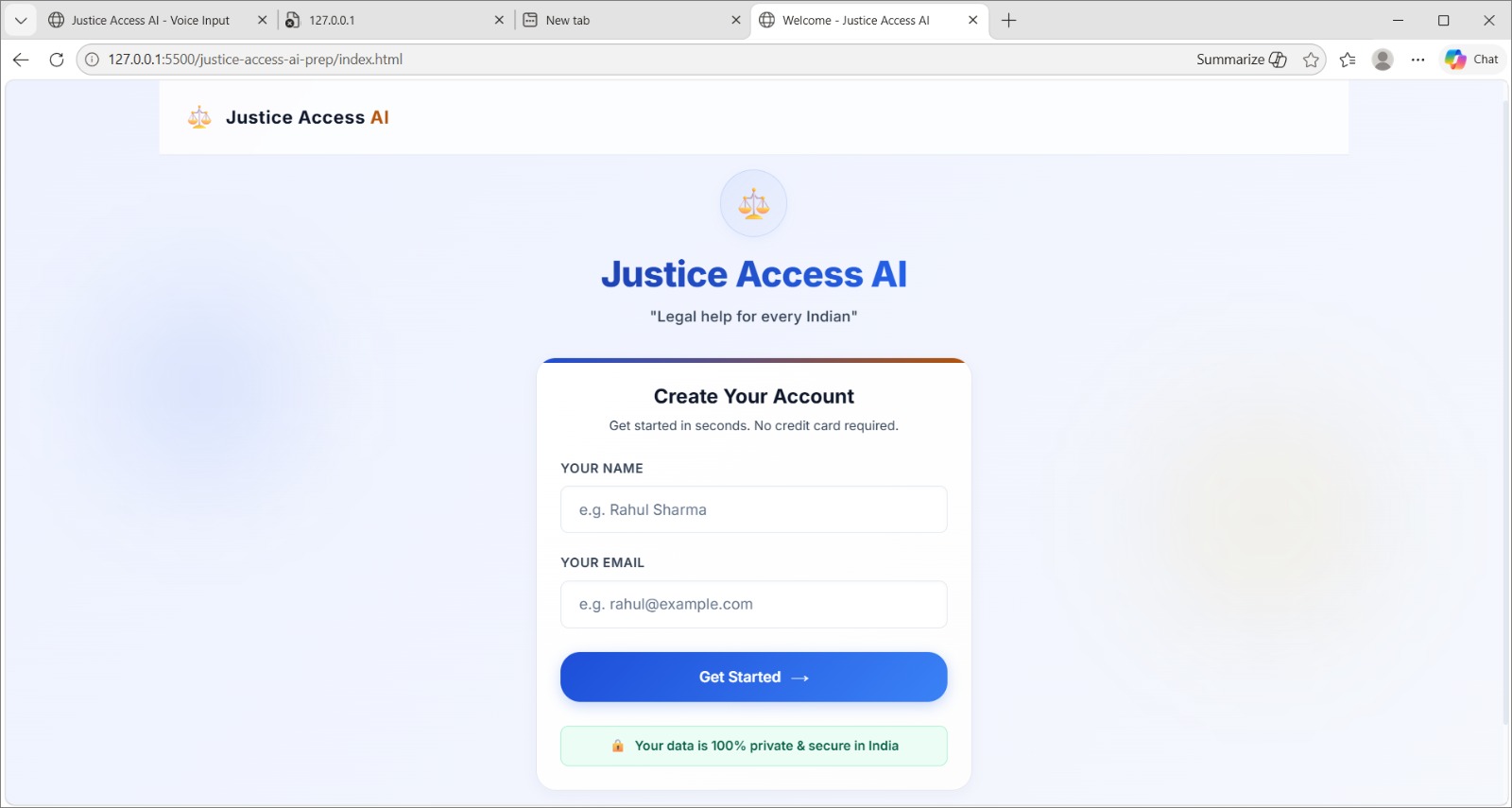
Login Page
-
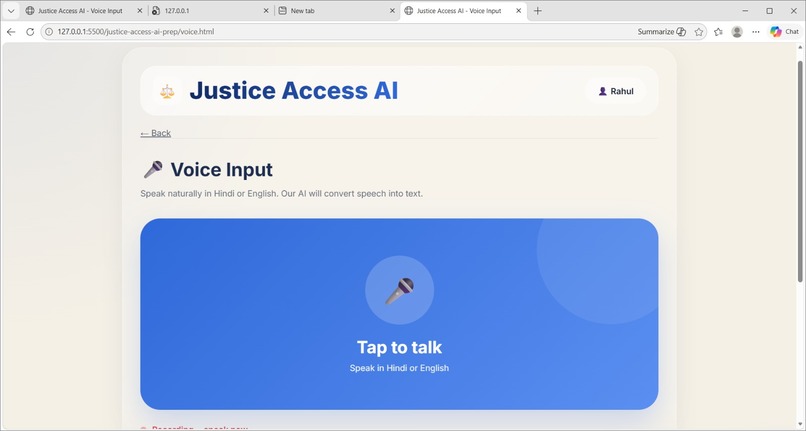
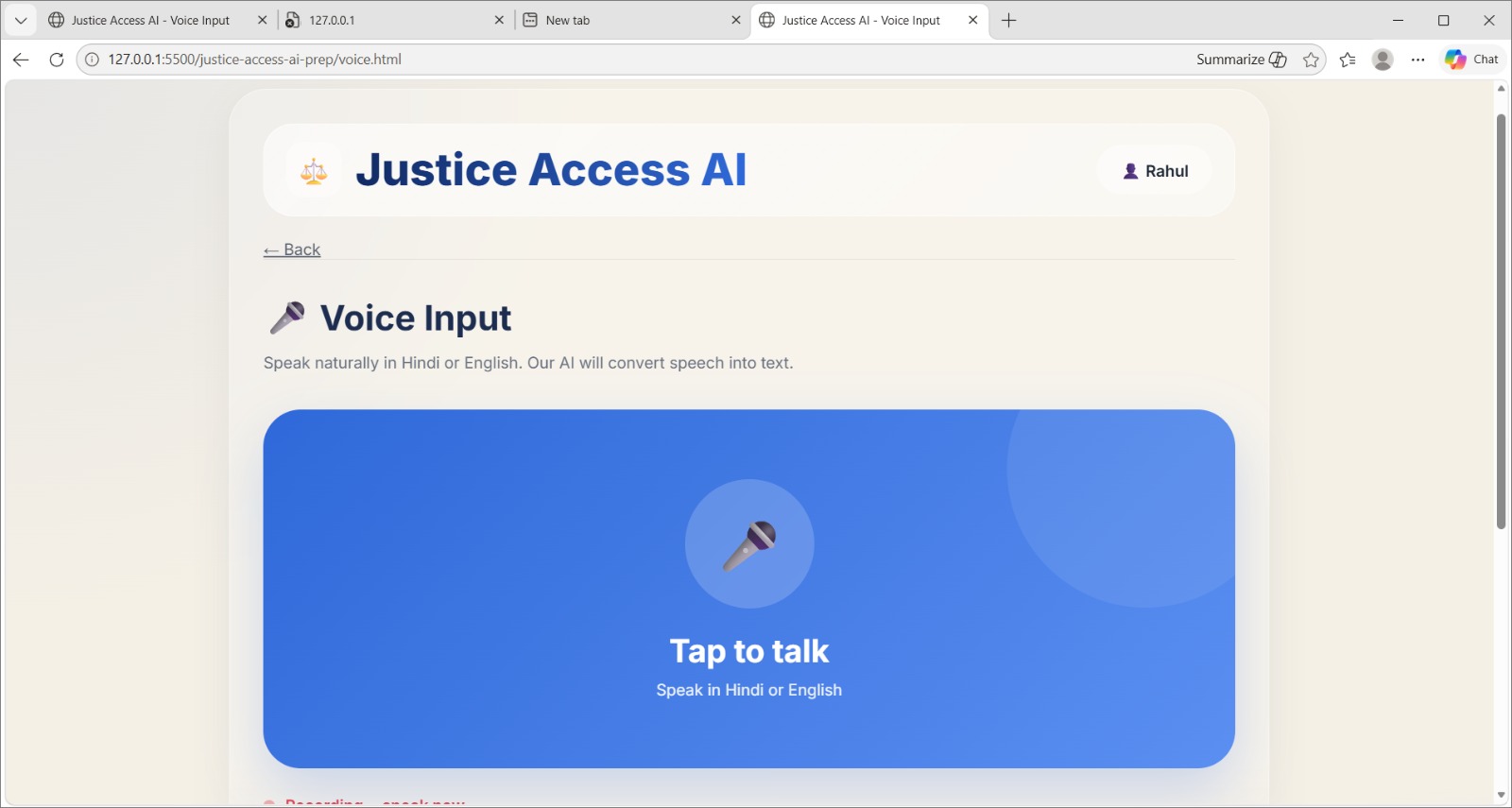
Voice input
Inspiration
Millions of people face legal problems every day but do not understand their rights, legal procedures, or where to begin. Hiring legal professionals can be expensive and intimidating, especially for students, tenants, workers, and victims of cyber fraud. We wanted to build a platform that makes basic legal guidance accessible, understandable, and available instantly through AI.
What it does
Justice Access AI is an AI-powered legal assistance platform that helps users understand legal issues in simple language.
Users can:
Describe their legal problem Upload legal documents for AI-based summarization Get simplified explanations of rights and legal options Generate complaint drafts for disputes Receive AI-generated legal guidance for issues like rental disputes, cyber fraud, unlawful eviction, and more
The platform aims to bridge the gap between people and legal awareness.
How we built it
We built Justice Access AI using:
HTML, CSS, and JavaScript for the frontend Firebase Authentication and Firestore Database for user management and data storage Gemini AI API for legal analysis and document summarization Vercel for deployment and hosting
The application flow:
User submits a legal issue Data is stored in Firebase Gemini AI analyzes the issue AI-generated legal guidance is displayed to the user Challenges we ran into Securing API keys while working with a frontend-heavy architecture Handling Gemini API rate limits and model compatibility issues Debugging asynchronous API calls and empty AI responses Designing prompts that generate structured and reliable legal guidance Building an intuitive UI that keeps legal information simple and non-intimidating Accomplishments that we're proud of Successfully integrated AI-powered legal analysis into a working web platform Built a document summarization system for legal documents Created a clean and user-friendly interface accessible to non-technical users Implemented Firebase authentication and real-time data storage Developed a practical solution addressing real-world legal accessibility issues What we learned How to integrate generative AI APIs into production-style applications The importance of backend security and API key protection Effective prompt engineering for structured AI outputs Managing authentication, databases, and deployment workflows How AI can be used responsibly to improve access to legal information What's next for Justice Access AI Add multilingual legal support Integrate voice input and speech-to-text accessibility Build region-specific legal guidance systems Add lawyer and NGO directory integration Improve document analysis accuracy using fine-tuned legal prompts Deploy a secure backend architecture for enhanced scalability and security Develop a mobile-friendly version for wider accessibility

Log in or sign up for Devpost to join the conversation.