-
-
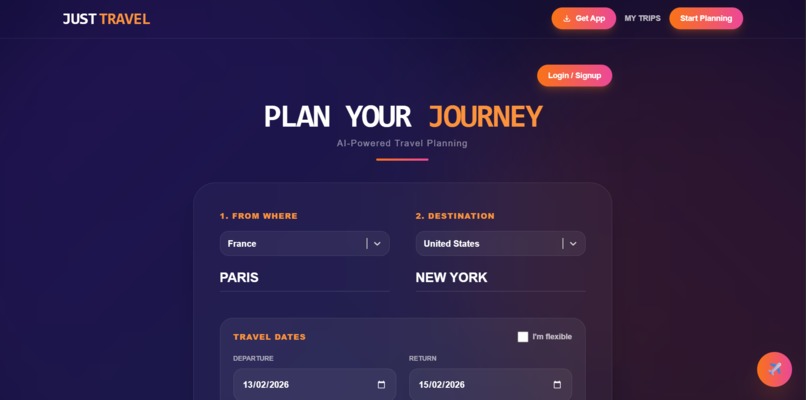
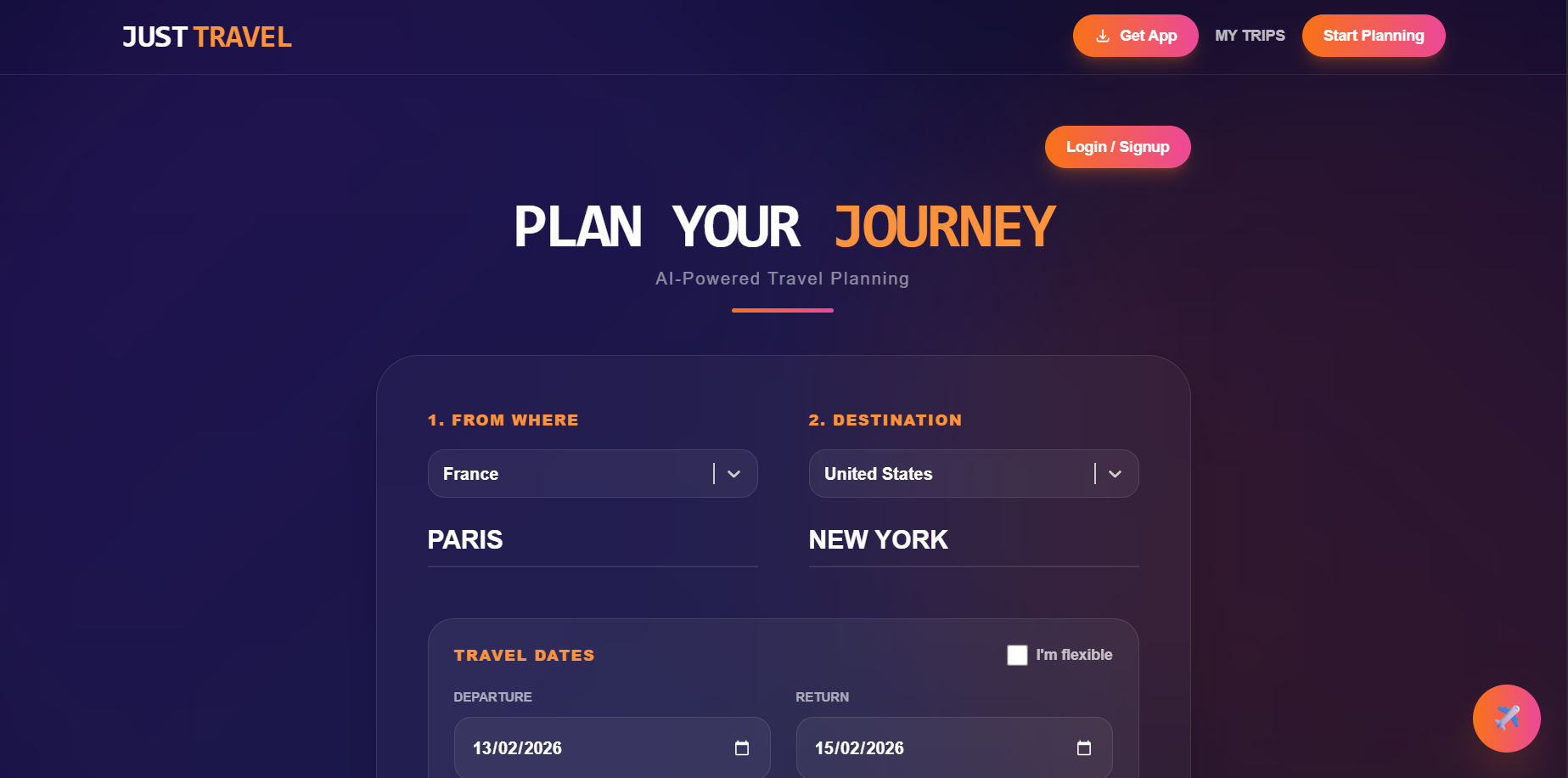
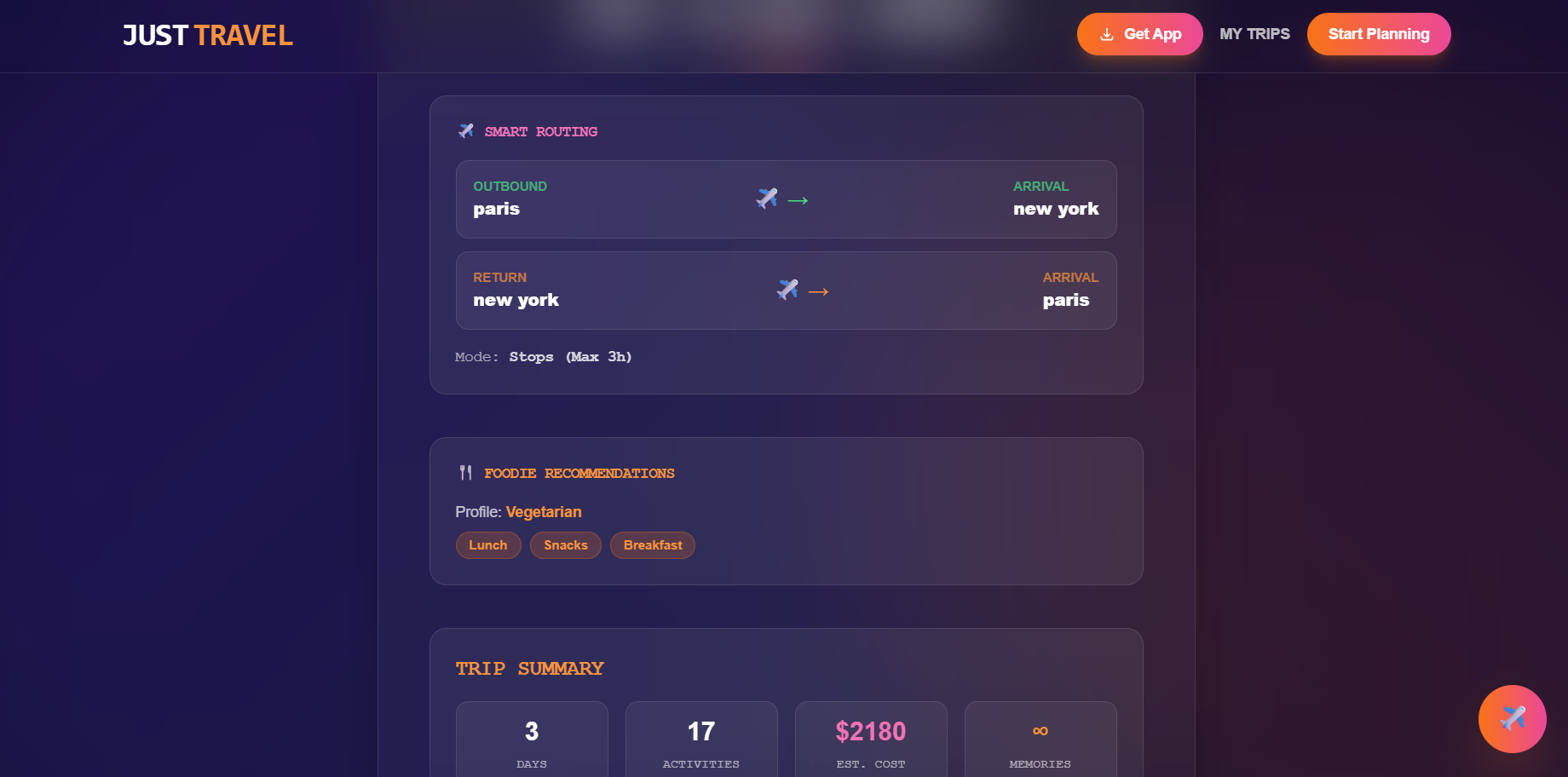
Front Page
-
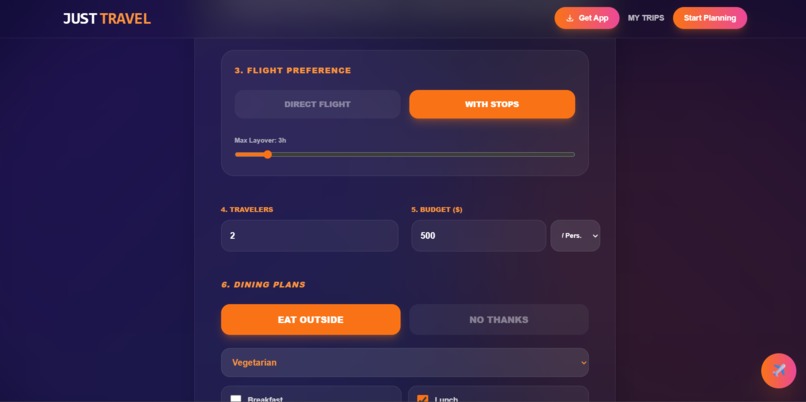
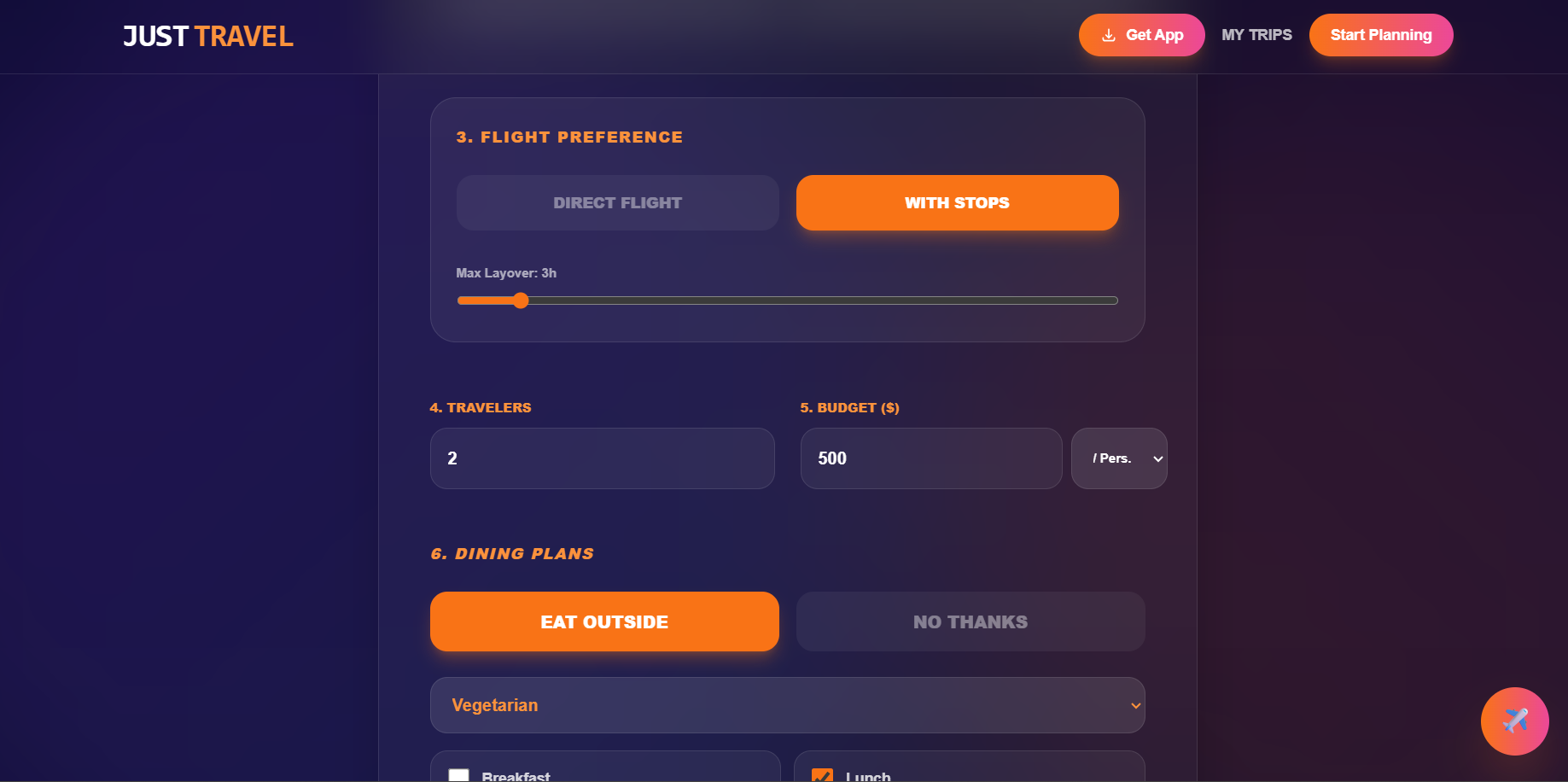
Filling in preferences
-
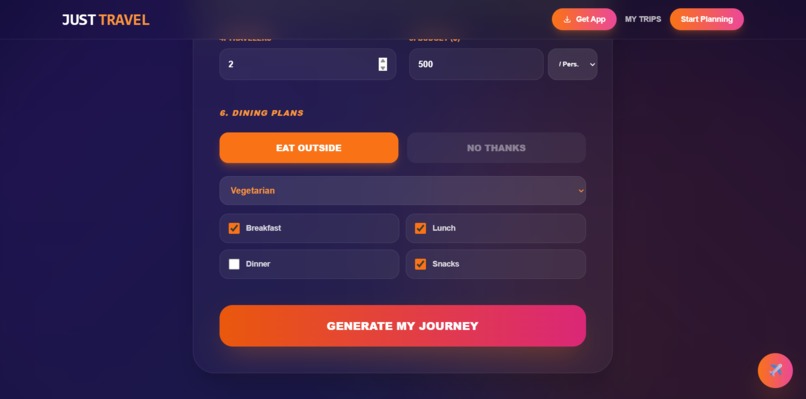
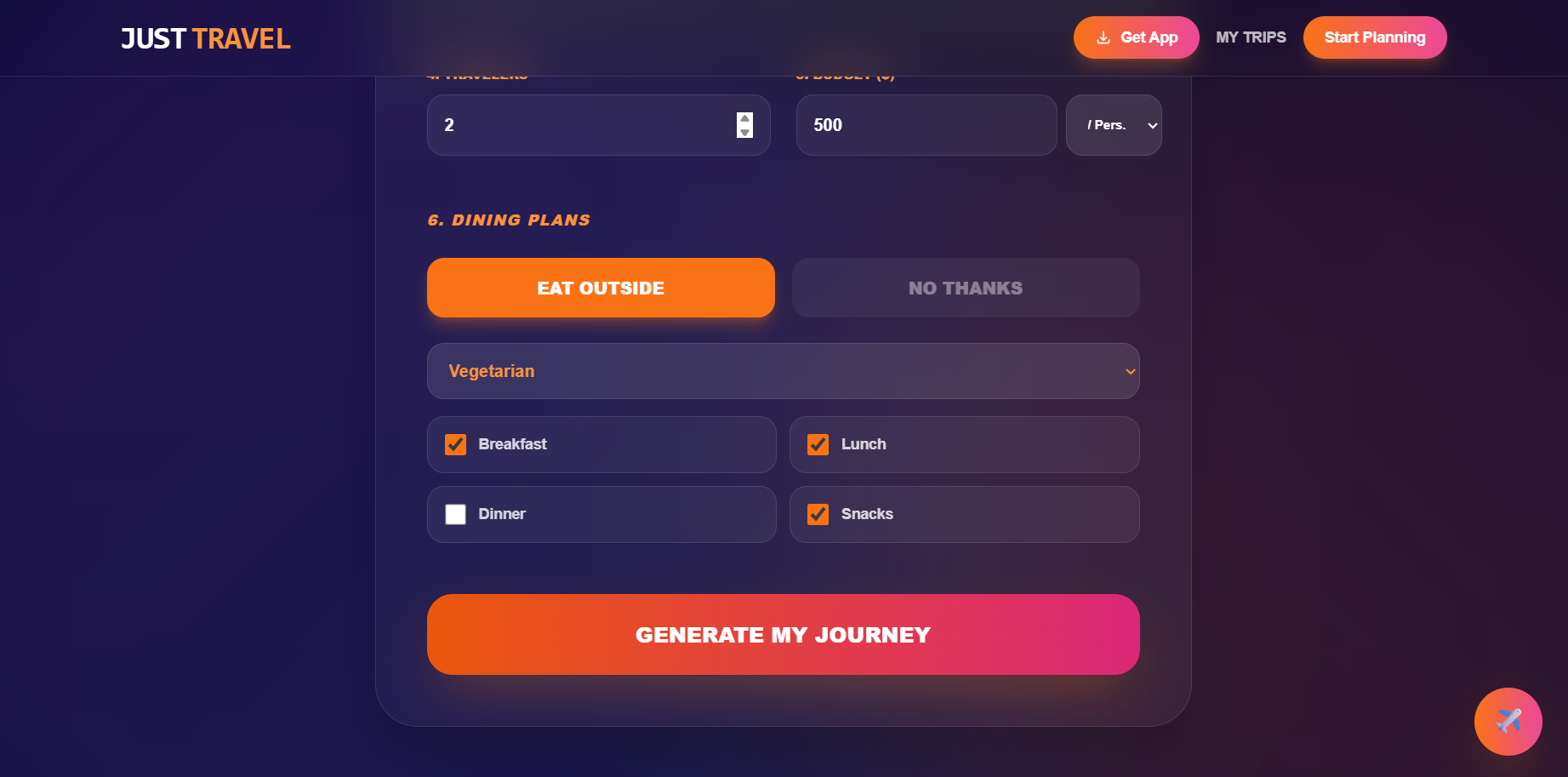
Filling in preferences
-
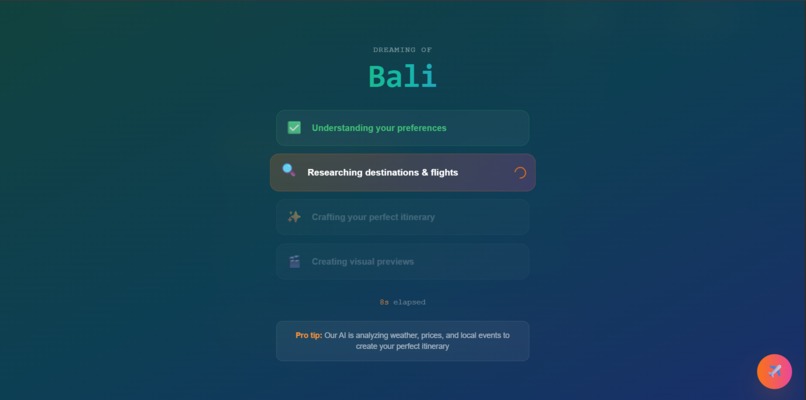
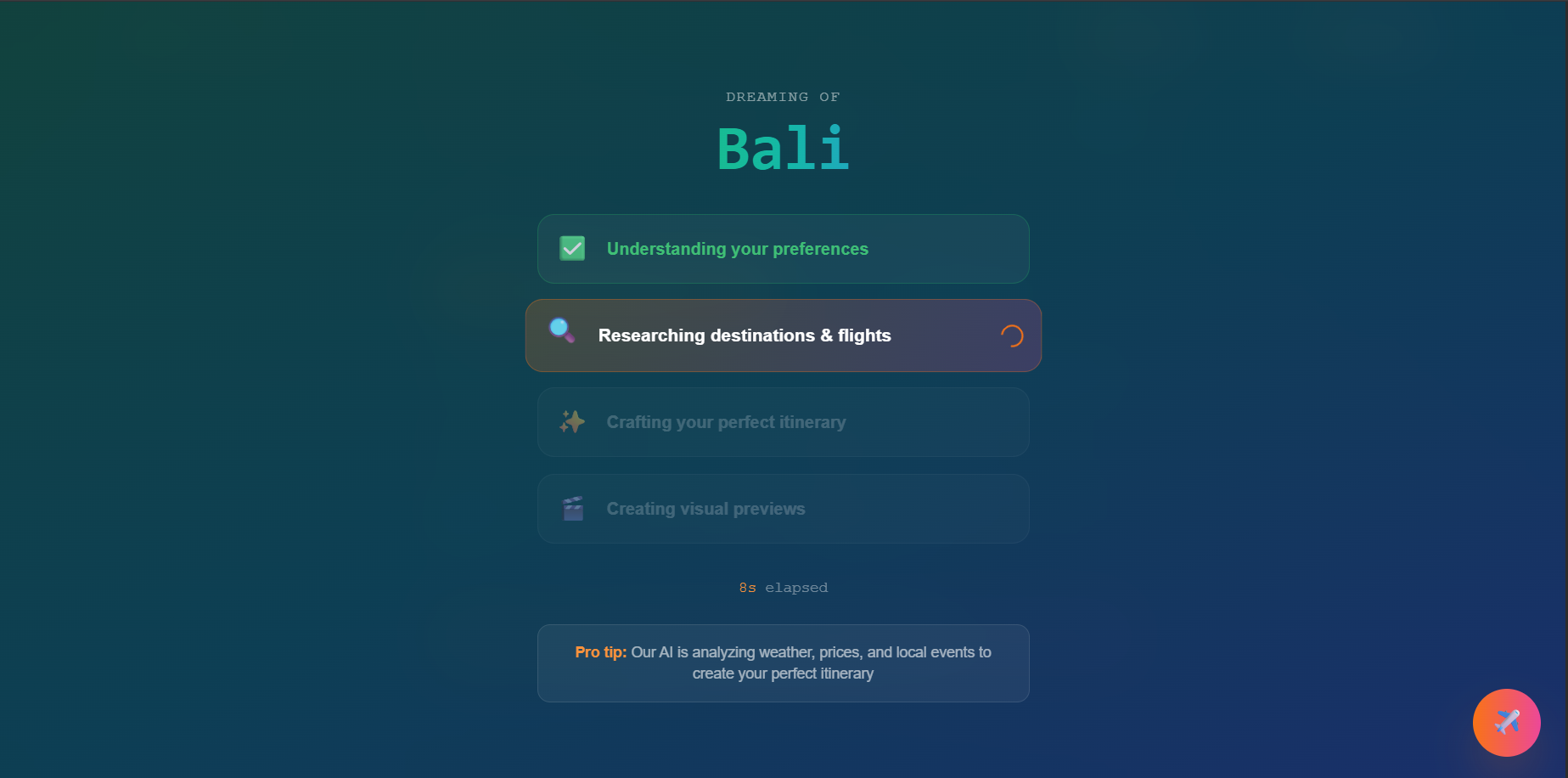
Waiting for itinerary
-
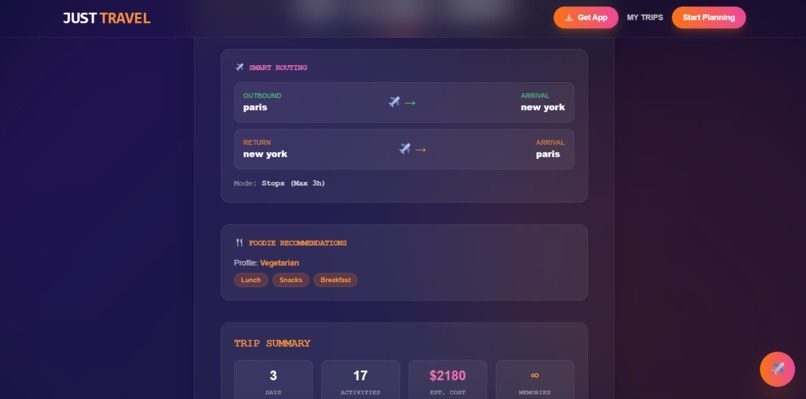
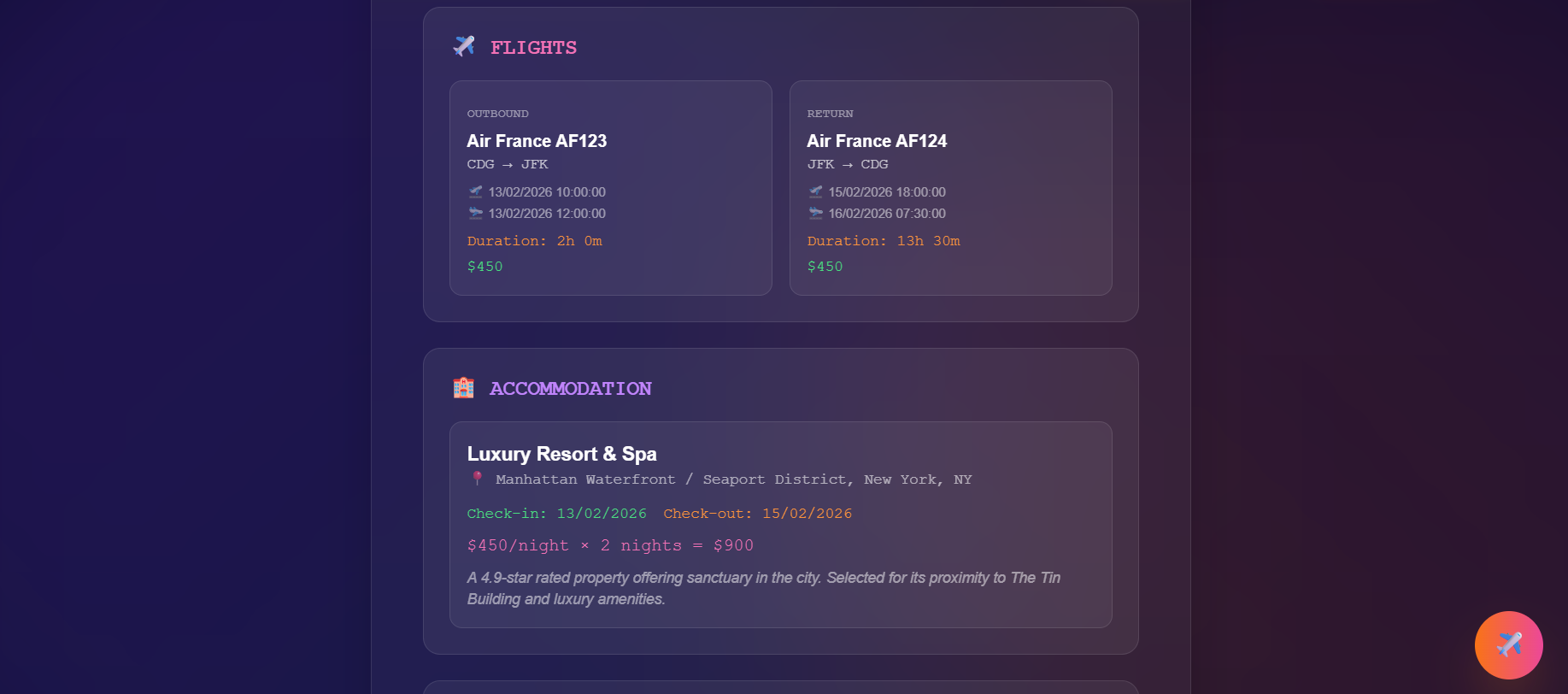
Flight
-
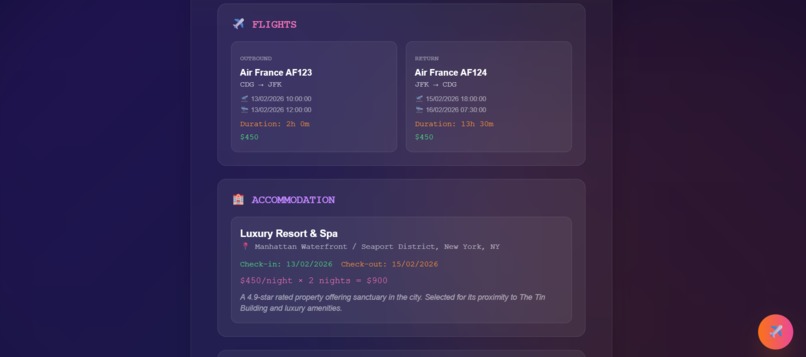
Accomodation and price
-
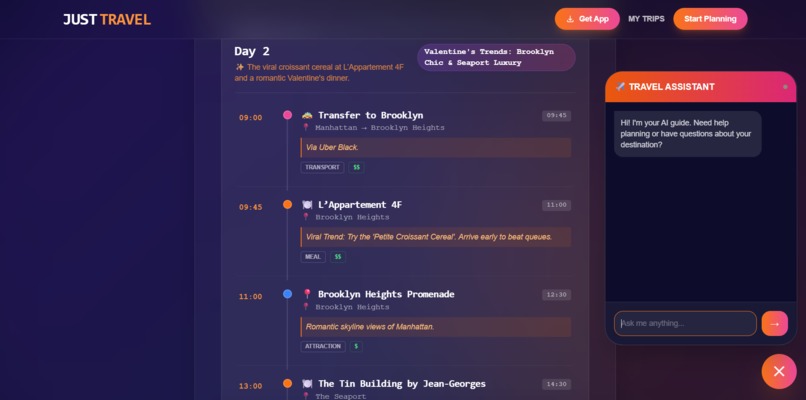
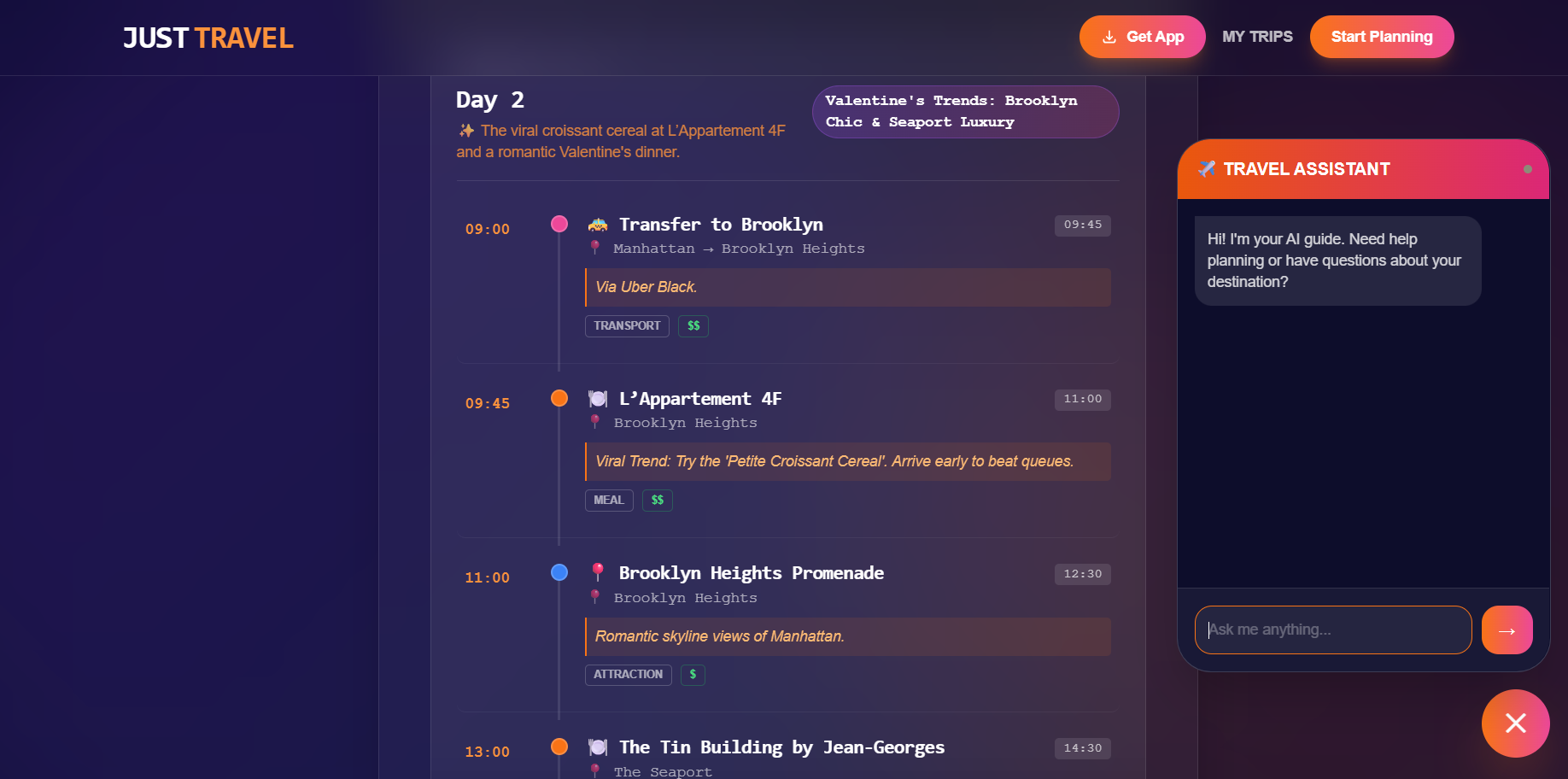
Day 2 of itinerary
-
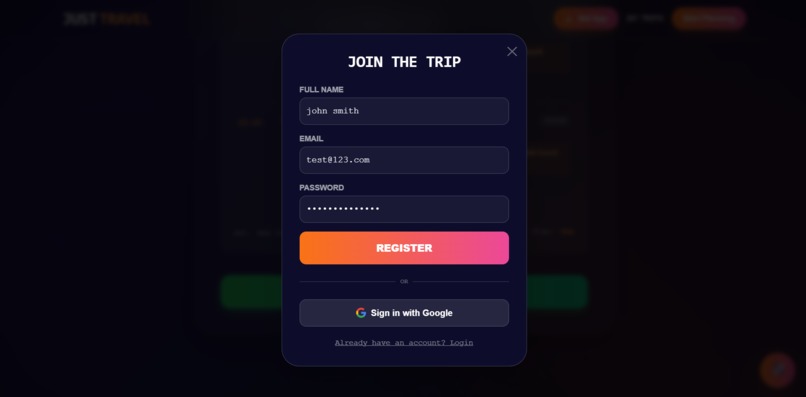
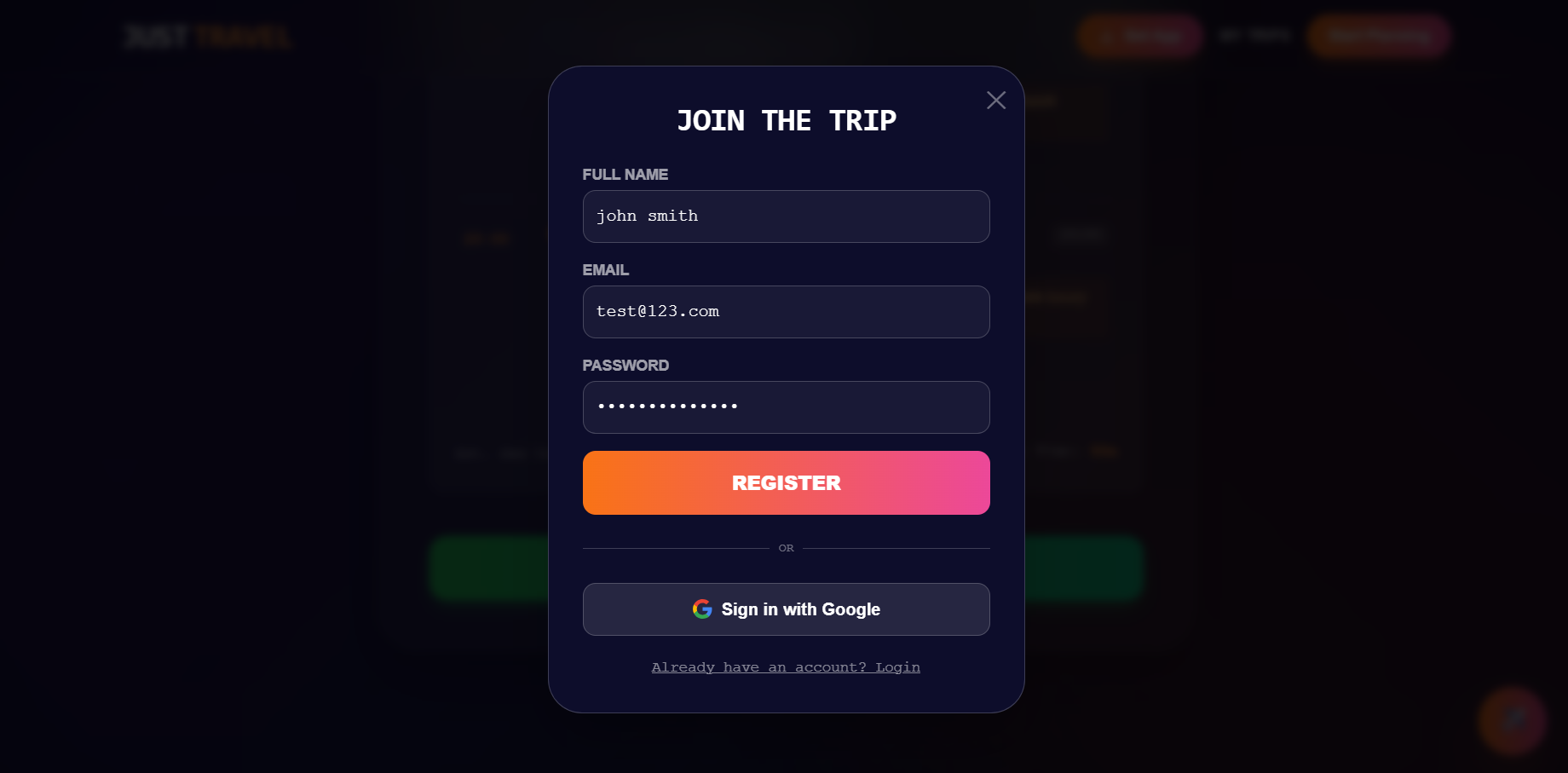
Login/Register Page
Inspiration
Planning a trip used to mean having 20 tabs open: Expedia for flights, TripAdvisor for hotels, TikTok for hidden gems, and Google Maps for logistics. Passwords, confirmations, and ideas were scattered everywhere with no clear source of truth.
But the biggest frustration was the lack of personalization. Standard booking sites simply don't care about who you are. They don't respect your dietary restrictions, constantly suggesting steakhouses to vegetarians or gluten-heavy spots to those with celiac disease. We realized that finding a restaurant that matches both your "romantic vibe" and your dietary needs is incredibly difficult. We wanted to build an AI that handles these nuanced, human constraints—centralizing the entire experience from leaving home to returning, just like a dedicated human agent would.
What it does
Just Travel is an AI-Native Travel Agency on your phone.
Deep Profiling: The Profiler agent interviews you to understand your psychological travel style and captures mandatory constraints like budget and dietary requirements.
Parallel Research: It spins up three specialist agents simultaneously to scan flight routes, social media signals, and accommodations.
- Pathfinder: Uses Neo4j and Cypher to find the intersection of the cheapest and fastest routes, handling complex multi-hop queries up to 1,000x faster than traditional databases.
- TrendSpotter: Scans Instagram and TikTok videos from locals to find "hidden gems" that aren't yet tourist traps.
- Concierge: Cross-references dining options with the user's budget and checks for 90% dietary compliance accuracy.
Intelligent Synthesis: The Optimizer agent synthesizes all this data into a cohesive day-by-day itinerary, ensuring logic and flow while allowing for manual user overrides and re-optimization.
Offline Companion: The entire app is a PWA, meaning your itinerary is fully available offline.
How we built it
We architected a specific multi-agent system to improve results and decrease hallucinations:
Sequential & Parallel Workflows: We implemented a "Sequential → Parallel → Sequential" structure. This deterministic workflow ensures the AI stays on track and doesn't get lost in open-ended conversation.
The Models: We leveraged Google Gemini 3 Pro for complex reasoning tasks and Gemini 3 Flash for high-speed, lower-latency operations.
Asynchronous Architecture: Using Python's
asyncio, we handle multiple APIs and agents at the same time, drastically reducing wait times to hit our target of itinerary generation in under 5 seconds.Thought Signatures: We utilized a "Thought Signature" attribute, forcing each agent to articulate its reasoning before acting. This significantly improved context retention and decision quality for every agent.
State Management: We integrated Redis to handle caching effectively, allowing us to manage the complex state of a multi-turn conversation without losing context.
Challenges we ran into
AI Interoperability: Formatting the output of one AI agent to perfectly fit the strict input requirements of the next agent was one of our biggest hurdles.
Hallucinations & Context: Mitigating AI hallucinations and managing the strict limits of context windows required constant tuning.
Concurrency: Managing asynchronous agents introduced complex race conditions and API rate-limiting challenges that required a robust, resilient architecture.
Accomplishments that we're proud of
Advanced Cache Handling: Successfully implementing Redis to manage state and cache, ensuring the app feels snappy.
Structured Workflows: Designing a deterministic agent workflow that minimizes errors while maintaining flexibility.
Offline Design: Building a widely accessible PWA that looks and feels like a native app, complete with offline mode.
What we learned
We gained deep insights into Agentic AI patterns. We learned that breaking tasks into specific sequential and parallel flows allows for much higher accuracy than a monolithic approach. We mastered the complexities of handling multiple asynchronous API calls and discovered how techniques like "Thought Signatures" can drastically improve an agent's performance. Most importantly, we learned how to structure a system where the AI is a reliable tool, not just a creative writer.
What's next for Just Travel
Real Booking: Moving from simulation to integration—implementing actual flight and hotel booking capabilities after user confirmation.
AR Tour Guide: Using the camera to overlay historical facts on landmarks.
Group Planning: Enabling collaborative itinerary building for groups.
Built With
- amadeus-api
- apify
- gemini
- google-gmail-oauth
- google-maps
- nano-banana-pro
- neo4j
- nextauth
- openweathermap-api
- python
- rapidapi
- redis
- sqlite
- typescript

Log in or sign up for Devpost to join the conversation.