Inspiration
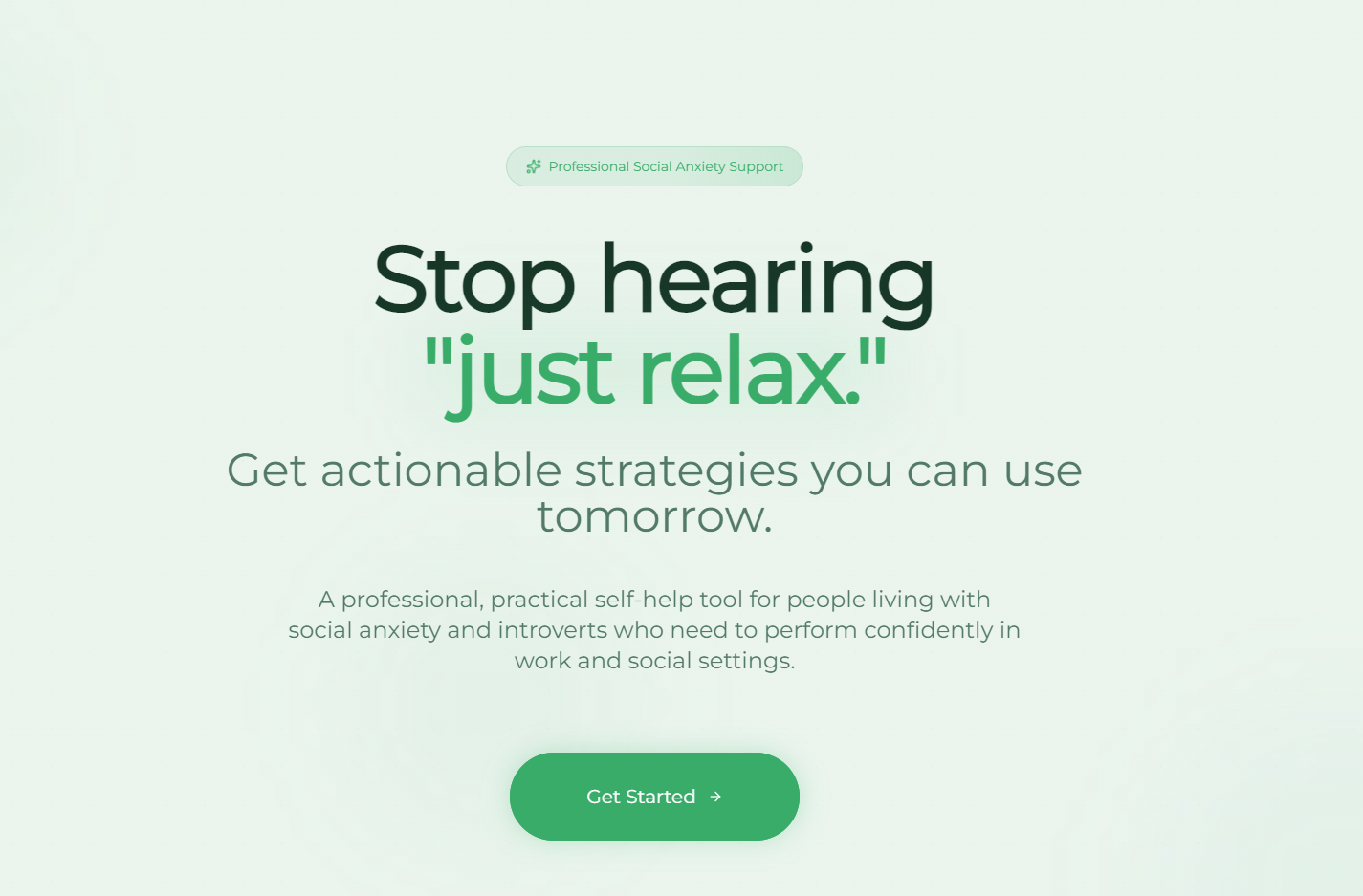
As someone who’s navigated social anxiety in professional and social settings, I grew frustrated with vague "just relax" advice—there was no practical, step-by-step toolkit for adults needing to perform confidently. I wanted to build something that turned abstract coping tips into concrete actions, rooted in evidence-based techniques like exposure therapy and cognitive reframing.
What it does
SocialAnxiety Toolkit is a web app for adults with social anxiety/introverts, offering pre-event checklists, 10-minute guided anxiety relief, AI-powered conversation starters, a customizable exposure therapy ladder, and a positive-focused reflection journal—all behind a $12.99/month subscription model.
How we built it
I started by mapping core user scenarios (pre/during/post social events) and translating them into page structures. Using React for the frontend (responsive design for mobile) and Node.js/Express for the backend, I integrated MongoDB to store user checklists, journal entries, and ladder progress. I added Stripe for subscription management, OpenAI API for conversation starter matching, and Chart.js for progress visualization.
Challenges we ran into
The biggest hurdle was balancing simplicity with functionality—users with anxiety need intuitive tools, so overcomplicating the UI risked defeating the purpose. I also struggled with subscription access control (ensuring non-paying users only saw the landing/registration pages) and syncing progress data reliably across sessions (solved with robust error handling for network saves).
Accomplishments that we're proud of
Creating a tool that centers actionable, small steps over overwhelming advice—user testing showed the checklists and guided anxiety relief sessions felt "usable" and "non-intimidating." I’m also proud of the progress tracking features, which turn small wins (e.g., completing a ladder step) into visual, motivating milestones.
What we learned
I deepened my understanding of UX design for neurodiverse users—small choices (checkboxes for checklists, quick-entry journal prompts) make a huge difference. I also learned to prioritize core features over scope creep, and how to integrate third-party APIs (OpenAI, Stripe) while maintaining data security and user privacy.
What's next for this project
I plan to add audio customization for anxiety relief sessions (adjustable pacing), expand conversation starter environments (e.g., remote meetings), and integrate weekly progress summaries via email. Long-term, I want to add mild gamification (achievement markers) to reinforce consistent use without adding stress.
Built With
- amazon-web-services
- css
- html
- mongodb
- openai-api
- stripe

Log in or sign up for Devpost to join the conversation.