Inspiration
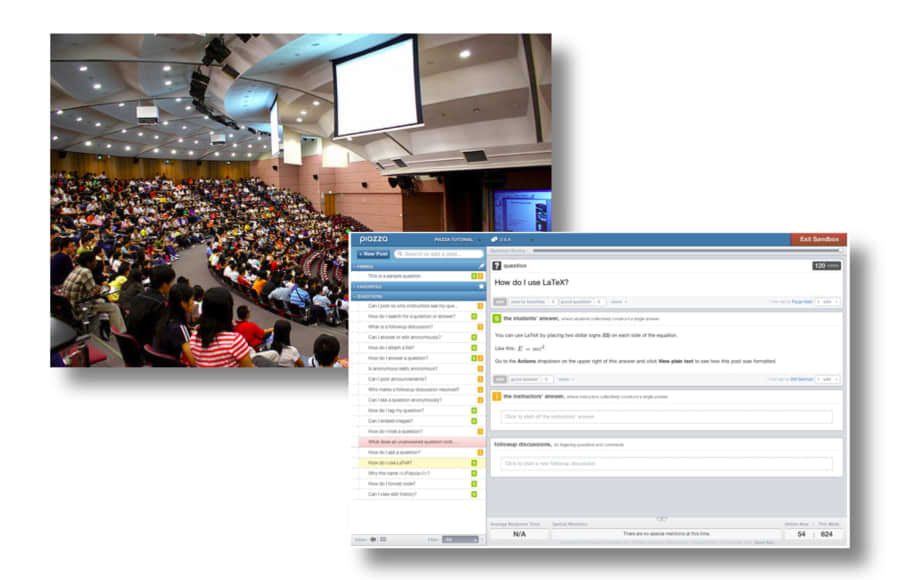
As students, we've all faced a situation of sitting in a large lecture hall and wanting to ask the professor a question. Several issues stop most of us:
- The peer pressure of other students in the lecture makes us feel too shy to ask the question;
- The fear of the professor's reaction to being interrupted;
- The fear of making a bad impression in case our question is perceived to be "stupid" by others.
Research shows that lack of engagement is correlated to lack of anonymity and presence of accountability. Modern platforms like Piazza do not provide sufficient anonymity which when coupled with their "bloated" nature makes existing software inadequate to optimally addressing the problem of getting potentially important questionst to be addressed by a speaker (such as a university professor) despite the aforementioned stigma. Our solution aims to provide such a service.
What it does

Our software currently provides a fully anonymous and streamlined ("bare bones") interface to be able to alert a presenter about the topmost questions from the audience. Per our tests, it is fully usable in a university lecture or company meeting settings.
How we built it
The software is provided via a responsive web interface built upon the following open-source technologies:
Challenges we ran into
- Developing a bare-bones UI which only contains the most important information for the user (i.e. maximizes utility-per-clicks);
- Interfacing the UI with the MySQL database via the Python Flask API
- Deploying Flask on AWS
Accomplishments that we're proud of
- Identifying a goal which satisfies the three T's: Timing (it is relevant for current students and meeting members), Target (the vast student population) and Team (a missionary objective executed with a positive team spirit)
- Delivering a fully functioning product on time
What we learned
- Productive teamwork and fostering of a positive collaborative environment despite a demanding short-term goal
- Intricacies of development of a web solution to a problem, including interfaces between open-source interfaces
What's next for the project
The software is expected to grow to include features like message alert, better message filtering (e.g. question matching) and better message editing and customization (such as the support for LaTeX and computer code). Anonymity and minimal-clicks-to-action will remain the overarching drivers of this project.


Log in or sign up for Devpost to join the conversation.