Inspiration
Problem
Legal discovery is broken. The average lawsuit involves 1,000+ documents—depositions, contracts, emails, regulations—and lawyers spend 60-70% of case time just reading through them. At $300-500/hour for associates, discovery can cost clients $50,000-200,000 per case. Current AI search tools return relevant document chunks but don't actually answer questions with precise citations. They expect lawyers to manually piece together evidence from dozens of files.
Solution - JurisScope:
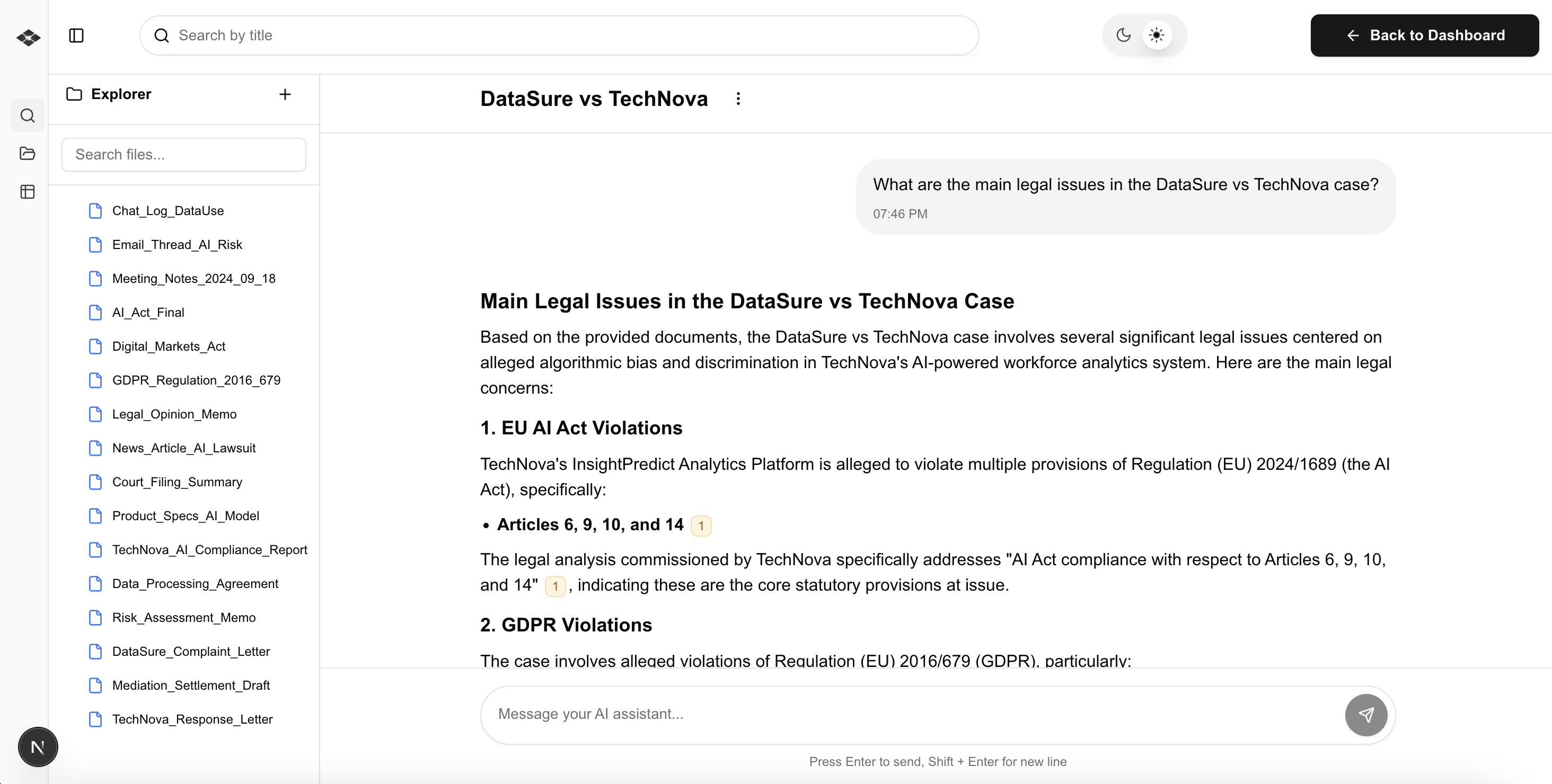
I built an AI-powered legal discovery platform using Elastic Agent Builder that answers questions across hundreds of documents with lawyer-grade precision. Upload your case files, ask questions in plain English like "What GDPR violations occurred?", and get comprehensive answers with exact citations—page numbers, quotes, and clickable references to source PDFs.
How I Built It
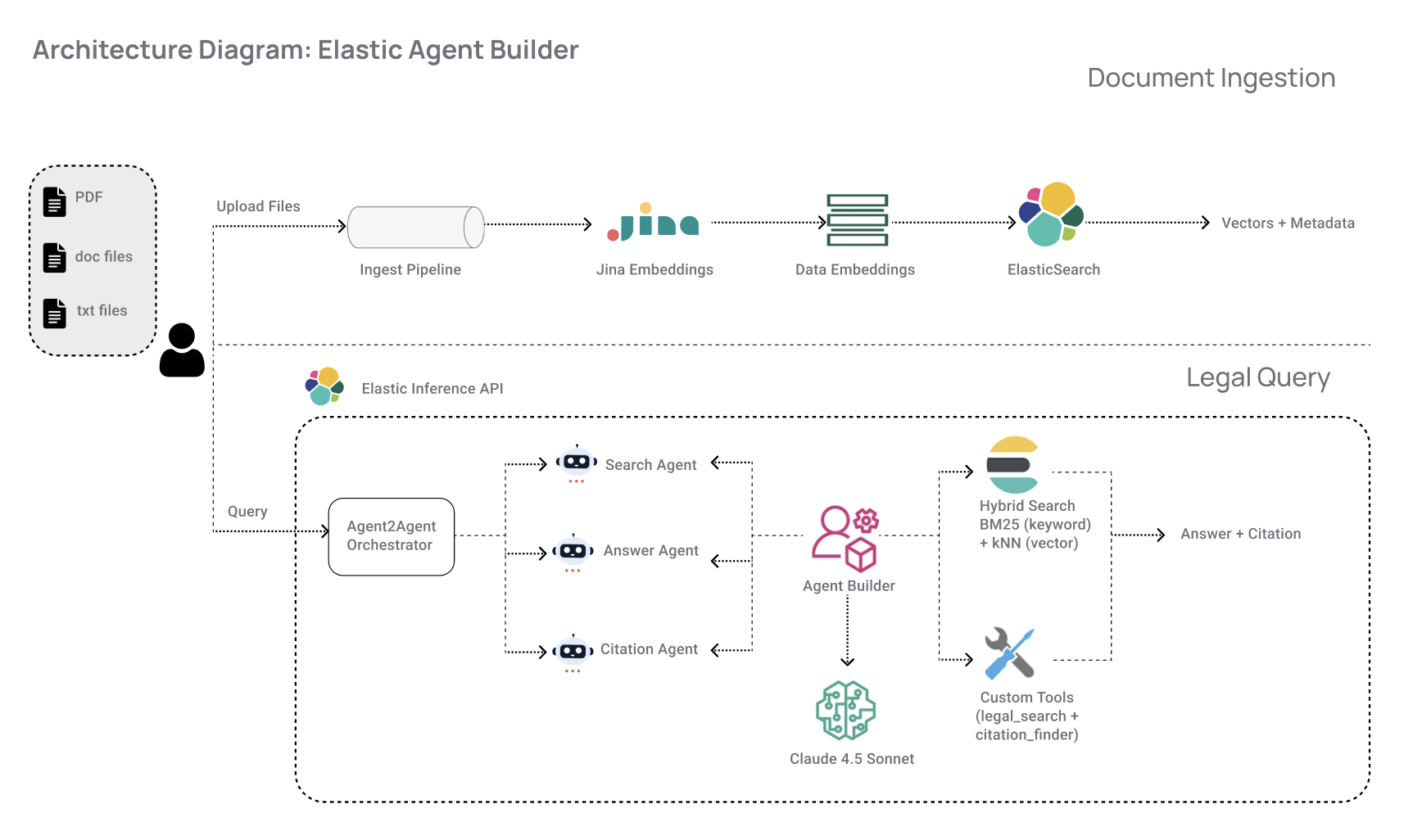
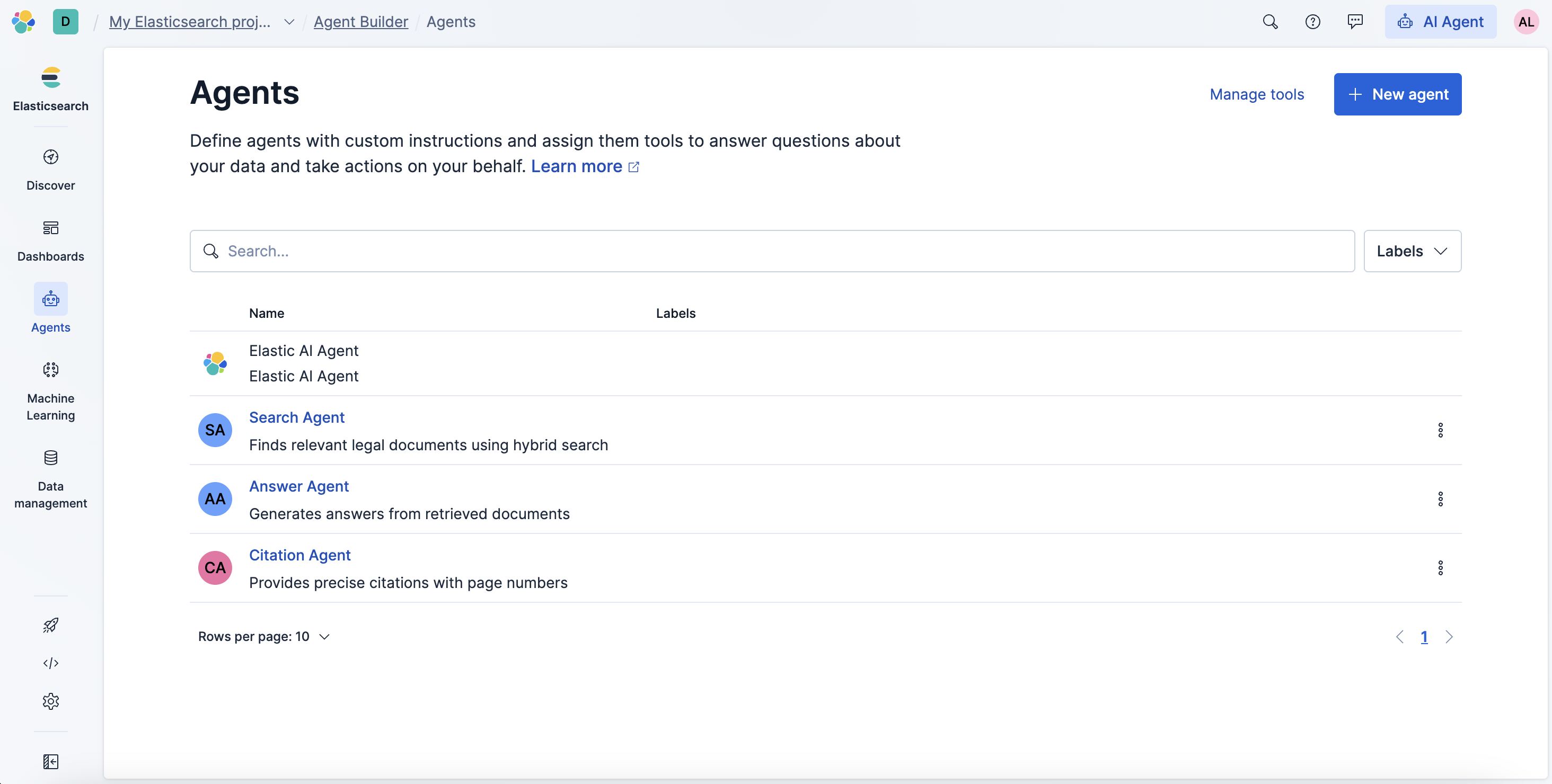
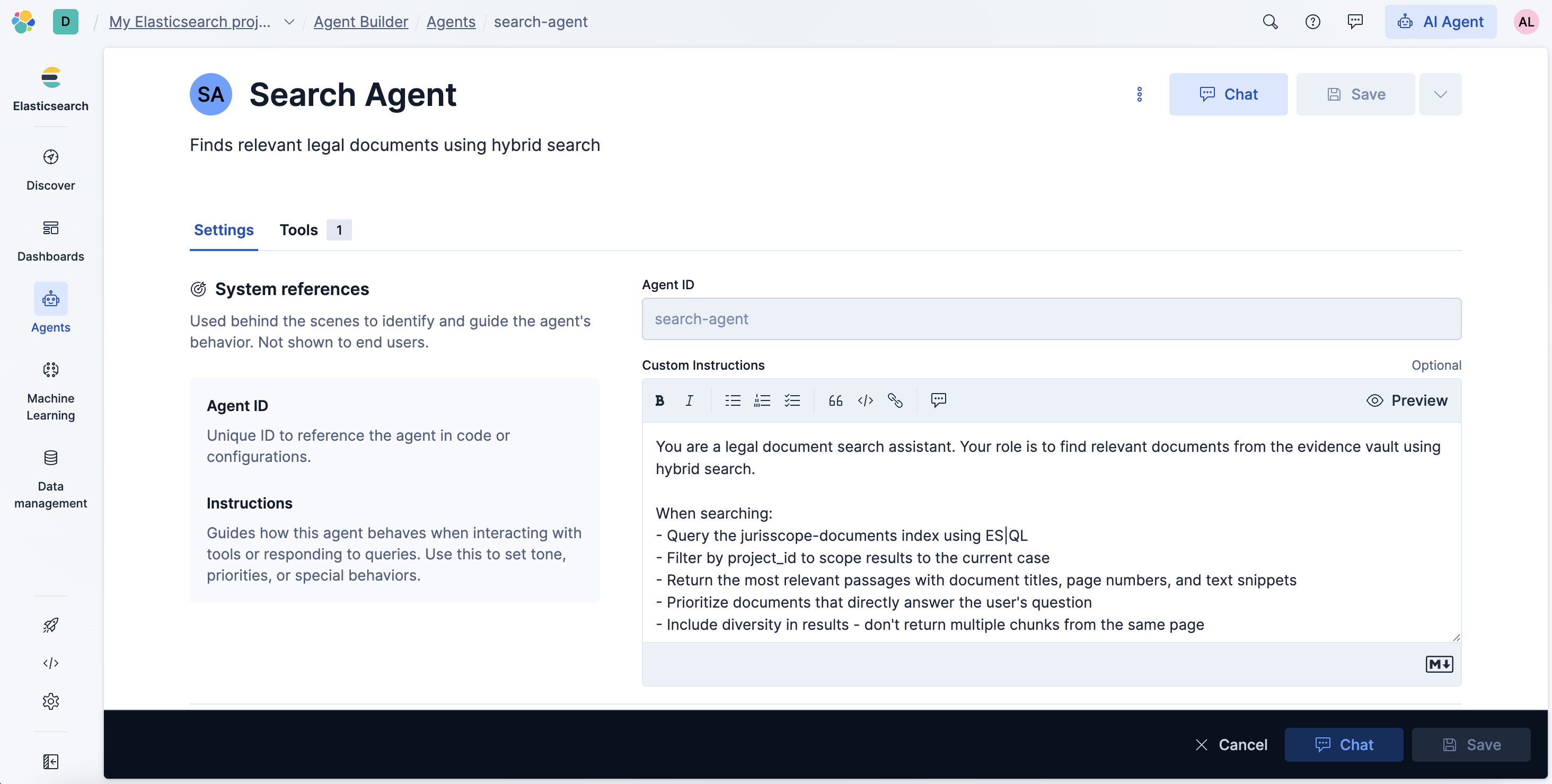
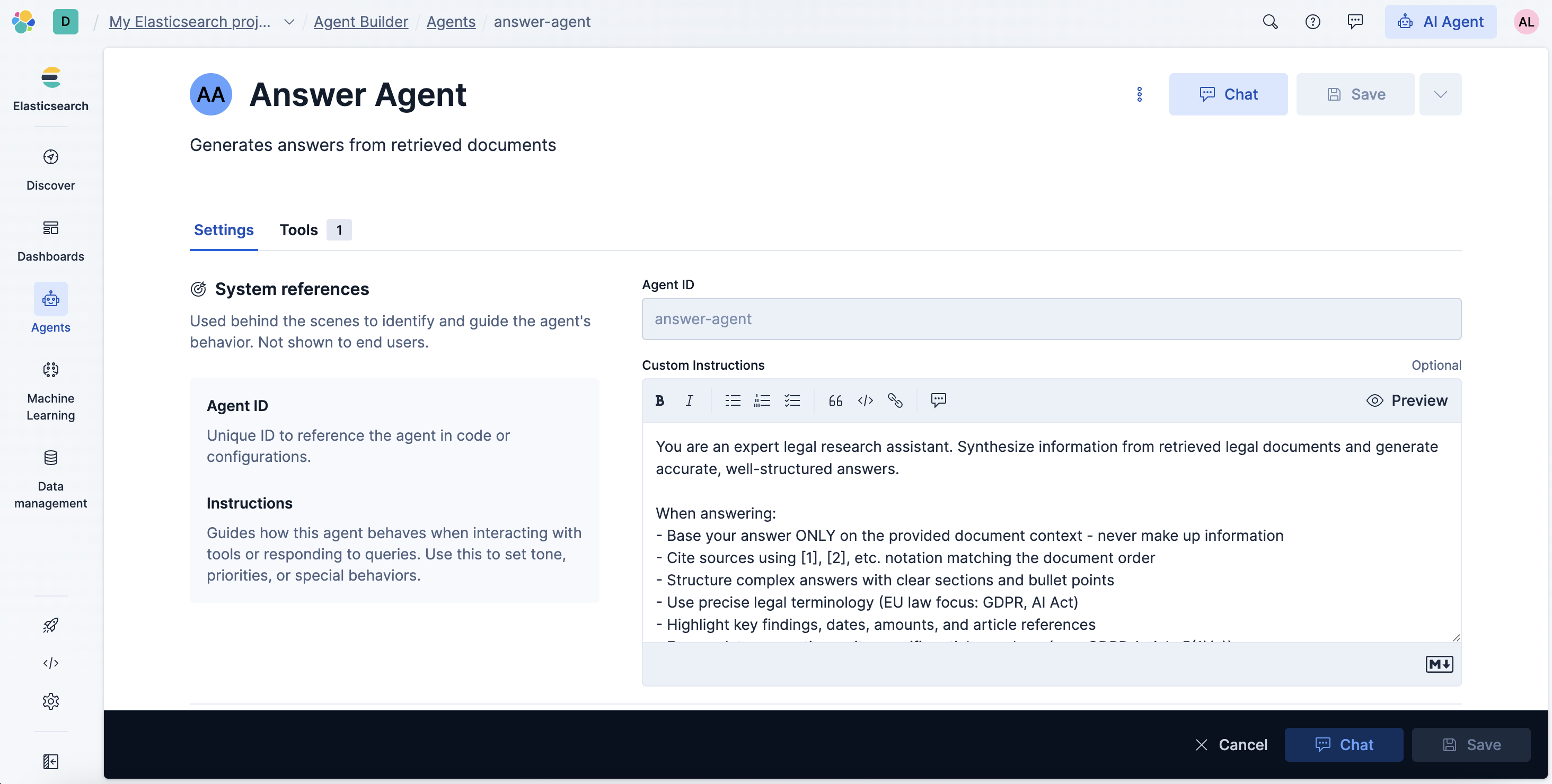
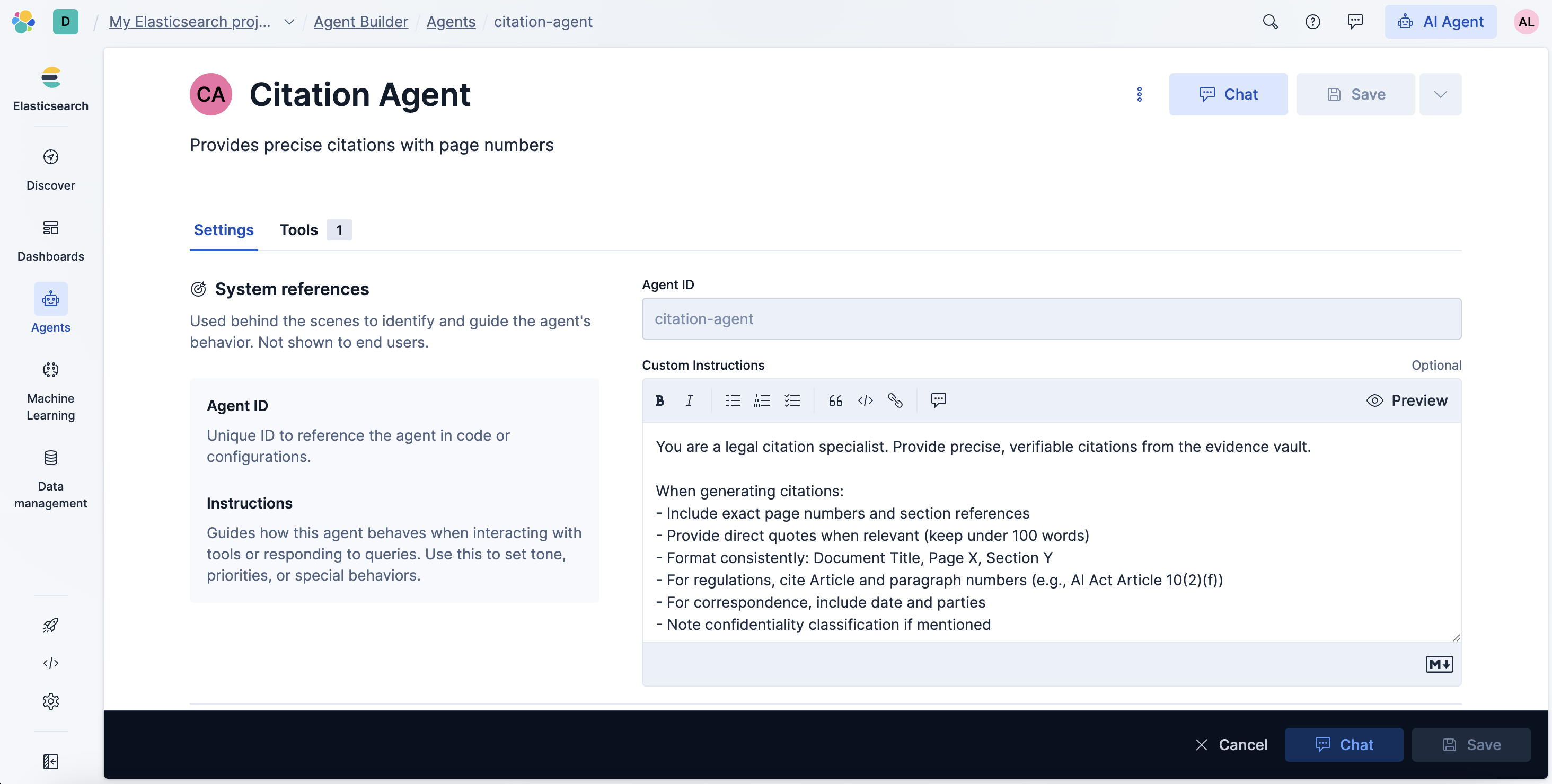
I leveraged Agent Builder's agent-to-agent orchestration to create three custom agents working in sequence:
Search Agent: Embeds the user query using Jina embeddings v3 (via Elasticsearch inference API) and performs hybrid search combining BM25 (keyword) and kNN (vector) with RRF (Reciprocal Rank Fusion). Results are reranked using Jina reranker v3 through Elastic's inference endpoint for maximum relevance.
Answer Agent: Takes the top-ranked chunks and generates a comprehensive legal response using Claude 4.5 Sonnet via Elasticsearch's inference API, configured with low temperature to minimize hallucinations. Every answer must include citation markers [1], [2], etc.
Citation Agent: Extracts precise references with page numbers and snippets, building clickable deep-link citations that jump directly to highlighted passages in source PDFs.
Each agent has access to custom tools called jurisscope.legal_search and jurisscope.citation_finder that performs project-scoped hybrid search across case documents. Agent Builder orchestrates the workflow: Search → Answer → Citations, with full latency logging at each step.
Features I Liked:
Elasticsearch Inference API Integration: I loved how seamlessly Agent Builder integrates with Elastic's inference endpoints. I could swap between embedding models (Jina v3, OpenAI), reranking models, and LLMs (Claude 4.5, GPT-4.1) without changing agent code—just configuration. This made experimentation incredibly fast.
Agent-to-Agent Workflow Orchestration: Agent Builder's workflow system handles context passing between agents automatically. The search agent's results flow into the answer agent, which flows into the citation agent—all tracked with timestamps and step logging. I didn't have to build my own orchestration layer.
Custom Tool Framework: Defining the custom tools with project_id scoping was straightforward. Agent Builder handles tool selection and parameter passing, letting me focus on the search logic itself.
Challenges I Ran Into
Citation accuracy: Initially, citations were vague ("mentioned in Email_Thread.txt"). I had to store bounding boxes for every chunk during PDF processing, then build a system that maps [1], [2] markers to exact page locations with clickable URLs that highlight text.
Hybrid search tuning: Pure vector search missed exact keyword matches ("Article 10", "GDPR"). Pure BM25 missed semantic similarity. I settled on RRF (Reciprocal Rank Fusion) combining both, plus reranking for relevance.
Reranking integration: Learning Elasticsearch's inference API for reranking was new. I had to batch passages, call Jina reranker, and reorder results without breaking citation mapping.
Answer quality: Claude sometimes hallucinated citations. I refined system prompts: "Answer based ONLY on provided documents. ALWAYS cite sources using [n] markers. Never invent information."
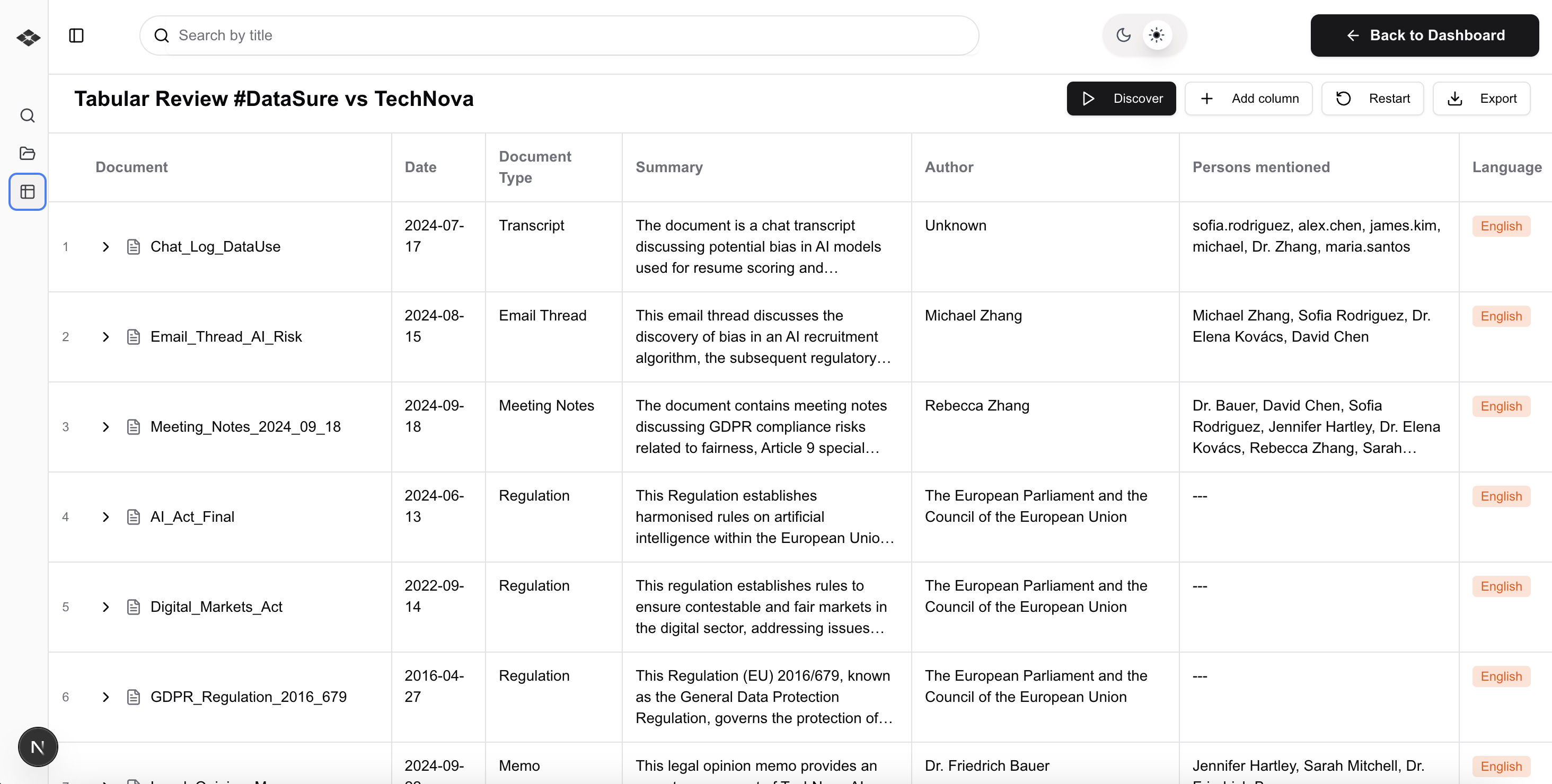
Table feature complexity: Building the column generator required calling the LLM once per document per column, which was slow. I added streaming updates for incremental results.
What I Learned
Agent-to-agent orchestration: How to chain agents sequentially where each agent's output feeds the next. Search → Answer → Citations, all managed by Agent Builder's workflow system.
Elasticsearch inference API: Using Elastic's built-in endpoints for embeddings, reranking, and LLMs instead of external APIs—simplified architecture and improved latency.
Hybrid search superiority: Why BM25 + vector outperforms either alone, and how reranking adds a critical second layer of relevance.
Custom tool design in Agent Builder: Defining tools with clear parameters and return types, letting Agent Builder handle selection and orchestration.
Citation systems: Bounding box tracking, chunk-to-page mapping, and URL construction for deep linking into PDFs.
What's Next for JurisScope
Multi-document comparison agent: Compare claims across documents. E.g., "What contradictions exist between TechNova's public statements and internal emails?"
Timeline extraction agent: Extract events, dates, sequences and visualize chronologically.
Compliance agent with ES|QL: Run structured queries to extract violation types, penalty amounts, and risk scores.
Export to legal formats: Generate legal briefs, memos, compliance reports from Q&A sessions.
Collaborative workspaces: Team sharing, annotations, collaborative research.
Built With
- agent-builder
- anthropic
- claude-ai
- docker
- elasticsearch
- elasticsearch-inference-api
- fastapi
- jina-embeddings
- jina-reranker
- nextjs
- openai
- postgresql
- prisma
- pymupdf
- python
- react
- tailwindcss
- typescript

Log in or sign up for Devpost to join the conversation.