-
-
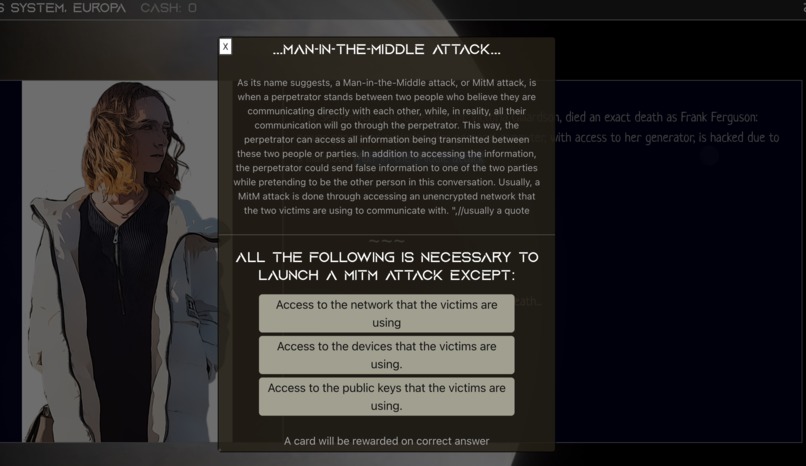
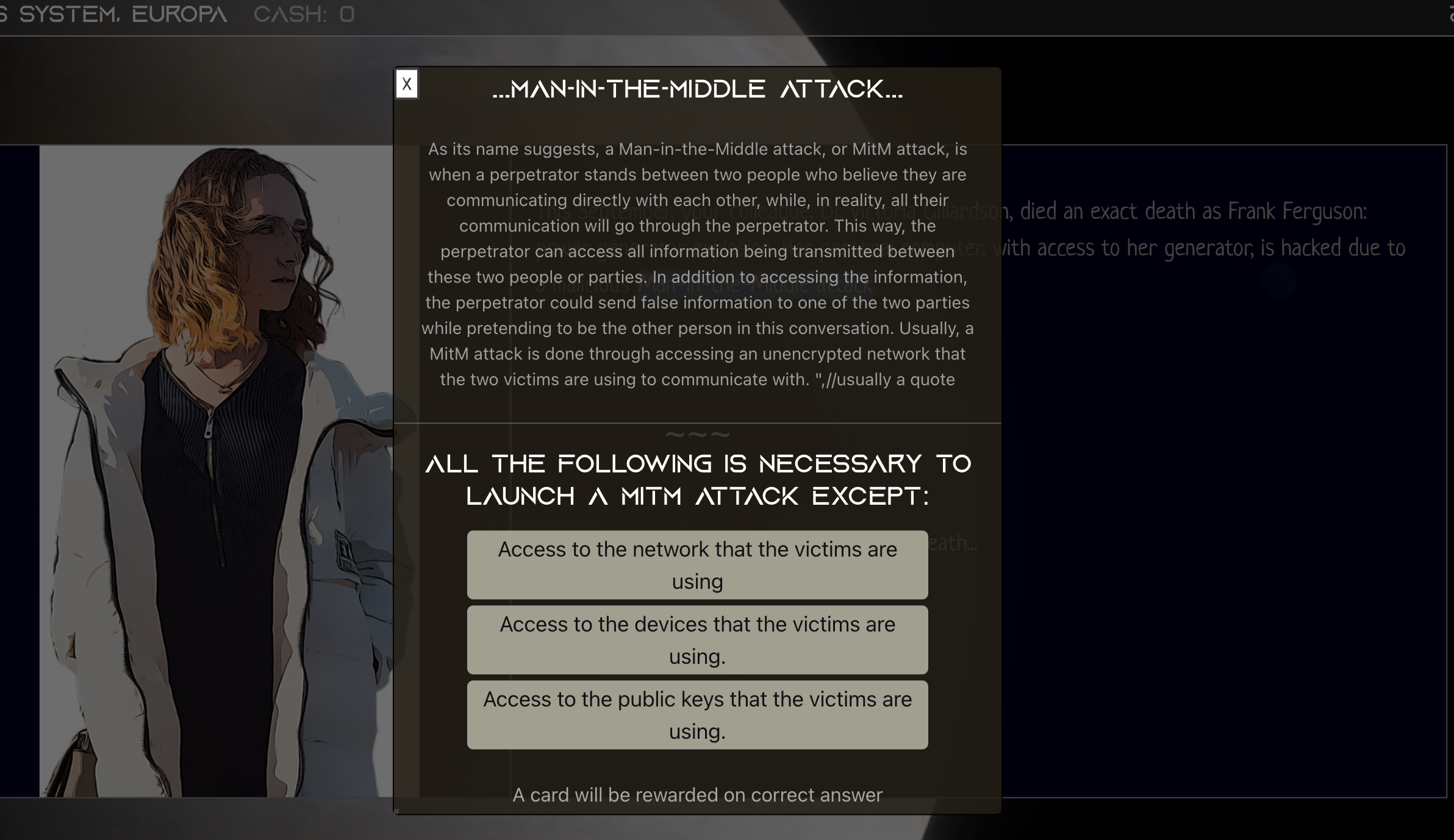
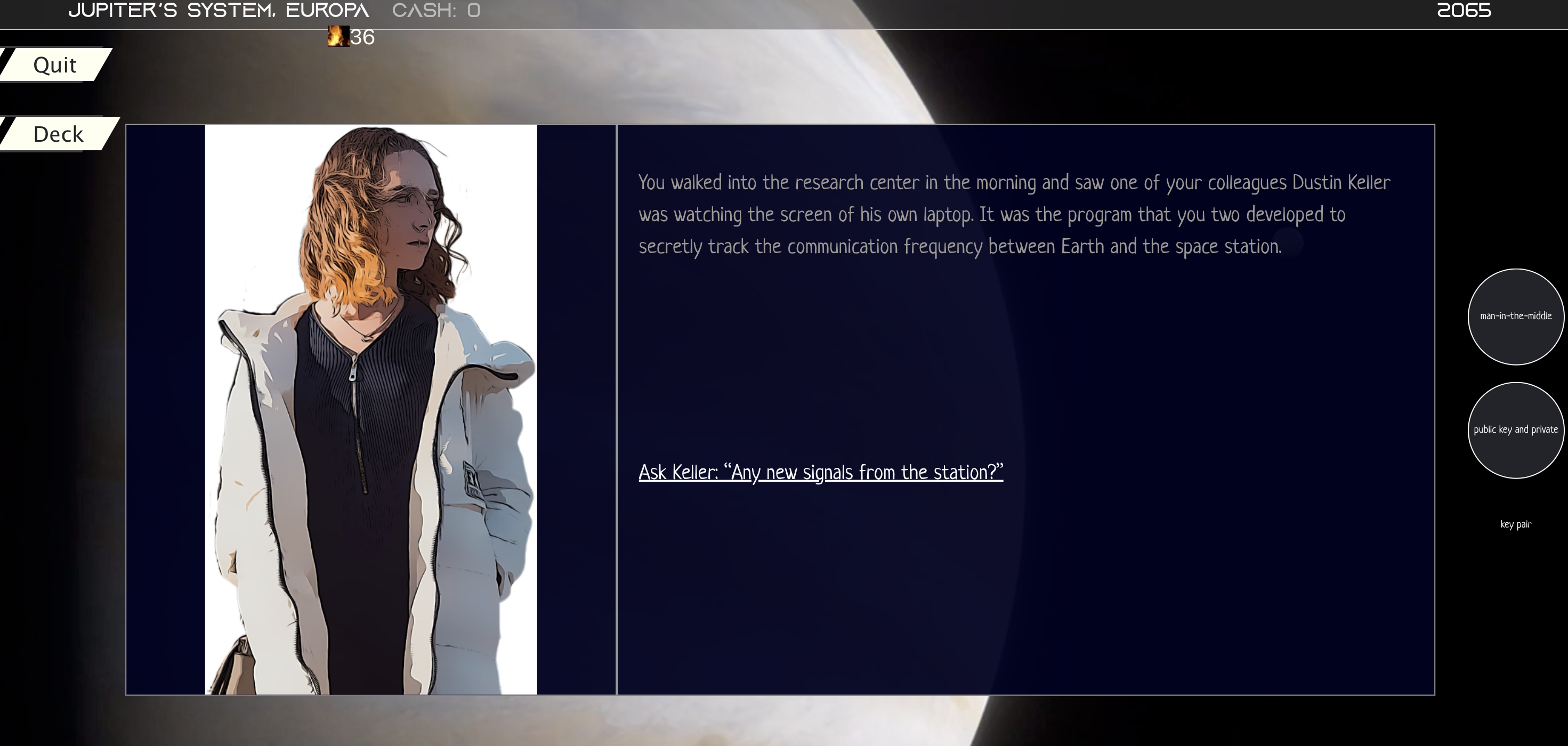
Mystery Term revealed- "Man in The Middle Attack"
-
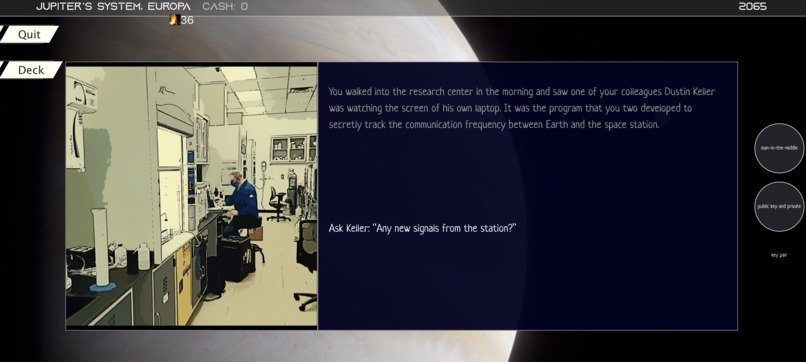
Interactive Narrative
-
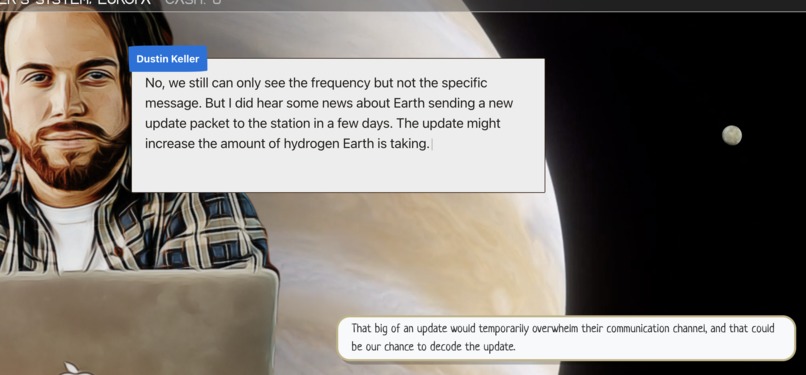
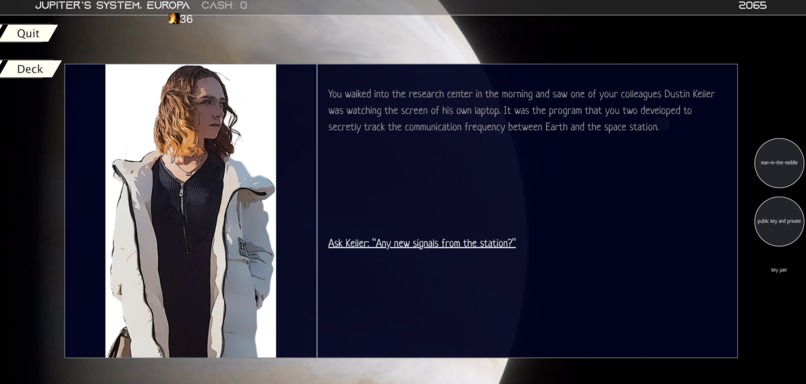
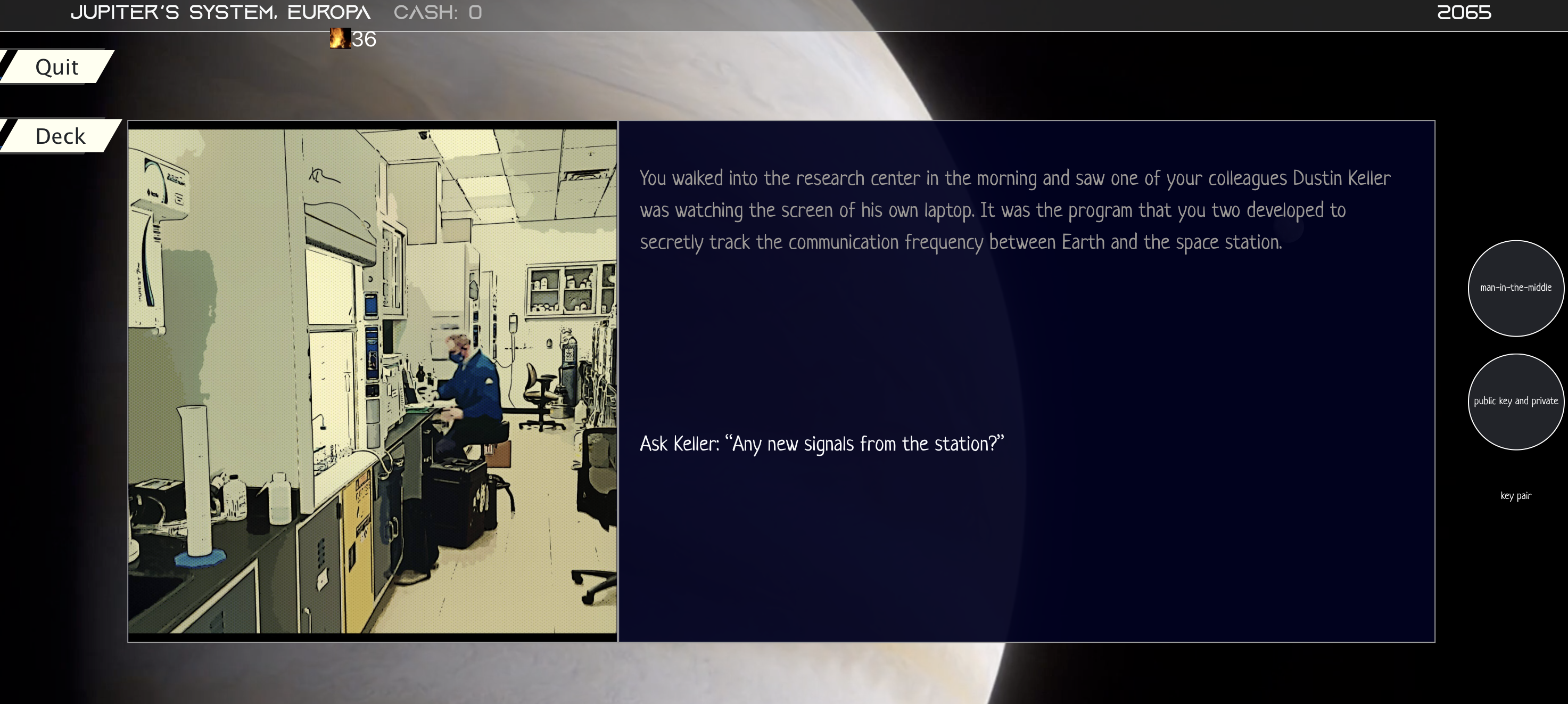
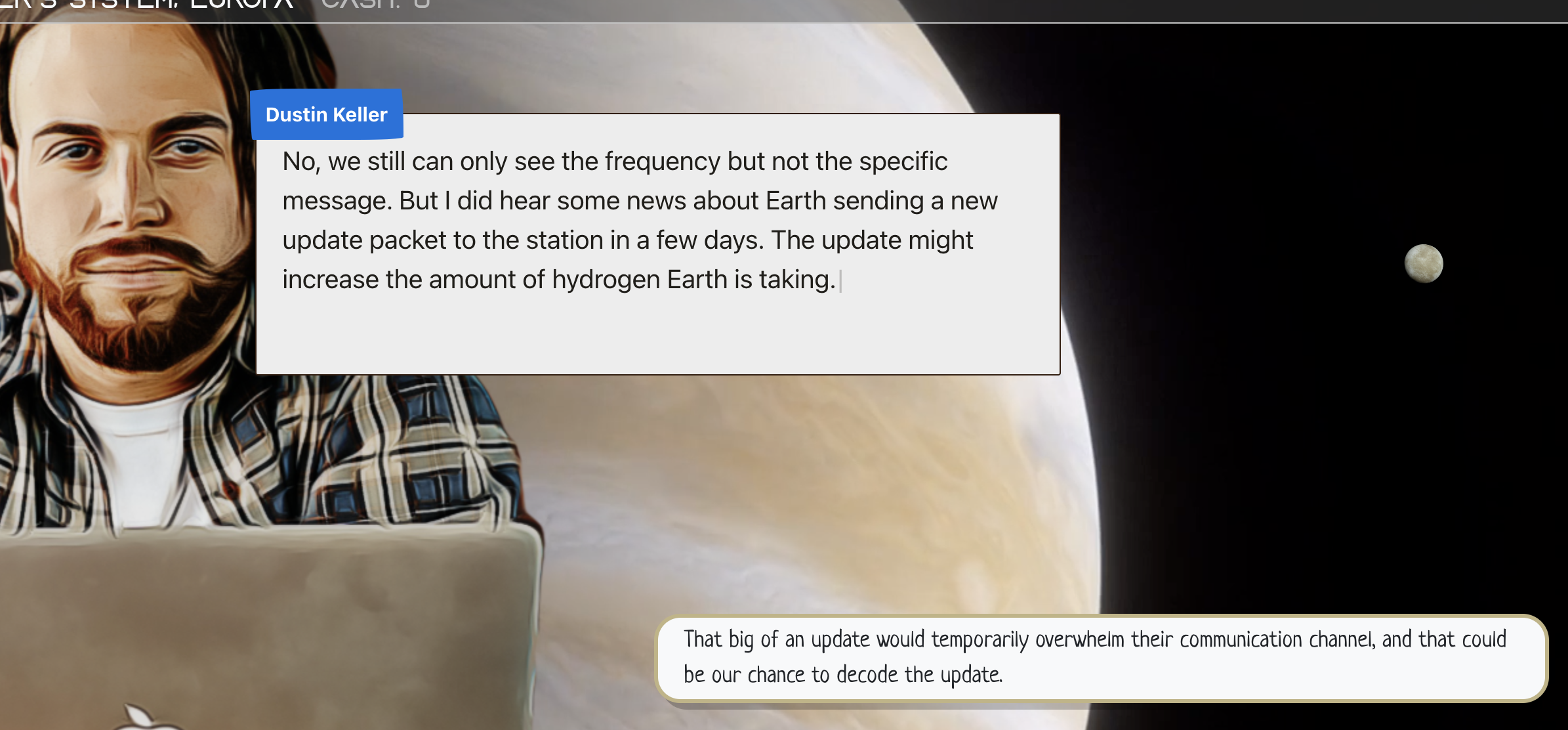
Dialogue with Dustin Keller
-
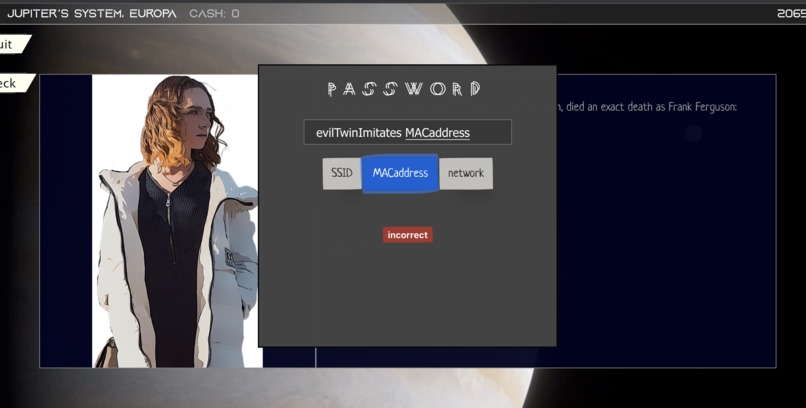
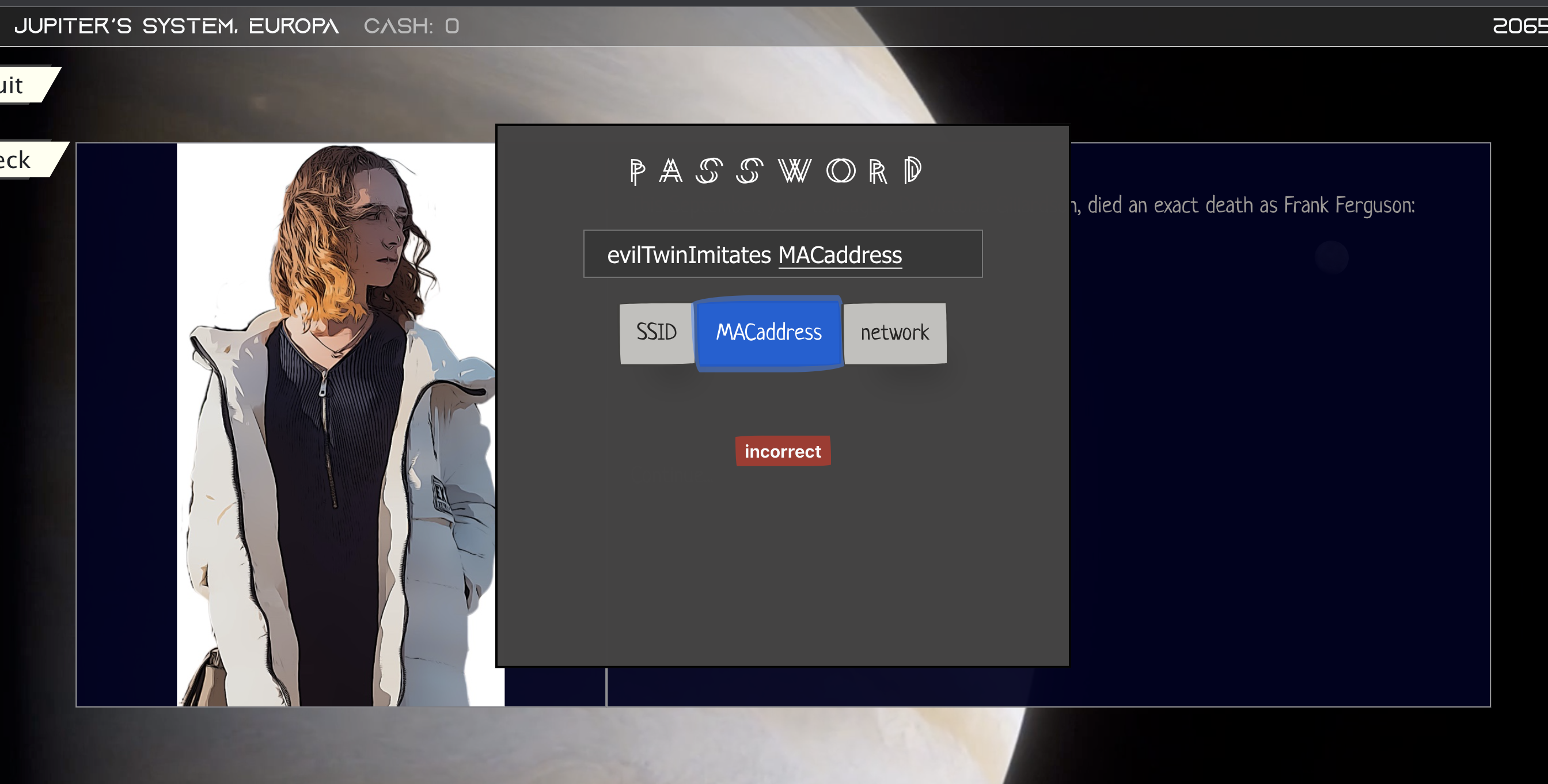
crack passwords to progress through the story
-
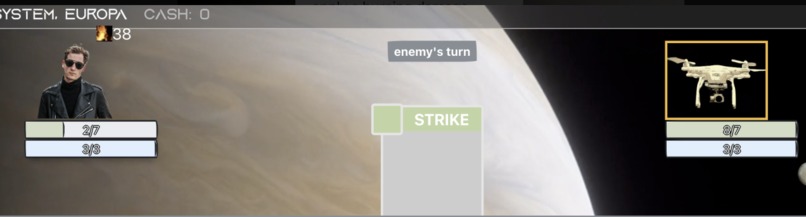
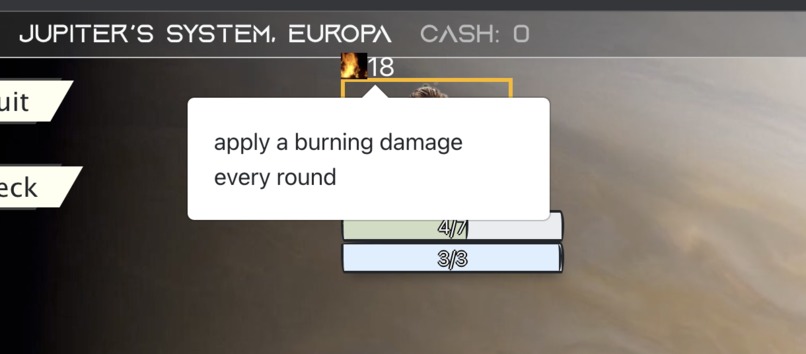
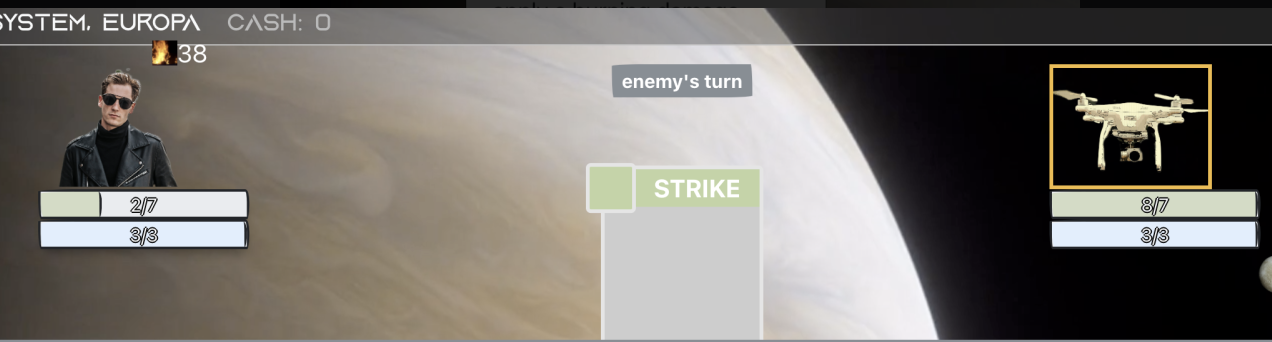
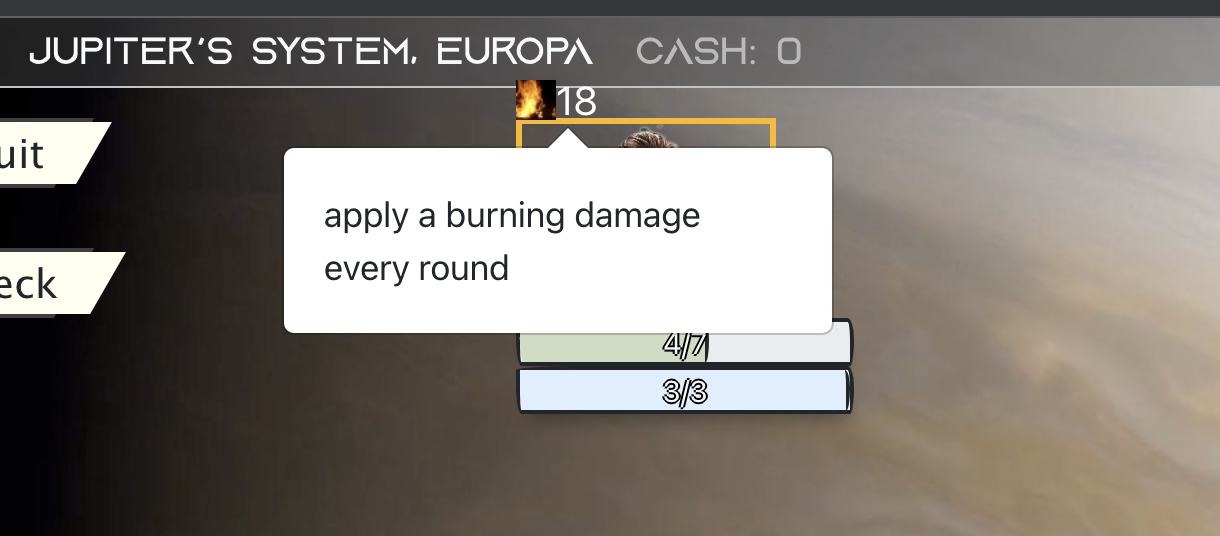
Part of the battle
-
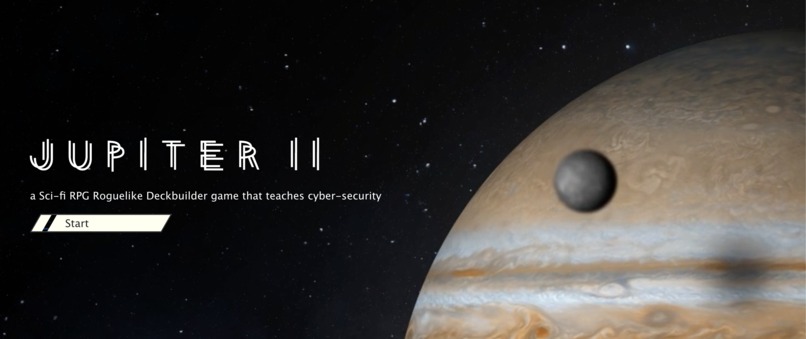
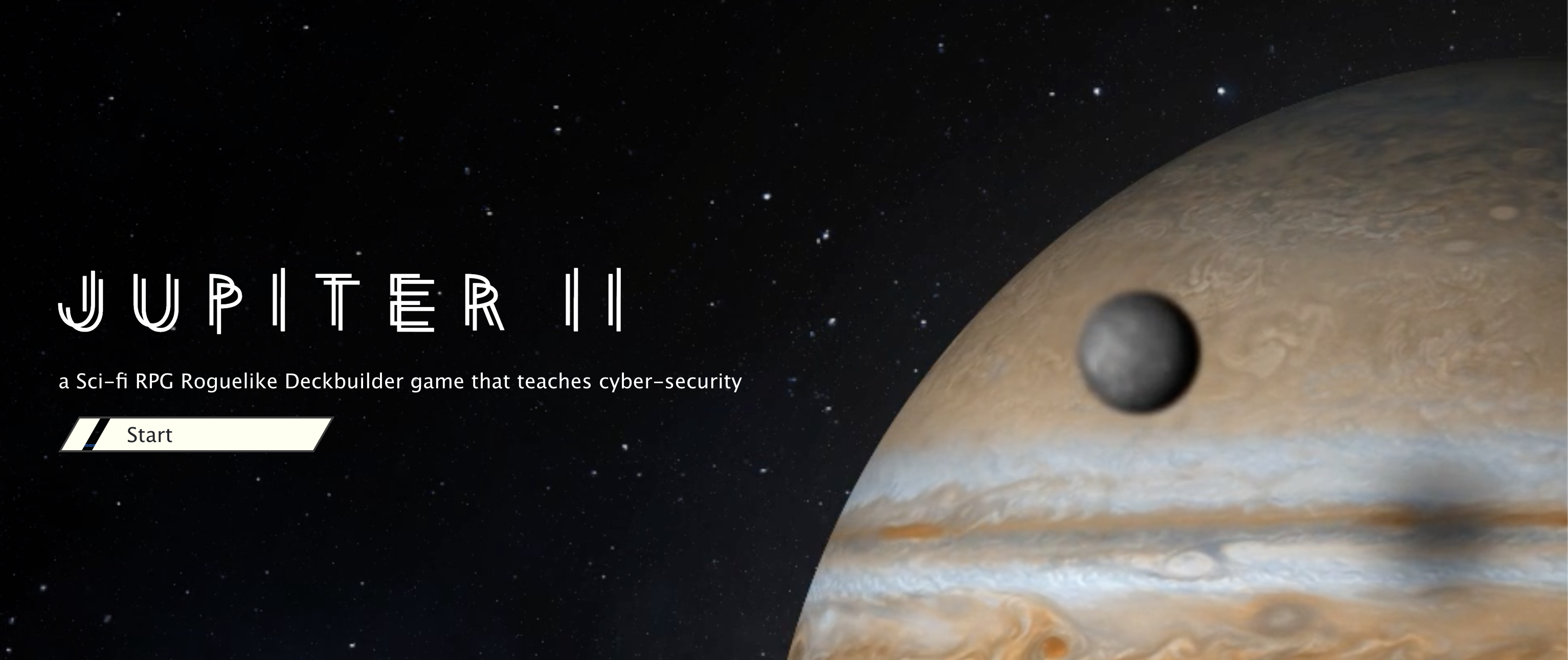
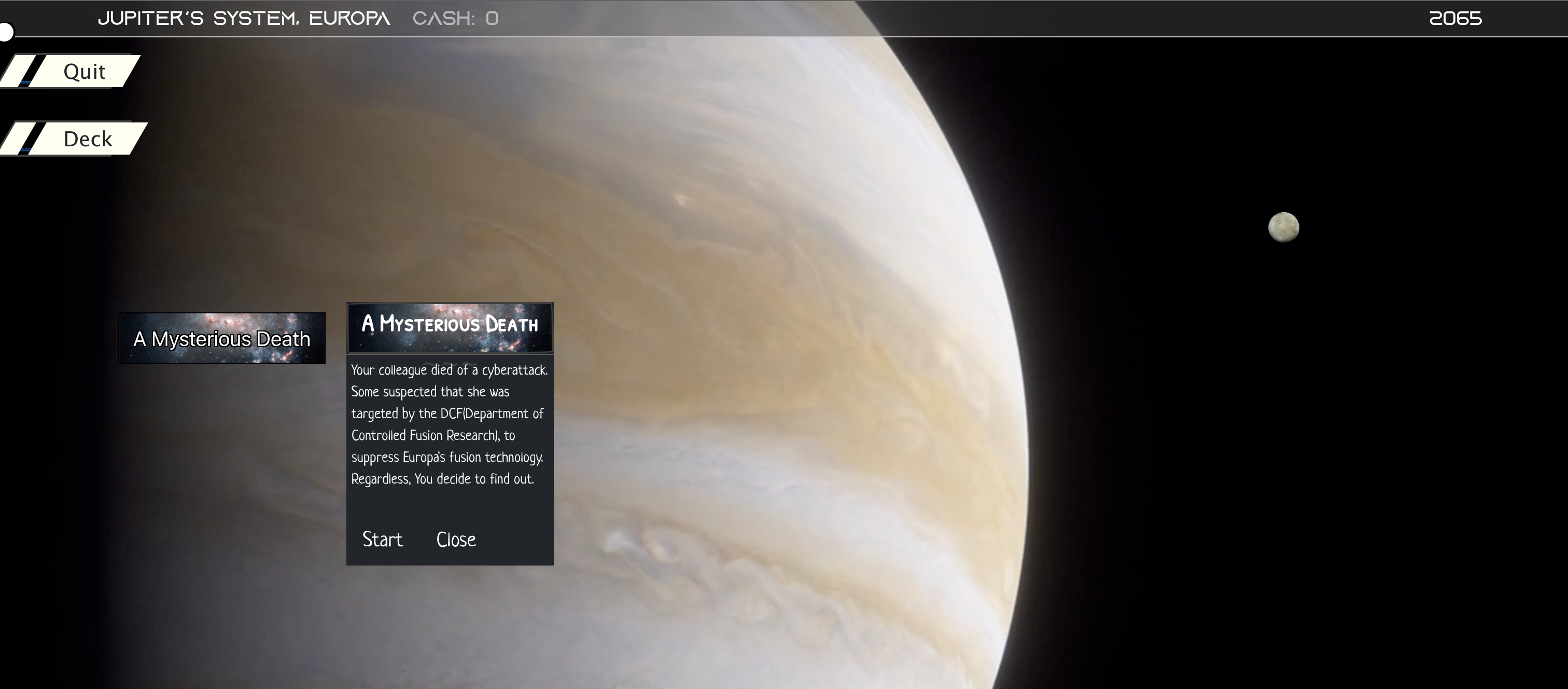
Title Screen
-
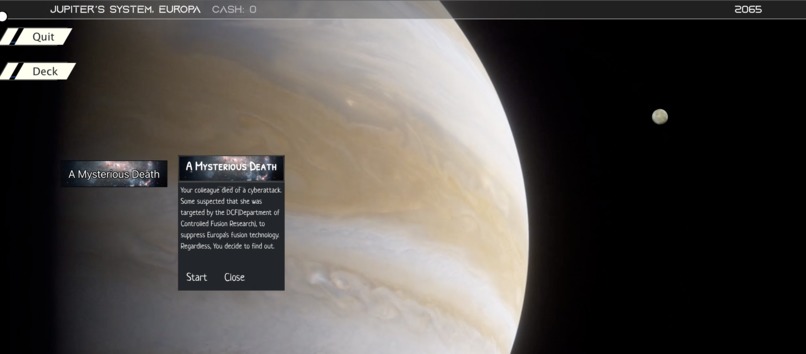
Grand Saga - shows up different quests based on player decision in previous quest
-
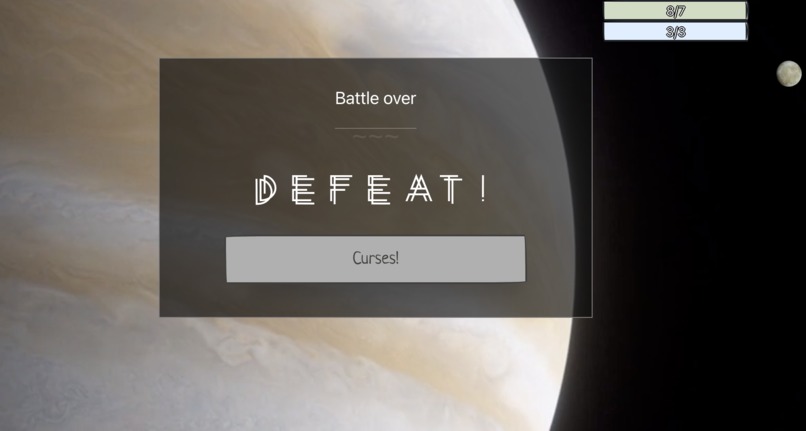
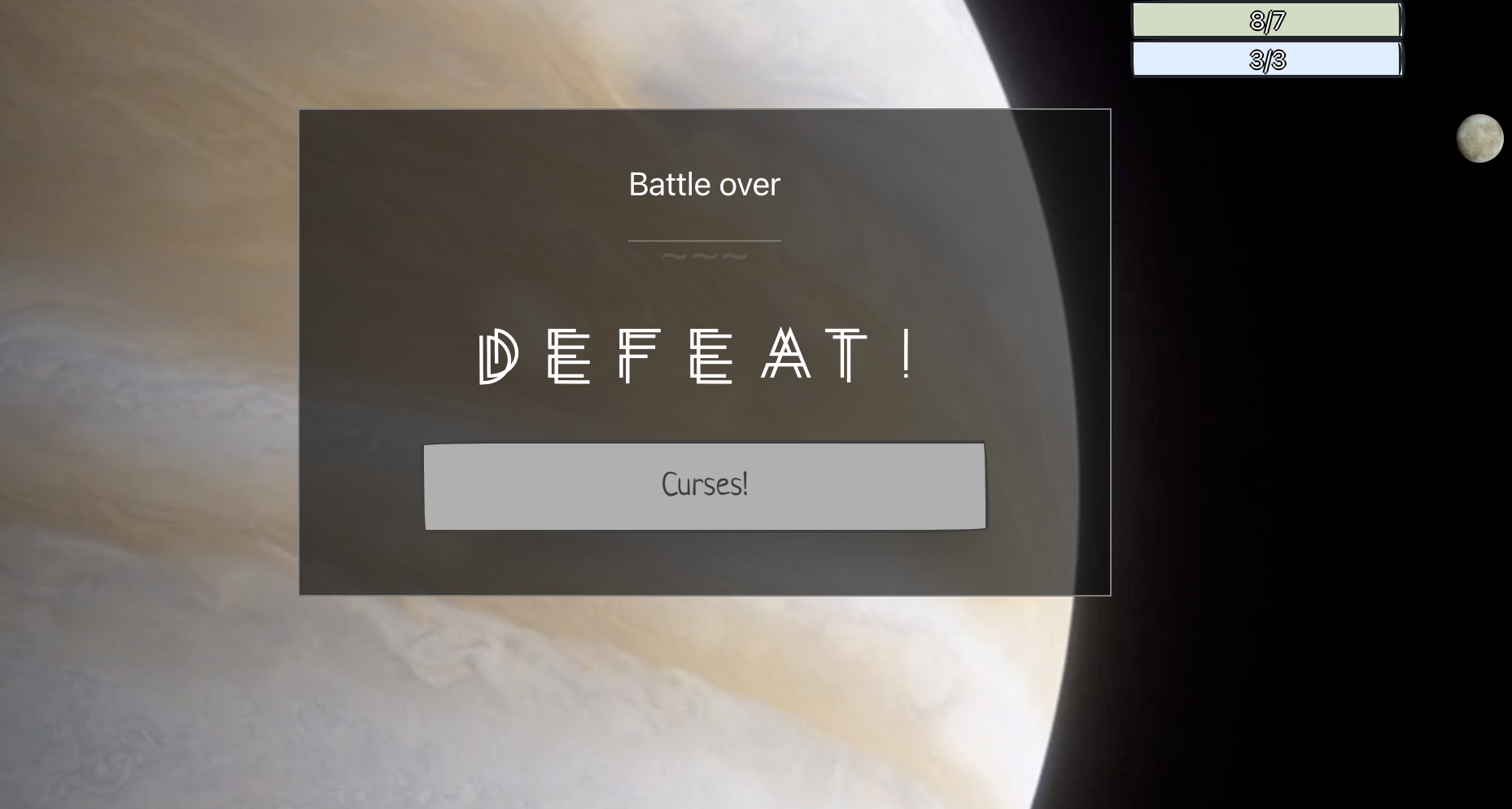
Battle defeat
-
-
What is Jupiter II?
Jupiter II is a sci-fi RPG deck-builder game that teaches cyber security skills through its combat, narrative, and various mini-games. The term "Jupiter II" refers to Jupiter's second and hospitable moon, Europa.
Story
The Solar System Union, led by Earth, was established fifty-five years ago, to bring the people of different planets together. After controlled fusion energy was achieved, communities on different planets no longer depended upon Earth as their economic and energy center. But the increasing independence of each planetary community was a threat to Earth’s power and influence. To preserve Earth’s waning influence, the Union established the Department of Controlled Fusion, also known as DCF, headquartered on Earth, to review controlled fusion research and usage. Under the hood, however, it is simply a form of interplanetary mercantilism, and a gross violation of each planet's sovereignty.
As Earth and the DCF seek to tighten control over your home, the Jupiter Community, you must find a new way to interfere with the DCF’s cyber communication with their spaceships in Jupiter Community’s airfield to prevent Earth’s future attack from happening. At the same time, radicals among your colleagues are resorting to drastic cyber-attacks that could potentially result in a devastating interplanetary war. It is up to you to either assist them or stop them.
Gameplay features
DeckBuilding Card Battle
As you progress through the narrative, you gain cards from making decisions and completing mini-missions. You also gain cards through learning “Mystery Terms”(about cyber-defense). This will build you an unique deck of cards that can be used in battle against the DCF. For example, after you discover Dr. Gilliardson's death to be a result of Evil Twin Attack, you can choose to receive one of the two cards- Evil Twin Attack (add a modifier on an enemy that divert all enemy’s damage next turn to enemy themselves), or SSID Detection, which grants you three shield cards, and add a modifier that prevent Evil Twin Attack from enemy or remove existing Evil Twin Attack modifier on you
Mystery Terms
In the narrative, there are mystery words related to cyber security that pops up. Players can “reveal” the mystery word, learning about it through reading bite-sized information nugget and prove their mastery through answering a question. If they answer correctly, they can receive a bonus. For example, in the introductory quest A Mysterious Death, player will encounter a mystery word called “Man in the Middle Attack” that will grant the card “Man In the Middle Attack” if player read through it and correctly answer the question
Interactive dialogue(with meaningful choice regarding cybersecurity ethics)
One main driving force of the game is for the player to use dialogue choices to interact with other characters in the game (such as Dustin Keller, a colleague of the player). Through these dialogues, the player will explore the different types of cyber attack and defense and how they can be applied in the sci-fi scenario. The dialogue choices that the player chooses will eventually influence where the story will progress in the future.
Interactive Visual Novel
Beside dialogue, there is also a narrative in which the player can choose actions to do. This will test the player's cybersecurity knowledge in making meaningful decisions that will impact the state of the game.
Password Lock
A stylized mini-game that requires the player to use cyber-security knowledge that they learned earlier to crack a password lock consisting of an incomplete cyber-security fact and few options.
Grand Saga
The game contains different branching quests that will appear based on players' decisions in the previous quest. For example, if the player decides to stop his colleague from launching a cyberattack, he/she's future mission will be altered based on this.
Built for Easy Access, Optimized For Great Performance
This project is built fully in javascript(with React.js framework). Because this, there are no extra download required. This made sure anyone with a computer that can run browser can play this. This is very important to us, since this is an educational tool, and many high schools and middle schools issue Chromebooks that only grants Browser access. Furthermore, by developing the project natively in Javascript, instead of using a web-compiler like LLVM for Unity, we made sure that the project is runnable on most browsers and platforms. Many browsers does not support Unity's LLVM webGL, especially a school-issued Chromebook. It is very important to us that Jupiter II be built in the most optimized way that allows anyone with a browser to access it without worrying about performance.
Challenges we ran into
Because of how plot-based this educational game is, we had to find a smooth way to integrate cybersecurity teaching into the plot. We eventually solved the issue by integrating the "mystery term" feature.
Accomplishments that we're proud of
One part we are proud of is the plot writing. It adds a philosophical and thought-provoking layer to the story through having the colleague trying to do something understandable but wreck-less that will undermine the player's effort in the face of tightening of control from Earth's DCF. The player will have to use the cybersecurity knowledge learned to either stop his colleagues from starting an interplanatary war, or actively assist their radical cyber-attacks. We are also proud of the game format and the "card battle" feature. It was difficult to create the card battle feature within the contest time period. We had a great deal of fun designing each card to be about a cyber security topic. One inspiration we had is how many people memorized their pokemon cards or Hearthstone deck -- and our goal is to design the card battle in a way that is akin to a pokemon card battle. The player will learn cybersecurity naturally through mastery of the deck-building and card battle process.
What we learned
It is important that an educational game has an intriguing plot. We first began with a more education-driven game, but that would bring down the enjoyability side of the game. As a result, we transitioned to a story-driven game, with education scattered throughout, in the form of narrative, dialogue, Deckbuilding, card battle, mystery words, mini-missions, etc. This way, the game will be beneficial both from an educational and recreational viewpoint.
What's next for Jupiter
We will be expanding the number of quests to turn the story into a sci-fi saga. We will also plan to category cyber security knowledge into groups, with each quest of the saga incorporating one group of knowledge. This way, there is more organization and structure in cyber security learning.
Built With
- javascript
- react.js


Log in or sign up for Devpost to join the conversation.