-
-

App Logo
-

-
-

-
-
-
-


Inspiration
We started with the frustration that a lot of healthcare problems aren’t actually about lack of treatment, but lack of clarity. People don’t understand their symptoms, doctors don’t have enough time for follow-ups, and most tracking tools feel too disconnected from real life. For us, gut health stood out because it’s something so many people deal with quietly, especially college students, but it’s still really hard to understand what’s actually causing issues. We also wanted to explore bigger healthcare inefficiencies like follow-up care and access, which influenced how we thought about AI in Juni.
What it does
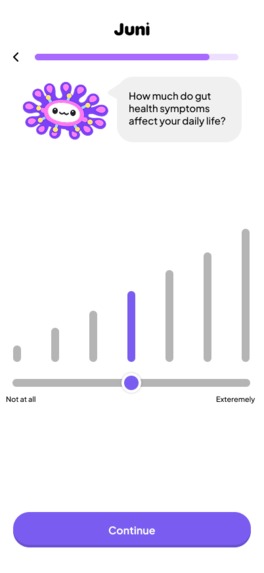
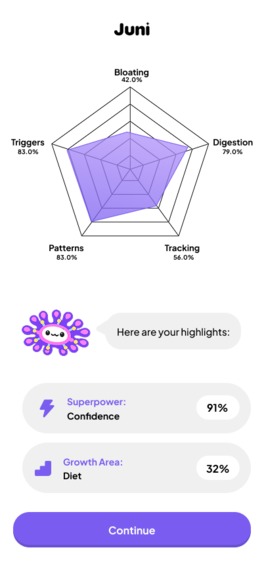
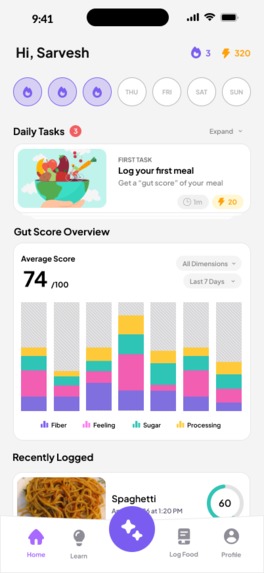
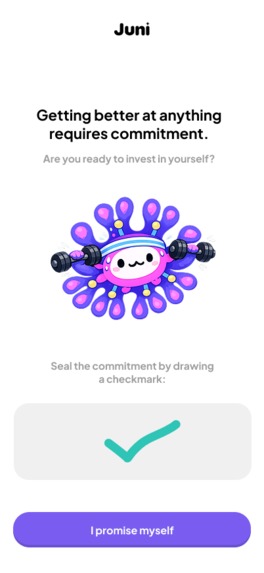
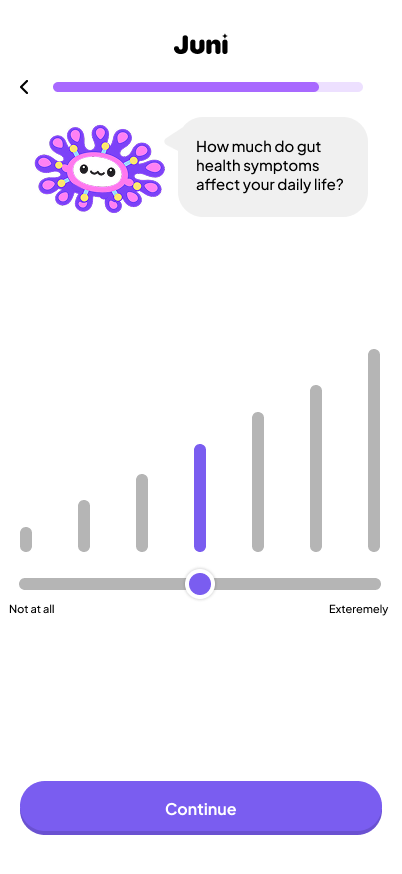
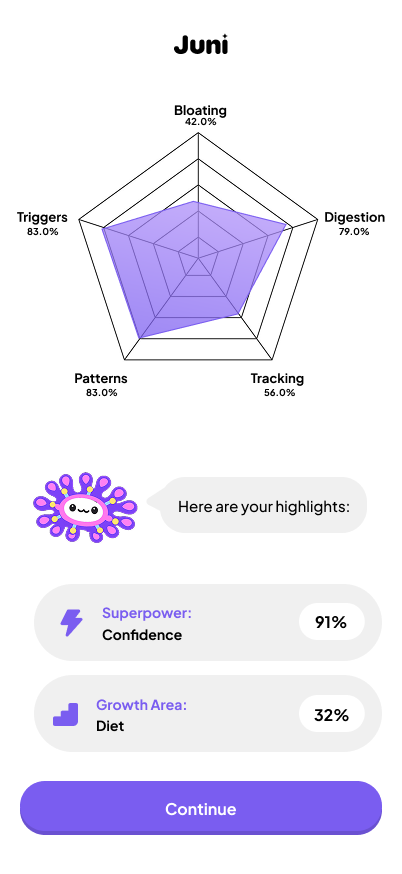
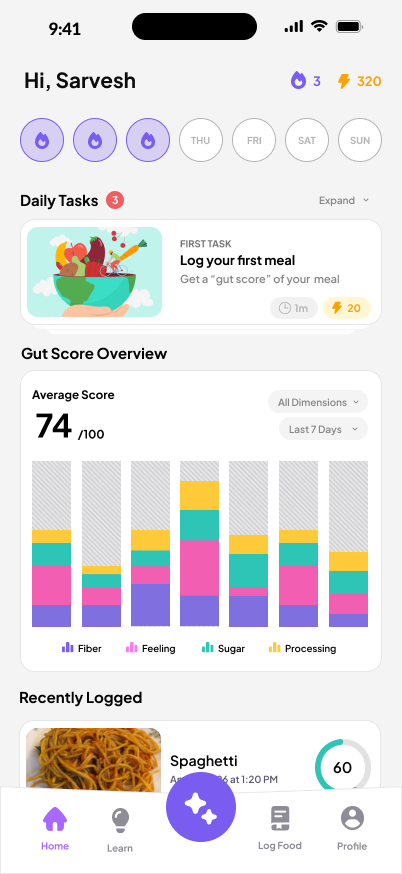
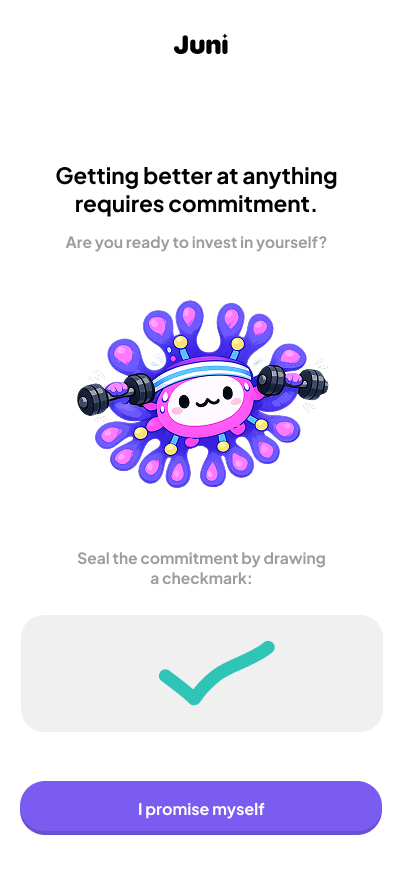
Juni is an AI-powered gut health coach that helps users understand how food, sleep, stress, anxiety, and hormones affect how they feel. Users log meals and symptoms, and Juni connects patterns over time to surface likely triggers. It also generates simple summaries that can be shared with doctors to improve follow-ups and care. The app is guided by friendly gut bacteria mascots that make tracking feel less clinical and more intuitive, almost like a companion system for your health.
How we built it
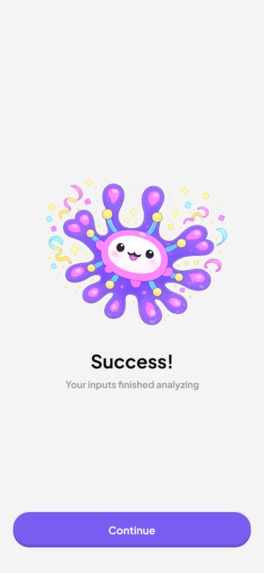
We designed Juni in Figma first, focusing on the full user flow from onboarding to daily tracking to insights. We used multiple frames to simulate navigation, interactions, and the overall experience. The AI behavior was mapped out conceptually, especially how it would process symptom logs and identify correlations between lifestyle factors and gut reactions. We also iterated on branding heavily, using the bacteria mascots to make the app feel more approachable instead of overwhelming.

Figma Make prototype: https://www.figma.com/make/RB08NTPqEh9a99krvSmzd3/Juni---Figma-Make?t=qqcaY04ncEbbQsgS-1
Challenges we ran into
One of the biggest challenges was balancing simplicity with depth. Gut health data can get really complex fast, but the app still needed to feel easy enough for someone to use daily without thinking too much. Another challenge was figuring out how to integrate AI in a way that felt useful and not vague. We also had to keep redesigning the interface so it didn’t feel too medical or too playful, since it sits between healthcare and consumer wellness.
Accomplishments that we're proud of
We’re proud that we created a full end-to-end prototype that actually feels usable and not just conceptual. The app has a clear identity, a consistent system of tracking, and a strong visual language with the mascots. We also managed to connect multiple real healthcare pain points like follow-ups, symptom confusion, and lack of pattern recognition into one unified product instead of treating them separately.
What we learned
We learned that healthcare design is less about adding features and more about reducing confusion. Even simple things like logging food or symptoms become meaningful when the system can actually explain what it means back to the user. We also learned a lot about how AI needs structure to be useful in healthcare contexts, especially when dealing with patterns over time instead of one-time answers.
What's next for Juni
Next, we want to make Juni more clinically connected by integrating with healthcare providers so doctors can actually use the data in real time. We also want to expand beyond gut health into a broader digestive and wellness ecosystem using wearables and possibly microbiome testing. Long term, the goal is to make Juni a daily health companion that helps people understand their body without needing to constantly guess or wait for answers.
Built With
- figjam
- figma
- figmamake

Log in or sign up for Devpost to join the conversation.