Inspiration
Open the news and it feels like the end is near. Yet the good stuff happens right outside our door: a neighbour lending a ladder, a student teaching a language, a charity run that quietly raised thousands. Nobody headlines it.
At the same time, two groups don't find each other. People who want to help don't know where help is needed nearby. And local non-profits, often working on youth, education and inclusion, struggle to find volunteers, donations and visibility. Most of us don't even know our neighbours, let alone the causes around us.
We wanted to build the opposite of doomscrolling: an app that makes local kindness easy to start, easy to measure and easy to celebrate. It works in any city, and we're starting with Munich.
What it does
Good things start next door: swap items and skills for free and turn strangers into friends.
Common Grounds connects neighbours, communities and local charities in one app:
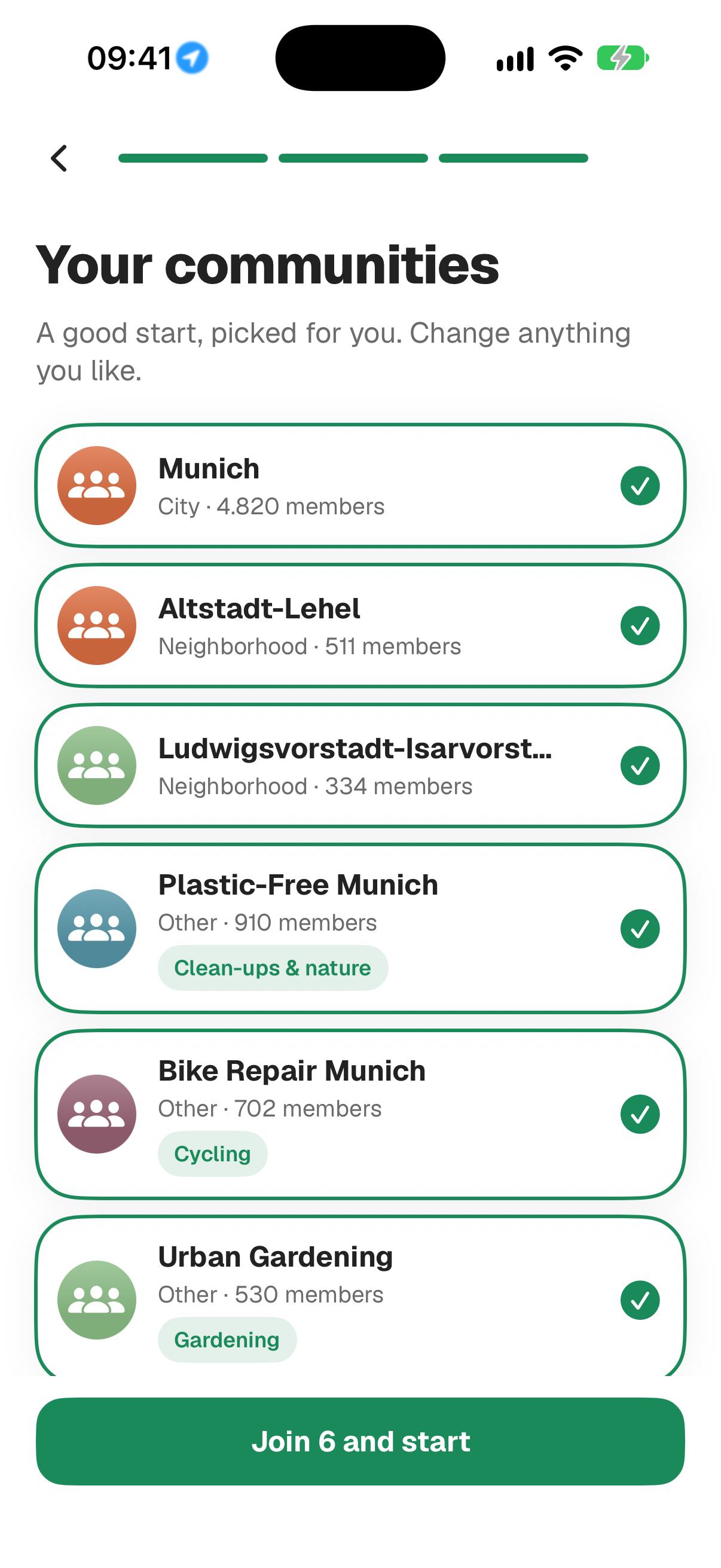
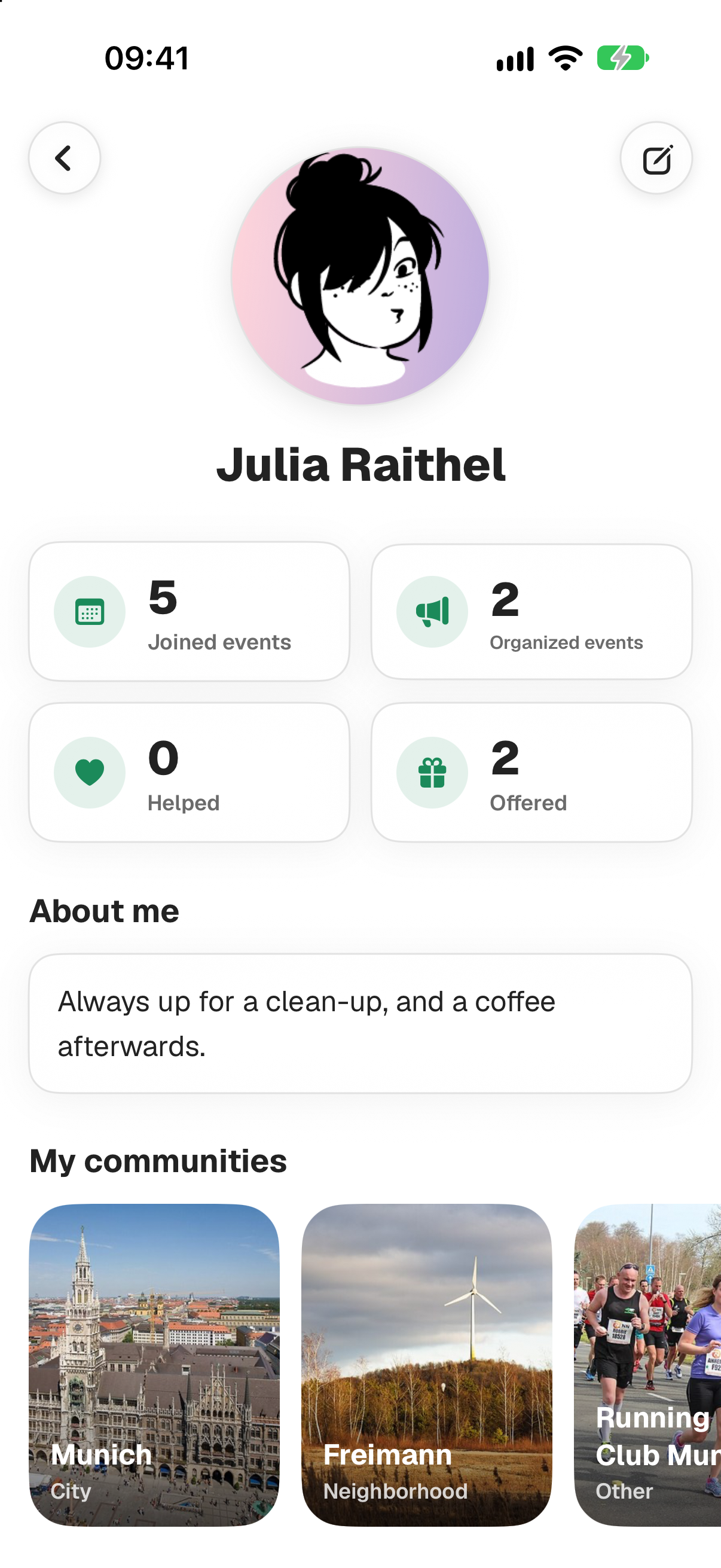
- Communities: join groups near you, from neighbourhood circles to non-profit organisations.
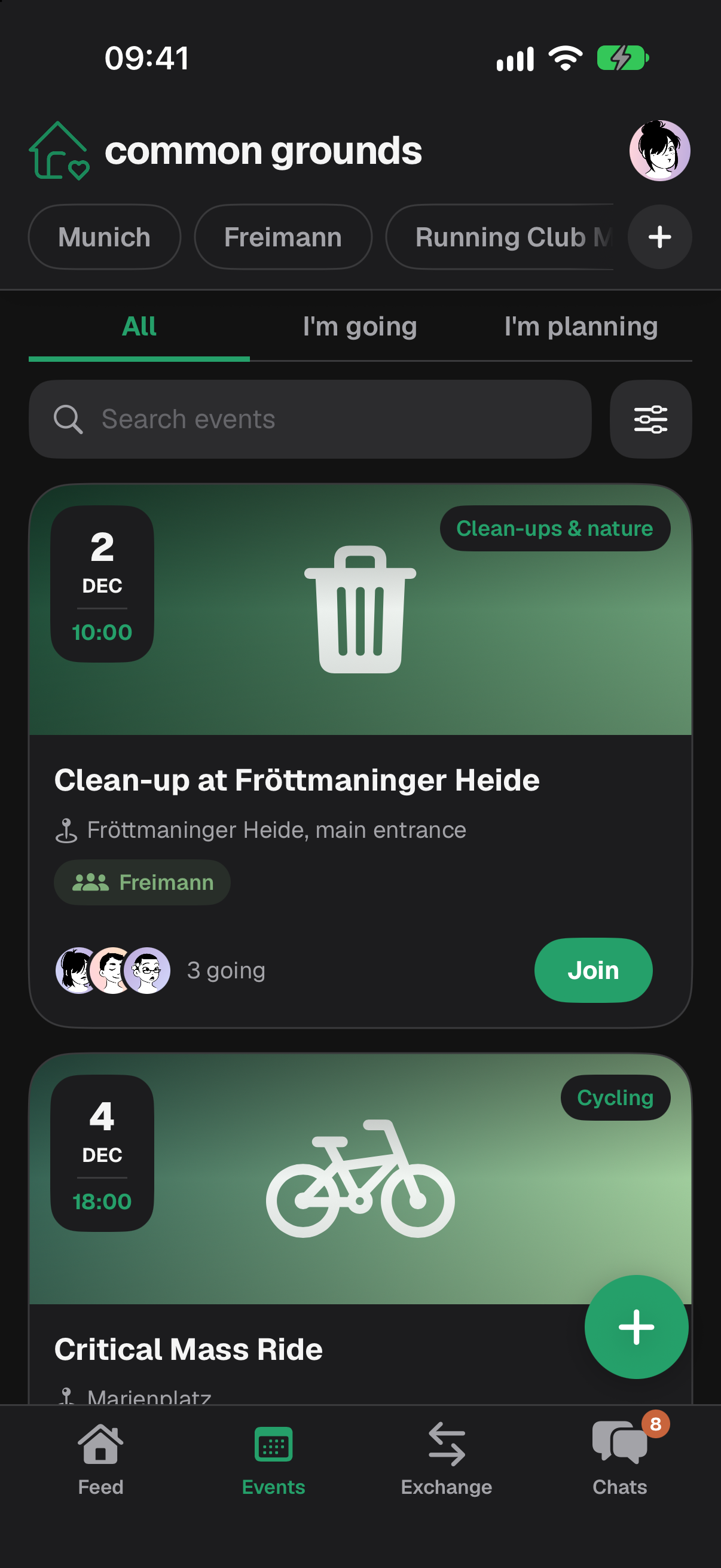
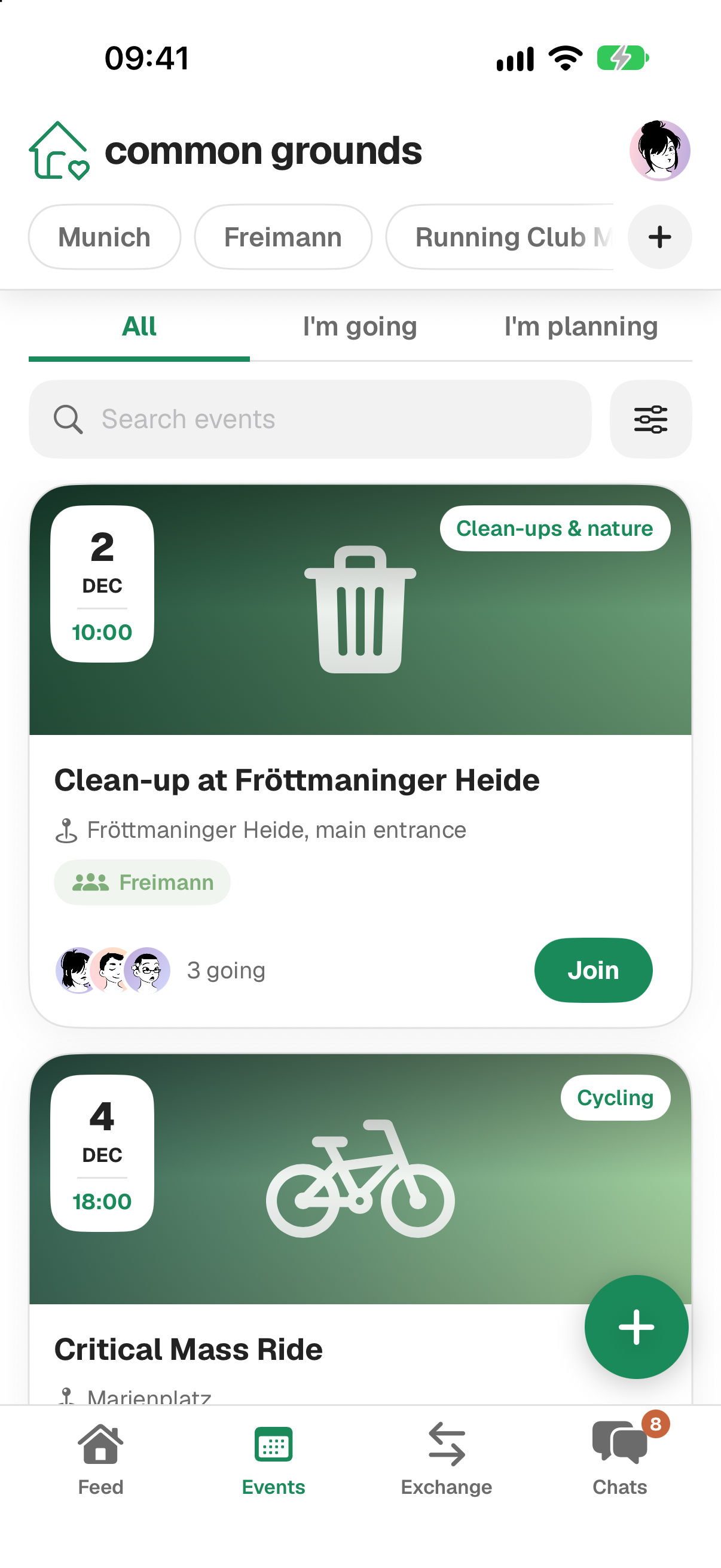
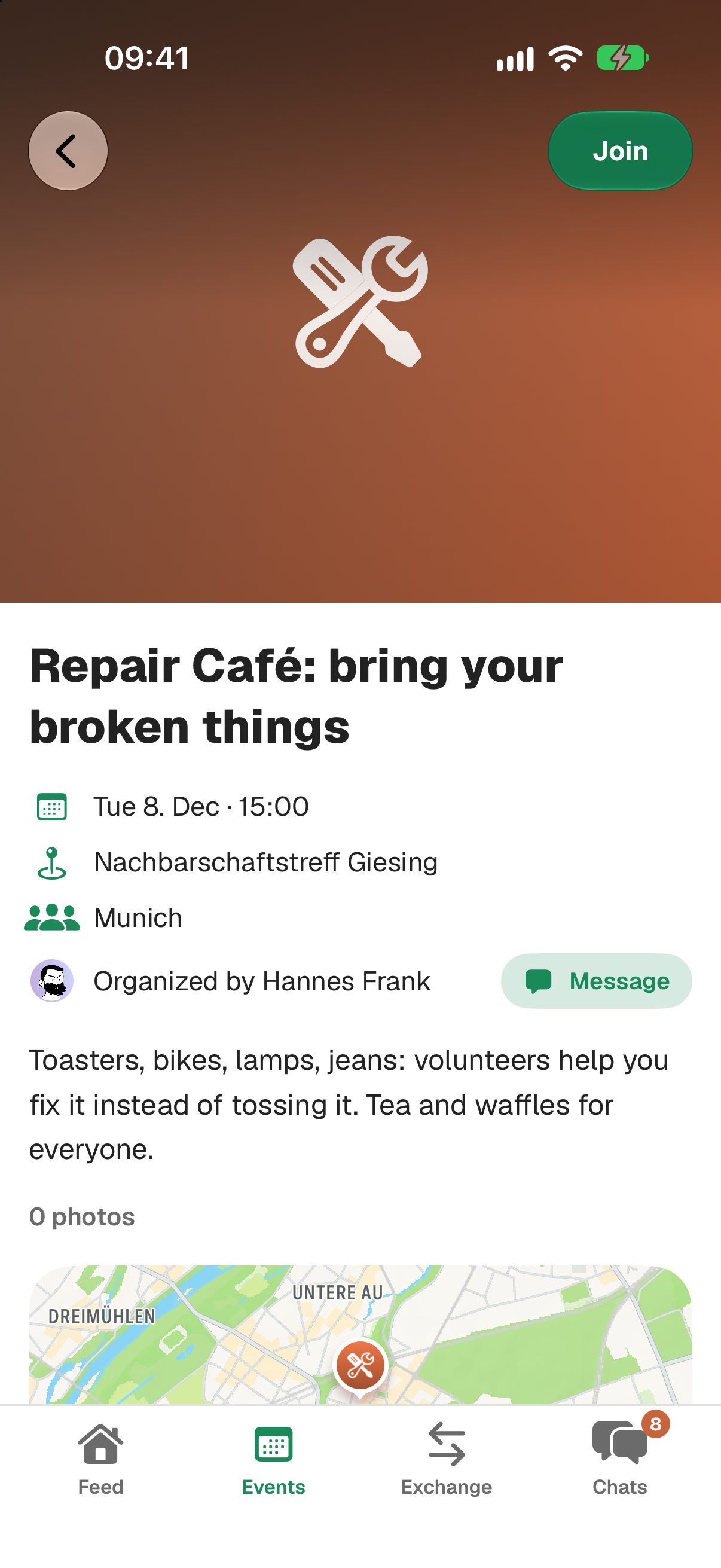
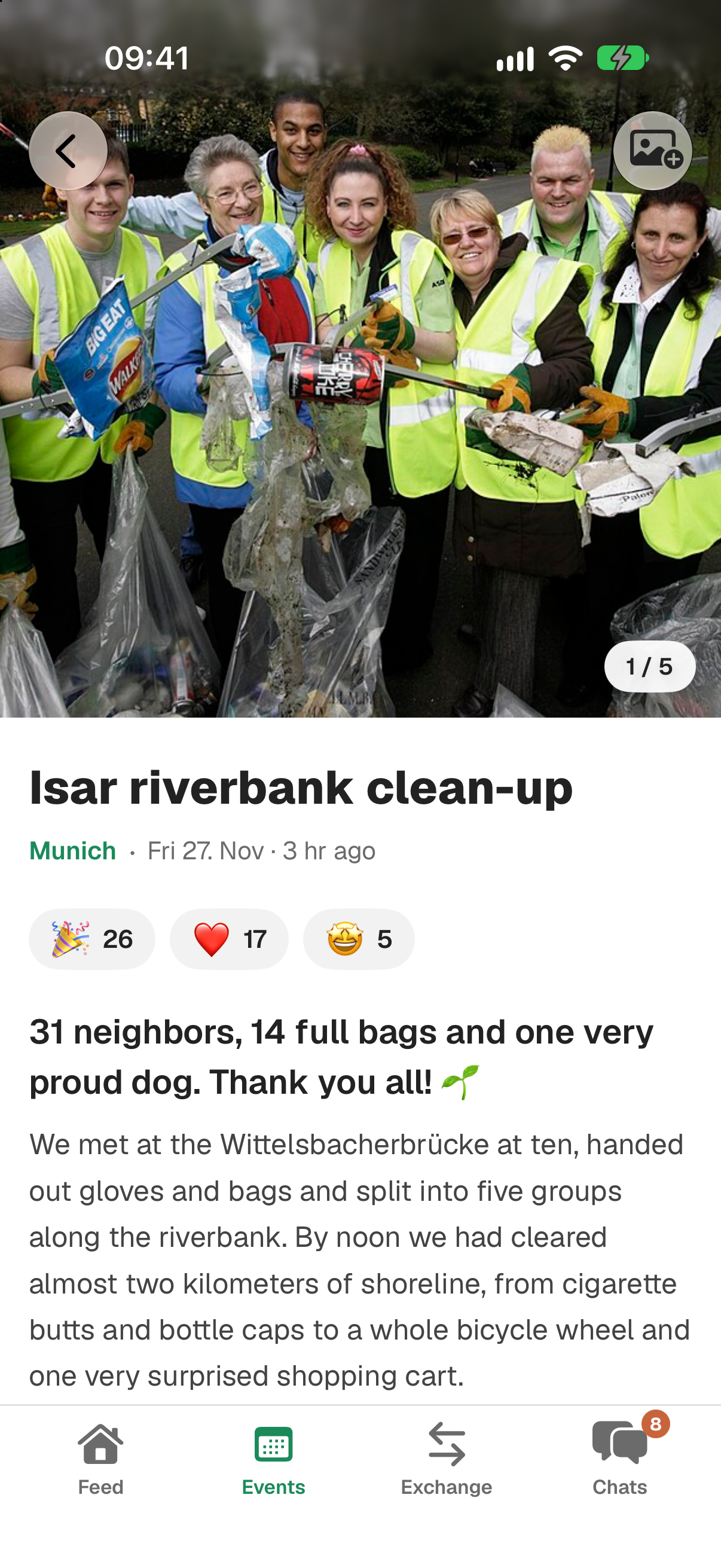
- Events: find, join and organise local meetups and charity activities.
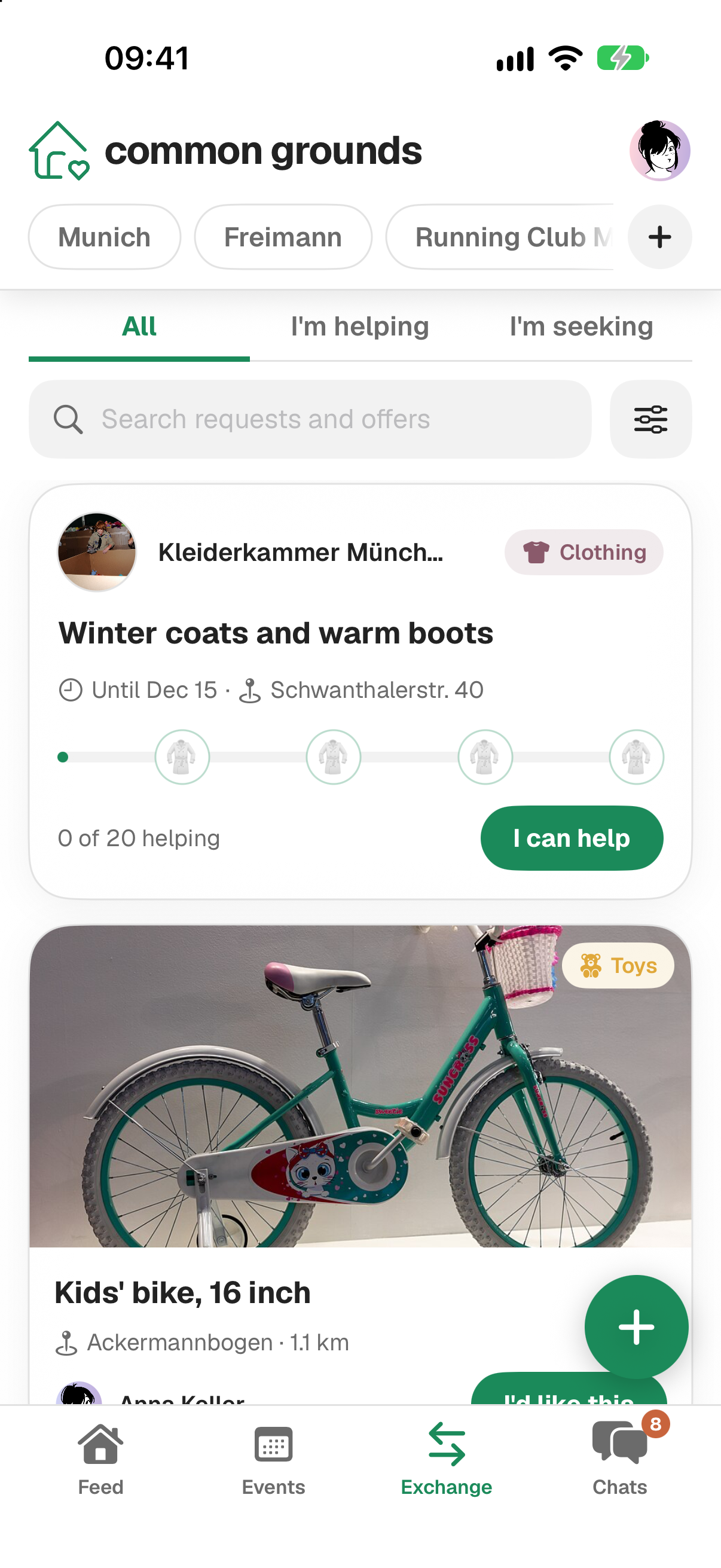
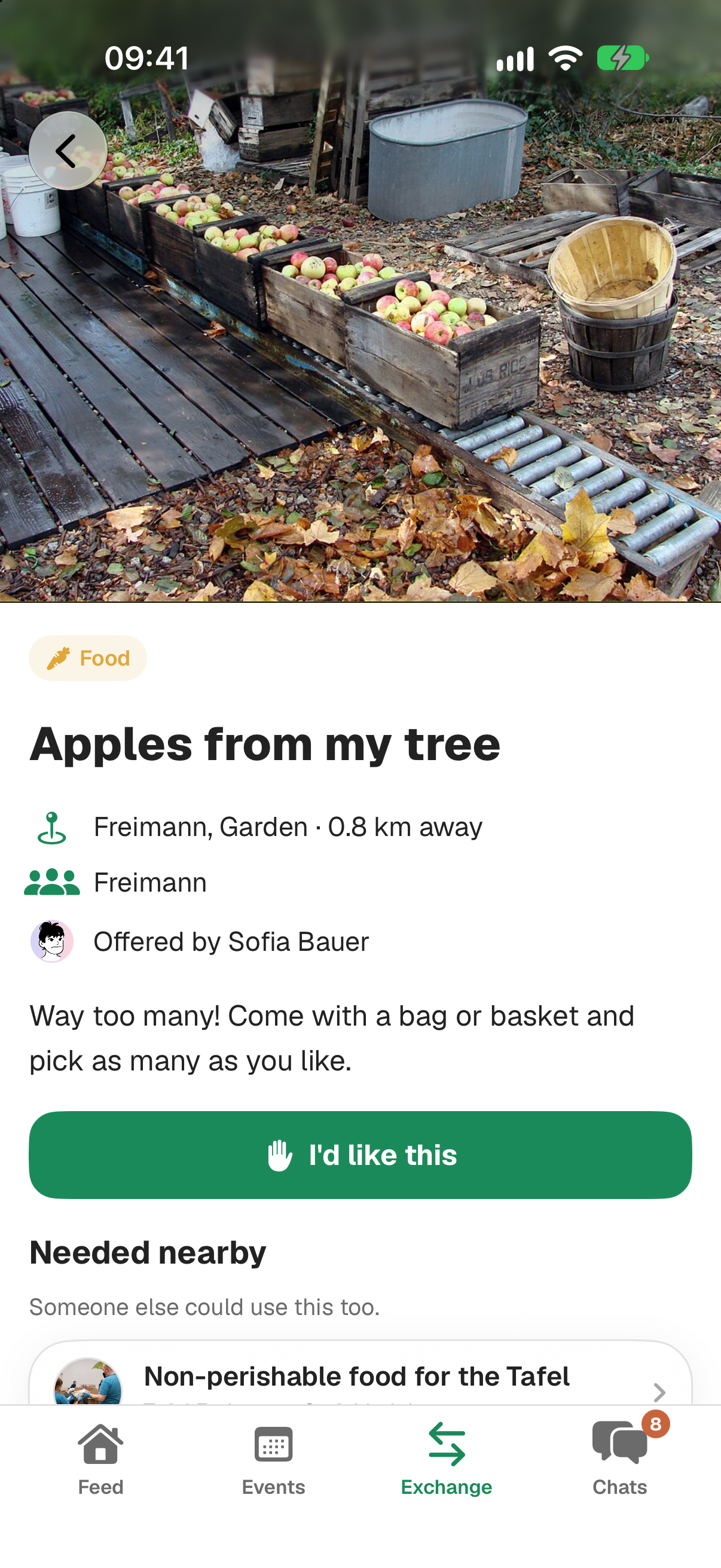
- Exchange: one place to ask for something or offer something for free. It covers items and skills, and works for neighbours and non-profits alike.
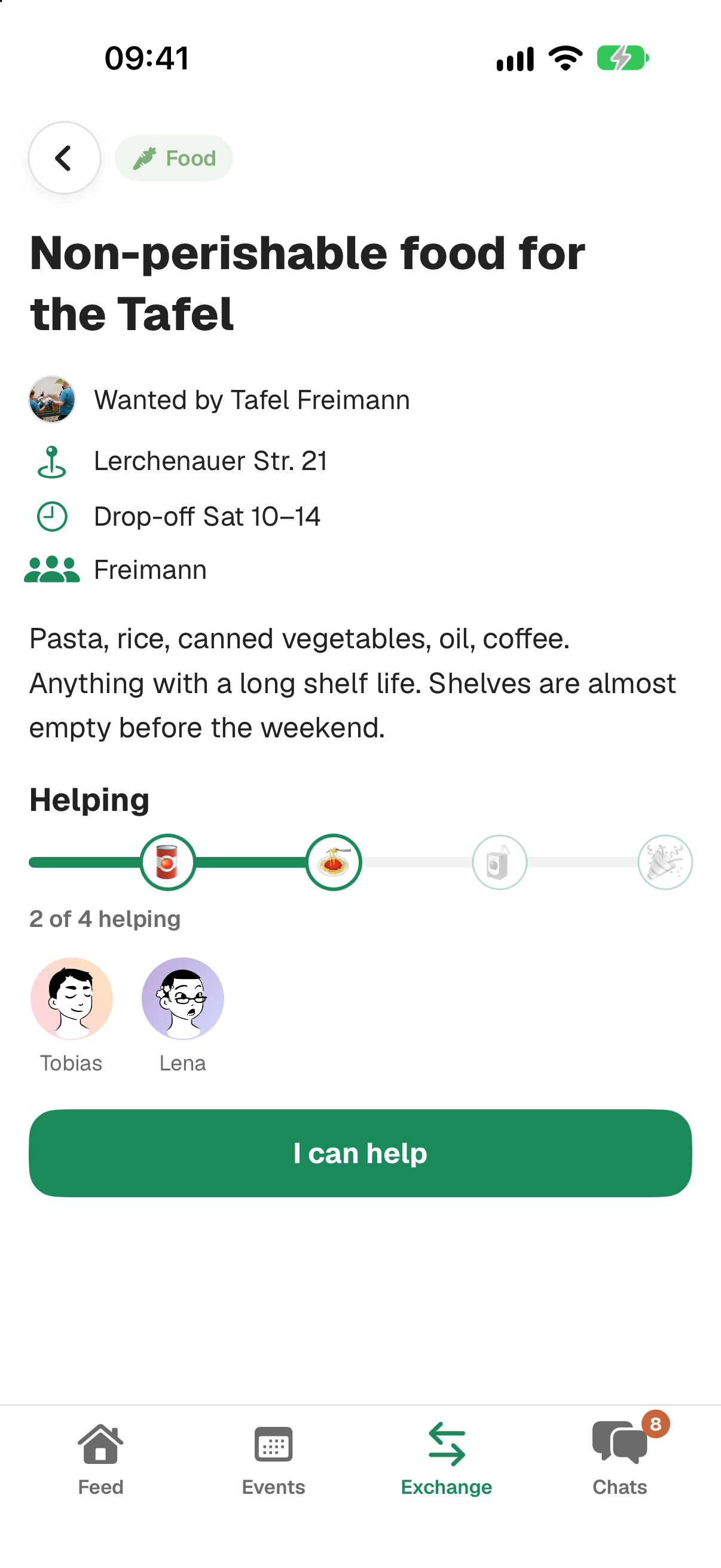
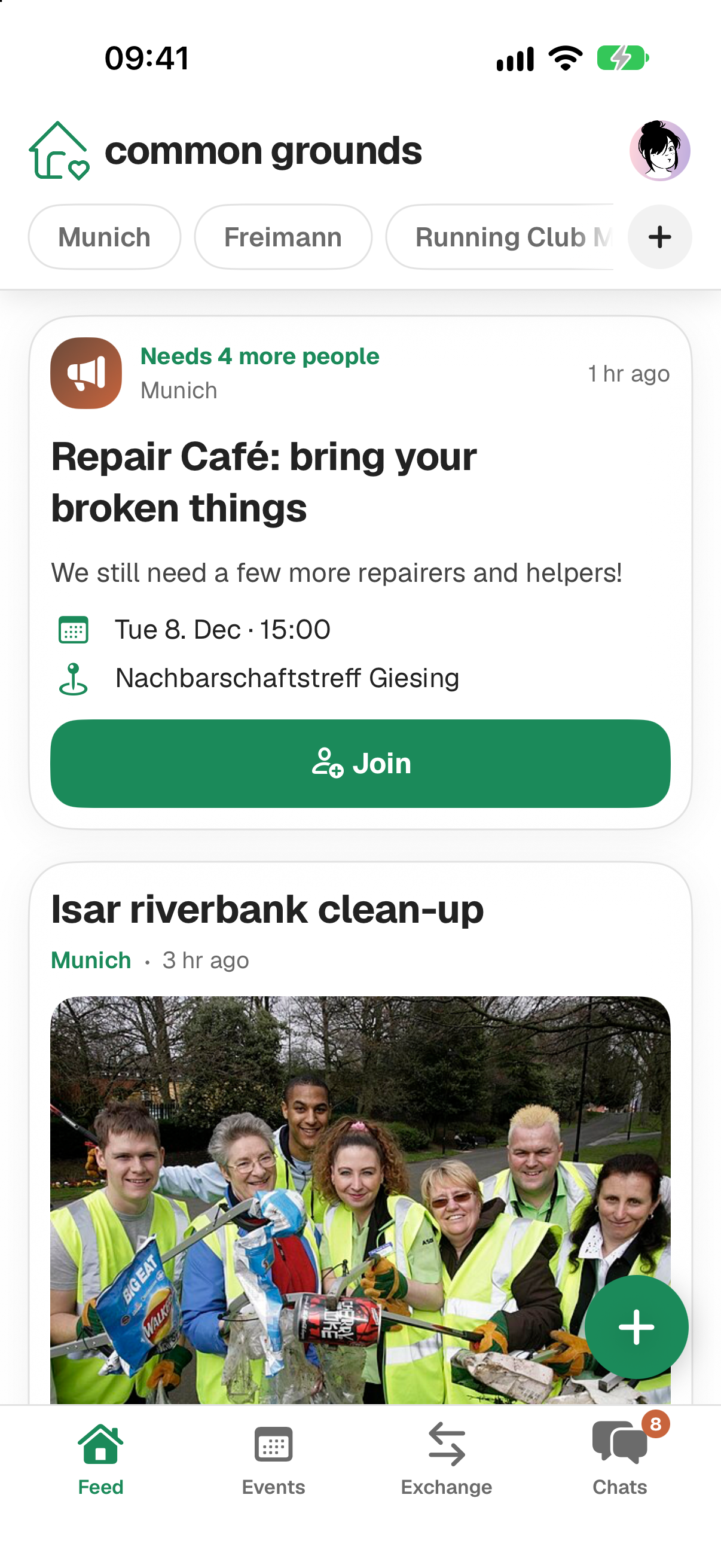
- Visible progress: every request shows emoji checkpoints that fill up as neighbours sign up to help, so everyone sees what is still needed.
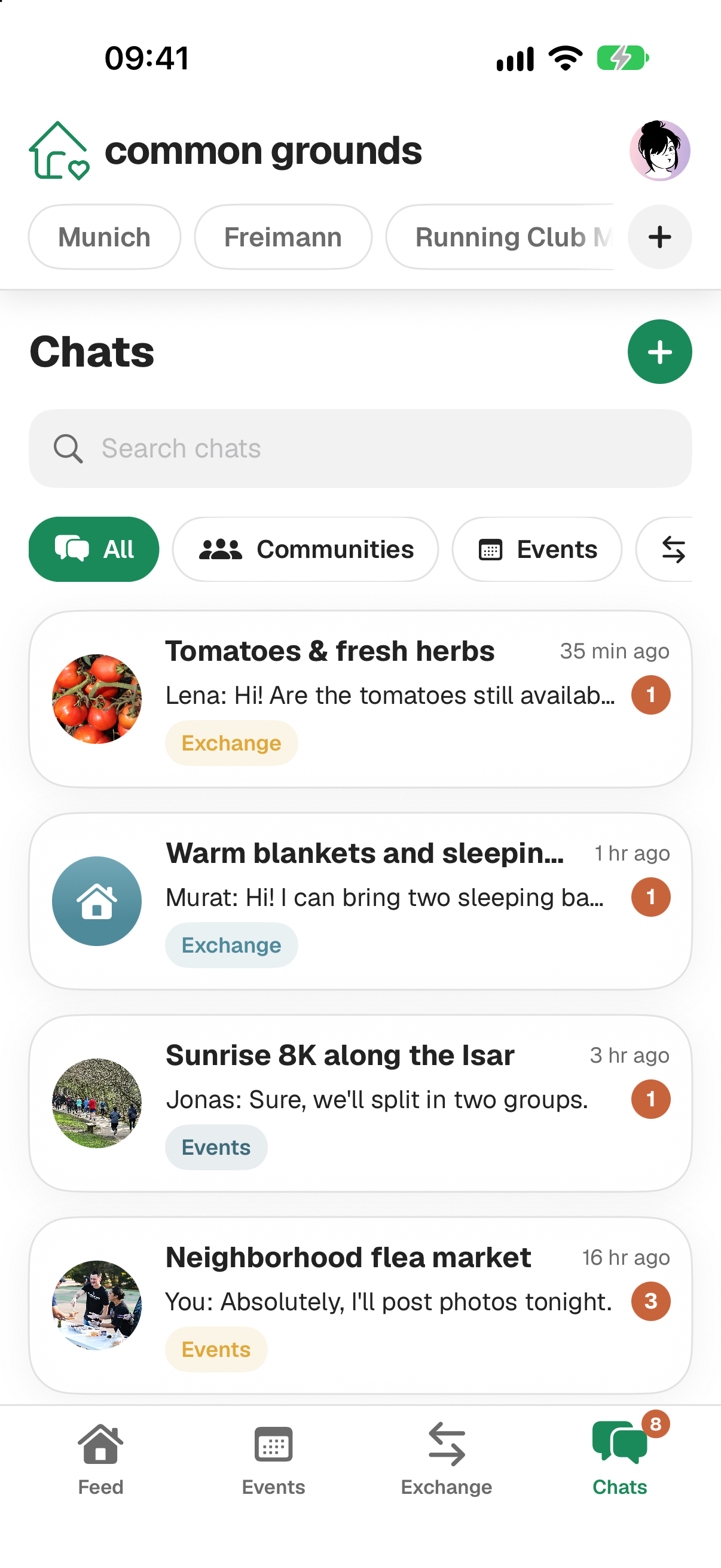
- Chat: every offer, request and event has its own conversation.
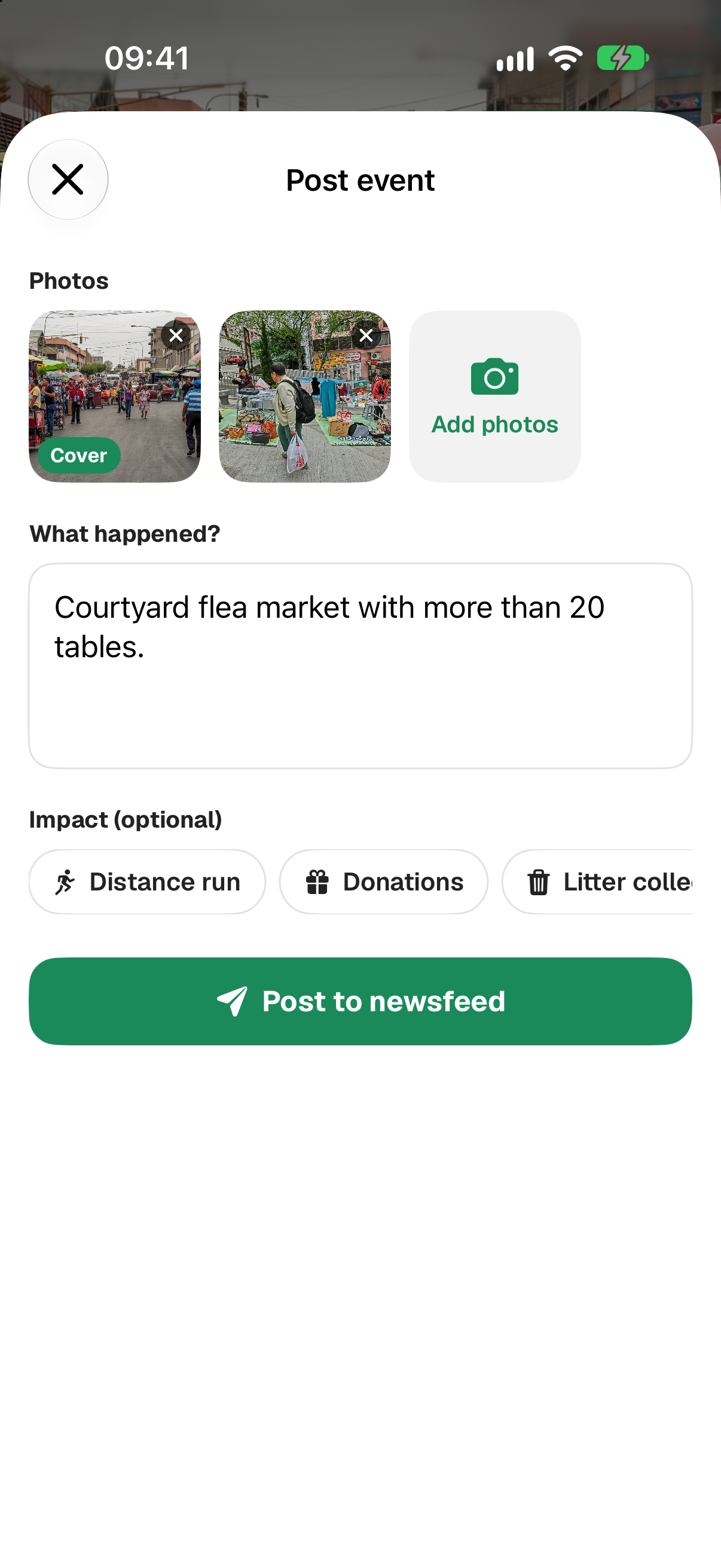
- Good-news feed: finished events and fulfilled requests are shared with their impact, turning everyday kindness into stories the whole community can see.
How we built it
- iOS app: SwiftUI with one shared design system. A mock mode lets the app run without a backend, which is handy for demos.
- Backend: FastAPI on Postgres/PostGIS, so everything is location-aware and relevant to your neighbourhood.
- Infrastructure: Google Cloud (Cloud Run and Cloud SQL), Flyway migrations, push notifications via APNs and photo uploads.
- Process: a repository with shared agent docs and clear conventions, so many people could build in parallel.
Challenges we ran into
- One simple Exchange instead of many screens: we merged requests and offers into a single tab without cluttering the UI.
- Too many filters: early versions overwhelmed users, so we rebuilt search and filtering around patterns people already know from marketplaces.
- Making helping feel rewarding, not like a chore: the emoji checkpoints and the good-news feed grew out of that question.
- Consistency under time pressure: many contributors, frequent merge conflicts and a project rename mid-hackathon.
Accomplishments that we're proud of
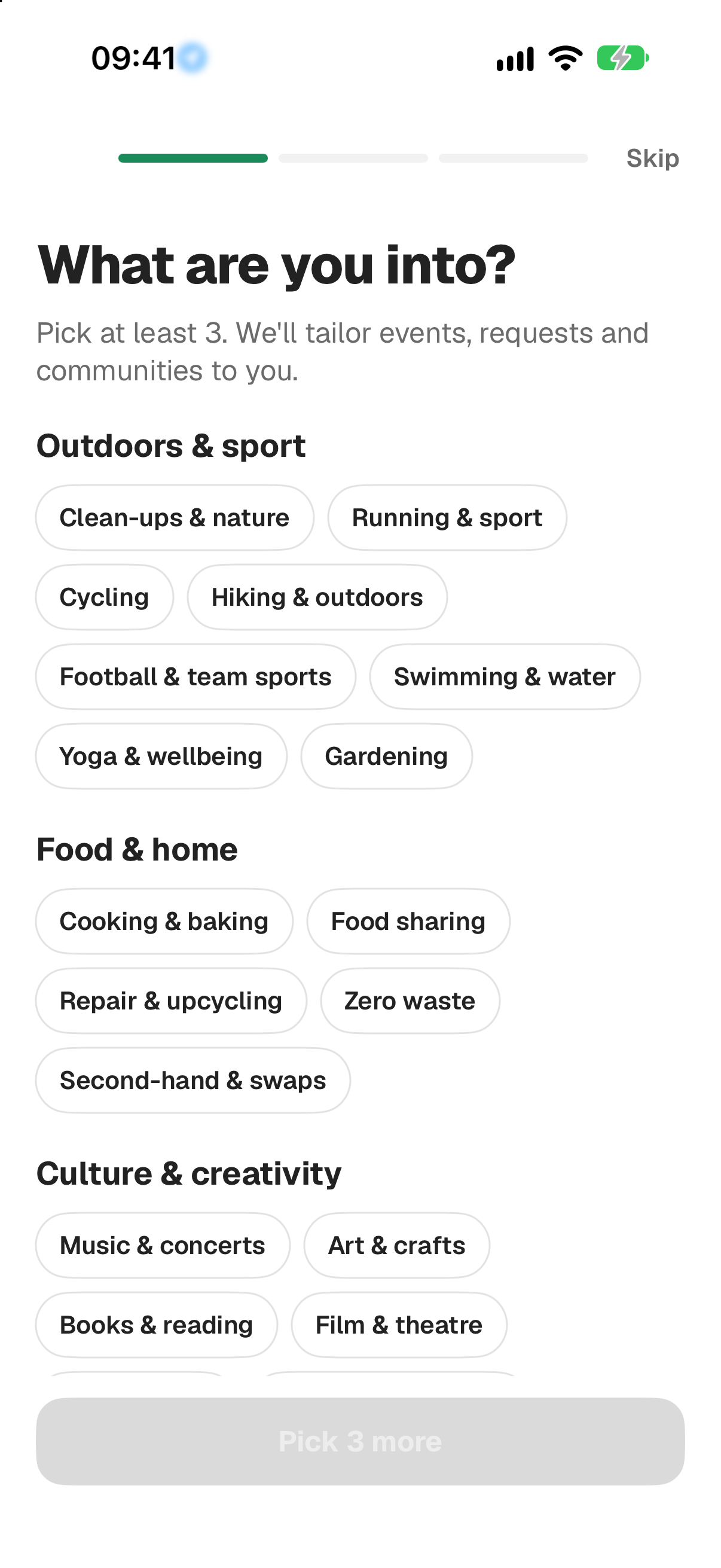
- A complete flow from onboarding (interests, location on a map, communities) to posting, helping, chatting and celebrating the result.
- A calm, consistent UI that stays positive without being cluttered.
- A progress mechanic that shows impact at a glance, so reach and depth of help are visible instead of hidden.
- A deployed backend plus an offline-capable mock mode.
What we learned
- Positive framing is a design decision: what you show (progress, thanks, results) shapes how people feel about their community.
- Less UI is almost always better. Every button and filter had to earn its place.
- Impact only counts when people can see it, so we made it visible.
- Shared conventions matter more than speed when many people build at once.
What's next for Common Grounds
- Connect the remaining features to the live backend: editing and closing requests, hand-over confirmation and organisation logos.
- Verified non-profit profiles, open only to registered, apolitical organisations with public-benefit status, so charities can post needs and volunteers can find them.
- Real impact numbers per community, such as helpers, hours and items shared.
- Map-based discovery and push notifications for new requests nearby.
- A pilot with one Munich neighbourhood and one local charity.

