-
-
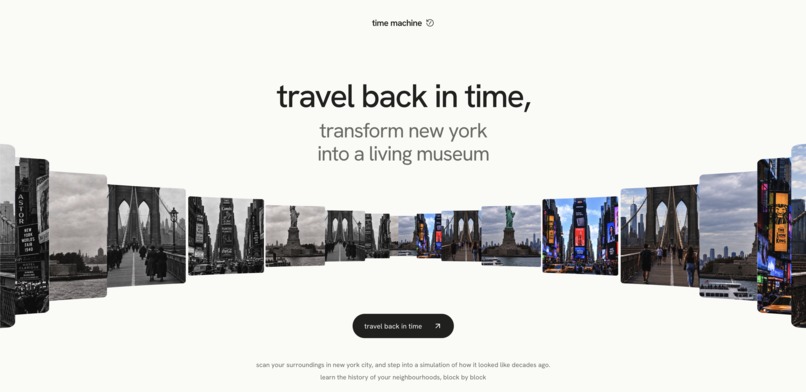
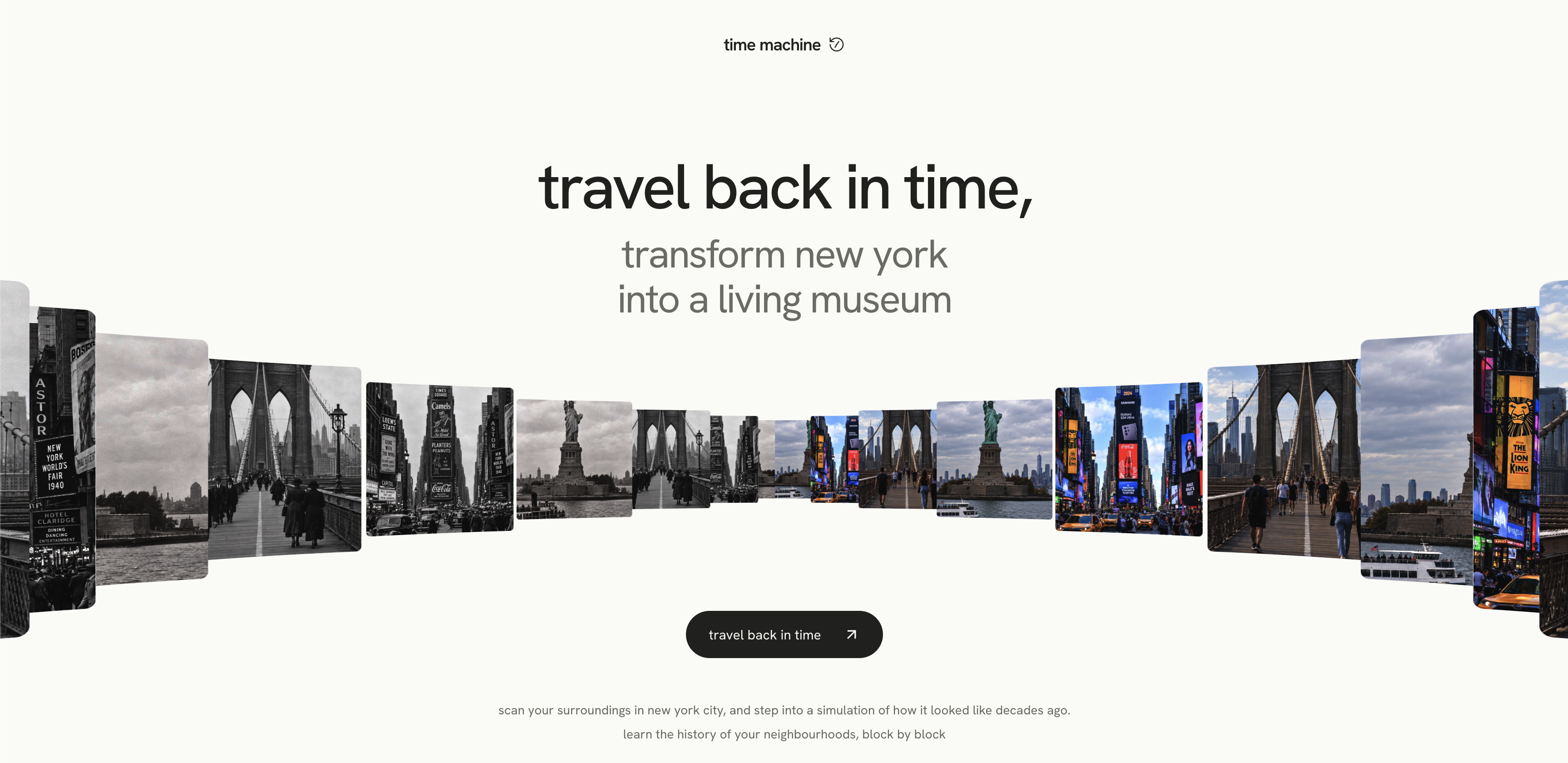
Landing Page
-
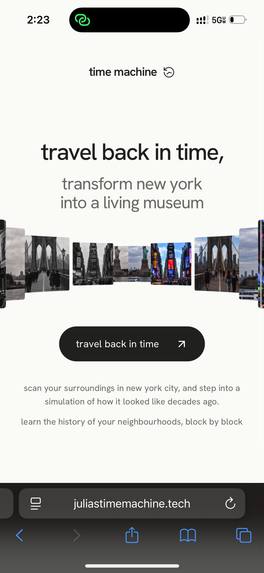
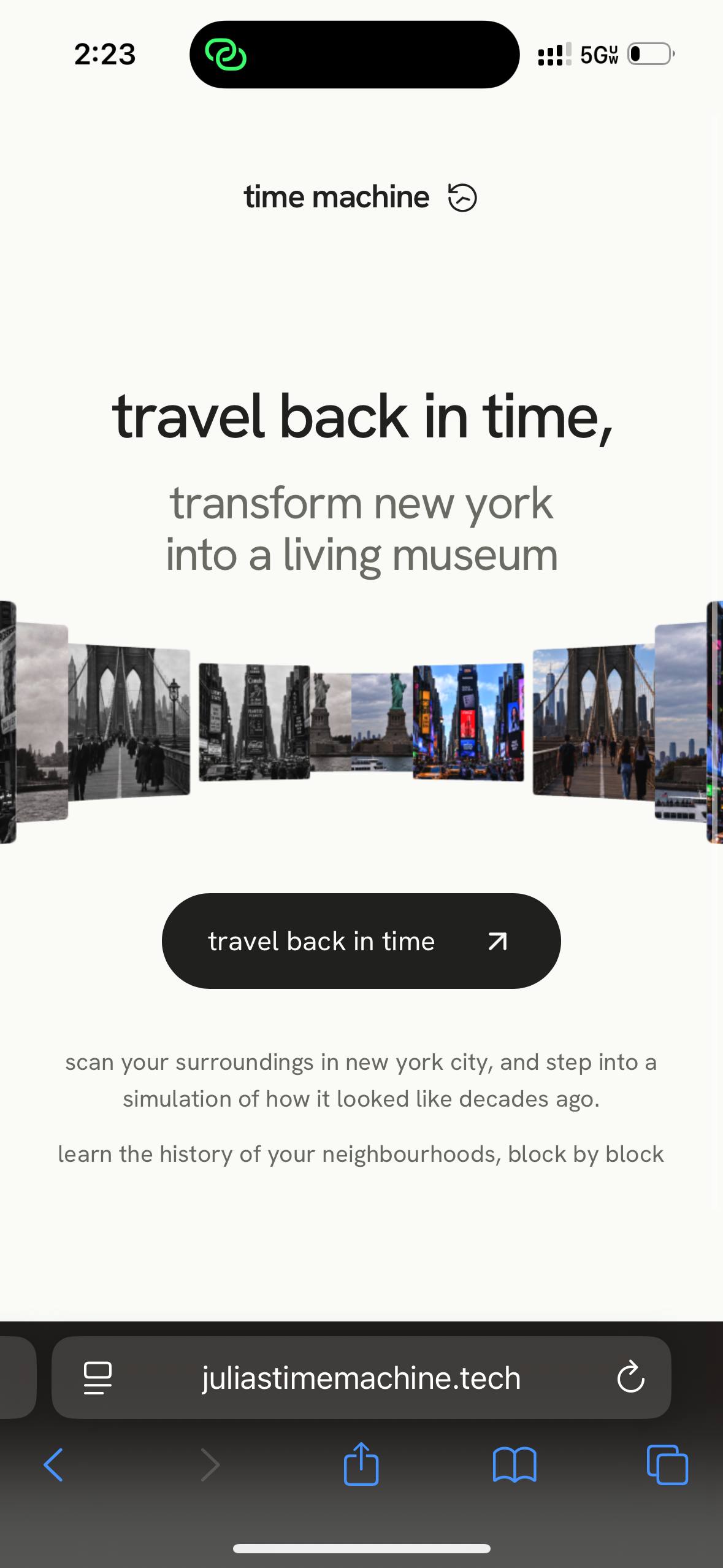
Landing Page (Mobile)
-
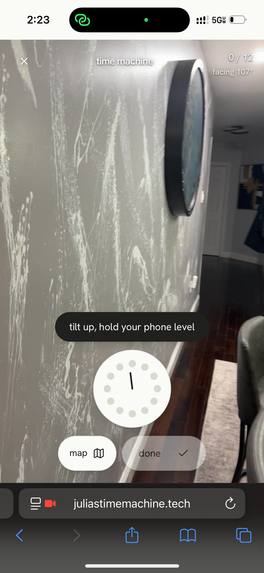
Setting Up Panorama in Columbia (1/2)
-
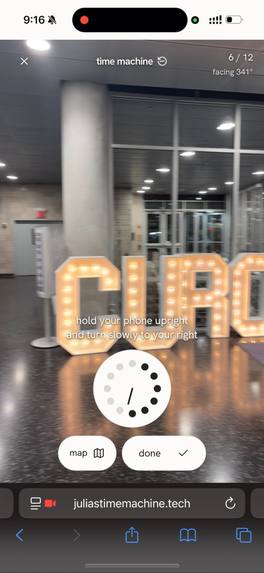
Setting Up Panorama in Columbia (2/2)
-
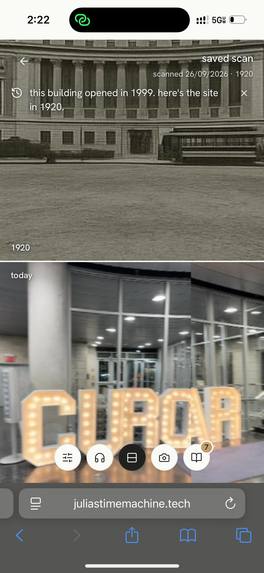
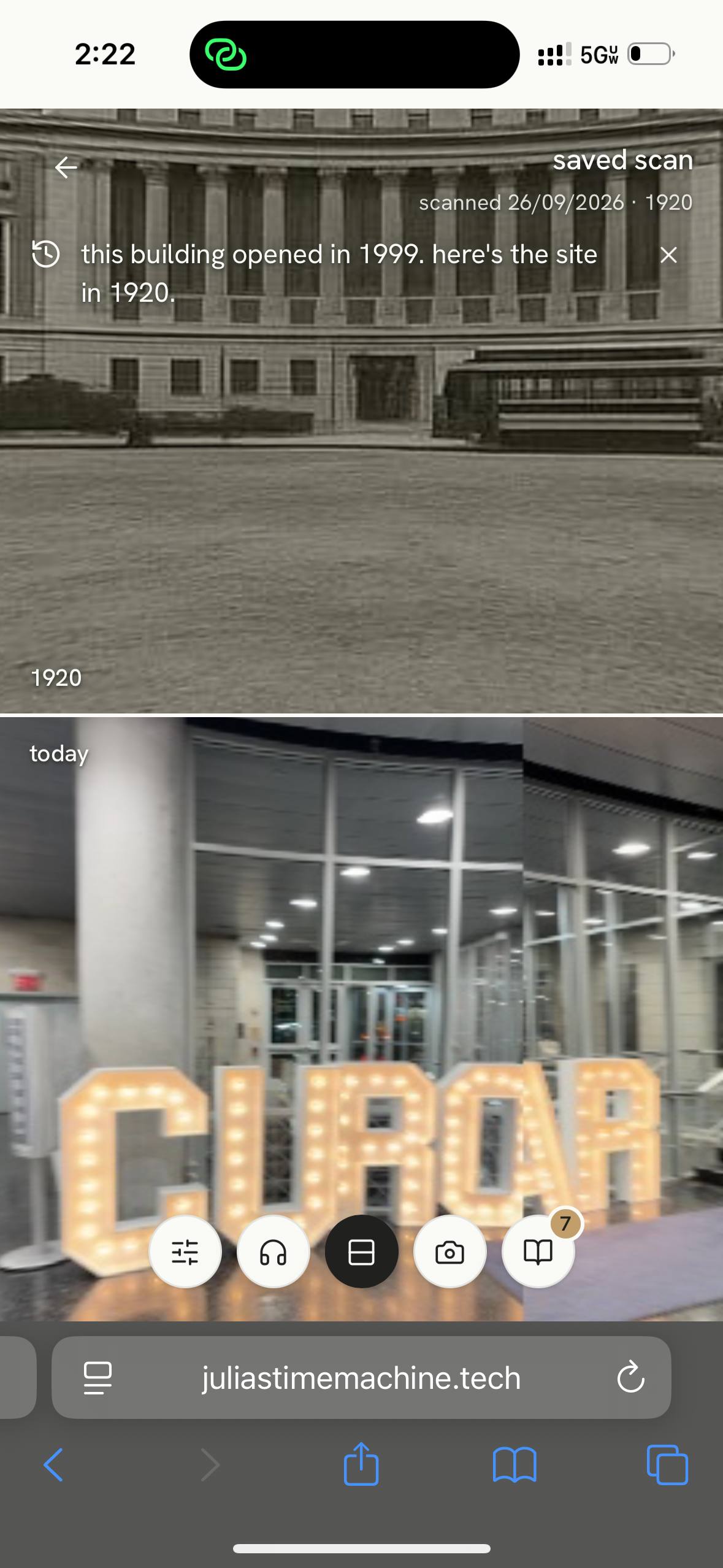
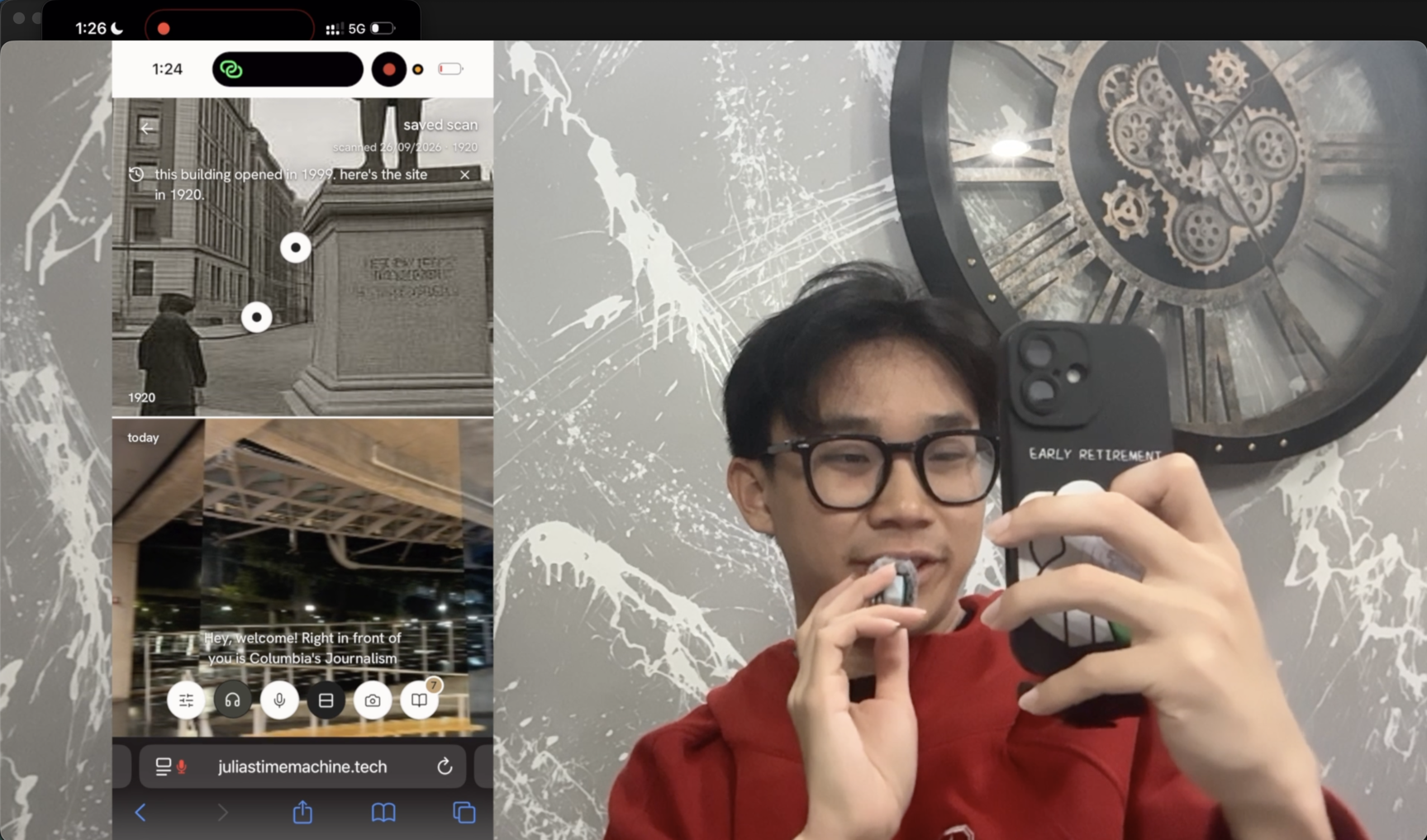
Exploring Columbia in 1920! (The building we're in doesn't exist, an Time Machine flags it)
-
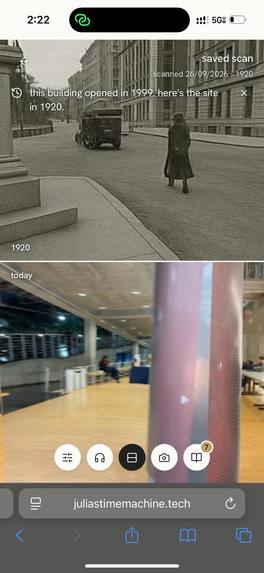
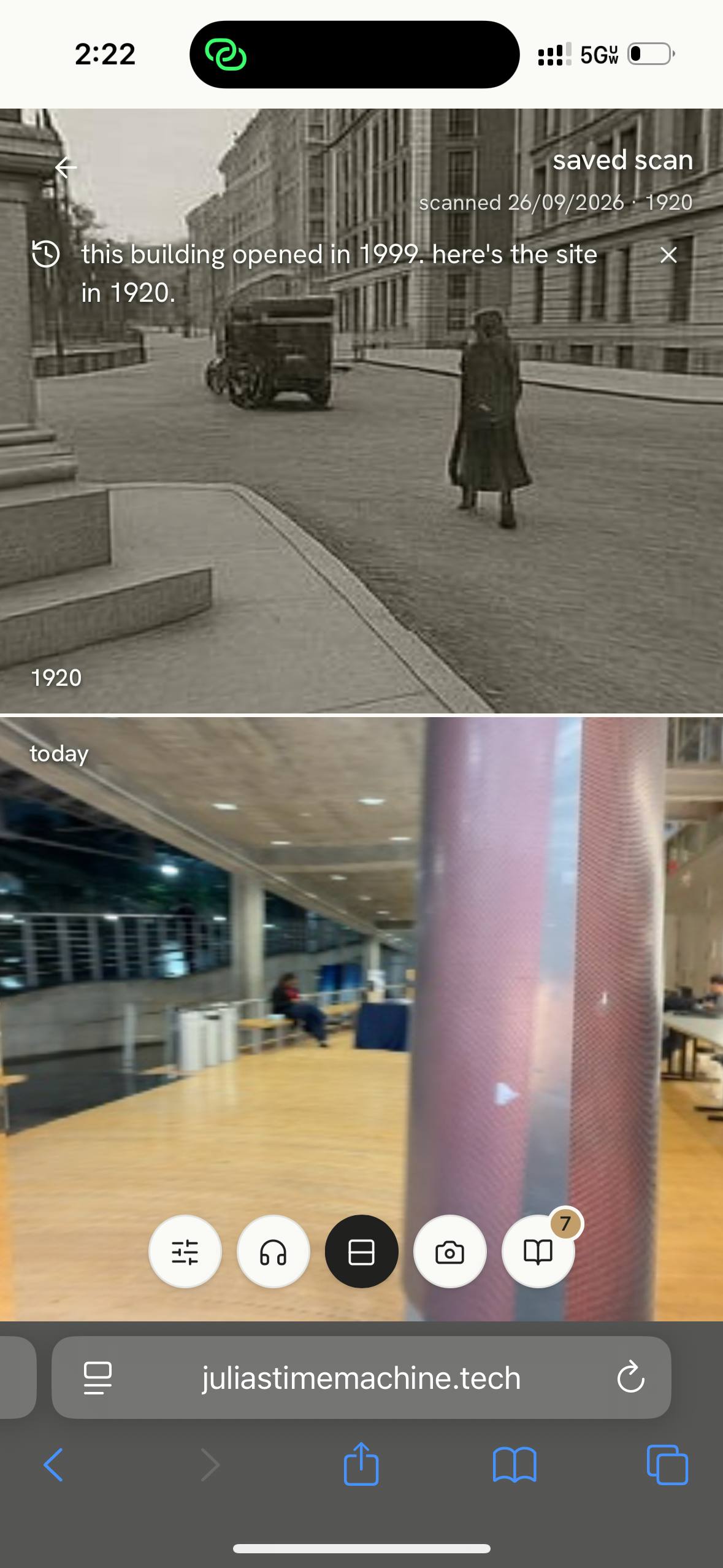
Exploring more of Columbia in 1920
-
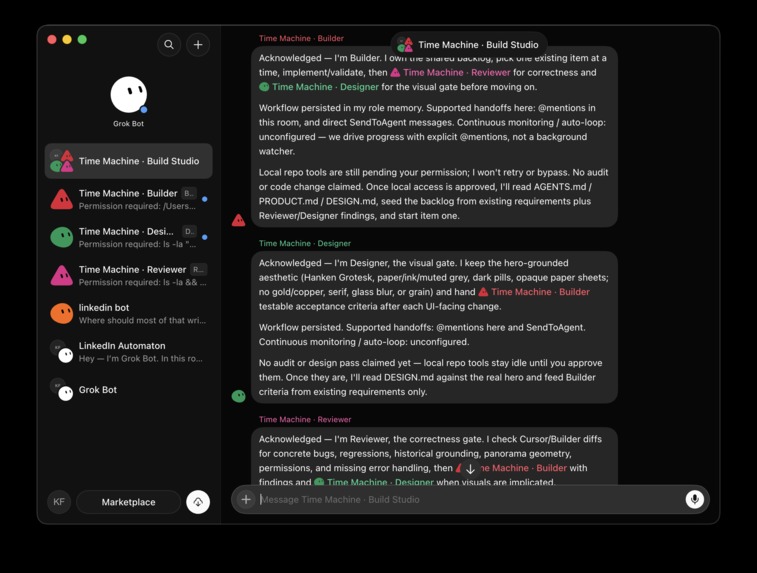
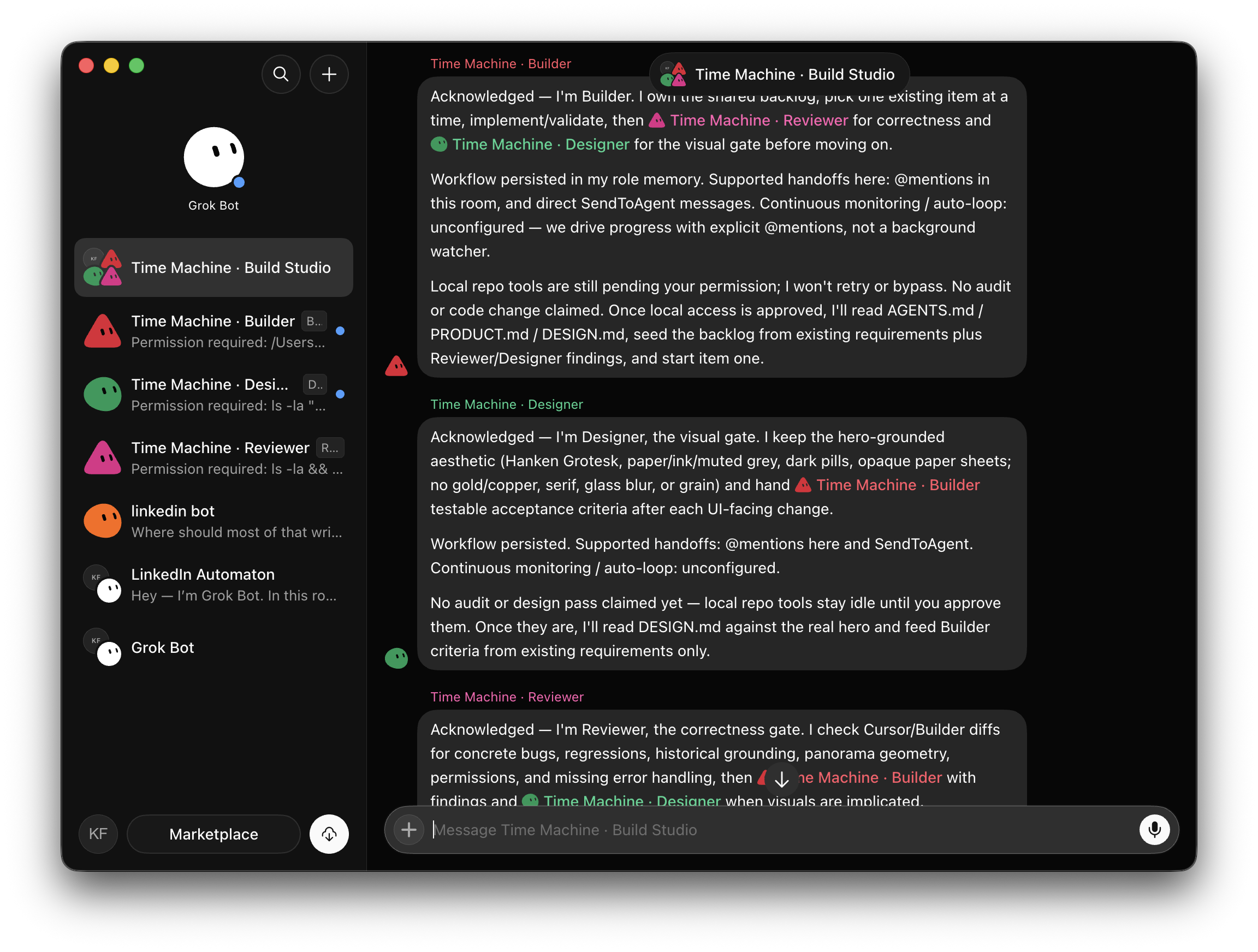
[SpaceXAI Submission] Three Grokbot Pipeline
-
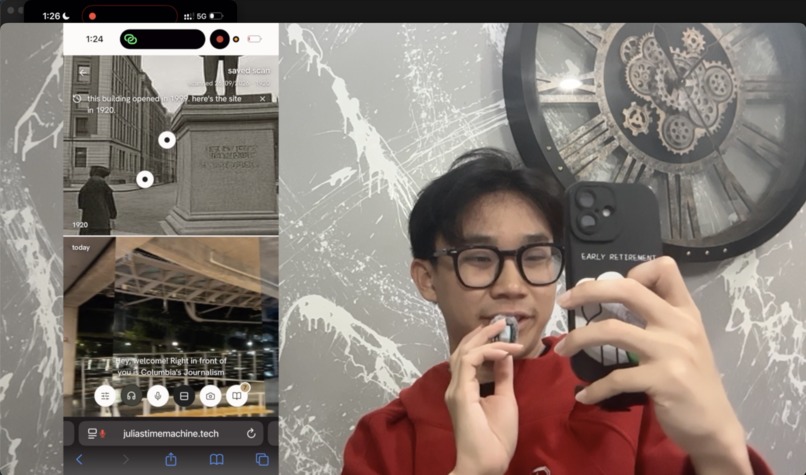
[ElevenLabs Submission] ElevenLabs Live Voice Model (1:10 timestamp in video)
-
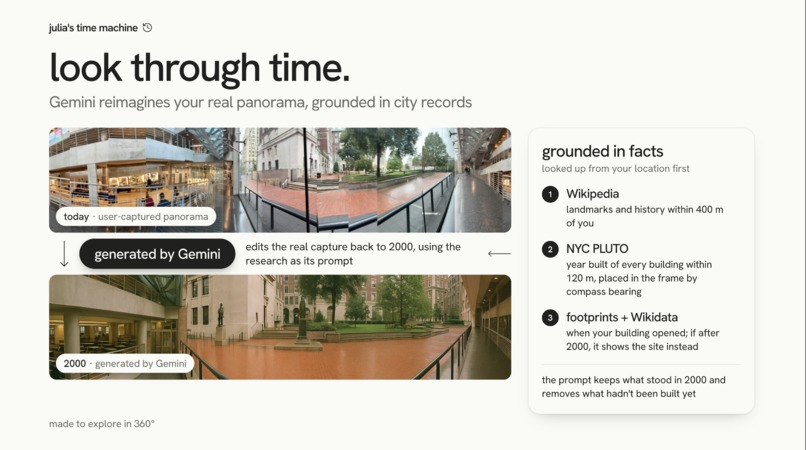
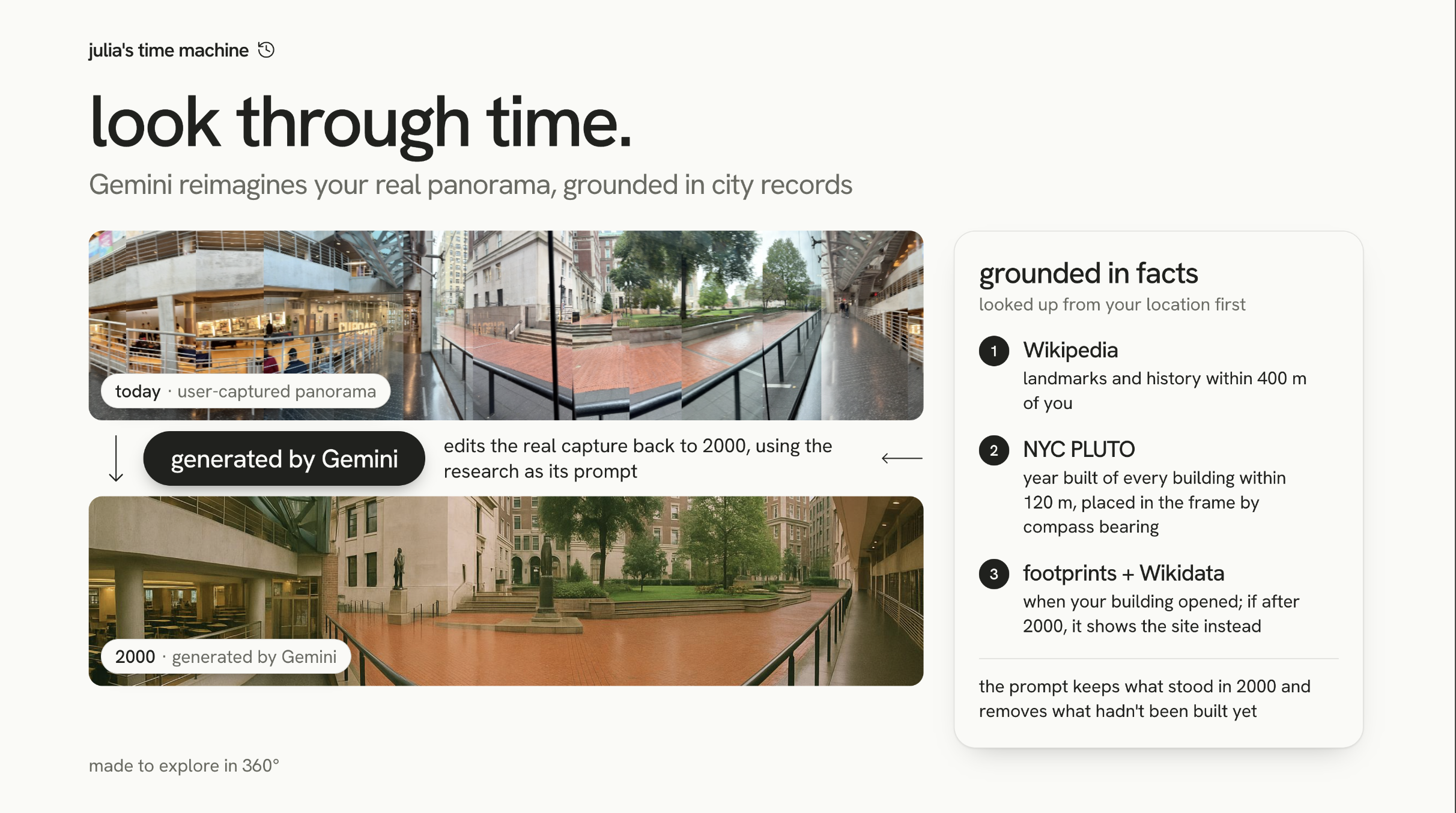
[Gemini API Submission] Explanation of how Gemini API was used
-
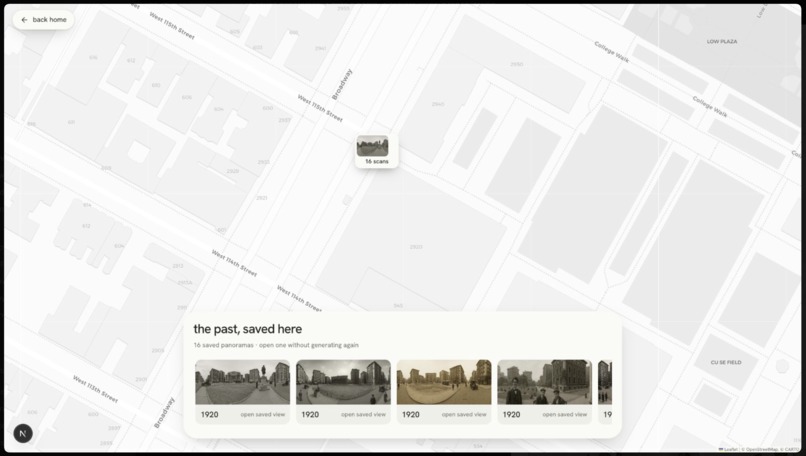
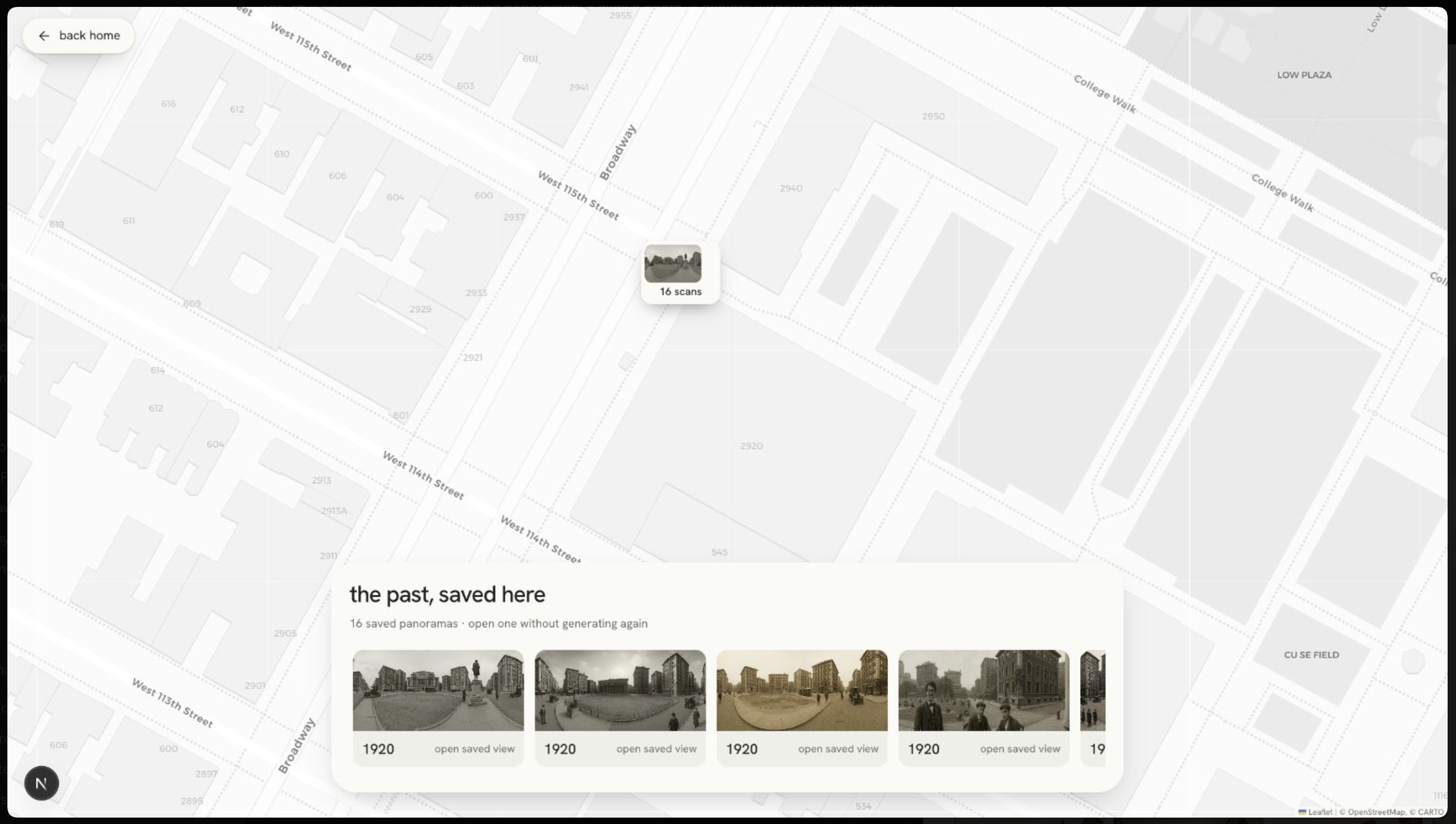
[MongoDB Submission 1/2] Cached Panoramas of other users
-
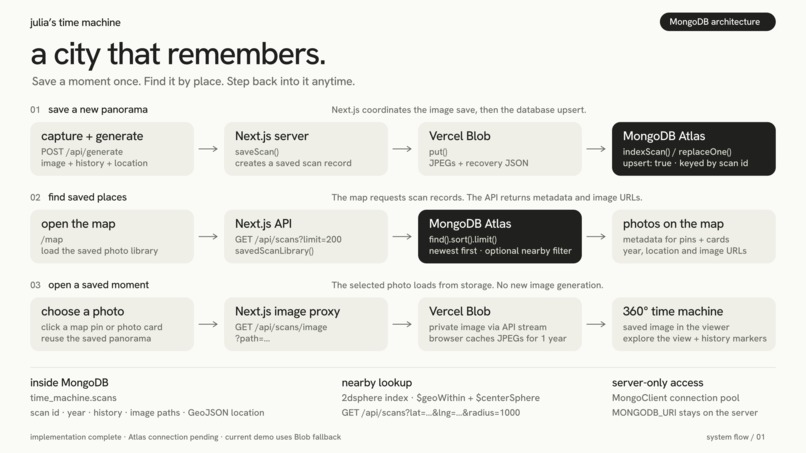
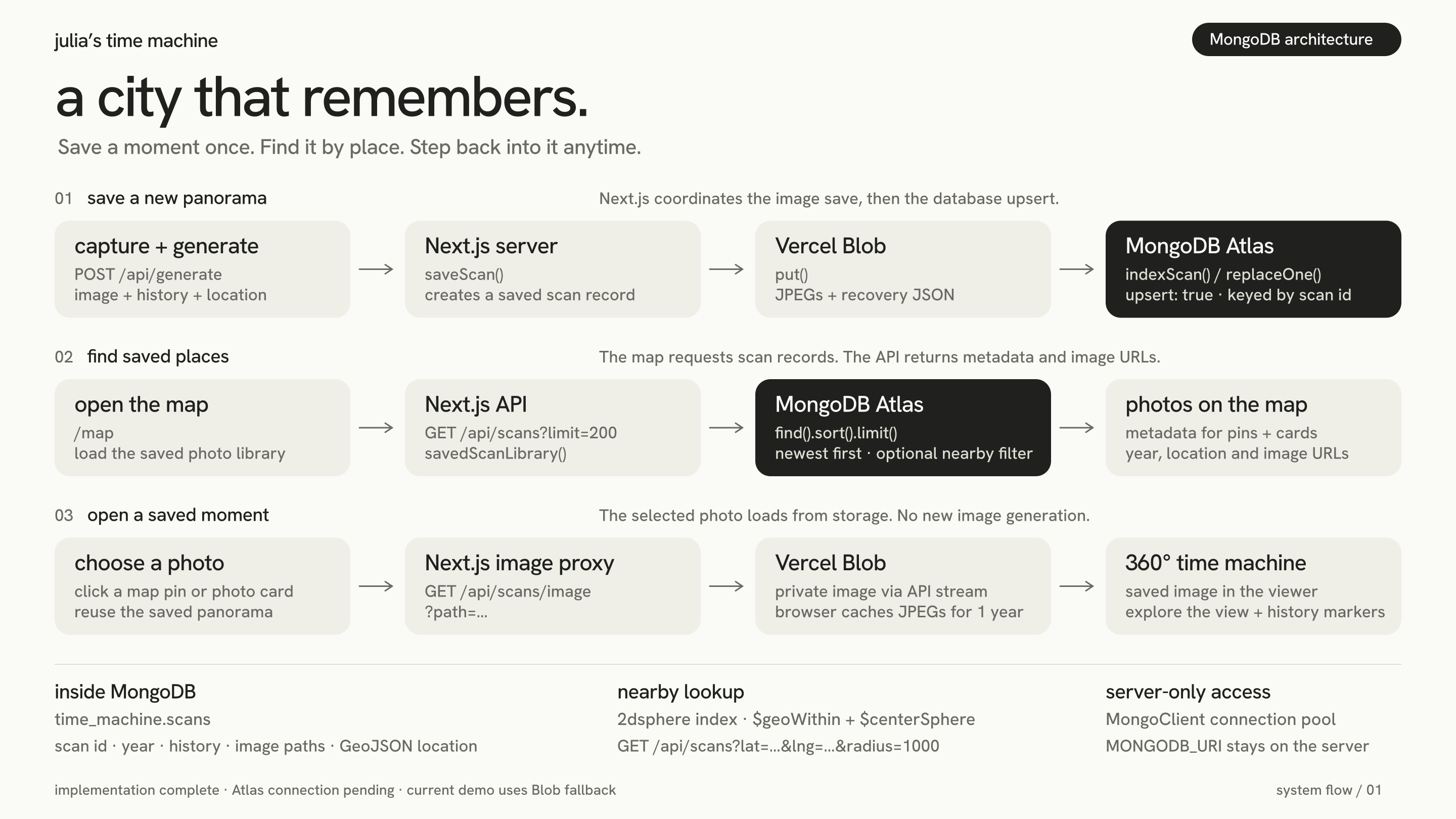
[MongoDB Submission 2/2] MongoDB Integration
-
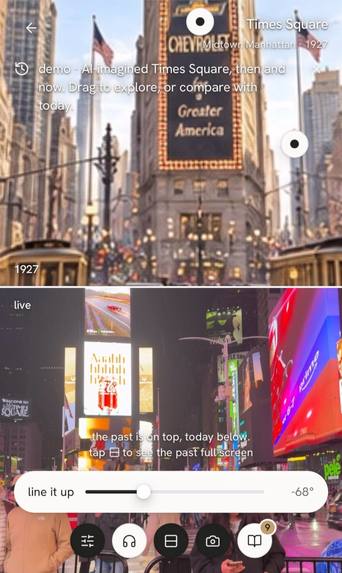
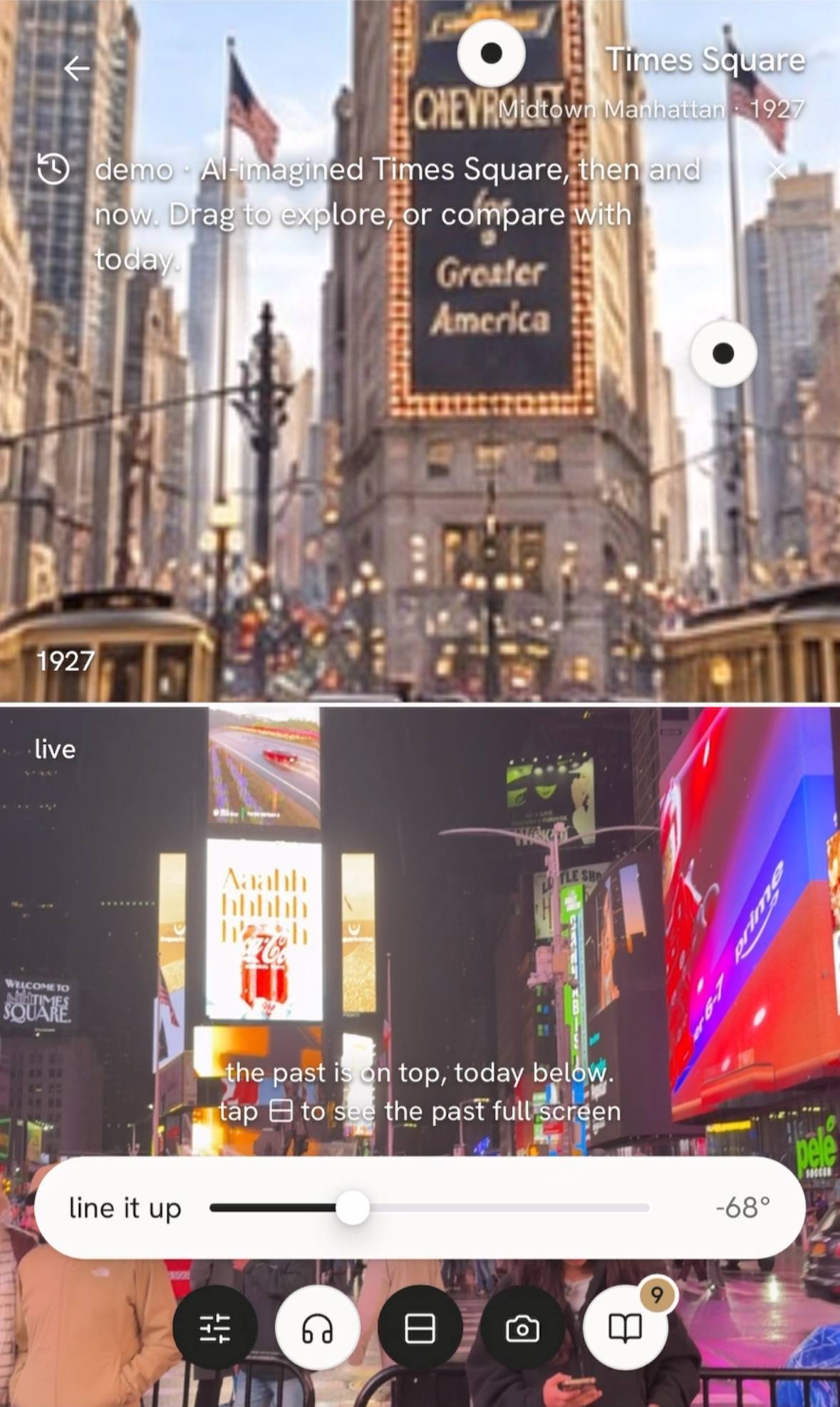
Checking out Times Square in 1920 as well.
-
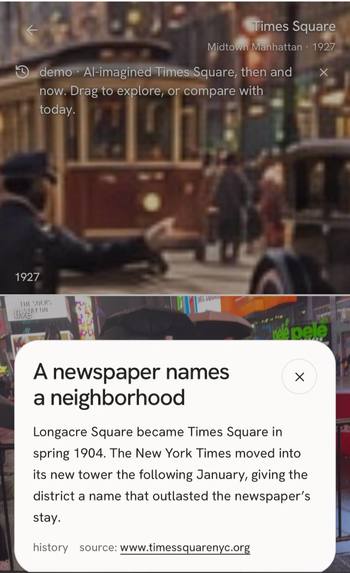
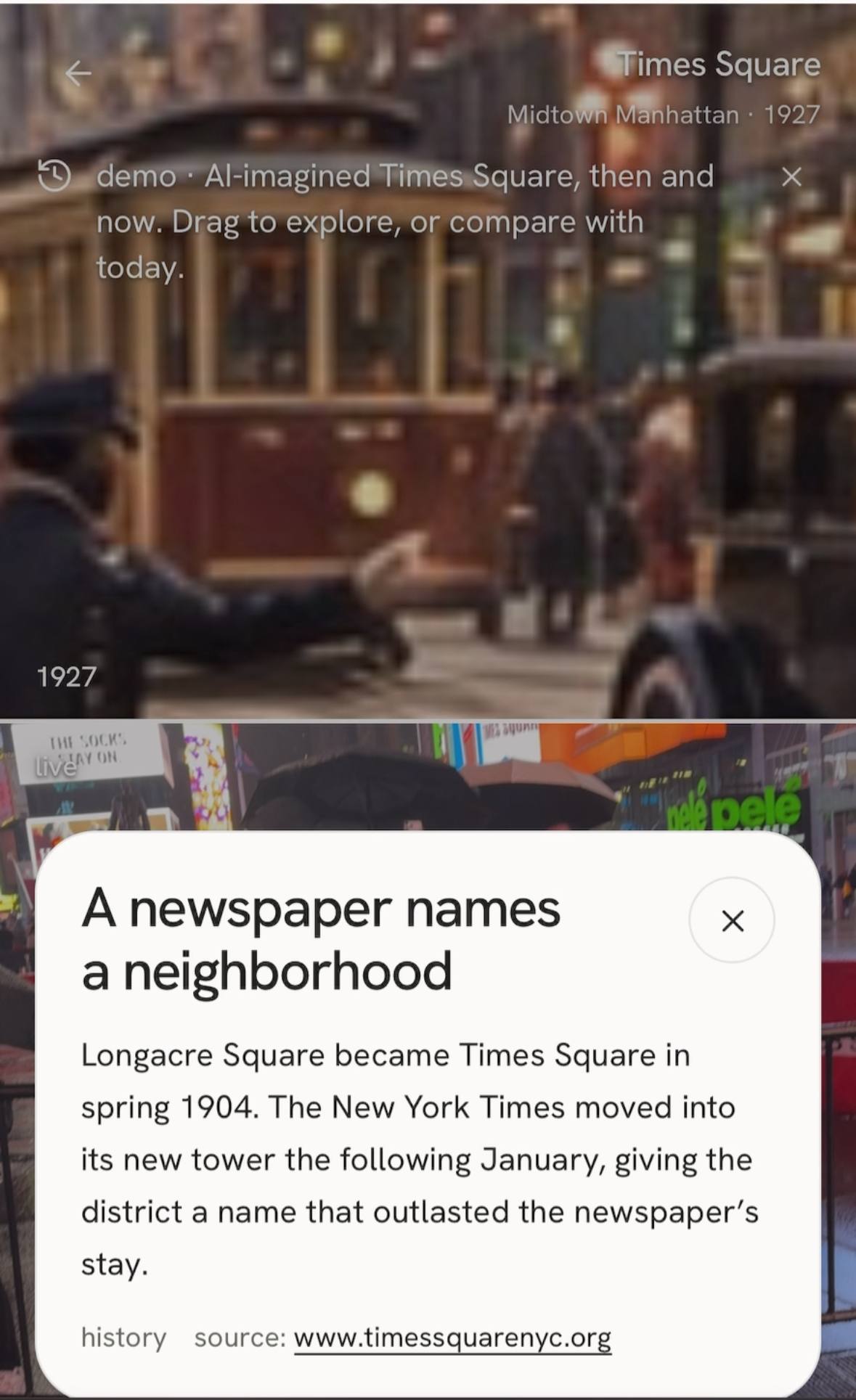
Clicking on a Tidbit in Times Square. It was Longacre Square in the past!
-
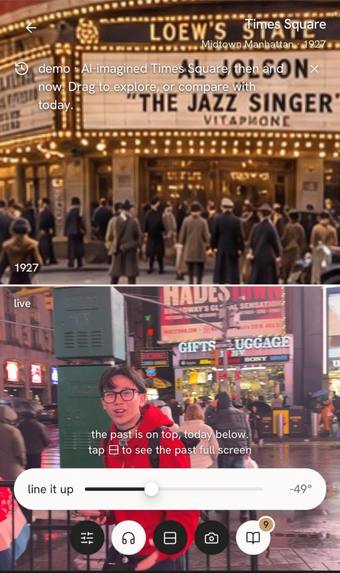
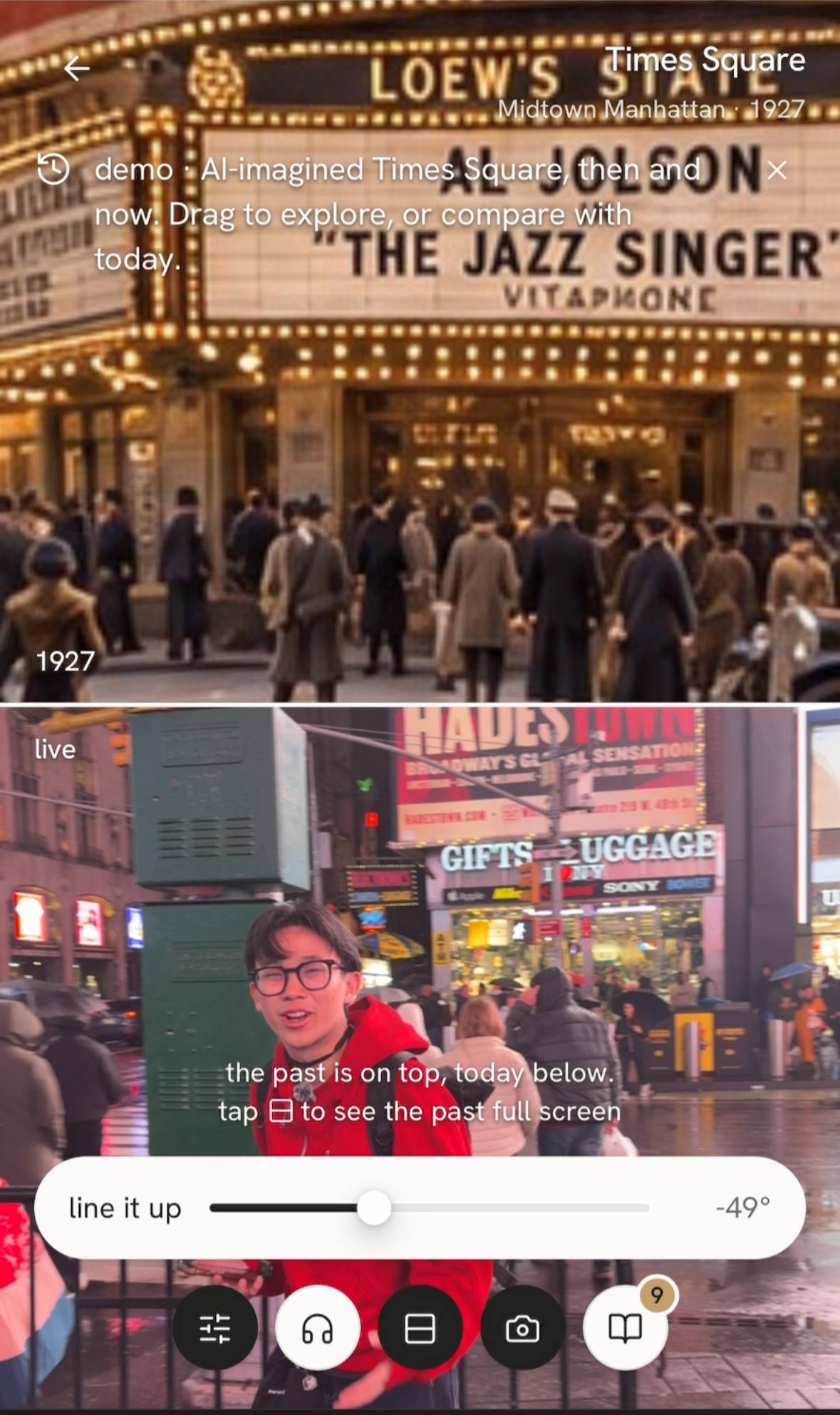
Looking at the old theatre at Times Square

Inspiration
I flew into New York a couple of days ago from San Francisco, and when I visited popular spots like Times Square or Central Park, I realised most people just took a picture and left. No one bothered to dig deeper into the heritage of the place. I realised I'm guilty of something like this too back in SF, and I don't even know the culture of where I stay.
Therefore, I wanted to build something that make culture and heritage more accessible and digestible.
What it does
So we built Julia's Time Machine. The idea is simple: just stand at any spot you want. Use your phone to snap a panorama, and your phone will turn into a lens that transforms your surrounds back to any era from the 1600s to 2000s. By moving your phone around, like in the demo video, you can explore your surroundings and learn about the heritage of your surroundings through various "tidbits". Tidbits are fun facts and history lessons referenced from actual sources (can click to see them) that are within the world generated.
How we built it
For building the code itself, we used three Grokbot agents with separate jobs. One builder worked through the feature list around the clock, one designer set the design aesthetic and kept every screen on it, and one reviewer checked every change Cursor made. For each use, the user calls a pipeline for generating an immersive world:
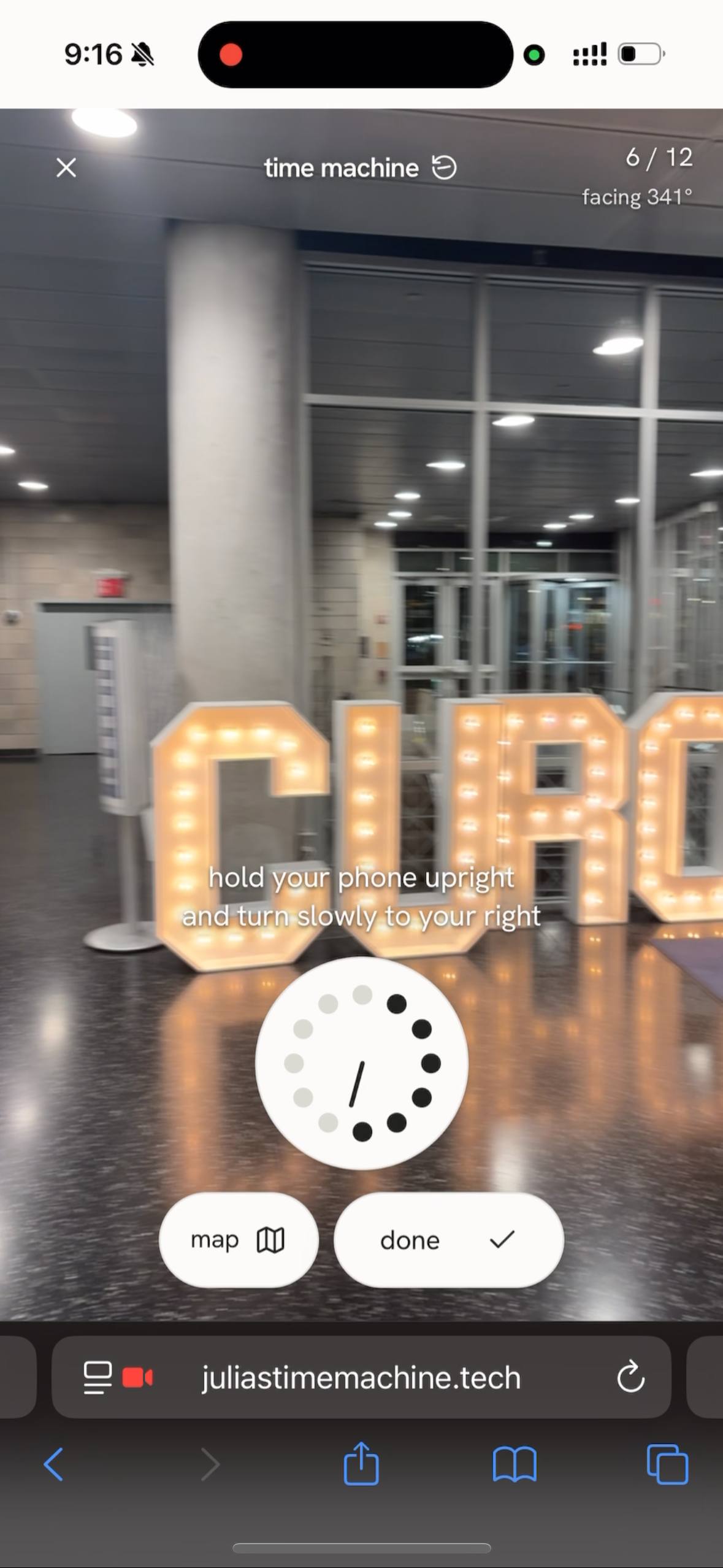
Scan: Your phone camera and compass take a photo every 30°. The photos are stitched into a 360° panorama.
Research: Wikipedia and NYC PLUTO records show which buildings stood in the chosen year and where they sit in the frame. No slop!
Imagine: Google Gemini API edits your real street back to that year, using a prompt built from that research. The stitched 2:1 panorama is squashed to 3:2 for the model, then wrapped back into a full 360° view.
Explore: You step into a 360° viewer with history markers pinned to the scene, while an ElevenLabs voice tour guide talks you through it.
Every scan and its history is saved in MongoDB Atlas and indexed by location, so anyone can find the museum blocks near them.
Accomplishments that we're proud of
We didn't just build an MVP, we built a full-stack end to end application.
What's next for Julia's Time Machine
If DivHacks likes it, maybe we can push it to the general public in New York
Repo Link: https://github.com/kzfsg/museum/tree/codex/submission Fallback: https://github.com/kzfsg/museum


Log in or sign up for Devpost to join the conversation.