-
-
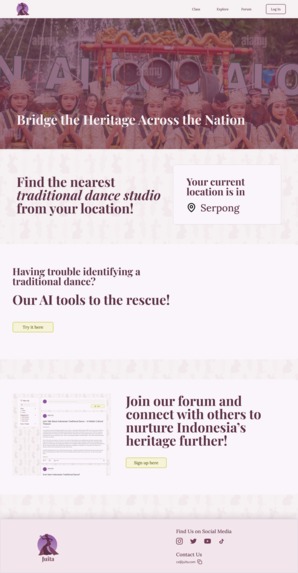
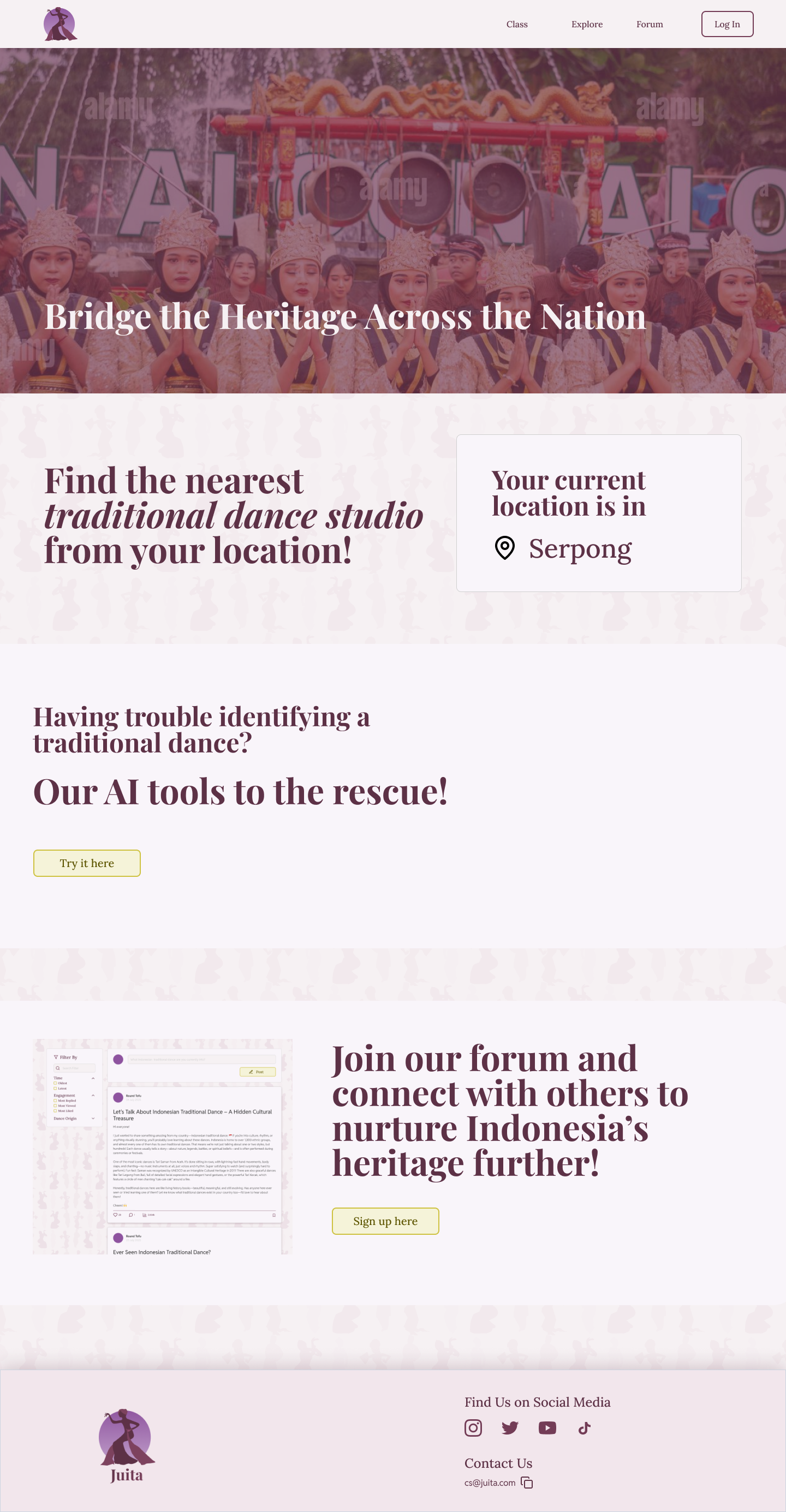
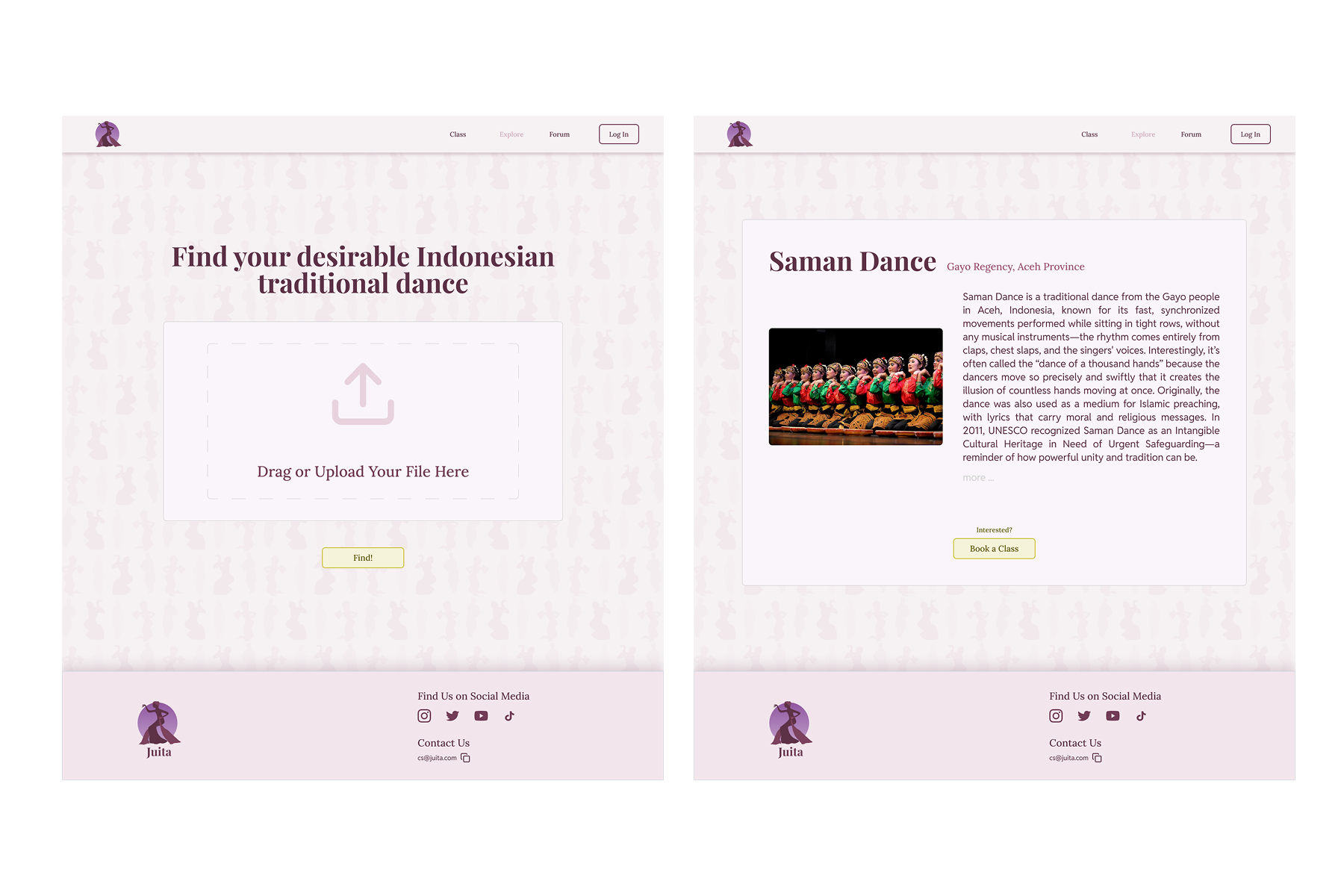
Landing Page - UI Design
-
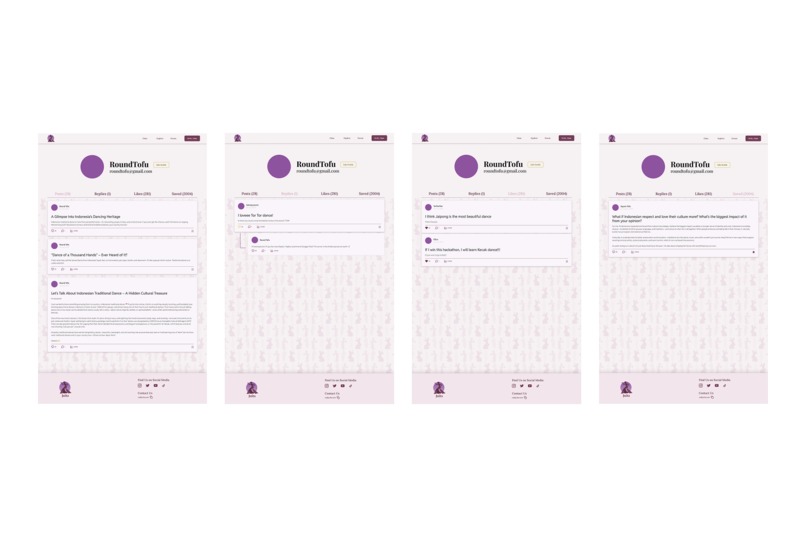
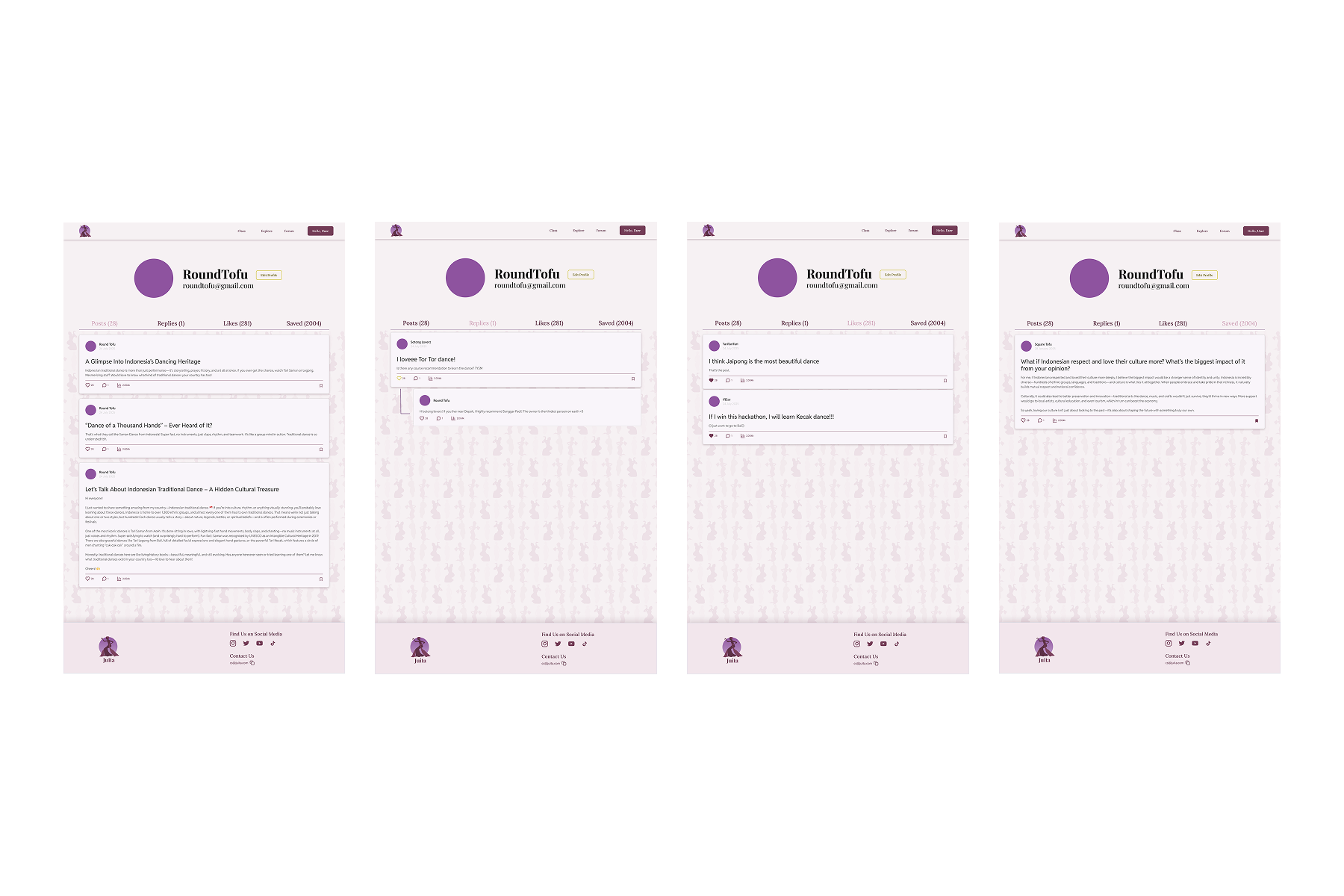
Profile Page - UI Design
-
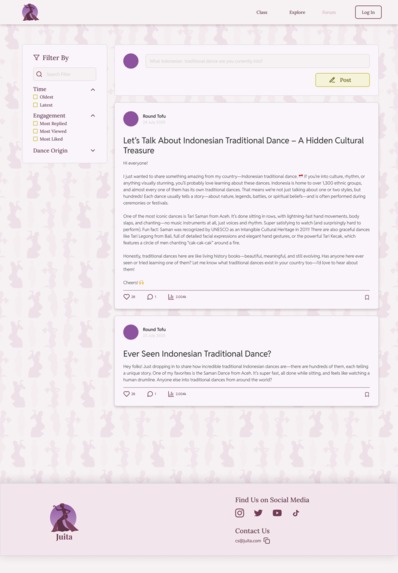
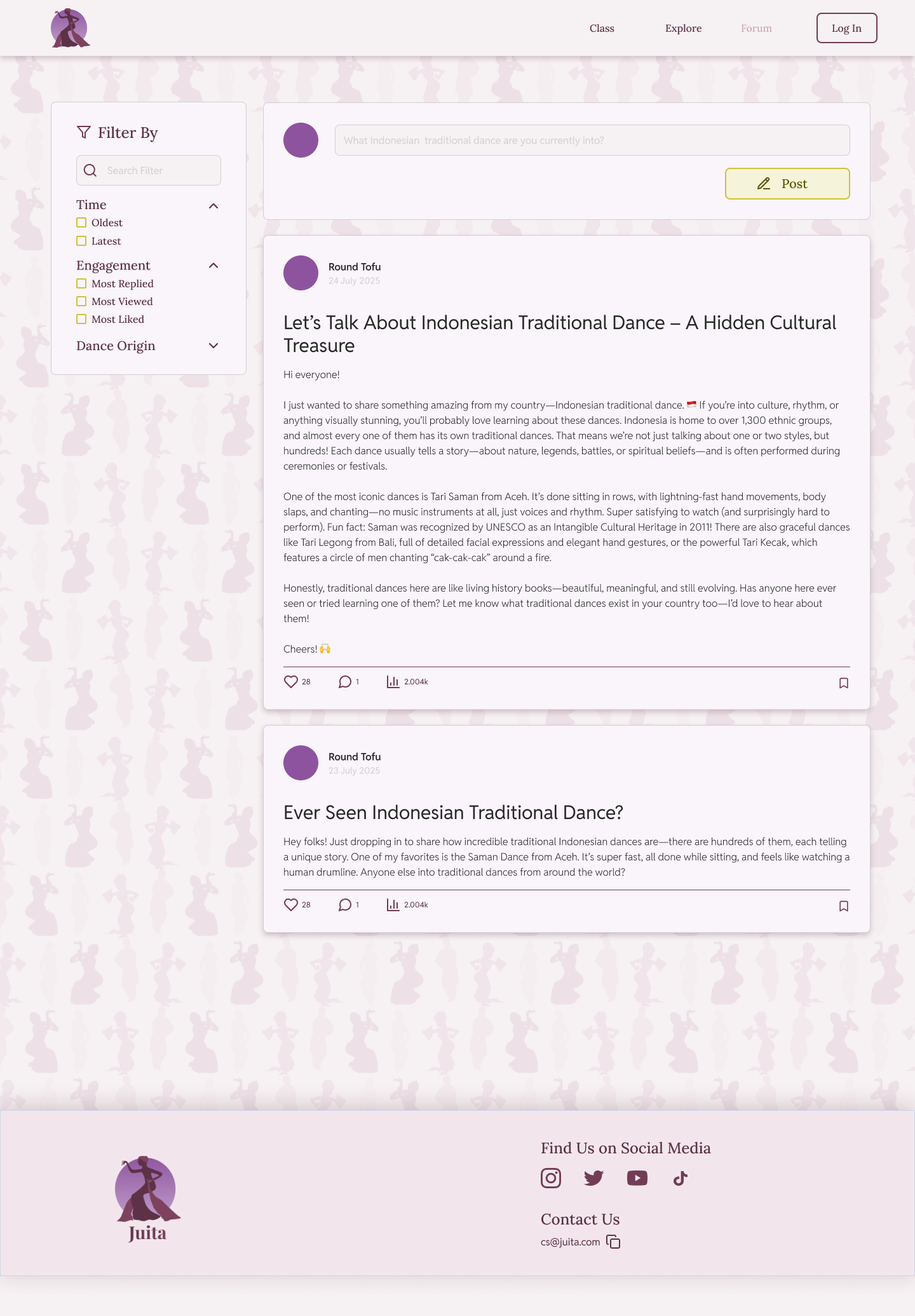
Forum Page - UI Design
-
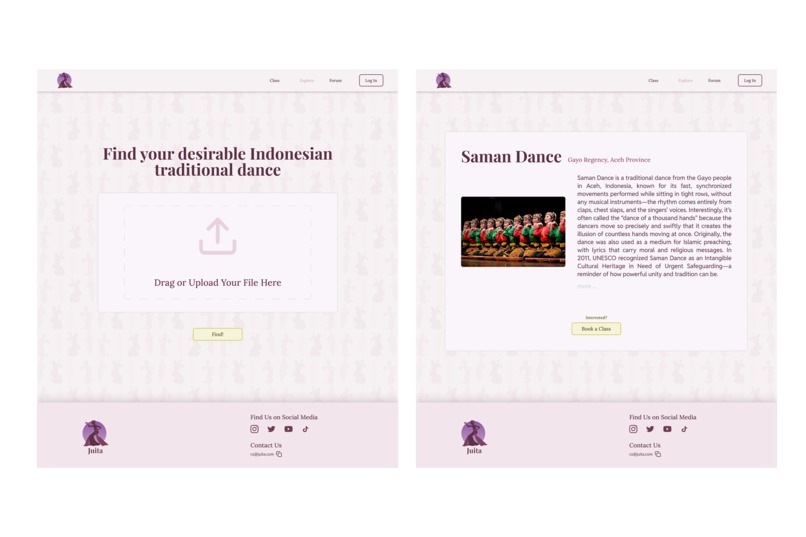
Explore Page - UI Design
-
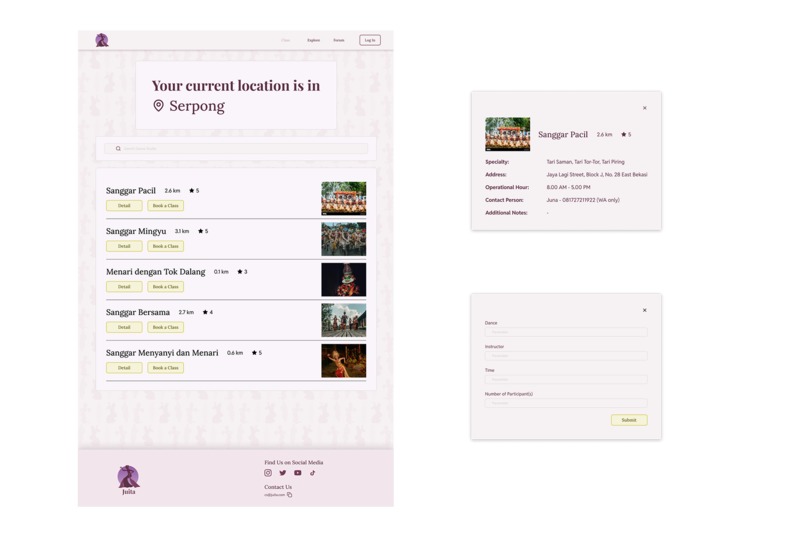
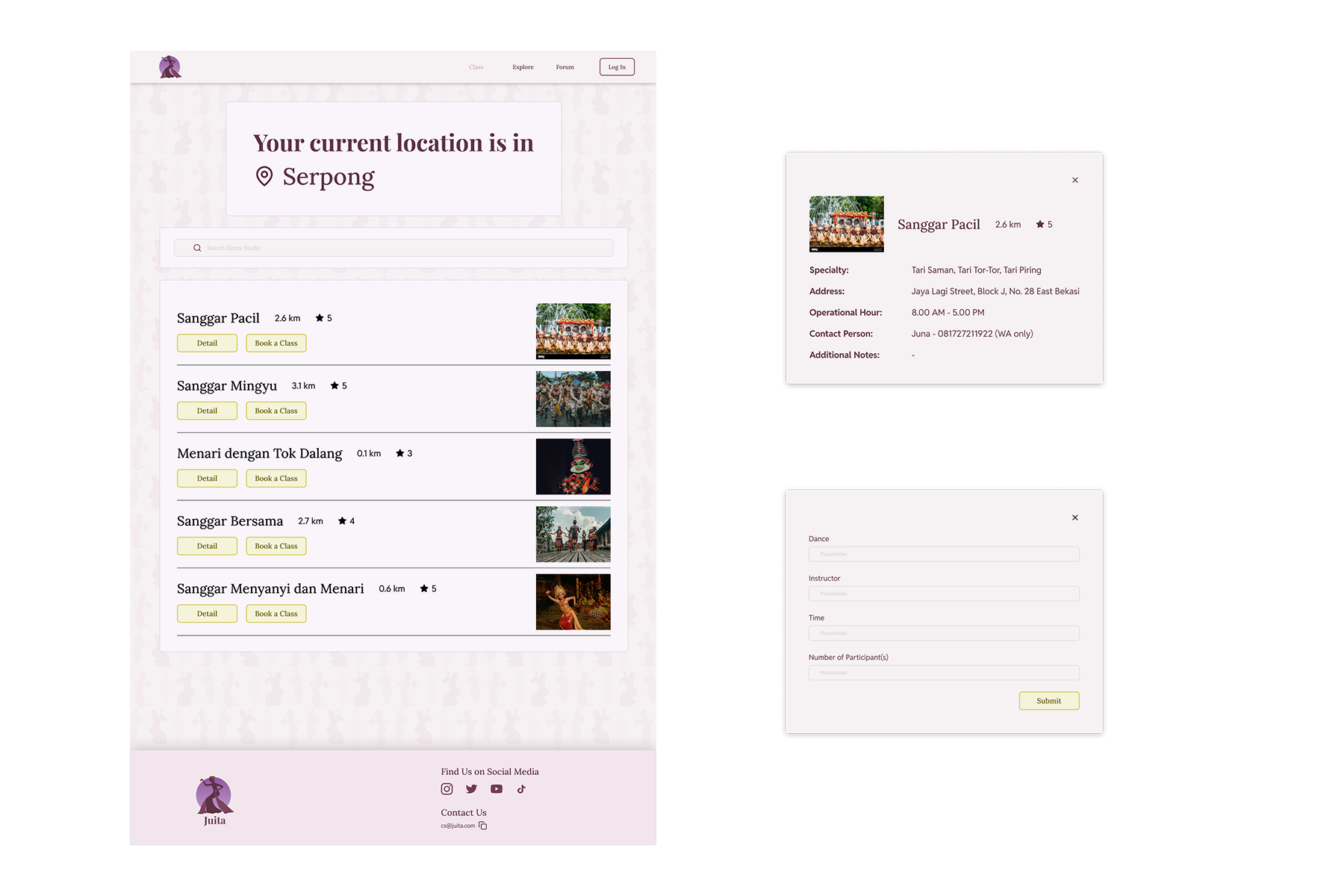
Class Page - UI Design
Juita: Dance Gracefully, Dance with Juita
Inspiration
The Indonesian archipelago boasts a rich tapestry of traditional dances, with each region exemplifying a distinct cultural identity. However, this cultural richness is often inaccessible to younger generations or those residing outside of their regions. Concurrently, numerous traditional dance studios (sanggar) are encountering challenges related to visibility and contemporary engagement.
The impetus for the creation of Juita was the theme "Connecting Cultures." Juita is a cultural platform that serves as a nexus for technology, artificial intelligence (AI), and heritage.
What it Does
Juita is a web-based platform that celebrates Indonesian traditional dance through three major features:
- AI Dance Recognition: The user is prompted to upload a photograph or video, and the AI model will predict the type of traditional Indonesian dance depicted. This approach fosters engagement and interactive exploration of diverse dance forms, promoting a multifaceted understanding of these cultural expressions.
- Cultural Directory: Users can discover local dance studios (sanggar) across the country and read the latest cultural news about arts and traditions. A comprehensive profile of each sanggar includes specific details such as its geographical location, the dance styles it specializes in, and its contact information.
- Community Forum: A forum has been designated for users to engage in discourse on the subject of traditional dances. The forum also facilitates the sharing of cultural experiences, the solicitation of recommendations, and the establishment of connections with dance instructors and aficionados. This feature fosters a vibrant, inclusive community centered on cultural exchange.
Supporting Data
This project was inspired and validated by the findings from the 2024 academic study titled "Hilangnya Budaya Lokal di Era Modern dan Upaya Pelestariannya dalam Perspektif Pancasila". Key highlights:
- Globalization: The study notes that 65% of Indonesian youth report reduced appreciation for local culture, with K-Pop and Western media dominating attention.
- Modernization Effects: Traditional dances and rituals are often commodified for tourism, diminishing their original sacred value.
- Youth Cultural Disconnect: Many urban youth are unaware of their regional traditions beyond basic food and music references.
- Social Media Dominance: Cultural content is overshadowed by global media trends, creating cultural displacement.
Juita answers this cultural gap through interactive AI features, a sanggar discovery system, and forums that allow users to explore, share, and reconnect with Indonesian heritage — in line with Pancasila values of unity in diversity.
How We Built It
Frontend
- Next.js: Modern React framework for performance and routing.
- TailwindCSS: For fast, responsive styling.
- shadcn/ui: Beautiful and accessible components.
- Axios: For API communication with both NestJS and FastAPI.
Backend
- NestJS + Prisma ORM: For scalable RESTful APIs and data handling.
- Supabase: PostgreSQL-based DB as a service, used for managing sanggar and news data.
- FastAPI: Separate microservice for image/video-based AI prediction.
- TensorFlow: For building and deploying our custom classification model.
Problems We Faced
- Lack of Suitable Datasets: Given the absence of an open dataset for Indonesian traditional dance classification, a manual curation of a small dataset was necessitated, drawing from public sources and our video collection. This limitation resulted in suboptimal performance and generalization of our AI model.
- Scalable and Modular Architecture: The system incorporates multiple independent features, including artificial intelligence (AI), sanggar listings, and a community forum. To address these features, we employed a microservice architecture, with FastAPI for AI prediction and NestJS for the main backend, connected via REST API.
- UI/UX and User Flow Design: Given the broad spectrum of users targeted, ranging from youth to cultural enthusiasts, the design of an interface that is both contemporary and rooted in cultural aesthetic posed a significant challenge. The identification of an optimal user flow for exploration, learning, and interaction necessitated a substantial iterative process.
- Time Management: With a mere 48 hours to construct and implement the project, the team faced considerable logistical challenges, including coordinating tasks, debugging bugs across three codebases (frontend, backend, and AI), and generating meaningful content.
Accomplishments We're Proud Of
- Integrated a full AI pipeline from image/video input to live prediction in the browser.
- Created a smooth, modern UI/UX for culture-focused content.
- Successfully connected frontend, backend, AI microservice, and Supabase database all deployed in a short timeframe.
What We Learned
- How to build modular, scalable web systems using NestJS, Prisma, and FastAPI.
- Real-world integration of ML models in production-ready architecture.
- Deploying structured content using Supabase.
- The importance of UI/UX in cultural education platforms.
- Team coordination in a high-stakes, short-timeline hackathon setting.
What's Next for Juita
- Improve AI accuracy by collecting more image/video training data.
- Expand sanggar listings via crowdsourced submissions or partnerships with cultural institutions.
- Develop a mobile app version to reach a wider audience across Indonesia.
- Localize the content for regional languages and add Augmented Reality features in the future.
Built With
- figma
- nestjs
- prisma
- python
- tailwaindcss

Log in or sign up for Devpost to join the conversation.