Inspiration
“Text me when you get there” is something many of us say when a friend walks home alone. We started with a question: what could a safety app do if someone needed help but couldn’t reach their phone to press SOS? That question led us to build Jugnu, a personal safety companion for everyday journeys.
What it does
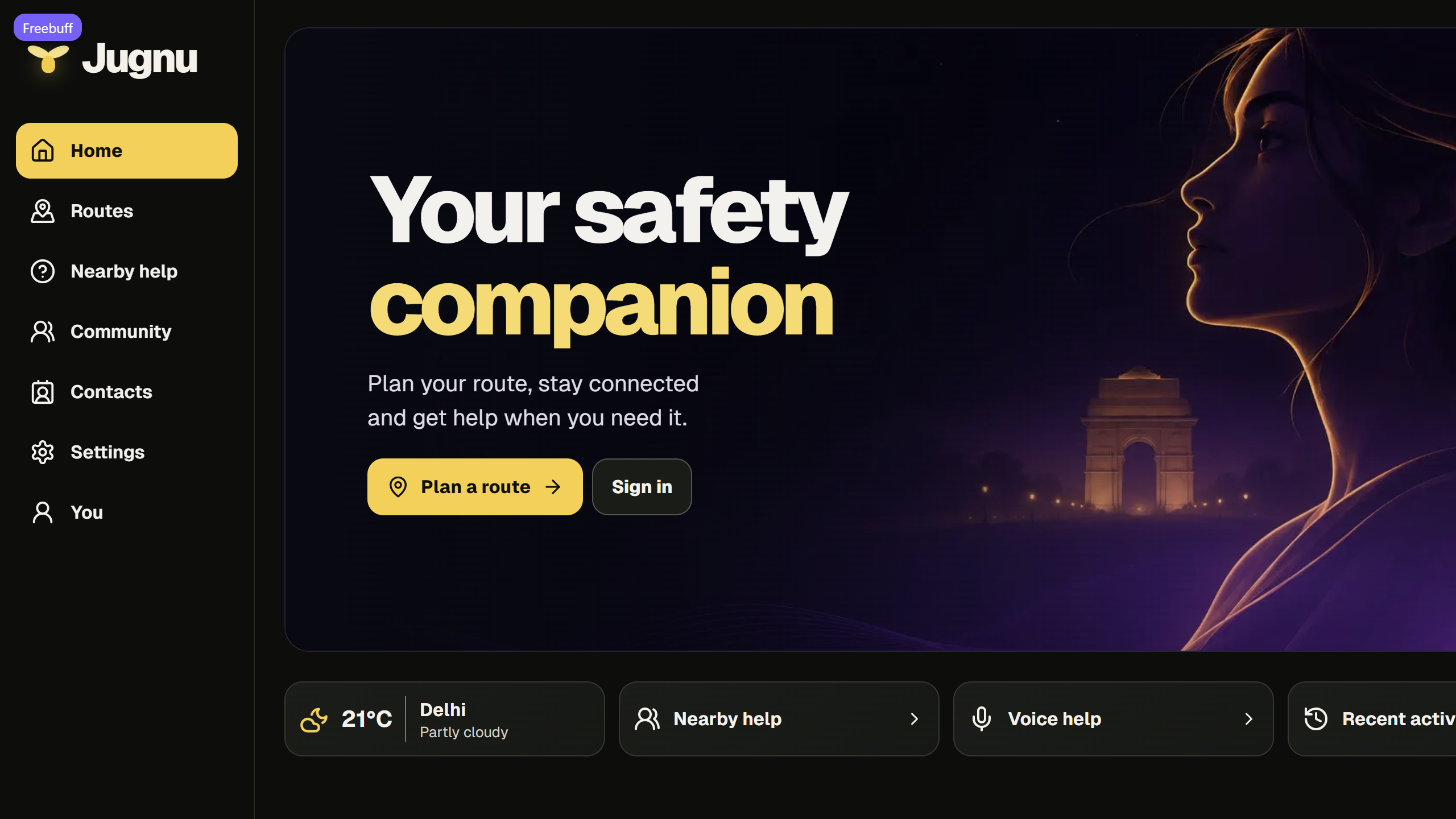
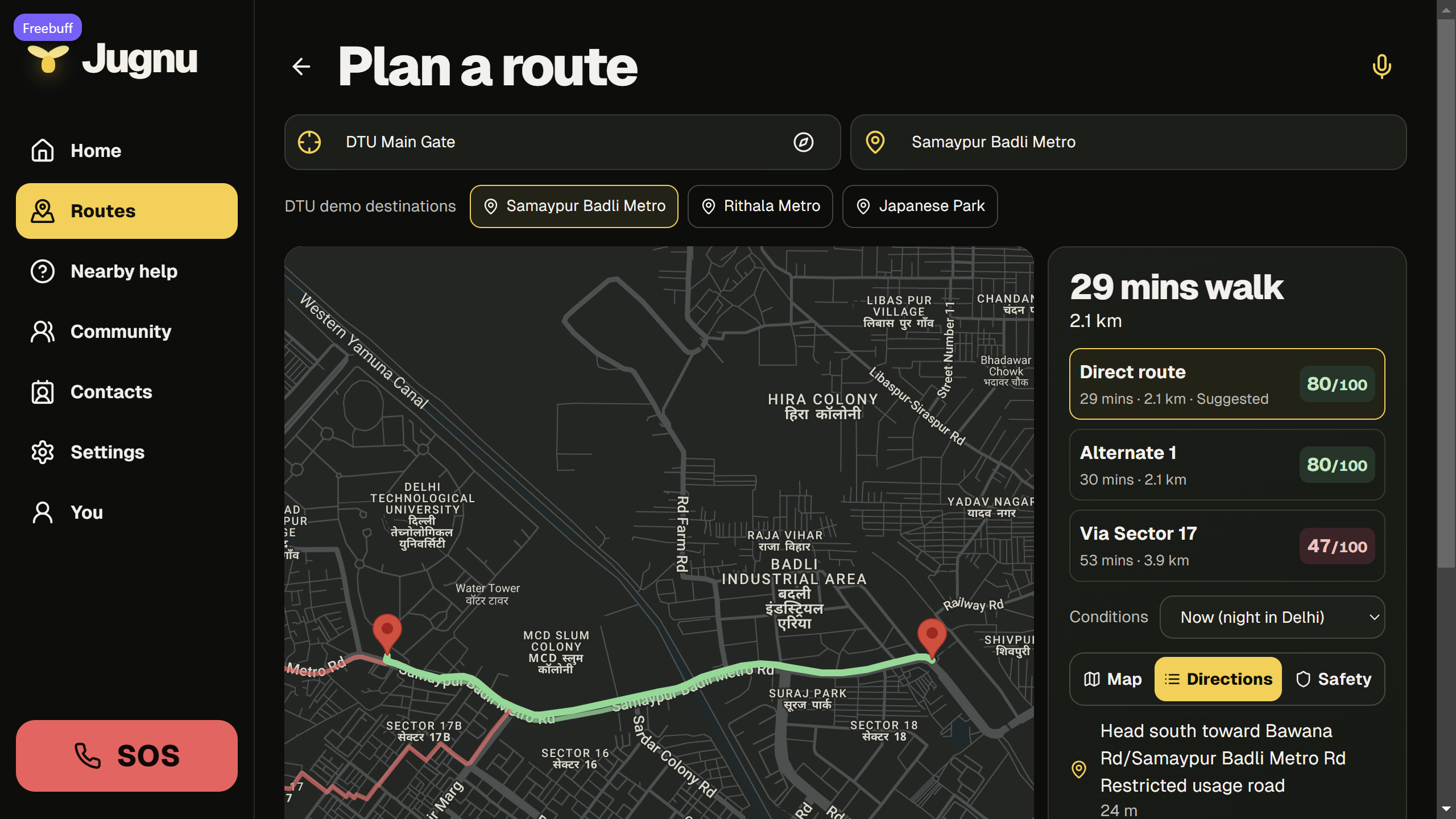
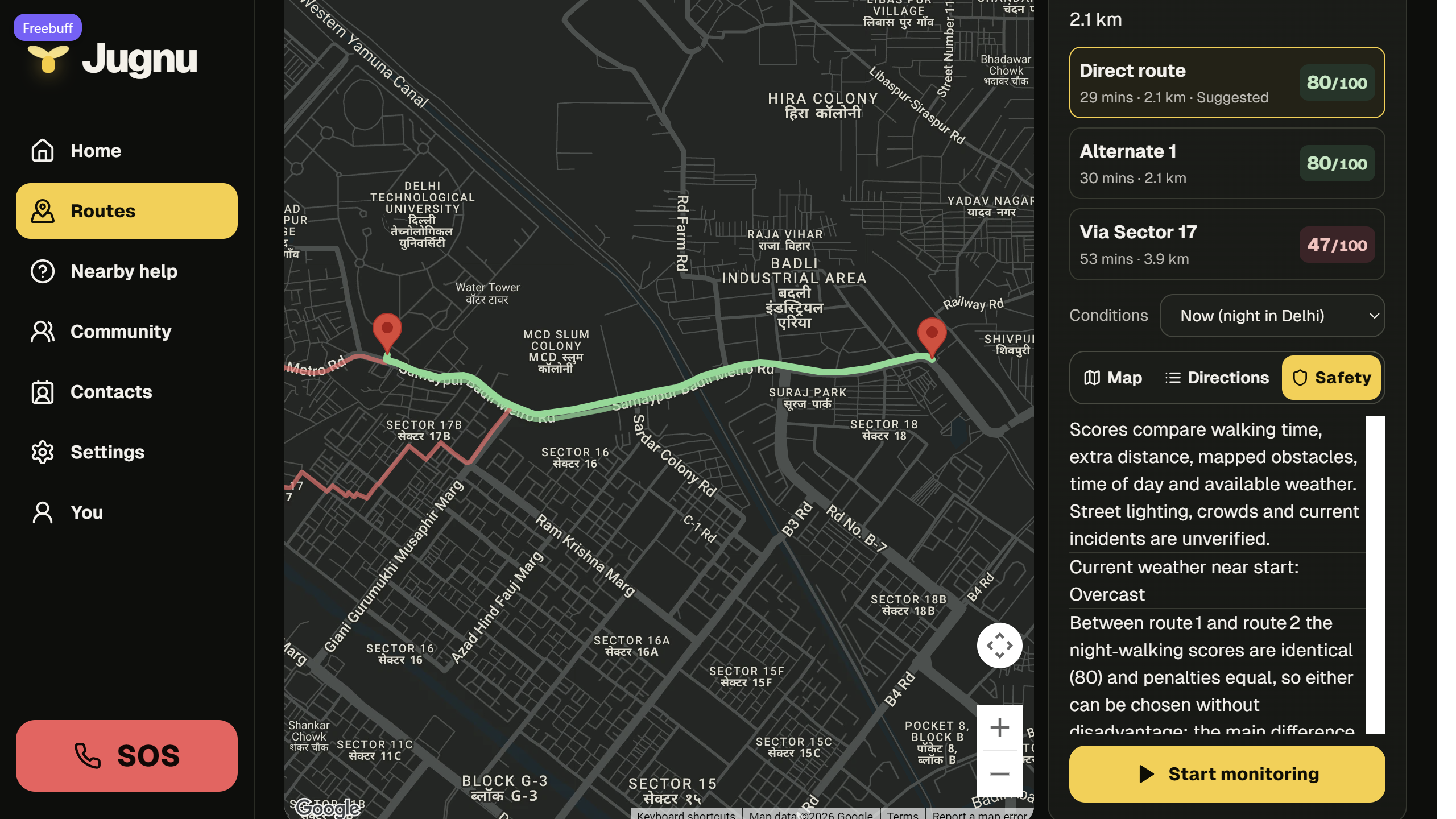
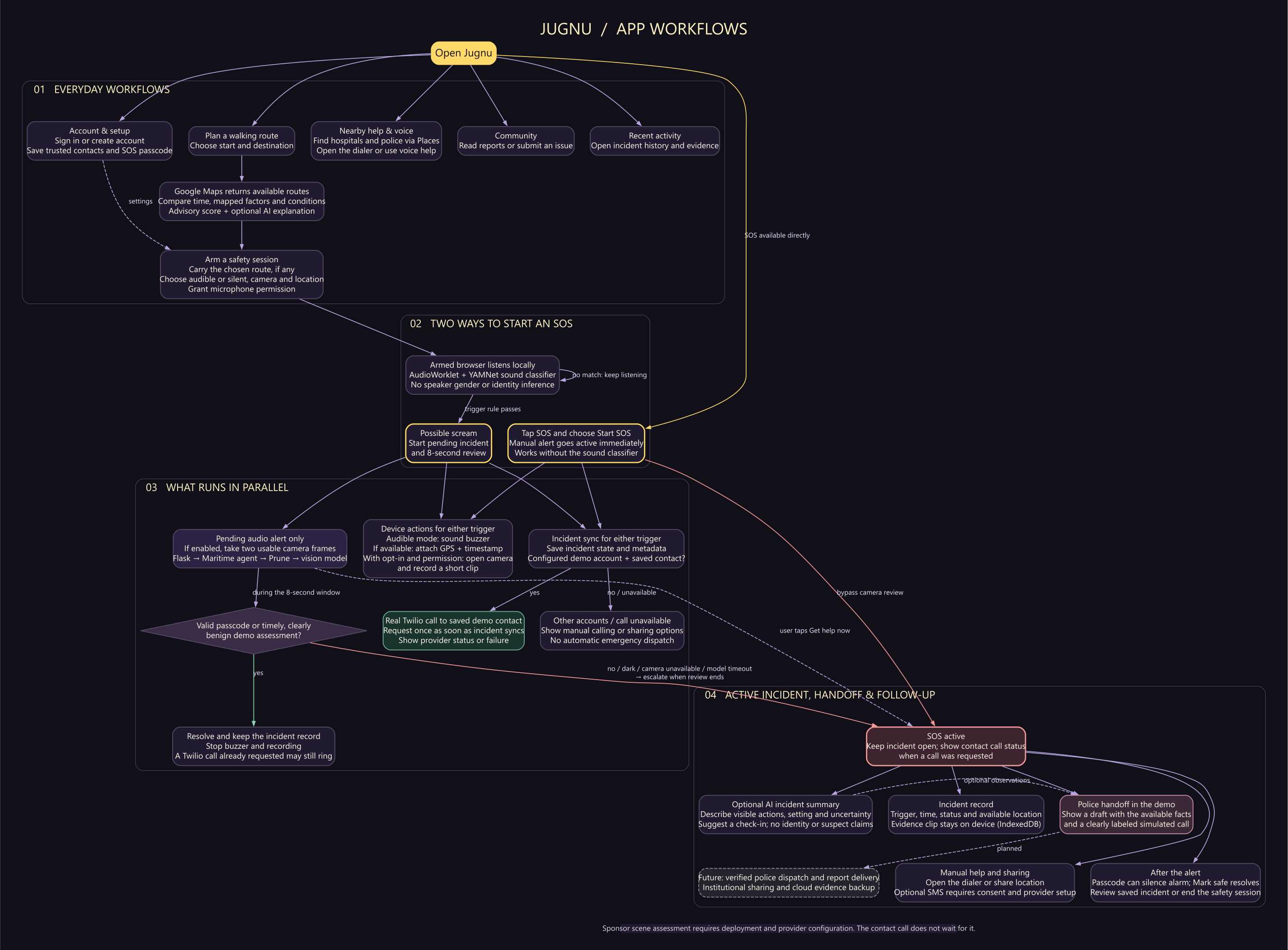
Jugnu helps people compare walking routes, find nearby hospitals and police stations, and start a safety session. While the session is open, the app listens for possible screams on the device. A detected scream starts an eight-second review. Pressing SOS activates the alert immediately.
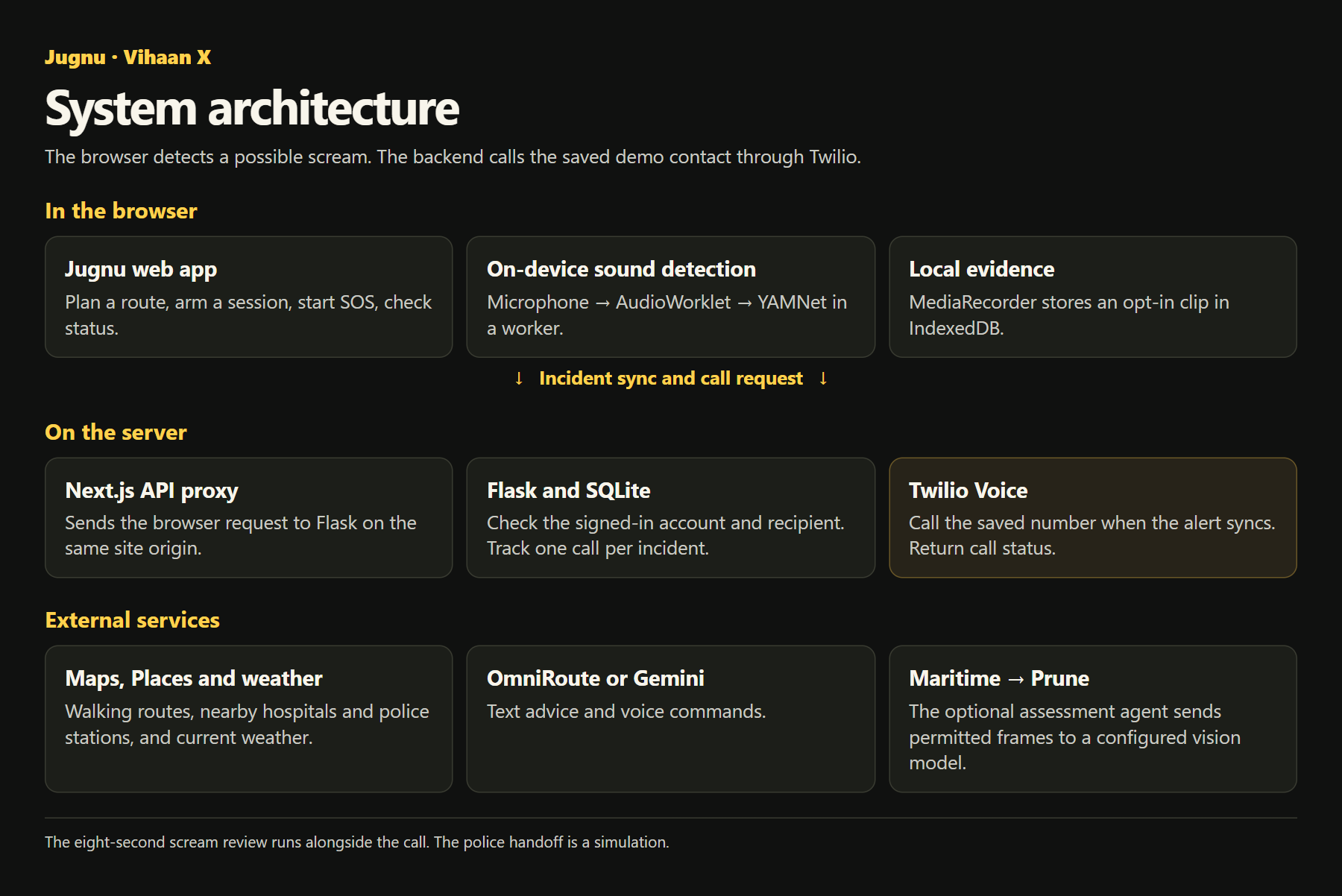
Both paths can request a Twilio call to a configured trusted contact. With permission, Jugnu attaches the available location and records a short clip that stays on the device. We verified a real call to a trusted contact. The police handoff is currently simulated.
How we built it
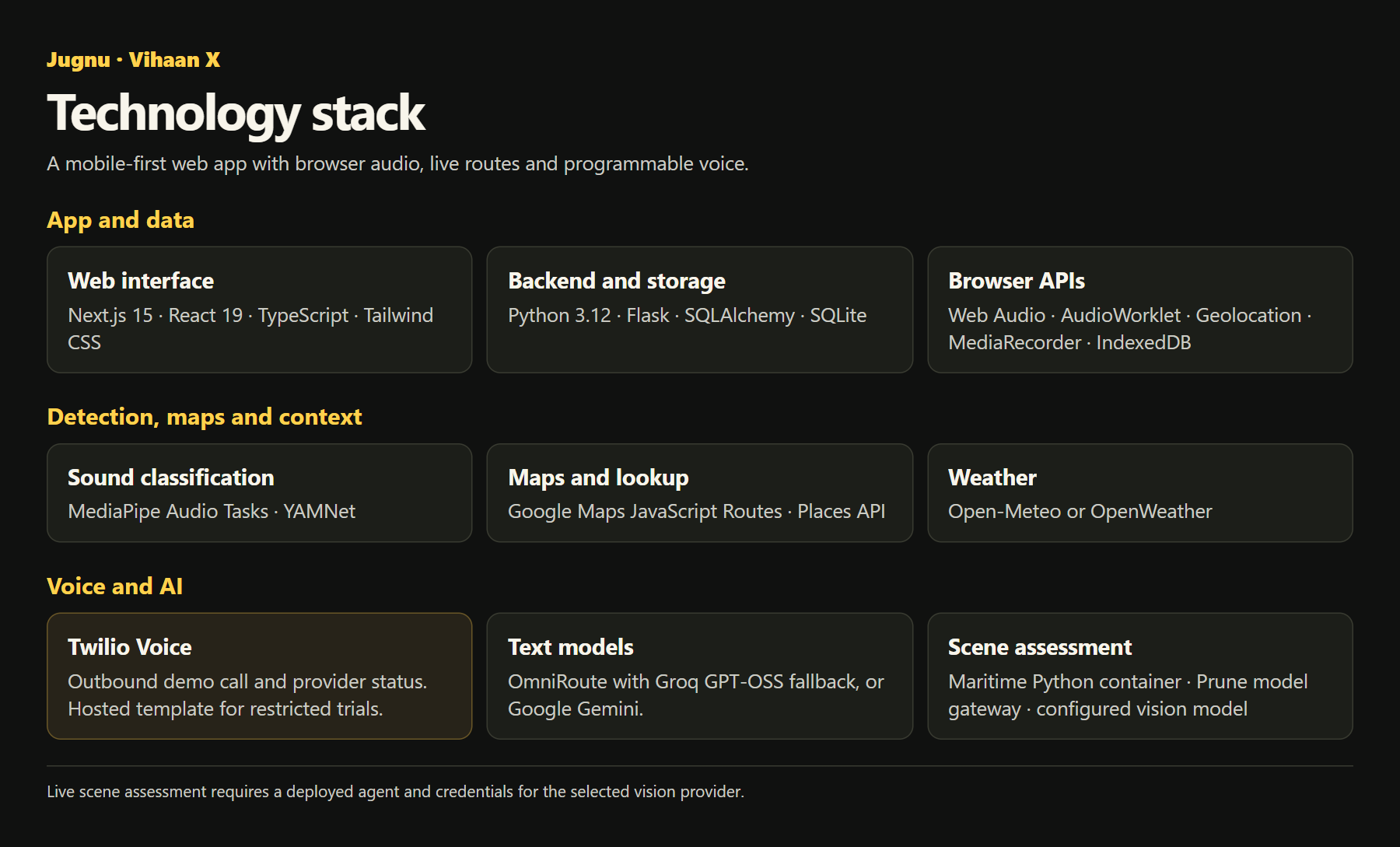
We built Jugnu as a mobile-first web app with Next.js, React, Flask, and SQLite, building on the open-source Go Guardian project. Google Maps provides walking routes and nearby places. An AudioWorklet feeds microphone audio into YAMNet for local sound classification.
Maritime and Prune form the backbone of Jugnu’s optional incident assessment. Maritime runs the Python agent, and Prune connects it to the configured vision model. With consent, the agent can review camera frames and summarize what’s visible.
Challenges and what we learned
The hardest part was handling ambiguous signals. In a small holdout test of prerecorded clips, Jugnu triggered on 9 of 10 female-labeled scream clips and 1 of 5 laughter clips. Those results showed us the need to test across different phones and in noisy environments like roads, stations, and crowds.
We also learned to design for missing information. A phone can fall face down, the camera can be blocked, or the model can time out. The trusted-contact call proceeds independently of the camera review so help can be requested even when the scene is unclear.
Built With
- audioworklet
- flask
- gemini
- geolocation-api
- google-maps
- google-places
- indexeddb
- maritime
- mediapipe
- mediarecorder
- next.js
- omniroute
- open-meteo
- prune
- python
- react
- sqlalchemy
- sqlite
- tailwind-css
- tensorflow-lite
- twilio
- typescript
- web-audio-api
- yamnet

