-
-

Signup Page
-

Login Page
-
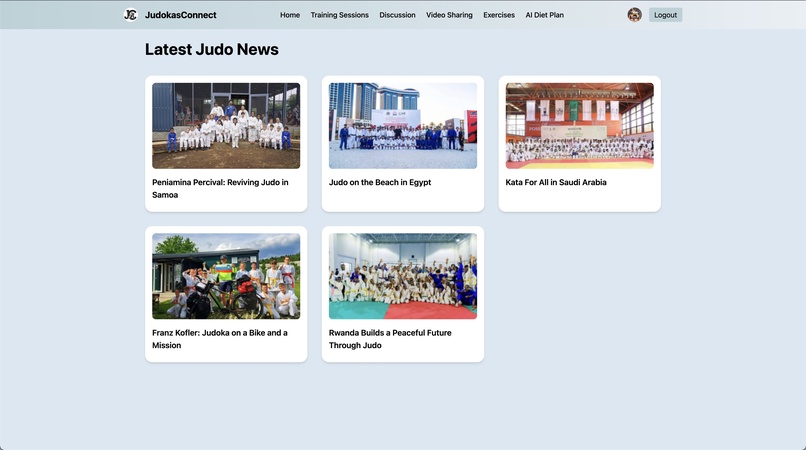
Home Page
-
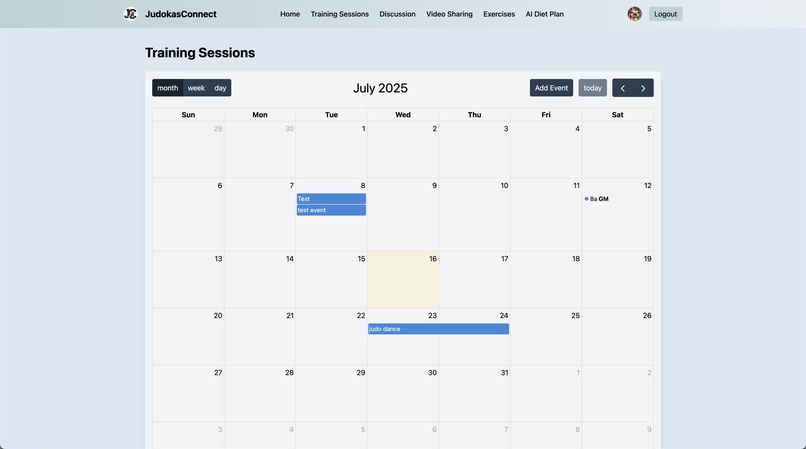
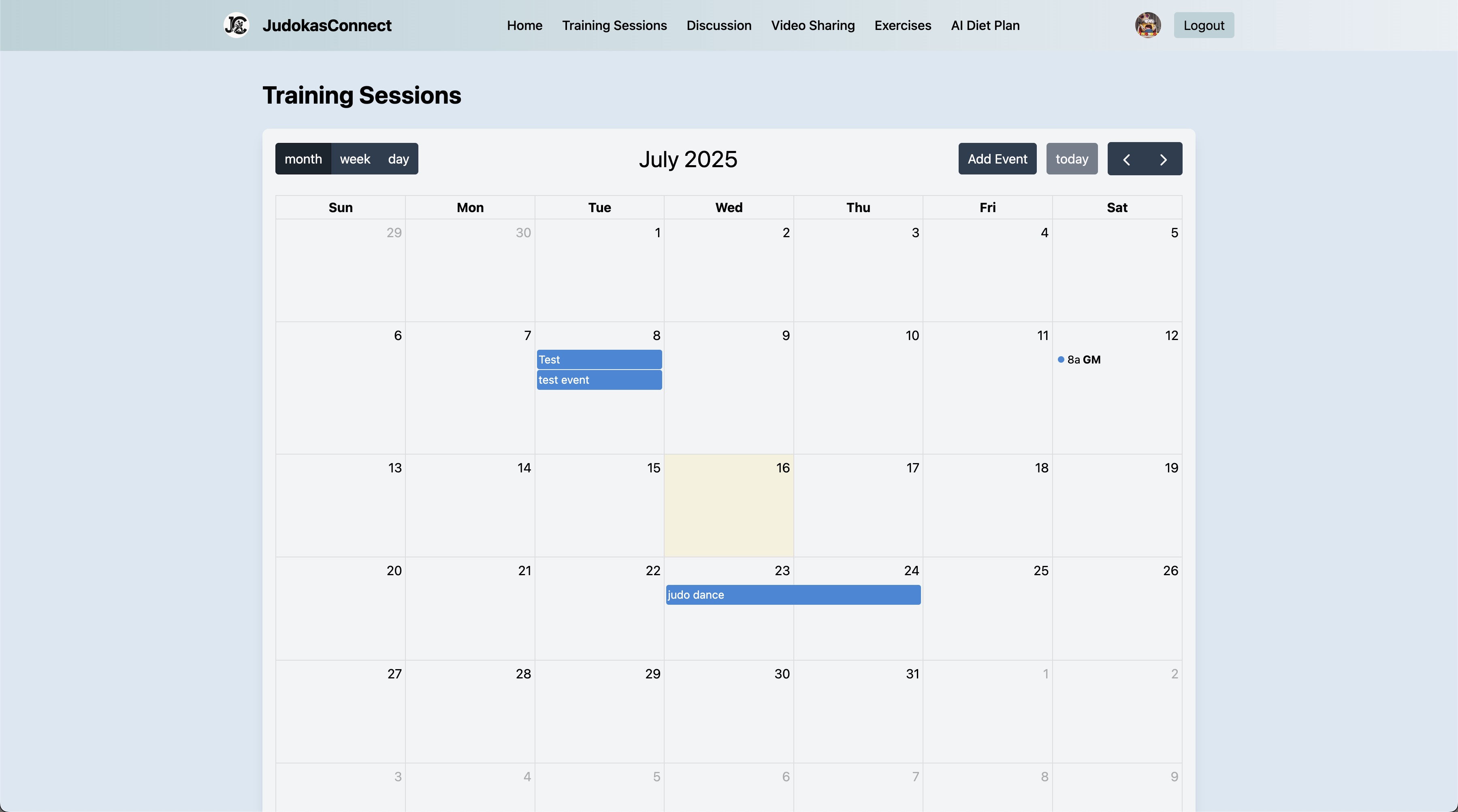
Events Page
-
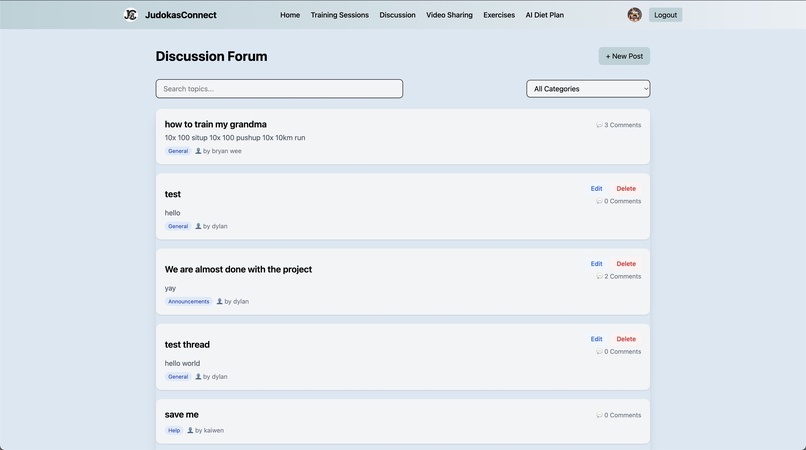
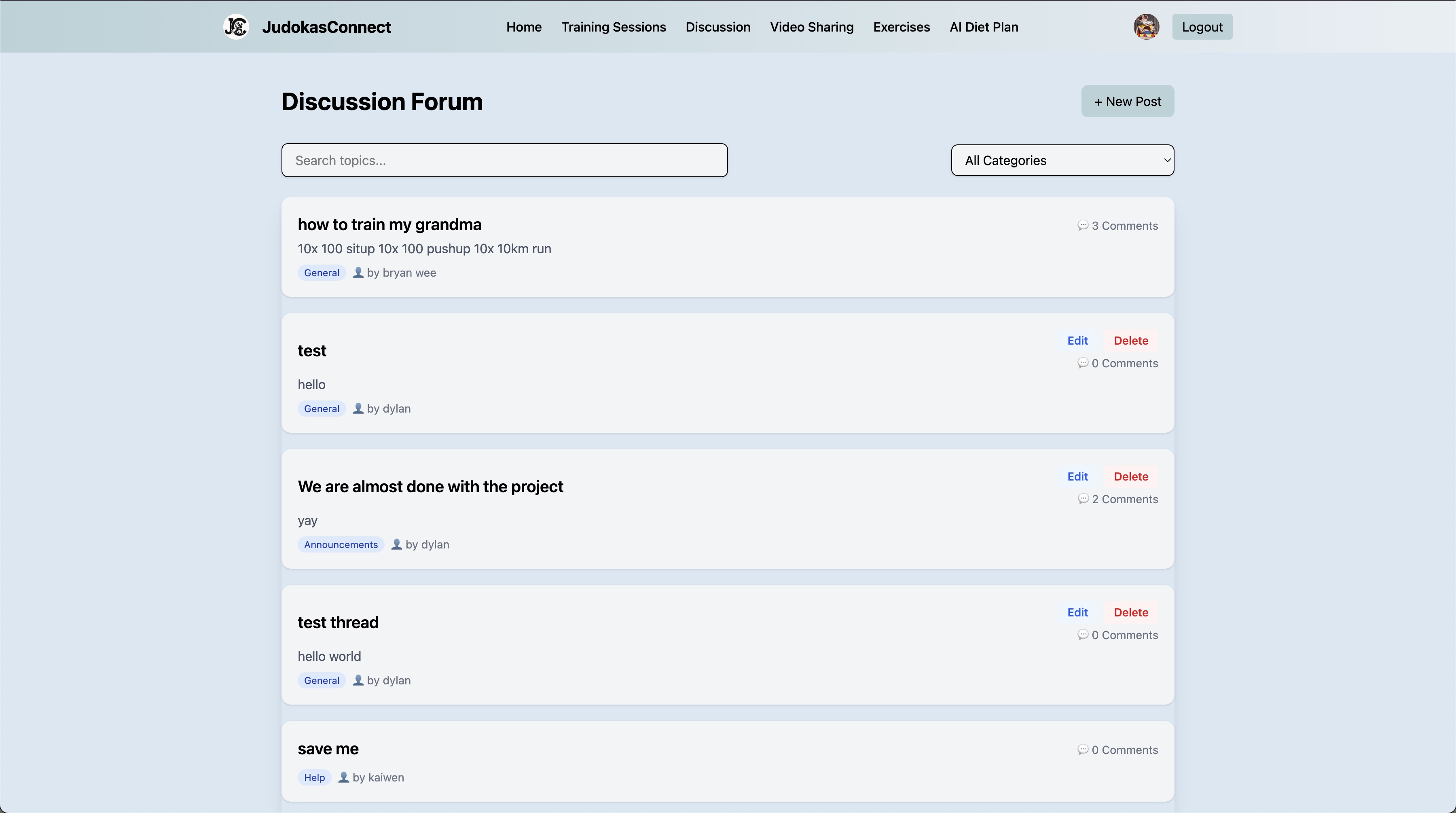
Discussion Page
-
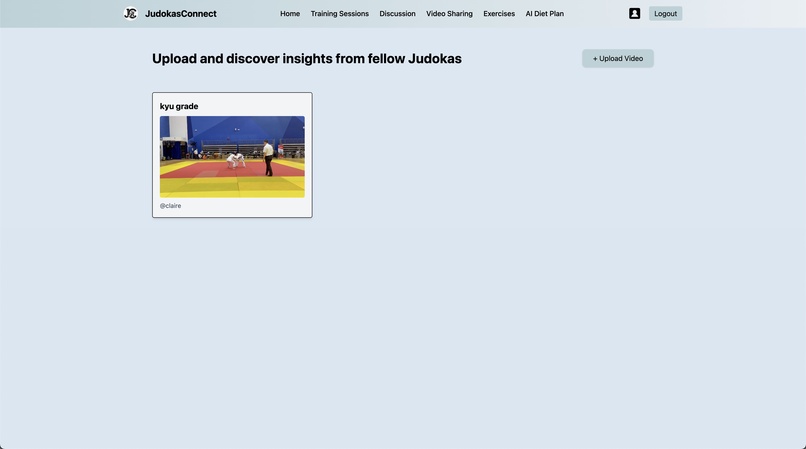
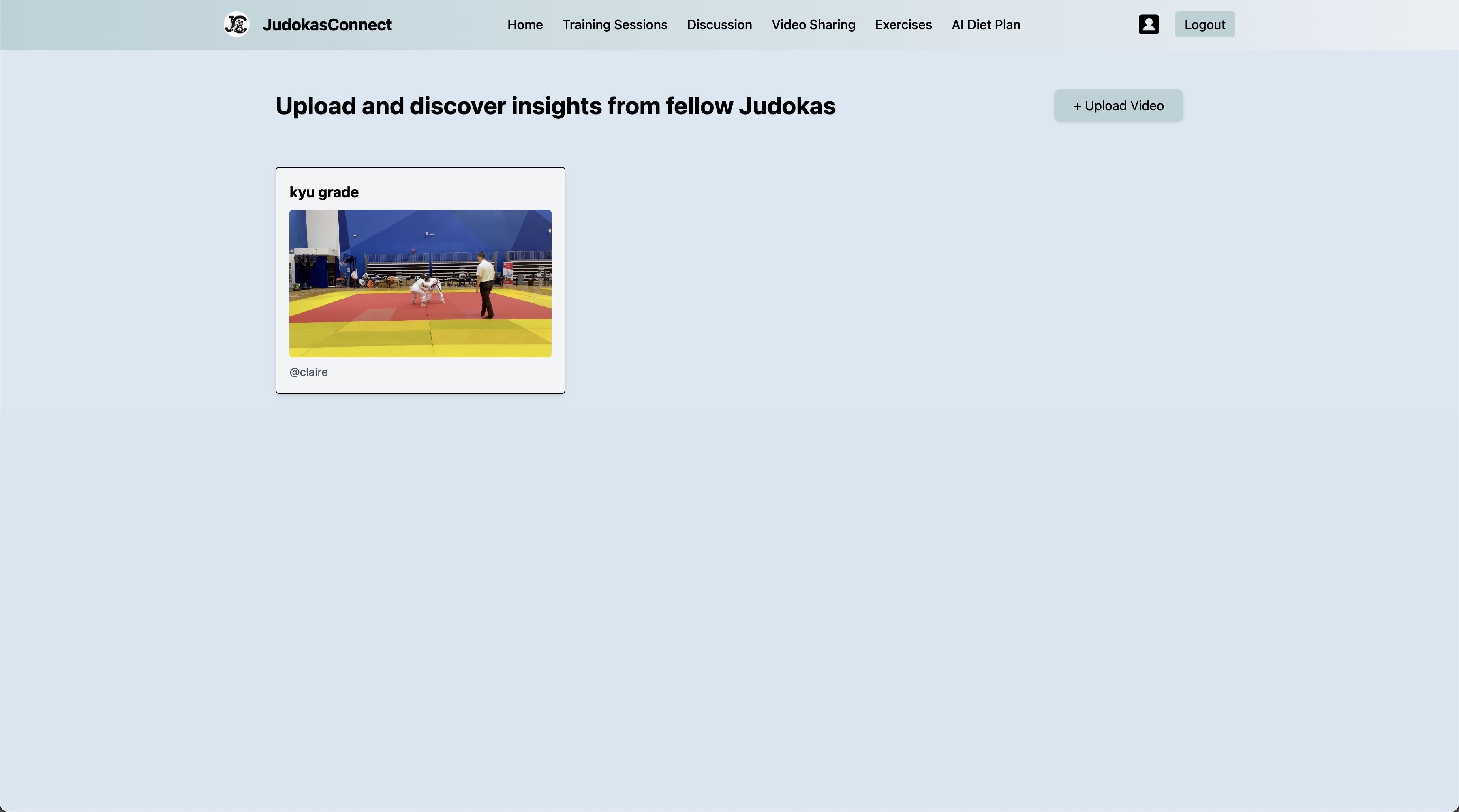
Video Sharing
-
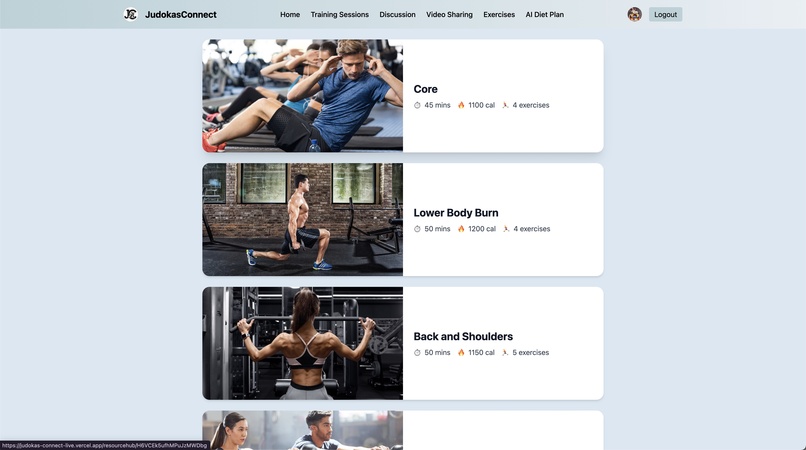
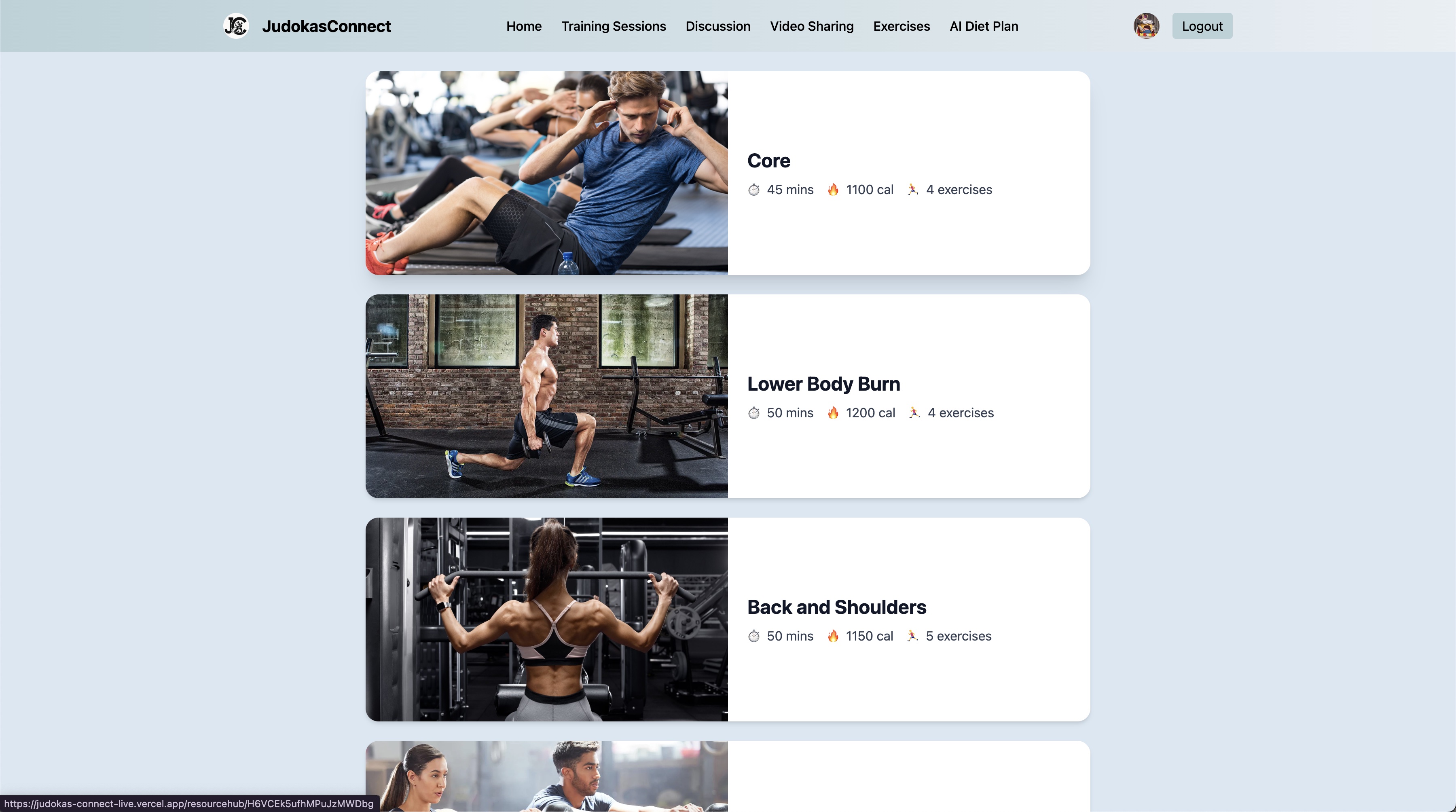
Exercise Page
-
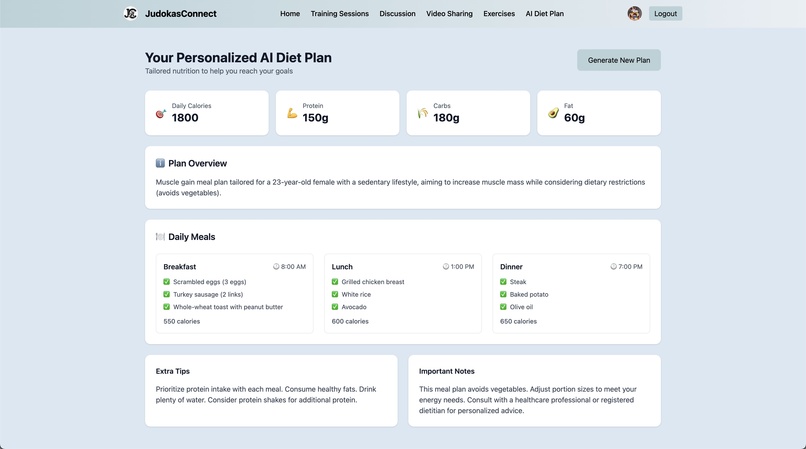
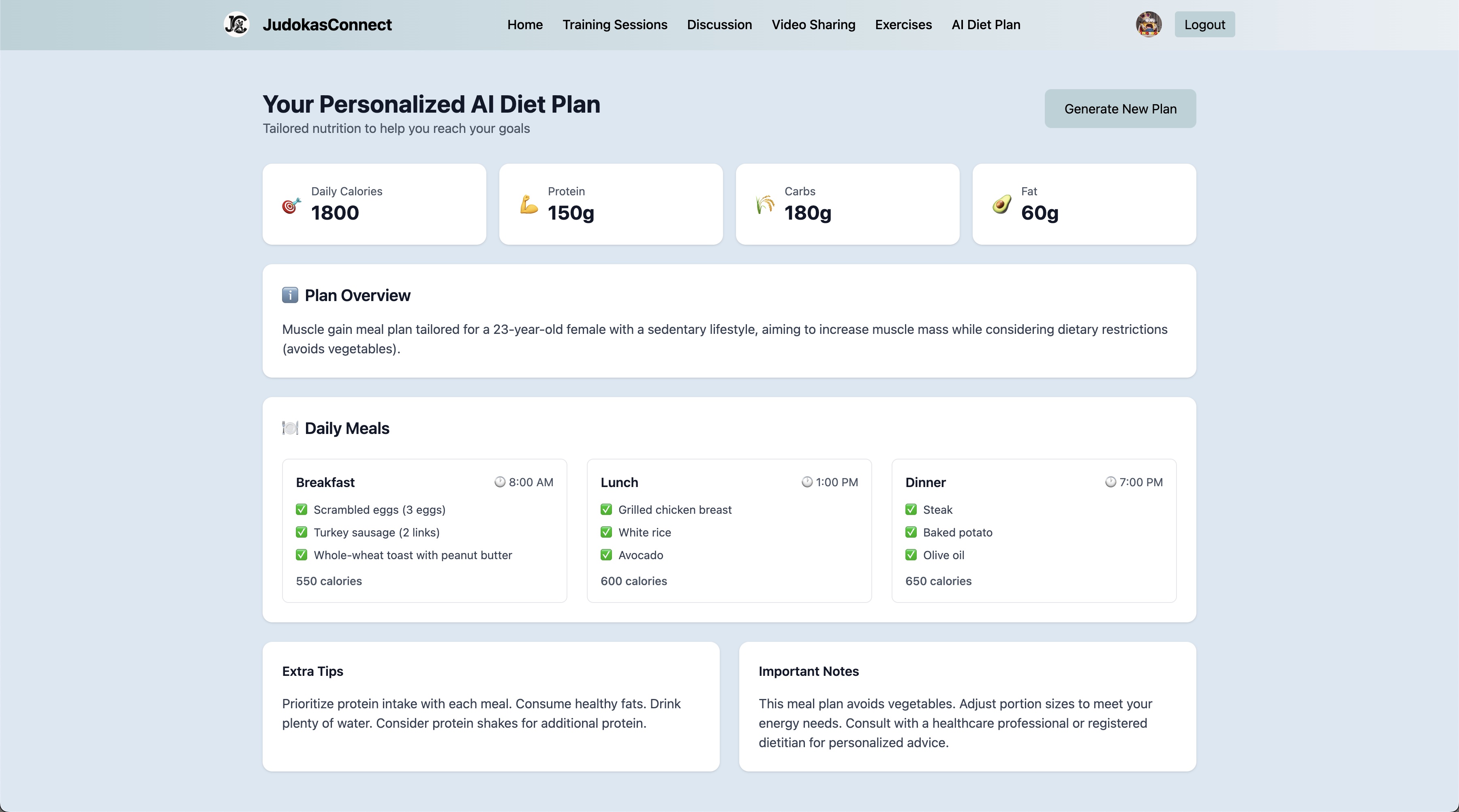
AI Diet Plan Page
-
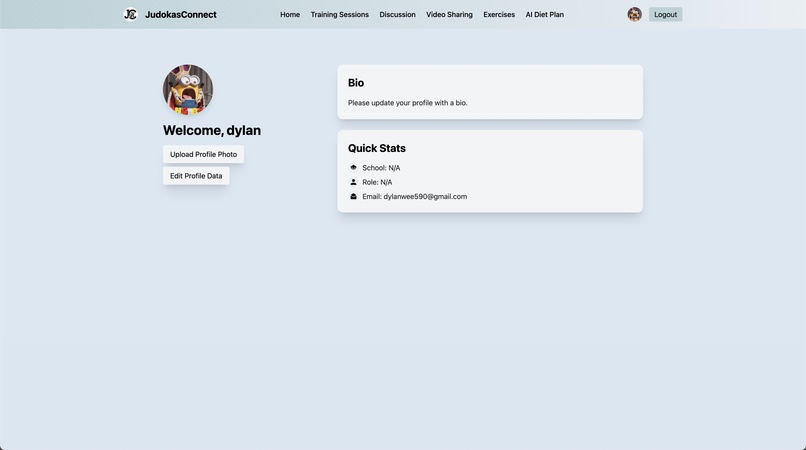
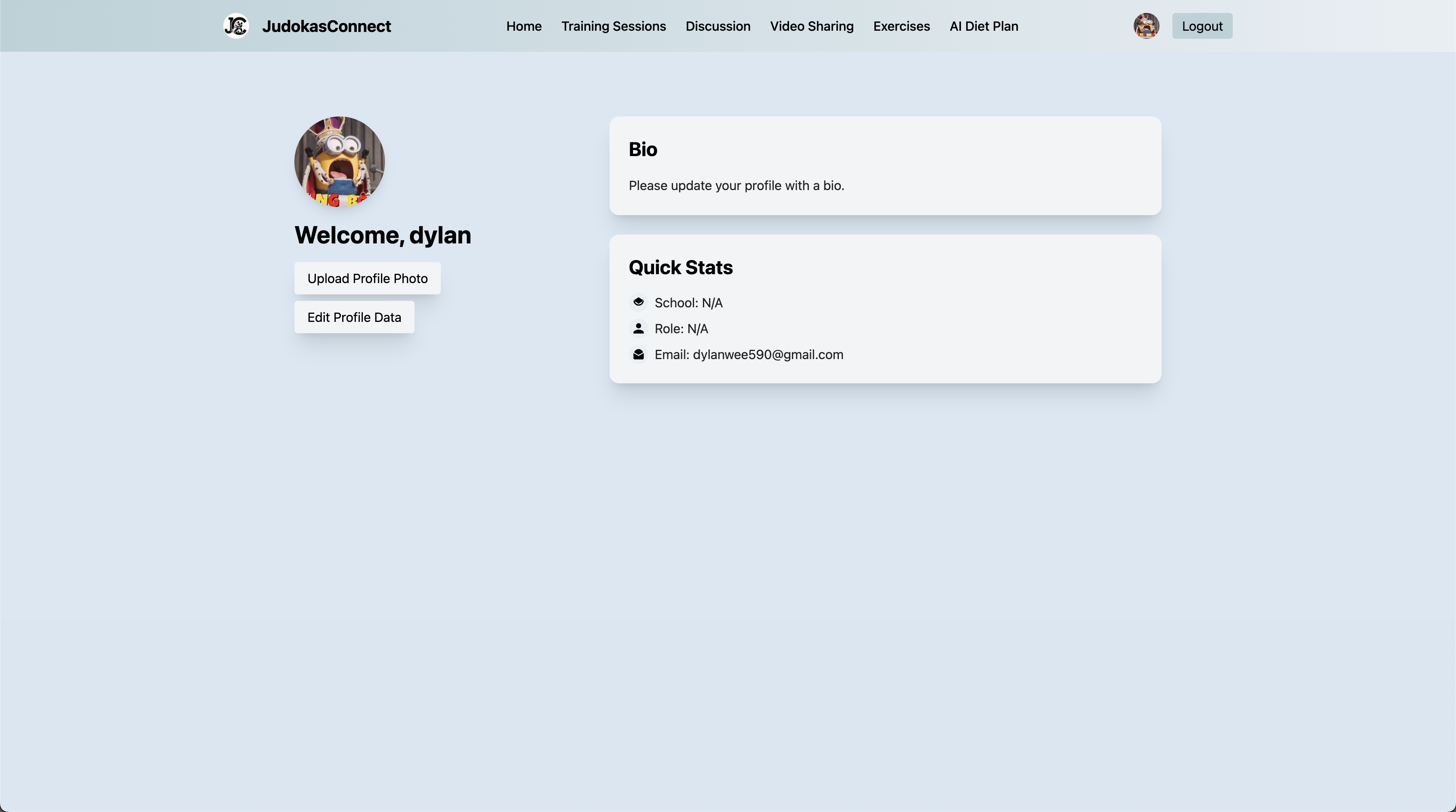
Profile Page


Project Deployment Overview The project architecture consists of a frontend and backend hosted on separate platforms:
Frontend: Deployed on Vercel, which serves the client-side web application and handles user interactions.
Backend API: Hosted on Render, providing server-side logic, data processing, and API endpoints.
Deployment Behavior Due to the nature of cloud hosting platforms, particularly on free or hobby plans, the backend service on Render may enter an idle or sleep state when not receiving traffic for a certain period. This results in a cold start delay, where the first API request after inactivity experiences a noticeable delay (typically 10–30 seconds) while the server restarts.
Once the backend is active, subsequent API requests are handled with normal response times.
Inspiration
In Singapore, judo is a passionate but niche sport. While the community is strong, we often face a lack of digital infrastructure to support our training. Attendance is still tracked manually via Telegram polls in a chat with over 200 members. Randori videos from training and competitions get buried in endless chat history or lost in scattered Drive folders. Technique discussions are either disorganized in group chats or happen privately in DMs, limiting knowledge-sharing. Competition season brings even more challenges, as judokas often resort to last-minute weight cuts without proper training or diet guidance. We built JudokasConnect to solve all of this—by creating a central hub to train smarter, learn faster, and prep better.
What it does
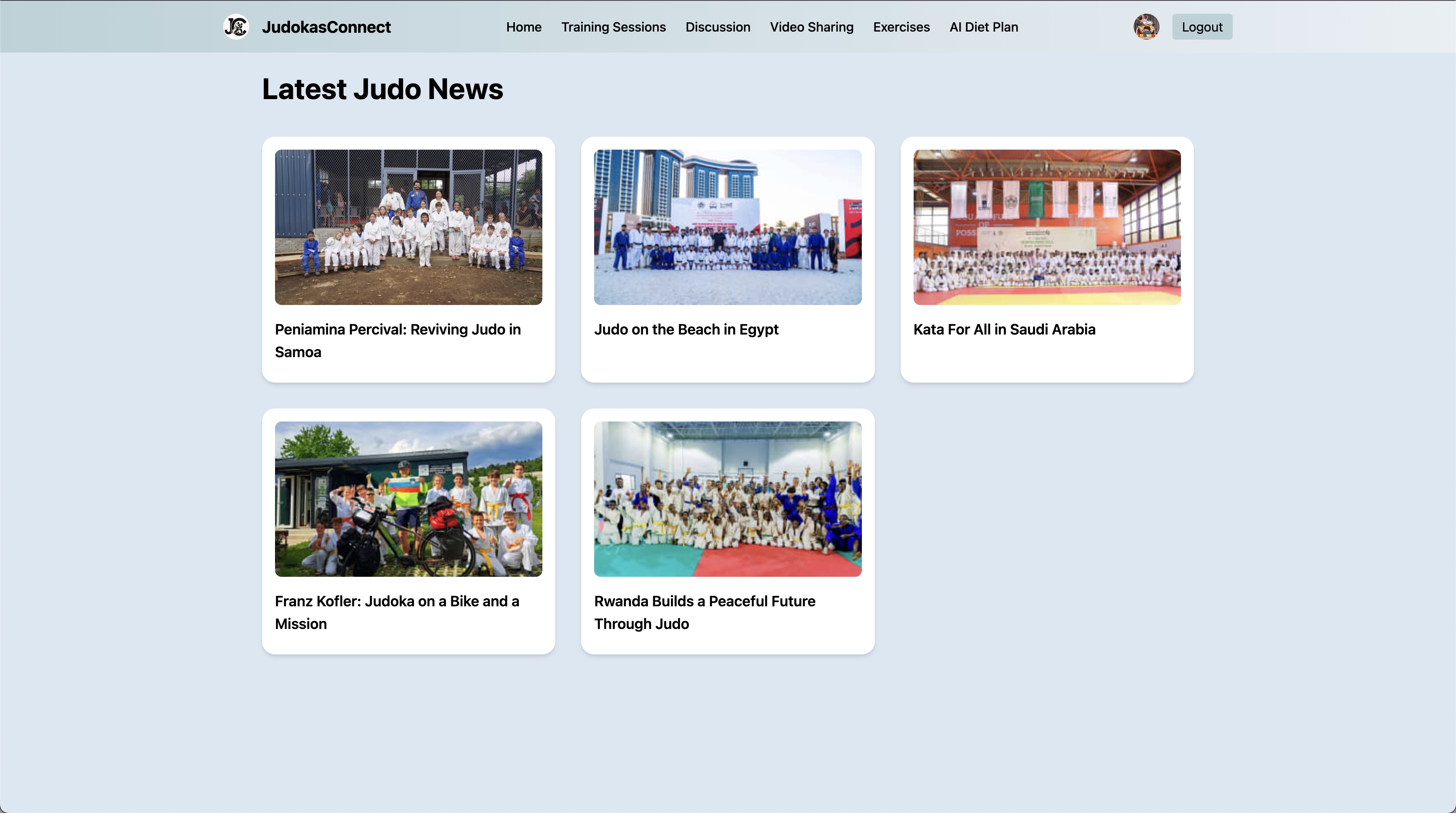
JudokasConnect is an all-in-one platform built to streamline the training experience. It replaces Telegram attendance polls with a clean, interactive calendar. Sparring and competition footage can be uploaded, organized, and reviewed easily on our searchable video hub. For technical discussions, we offer a structured forum where judokas can ask questions, share insights, and grow together. Our AI-powered weight-cutting tool provides sustainable meal planning and curated workout guidance. We also keep users up to date with live news scraped from the International Judo Federation—covering competition results, rule changes, and athlete stories.
How we built it
The frontend of JudokasConnect is built using React and deployed on Vercel to ensure fast, responsive user experiences. The backend API, hosted on Render, powers the core logic, data handling, and media storage. For judo news, we initially tried using an API, but its limitations led us to implement web scraping directly from the IJF website. This gave us real-time updates and more relevant content, creating a more dynamic experience.
Challenges we ran into
One major hurdle was finding a reliable source for judo news. We started with a third-party API, but it offered limited, often irrelevant results and was constrained by rate limits. Caching didn’t solve the lack of depth either. We pivoted to web scraping, which allowed us to pull exactly the content we needed from the IJF site—timely, relevant, and unrestricted. Another challenge came from deploying our backend on Render’s free tier, where inactive periods trigger a sleep mode. This causes a noticeable delay (10–30 seconds) on the first API call after inactivity, but normal performance resumes afterward.
Accomplishments that we're proud of
We’re proud of building a tool that judokas can truly rely on—from managing training logistics to sharing technical knowledge. We created a searchable video library that gives value to past randori sessions. Our forum encourages open learning across experience levels. The AI-powered weight planner promotes healthier competition prep. And with our news scraper, judokas stay connected to the international scene without leaving the app.
What we learned
This project taught us the importance of adaptability in development. Switching from an API to web scraping showed us how the right technical approach can greatly improve user experience. We also learned how backend deployment choices affect performance, especially when using free hosting plans. Lastly, we saw how valuable intuitive UI is when dealing with large communities and user-generated content.
What's next for JudokasConnect
We plan to expand JudokasConnect by introducing athlete profiles and progress tracking to personalize the training experience. Coaches will be able to view team-level analytics to better guide their students. We also hope to scrape more regional news and local competition updates to bring the community even closer. Finally, we’re exploring a mobile app version to make access even more seamless.

Log in or sign up for Devpost to join the conversation.