Inspiration
Growing up visiting museums across Paris, London, and New York, I always craved a way to connect the art I saw to its full story—beyond the small placards on walls. I wanted to create something that makes art history feel immersive, not just academic, for anyone who loves art, whether a student or a casual traveler.
What it does
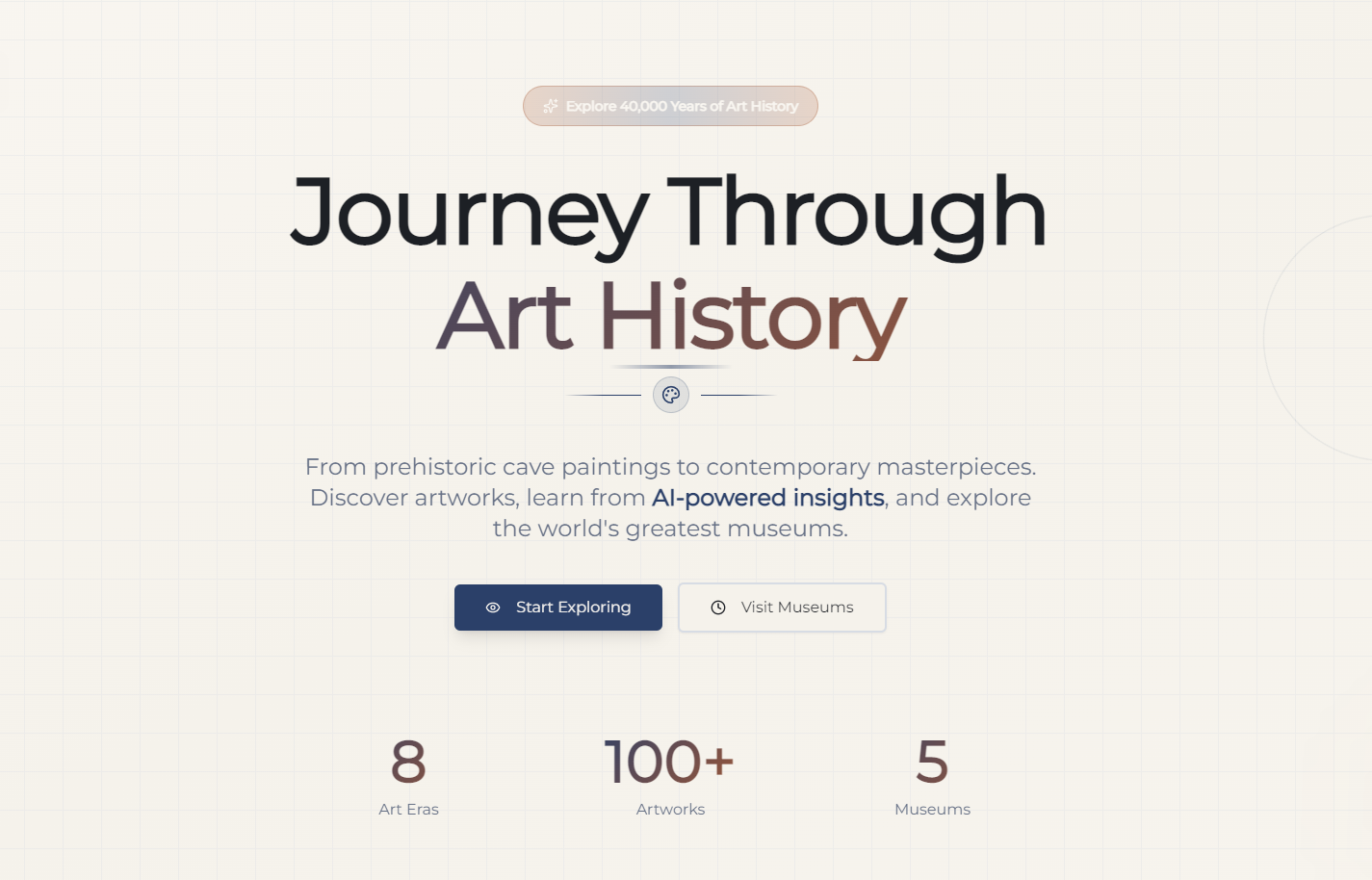
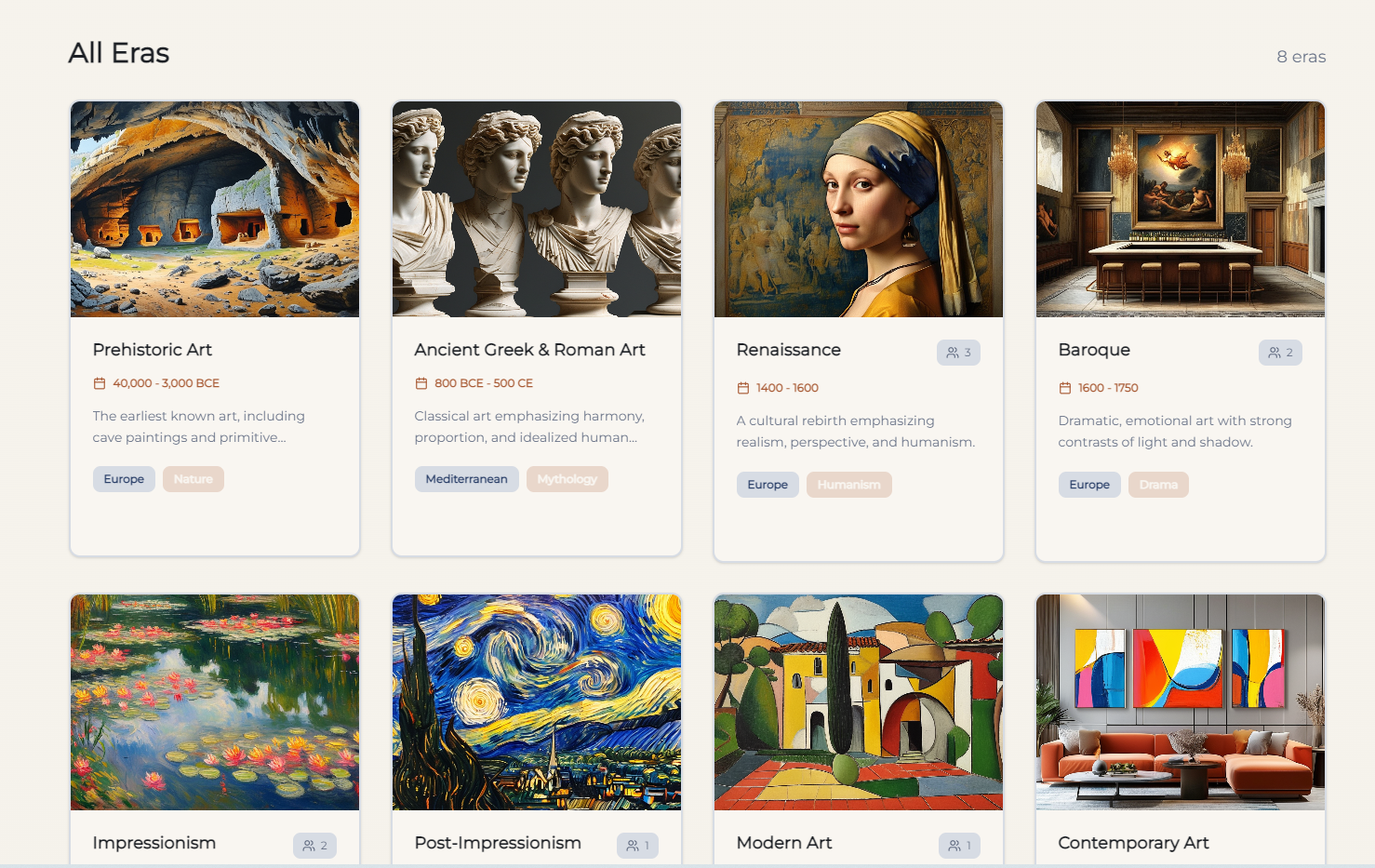
ArtHistory Explorer lets users navigate art history via an interactive timeline, dive into high-res artworks with AI-driven analysis and contextual storytelling, browse city-based museum guides, and experience AR-style overlays that bring art context to life. Free access to core features, with premium for full libraries and deep insights.
How we built it
I started with mapping the core user journeys—timeline navigation, artwork detail viewing, museum browsing. Used React for the frontend to build smooth, card-based UI with soft rounded corners (matching the ivory/indigo color palette). Integrated AI APIs to generate artwork analysis, and structured museum data geographically for intuitive browsing.
Challenges we ran into
The biggest hurdle was balancing visual focus (artwork images as the centerpiece) with functional clarity—ensuring filters, AI text, and navigation didn’t distract from the art. Also, optimizing high-res images to load quickly without losing quality, and designing the AR simulation to feel intuitive without real camera integration.
Accomplishments that we're proud of
Creating a seamless, login-free experience that makes art history accessible to all. The timeline filters work instantly, and the AI analysis strikes a balance between depth and brevity—informative but not overwhelming. Users can jump from a Renaissance timeline entry straight to Da Vinci’s works or Paris museum guides in one tap.
What we learned
I learned how to prioritize user experience over feature bloat—cutting out unnecessary complexity (like advanced search) to keep the core journey smooth. I also gained insight into curating content for diverse users: students need concise analysis, travelers need practical museum tips, and enthusiasts want deep historical context.
What's next for this project
First, expand museum data to more European and US cities (Madrid, Chicago, Rome). Then, refine the AI analysis to include more diverse artists and movements. Long-term, explore adding lightweight offline access and basic multi-language support (starting with French and Spanish) to match the global art cities we cover.

Log in or sign up for Devpost to join the conversation.