-
-
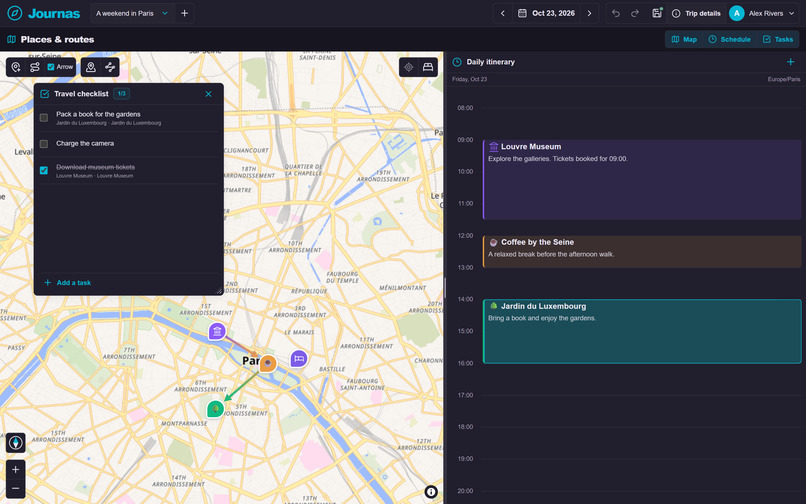
Your daily trip planner
-
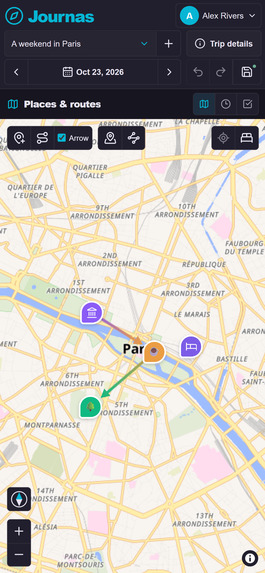
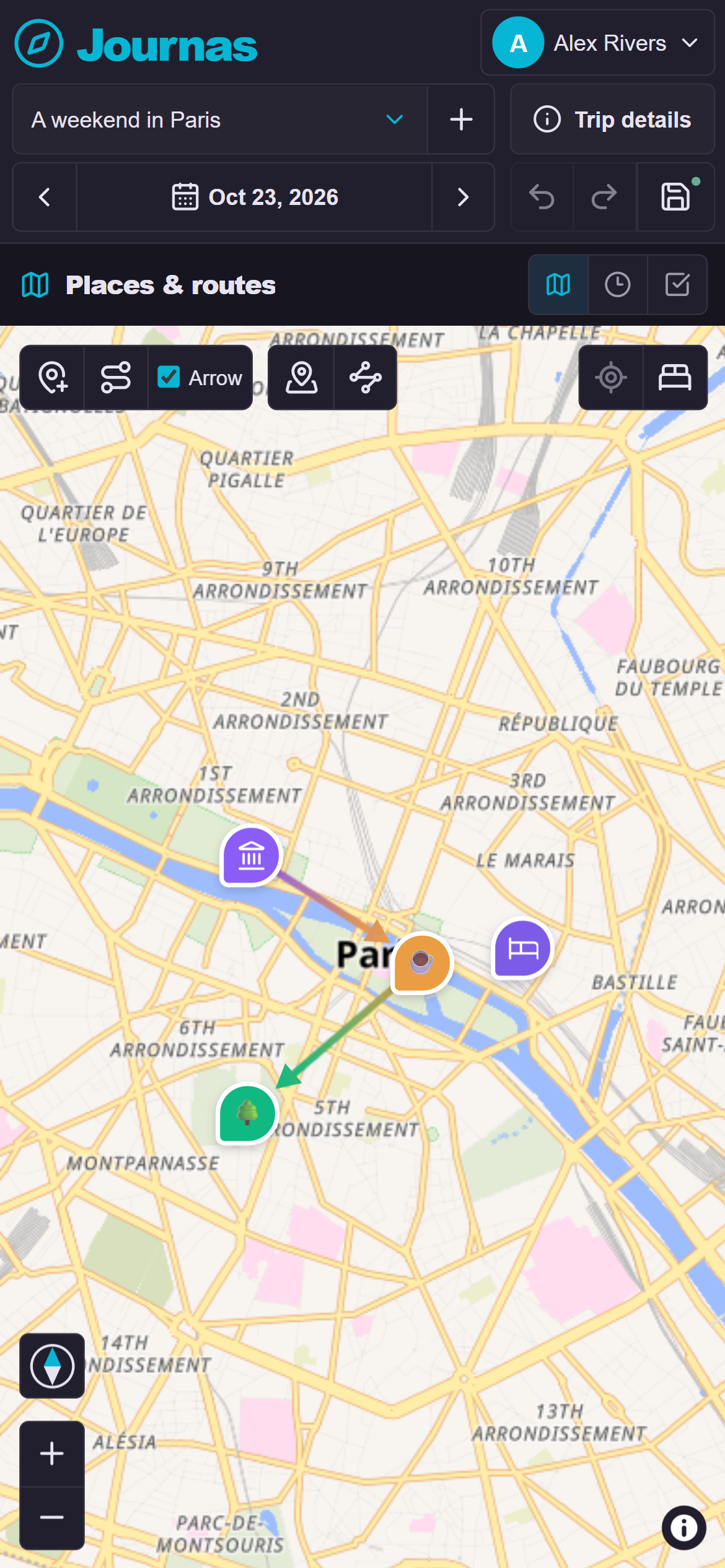
Places and routes on mobile
-
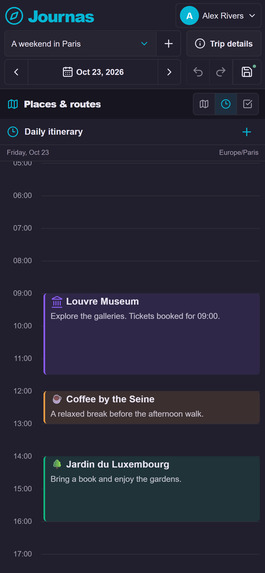
Your day at a glance
-
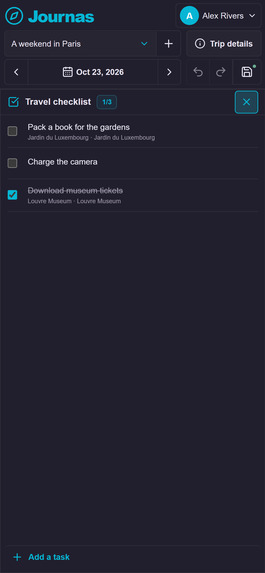
Everything you need to remember
-
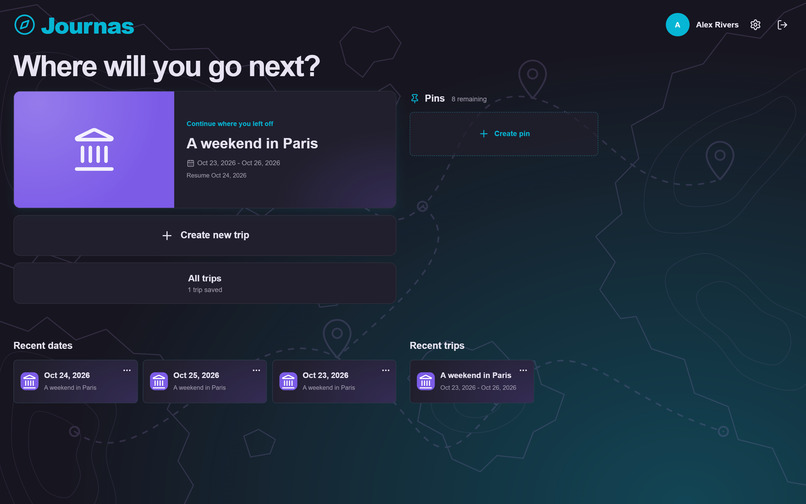
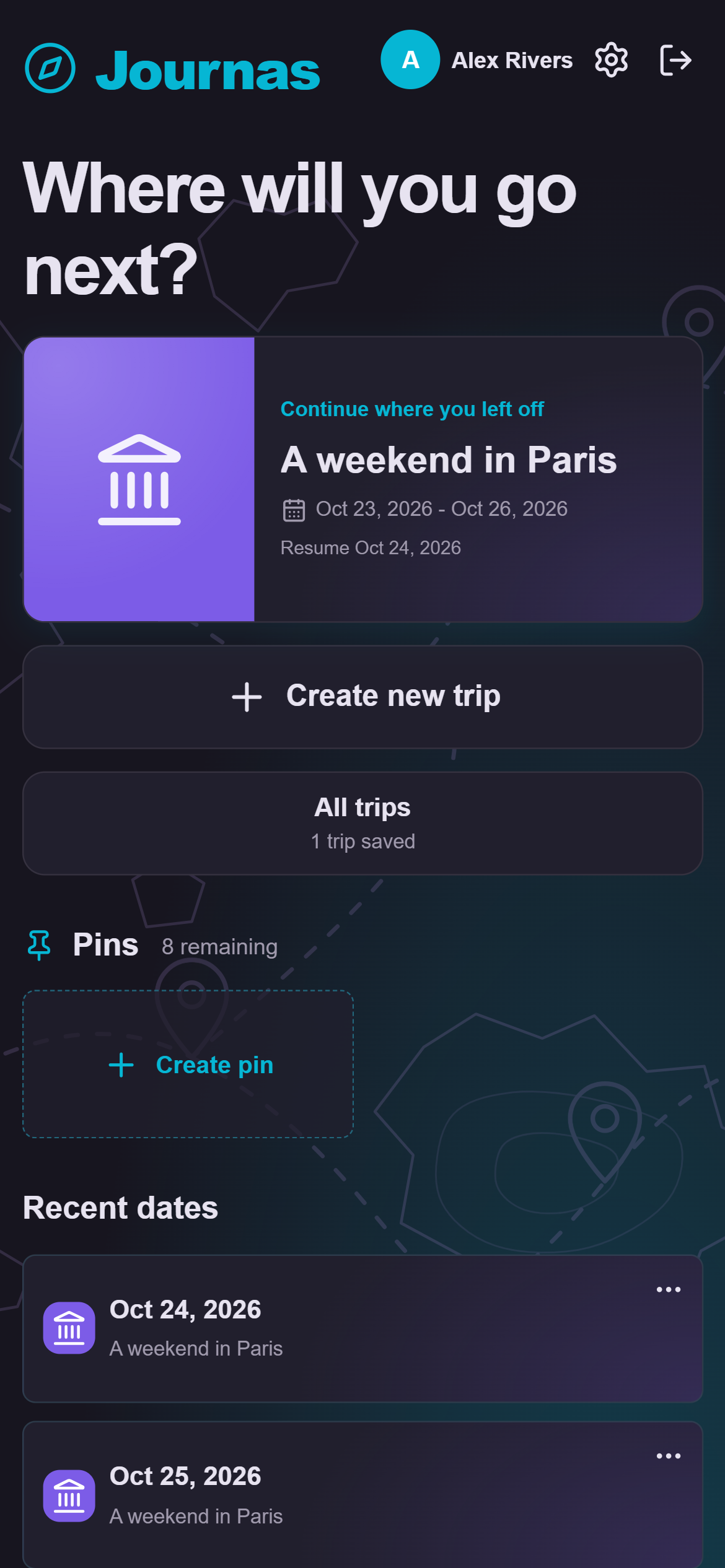
Your trips in one place
-
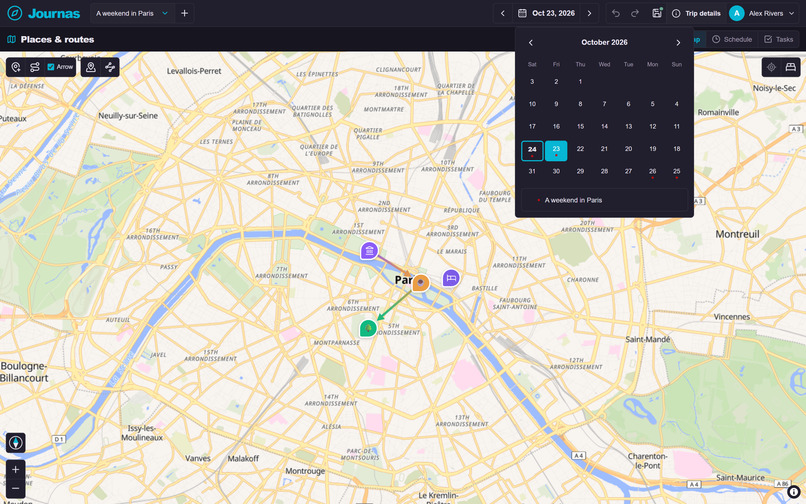
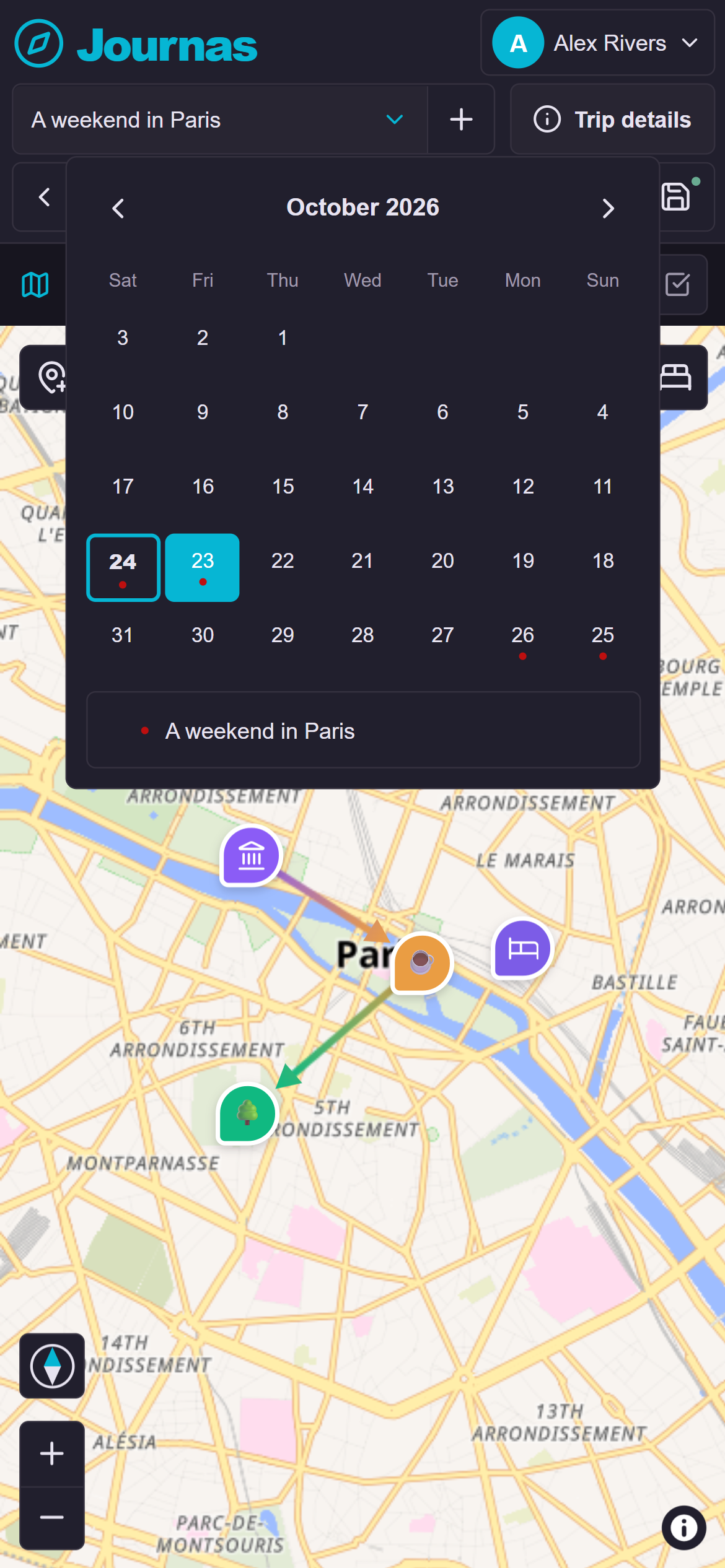
A month of travel plans
-
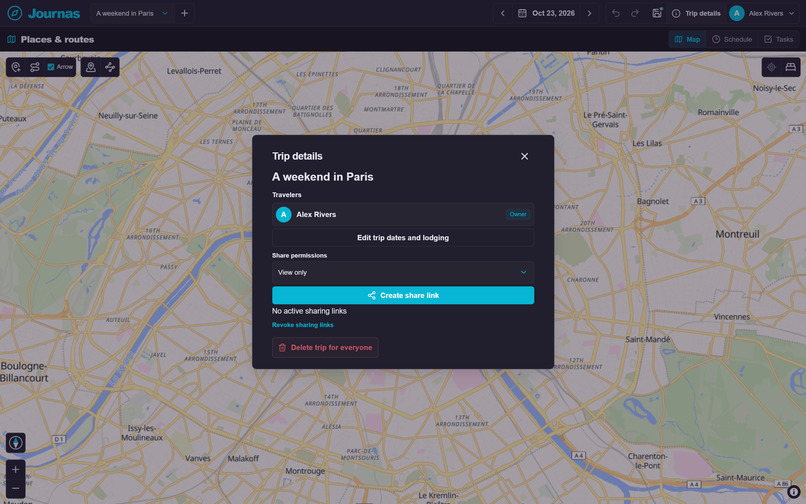
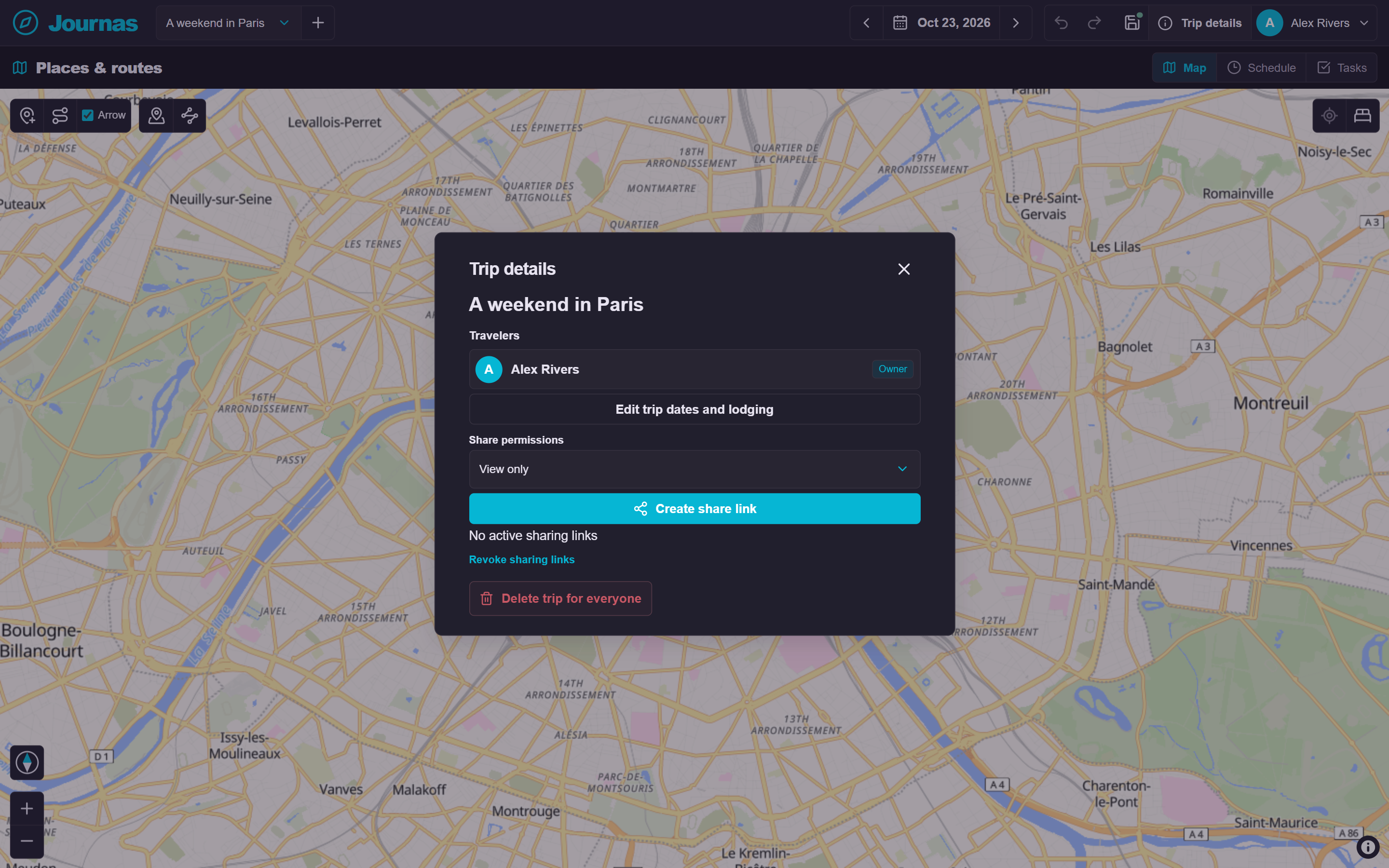
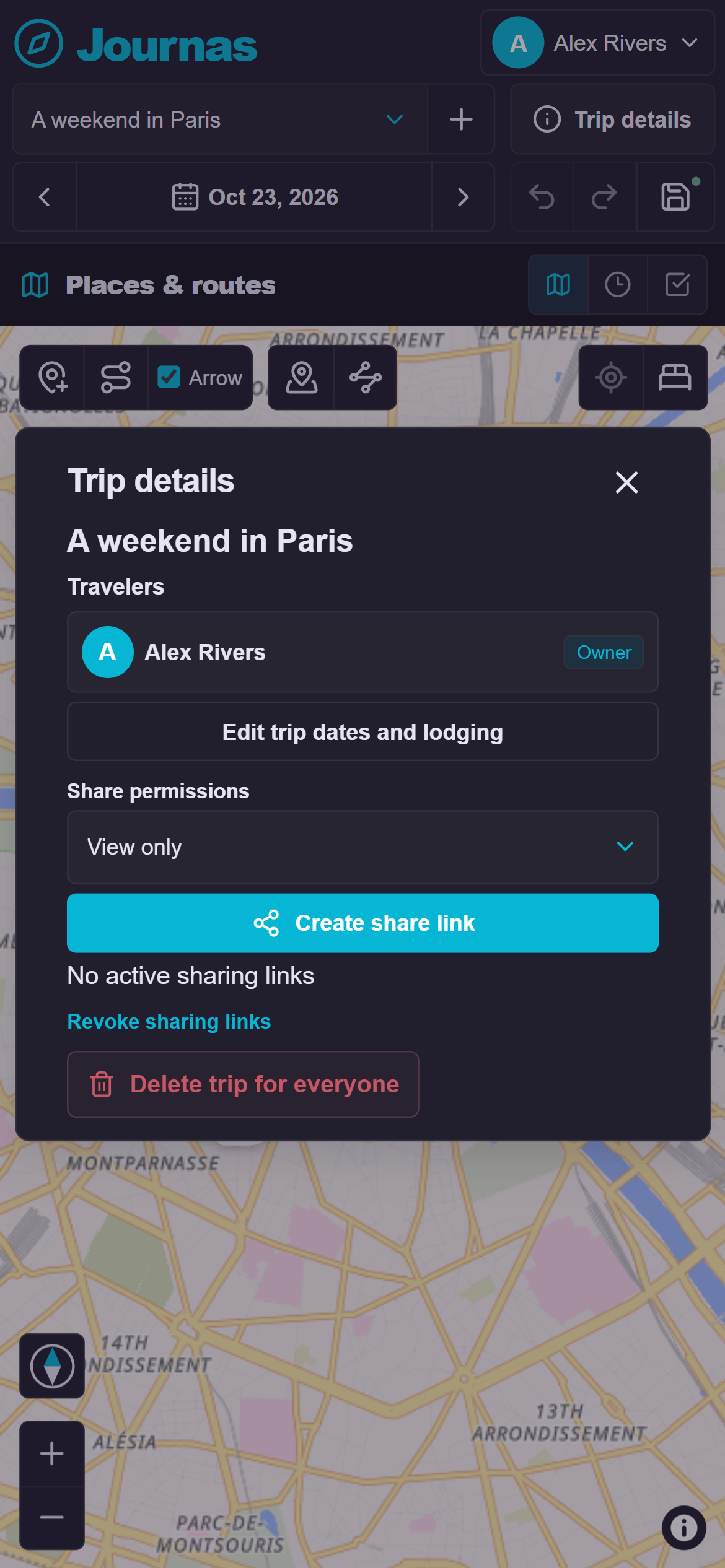
Share your trip with others
-
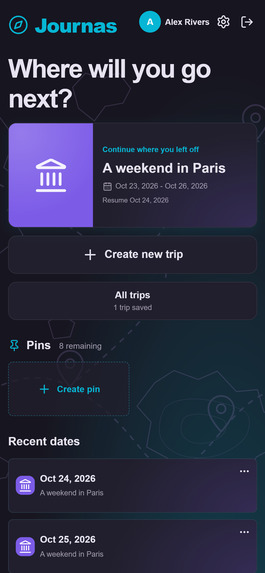
Your trips on the go
-
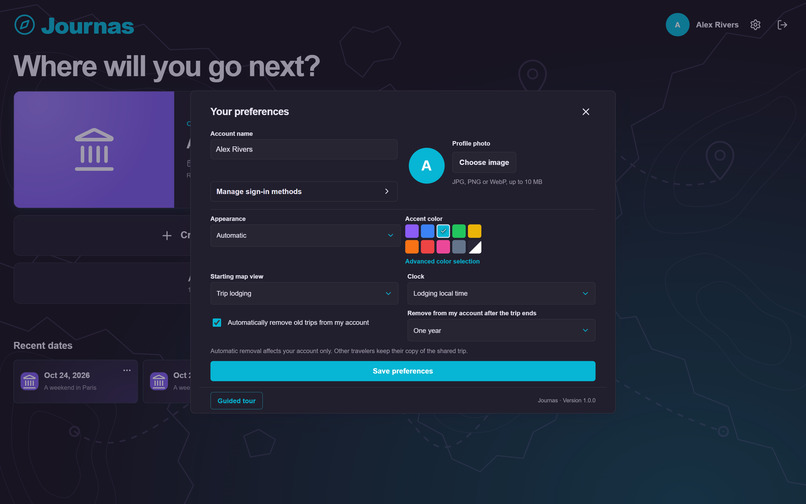
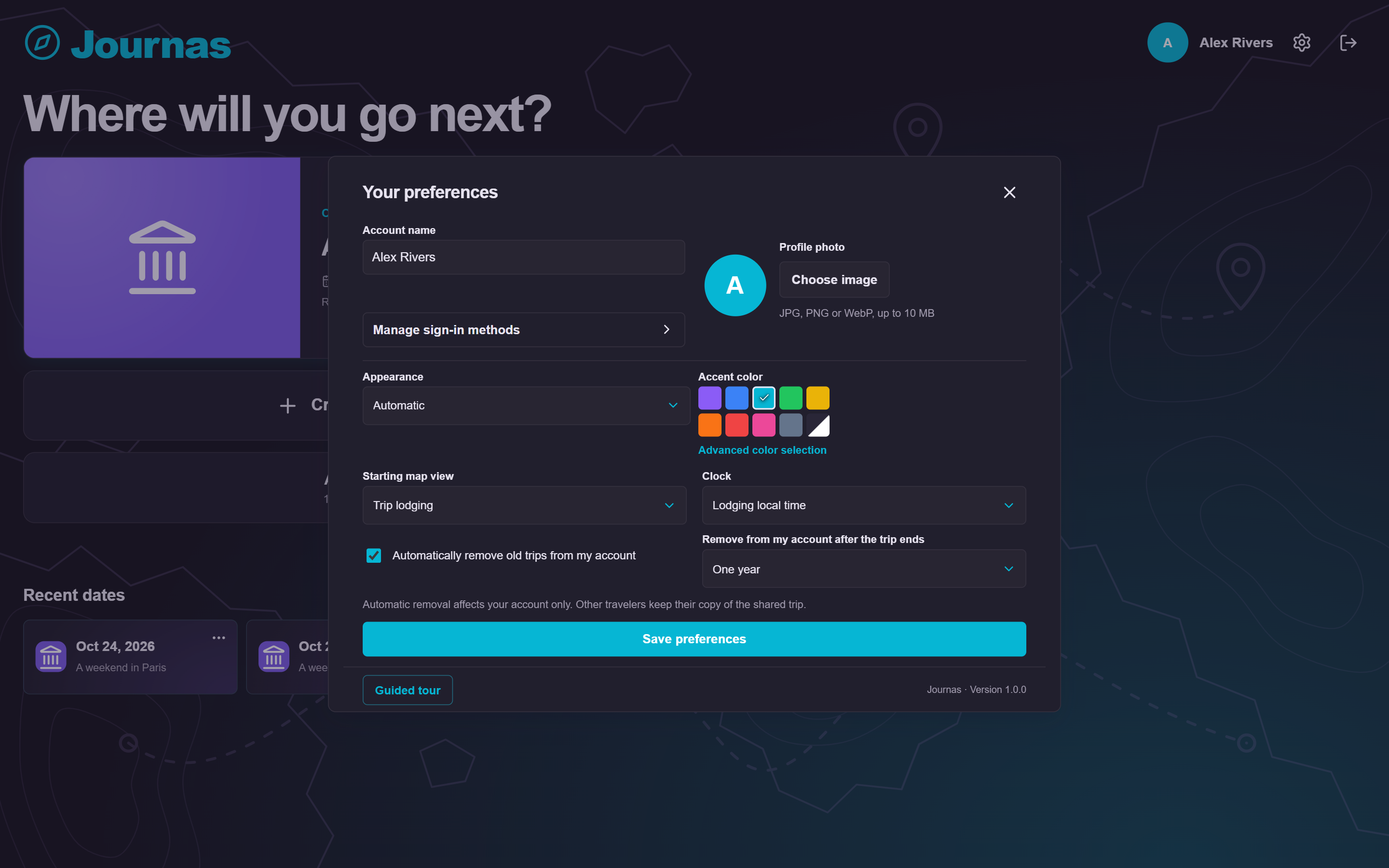
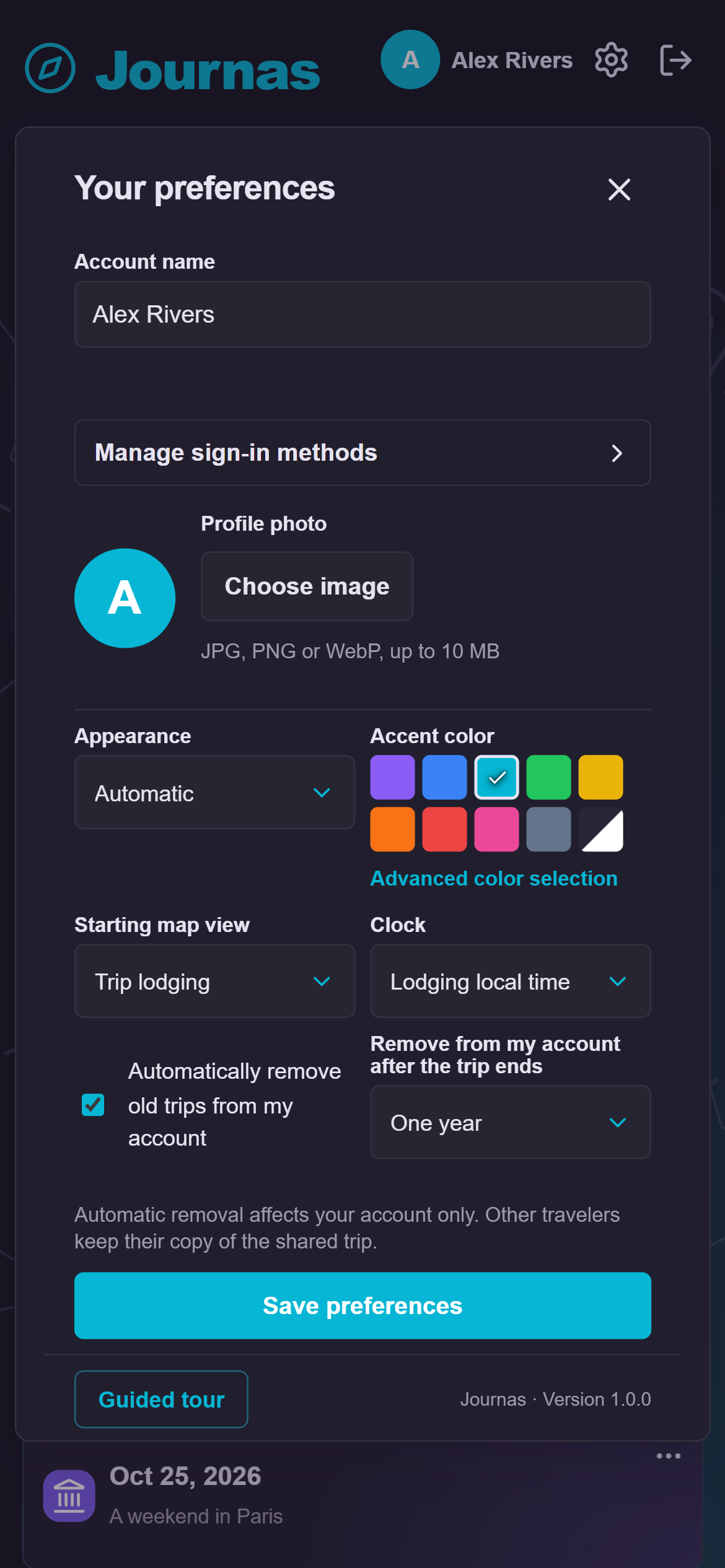
Make Journas your own
-
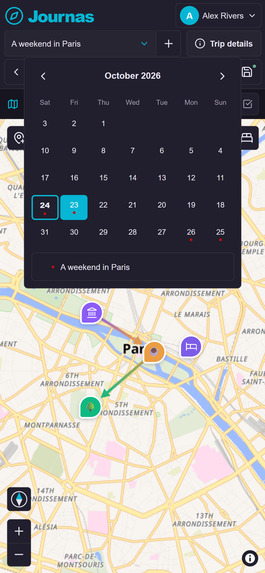
Browse trip dates on mobile
-
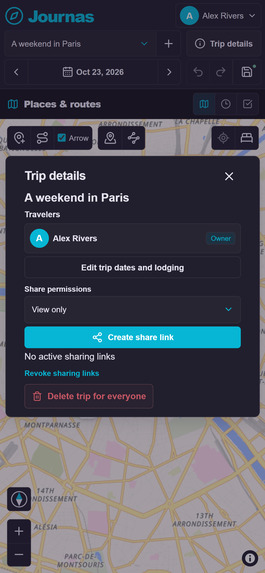
Share your plans on the go
-
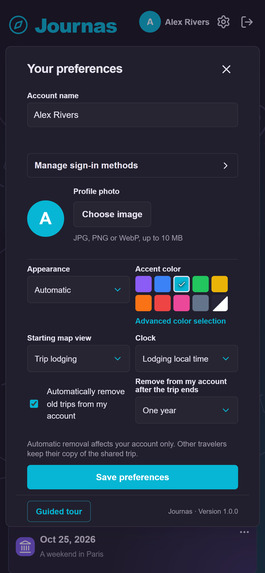
Your preferences on mobile
-
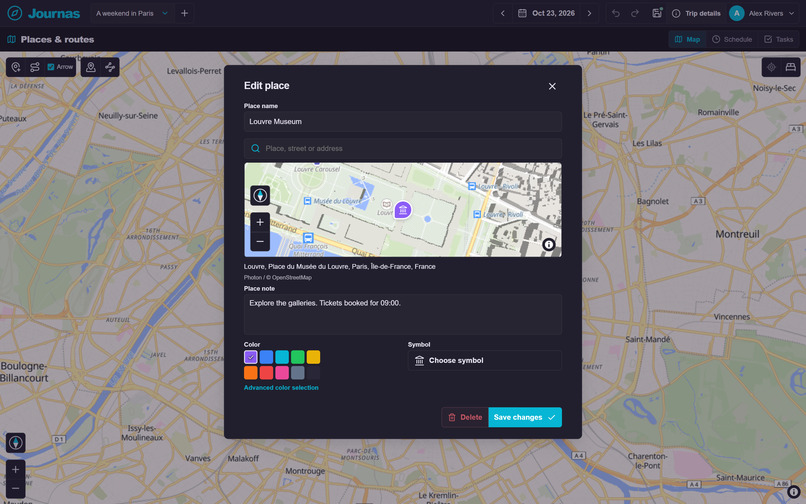
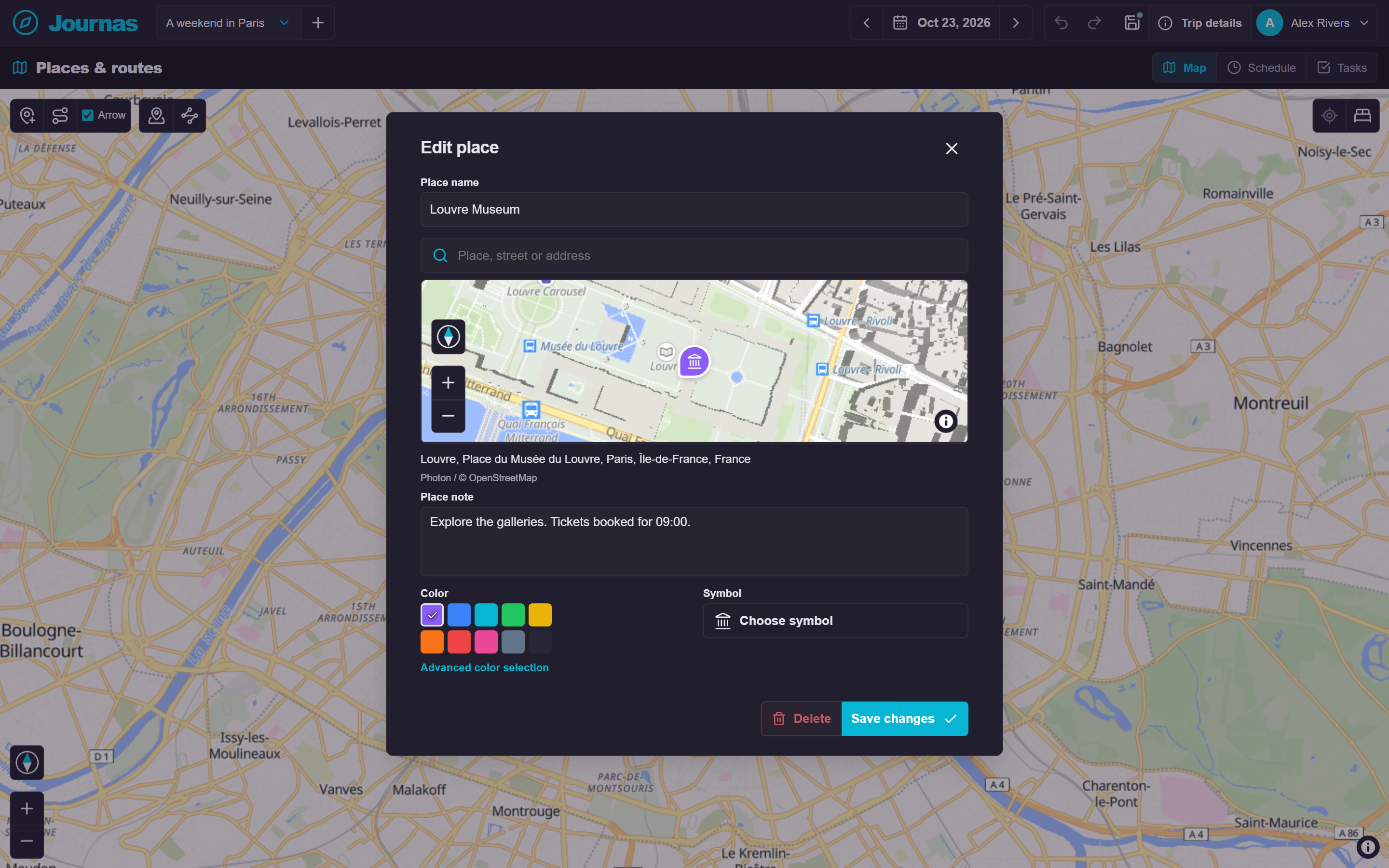
Add details to each place
-
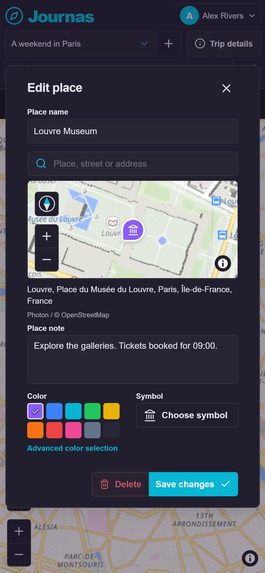
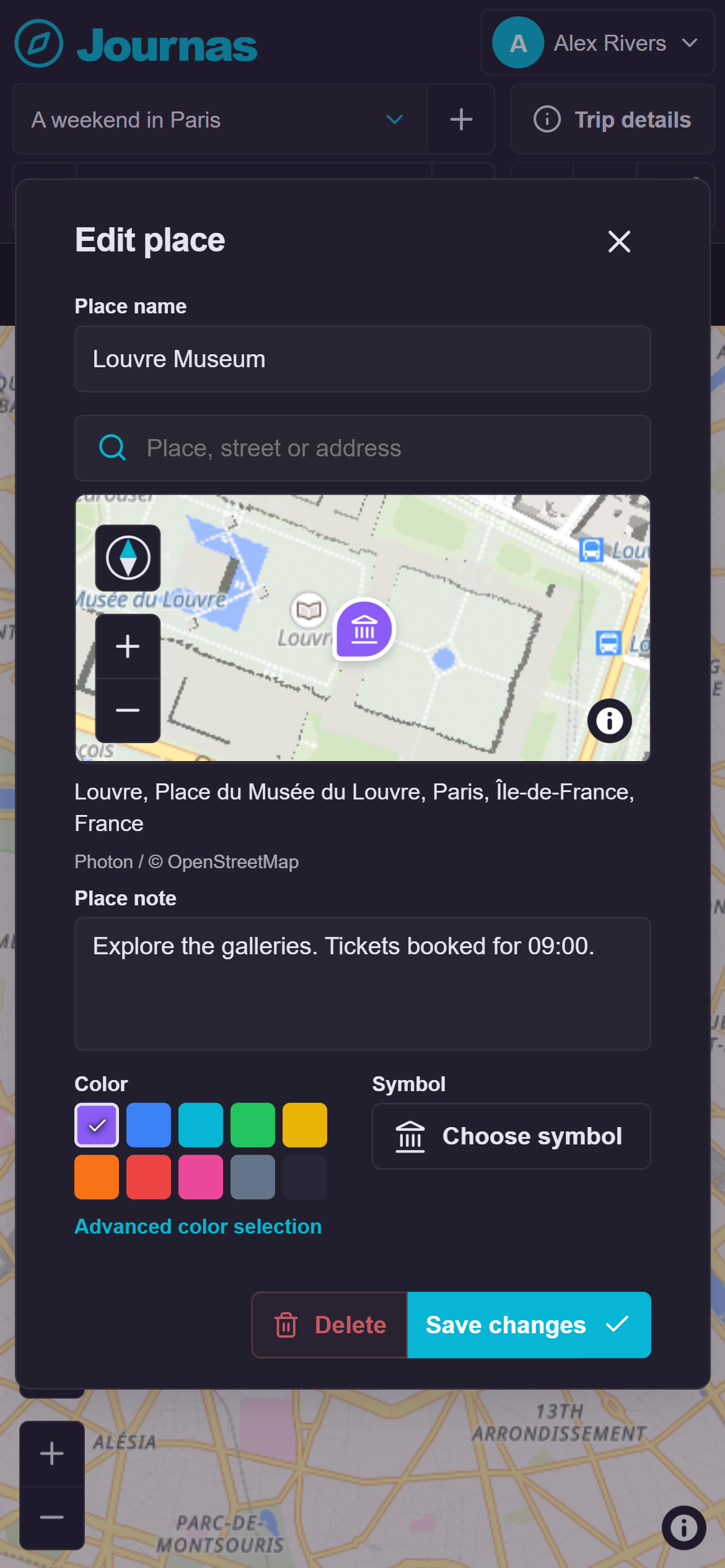
Edit places on the go
Inspiration
I wanted a way to plan a trip without having to use a different app for every part of it. You find a place on a map, write down when you want to go there somewhere else, and then have another list for everything you need to remember. I thought it would be useful to bring all of that together, so that's what I tried to do with Journas.
What it does
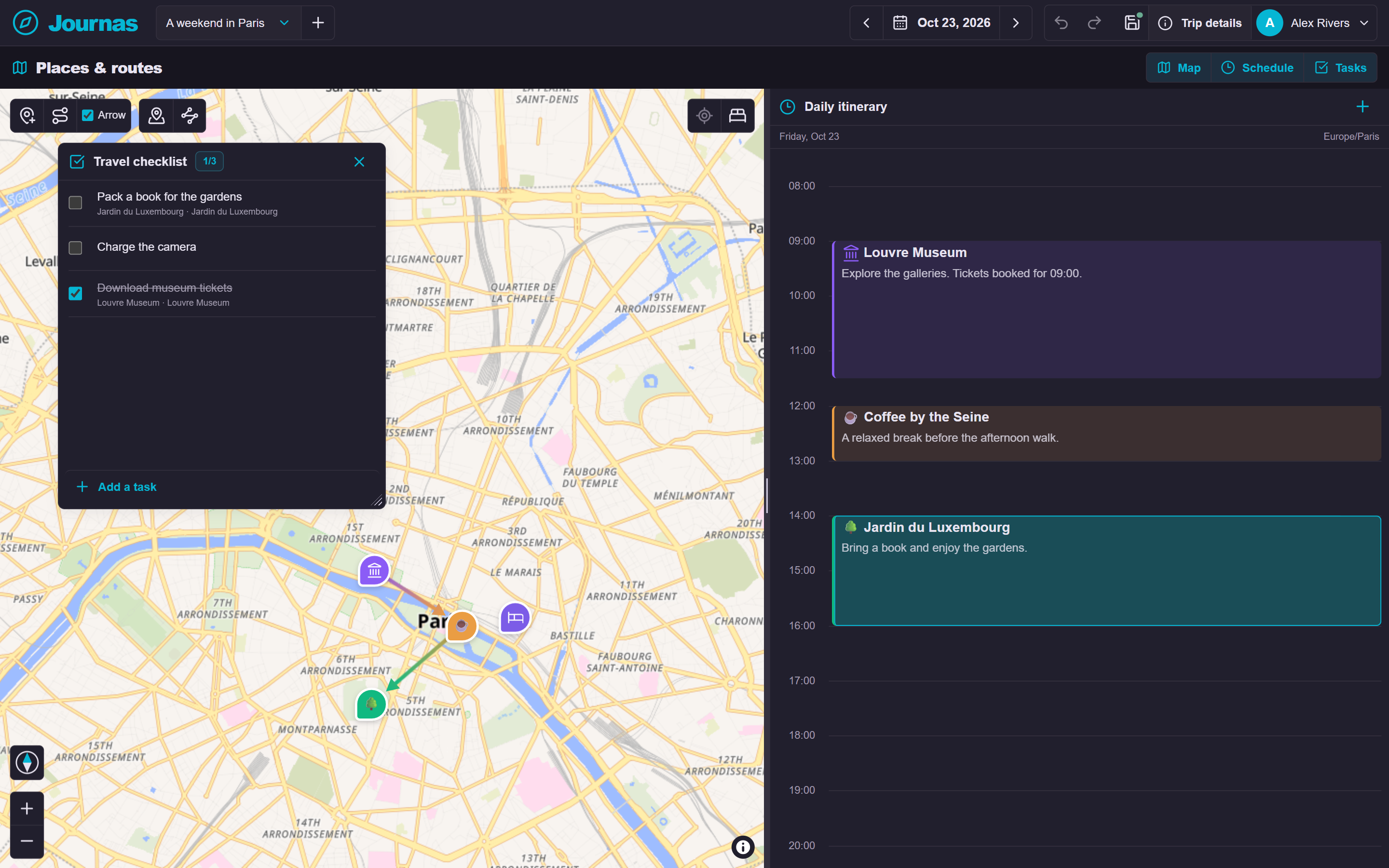
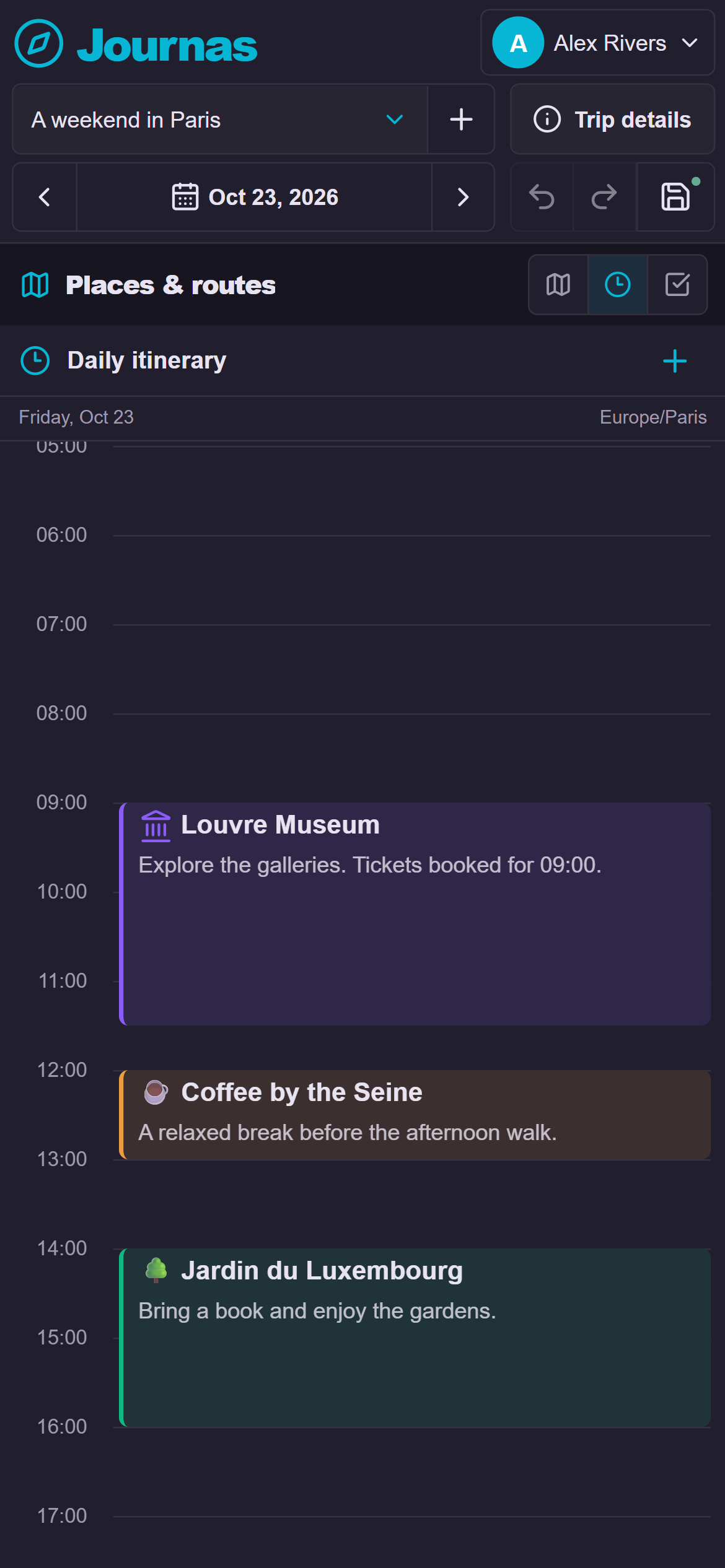
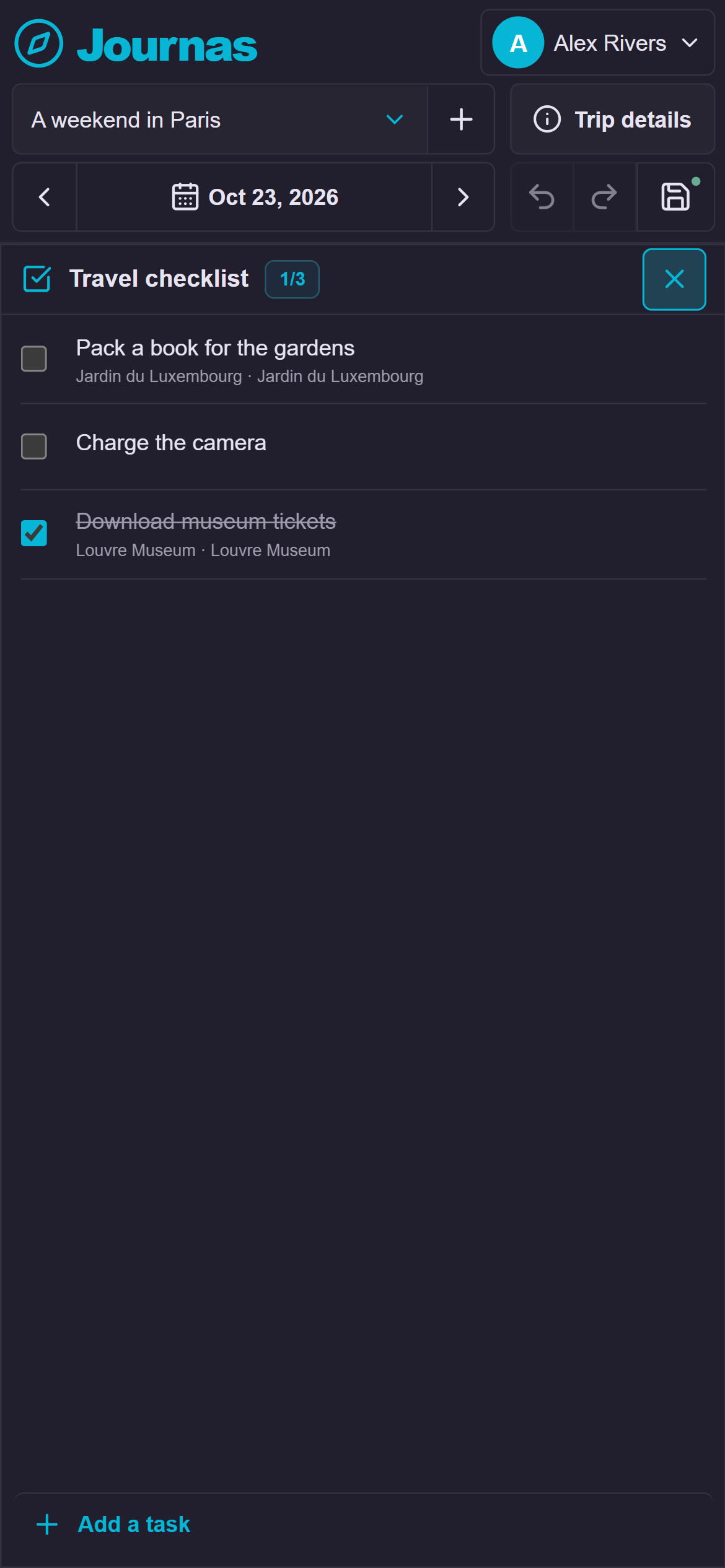
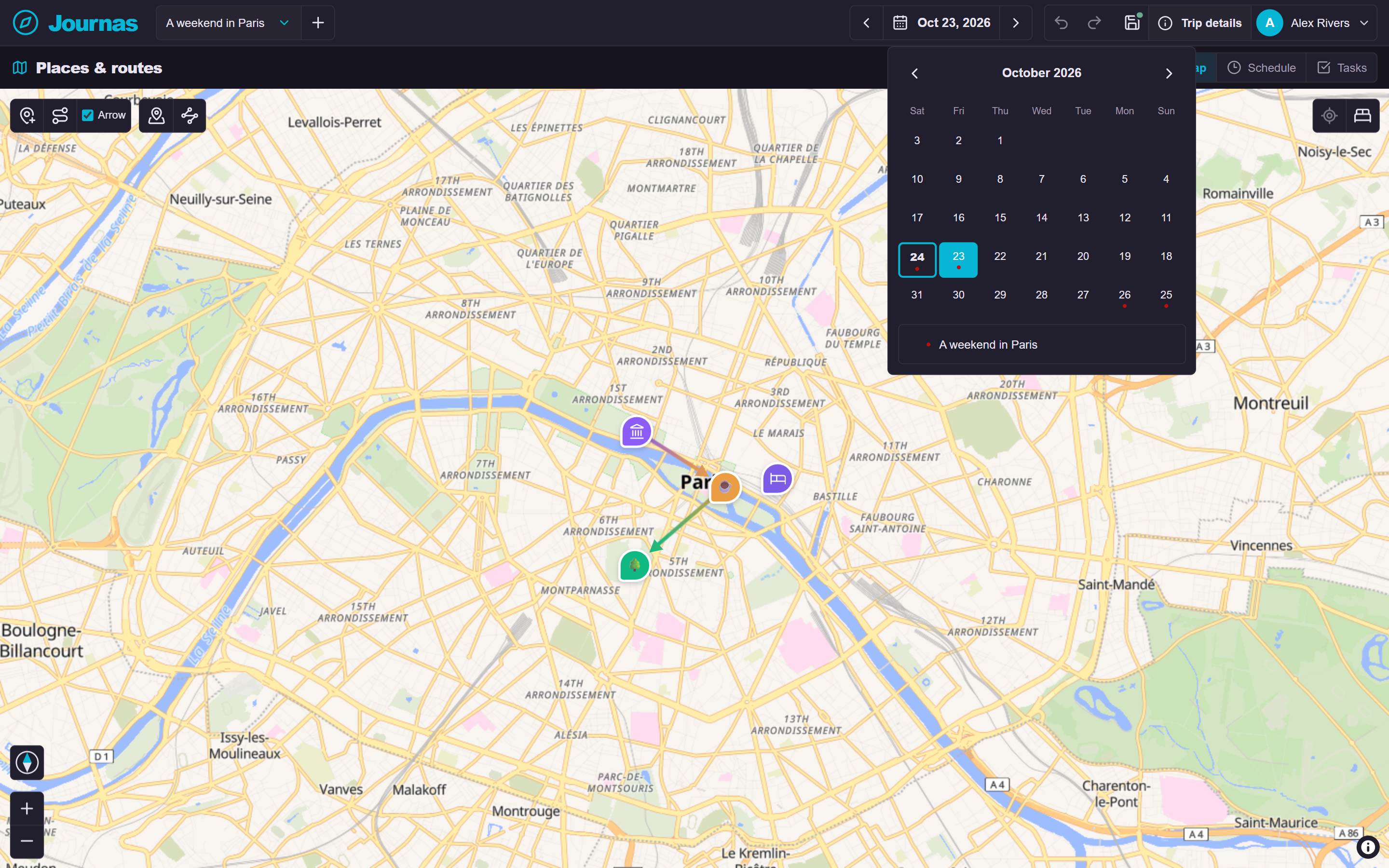
You can create a trip and plan each day with a map, a schedule, and a checklist. The useful part is that they aren't just three unrelated things on the same page. If you add a place to your schedule, its details come with it. You can also link a task to that visit, so it's clear what it belongs to.
There are also colors, symbols, notes, and connections between places to help organize the day however you like. If you're traveling with other people, you can invite them to edit the trip with you, or just send a link so they can look at it. Everyone shares the plans, but each person can choose how to arrange their own screen.
How it was built
I built Journas with Codex, using the Devpost Learn Skill Pack to work through the idea and make a plan before starting the implementation. I made the product decisions and kept asking for changes as I tried the site. Codex handled the code and helped investigate problems along the way.
For the technical side, the frontend uses React, TypeScript, and Vite. Firebase handles accounts and data storage, and the map uses MapLibre with OpenFreeMap. The site runs on Vercel. The scope, requirements, and technical plan are also available in the repository under devpost/.
Challenges
There was really only one major challenge - getting the agent to truely understand me. When developing a project on your own, it's very easy to just do exactly what you think of. With an agent as your only way to access the "behind the scenes" of the entire thing, it's sometimes very hard to do exactly what you want, because you don't have a way to change the code exactly how you want.
Accomplishments
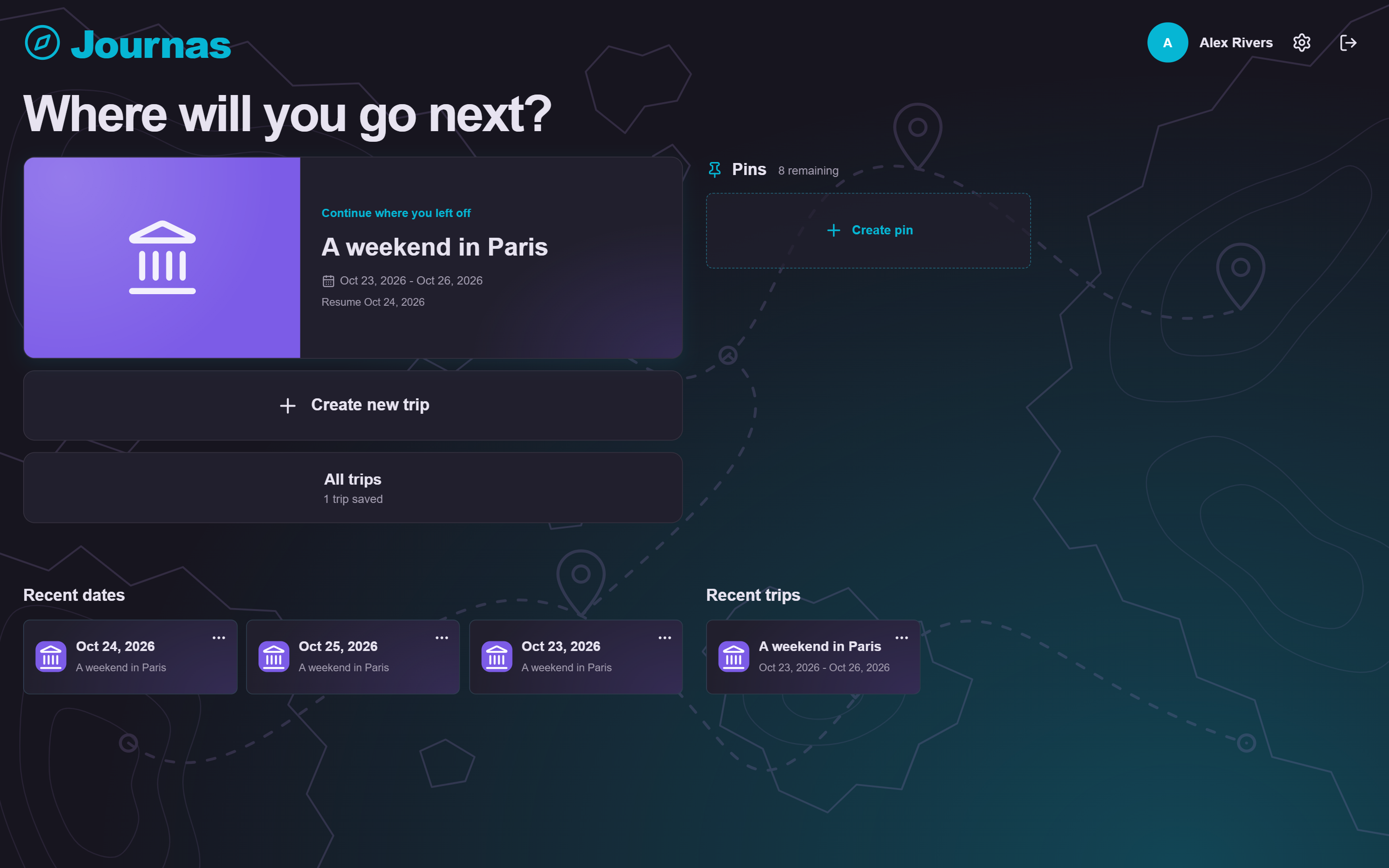
I'm happy that Journas became a working site that people can actually use. You can make an account, save a trip, come back to it later, and plan it with someone else. It feels like a product I can keep working on, which was something I wanted to get out of this project.
I also put effort into making it usable on both a computer and a phone. The screenshots show the actual site with a test account and an example trip to Paris.
Development takeaways
One thing I took from this is that having a working feature and being happy with how it works are two different stages. A button can do what it was supposed to do and still feel awkward to use, especially on a smaller screen. A lot of the work ended up being those small changes after the main features were already there.
It also helped to have the planning documents as a starting point, even when I later changed my mind about something. They gave the project some structure without having to decide every detail at the beginning.
What's next
A way to make money through the site - ads (sorry everyone, but it's not going to be to much, I promise) and paid subscriptions. I put a lot of effort into this project, and unlike many of my other projects I do feel Journas can go somewhere beyond this hackathon.
Built With
- cloud-firestore
- codex
- firebase
- maplibre-gl-js
- node.js
- openfreemap
- react
- typescript
- vercel
- vite


Log in or sign up for Devpost to join the conversation.