Inspiration
As someone who struggled with unprocessed stress and avoided in-person therapy, I wanted a private, accessible way to practice expressive writing—backed by real therapeutic research. I saw a gap in tools that balance structure with gentleness, so I built JournalTherapy AI to meet that need: no clinical pressure, just gradual, personalized support.
What it does
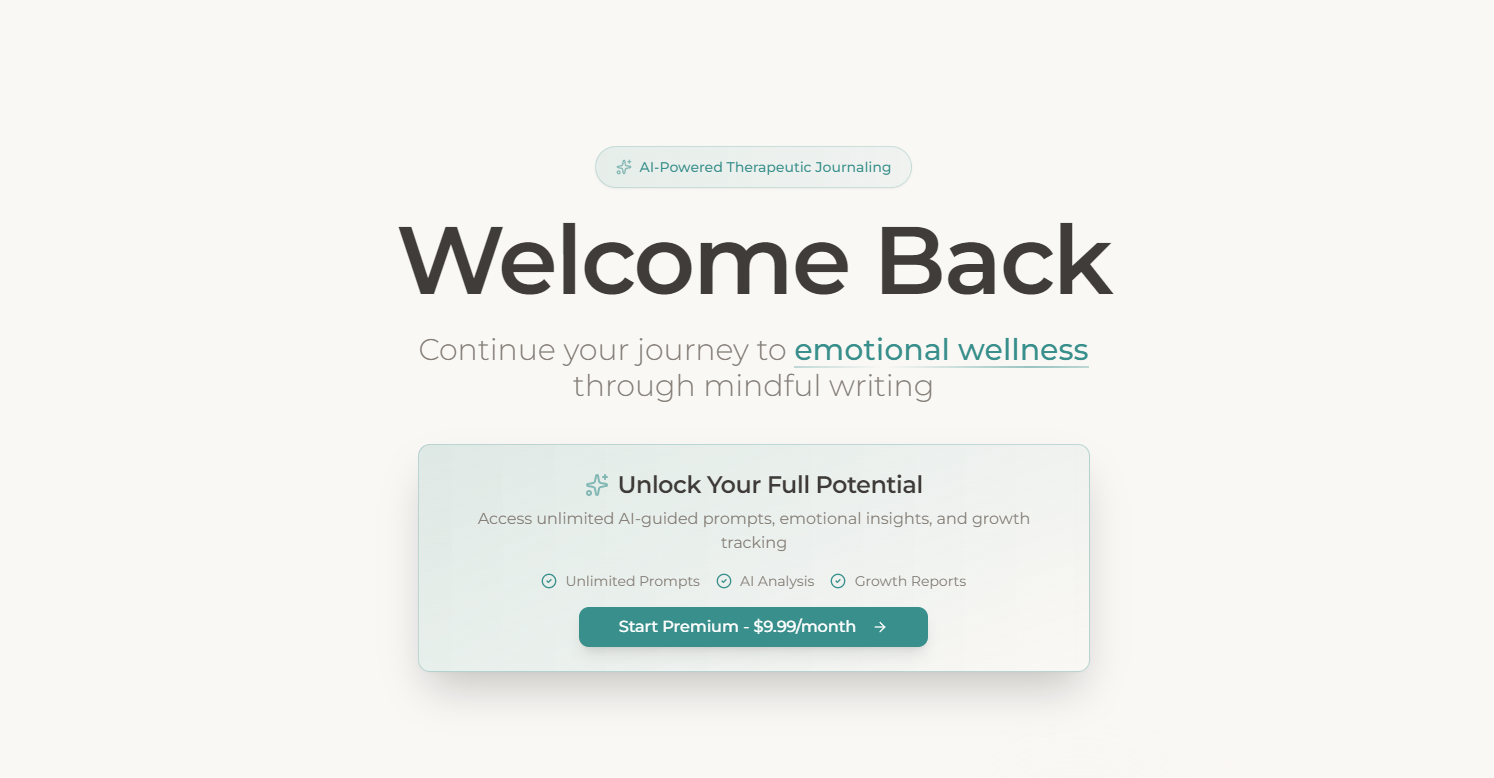
JournalTherapy AI delivers daily AI-generated therapeutic prompts (tailored to writing style/preferences), gentle emotional feedback on entries, and monthly growth tracking. It uses a progressive system to avoid overwhelm, keeps all journal data encrypted, and offers full access via a $9.99/month subscription (entries remain accessible post-cancellation).
How we built it
I started with core UX design focused on minimalism and safety, then built the frontend with React/TypeScript for responsiveness across devices. The backend (Node.js/Express) integrates OpenAI API for prompt/emotional analysis, Stripe for subscriptions, and AWS for encrypted cloud storage. Chart.js powers emotional timeline visualizations, and PDFKit enables summary exports.
Challenges we ran into
The biggest hurdle was balancing AI personalization with ethical guardrails—ensuring the AI never gives clinical diagnoses, and the progressive prompt system only advances when users show readiness. We also had to refine data encryption protocols to meet strict privacy standards, and test subscription logic to avoid access disruptions post-cancellation.
Accomplishments that we're proud of
Creating a system that adapts to user comfort (no forced emotional progression) while still delivering meaningful therapeutic value. We also built a seamless privacy-focused experience—all data encrypted in transit/rest, no third-party sharing—and a subscription model that prioritizes user control (one-tap cancellation, full entry access post-cancellation).
What we learned
I deepened my understanding of ethical AI design for emotional health—how to balance personalization with safety. I also learned the importance of user-centric subscription logic (transparency, flexibility) and the value of iterative testing with real users to refine prompt adaptability and emotional feedback tone.
What's next for this project
We plan to add mild guided writing exercises (aligned with expressive therapy research), expand emotional visualization tools (weekly trend snapshots), and introduce a "coping toolkit" linked to user-identified emotional themes. We’re also exploring a yearly subscription option for cost savings, and refining AI feedback to better highlight personal strengths.

Log in or sign up for Devpost to join the conversation.