
Inspiration
I wanted to build Jotter because I kept running into the same problem myself: I would read useful books, listen to podcasts and audiobooks, learn something genuinely interesting, and then forget most of it a few weeks later.
I looked for apps that could help resurface useful knowledge naturally, but the mainstream options I found were either focused mostly on books, charged from the start without letting you properly try the product first, or resurfaced information in a way that didn’t really suit how I wanted to use it.
I already wanted to build my own products and become an entrepreneur, so Jotter felt like a good problem to solve because it was something I personally wanted to exist.
What it does
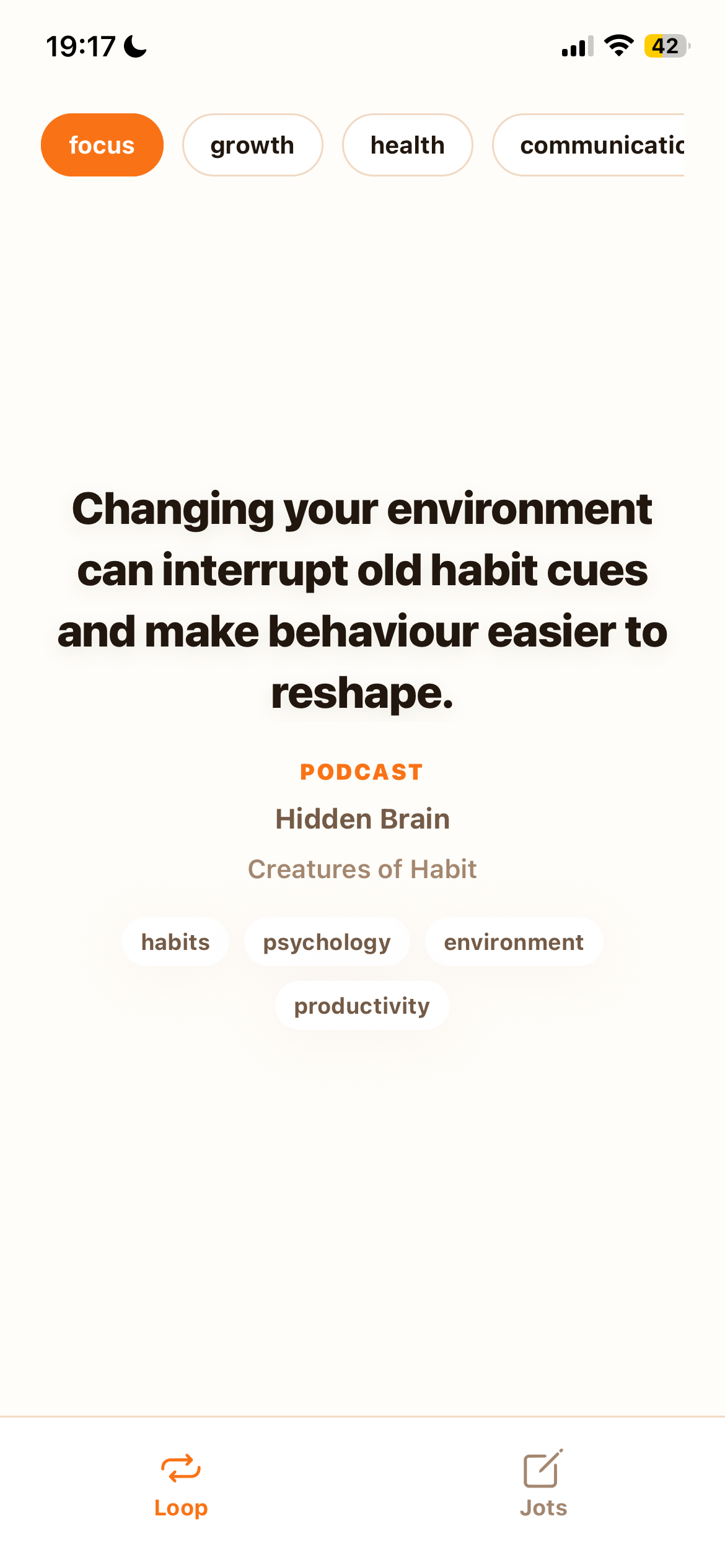
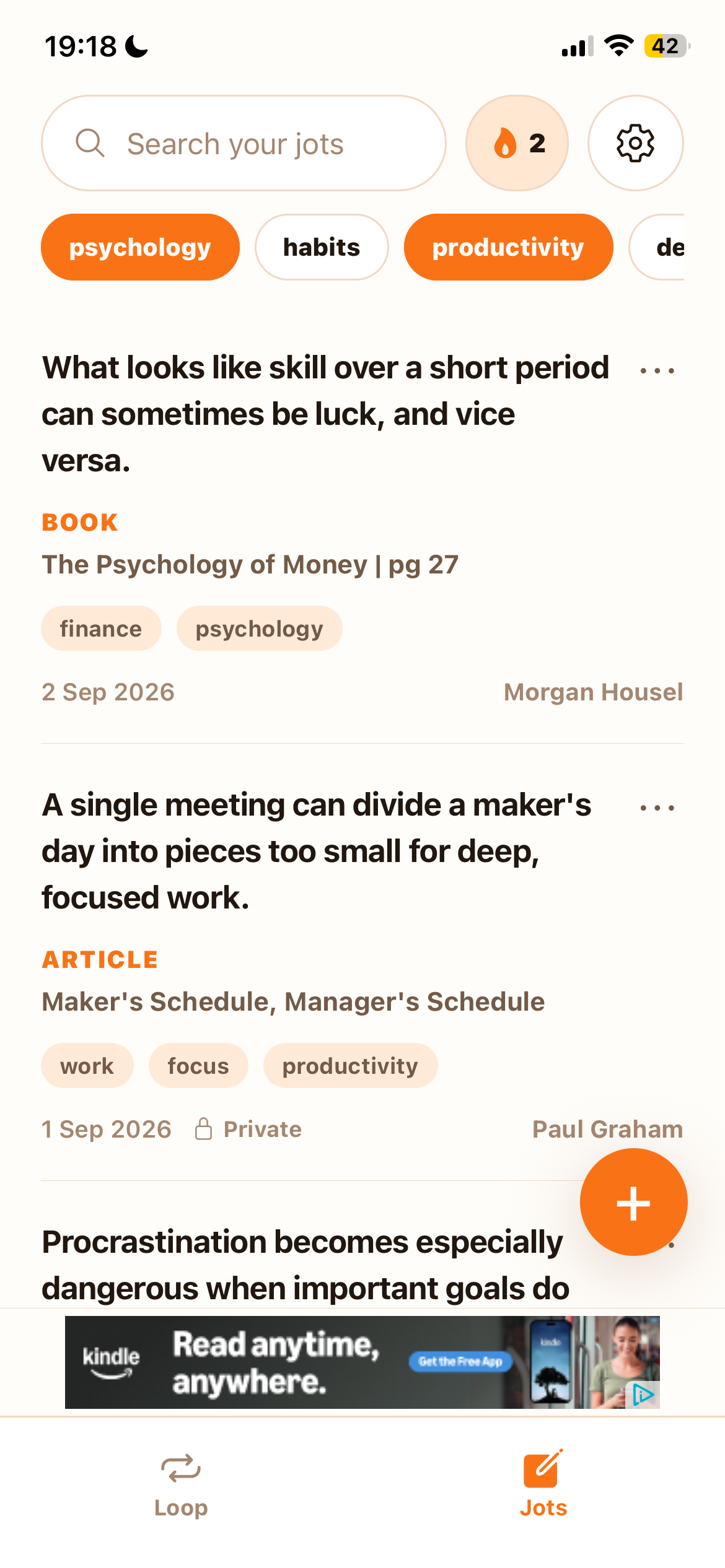
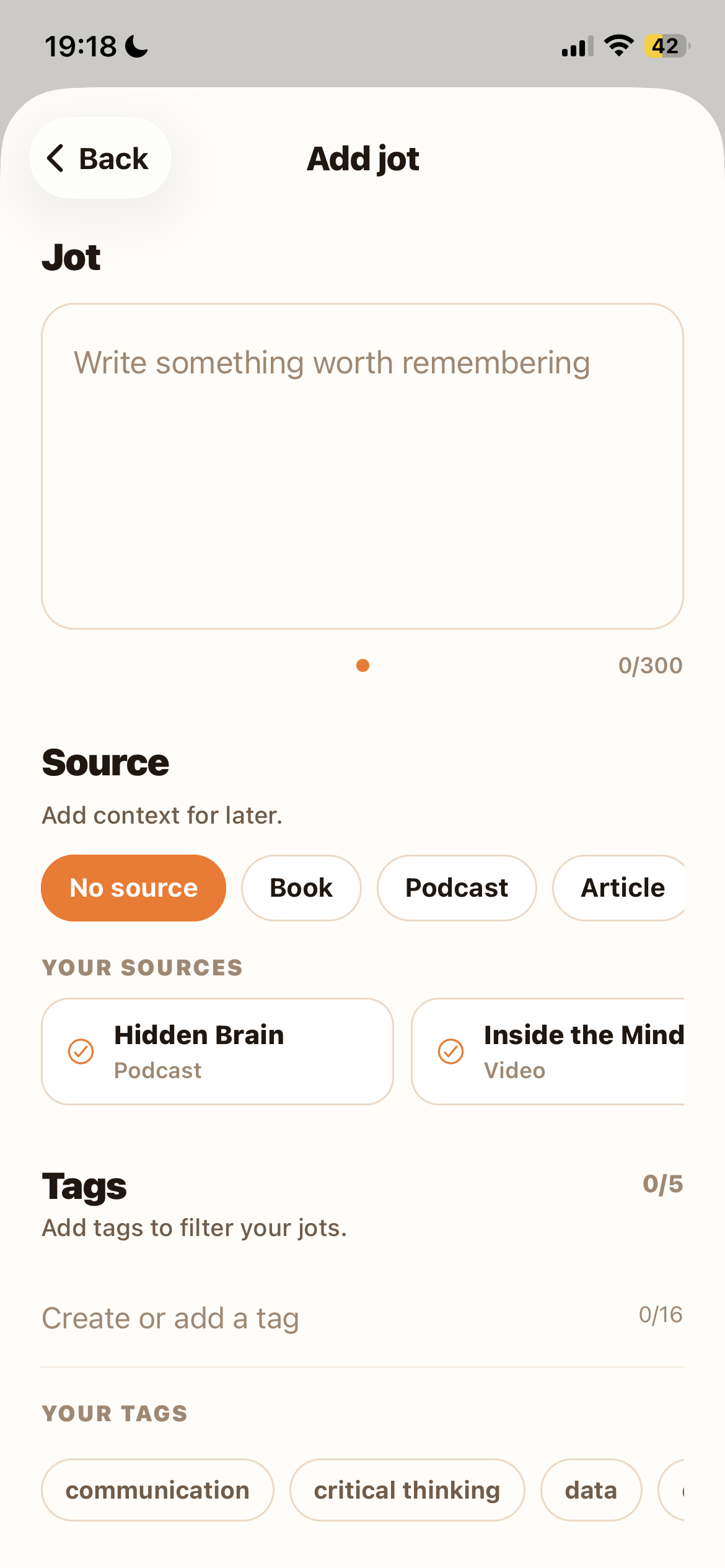
Jotter lets you save useful pieces of information as short notes called Jots.
These can be things you learn from books, podcasts, videos, conversations, or just ideas and lessons you want to remember.
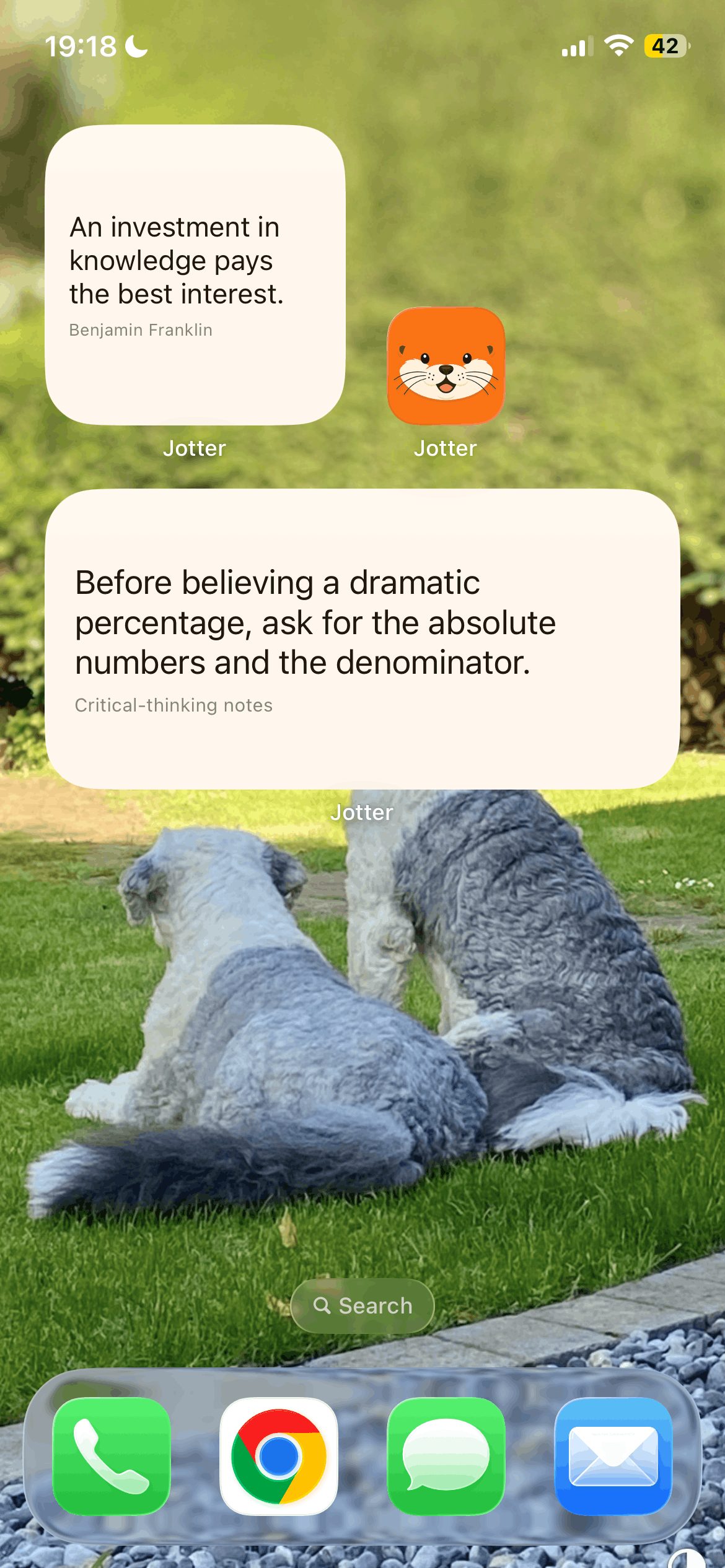
Instead of saving them and forgetting about them, Jotter resurfaces them through:
Loop, a feed of your saved Jots Home Screen and Lock Screen widgets Notifications
The idea is simple: save useful knowledge once, then have it naturally come back into your life.
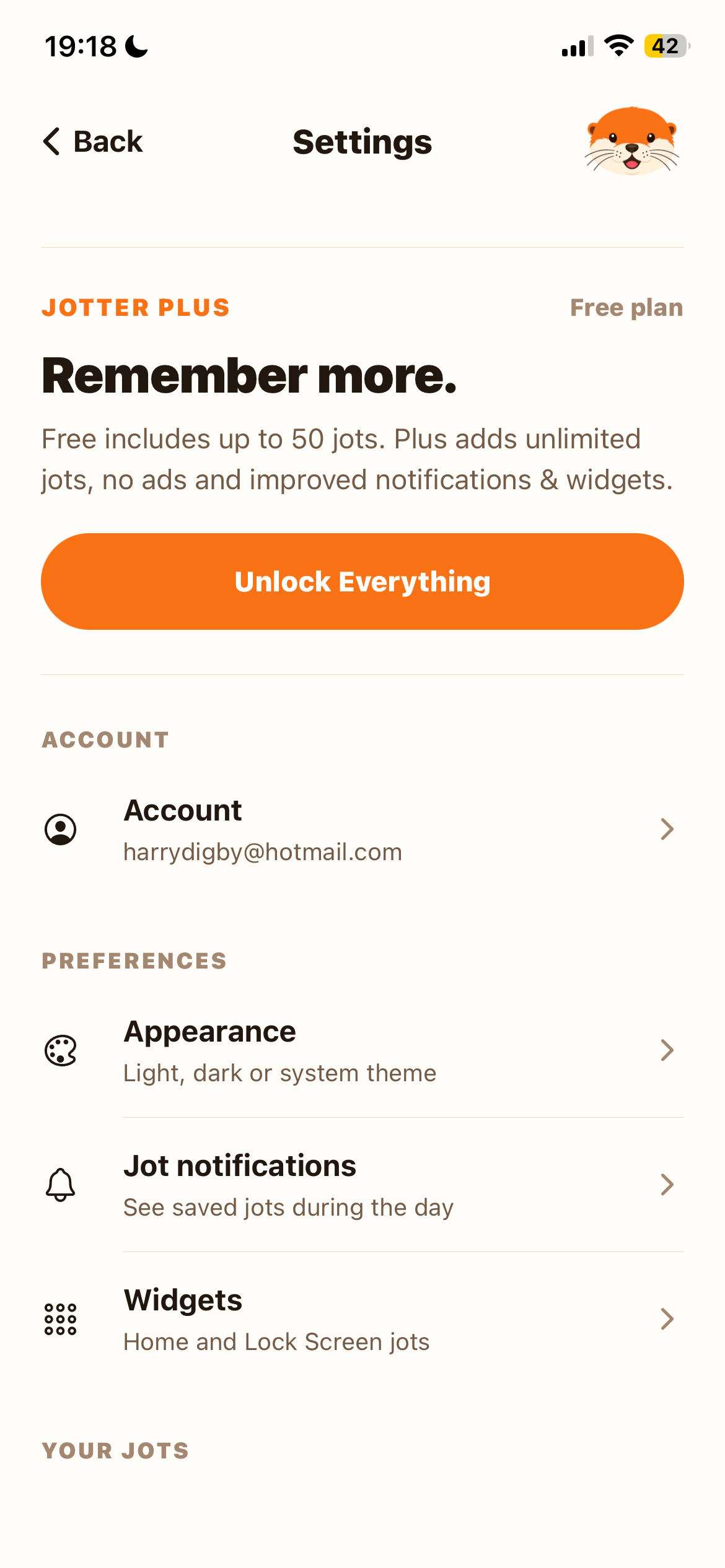
There is a free version so people can properly try the app before deciding whether they want Jotter Plus.
How I built it
Jotter was built as a cross-platform mobile app using React Native and Expo.
The backend uses Supabase for authentication, database storage and syncing. RevenueCat manages Jotter Plus subscriptions, and AdMob is used for ads on the free plan.
The app also includes native iOS widgets, notifications, Google and Apple authentication, and a guest mode so people can start using Jotter without immediately creating an account.
A lot of the work was also in the design. I wanted Jotter to feel simple and friendly rather than like a serious productivity tool, which led to the orange visual style and the creation of Jotter the Otter as the app's mascot.
Challenges I ran into
The biggest challenge was probably deciding what not to build.
It is very easy when making your own product to keep adding features because every new idea sounds useful. At one point I really wanted Jotter to include a social side where people could publicly share Jots and browse an Explore feed of other people's lessons and ideas.
I still think that could be really cool, but turning Jotter into a social platform would have added a huge amount of complexity around moderation, privacy, legal issues and infrastructure.
Eventually I decided that the important thing was to ship the core MVP first and find out whether people actually like the basic product.
There were also plenty of smaller development challenges along the way, especially around widgets, authentication, subscriptions, ads and getting everything ready for the App Store. None of them were individually impossible, but together they definitely made shipping take longer than expected.
Naming was another surprisingly difficult part. The project originally had a different name and I even bought the jotloop domain before deciding I didn't really like it and eventually rebranding everything to Jotter.
The challenge I am still working on now is marketing. Building the app is only half the problem — getting people to discover it is a completely different skill.
Accomplishments that we're proud of
The thing I am most proud of is simply finishing and shipping something that people can actually download and pay for.
I am also proud that Jotter solves the original problem I personally had. I genuinely use the core idea myself, which makes the product feel much more meaningful to me than building something purely because I thought it could make money.
I am especially happy with the visual design and Jotter the Otter. The mascot made the app feel much more welcoming and gave it a personality that I don't think it had in the earlier versions.
More than anything, it feels good to have gone from an idea in my head to a real product on the App Store.
What we learned
The biggest lesson was how important it is to define the MVP properly before building.
I thought I understood this before starting Jotter, but I understand it much better now. If you don't have a very clear picture of what the product is, what problem it solves, and exactly what the first version needs to contain, it becomes incredibly easy to waste time designing and building things that aren't actually necessary.
I also learned that shipping quickly does not just mean coding quickly. A lot of time goes into App Store requirements, subscriptions, privacy, authentication, analytics, ads, testing and all the other details around the actual product.
For future projects, I want to spend much more time upfront designing the full MVP and then be much stricter about refusing to add features until the core product has been validated.
What's next for Jotter: Remember What Matters
The immediate next step is marketing.
I want to create social media content around learning, remembering useful information and self-improvement, and use that to get Jotter in front of enough people to see whether the product genuinely resonates.
The main thing I want to learn now is whether people:
download it actually create Jots keep coming back use the resurfacing features eventually pay for Jotter Plus
If the early data looks promising, I would then consider investing more seriously into paid advertising and continuing to improve the product based on real user behaviour.
There are plenty of features I would love to add eventually, including the social / Explore concept, but for now the goal is deliberately much simpler: get the MVP into people's hands and see if they actually want it.
Built With
- admob
- cloudflare
- expo.io
- git
- google-gmail-oauth
- ios
- javascript
- oauth
- postgresql
- react
- resend
- revenucat
- supabase
- typescript
- widgetkit

Log in or sign up for Devpost to join the conversation.