Complete 3 cards a day for a happier life.
Philosophy:
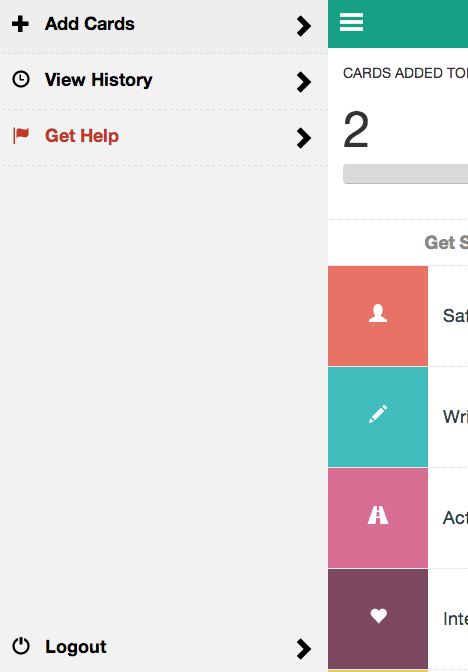
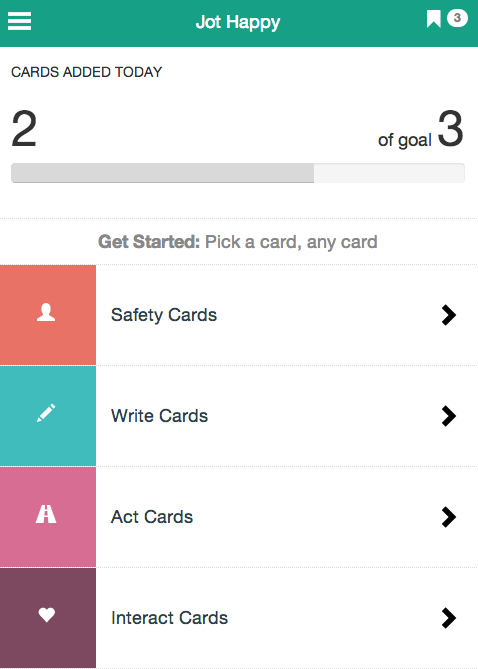
The app “Jot Happy” is activity oriented. The goal is for the user to complete 3 cards (each one containing an activity) every day. There are just over 30 cards (not including the safety planning cards), which correspond to the 30 at-risk days following release from an emergency department. So, if users complete two safety cards and one non-safety card each day, they are on their way to a better outlook on life. And not only does completing activities make users happier, but so does looking back at their previous activities, and admiring their progress.
I have found that tips for happiness are often vague and based on hearsay. In this app, each activity is concrete and based on research (a detailed account of the research used in this app is found below). These activities can be quickly and easily done by anybody at anytime, and can provide an immediate mental health boost. Because up to 40% of our mental health is based on outlook and activities (while 50% come from genes, and 10% come from the environment), I believe this app could really make a difference.
Research:
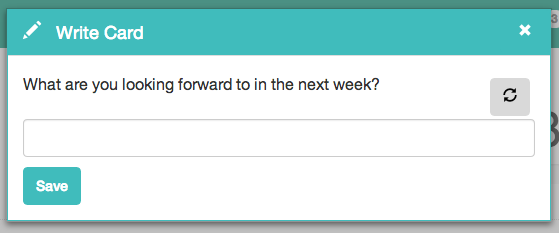
Every activity in every card is based on research. In fact, all of the “Write Cards” are based on the 10 positive emotions presented by Barbara Fredrickson. This app derives its research particularly from the field of positive psychology. By focusing on the few minutes in each hour when someone is functioning well, instead of the rest of the hour when they aren’t, Jot Happy believes we can defeat illness by building health. By guiding users to complete health-building activities, we’re guiding them to focus on what is going right in their lives. And we’ve sifted through the research so that users won’t have to. All they have to do is pick a card.
Although activities in this app are based on research from a large variety of sources, they are based mainly on readings from the following sources:
Martin Seligman (2004), Authentic Happiness
Shawn Achor (2010), The Happiness Advantage
Jonathan Haidt (2006), The Happiness Hypothesis
Dan Baker (2004), What Happy People Know
Barbara Fredrickson (2009), Positivity
suicidepreventionlifeline.org/learn/safety
actionforhappiness.org
neweconomics.org/publications/entry/five-ways-to-wellbeing
About Me:
I am currently a junior at Thomas Jefferson High School for Science and Technology. I greatly enjoy programming and looking for opportunities to create applications that can help people. I had wanted to create an app for mental health for a while, and when I saw this competition, I knew it was the perfect opportunity to actually make a difference. I look forward to seeing how technology can impact mental health in the future.

Log in or sign up for Devpost to join the conversation.