
Seven years ago, I learned I have PCOS. I spent two years without a period, losing my hair in clumps, and being told by doctor after doctor to "just lose some weight." I was scared and completely alone. I had the most common hormonal condition there is, and still nobody gave me anything to hold onto, just me, at 2am, desperately Googling for answers no one would give me otherwise. So I built the tool I needed and couldn't find.
We're submitting for the Impact category and the RevenueCat Peace Prize, and applying for the Nutrition & Healthy Eating Influencer Award (Abbey Sharp).
Who Josie is for
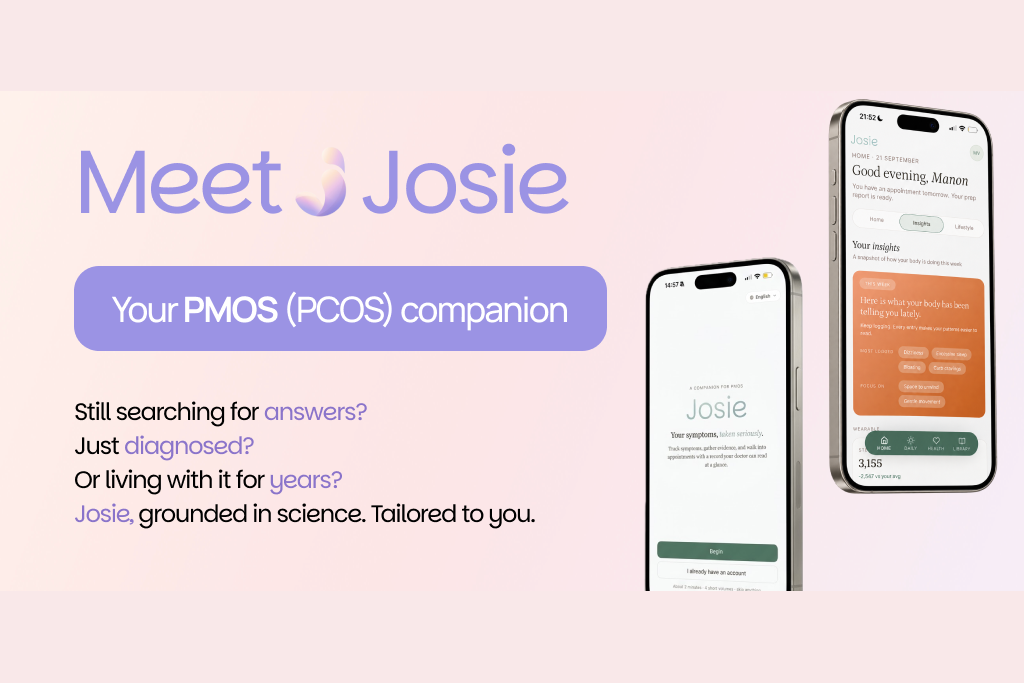
Josie is built for women with PCOS (now renamed PMOS), the most common hormonal condition there is, affecting 1 in 8 women. Up to 70% remain undiagnosed, and 85% of patients say they weren't given the information they needed to understand their own bodies. That's not a small, underserved niche, it's the norm for a huge share of women, most of them navigating this alone, without guidance, in a healthcare system that too often dismisses them.
The problem, and why it matters
Women with PCOS are left to piece together their own understanding of a chronic condition with no real tools built for them: no way to track their own patterns, connect their symptoms to their data, or walk into a doctor's appointment with evidence instead of anxiety. The cost isn't just personal distress. Undiagnosed and poorly managed PCOS carries real long-term health consequences (diabetes, cardiovascular disease, infertility) precisely because there's no early, structured way to catch and act on the patterns.
What it does
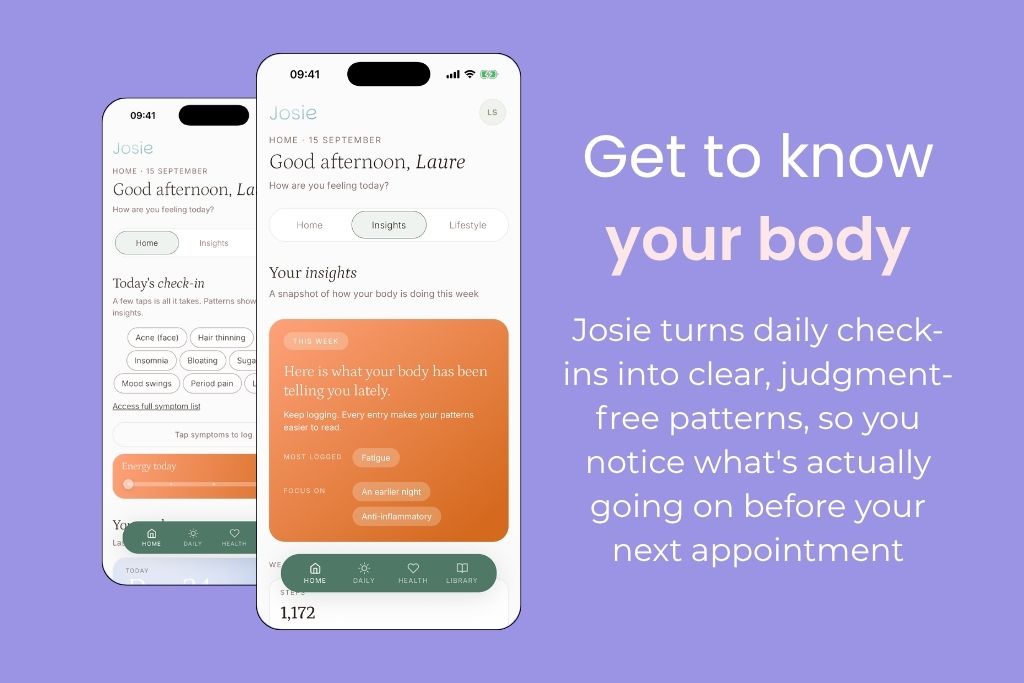
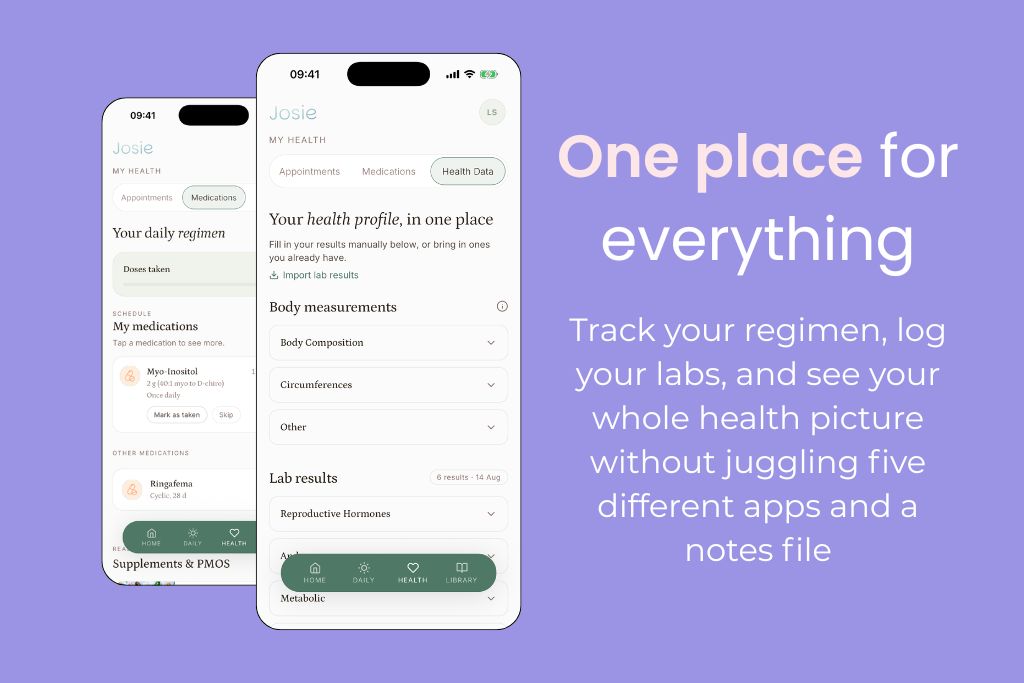
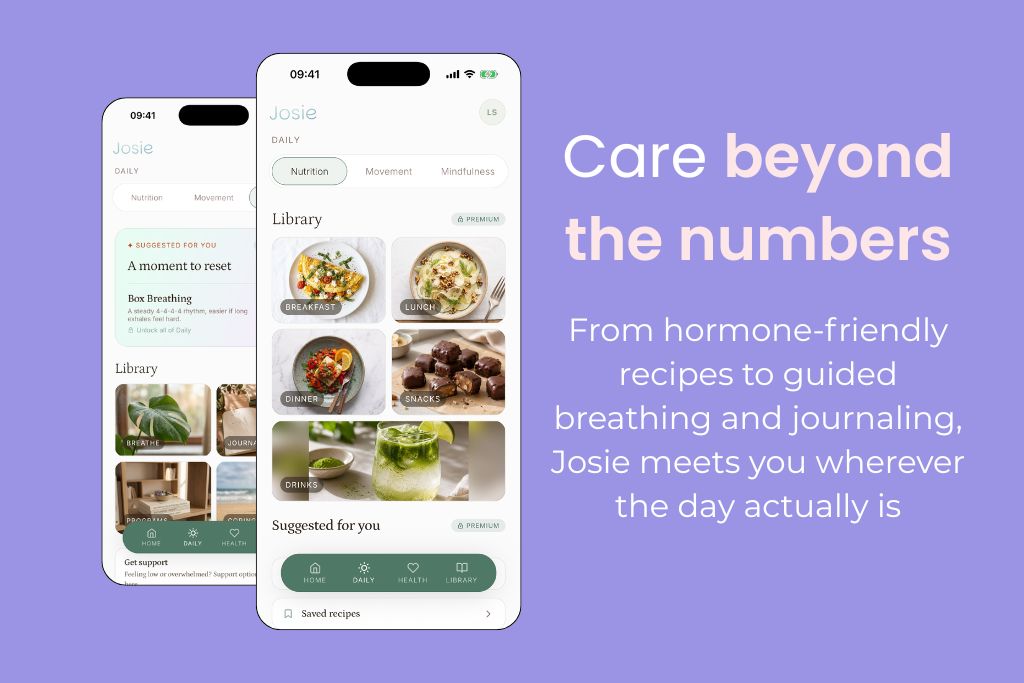
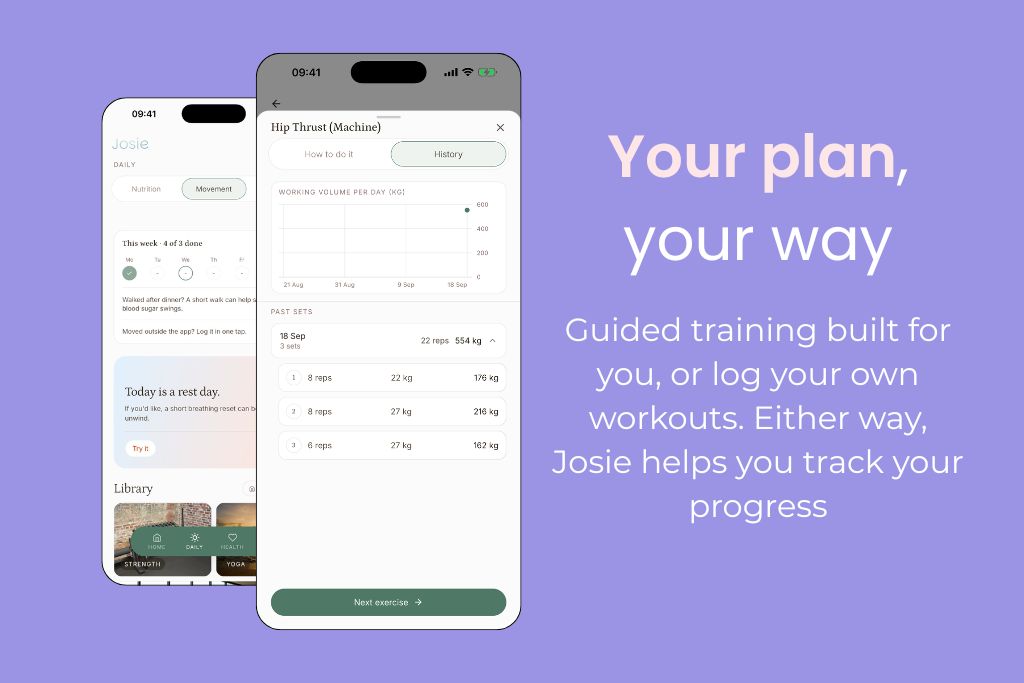
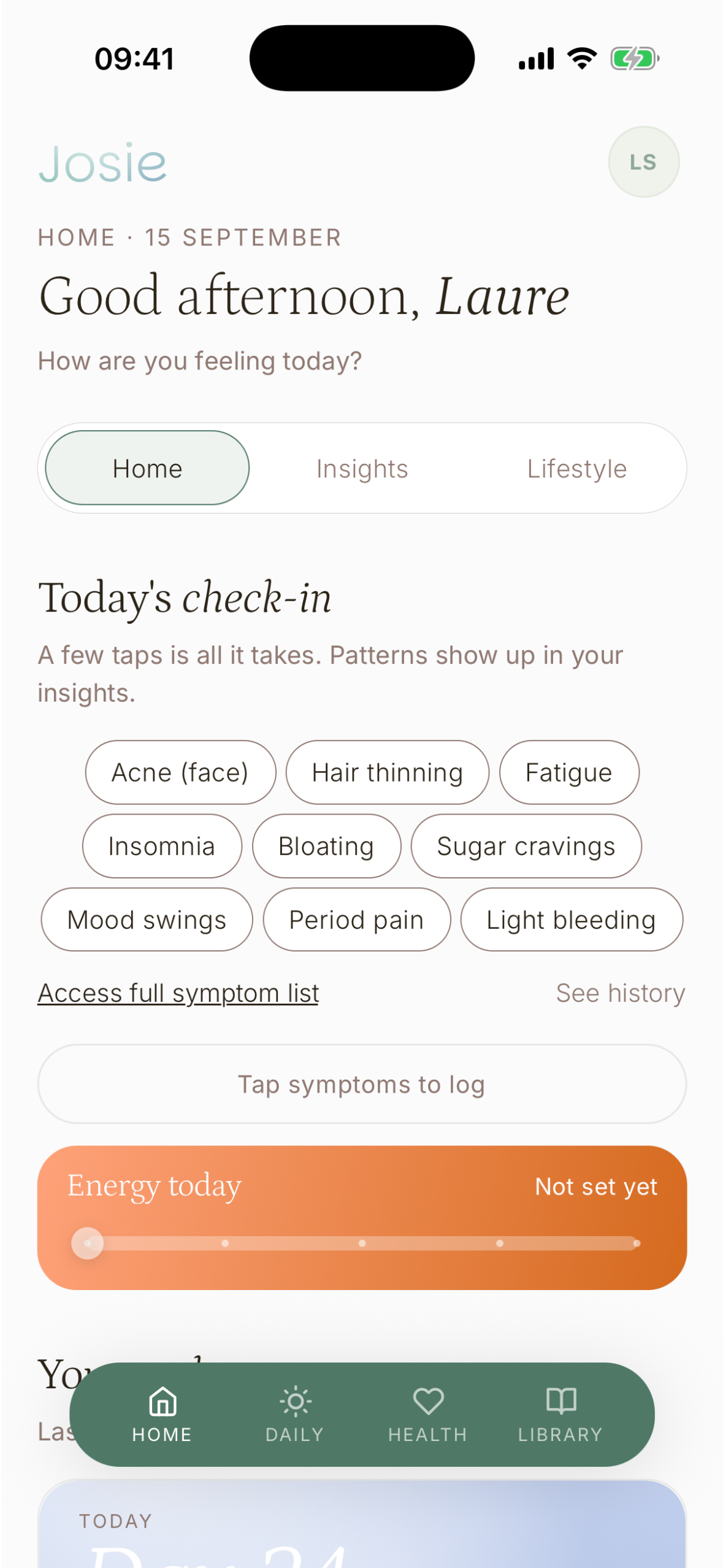
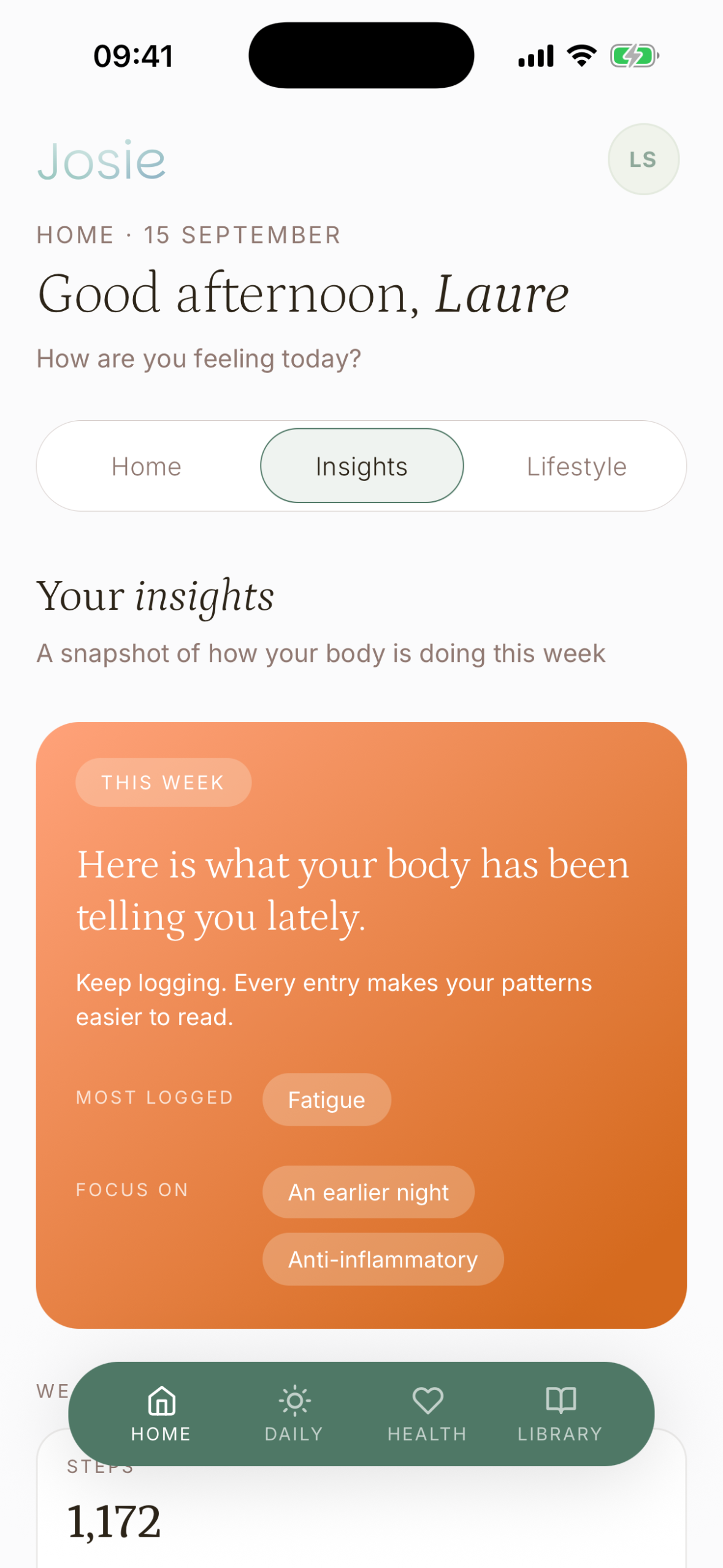
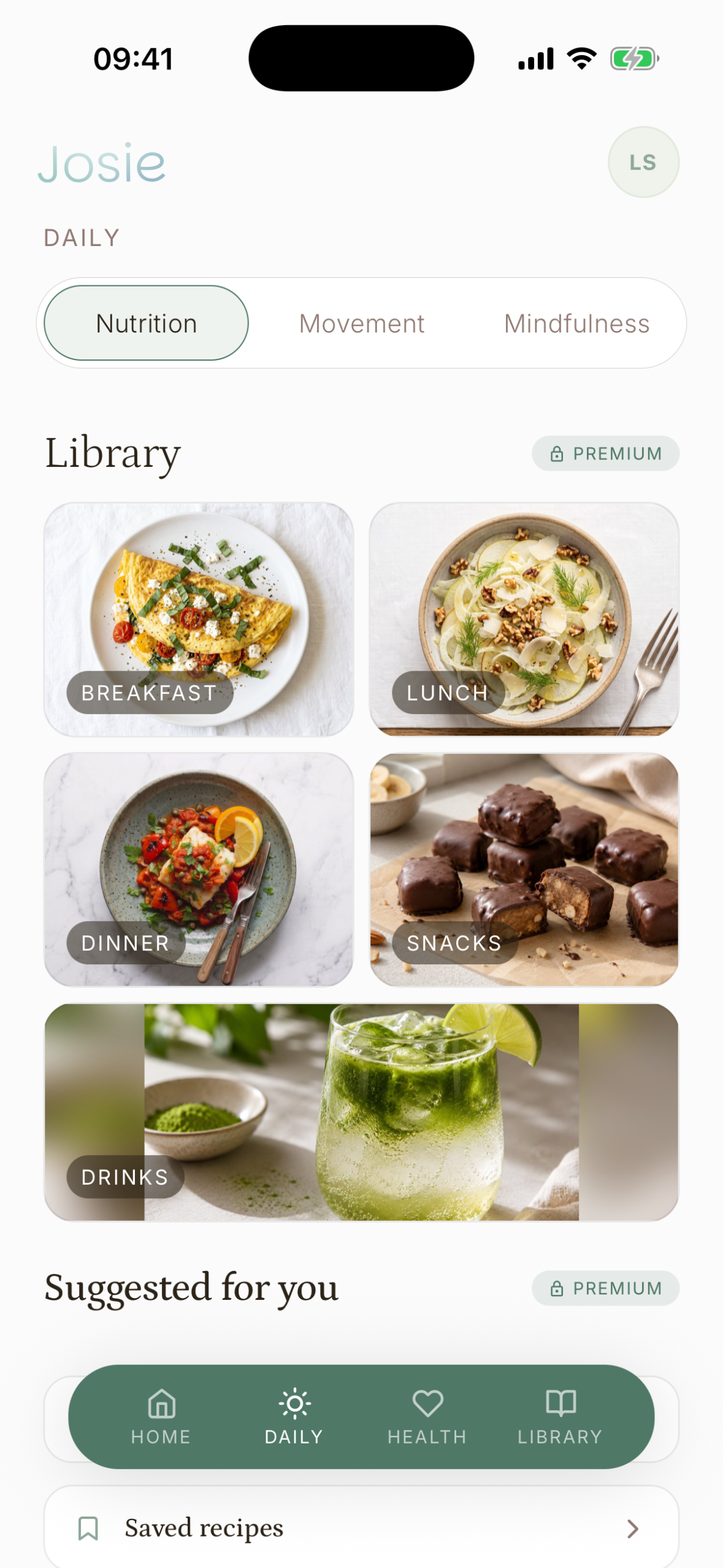
Josie is a self-tracking app for people with PCOS, live on iOS and Google Play across three languages (FR/NL/EN). It turns lab markers, cycle data, and daily habits into a clear picture over time, without normative "you're abnormal" flags or red alerts telling you what to feel about your own numbers. For this Shipaton, we built out the subscription side with RevenueCat: tiered plans with a 14-day free trial.
How we designed for positive impact
Every design decision in Josie starts from the same principle: give women data and clarity, not verdicts. No colour-coded flags, no diagnosis-by-app, just honest patterns so women can advocate for themselves, not be told what to feel about their own numbers.
Accessibility was built in from the start, not bolted on: full VoiceOver support, larger text options, reduced motion for users sensitive to animation, sufficient colour contrast throughout, and information that's never conveyed by colour alone, so nothing in Josie depends on being able to see a specific shade to understand your own data.
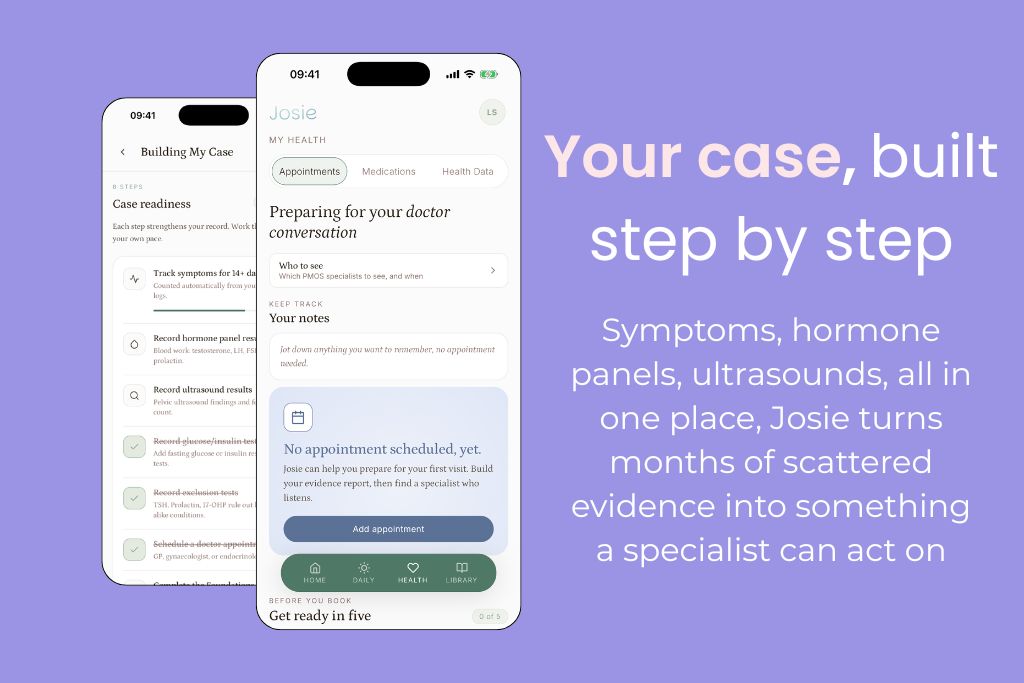
Diagnosis support stays free. Building your case, symptom tracking, and the path toward a diagnosis, is free for everyone, not gated behind a subscription. Up to 70% of women with PMOS remain undiagnosed, and we didn't want a paywall standing between a woman and the evidence she needs to finally get taken seriously by a doctor. Whether someone can pay or not shouldn't decide whether they get diagnosed.
We built a Scientific Advisory Board of 5 practicing doctors and health practitioners specifically so the guidance reaching users is trustworthy, not another source of the same contradictory noise that leaves women searching alone at 2am. And because PCOS doesn't respect borders or language, Josie launched in three languages from day one rather than English-only.
Why it's different
Most hormonal health apps on the market default to interpretation: a red flag, a "your levels are abnormal" message, a verdict on your own body. We deliberately built Josie not to do that. Every screen that shows a woman her own data, lab markers, cycle patterns, symptoms, was engineered against a strict internal rule: describe, never diagnose. No colour-coding, no alerts, no normative language, only factual trend descriptions like "this value has been trending up over the past 3 months." That constraint wasn't just an ethical stance, it's an active regulatory and product design decision that shapes every feature we ship, and it's what lets Josie support women's understanding of their bodies without crossing into medical-device territory before we're ready to make that leap deliberately, with proper clinical backing.
How we built it
React Native/Expo on the front end, Supabase on the back end. RevenueCat manages entitlements and powers the tiered subscription plans, including the 14-day trial.
Challenges we ran into
Building a health app with a non-technical background meant learning as we went: React Native, Supabase, subscription infrastructure, all of it new. Every technical decision also had to survive a second filter, is this safe for health data, before it could ship.
Privacy and security came first, not as an afterthought. Cycle, flow, and energy data stays on-device rather than in the cloud.
One of the biggest decisions wasn't technical at all: medical device or wellness product. We landed on a phased approach: launch as a wellness product first, without interpreting the data, then add the regulated layer once we've validated the product.
RevenueCat surfaced its own edge case. Our trial period is 14 days, which doesn't map cleanly onto RevenueCat's standard weekly/monthly entitlement periods. We had to build a custom entitlement instead of stacking smaller standard ones.
Early evidence of impact
As of September 22nd, Josie is live on the App Store and Google Play, in three languages, built by two founders who didn't come from a tech background. With a single Instagram announcement and no paid acquisition, we've already reached around 50 downloads, early signal that the problem we're solving resonates the moment women hear about it. We've built a Scientific Advisory Board of 5 signed doctors and health practitioners who believe in the product enough to put their name behind it and review every clinical claim before it goes out. We were selected into Start it @KBC, Belgium's largest startup accelerator. We're currently running a small scale pilot measuring real retention and willingness to pay, with results due mid-November.
What we learned
Subscription infrastructure has edge cases that only show up once you step outside the "standard" durations a platform expects. More broadly: building a regulated-adjacent health product means every decision, technical or not, has to be made twice, once for whether it works, and once for whether it's safe and defensible.
What's next for Josie
We're taking Josie from wellness product to genuinely clinical tool: adding the Class I regulated layer on top of what's live today, still without interpreting your data for you, just giving doctors and clinics the clinical credibility they need to recommend it.
Beyond the product itself, we're building toward partnerships that put Josie in front of more women who need it: health insurers, so coverage isn't a barrier; doctors and specialists directly, so Josie becomes part of standard care rather than something women have to find on their own; and accelerator and grant programmes that can help us reach the scale a condition affecting 1 in 8 women actually requires.
On the product side: deeper personalization of the Daily Hub, and features that help women build their case for a diagnosis they're still fighting for. Longer term: community features, support for women trying to conceive, and more languages, German is next.
Built With
- apple-developer
- eas-build
- expo.io
- github
- google-play-console
- posthog
- react-native
- revenuecat
- sanity
- sentry
- supabase
- typescript

Log in or sign up for Devpost to join the conversation.