Inspiration
I wanted to build a fun, hands‑on project instead of a normal computer game. Reaction‑time tests online are boring, so I made a physical version using real LEDs and buttons.
What it does
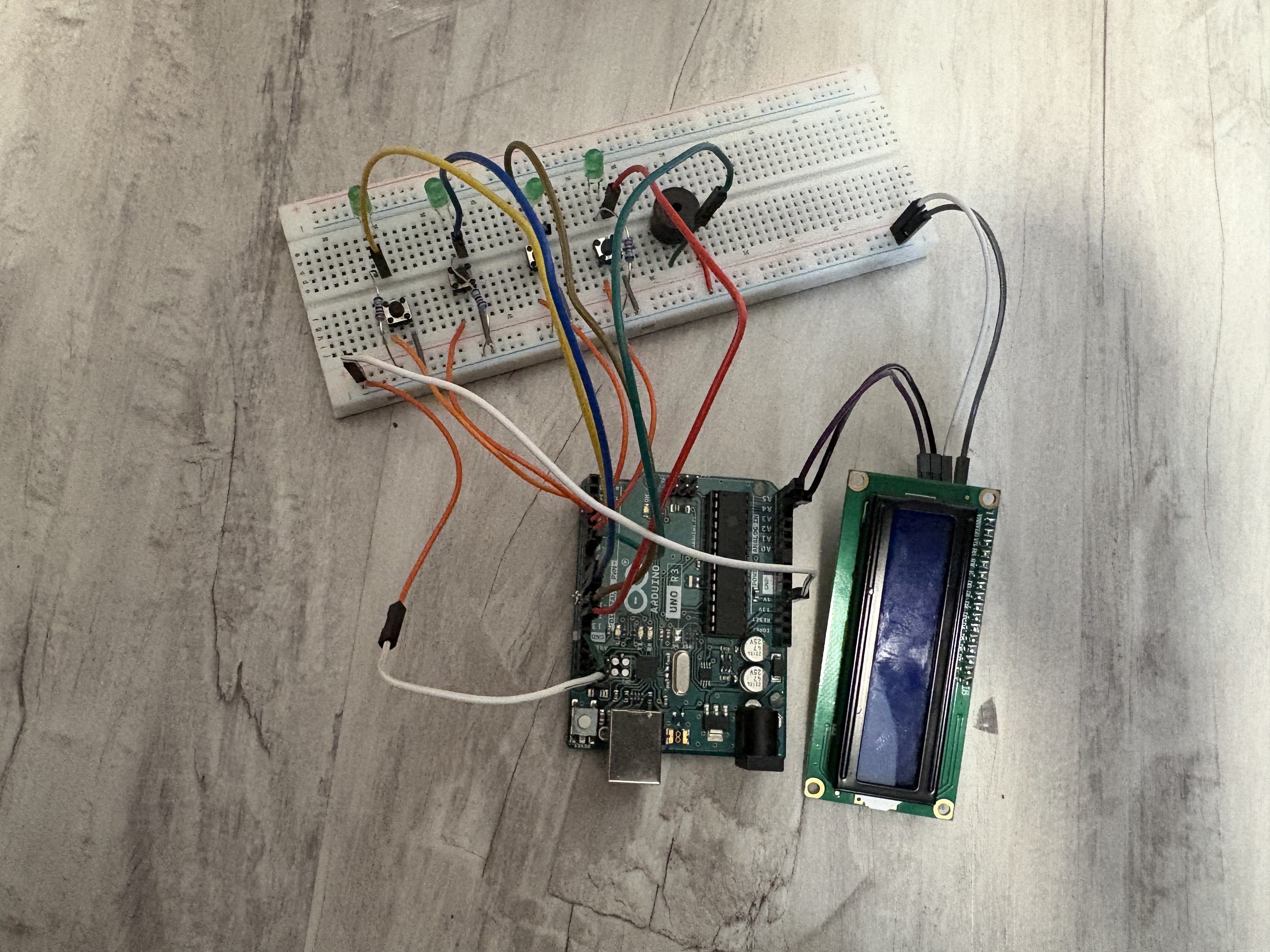
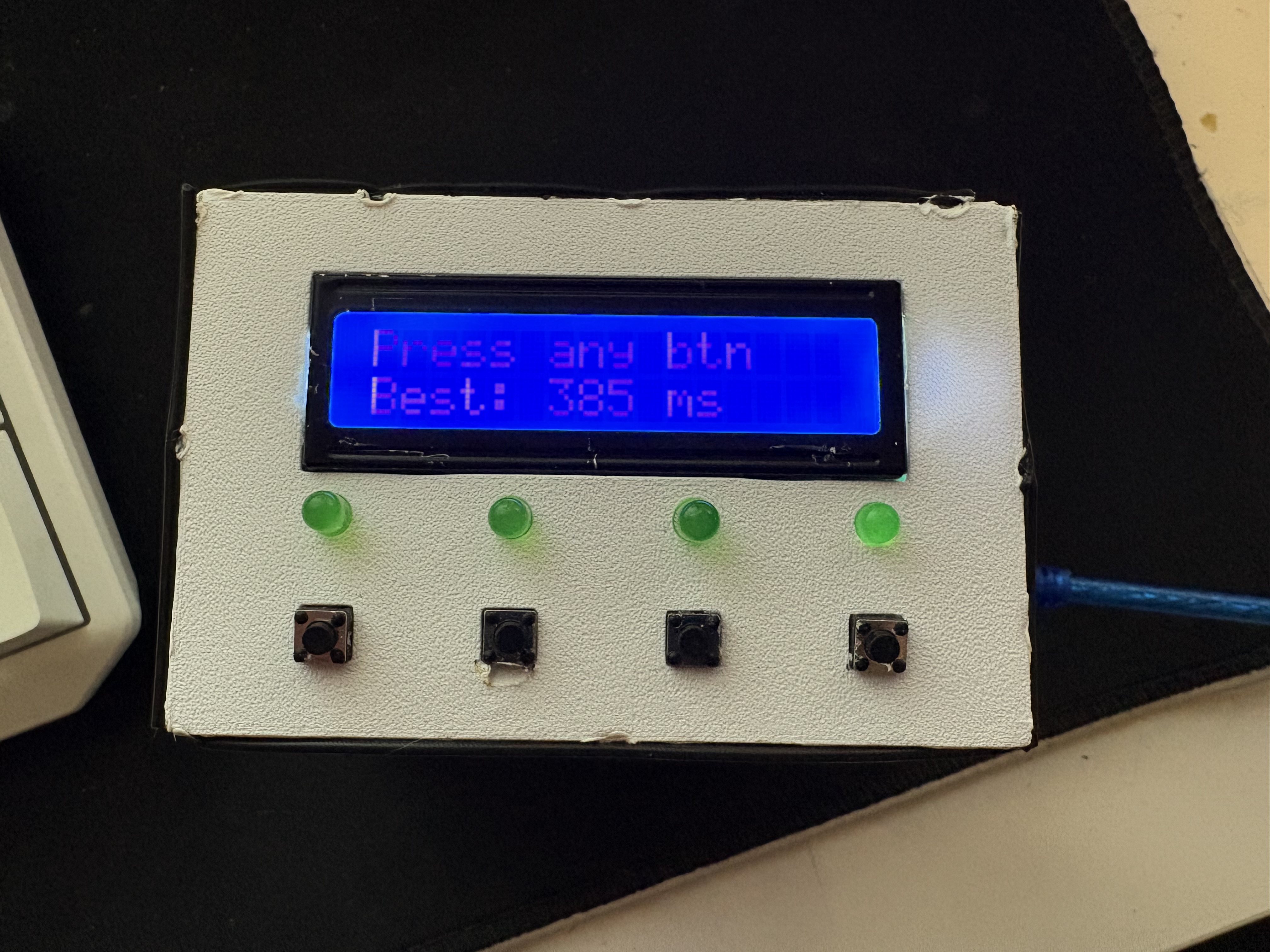
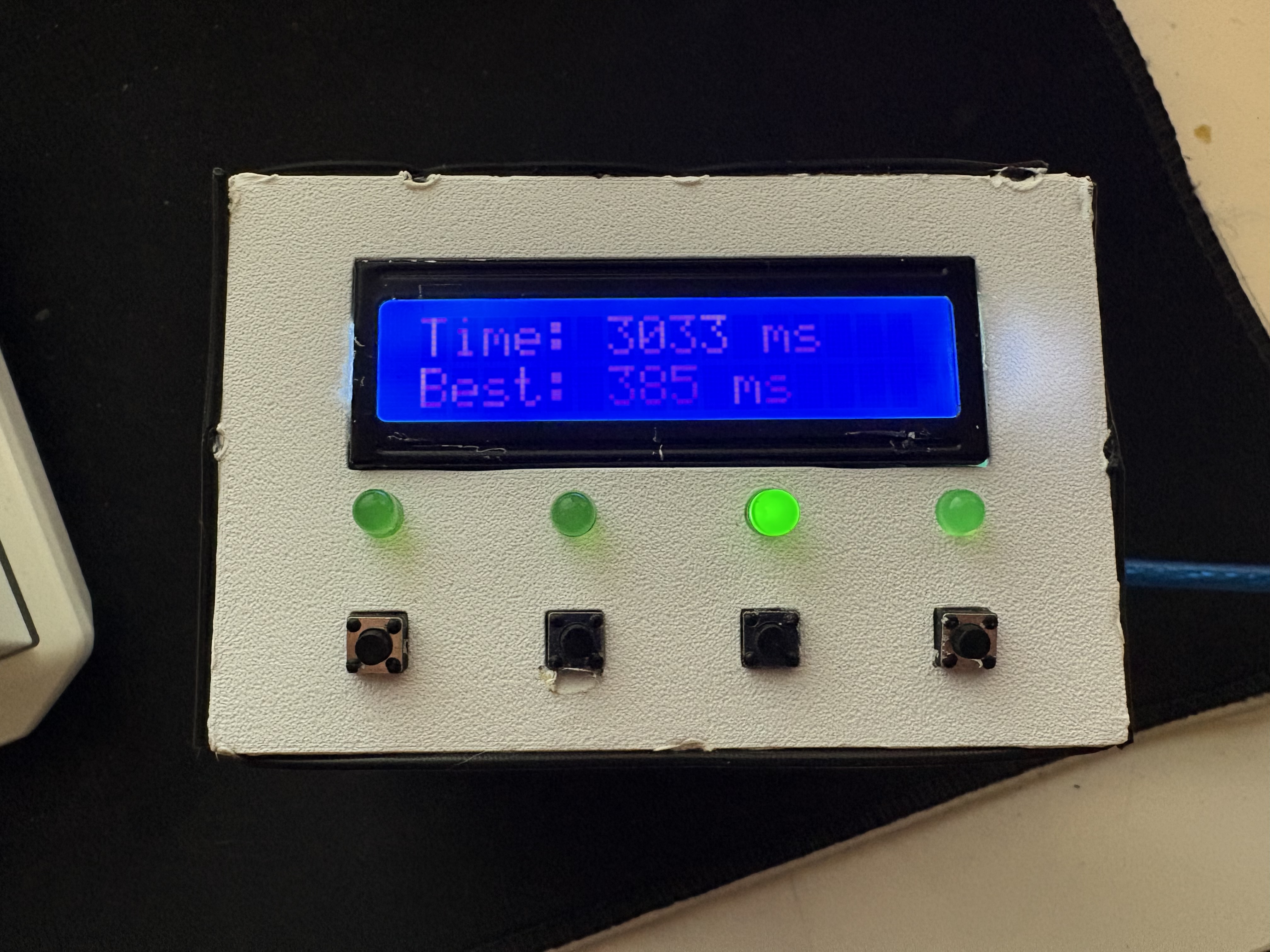
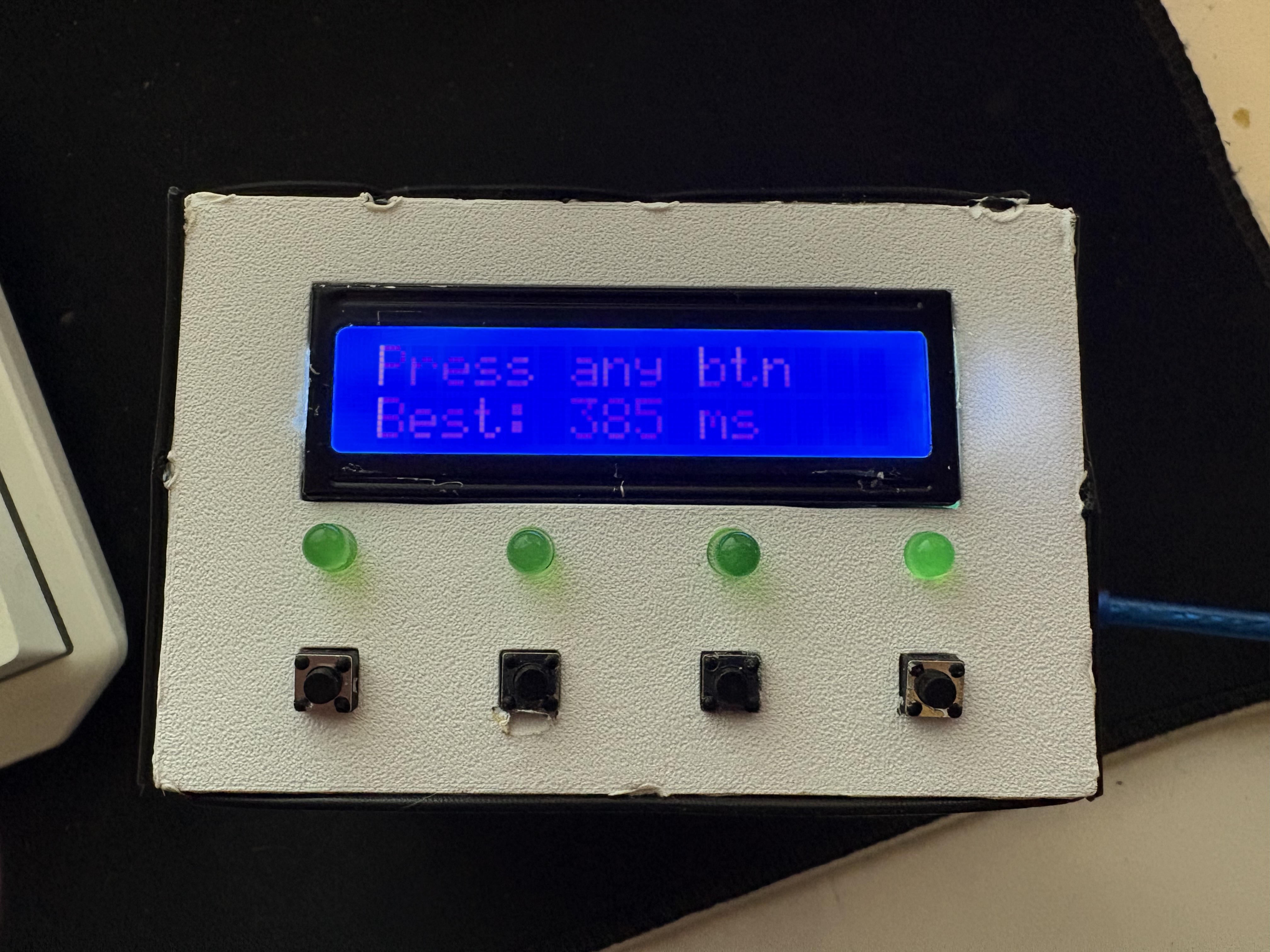
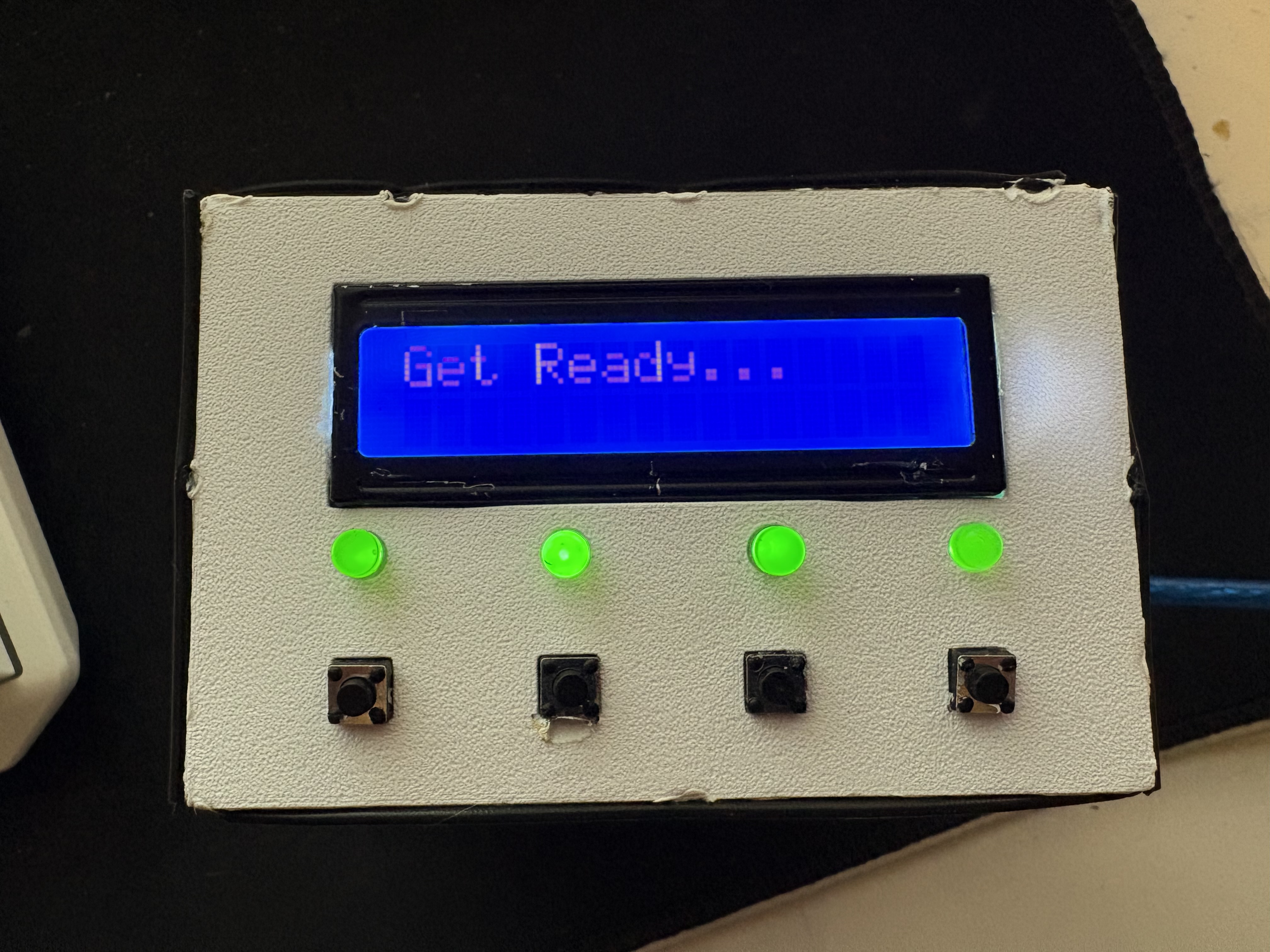
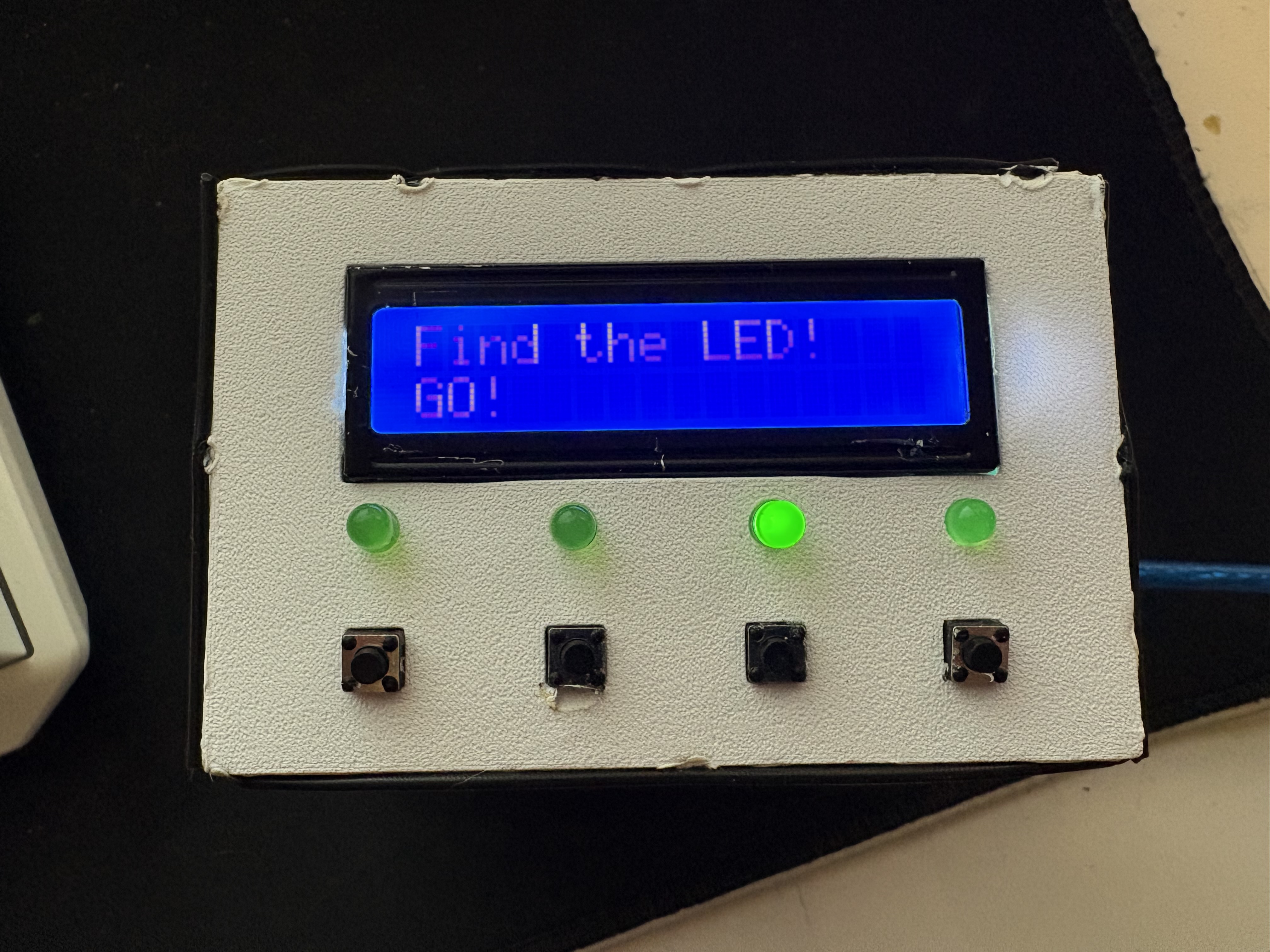
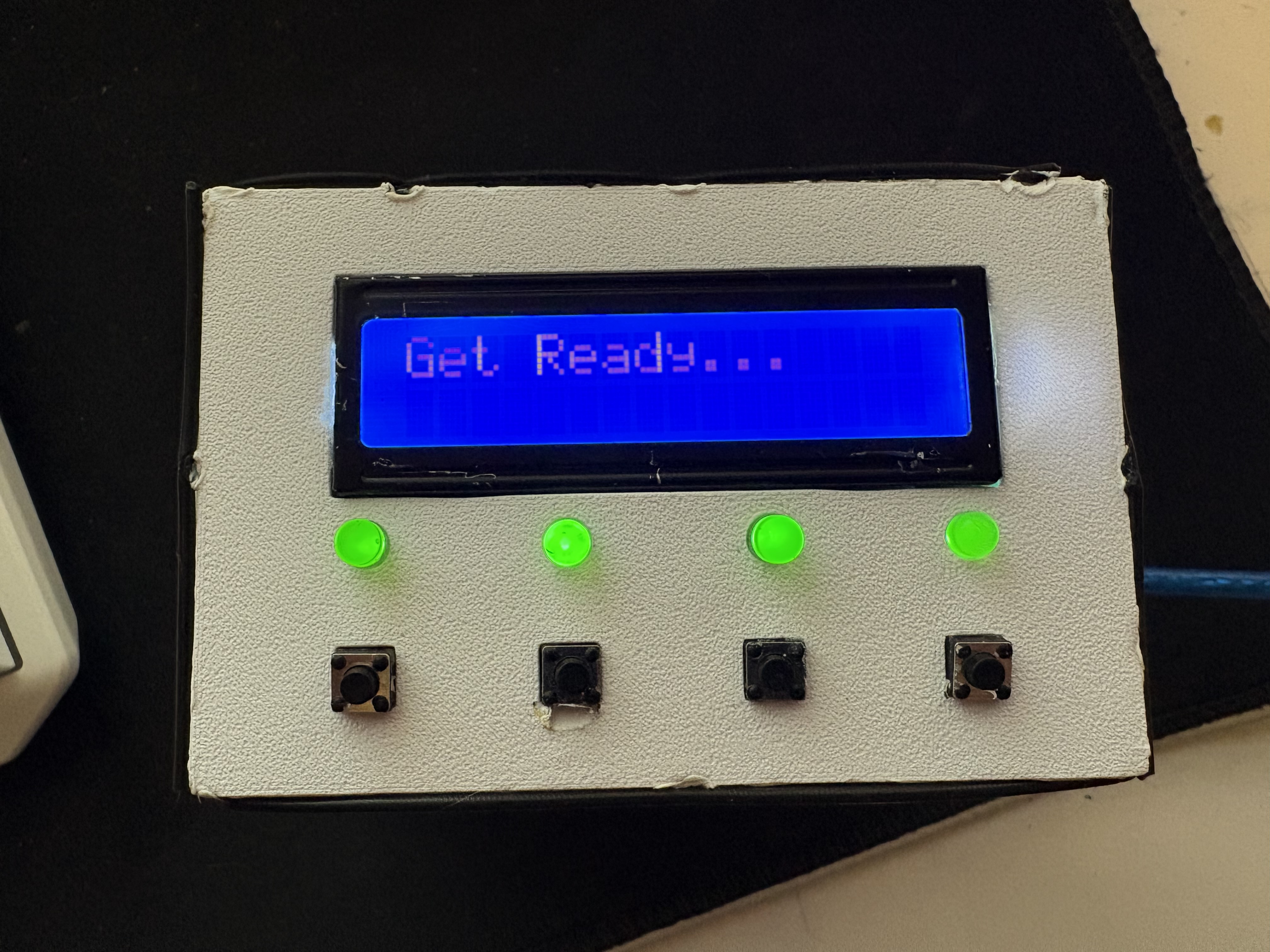
One LED lights up at random, and you try to press the matching button as fast as possible. The LCD shows your reaction time and saves your best score.
How we built it
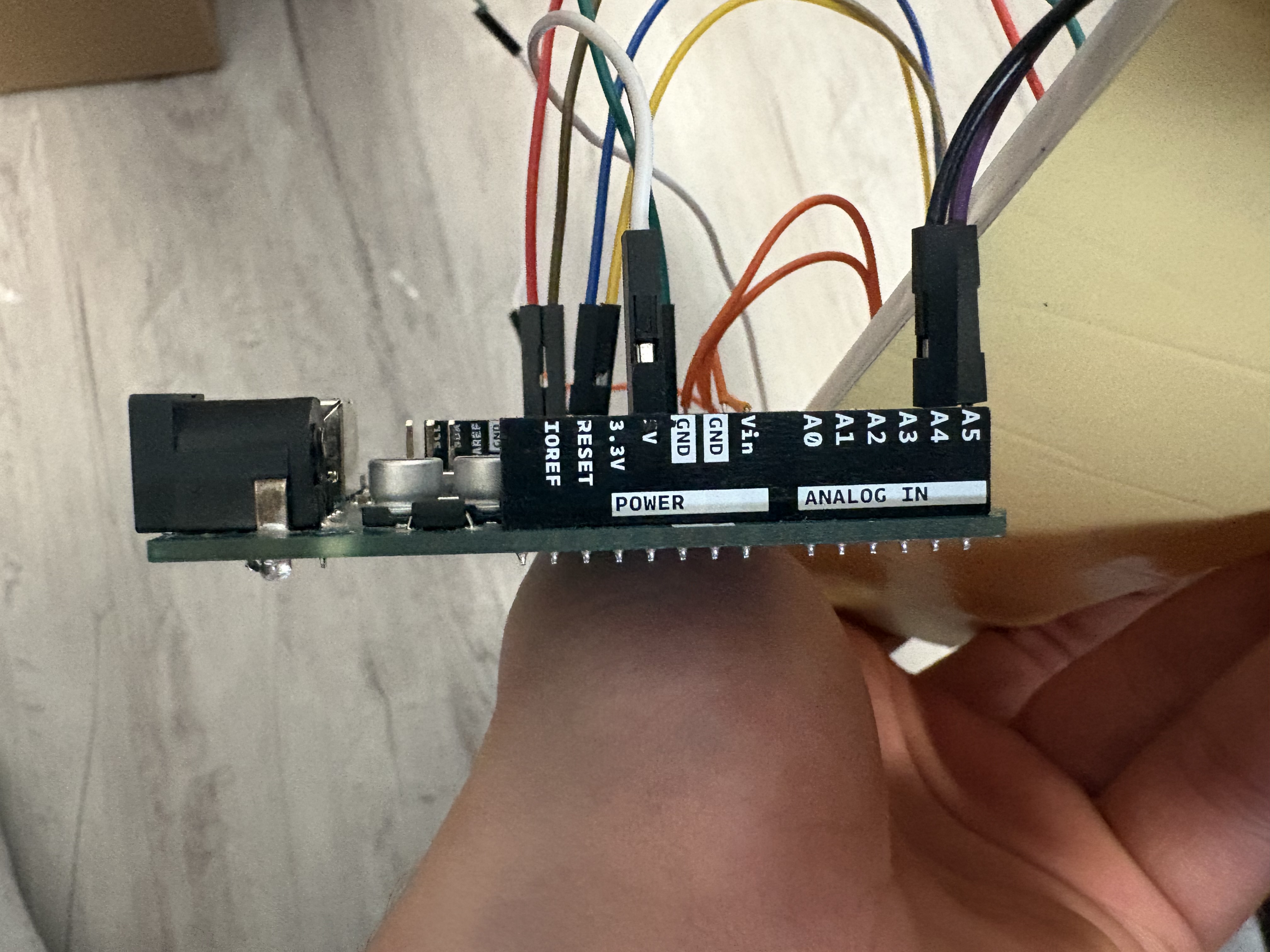
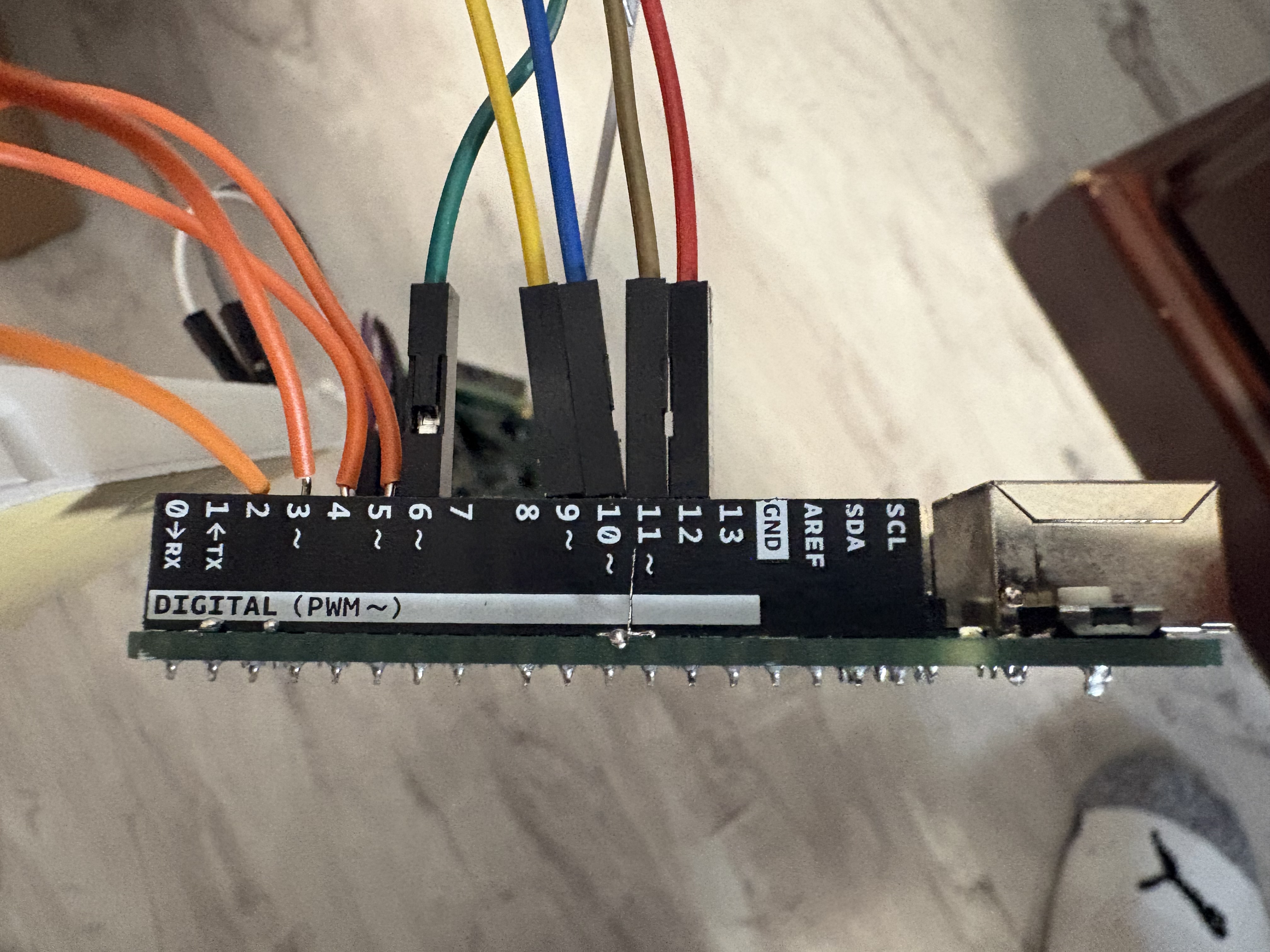
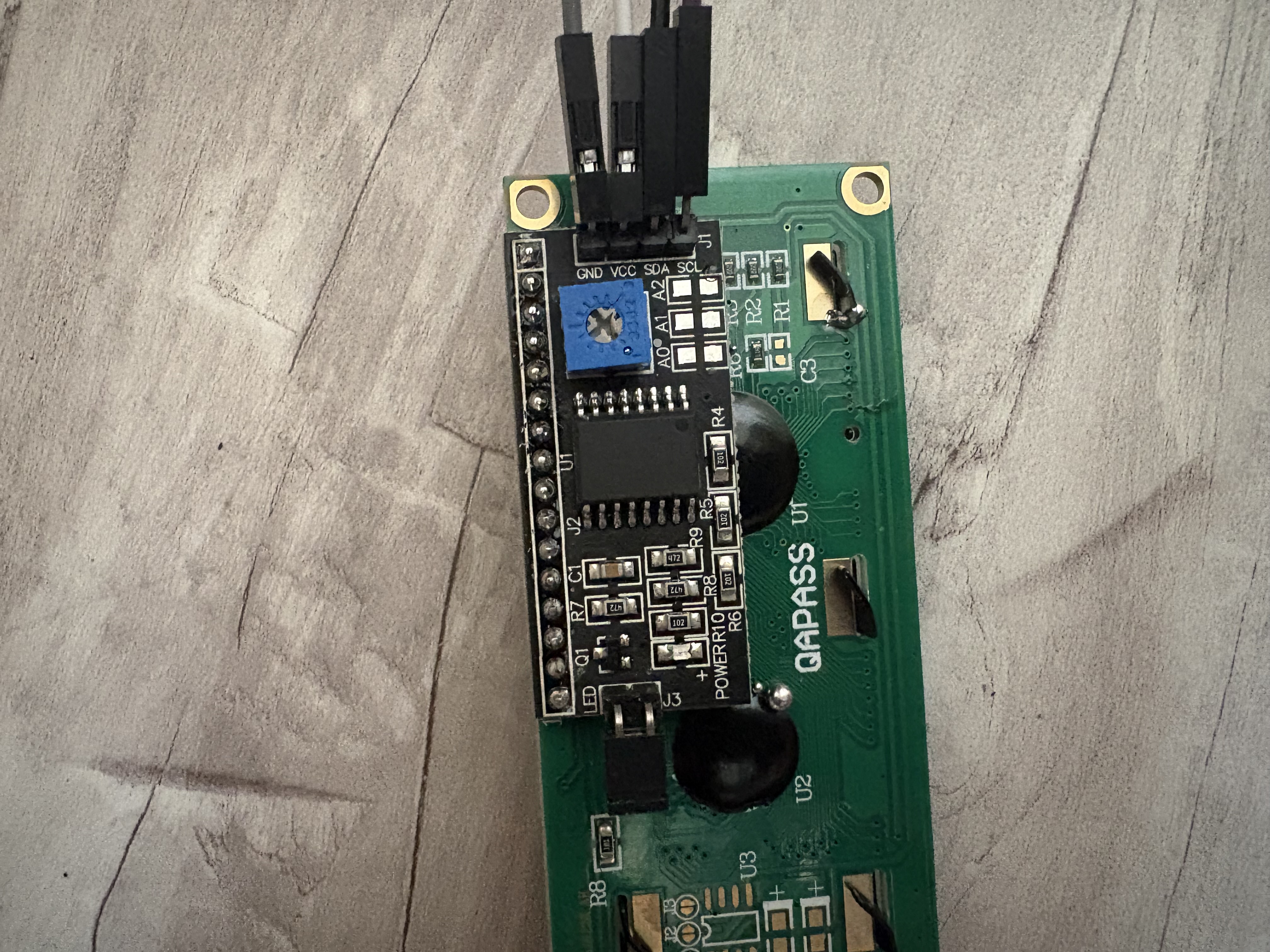
I used an Arduino Uno, a 16×2 I2C LCD, four buttons, four LEDs, and a buzzer. I wrote the game in Arduino C++, used 'millis()' for timing, and stored the high score in EEPROM.
Challenges we ran into
I had issues with LCD flickering, wiring SDA/SCL correctly, and making the buttons respond smoothly. Fixing these taught me a lot about hardware debugging.
Accomplishments that we're proud of
I’m proud that I built a fully working hardware reaction game from scratch. The LEDs, buttons, buzzer, and LCD all work together smoothly, and the game accurately measures reaction time and saves the best score. I’m also proud that I fixed issues like LCD flickering and wiring problems on my own.
What we learned
I learned how to use I2C, save data with EEPROM, organize Arduino code, and build a complete working prototype.
Problem that I am solving
It improves human reaction time, helping people respond faster and more accurately in real‑world situations.
What's next for Joseph's Reaction Game
I want to add difficulty levels, more LEDs, multiplayer mode, and a 3D‑printed case.

Log in or sign up for Devpost to join the conversation.