Inspiration
I’ve sat through too many awkward silences at work meetings, dull dates, and friend gatherings—everyone struggles to land the right joke. I wanted a tool that takes the guesswork out of humor, making it easy to find the perfect icebreaker for any moment, no comedy experience required.
What it does
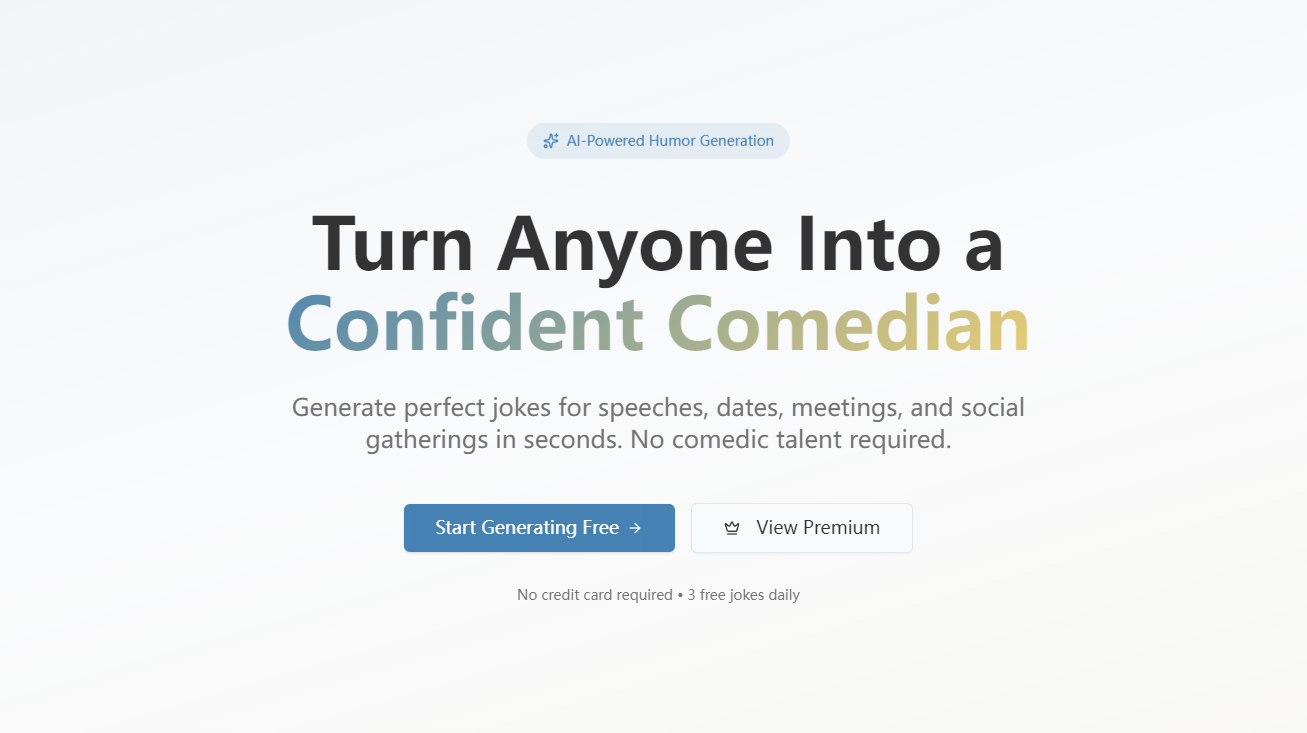
JokeGenerator AI lets users create tailored jokes by selecting a scenario (e.g., public speaking, office meetings), joke type (one-liners, puns), and tone (family-friendly, casual). Free users get 3 daily generations; premium unlocks unlimited access, exclusive styles, and full AI success rate scoring. Saved jokes persist locally, and one-click copy/share simplifies sharing.
How we built it
We started with core web tech (HTML/CSS/JavaScript) for the UI, using React for component-based design. LocalStorage tracks favorites and daily generation limits; Stripe API powers premium subscriptions. An AI language API generates jokes, with custom logic to calculate relevance/funniness for the success rate badge. We tested UI flow with real users to refine card-based design and error handling.
Challenges we ran into
Calibrating the AI success rate algorithm to balance accuracy and consistency took weeks—we had to tweak how the AI weights relevance, funniness, and scenario fit. Tracking daily limits across timezones also tripped us up, as we needed to reset counts at the user’s local midnight (not UTC). Additionally, ensuring smooth payment flow for premium users required debugging Stripe API integrations repeatedly.
Accomplishments that we're proud of
We built a tool that’s intuitive—no login, no complicated setup—and truly solves a real pain point. The local storage implementation keeps favorites accessible across sessions, and the AI consistently generates jokes that match user criteria. We also hit our performance goal: joke generation in under 3 seconds every time.
What we learned
I deepened my understanding of client-side storage best practices and API integration (especially payment gateways). I also learned that user-centric design means prioritizing edge cases—like handling empty favorites lists or failed copy-to-clipboard actions—to make the tool feel polished. Most importantly, I realized humor is subjective, so flexibility (multiple tones/styles) is key to user satisfaction.
What's next for this project
We plan to add exclusive premium joke styles (e.g., roast humor, motivational jokes) and refine the AI to learn from user interactions (e.g., regenerate trends). We’ll also test multi-device sync for favorites and explore light mobile optimization (even though it’s web-only now) to make it easier to use on the go. Finally, we’re looking into partnering with event planners to tailor jokes for large-scale conferences.

Log in or sign up for Devpost to join the conversation.