Inspiration
Starting from the idea of how a person with social volunteering mindset struggles to find the right platform to serve his/her community, the Join Hands application originated from brainstorming how we could improve the volunteering experience and make it simple for more people to join.
Problem Statement
Charities, nonprofit organizations, government, and other interested parties are not benefiting as much as they could from the aid of volunteers to work on their causes and help to improve the community.
Furthermore, people willing to do volunteer work come across some difficulties that can discourage them to proceed. One common problem is that information about the organizations and the work is scattered, not broadcasted enough, or are simply outdated. Some volunteer work can require more time than the person has available, or the location is not easily accessible.
On the other hand, Charities and Nonprofit organizations have difficulties finding volunteers to help their causes and rely on a passive process of waiting for people to register.
What it does
To address the issue, we created an application that improves the experience and foments the connection between volunteers and charities, nonprofit organizations, government, and other interested parties.
The goal is to provide users with a centralized application that can help with the end-to-end process - organizing an event or a social activity. To achieve it, the application receives the organization’s event details, finds the volunteers, sends the necessary notifications, and receives the responses. The application also asks for feedback from both parties for future improvements.
How we built the App
The proposed application is built on Pega 8.7 version using Theme Cosmos: 04-01 adapting Pega's case management, email integration and user interface capabilities.
The application includes two types of Personas. The first one is “Volunteers” and the second one is “Organizations”. The microjourney designed starts with:
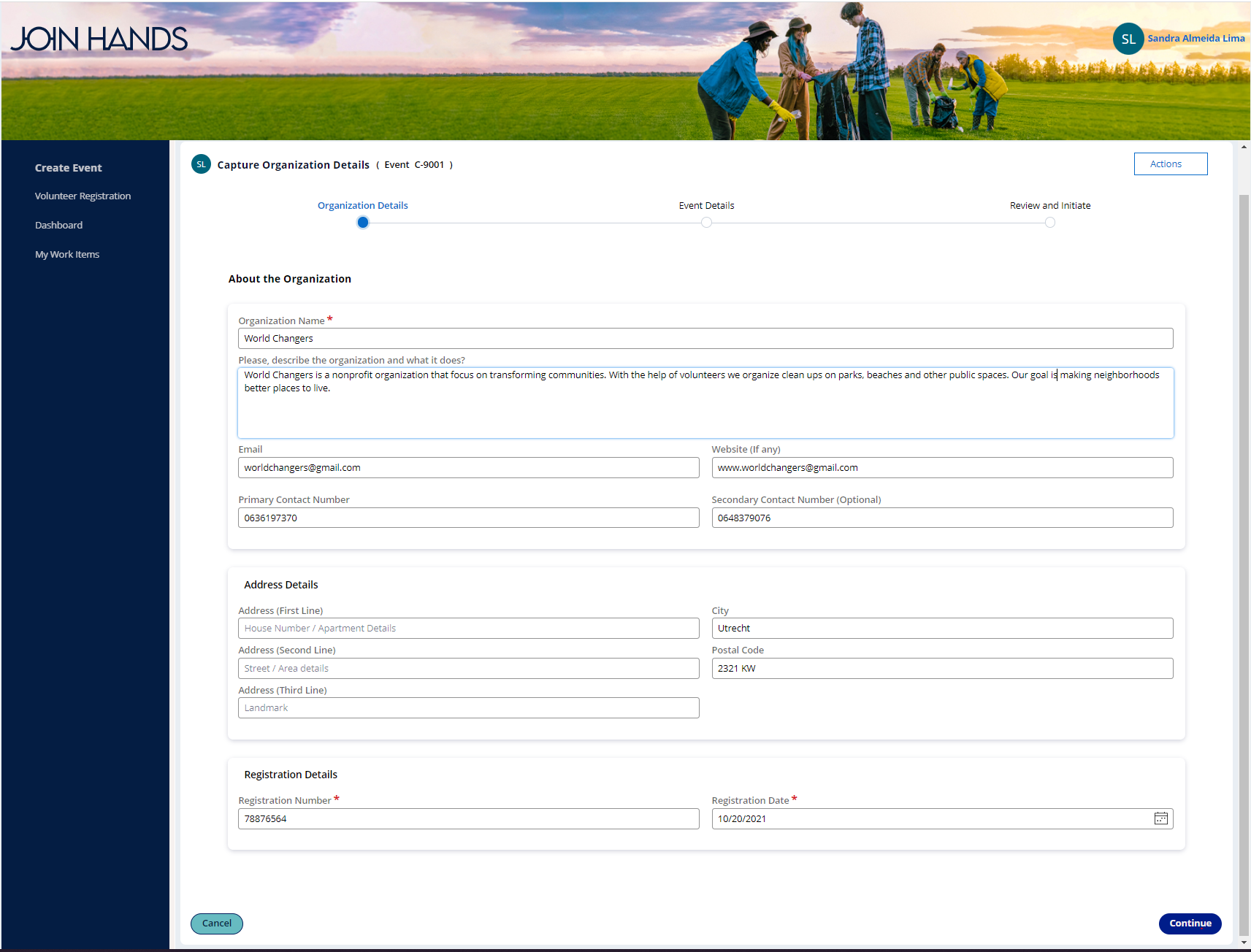
Organization registration: The organizations can register themselves in the application stating their goals, what type of work they offer.
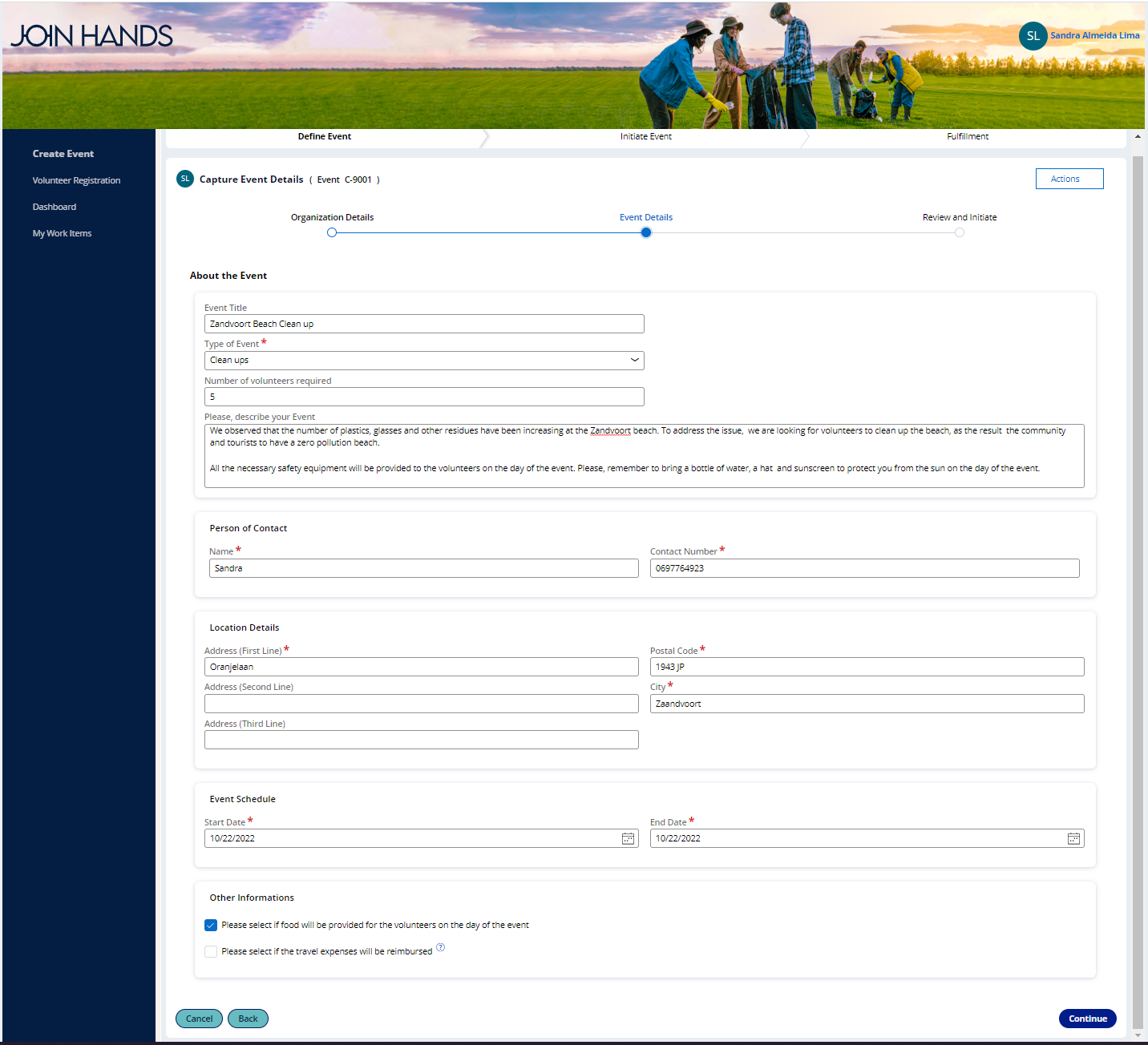
On a second screen, the organization provides the necessary information about the event they want to create.
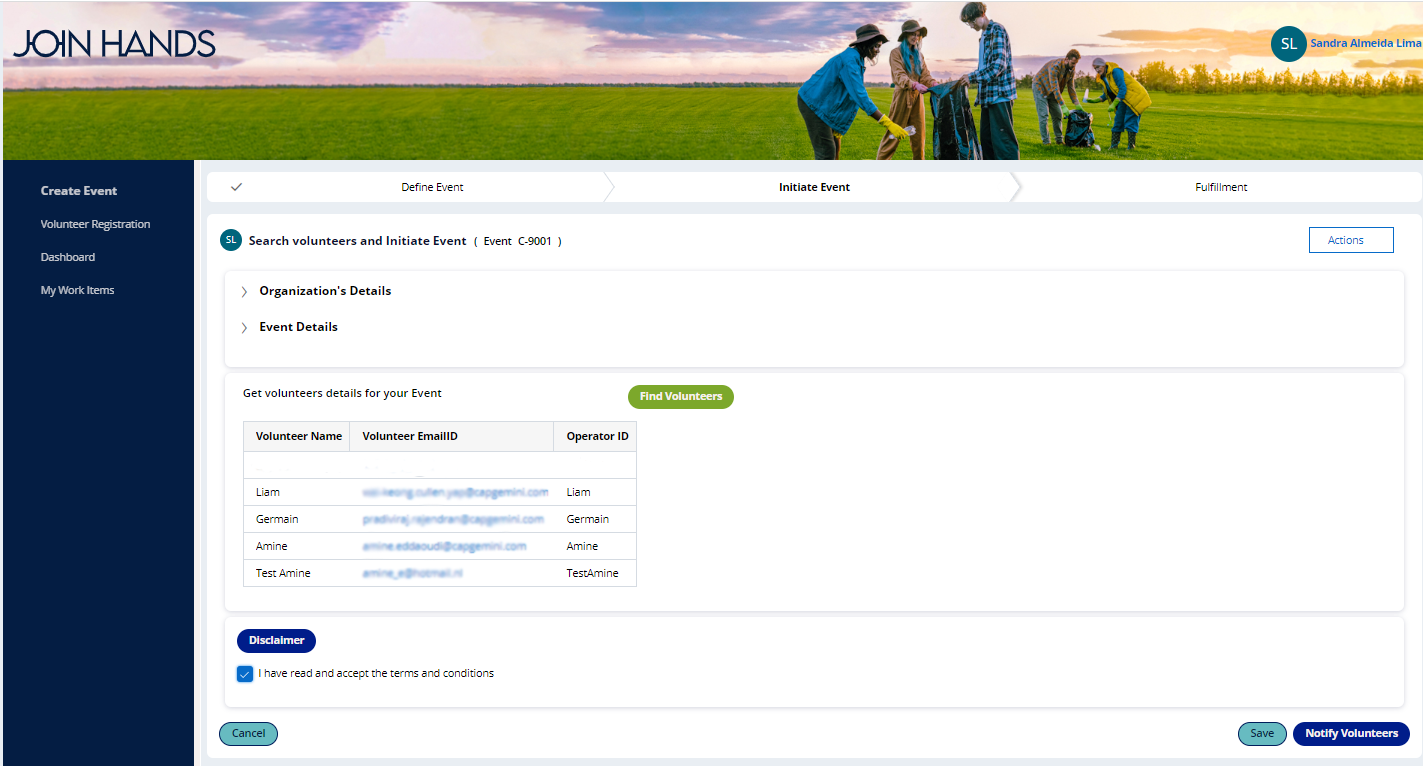
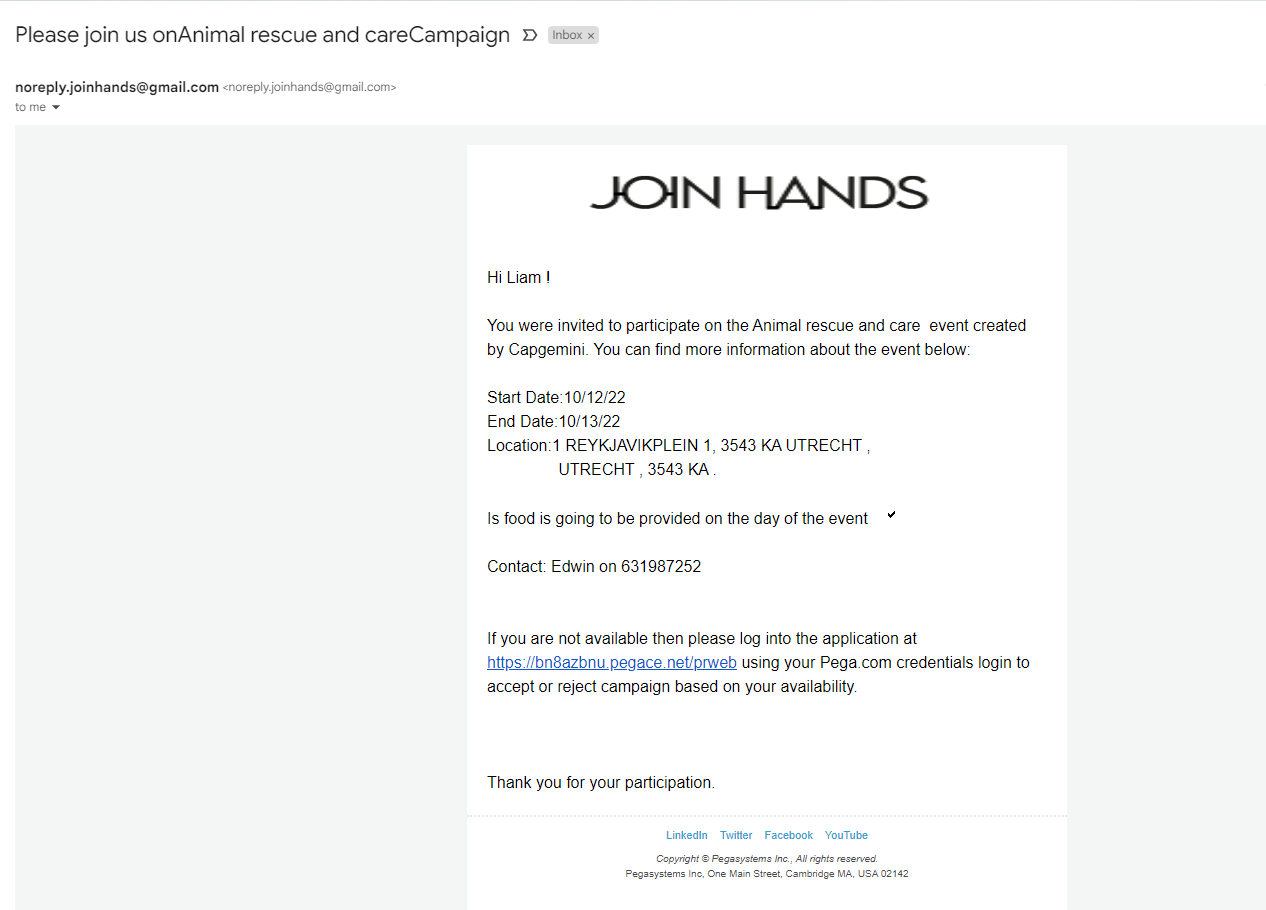
Find volunteers: After providing information about the organization and event, the organization can request Join Hands to find the number of volunteers requested based on the type of event and the areas of the volunteers’ interest. Then the organization can choose to initiate the event by notifying the volunteers found by the app. The default communication channels for notifications is email.
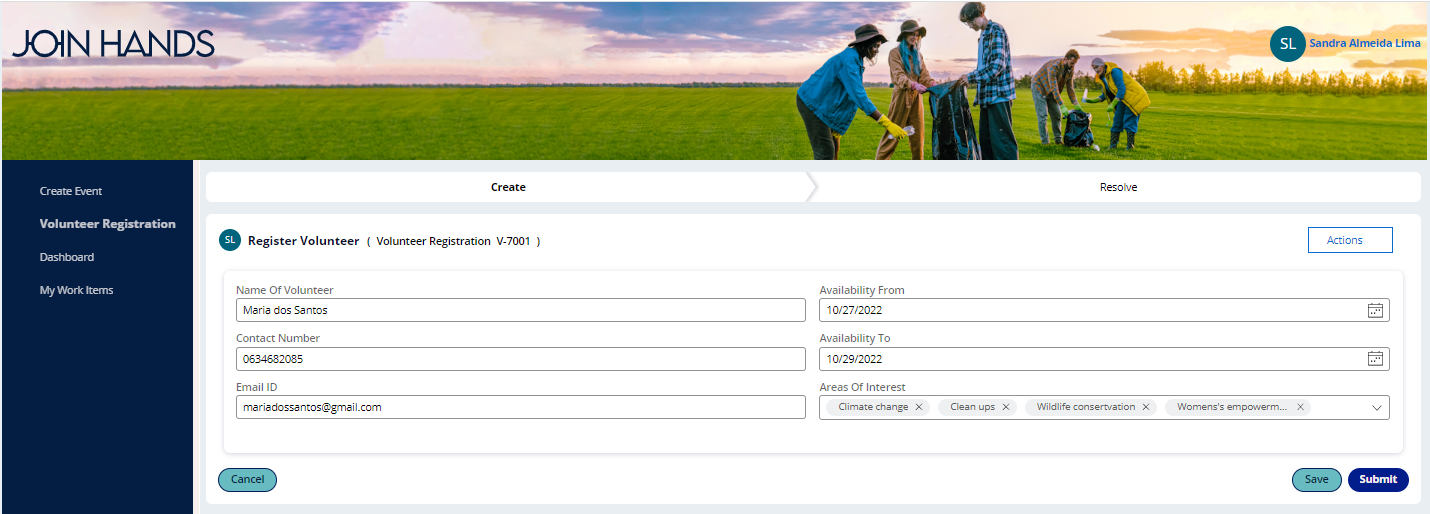
Volunteer registration: Volunteers can create their own profiles and mark their availability. This is made inside Pega as a separate case type to illustrate how a volunteer can register into Pega. The final implementation would contain this outside of Pega.
Volunteer Acknowledgement: After the organization sends out notifications to all volunteers that match their requirements, the volunteer can choose to show interest or reject the event. For that, they are required to make a comment and acknowledge a disclaimer before proceeding to the next step.
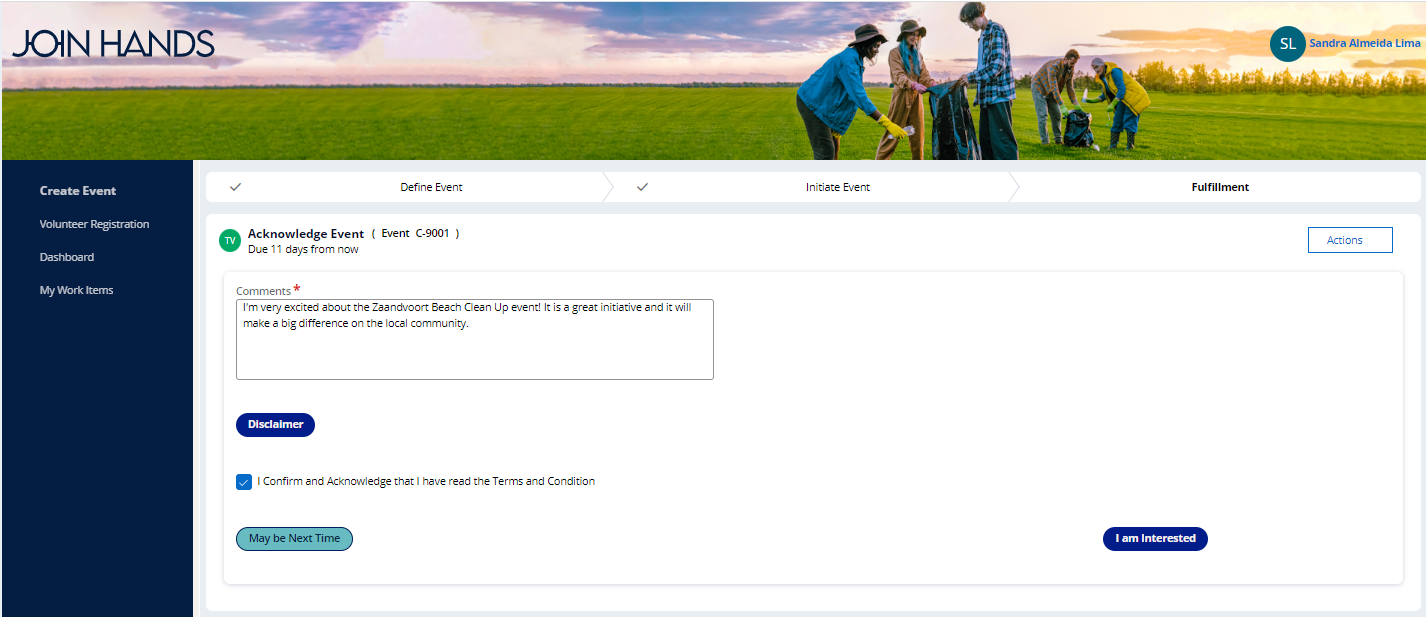
The team implemented an SLA on this step to make sure the organizations are informed 3 days (can be made configurable) ahead of the event about the status of acceptance/rejection/no response from volunteers so that they can decide on next steps for the event.
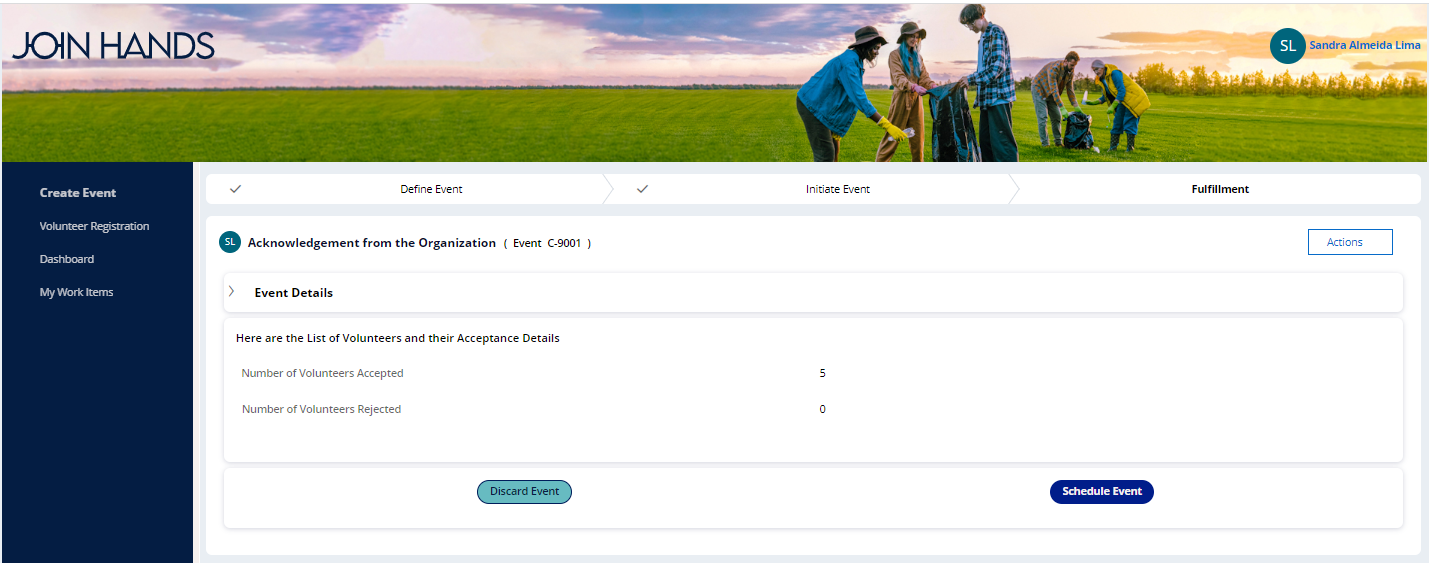
Organization Acknowledgement: Join Hands shows the number of the accepted invitations to the organization and based on this information the organization can choose to proceed with the event or cancel it.
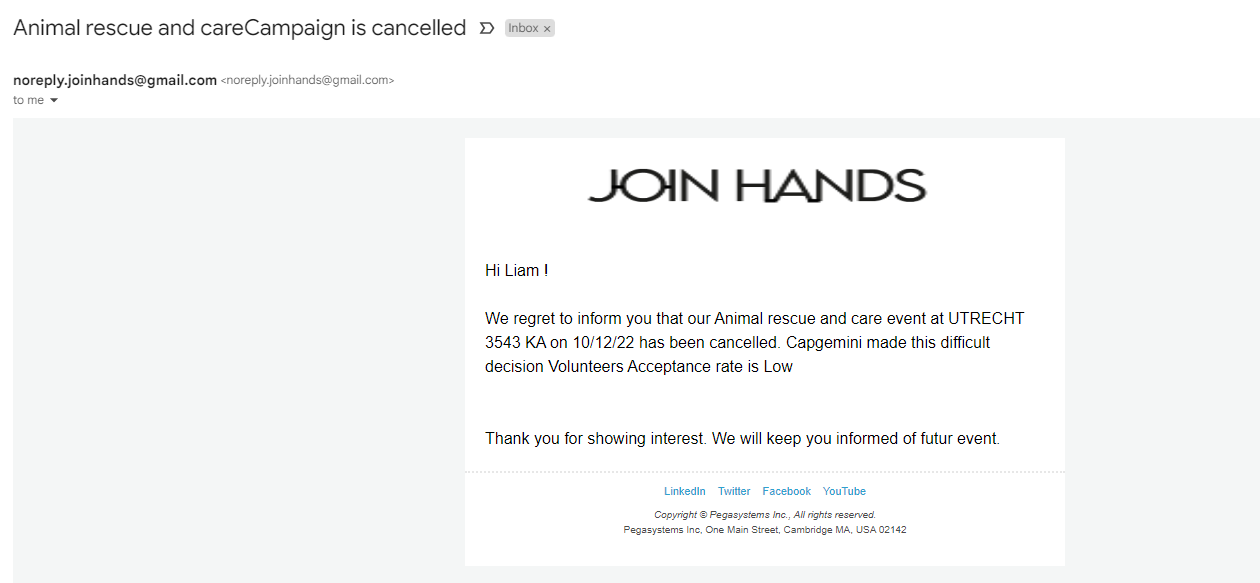
In Case the organization decides to cancel the event, the volunteers are notified by email.
Feedbacks: After the event, the application requests feedback from the organization and volunteers about the event and the interaction between both parties.
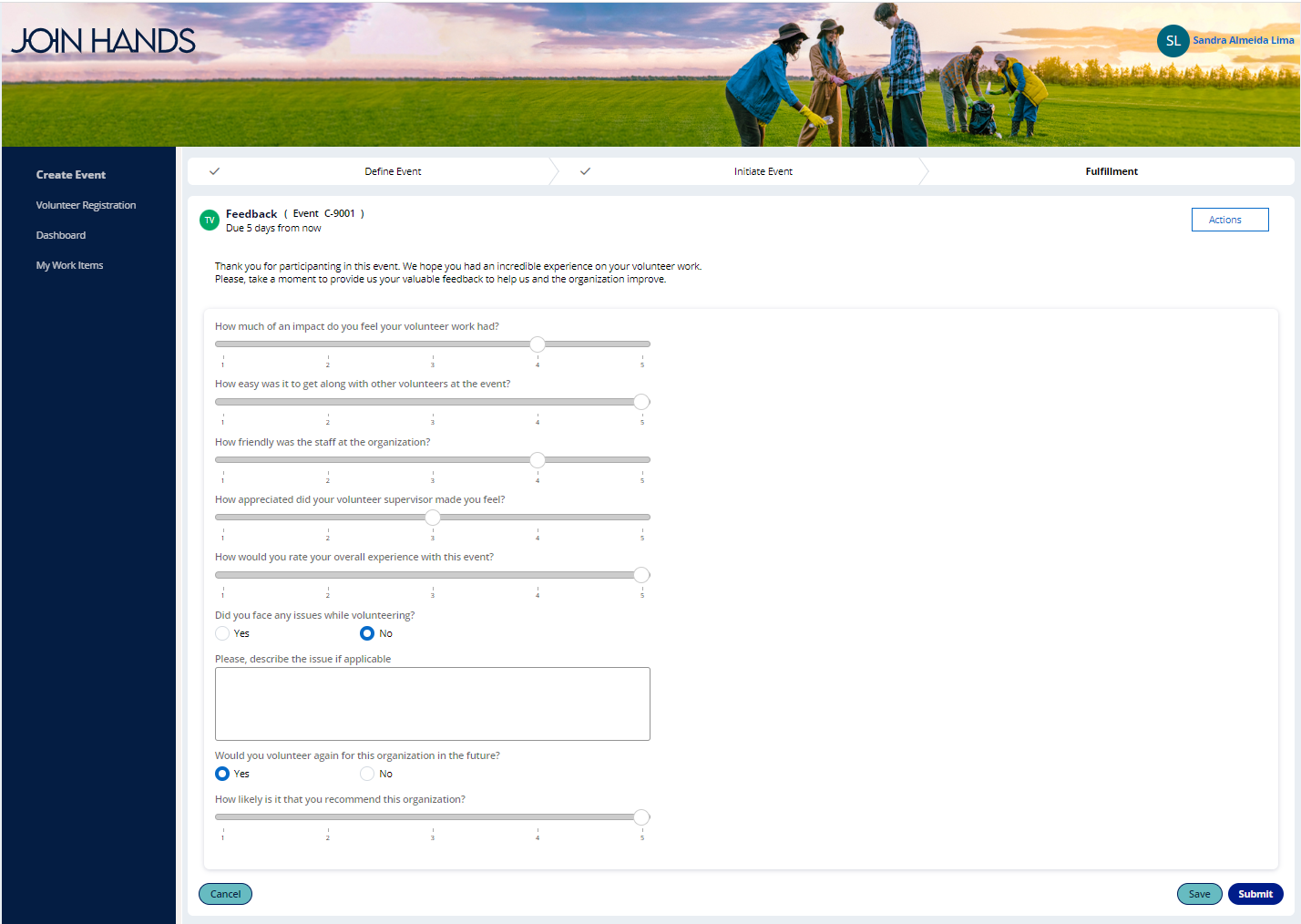
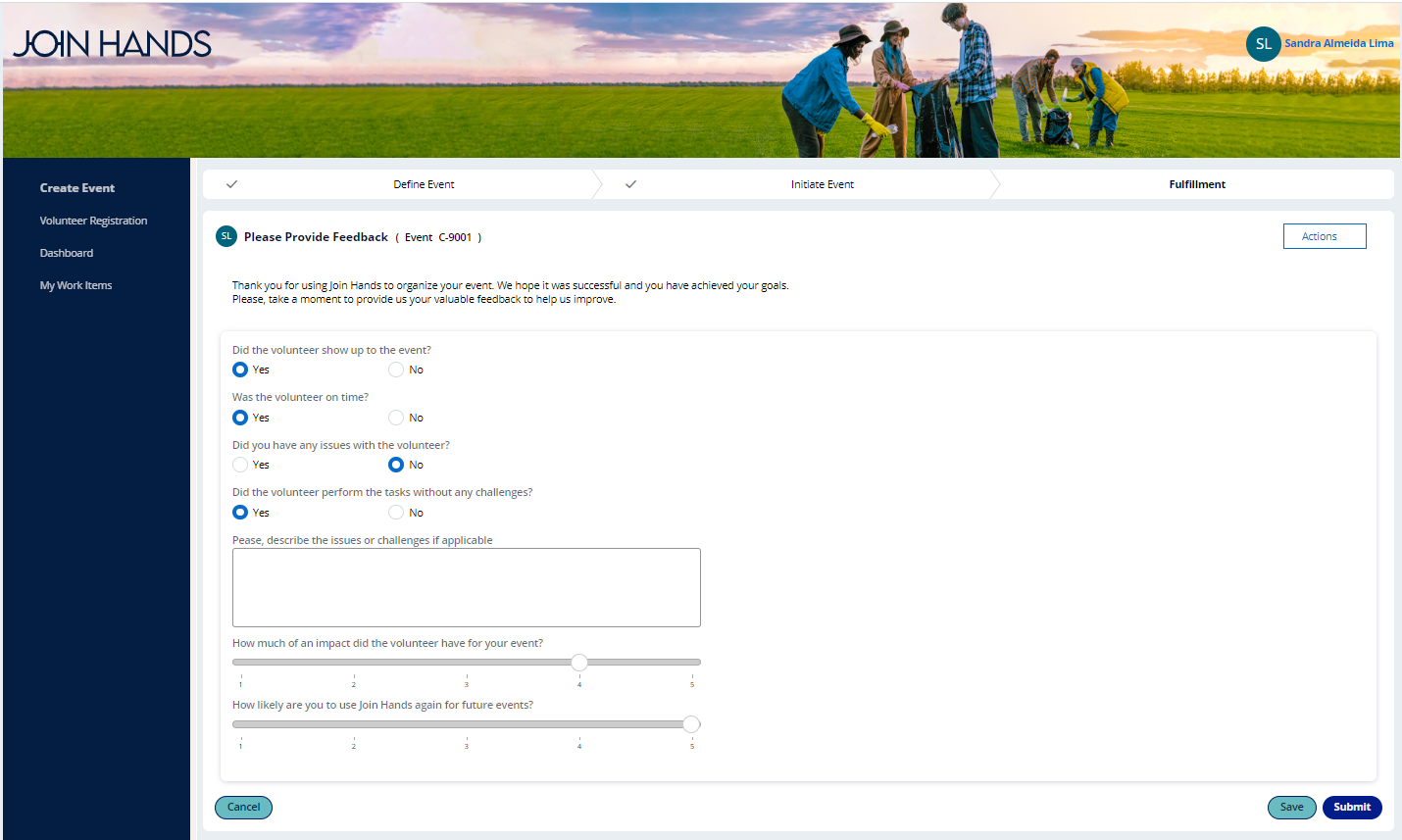
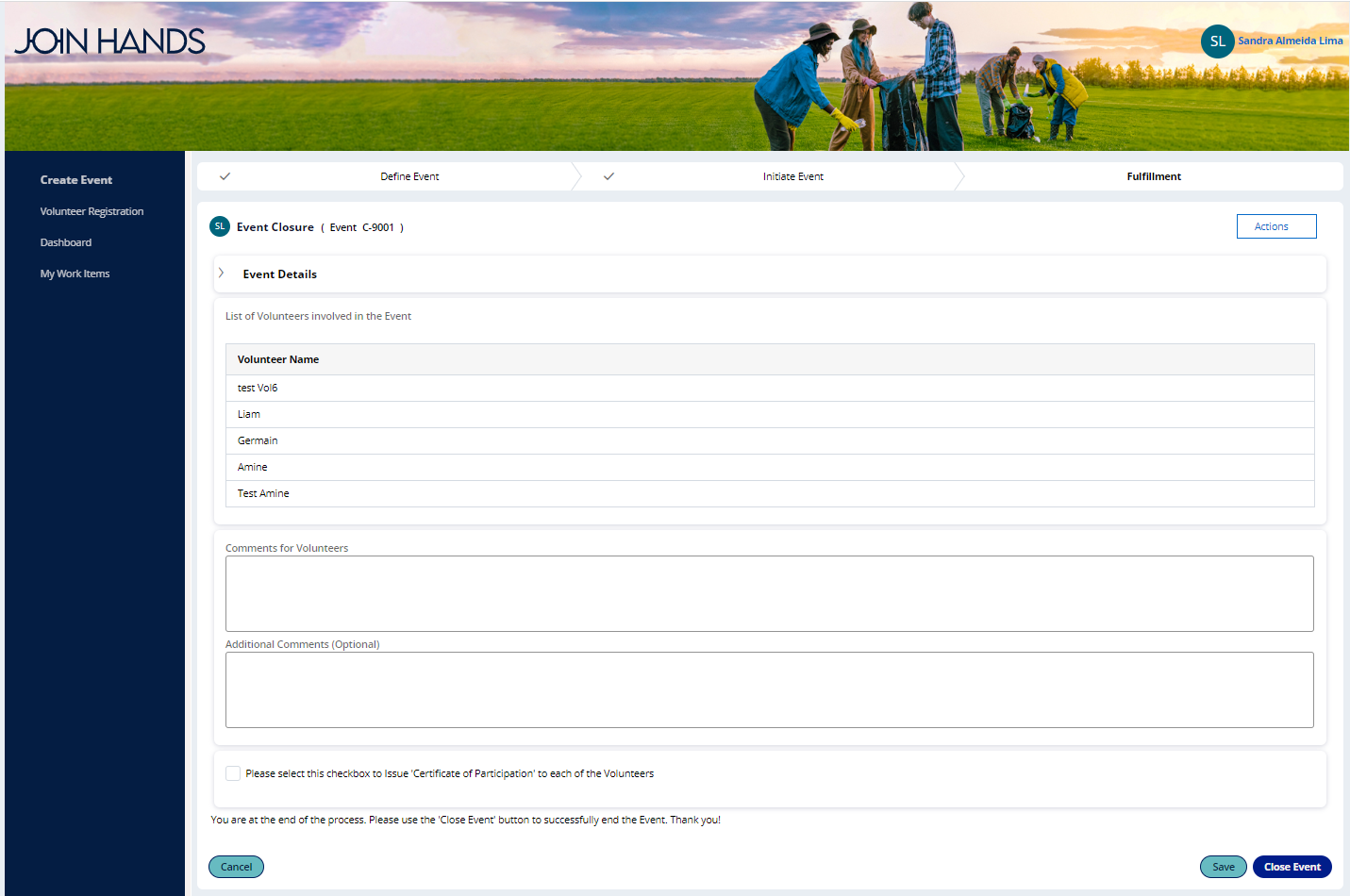
Event Closure: The last step of the microjourney is the event closure. On this screen the organization can write comments for volunteers and issue a certification of participation (future implementation) for each participant. The “close event” button confirms the successful end of the event.
Service Level Agreements: An SLA on Feedback tasks was configured to ensures that the organization doesn’t need to wait indefinitely for all volunteers to respond. That way, after 5 days (can be made configurable) after the sending feedback notification organizations will be able to continue with the closure of the event. This was a preferred solution over making the feedback mandatory for volunteers.
Challenges we ran into
The biggest challenges that the team faced were:
• To reduce the scope of the project so it could be designed and built within the short timeframe of the hackathon.
• Among eight participants, three were new Pega developers with no prior experience on developing real projects with the platform. The learning curve was steep to overcome with the time available, but the team was able to create a learning environment and, at the same time, build a meaningful application.
• Changes in the gmail access have impacted the configuration of a Gmail account in Pega hence we had to debug, understand the change and implement based on a new option provided by Gmail in Pega
Accomplishments that we're proud of
• The Join Hands application is a relevant application that has the potential to make a difference on real community problems with each new organization and volunteer use.
• The team is proud of having successfully developed an application in a short period of time in a way that we could improve our technical skills using the Pega platform as well as soft skills like decision making, flexibility as developers and team building.
What's next for JoinHands
The application has the potential to be extended in many fronts:
• Implement a System of rewards for the volunteers with badges and certifications of participation in events
• Extend the app to enable individuals in addition to organizations to create events and ask for volunteer’s help
• Integration with google API so the volunteers can indicate the distance that they would be willing to travel to participate in events.
• The application can be enhanced to be built into mobile devices with localization (language options) for better reach.


Log in or sign up for Devpost to join the conversation.