-
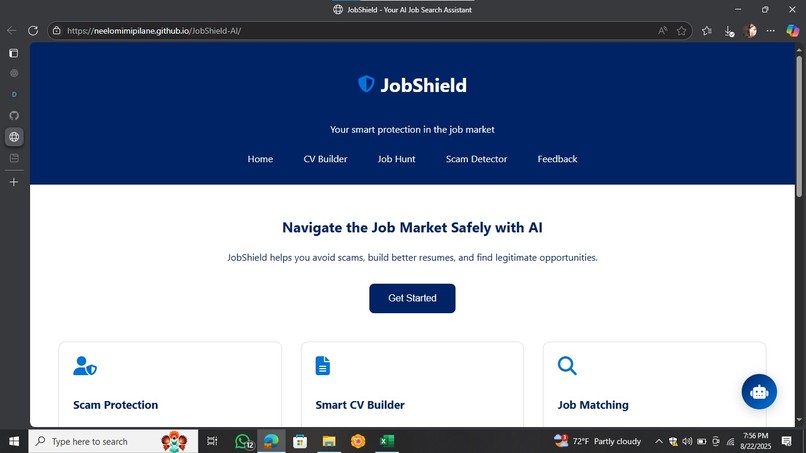
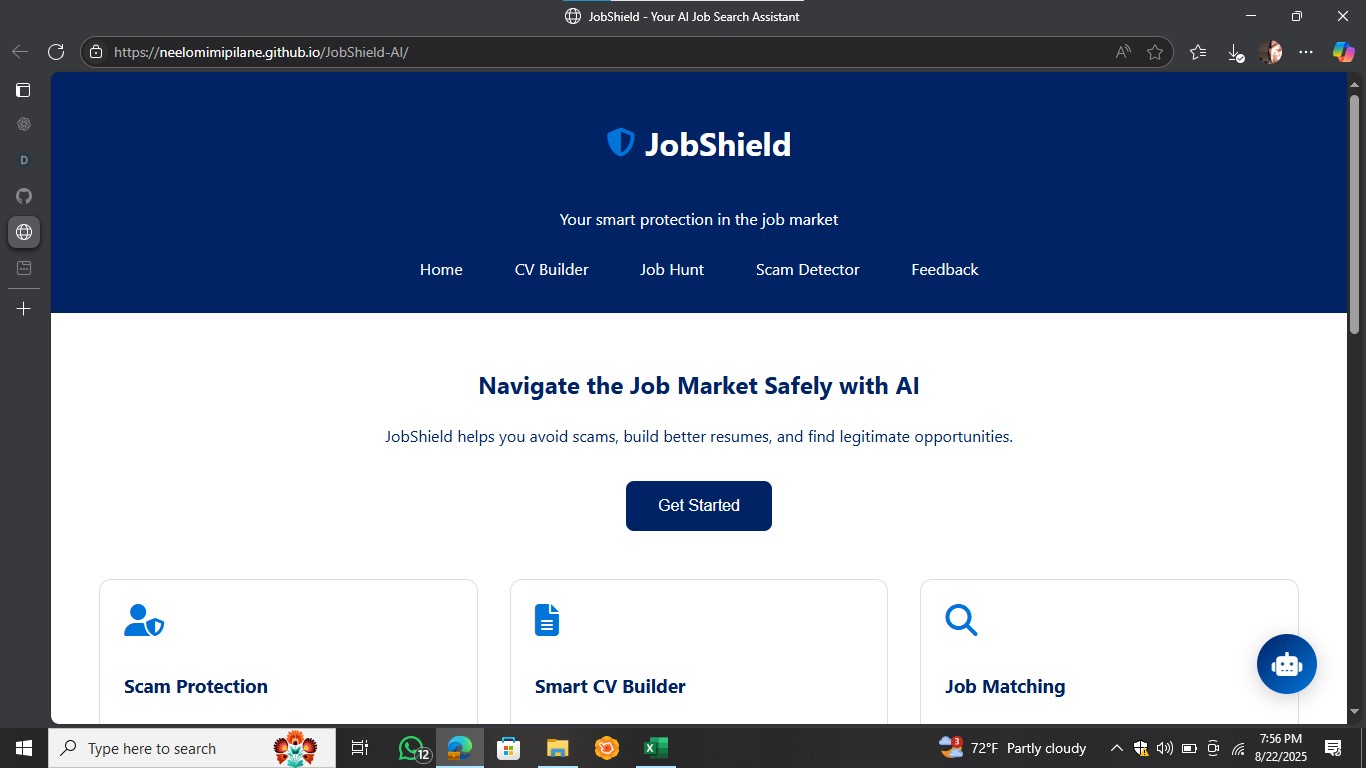
Home page
-
-
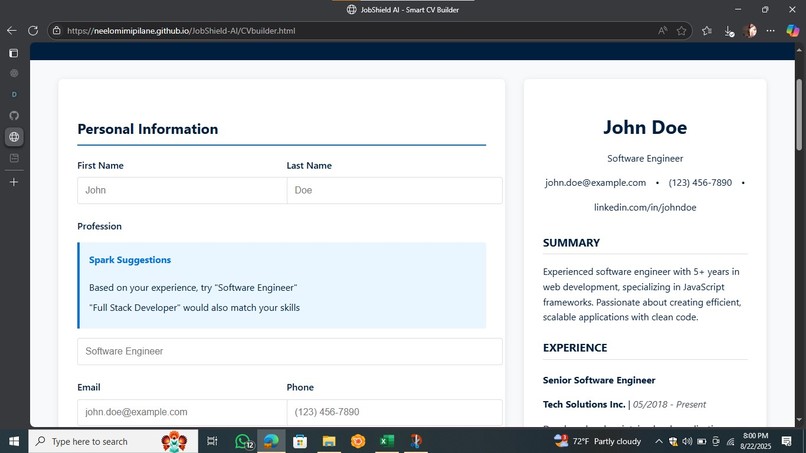
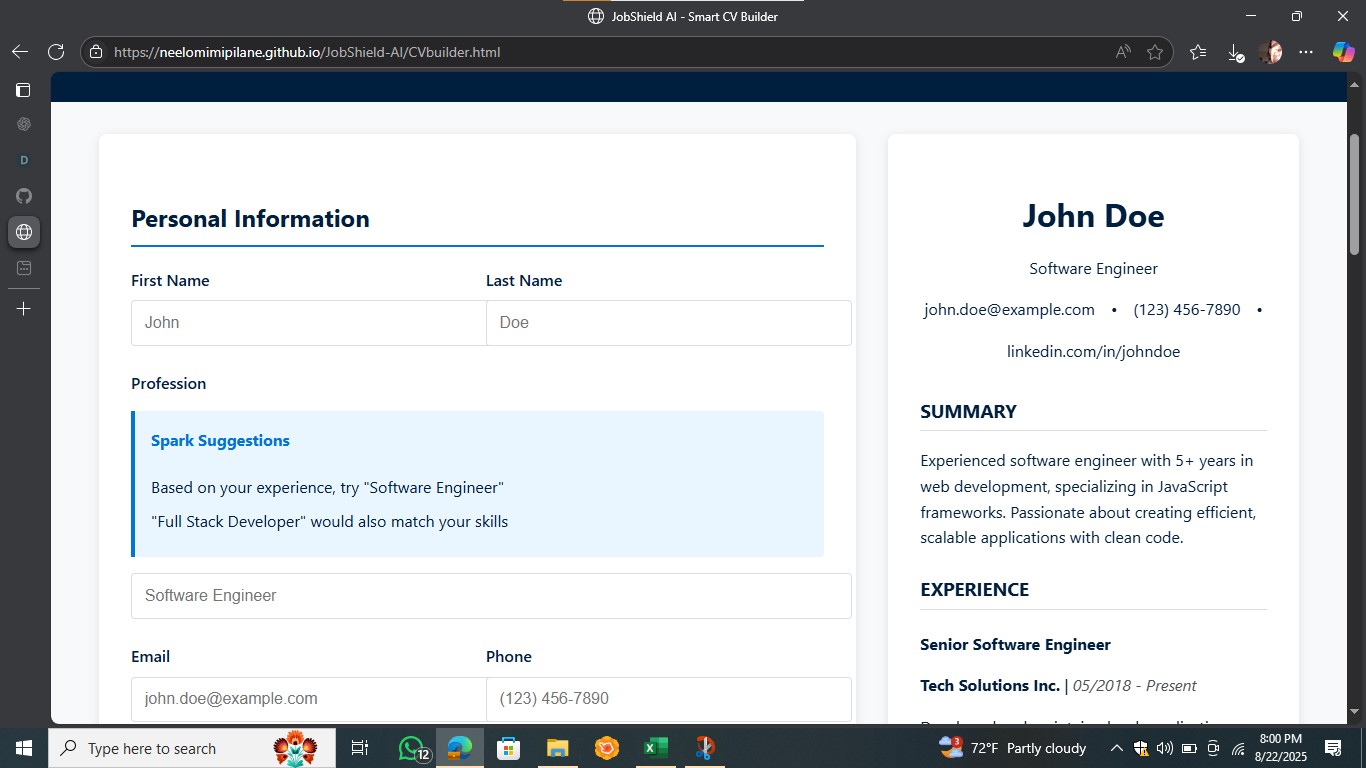
CV Builder.html screenshot
-
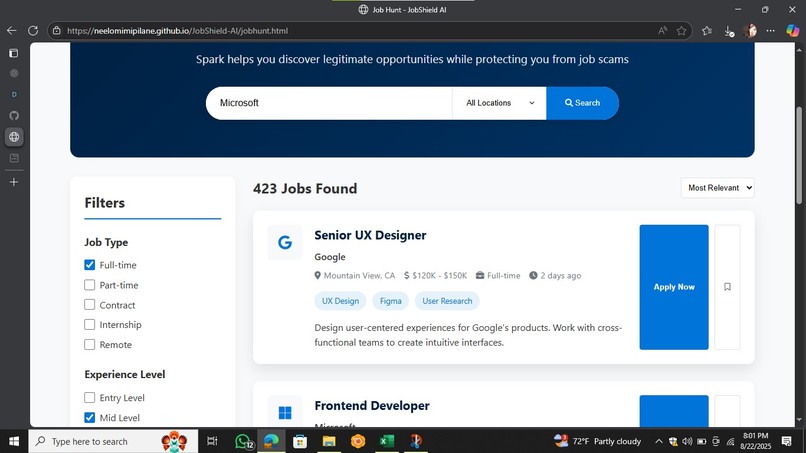
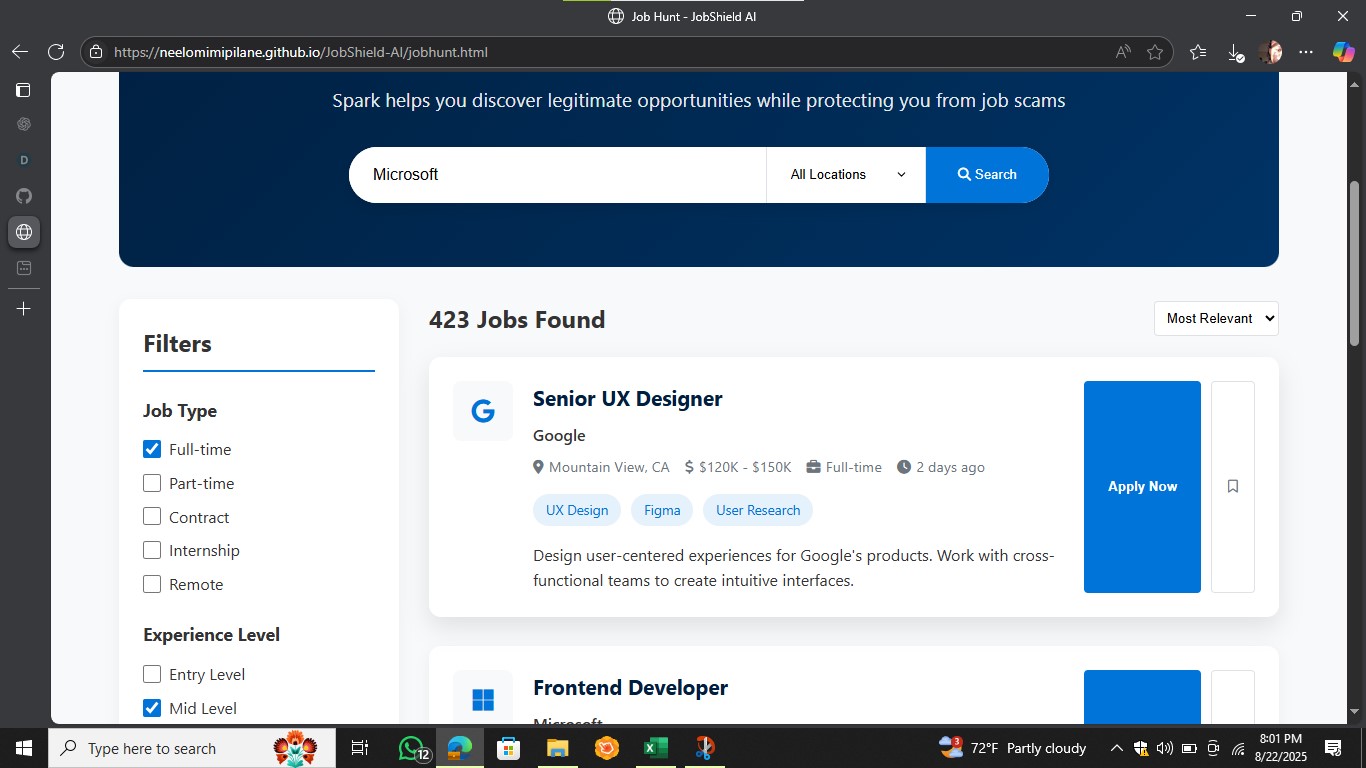
job hunt screenshot
-
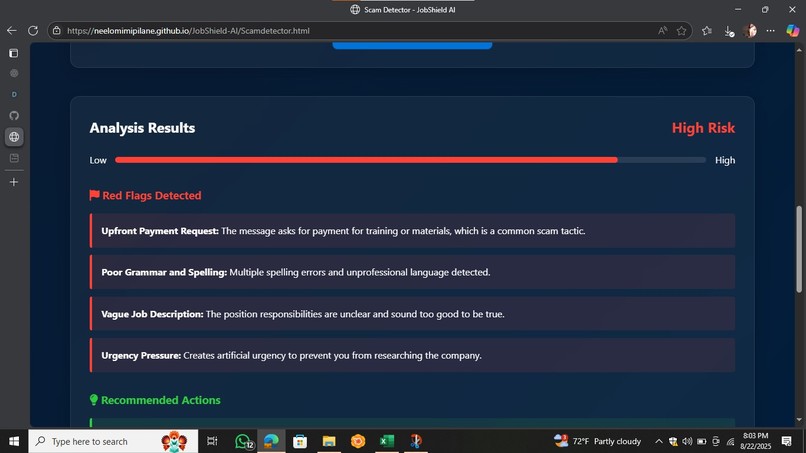
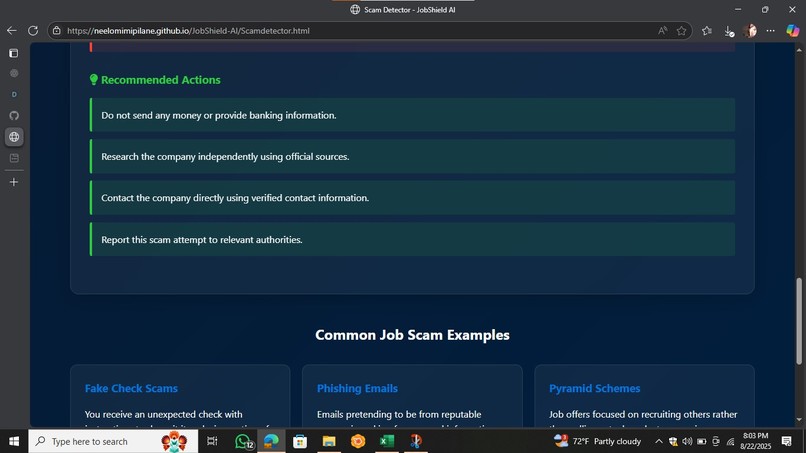
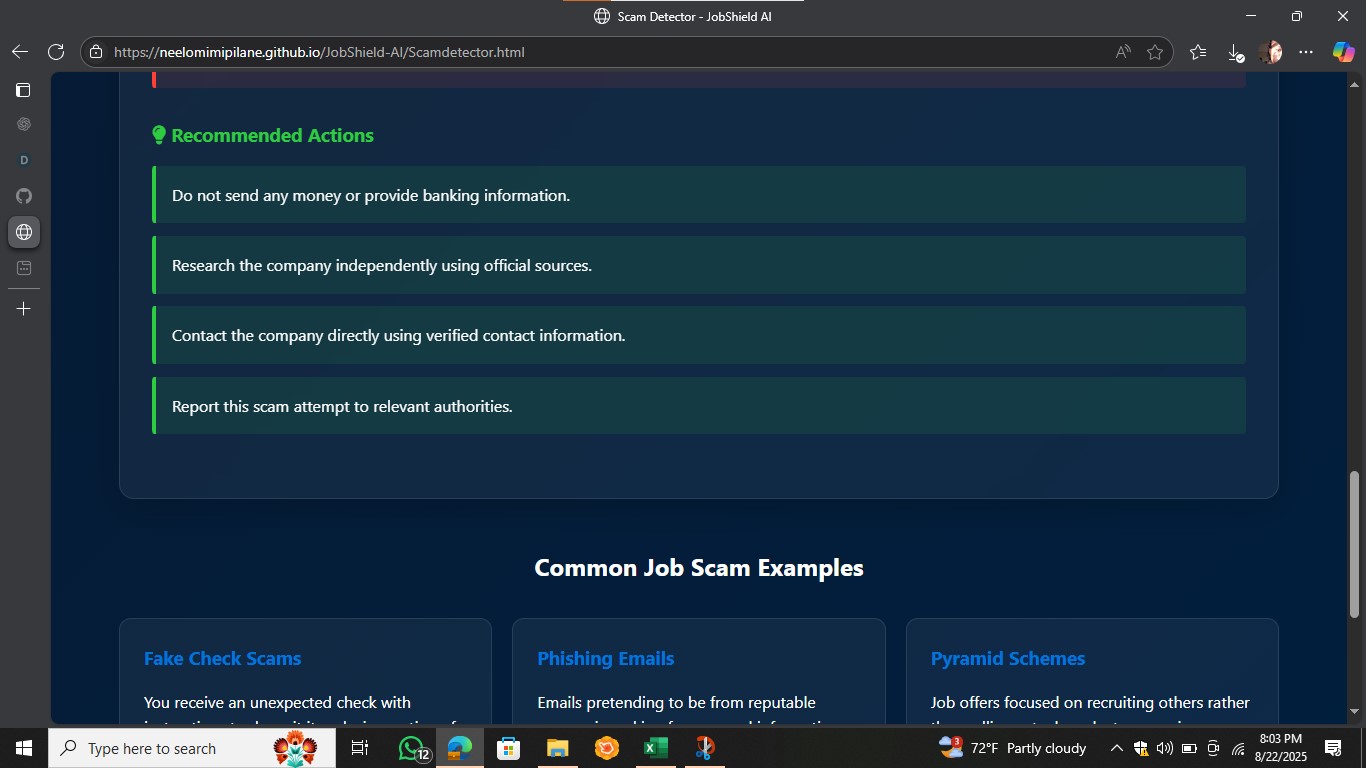
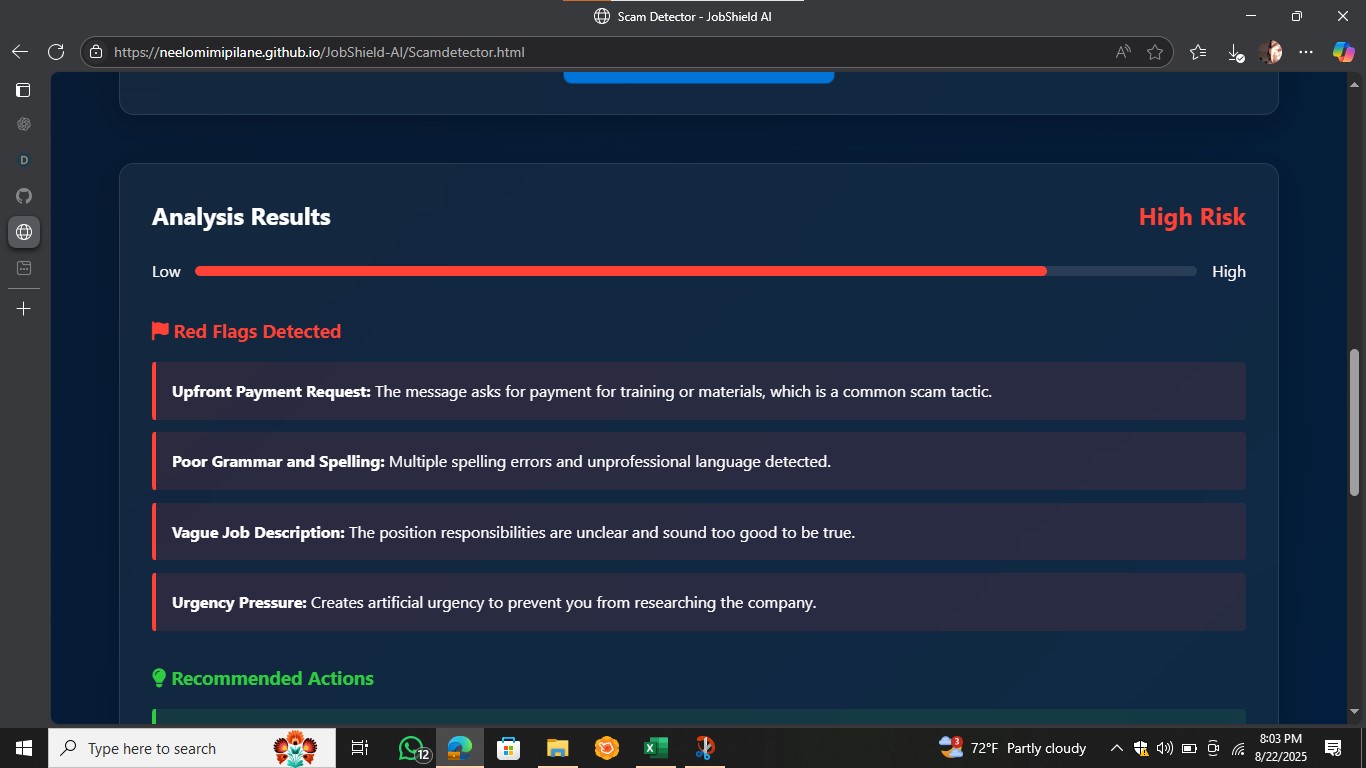
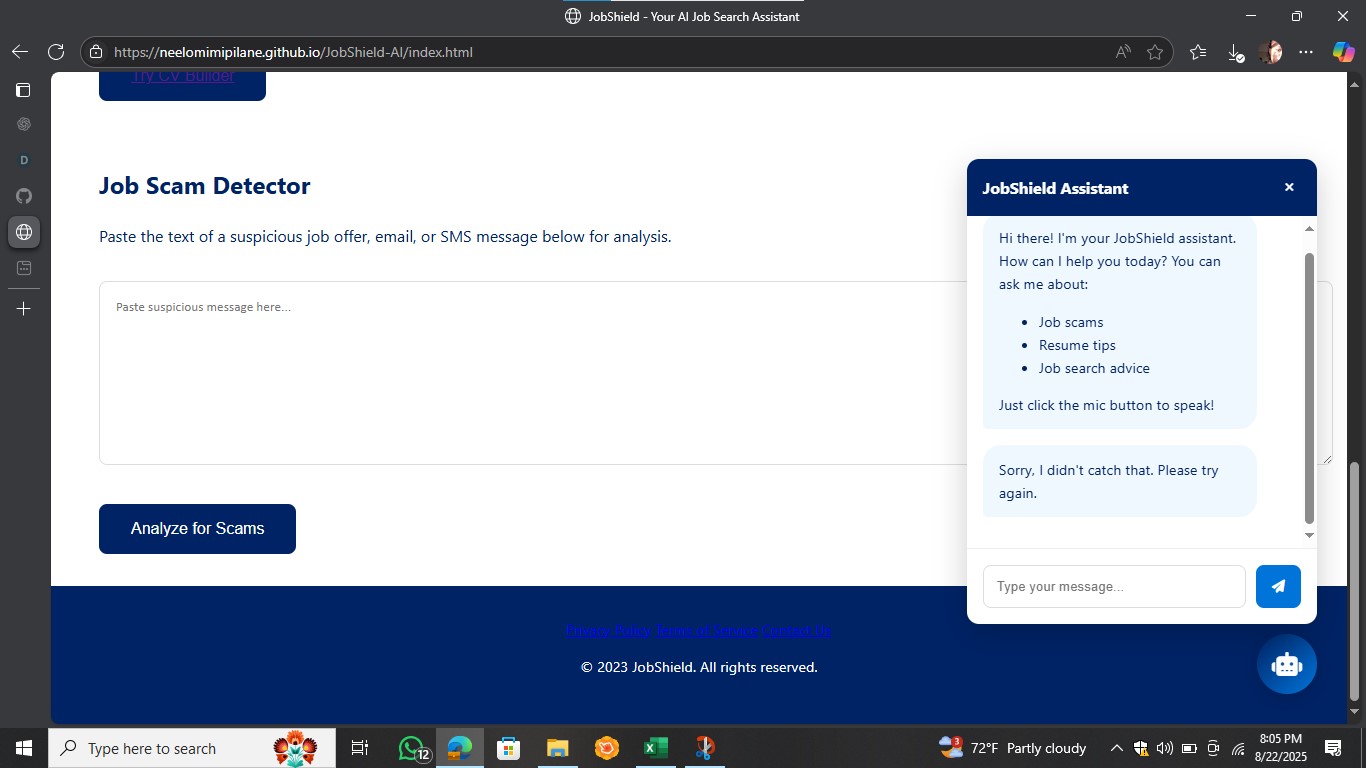
jobscam scanner
-
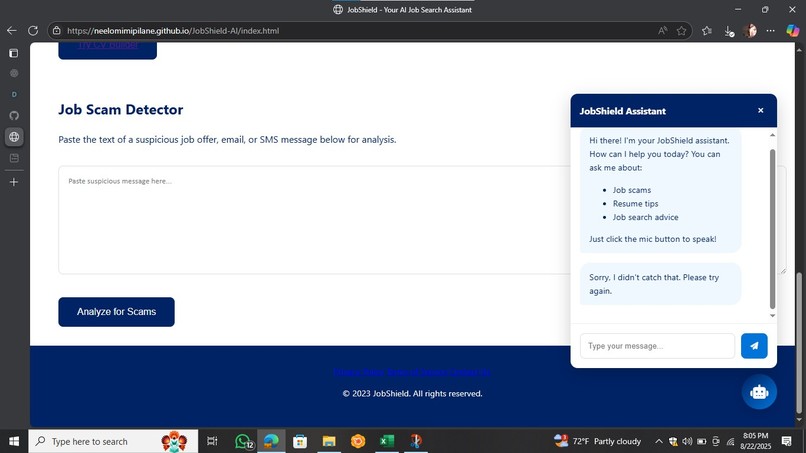
-
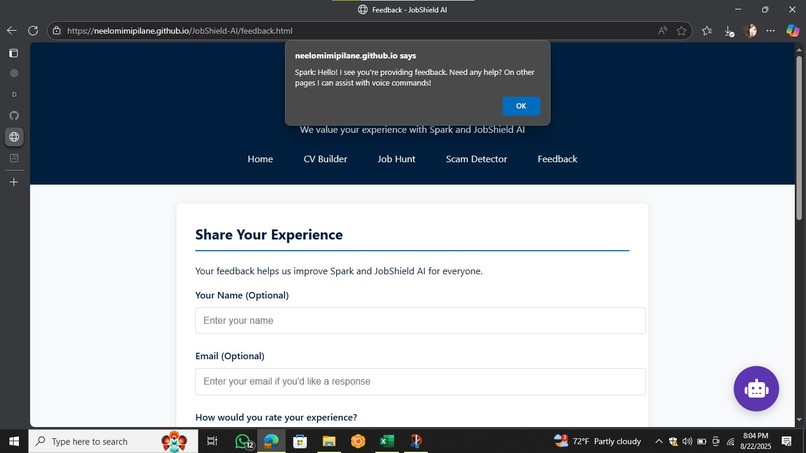
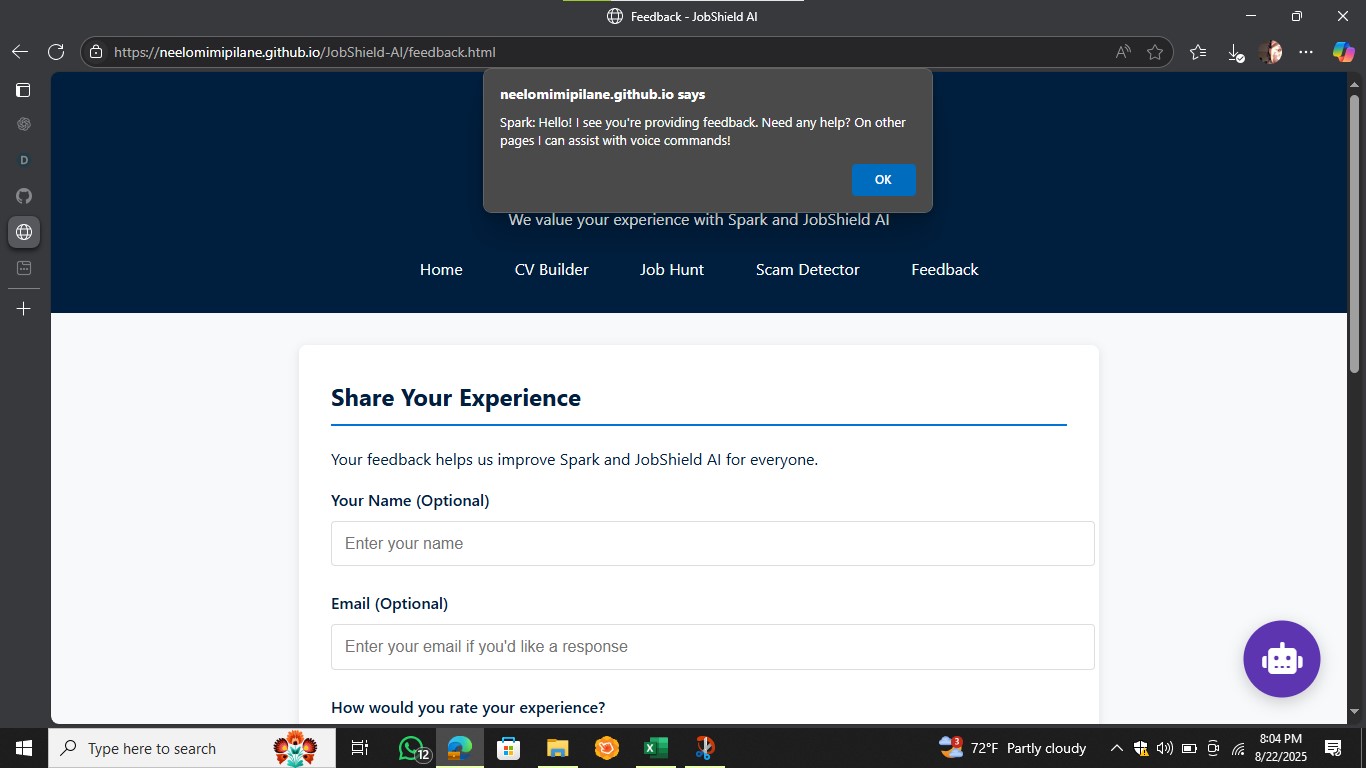
How spark the ai chatbot works
Inspiration
We were inspired by the growing number of young Africans, especially women, falling victim to online job scams and exploitative offers. Many are forced to pay for fake “applications,” give away personal information, or lose money to fraudsters. As students ourselves, we’ve seen friends and peers share “opportunities” that later turned out to be scams. We realized there was no simple, accessible, and AI-powered tool to protect job seekers. That drove us to create JobShield AI – a solution that combines cybersecurity, AI, and digital empowerment to fight back against fraud.
What it does
JobShield AI is a web-based assistant that:
Scans job ads and detects potential scams or red flags using AI (e.g., pay-to-apply schemes, vague job descriptions, suspicious requests).
Builds professional, secure CVs while warning users against oversharing sensitive data.
Provides fraud alerts on trending scams and suspicious websites.
Educates job seekers through a “Job Safety Hub” with quick lessons on digital safety, fraud prevention, and smart online job hunting.
In short, it empowers job seekers to apply safely, confidently, and securely.
How we built it
Stack: HTML5 + CSS + JavaScript — no heavy frameworks. This keeps load times tiny and the UX smooth, even on slow connections. The repository is a static site with pages like index.html, ScamDetector.html, CVbuilder.html, jobhunt.html, and feedback.html, plus a global style.css. GitHub
Scam Scan engine (phase 1): A rule-based JavaScript classifier that scores job posts for risk using curated red-flag patterns (e.g., “application fee,” “WhatsApp only,” “training fee,” unrealistic salary, urgent language). We use string/regex matching, URL/email extraction, and a simple weighted score to return Low / Medium / High risk with highlighted reasons.
Safety UX: Real-time JS feedback (no page reloads), accessible forms, and clear, color-coded alerts. All processing is client-side to protect user text from being sent anywhere.
CV Builder: Form-driven sections rendered with JS into a clean preview layout. Tips guide users to avoid oversharing (ID numbers, full address, bank details). Users can copy/export the formatted content and style it with our CSS template.
Job Safety Hub: Static content cards (HTML/CSS) with JS search/filter for quick learning on phishing, fake recruiters, and fee scams.
State & performance: We keep it simple — minimal DOM work, modest JS, and optional localStorage for draft persistence, so it’s responsive on low-spec devices.
Collaboration: We coordinated via GitHub (issues/commits/PR flow) so each teammate handled pages, copy, and JS features in parallel. The repo shows a static HTML/CSS codebase (GitHub language stats).
Challenges we ran into
Data Collection: Getting real scam vs. legitimate job postings to train our model was tough. So we used dummy data.
Time Constraints: Building both the scam detection AI and the CV generator in a short time required strong teamwork and prioritization.
Balancing UX with Security: Making the platform easy to use for non-technical users while embedding security best practices was challenging.
Limited Resources: As students, we didn’t have access to premium AI APIs or large datasets, so we had to improvise and optimize with what we had.
Accomplishments that we're proud of
Successfully built a working scam detection engine with AI-ready design within the timeframe for the hackathon.
Designed a clean and accessible interface that job seekers can easily navigate.
Built a smart CV generator that promotes safe job applications.
Created something with real-world social impact—not just a hackathon project, but a potential lifesaver for thousands of young job seekers.
Strong teamwork and collaboration, combining different strengths (tech, design, research, and problem-solving).
What we learned
The importance of user-centered design when building tech that targets vulnerable groups.
How cybersecurity, AI, and fintech can merge to solve unemployment-related risks.
That building a product is not just about coding—it’s about storytelling, understanding the problem deeply, and keeping the user’s safety first.
What's next for JobShield AI
Expand the AI model with more real-world scam datasets for higher accuracy.
Build a browser extension so users can instantly scan job postings from social media or websites.
Partnerships with job boards, universities, and NGOs to integrate JobShield AI into their platforms.
Multilingual support for broader reach across Africa.
Mobile app version for even easier access.
Scale JobShield AI into a pan-African job safety ecosystem—empowering millions to seek work with confidence.

Log in or sign up for Devpost to join the conversation.