-
-
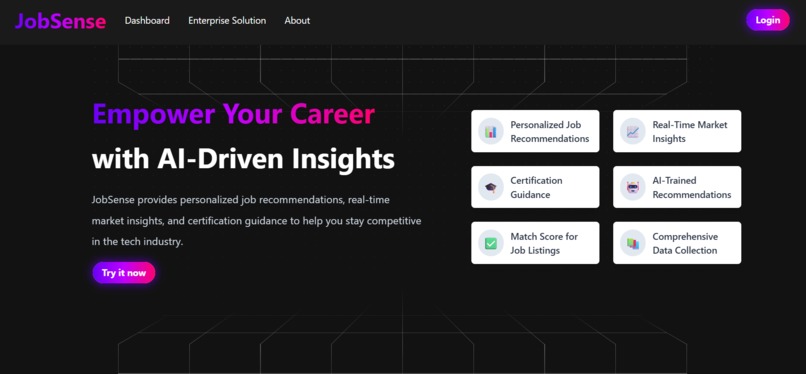
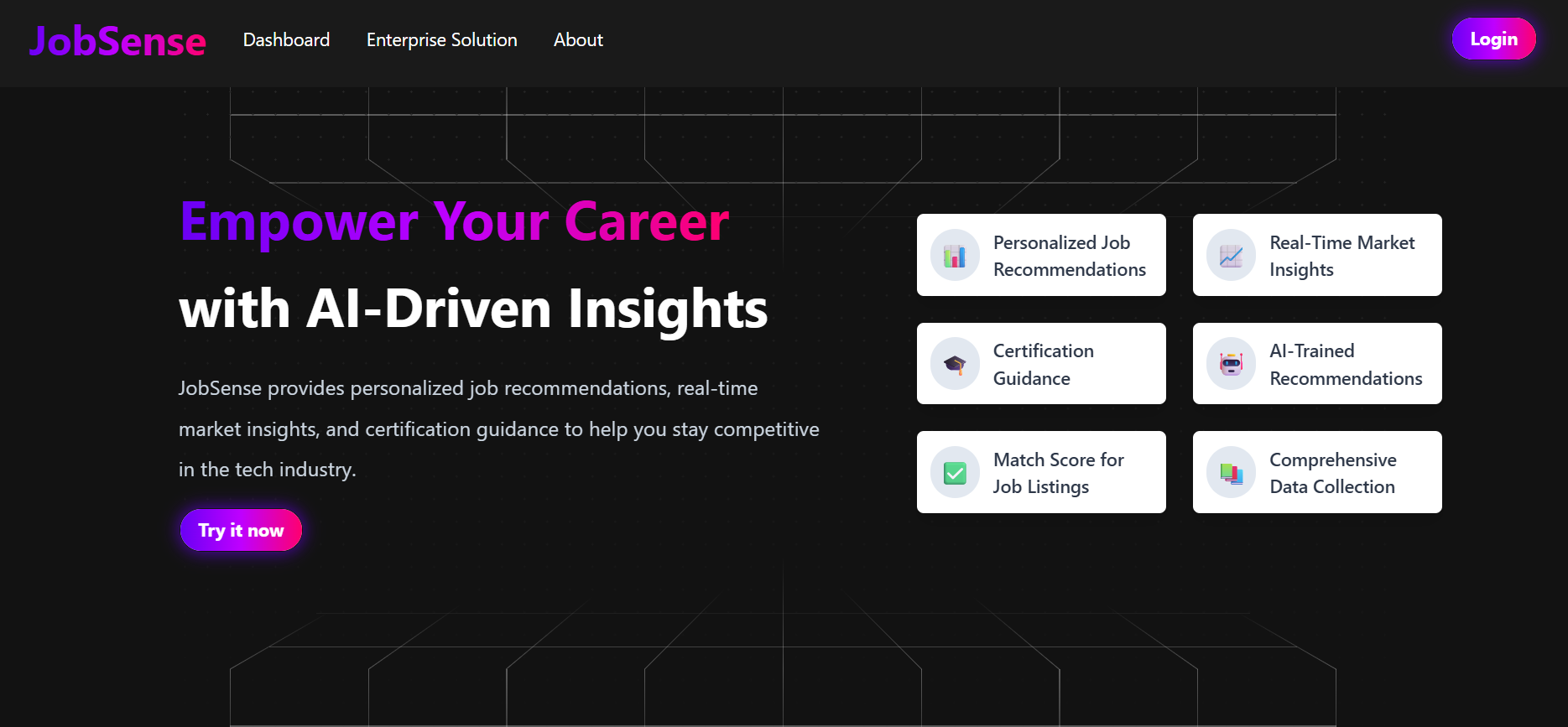
JobSense Landing Page
Inspiration
Let me tell you a story. A few months ago, while trying to expand my technical skills, I hit a hurdle. Due to the ever-changing field of technology, it was challenging to keep up with the industry's demands. As engineers, the list of skills we need to learn is vast and knowing which ones to prioritize is overwhelming. That’s when our team decided to fast-track the process with JobSense.
What It Does
JobSense helps tech professionals navigate their career paths by providing three core features:
- Job Compatibility Score: Matches an individual’s skills and qualifications with relevant job roles to identify the best fit.
- Career Roadmap: Creates a personalized step-by-step learning plan, highlighting courses and certifications to bridge skill gaps and support career growth.
- Skills to Learn: Identifies specific skills users should focus on to enhance their employability and meet market demands.
For organizations/teams, JobSense offers team analysis features that provide insights into collective skill gaps, helping employers design targeted training programs. We also provide certification comparison allowing you to have a holistic understanding of what each technical cert can offer you.
Challenges Faced
User Feedback & Feature Prioritization: We engaged extensively with users both online and offline. Some feedback was critical, leading us to remove certain features. However, the unanimous request to implement a career roadmap was a game-changer, and we successfully delivered this feature.
Technical Challenges with AI & Data: Since we scrape data from the internet regularly, keeping our AI model updated with the latest information has been challenging. To address this, we implemented a RAG pipeline and fine-tuned our models using AWS SageMaker. Assessing the pros and cons of these technologies and integrating them effectively was a complex but valuable learning experience.
How We Built the Project
We started by identifying key pain points: job misalignment, skill gaps, and lack of guidance. To tackle these, we built a job scraper using Python and various libraries to collect and categorize job data from the internet, which we store securely in Supabase. This data forms the foundation of our AI models.
For personal recommendations, we implemented a RAG pipeline, training and fine-tuning our AI models based on the scraped data to keep insights accurate and up-to-date.
Our frontend and backend are powered by Next.js, enabling a fast and seamless user experience. This tech stack allows us to efficiently serve personalized learning roadmaps and job compatibility scores in real time.
What We Learned
Throughout this journey, I’ve realized how crucial personalized insights are for making informed career decisions. Building a platform that combines such a powerful and well-trained AI with personalized learning pathways deepened my understanding of career growth complexities and what AI is capable of. User feedback proved essential in refining the product to truly meet users’ needs.
What Is Next For JobSense
As we continue engaging with our users, we plan to further improve the accuracy of our AI models to deliver more niche and precise recommendations on the skills users need to learn. Additionally, we aim to introduce more premium features designed to provide greater value and support for our users’ career growth.


Log in or sign up for Devpost to join the conversation.