-
-
Project Page
Inspiration
Searching for jobs can be a daunting and time-consuming process—navigating dozens of platforms, tailoring applications, writing cover letters, preparing for interviews, and negotiating salaries. We wanted to simplify and streamline this process with an AI-powered assistant that acts like a personal job-hunting sidekick. JobQuest AI was born from the idea that technology, especially AI, can remove friction from career advancement and make job searching more efficient and personalized.
What it does
JobQuest AI is an intelligent job search assistant that automates and enhances every stage of the job hunt:
It scrapes multiple job boards and applies smart filters based on user preferences.
It generates customized cover letters using AI.
It prepares users for interviews with tailored tips.
It provides salary insights to empower better negotiations.
It scores and ranks jobs based on how well they match your skills and goals.
How I built it
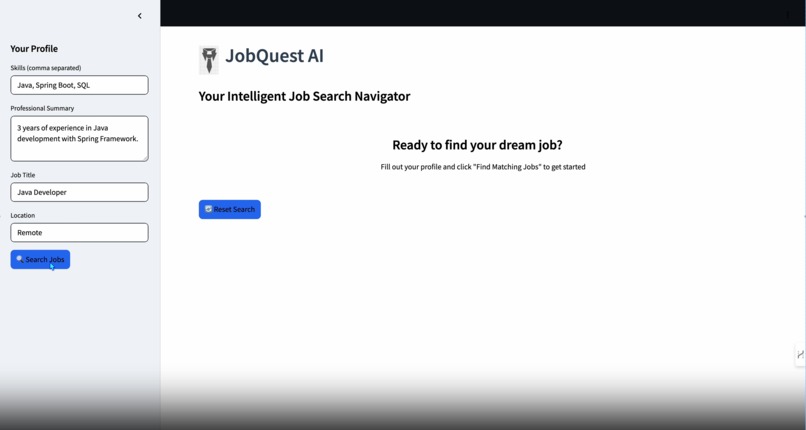
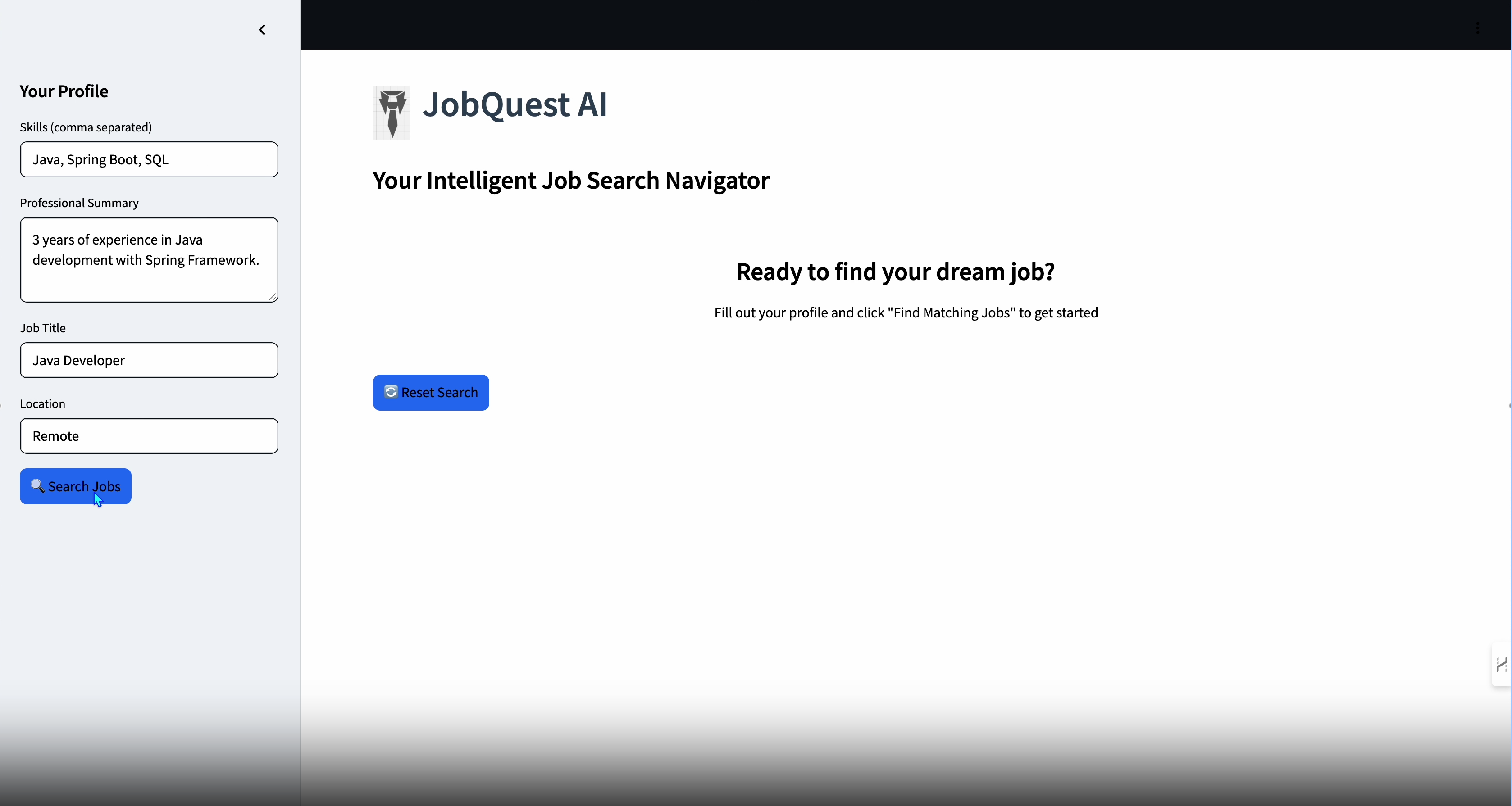
I used Streamlit to build a lightweight and interactive frontend, while the backend is powered by Python. Web scraping is done using BeautifulSoup and Selenium. For the AI components—cover letter generation, match scoring, interview prep, and salary insights—we used Groq and Gemini APIs. The app follows a modular architecture, allowing each agent (searcher, writer, advisor) to operate independently but integrate seamlessly into the user flow.
Challenges I ran into
Designing effective scraping logic that works across inconsistent job board structures
Balancing AI generation with user customization for cover letters
Creating a flexible yet intuitive UX within Streamlit
Managing rate limits and errors from third-party APIs
Ensuring privacy and data security while storing user profiles and documents
Accomplishments that I am proud of
Building a full AI-powered job search flow from scratch
Seamlessly integrating multiple AI services into a single user journey
Providing real-time job matching with intelligent filtering and scoring
Creating personalized, professional-grade cover letters in seconds
Enabling first-time users to go from zero to job-ready in minutes
What I learned
How to structure an AI assistant with modular agents and a stateful user flow
Best practices for working with language models in production (token handling, prompt tuning, fallbacks)
Effective use of Streamlit for rapid prototyping and deployment
The power of combining user data with job descriptions to generate meaningful insights
Importance of UX even in utility-focused tools like job assistants
What's next for JobQuest AI
Support for more job platforms and APIs (e.g., LinkedIn, Glassdoor)
Enhanced profile recommendations via resume parsing and auto-fill
Real-time alerts and job tracking dashboards
Integration with applicant tracking systems (ATS) for one-click applications
Advanced AI coaching features: mock interviews, career trajectory analysis, and skill-gap detection


Log in or sign up for Devpost to join the conversation.