Inspiration
This project was inspired by the need to support short-term workers, particularly those engaged in physical labor, and align with Sustainable Development Goal 8, which focuses on promoting sustained, inclusive, and sustainable economic growth, full and productive employment, and decent work for all. We noticed the challenges faced by job seekers in finding opportunities and the difficulties related to labor rights, including inadequate responses to workplace injuries and insufficient investigation into near misses. The risks posed by hazardous materials and poorly marked dangerous sites further underscored the need for a solution that enhances safety and provides better support for workers.
What it does
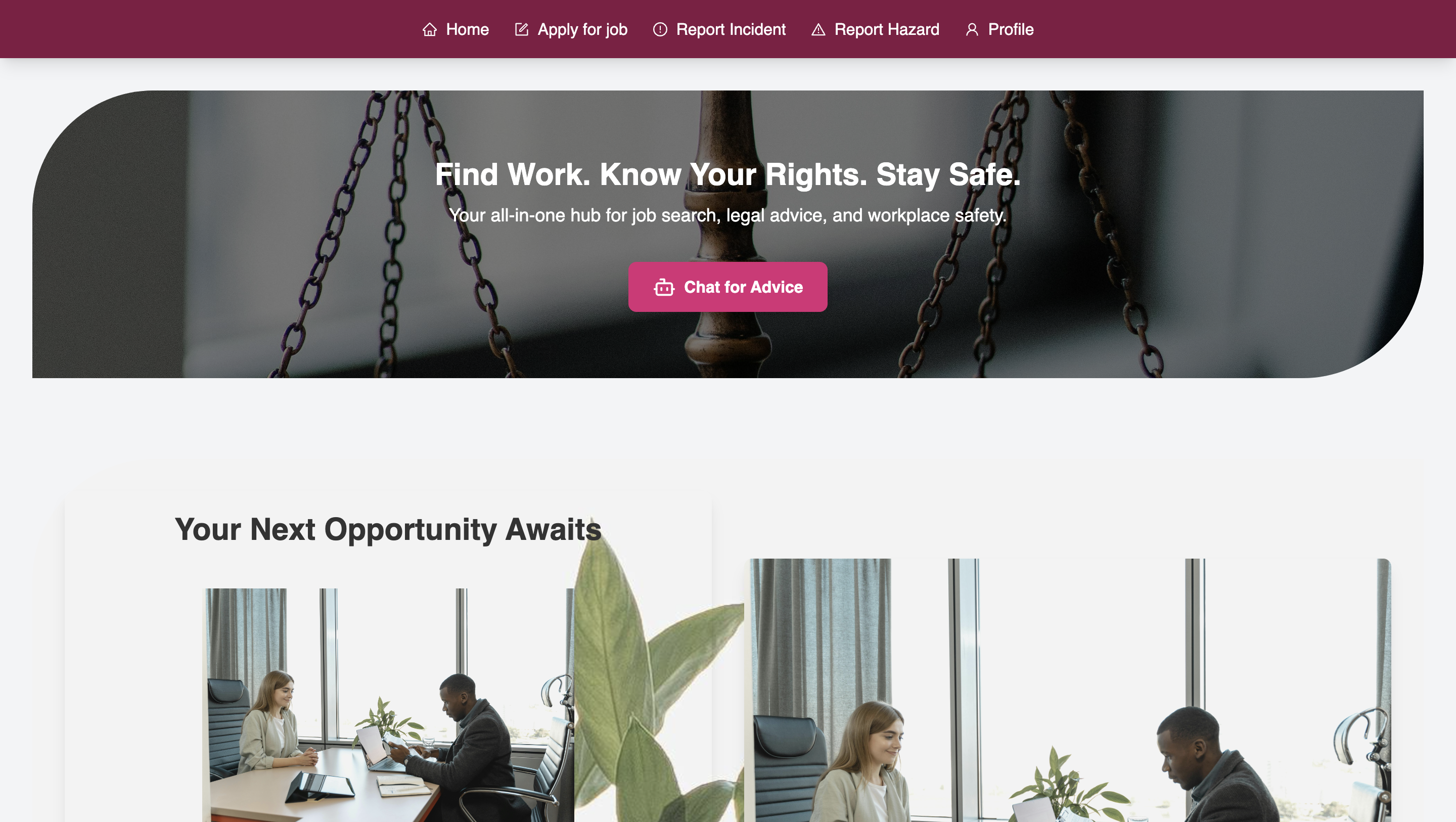
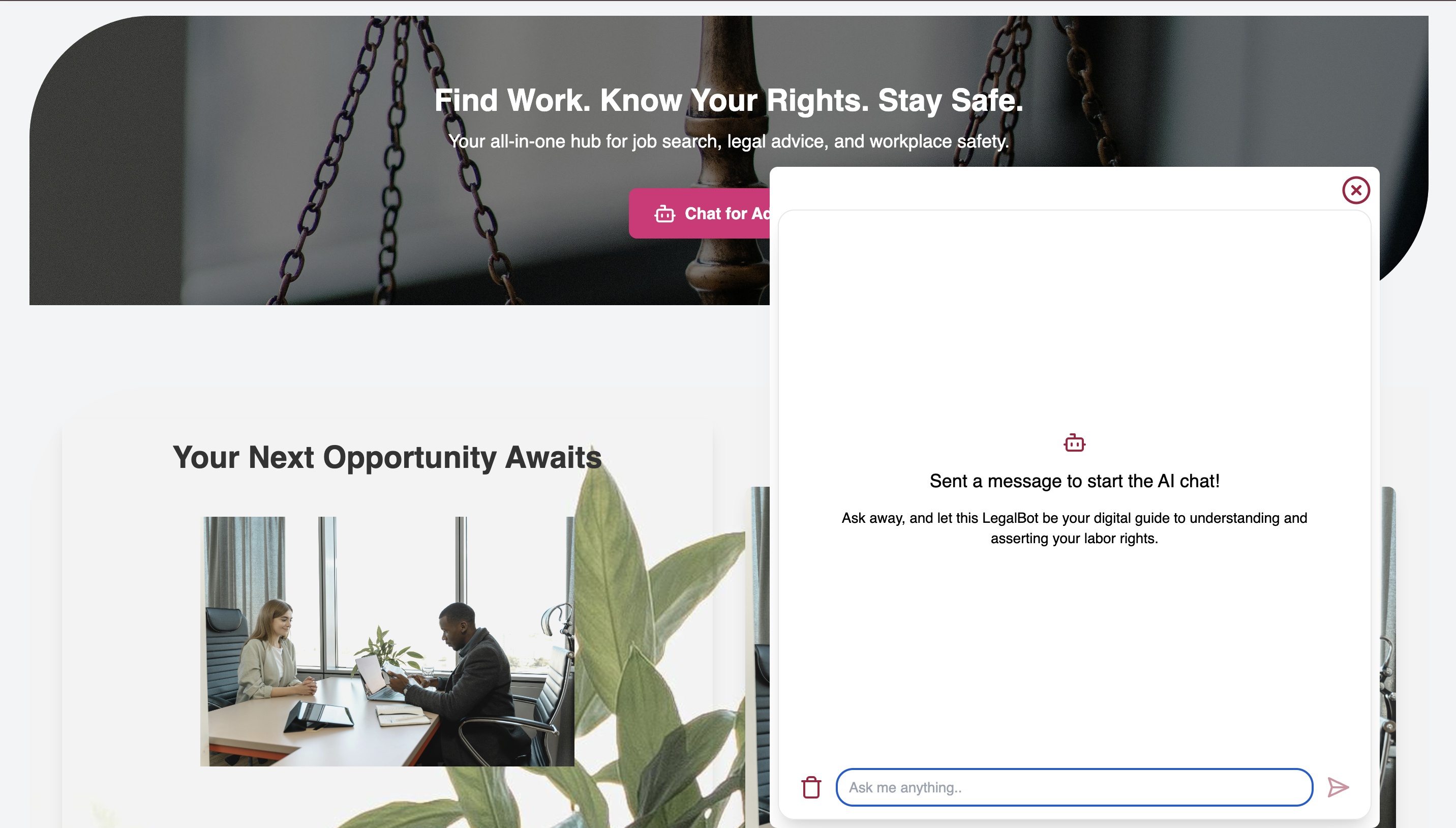
Chatbot Assistance: Our chatbot provides users with guidance on labor rights, offering advice on workplace issues and steps to take in various situations.
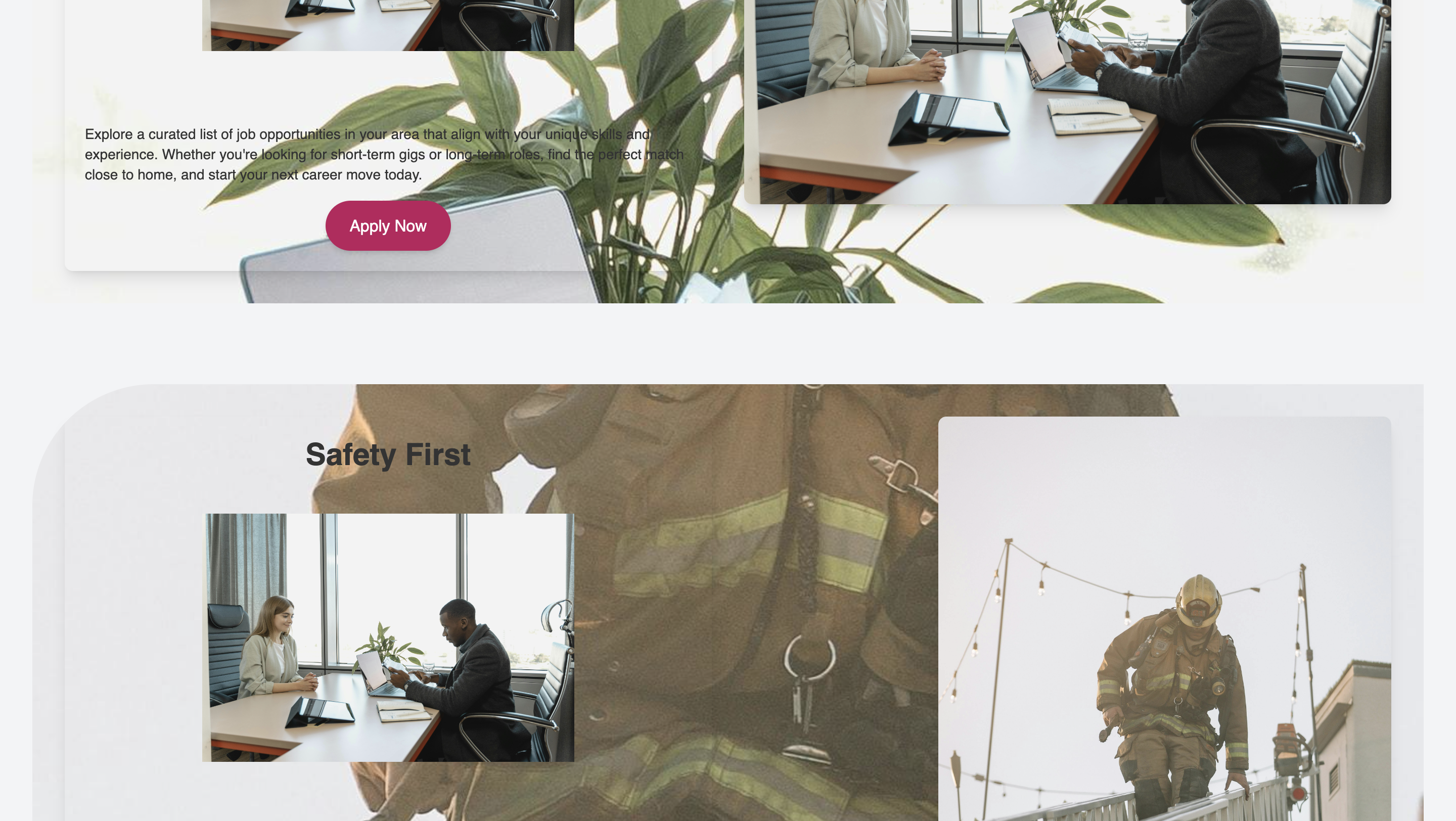
Job Search and Application: Users can easily find job opportunities in their area and apply directly through the platform.
Incident Reporting: The platform allows users to report workplace injuries to their employers and alert authorities to hazardous conditions they encounter. This facilitates rapid deployment of teams to investigate and address issues in real time, improving overall safety and responsiveness.
How we built it
ChatGPT Turbo: We harnessed the capabilities of ChatGPT Turbo to power our chatbot, which specializes in providing advice on labor rights and connecting users with relevant contacts for their specific issues.
Next.js: This framework was chosen for its ability to create a clean and efficient user interface, ensuring a seamless and responsive experience.
TypeScript: We used TypeScript for its benefits in component styling and development, allowing us to build robust and beautifully designed components.
Node.js with Express: For backend development, we utilized Node.js and Express to handle server-side operations, ensuring reliable and scalable performance.
What's next for Jobjoyride
Voice Prompts and Commands: Implement voice recognition capabilities to allow users to interact with the app using voice commands. This can make the app more accessible and user-friendly, especially for those with disabilities or those who prefer voice interaction.
AI-Powered Analytics: Integrate AI tools to analyze user behavior and app usage patterns. This can help in optimizing features and predicting future needs, leading to a more responsive and tailored user experience.
Sustainable Practices: Ensure that your app promotes sustainable practices by encouraging users to report not just hazards but also environmental issues. Features could include a sustainability score for companies based on their environmental impact.
Enhanced Safety Features: Incorporate real-time alerts and safety recommendations based on user location and reported hazards. This can include push notifications for immediate threats or safety tips relevant to users’ current environments.
Gamification: Introduce gamification elements to engage users and motivate them to actively participate in reporting and improving workplace safety. For example, users could earn badges or rewards for reporting hazards or completing safety training modules.
Integration with Wearable Tech: Consider integrating with wearable devices to monitor users’ safety in real-time. For example, smartwatches could alert users to unsafe conditions or automatically report incidents if they detect a fall or sudden impact.
Multi-Language Support: Expand the app's accessibility by providing multi-language support, making it usable for a broader audience and improving its reach.
Built With
- gpt-turbo
- langchain
- nextjs
- tailwindcss
- typescript

Log in or sign up for Devpost to join the conversation.