-
-
-
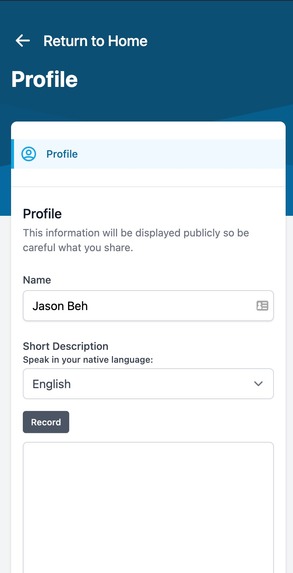
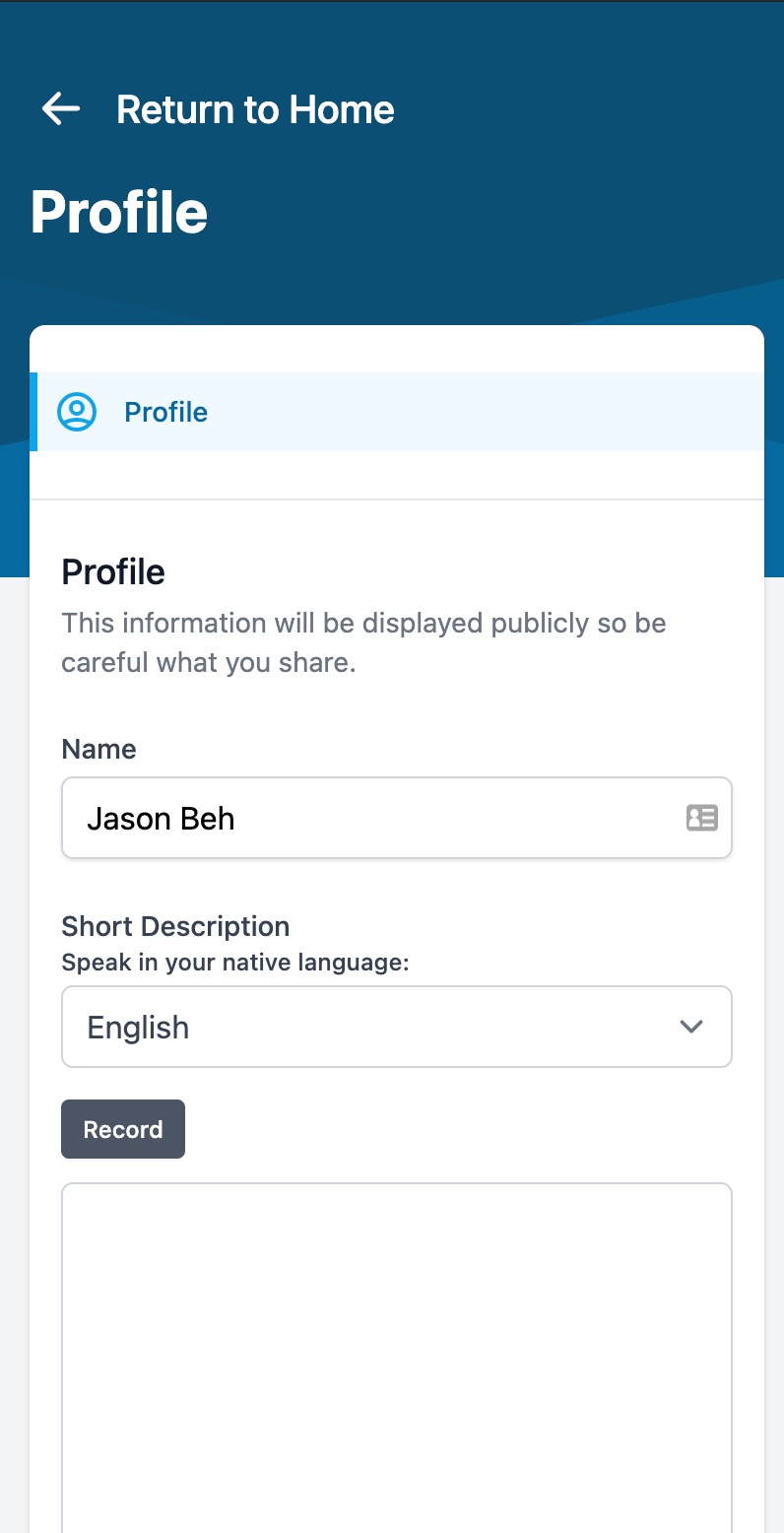
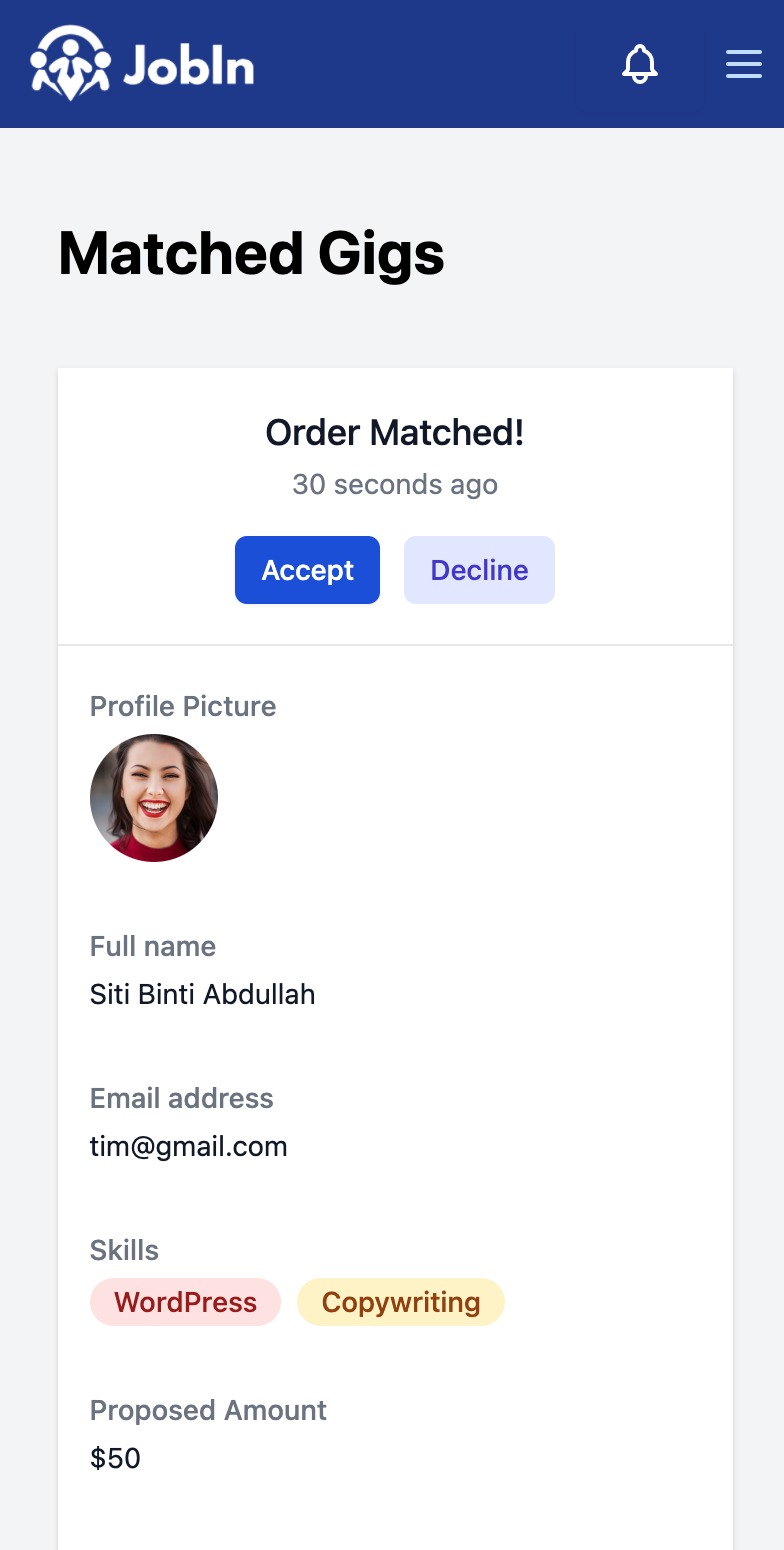
User Profile
-
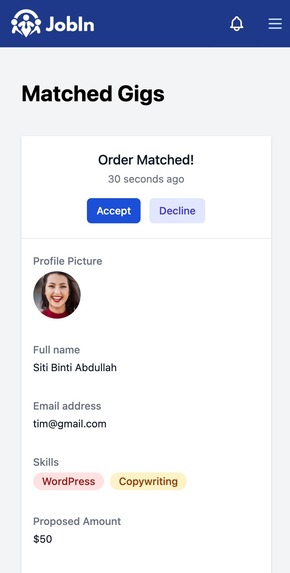
Matched Gigs
-
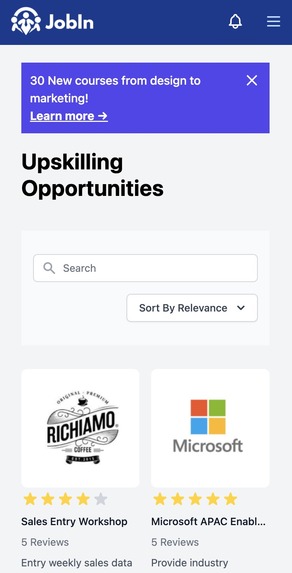
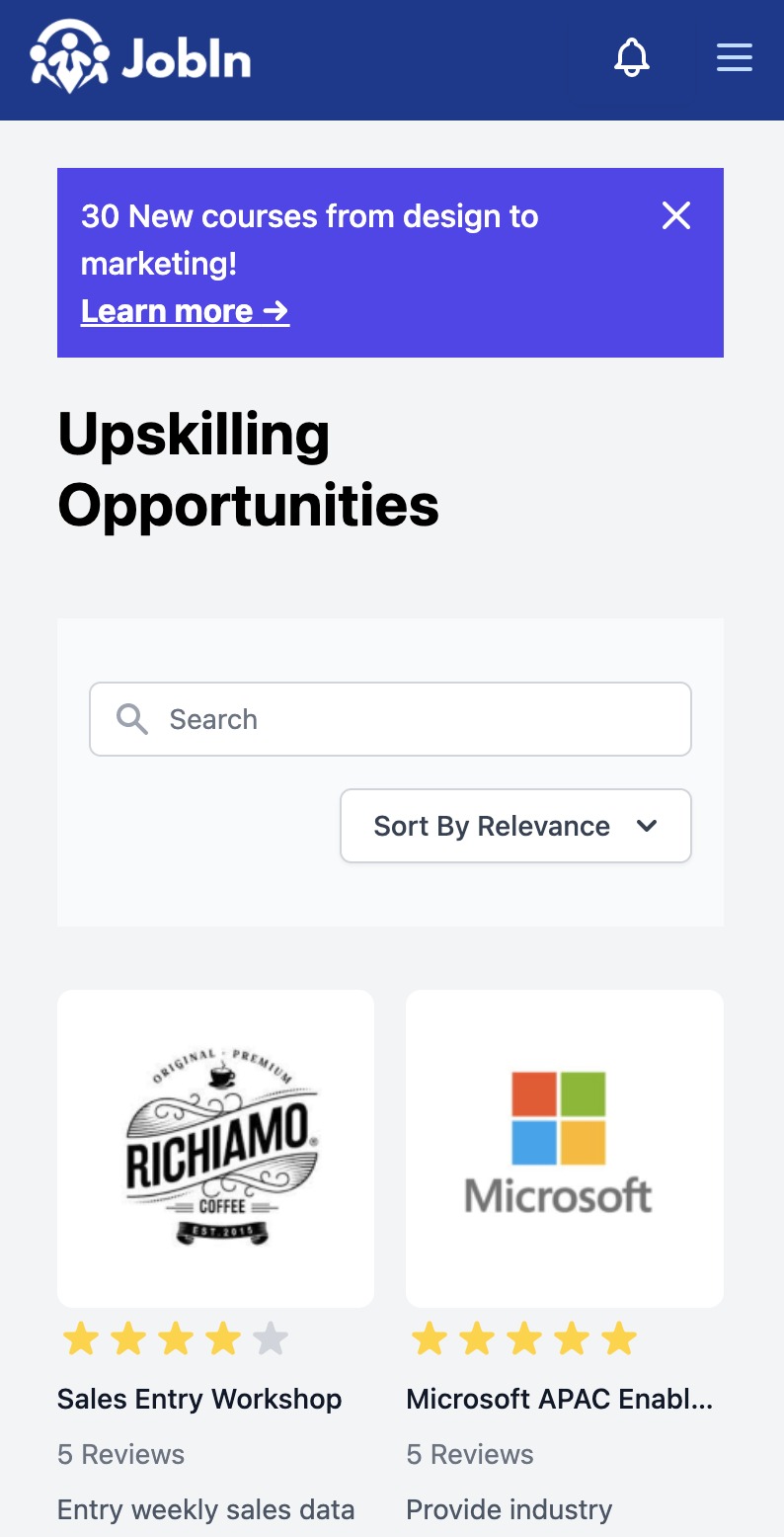
Upskilling Opportunities
-
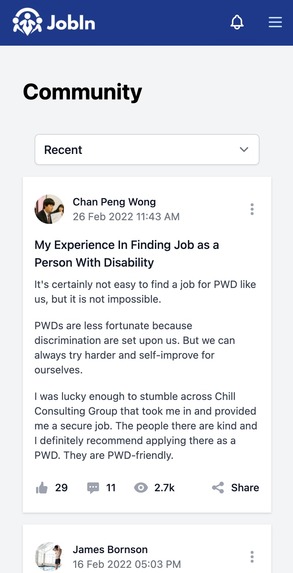
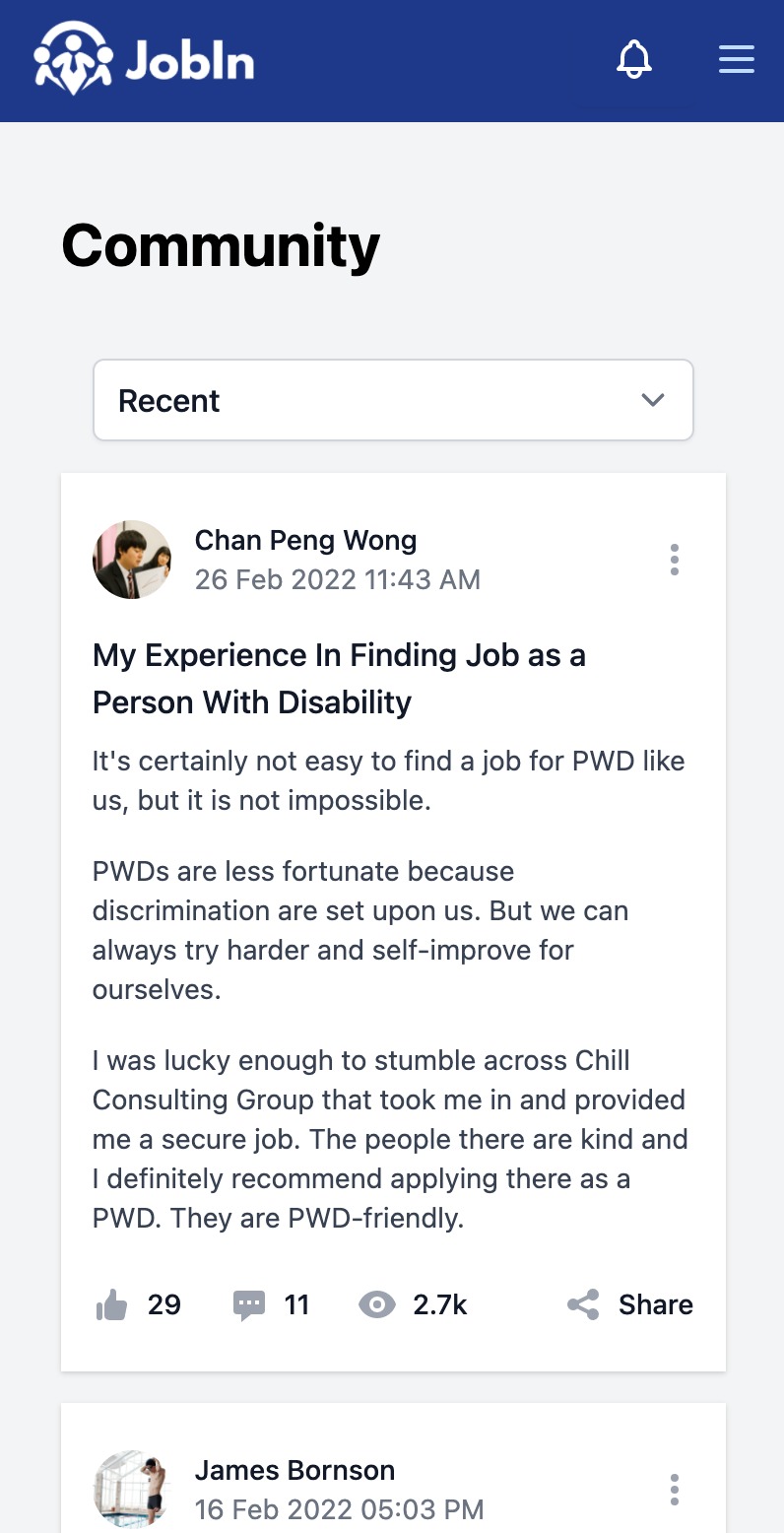
Community Building
-
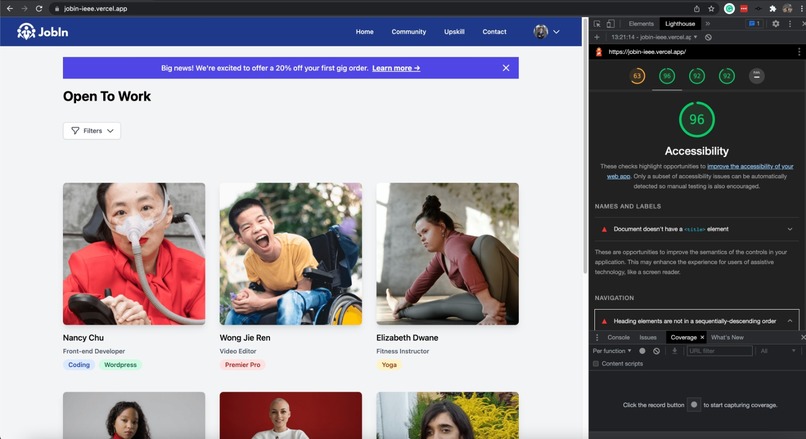
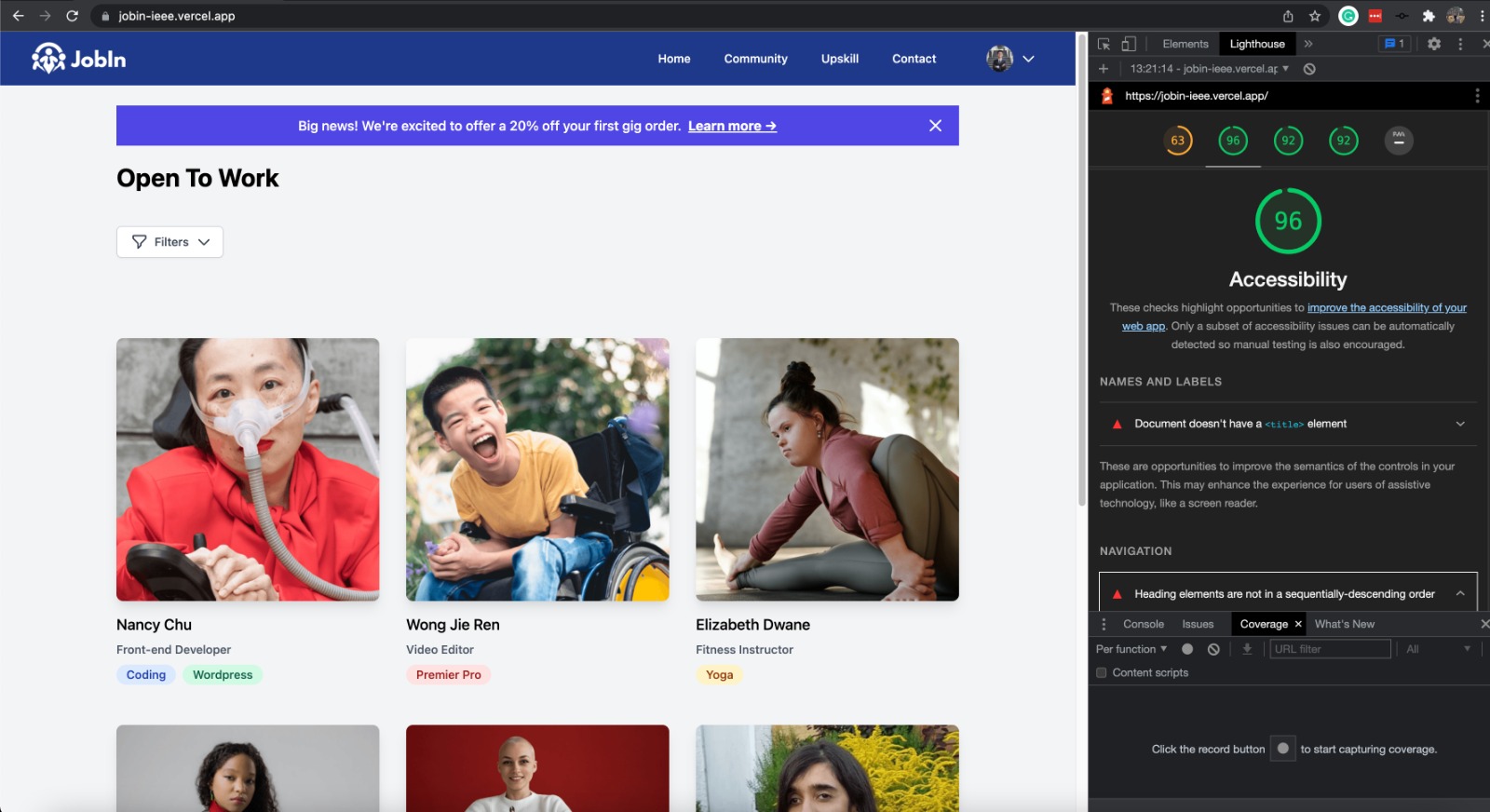
Accesibility Test with Google Light House
How we built it## Inspiration
Our idea JobIn was inspired by one of our team members, a Person With Disability (PWD) who struggled in the job-seeking world due to low accessibility and inclusivity in the workplace. He actively took out freelance jobs to sustain himself, but he realized that the current job listing platform is not focused on PWD because most employers/clients still prefer to hire normal people for various reasons. He also mentioned his pain point in finding a PWDs friendly community focused on gig work.
During the pandemic, he mentioned that he spent his time helping SMEs digitalize. This serves as a sweet spot between PWDs and not digitized SMEs as that's a gap between the SMEs looking for tech-savvy people to compete for the simple task while PWDs booking for job opportunities.
With that in mind, we were thinking, why not find a win-win solution by hiring PWDs who are digitally savvy to help "on board" many of these SMEs into the digital world? It can be as simple as getting the local kway teow or popiah seller to sign onto one of the food delivery platforms or helping a local restaurant do FB promotions and create FB posters using online software applications such as CANVA. These PWDs can then be our digital "frontliners'' to help SMEs sustain themselves.
What it does
Connecting PWDs who are digitally competent to help "onboard" many of these SMEs into the digital era. Encouraging local businesses to think beyond the conventional way of approaching business and do what is relevant in the IR4.0 times
How we built it
We built the entire front end based on a UI-rich library called React.js. With Next.js to provide a server-side rendering solution with React, Next.js also serves as our primary back end. We also utilized Vercel to deploy our code and view changes quickly in different git branches. For Jobin, we decided to use a utility-first approach for our CSS, which is by default 100% powered by TailwindCSS.
As for APIs, we leveraged Firebase, Azure Translate API, and Azure Speech-To-Text API to empower our users to have the best experience possible.
Challenges we ran into
We stumbled upon our first main challenge during the ideation phase. With less than 24 hours to innovate a solution to ease PWDs socially and economically, we lacked an understanding of the problem statement. Nonetheless, through active collaboration and research on the pain points of various PWDs, we managed to overcome this challenge as a team and narrow the scope of impact that we wish to deliver.
The second challenge was the tech implementation. Our goal is to make a PWDs-friendly solution for our target users, delivering an intuitive user experience is a must in 24 hours. Switching between various CSS libraries like Bootstrap and Material Design, we decided to opt for the utility-based TailwindCSS to increase our development speed. Another technical challenge we have faced is integrating Azure APIs into our app. Their APIs require additional reading and experimentation, which took time to develop.
Accomplishments that we're proud of
We overcame all of these challenges, and I am proud to announce that we have developed v0.1 of JobIn!
What we learned
Being in a 24 hours hackathon was a remarkable experience. It is often said that your hackathon experience is your responsibility. The team was very fortunate to be paired with like-minded people with excellent team dynamics. Throughout our journey, our main key takeaway is that innovations come from necessity. With the problem question reflecting on the current societal issue, the team thought it was necessary to hack a beneficial solution to different parties simultaneously. Furthermore, we learned that resources could be a helping hand; the workshop session gave us some ideas to explore and pushed us to work harder. As for some of us newbies, challenging ourselves to stay up the night and see the bigger picture was an element that blew us away. The beauty of hackathons is that you can never know what will happen next. The unpredictability makes it exciting, and we will keep hacking!
What's next for JobIn
In the coming days, we plan to add more features that our target users want. For instance, we want to provide language support for JobIn. This means that our users can navigate the website in their preferred language. Apart from that, we also plan to add machine learning to make a more robust matching algorithm for our PWDs.
We want to reach out to our PWDs to gain more first-hand feedback on the operations side. We also want to facilitate their onboarding process to ensure that fewer users drop out during the process.
Built With
- azure
- cloudinary
- cosmos-db
- firebase
- javascript
- next.js
- node.js
- react
- tailwindcss


Log in or sign up for Devpost to join the conversation.