Inspiration
The inspiration for Job Tracker came from the need to stay organized and efficient during the job search process. Managing multiple job applications, deadlines, and follow-ups can be overwhelming, so we created a tool to simplify and streamline this process.
What it does
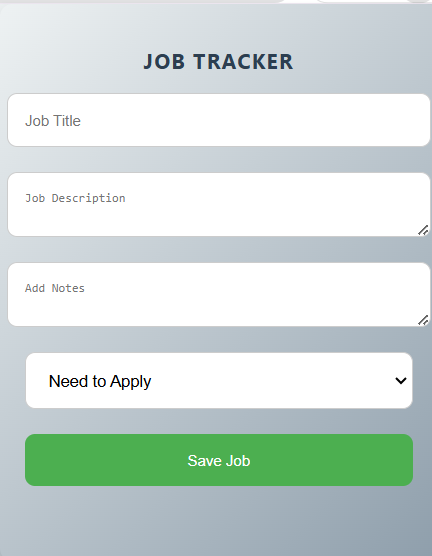
Job Tracker allows users to input job titles, descriptions, and notes while tracking the status of each application. It helps users keep track of whether they’ve applied, need a referral, or have an interview scheduled, ensuring no opportunity is overlooked.
How we built it
We built Job Tracker using HTML, CSS, and JavaScript. The app stores job data in the browser's local storage, allowing users to save, view, and remove job details. It uses a simple yet effective UI to ensure ease of use and responsiveness.
Challenges we ran into
One of the main challenges was implementing data persistence, ensuring that the job information is saved even after the browser is closed. We also faced difficulties styling the app to be fully responsive across all devices.
Accomplishments that we're proud of
We’re proud of creating a functional and intuitive interface for tracking job applications. The seamless integration of local storage to save user data and the ability to add, view, and remove jobs without reloading the page were key accomplishments.
What we learned
Through this project, we learned more about working with browser storage, improving our JavaScript skills, and making applications responsive. We also gained valuable experience in user-centered design, ensuring our app meets user needs.
What's next for Job Tracker
Moving forward, we plan to integrate AI features to assist users in optimizing their job search. This could include AI-powered job recommendations, automated application tracking, and smart reminders to ensure no opportunity is missed.

Log in or sign up for Devpost to join the conversation.