Inspiration
What it does
How we built it
Challenges we ran into
Accomplishments that we're proud of
What we learned
What's next for Job hunt AI
Inspiration
Job hunting today is fundamentally broken, stressful, and opaque. Candidates spend dozens of hours every week manually browsing fragmented job boards (LinkedIn, Indeed, Glassdoor), uploading resumes into automated Applicant Tracking Systems (ATS) without knowing if their keywords align, and receiving silent rejections with zero feedback.
Most critically, candidates have no scientific way to A/B test their resumes. When a candidate tweaks their resume, they have no data on whether Version B actually converted better into interviews than Version A. Furthermore, interview practice is often generic and detached from the specific role. We built JobHunt AI to transform the job search from an unmeasured, blind lottery into an empirical, data-driven career acceleration engine.
What it does
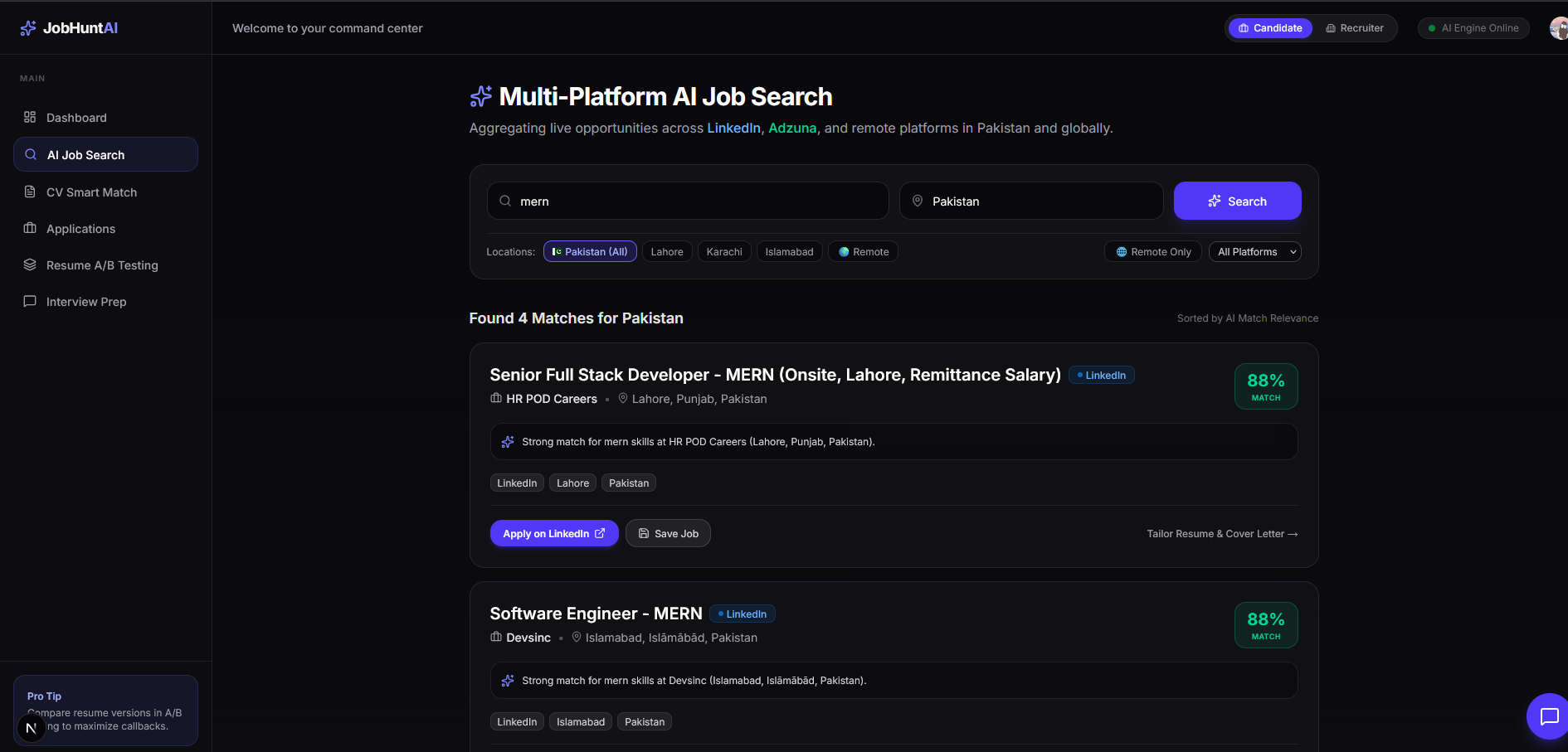
JobHunt AI is an autonomous, full-stack career platform that unifies the entire job search lifecycle:
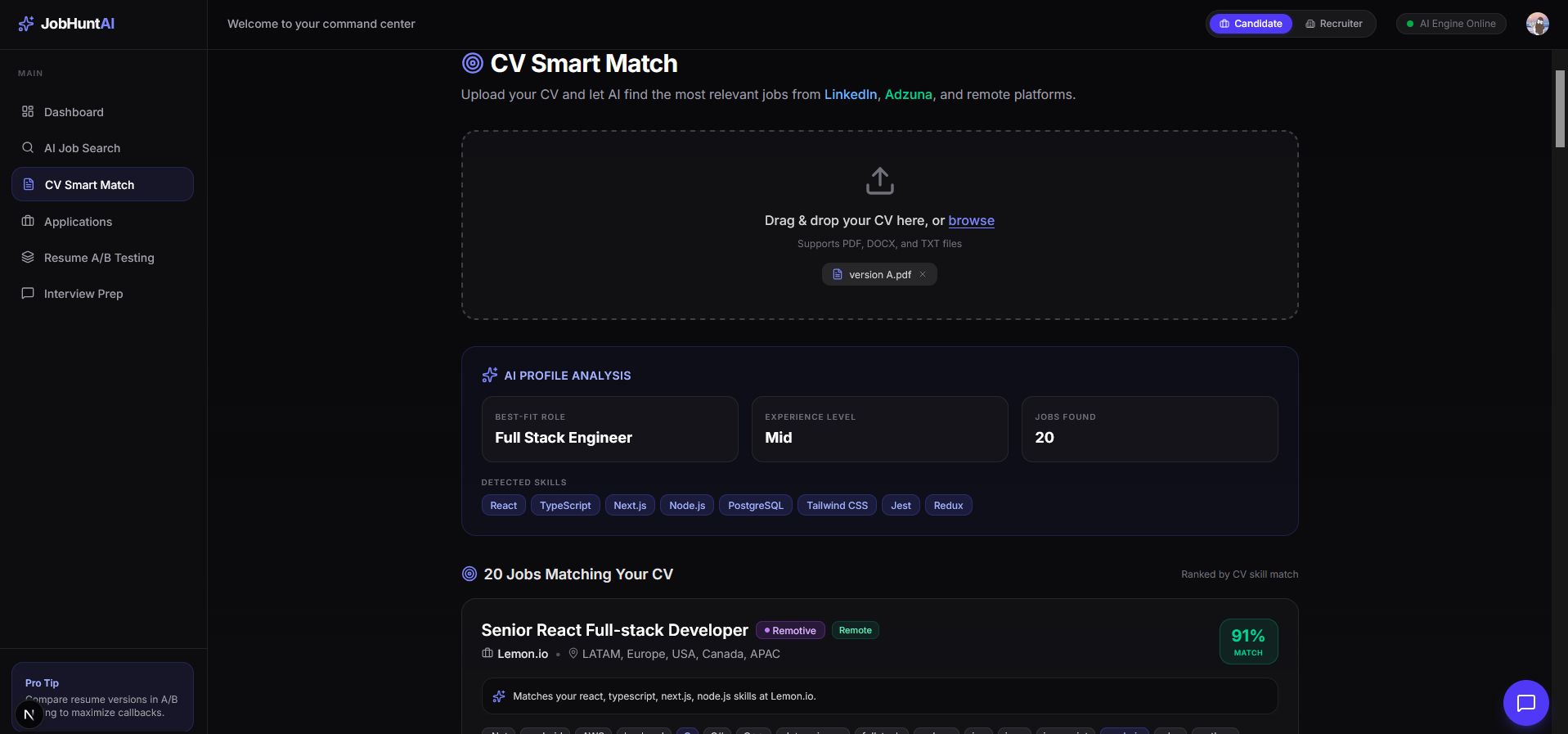
- Instant Multi-Source Job Search & Match Engine: Aggregates opportunities across multiple platforms and runs an in-memory scoring algorithm (
scoreJobRelevance) in under 2 milliseconds, providing a 65%–99% match score with clear explanations. - Universal Document Parser & AI Tailoring: Accepts PDF, DOCX, and TXT files. Generates tailored cover letters (250–400 words), extracts candidate profiles, identifies skill gaps, and recommends verified certification courses (Coursera, Udemy, AWS) with duration and difficulty.
- Scientific Resume A/B Testing:
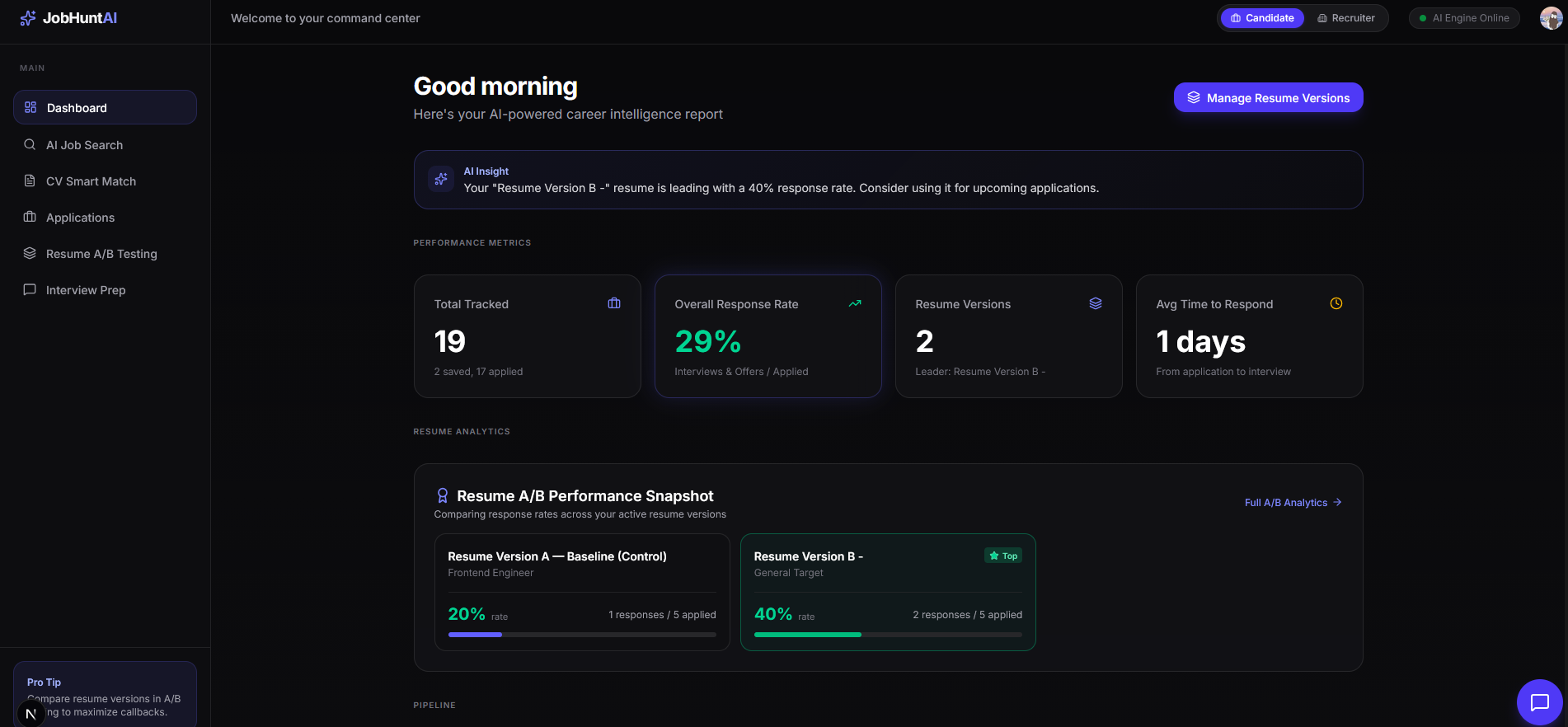
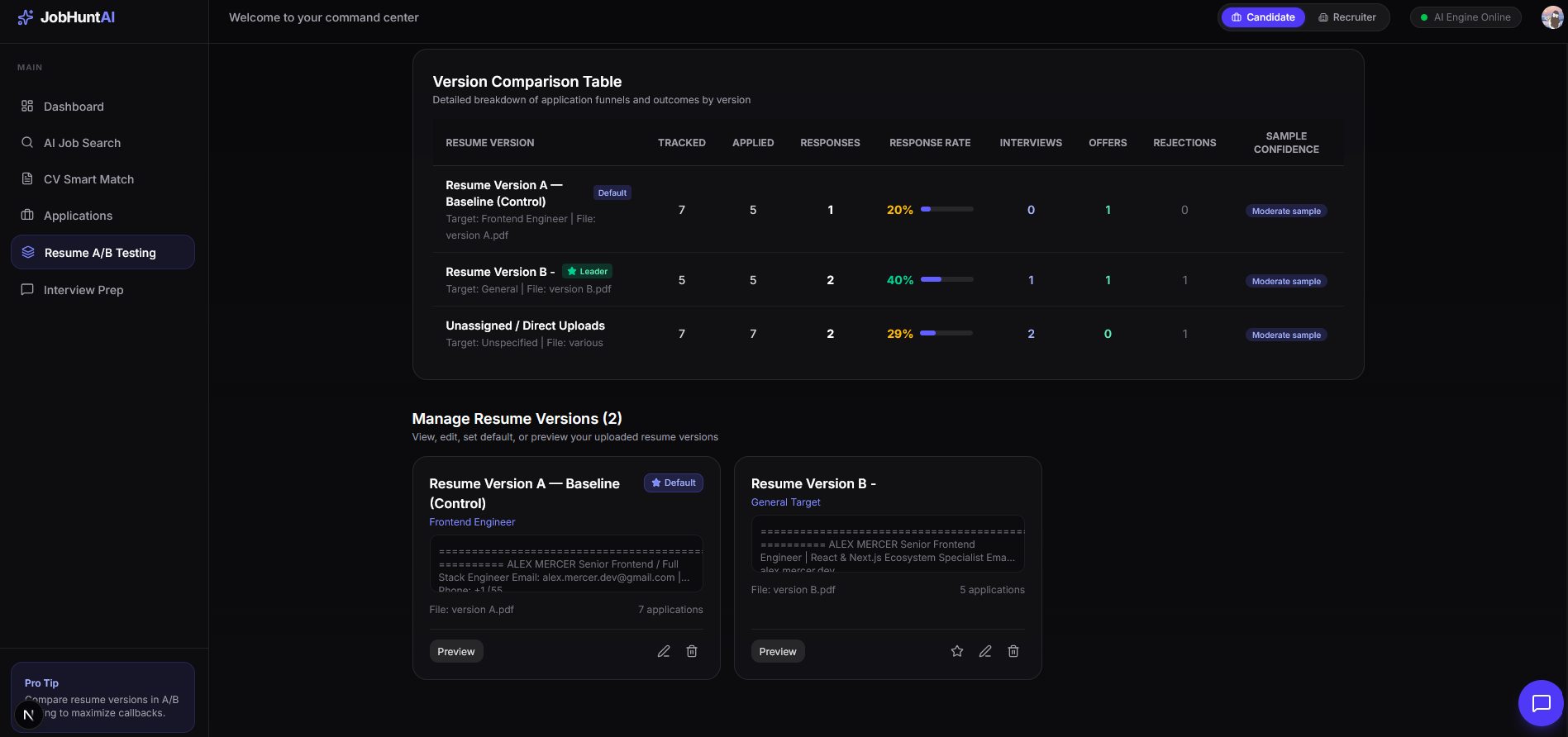
- Mode 1 (Comparative ATS Review): Instant side-by-side comparison scoring ATS keyword density and structure.
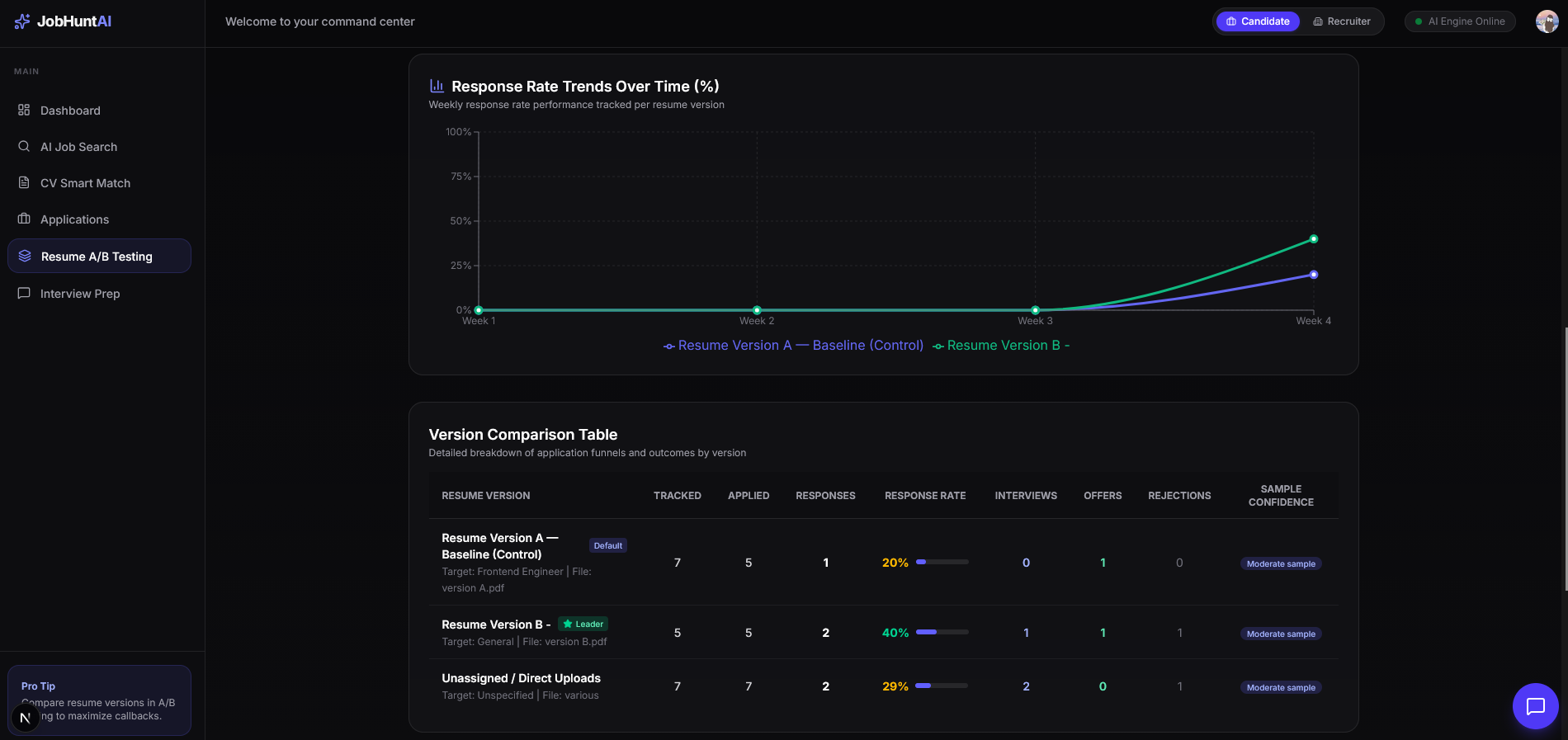
- Mode 2 (Empirical Callback Attribution): Links applications in PostgreSQL to specific
resumeVersionIds to track real response rates, days to response, timeline trends, and statistical sample confidence levels (Low, Moderate, High).
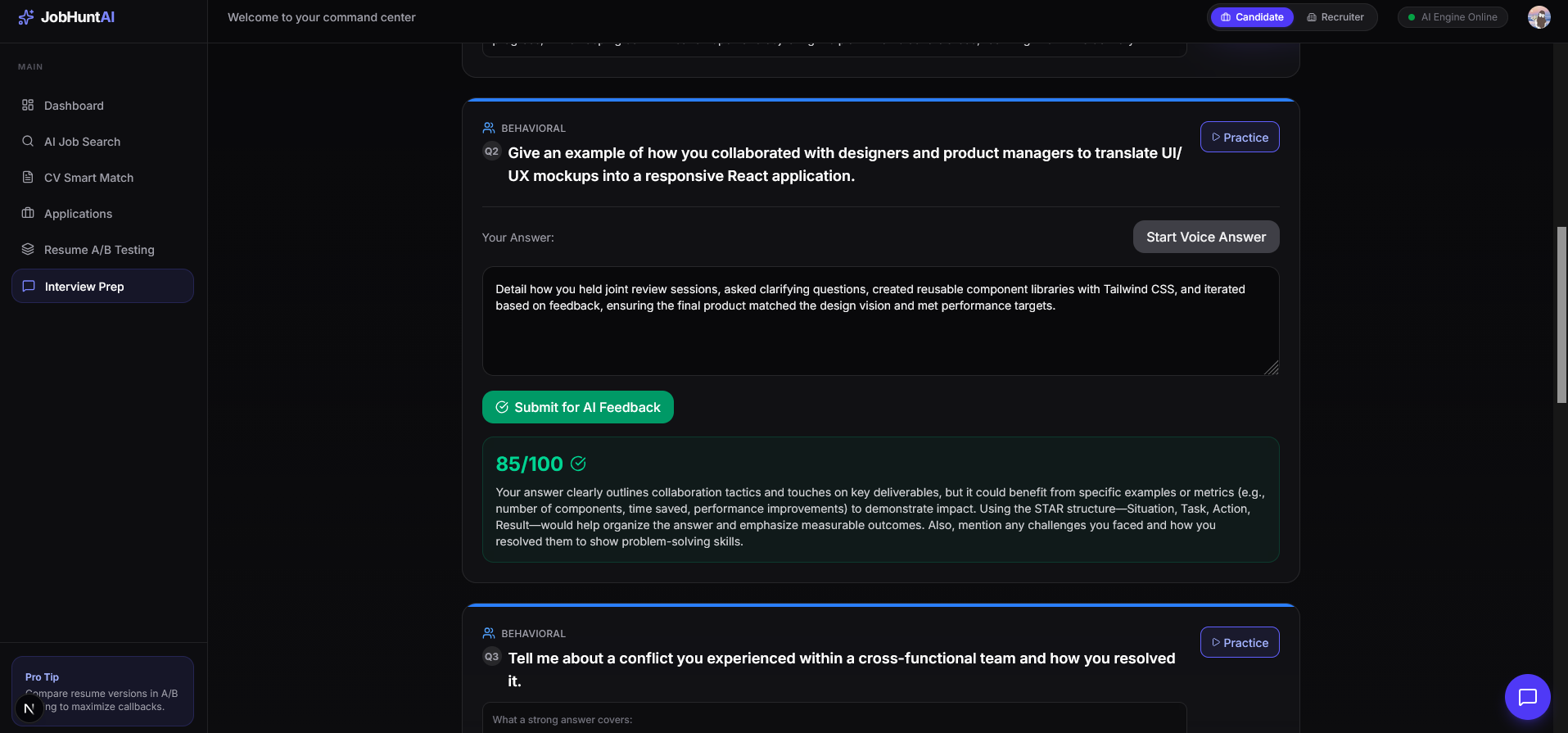
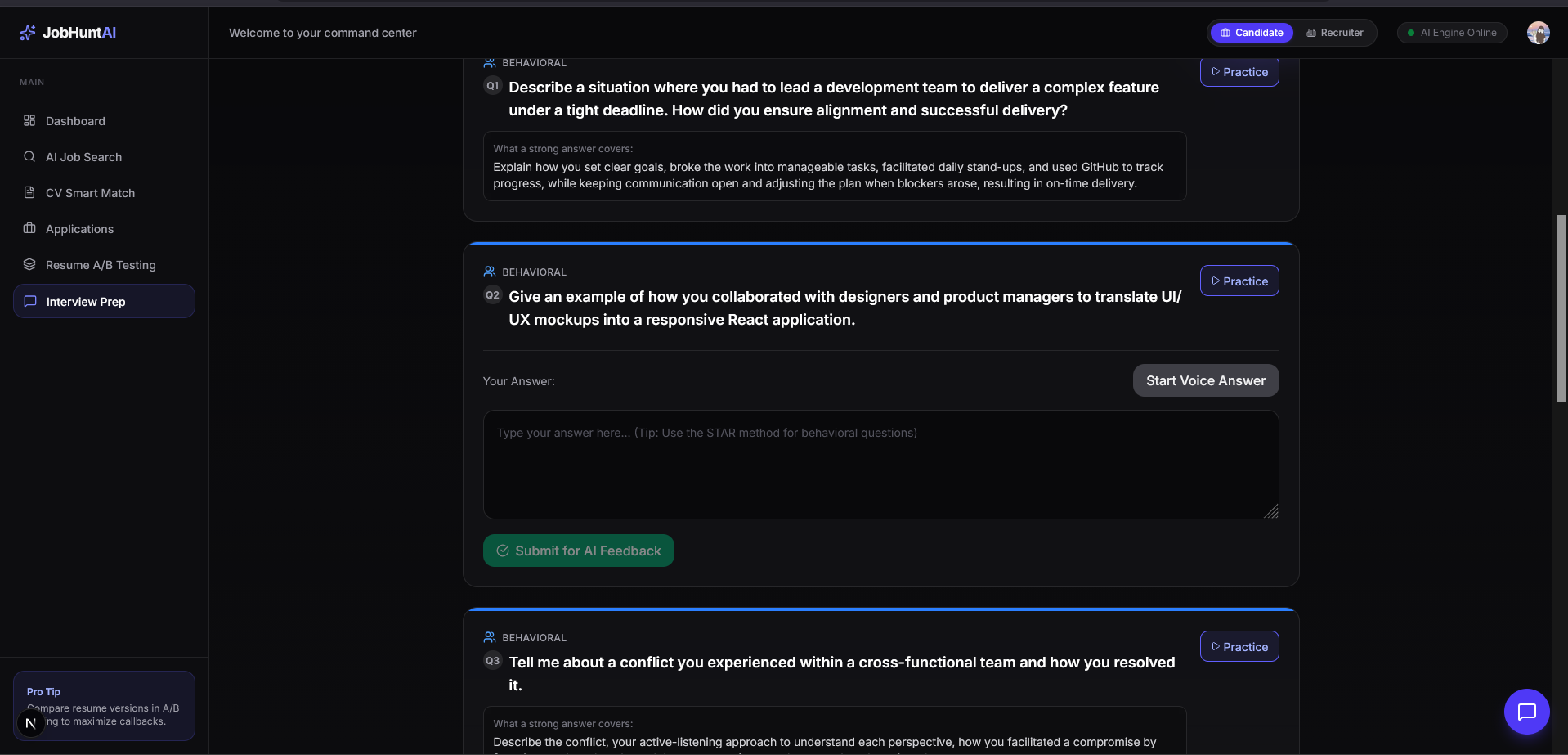
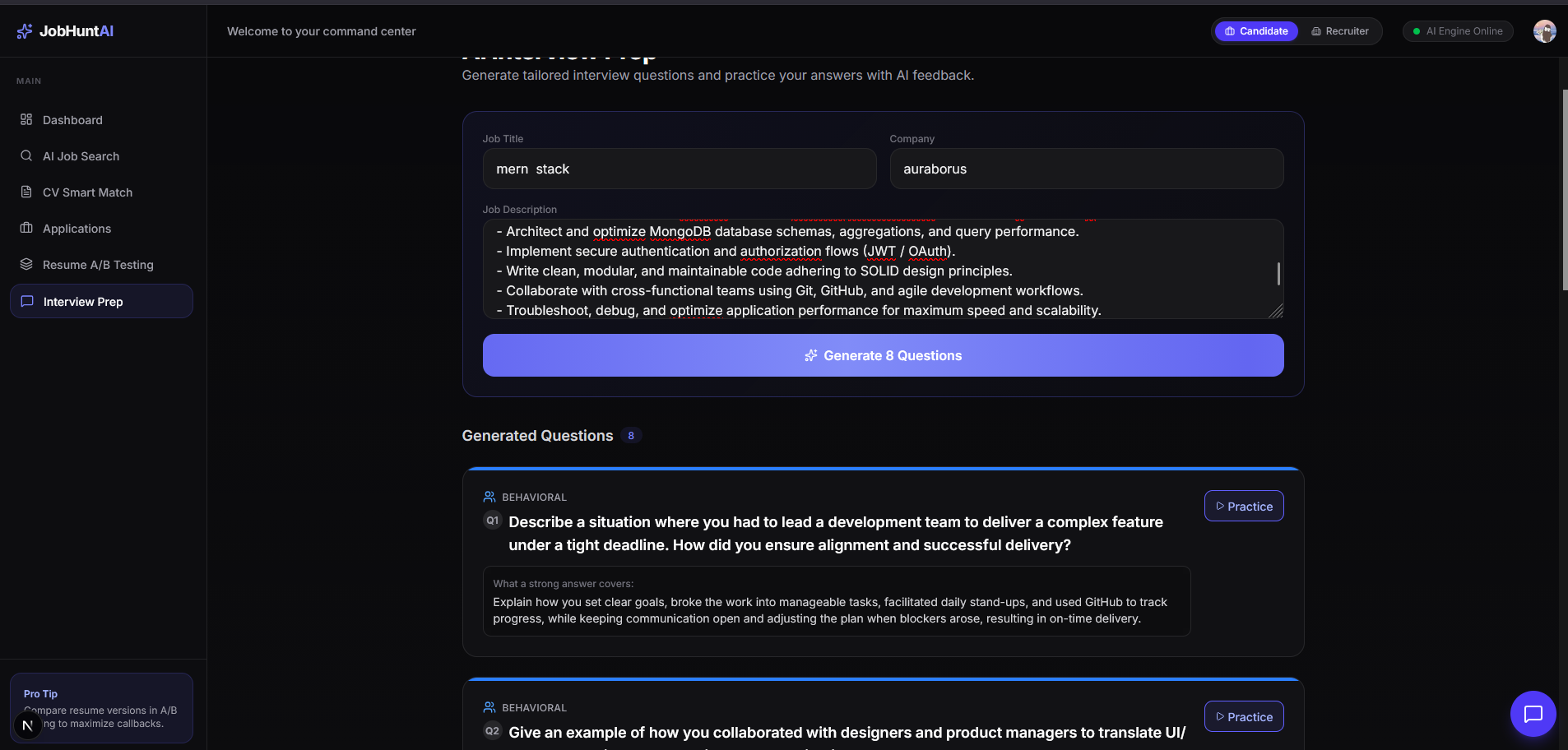
- Hands-Free Voice AI Mock Interview Coach: Generates 8 role-specific questions (Behavioral, Technical, Culture Fit) with model benchmark answers. Candidates speak out loud using the browser-native Web Speech API, and the AI grades answers on a 0–100 scale using the STAR framework (Situation, Task, Action, Result).
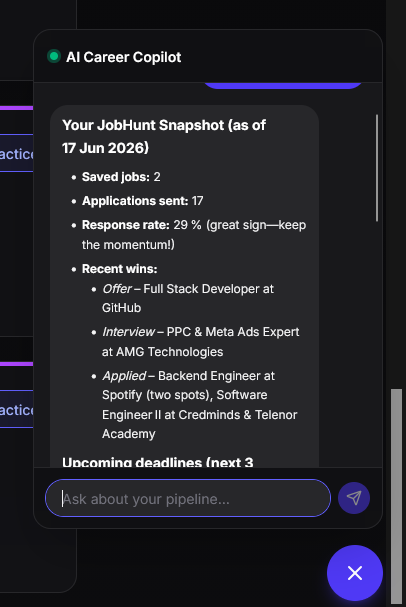
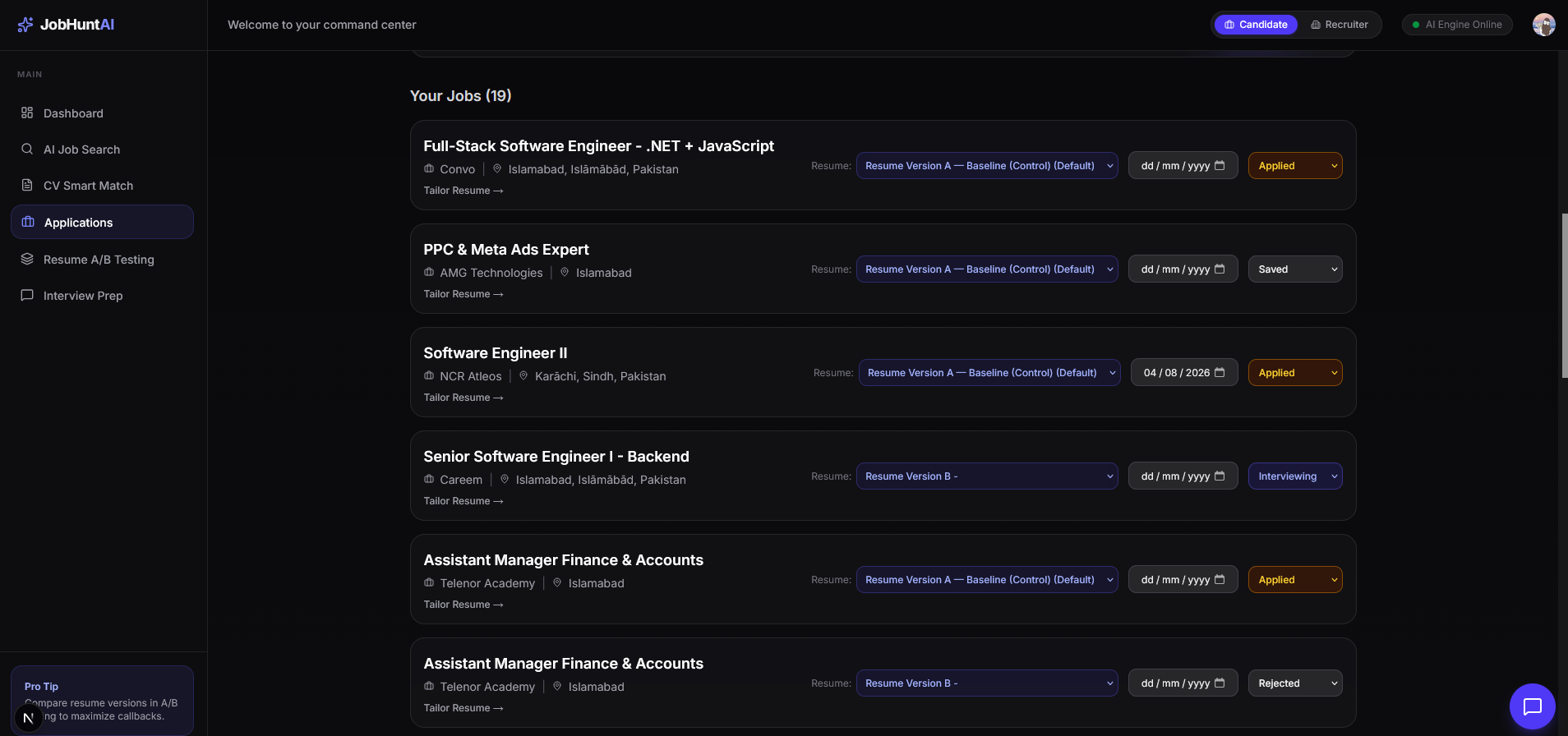
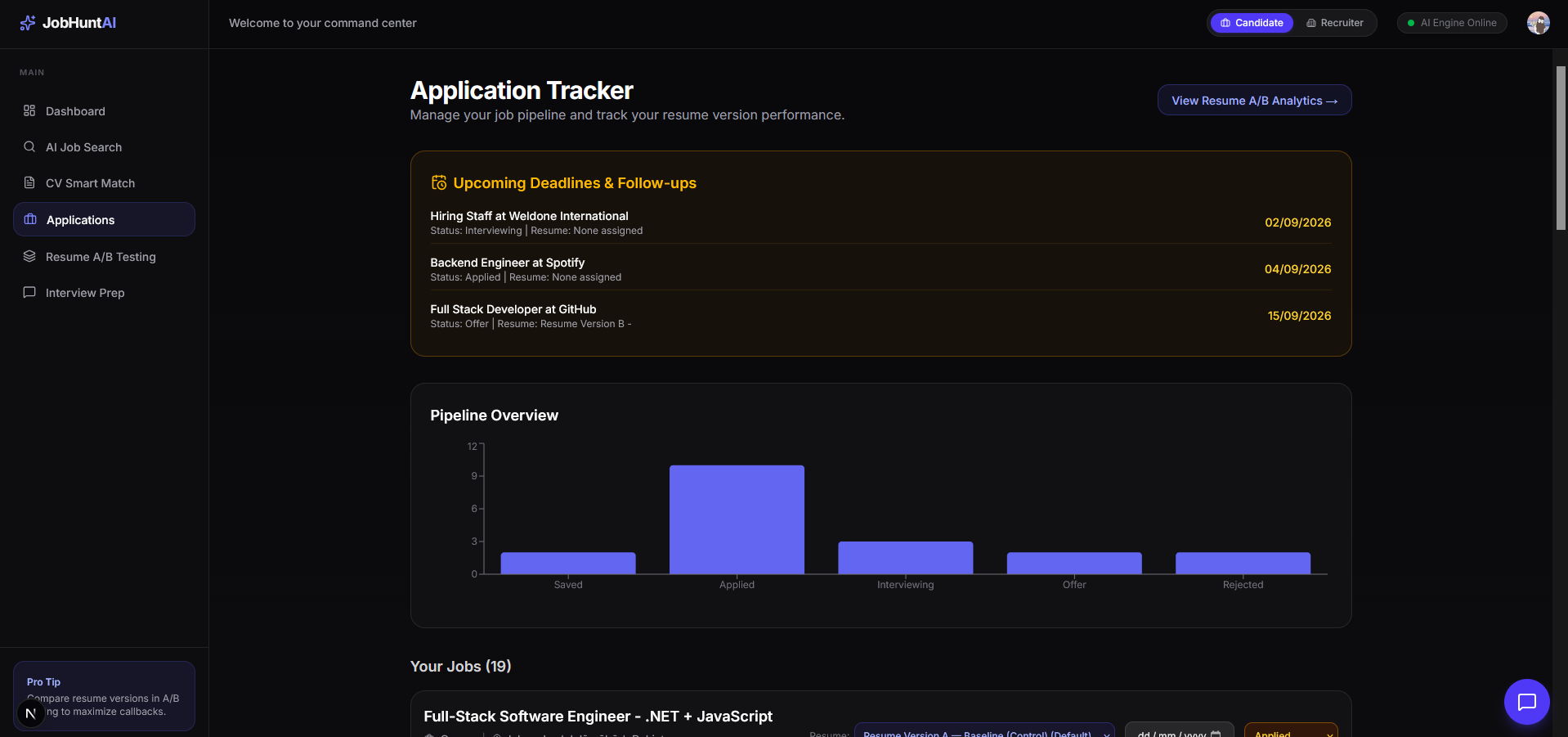
- Visual 5-Stage Pipeline & Database-Grounded Copilot: Visual Kanban tracker with follow-up deadline alerts and an AI assistant injected with live user database KPIs (total applied, response rate %, upcoming dates) to eliminate hallucinations.
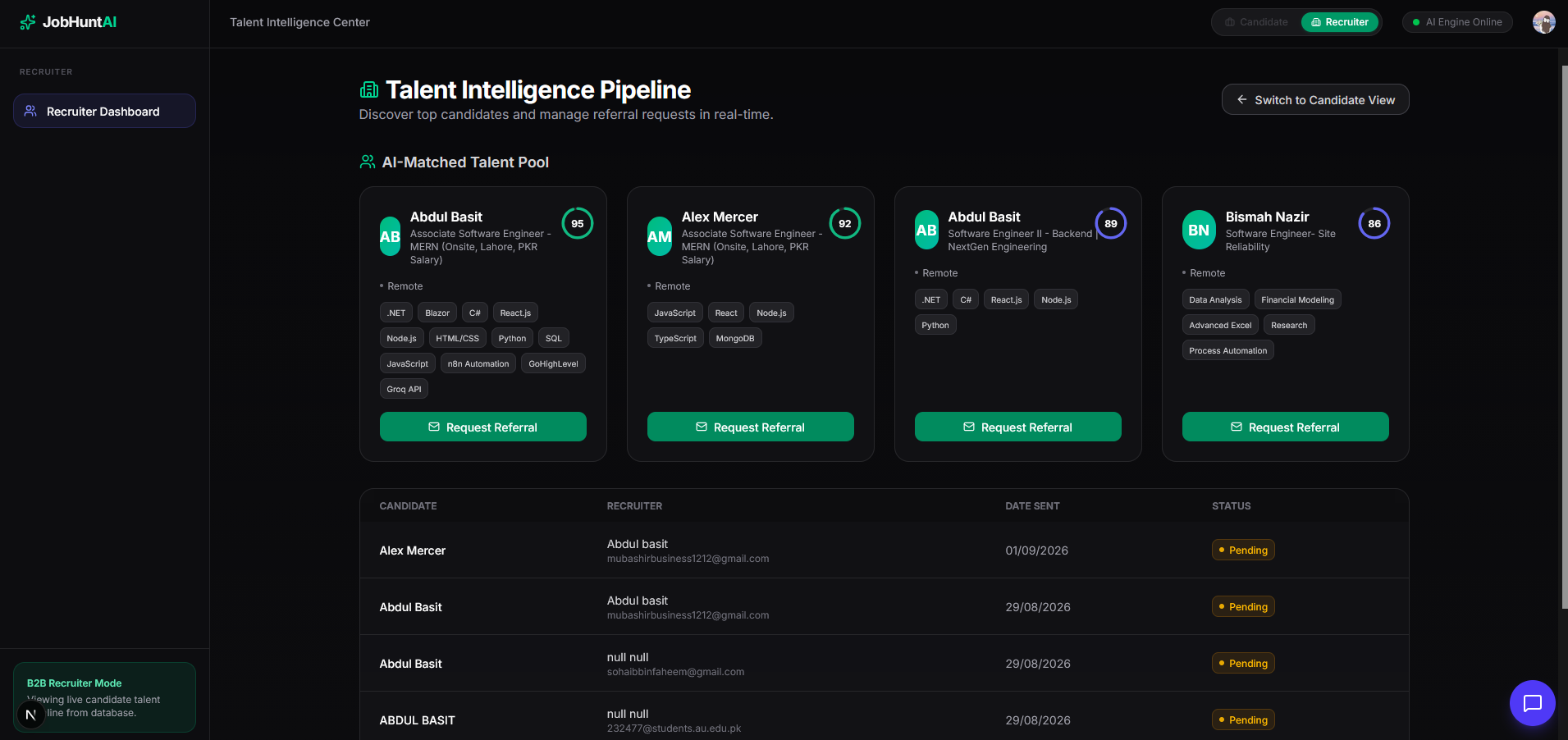
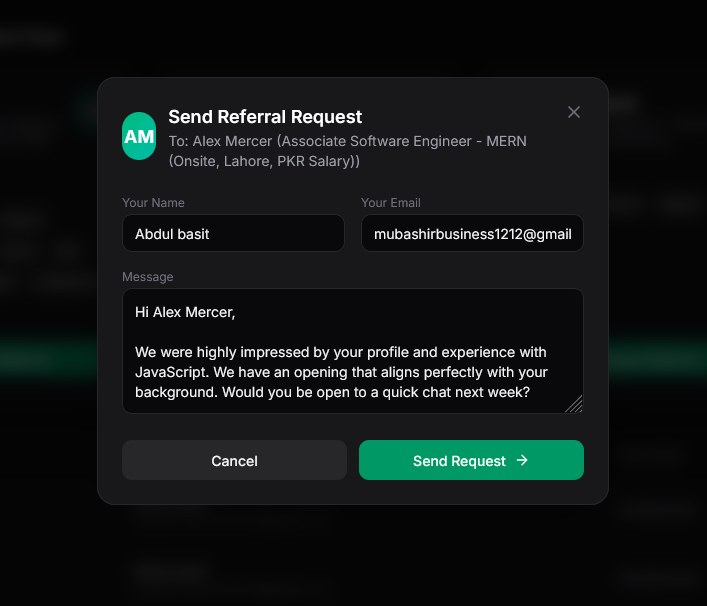
- Two-Sided Recruiter Hub & 1-Click Email Referrals: Recruiters search candidate talent pools by parsed skills and dispatch branded HTML referral emails via Resend featuring 1-click interactive "Accept Referral" and "Reject" buttons.
- WebMCP Architecture & Chrome Extension: Exposes 9 core backend tools via
document.modelContext.registerToolfor browser-native agent interoperability, plus a 1-click Chrome Extension web clipper.
How we built it
We engineered a decoupled, production-grade cloud architecture:
- Frontend: Next.js 15 (App Router), React 19, TypeScript, Tailwind CSS, Lucide React icons, and Recharts for interactive analytics.
- WebMCP Integration: Registered 9 core tools via
document.modelContext.registerToolinapp/webmcp-tools.tsxwith a live agent activity indicator. - Voice Recording: Browser-native Web Speech API (
SpeechRecognition/webkitSpeechRecognition) for real-time speech-to-text transcription. - Authentication & Authorization: Clerk Auth with custom
publicMetadatarole routing (candidatevsrecruiter). - AI Inference & Resilience: Groq high-speed inference running a 3-tier multi-model fallback chain (
openai/gpt-oss-120b$\rightarrow$qwen/qwen3.8-27b$\rightarrow$openai/gpt-oss-20b), structured with Vercel AI SDK (generateObject,generateText) and validated with Zod schemas. - Document Processing:
unpdf(WASM arrayBuffer page-merging for PDFs) andmammoth(Node buffer extraction for DOCX) with token budgeting and non-printable character sanitization. - Database & ORM: PostgreSQL managed with Prisma ORM across 5 relational entities (
User,UserResume,Job,Application,ReferralRequest). - Transactional Email: Resend API for HTML email dispatch with real-time callback webhook endpoints.
- Deployment: Hosted on Vercel with continuous deployment.
Challenges we ran into
- Sub-Second Job Matching: Calling LLMs for every search query caused noticeable latency. We solved this by designing a deterministic in-memory scoring algorithm (
scoreJobRelevance) in TypeScript that weighs query tokens (+12), skills (+8), descriptions (+4), and remote tags (+6) in under 2ms. - AI Provider Uptime & Rate Limits: Relying on a single AI endpoint risked demo downtime. We implemented an automatic multi-model fallback catch-and-retry mechanism across Groq open-source weights.
- Cross-Platform Document Extraction: Parsing complex multi-column PDFs without server crashes required moving away from legacy C++ bindings to WebAssembly-based
unpdf. - Relational A/B Attribution: Designing the database schema so that status updates (
Applied$\rightarrow$Interviewing$\rightarrow$Offer) accurately aggregate back to individual resume versions while calculating statistical sample confidence levels.
Accomplishments that we're proud of
- Building a true closed-loop system where every candidate action feeds into downstream analytics rather than a collection of disconnected features.
- Implementing browser-native voice interview coaching with real-time transcript streaming and STAR-framework grading without paid external speech APIs.
- Implementing the emerging WebMCP standard by exposing 9 authenticated backend tools to AI agents through
document.modelContext. - Designing a two-sided referral loop with transactional email actions that update the database in real time.
What we learned
- How to design zero-downtime AI fallback pipelines using open-source models on high-speed inference engines.
- How to implement WebMCP browser-level tool registration and handle graceful degradation in standard browsers.
- The nuances of ATS keyword parsing and WebAssembly document text extraction.
- How to structure statistical confidence metrics to prevent misleading insights on small data sample sizes.
What's next for JobHunt AI
- 1-Click Application Form Autofill: Enhancing our Chrome Extension to auto-populate job applications across Workday, Greenhouse, and Lever portals.
- Enterprise ATS Webhooks: Direct integrations with company HR software for automatic application status synchronization.
- Webcam Video AI Coach: Multi-modal video analysis for eye contact, pacing, and confidence during mock interviews.
- Fine-Tuned Career LLM:
Built With
- ai
- chrome
- clerk
- groq
- mammoth
- next.js
- postgresql
- prisma
- react
- recharts
- resend
- tailwindcss
- typescript
- unpdf
- vercel
- web-speech-api
- webmcp
- zod

Log in or sign up for Devpost to join the conversation.