-
-
Logo
-
Product
Inspiration Job hunting can be a stressful and unpredictable process, especially when it comes to interviews. Many talented candidates struggle to articulate their experiences or answer complex questions under pressure. The idea for JobBridge was born from the need to provide real-time, intelligent assistance that empowers job seekers to perform at their best. By leveraging AI, we aimed to create a tool that not only boosts confidence but also levels the playing field, giving candidates the support they need to land their dream jobs.
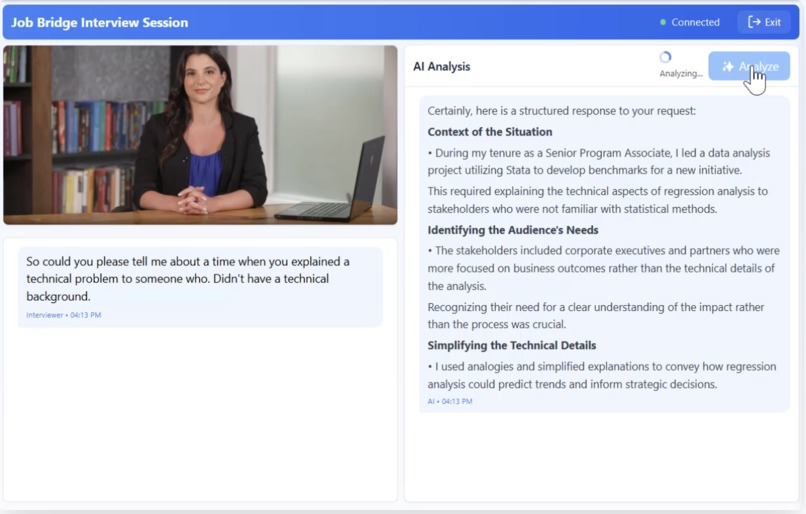
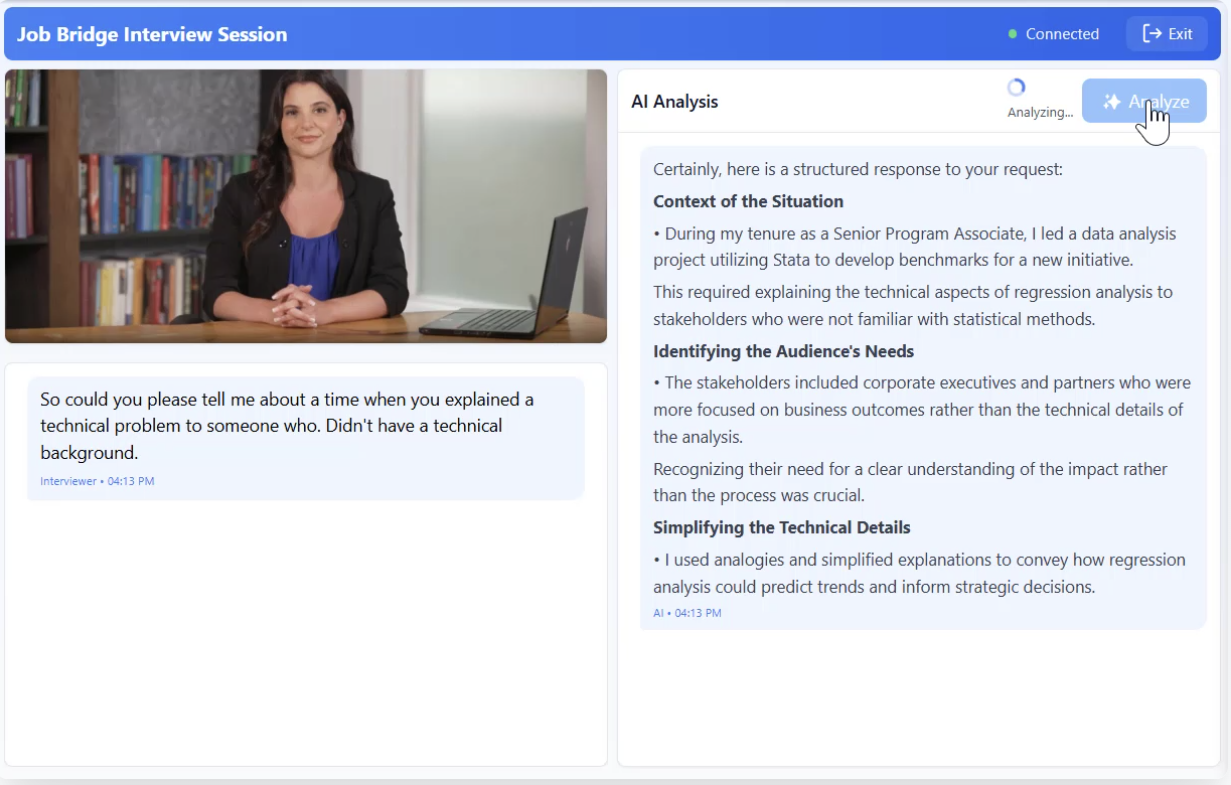
What it does JobBridge is an AI-powered interview assistant that provides real-time, contextual responses during job interviews. It listens to conversations, understands the context, and generates intelligent answers based on the candidate’s resume, job role, and industry. The tool operates undetectably, seamlessly integrating with video conferencing platforms like Zoom, Microsoft Teams, and Google Meet. With support for 30+ languages and advanced response suggestions, JobBridge ensures users can confidently navigate technical, behavioral, and industry-specific interview questions.
How I built it JobBridge was developed using advanced natural language processing (NLP) and machine learning models to analyze speech patterns and generate relevant responses. The backend is powered by AI-driven algorithms trained on vast datasets of interview questions and professional communication styles. The tool was designed to be lightweight and run in the background without disrupting the user’s interview process. We also integrated compatibility with major video conferencing software, ensuring seamless user experience across platforms.
Challenges I ran into One of the biggest challenges was making the AI both fast and contextually accurate. Generating real-time responses without lag required optimizing processing speeds and refining our NLP models. Another challenge was ensuring the tool remains undetectable, meaning it had to operate silently without interfering with the video or audio of an interview. Additionally, training the AI to adapt to various industries and job roles required extensive data collection and fine-tuning to maintain accuracy across different professions.
Accomplishments that I'm proud of I’m incredibly proud of building a tool that genuinely helps job seekers gain confidence and succeed in their interviews. Seeing users land roles at top companies and hearing their success stories has been incredibly rewarding. Another major accomplishment was achieving seamless integration with multiple video conferencing platforms, allowing users to access JobBridge no matter what software their interviewer prefers. The AI’s ability to generate personalized, industry-specific responses in real-time is also a significant milestone.
What I learned Throughout this journey, I learned the importance of balancing AI efficiency with user experience. Developing an undetectable, real-time AI assistant required deep problem-solving and continuous refinement. I also gained insights into the hiring process across different industries, helping me understand the varying challenges candidates face. Additionally, working on this project reinforced the value of user feedback in fine-tuning AI models and improving the overall functionality of the tool.
What's next for Job Bridge The next step for JobBridge is expanding its capabilities to provide even more personalized coaching and insights. We plan to integrate AI-driven feedback after interviews, helping users improve their responses for future opportunities. Expanding support for more niche industries and enhancing the AI’s ability to simulate mock interviews are also on the roadmap. Ultimately, the goal is to make JobBridge the go-to platform for interview preparation, ensuring every candidate has the tools they need to succeed.
Built With
- flask
- javascript
- python
- tailwind
- vanilla

Log in or sign up for Devpost to join the conversation.