-
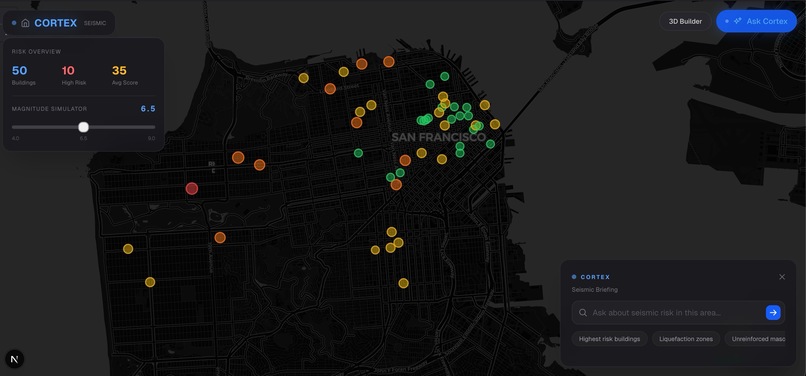
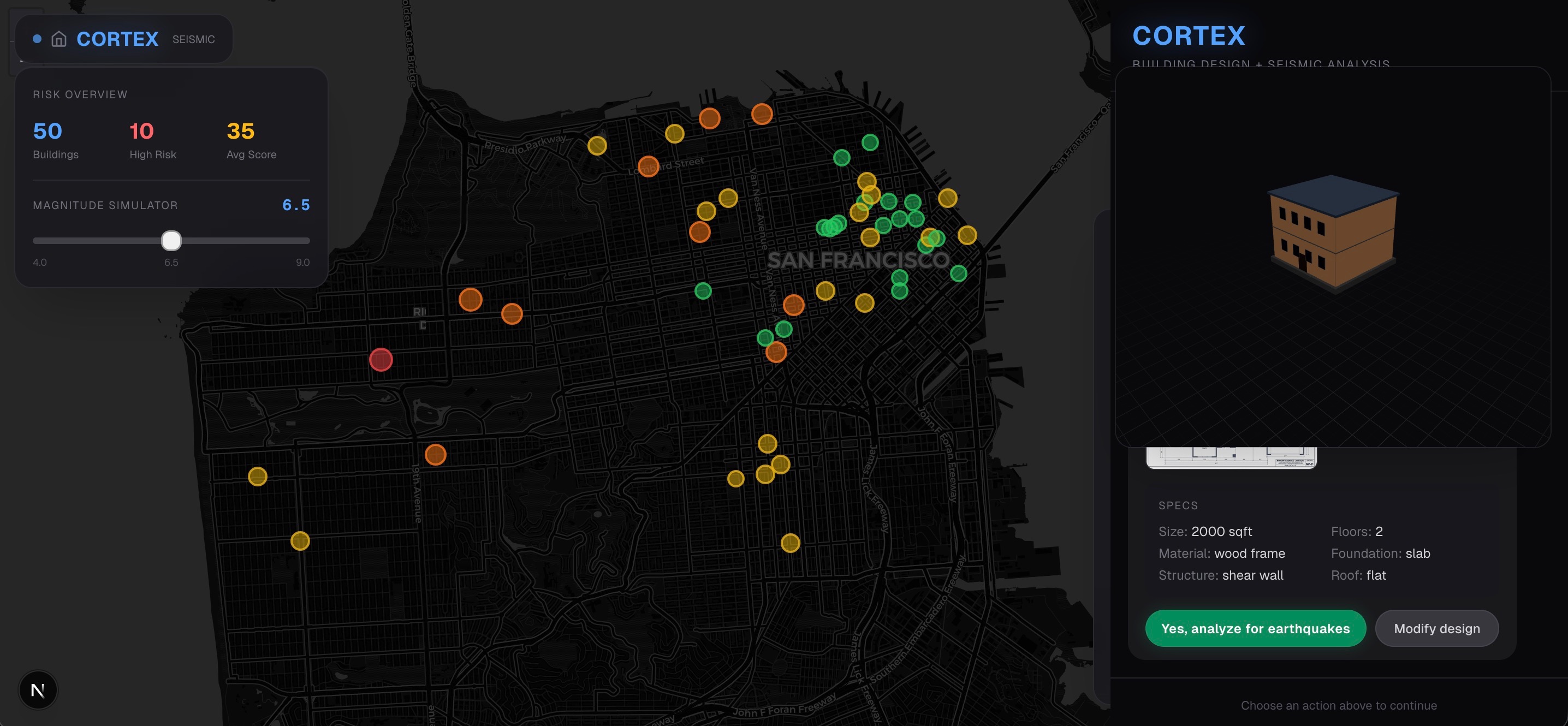
Map picture
-

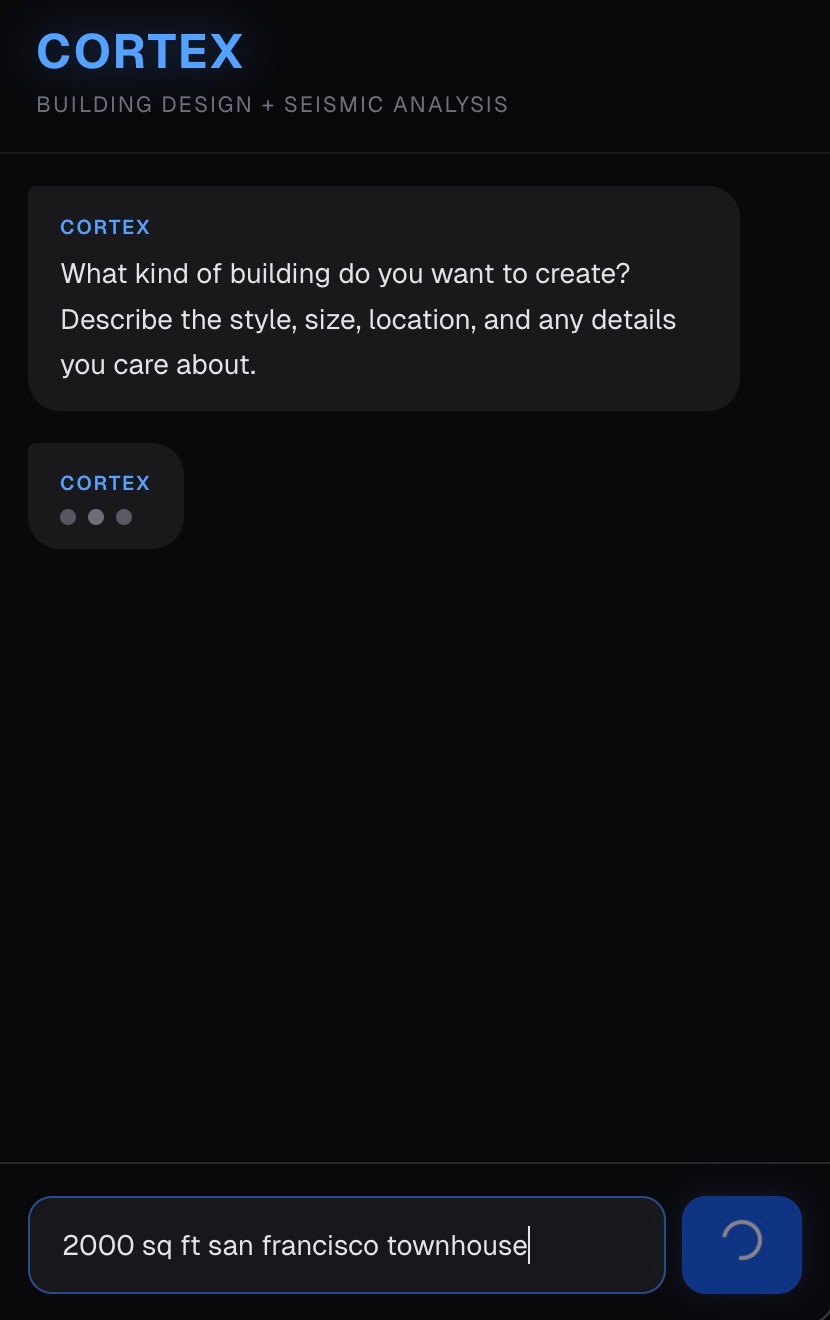
Our AI talking to the user
-
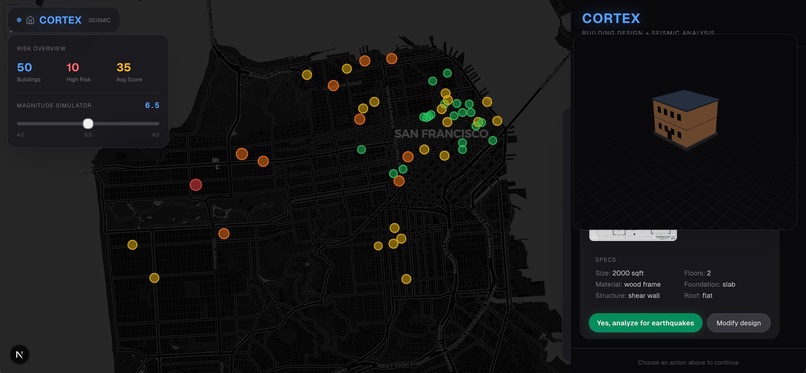
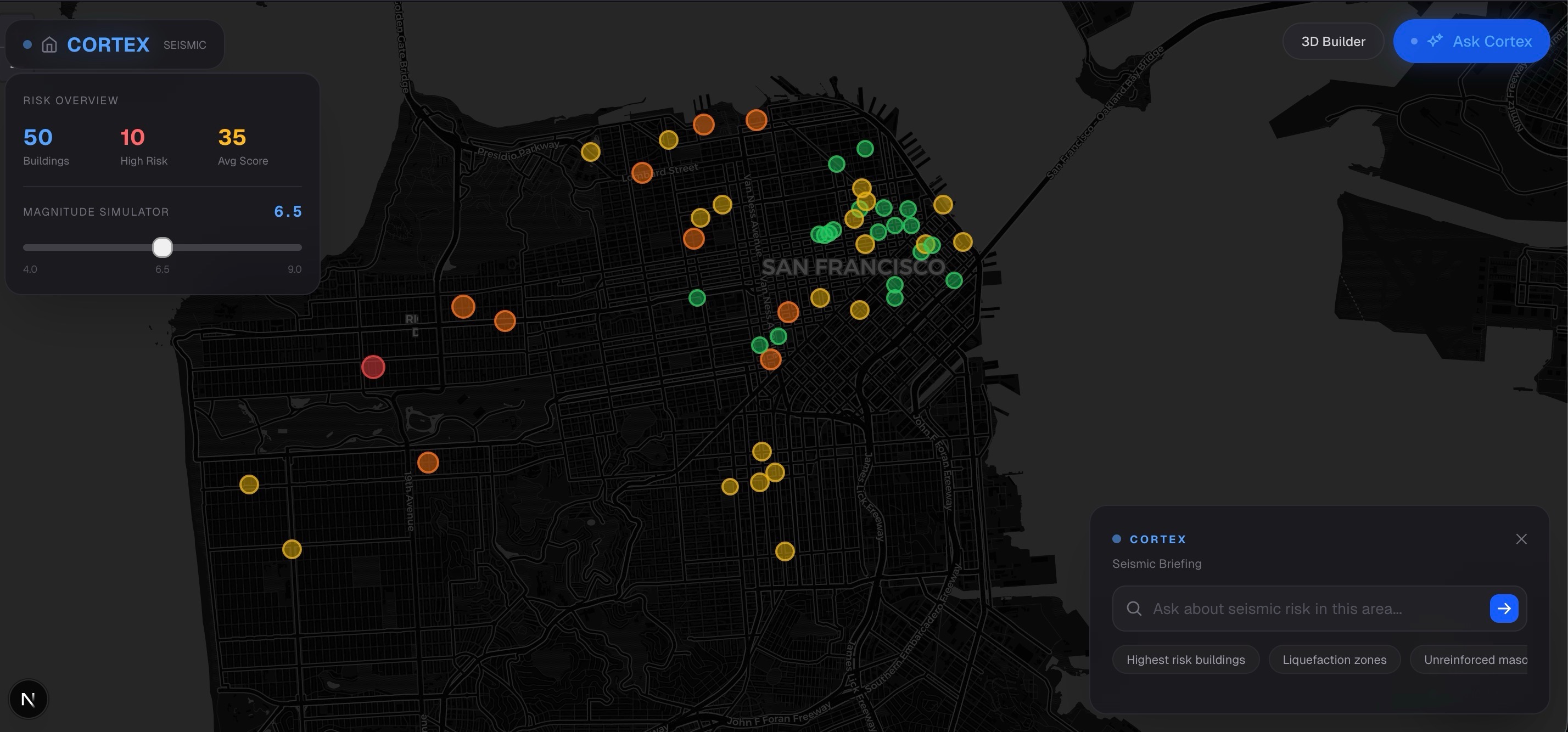
Map with AI Answer
Inspiration
Working alongside Professor Opabola at UC Berkeley on his seismic resilience research made us realize something. Buildings can pass safety codes and still get demolished after an earthquake from sheer damage. We wanted to build something that actually applied his research, not just understood it. That's how Cortex was born.
What it does
Cortex lets you describe a building and generates an earthquake resilient design visualized in full interactive 3D. It analyzes seismic risk based on real research, generates realistic building visuals, and renders a complete 3D model you can rotate and explore including the furnished interior.
How we built it
We built Cortex using Python for the backend, Gemini as our core LLM to interpret building descriptions and apply seismic design principles, Nano Banana 2 for AI image generation, Three.js for the interactive 3D rendering, and Railtrack for our infrastructure. The pipeline goes from user description to AI generated design to photorealistic image to fully interactive 3D model.
Challenges we ran into
The hardest parts were getting the 3D model to look architecturally believable rather than just a box, and getting our corpus pipeline working so the AI was actually grounded in the research rather than hallucinating structural principles.
Accomplishments that we're proud of
In the end the full pipeline actually worked end to end. User describes a building, Gemini applies seismic principles, Nano Banana generates the visuals, and Three.js renders it all in 3D. Getting all those APIs talking to each other cleanly felt like a real win.
What we learned
I learned a ton about how to effectively prompt and utilize Gemini to get consistent structured outputs, and honestly learned what it means to be a strong teammate under hackathon pressure, communicating fast, dividing work clearly, and shipping together.
What's next for Cortex
Expanding beyond San Francisco to other seismically active cities, integrating real structural analysis tools to validate designs, and potentially fine tuning a model on Professor Opabola's research to make the AI even more accurate.

Log in or sign up for Devpost to join the conversation.