-
-
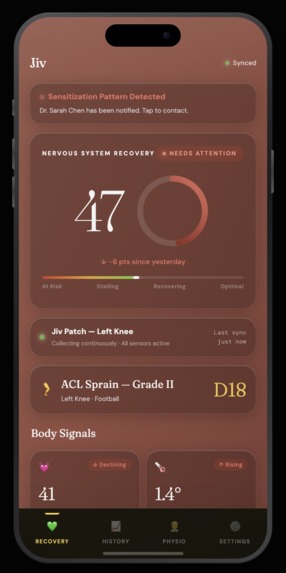
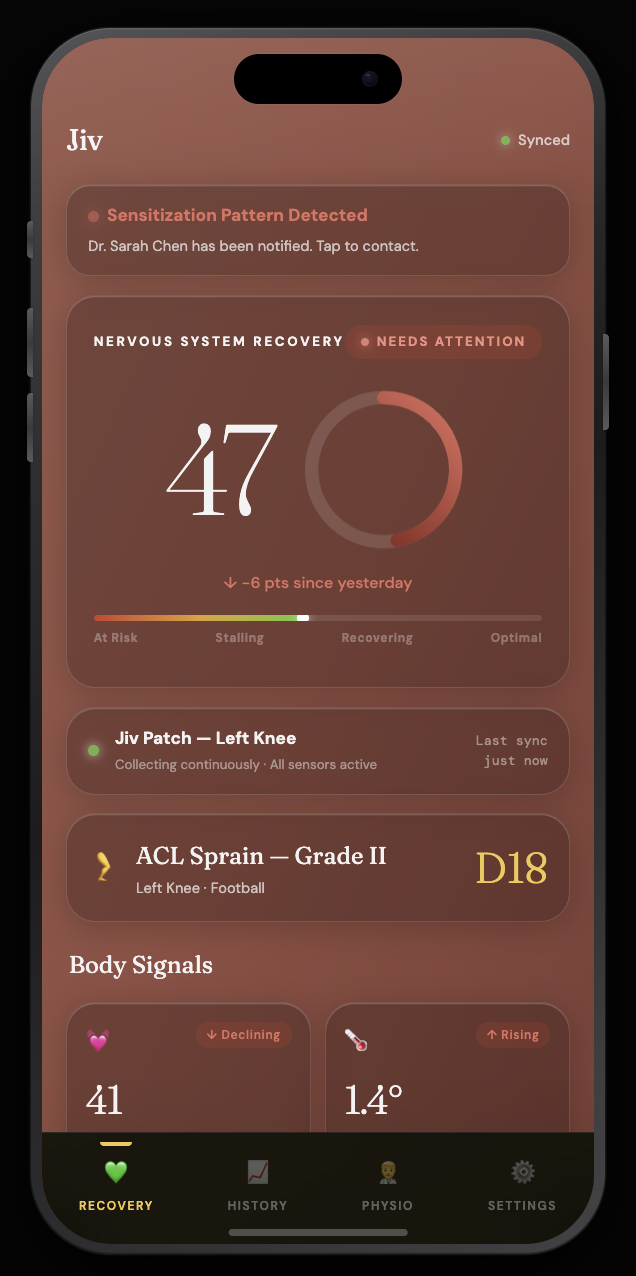
Jiv app in alert state, sensitization pattern detected
-
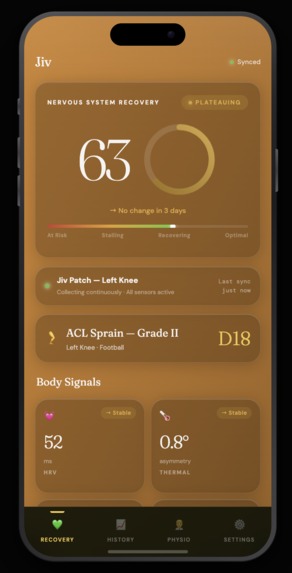
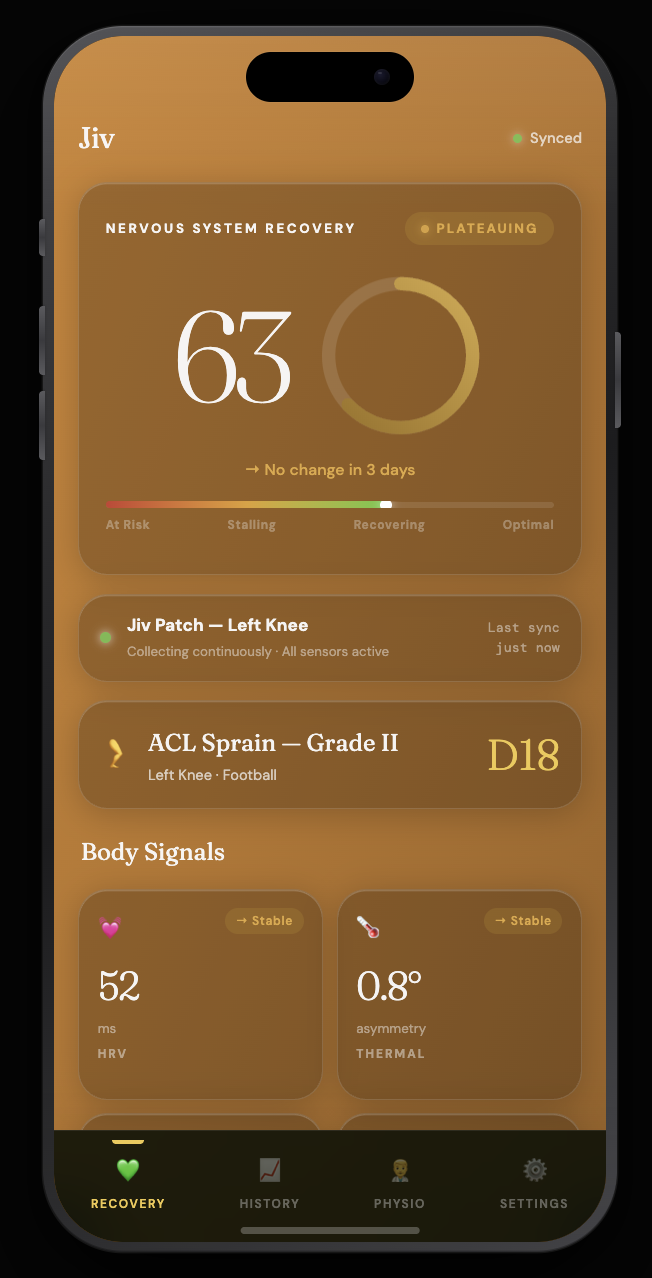
Jiv app in stalling state, recovery plateauing
-
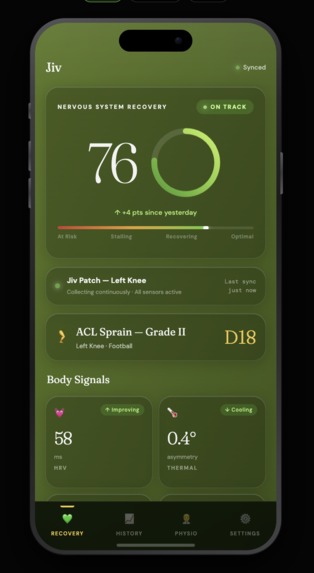
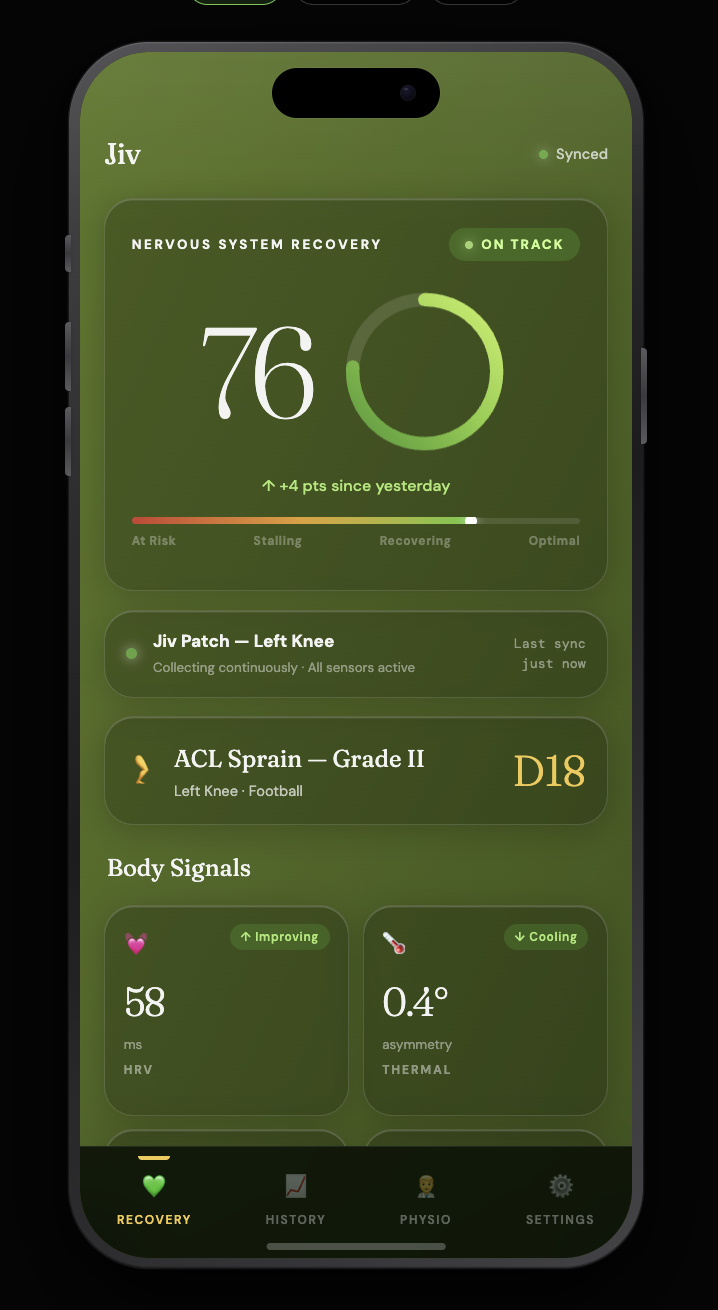
Jiv app in good state, nervous system is on track
-
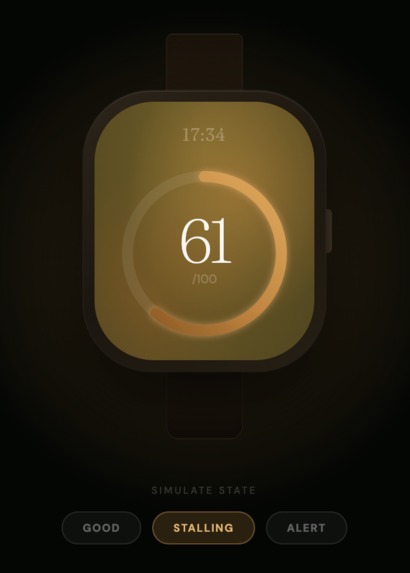
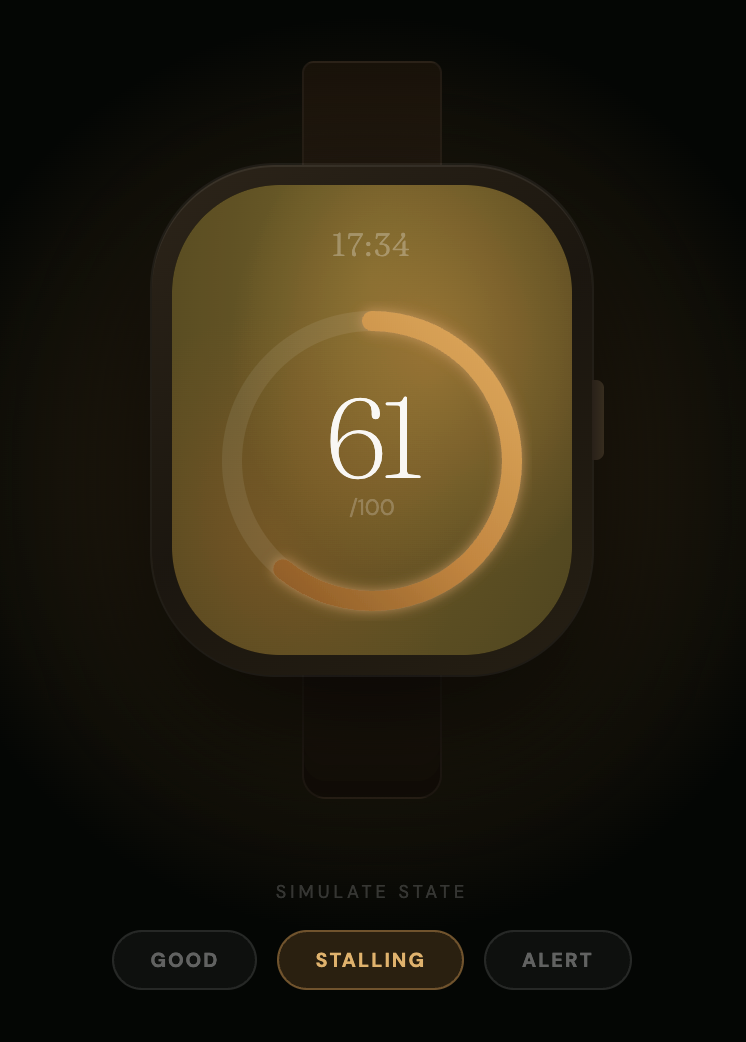
Jiv watch in stalling state, recovery plateauing
-
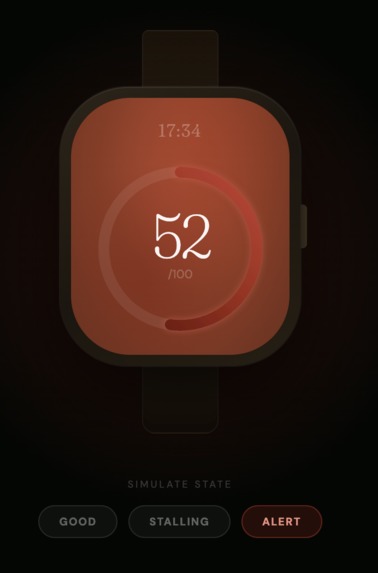
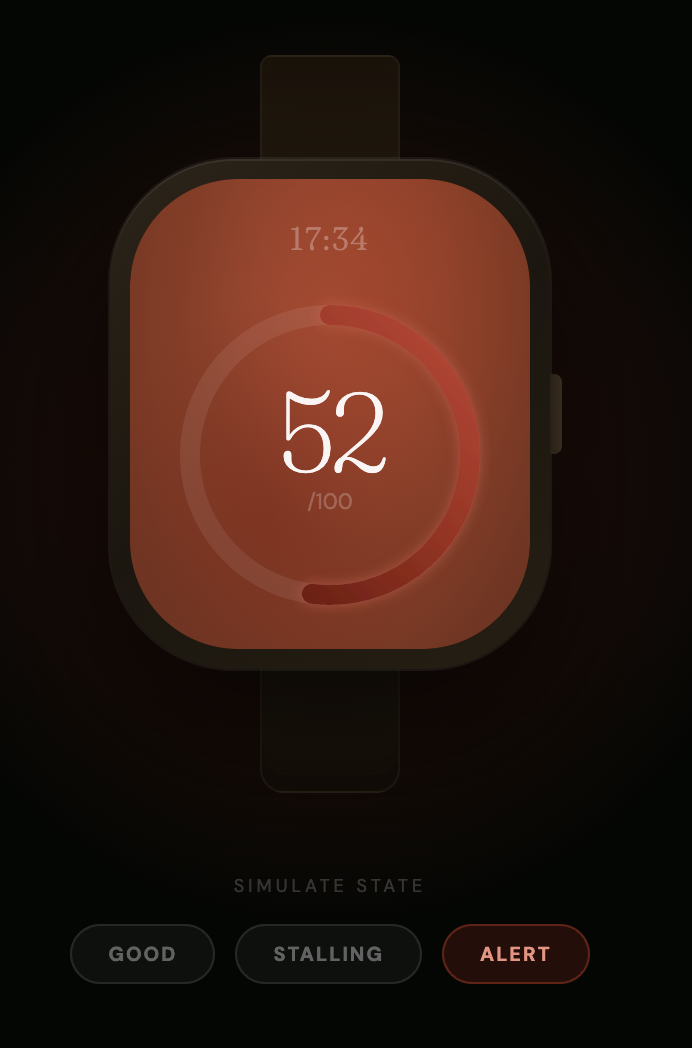
Jiv watch in alert state, sensitization pattern detected
-
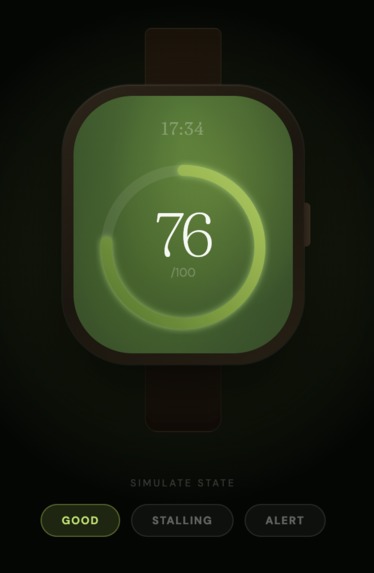
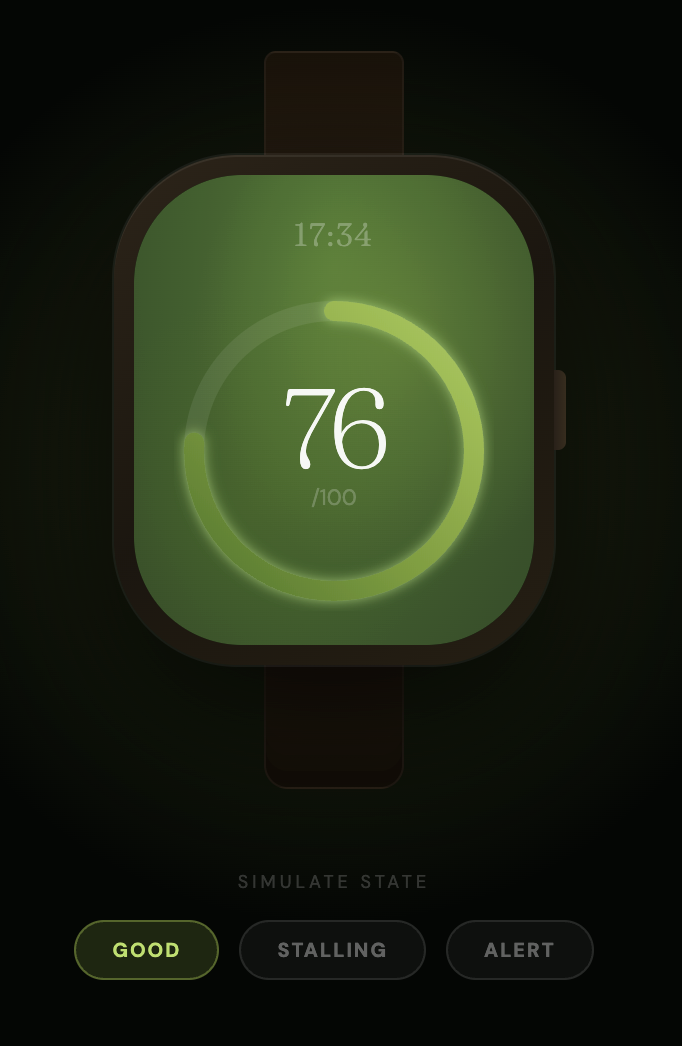
Jiv watch in good state, nervous system is on track
-
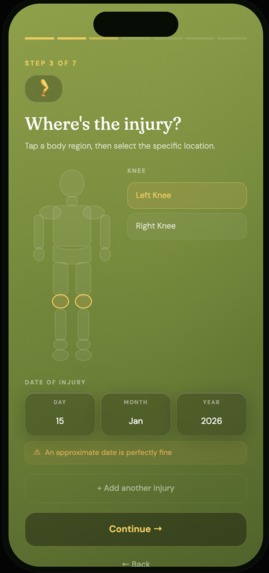
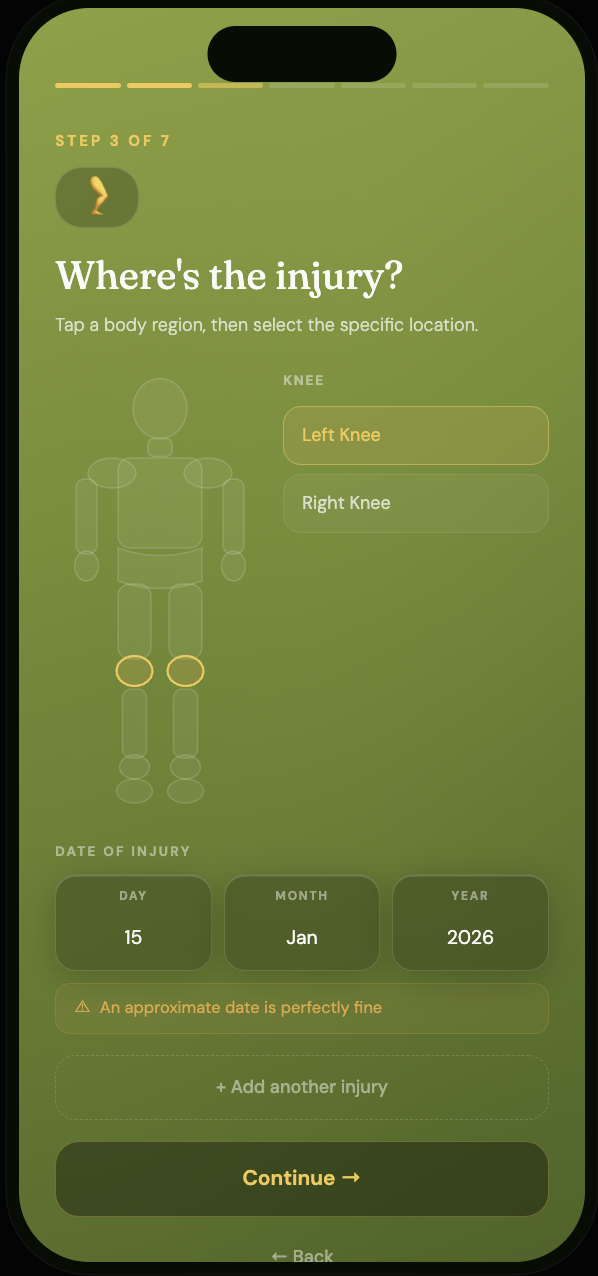
Onboarding - body map for injury site
-
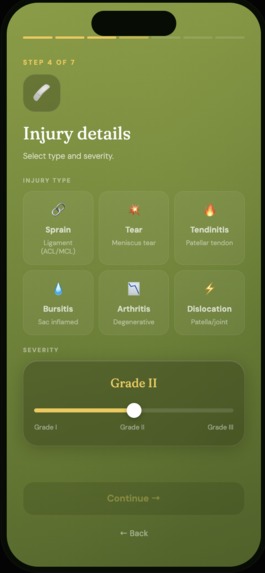
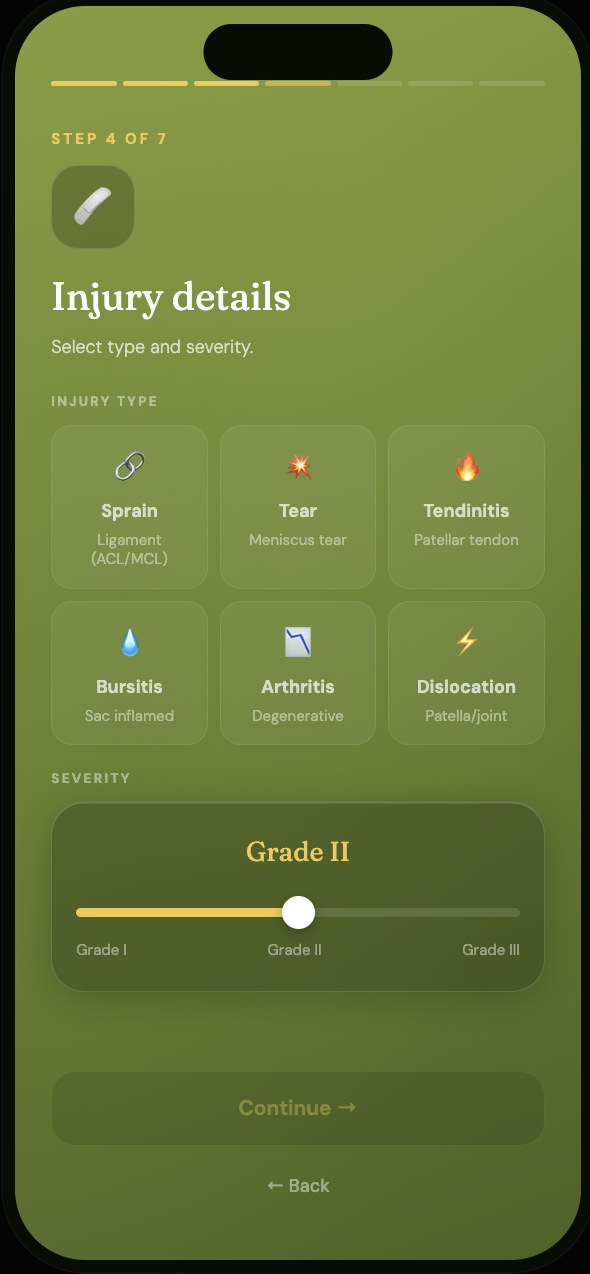
Onboarding - injury type and date
Inspiration
It started with a friend, a soccer athlete, who ignored what seemed like a small sports injury until it turned into long term chronic pain. Later, we realized that the body often sends early signals stress and subtle physiological changes long before pain becomes severe. These signals can actually be measured, but most of the time no one is paying attention to them. The idea for Jiv, a system that listens to the body’s signals and warns about chronic pain risk early, came when a Figma Build prompt asked us to think about sensory problems that technology could solve but have not yet been addressed.
What it does
Jiv is a passive nervous system recovery monitor for athletes rehabilitating from sports injuries. A biosensor patch worn directly at the injury site continuously tracks the signals the body already produces such as heart rate variability, thermal asymmetry, full-body gait balance and inflammation fusing them into a single recovery score with zero input required from the user. Jiv monitors nervous system trajectory, detecting the convergence pattern that precedes central sensitization the point where acute injury becomes chronic pain and automatically alerting the athlete's physiotherapist the moment that pattern emerges, days before any clinical test would catch it.
How we built it
Jiv was built through a tightly integrated research and design workflow. We used Claude to help think through the product in depth, especially the medical logic behind chronic pain. For the visual design, we looked at inspiration from Dribbble to find UI styles that felt warm, natural and calming. One design decision was tying the background colour directly to the recovery score a healthy trajectory shifts the interface toward calming greens, while a sensitization alert transforms the entire background to deep red, displaying the severity of the alert. These ideas were then brought into Figma, where we designed the full product experience, including the watch interface, mobile app screens and the onboarding process for new users.
Challenges we ran into
One of the main challenges was deciding which recovery signals actually mattered like HRV, thermal asymmetry, inflammation, gait balance and nerve activity and how to present them meaningfully. We quickly realized that athletes recovering from injury don’t need complex dashboards, they need clear direction. Another challenge was making the recovery score feel meaningful without overwhelming users with too much information. We addressed it by using subtle background color changes that reflect recovery status, allowing users to sense progress or risk instantly without needing to interpret complex data. Finally, designing the onboarding flow required balancing clinical accuracy with simplicity collecting necessary inputs quickly without making the experience feel like filling out a medical form.
What we learned
Building Jiv taught us that in situations where health decisions really matter, restraint is one of the hardest and most important design skills. Every instinct pushes toward showing more data and detail but users under physical and emotional stress need the opposite. We learned that color and spatial composition can communicate urgency faster than labels or numbers and that a single well designed score can inspire more trust than multiple metrics. We also realized that onboarding is not just a step in the process but the first moment a product either earns or loses a user’s confidence. The biggest lesson was that designing for someone in pain means designing for someone with very limited cognitive and emotional bandwidth and every pixel must respect that.
What's next for Jiv
The next phase for Jiv is expanding from monitoring to prediction training the model on real recovery datasets to move from pattern detection to early probability scoring, giving clinicians a risk percentage days earlier than the current convergence trigger. The app roadmap includes a dedicated physio dashboard with longitudinal patient comparison, multi-injury correlation analysis and direct messaging between athlete and clinician built into the alert flow. Long term, Jiv is positioned to become the standard passive sensing layer inside professional sports club rehabilitation programs, where the density of injuries, the cost of chronic pain and the value of early intervention are highest.
Built With
- css
- figma
- html5
- javascript
- vscode


Log in or sign up for Devpost to join the conversation.