-
-
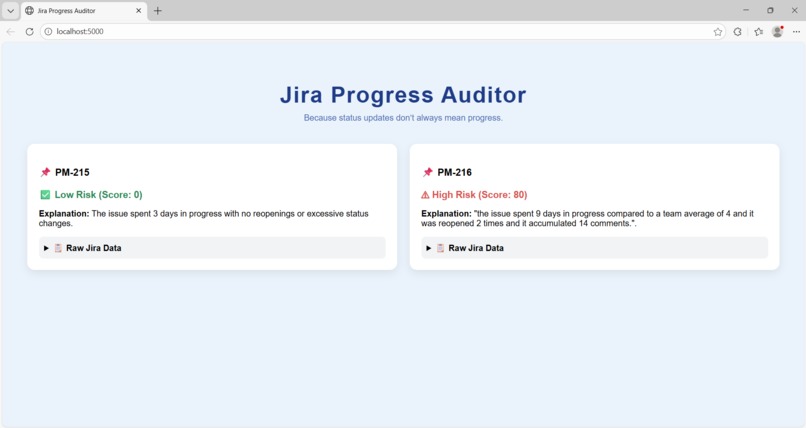
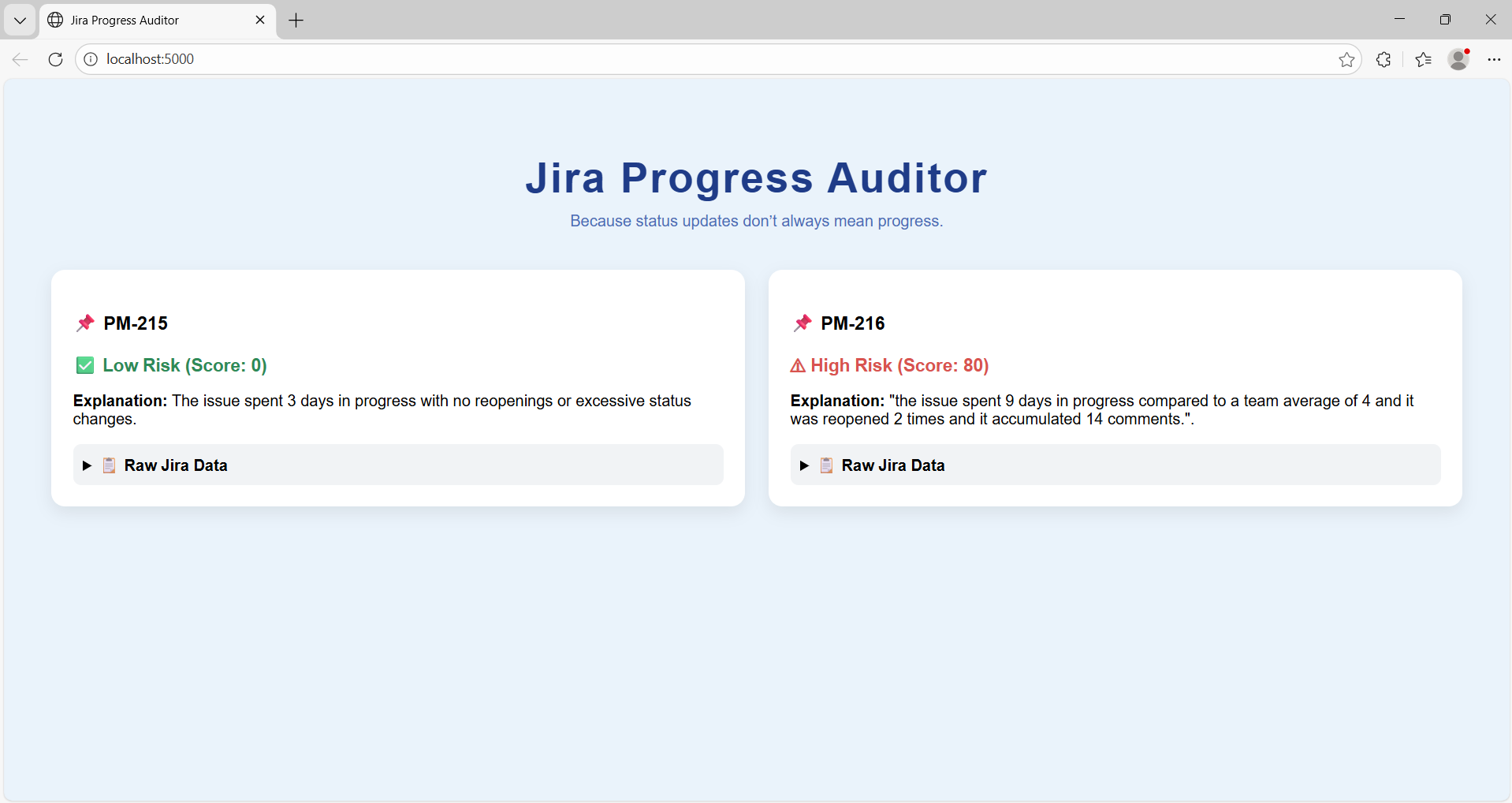
homepage
-
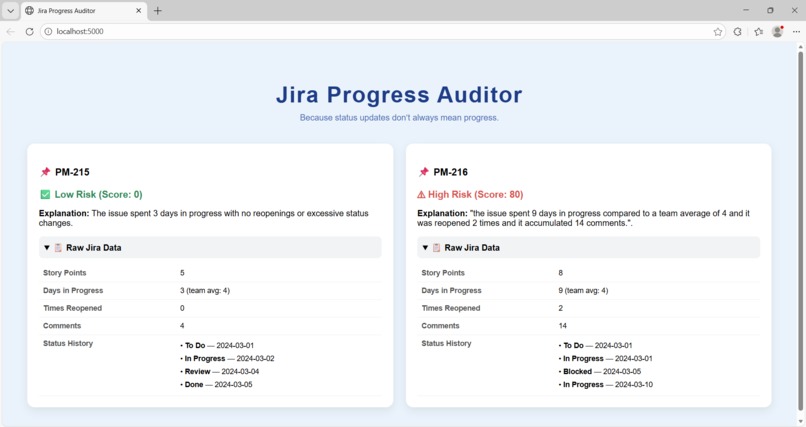
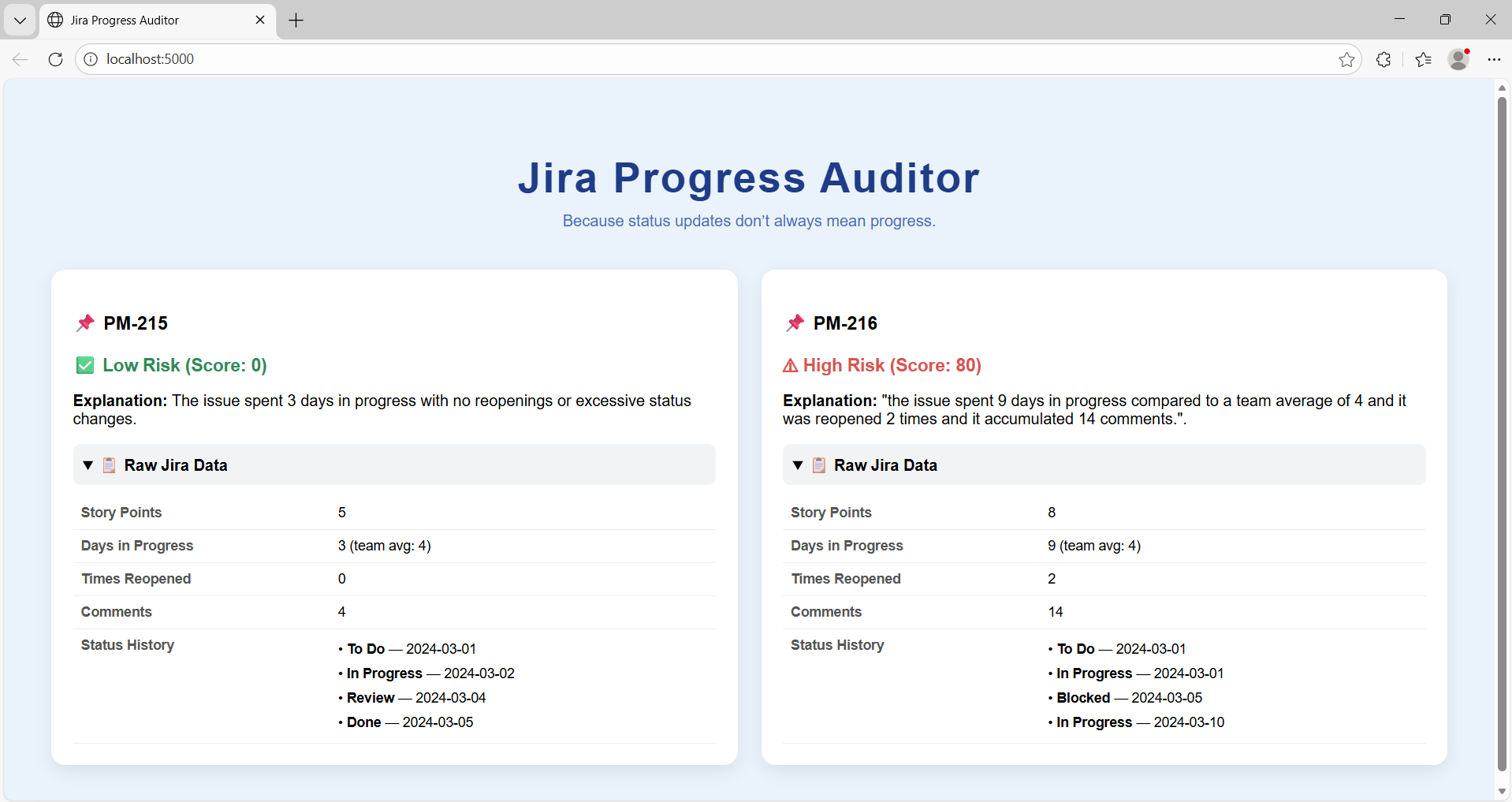
Information about Jira data displayed from drop down
Inspiration
During an internship last summer, my team relied heavily on Jira, a popular project management and issue-tracking software used by teams to plan, track, and deliver work. While Jira provides detailed activity tracking, I noticed that task updates didn’t always reflect real progress. Issues appeared active through status changes and comments, yet deadlines still slipped. It became clear that management needed an easier way to detect when work appeared more productive than it actually was, leading to problems that were discovered too late.
What it does
Jira Progress Auditor uses AI to analyze Jira issue behavior to identify early warning signs of fake or misleading progress. It assigns each issue a risk score and provides an AI-generated explanation for the score, helping Product Managers intervene before delivery is impacted.
How we built it
We created a mock Jira dataset (MockJira.py) to simulate Jira issue data, including status histories, reopen counts, comments, and time in progress. PromptAPI.py calculates the progress risk score based on these signals and uses the FLAN-T5 LLM to generate an explanation of why an issue was flagged. The results are displayed through a web interface built with Flask and HTML.
Challenges we ran into
One challenge we faced was with the AI-generated explanations. They were often vague and disorganized, which required us to experiment extensively with the prompts we fed to the LLM until we found one that was consistently successful. We also experienced some merge conflicts while pushing and pulling changes with GitHub, though we were able to resolve them. Additionally, formatting the dropdown bar for the raw Jira data presented some difficulties.
What we learned
We gained experience in feeding data to AI models and processing the outputs for use on a webpage. The project also strengthened our understanding of prompt design and data flow between project components.
What's next for Jira Progress Auditor
Our next goal is to connect Jira Progress Auditor directly to Jira Software to analyze real project data instead of using mock datasets. We also plan to explore more advanced language models that could provide deeper insights into the data.


Log in or sign up for Devpost to join the conversation.