-
-
Presentation
-
Jing Architecture
-
problems to resolve
-
Multi agent AI system
-
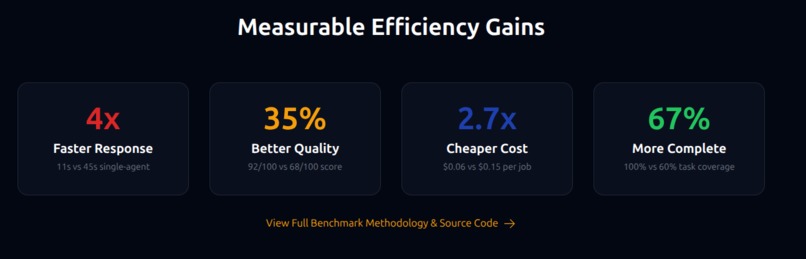
Measurable Efficiency Gains
-
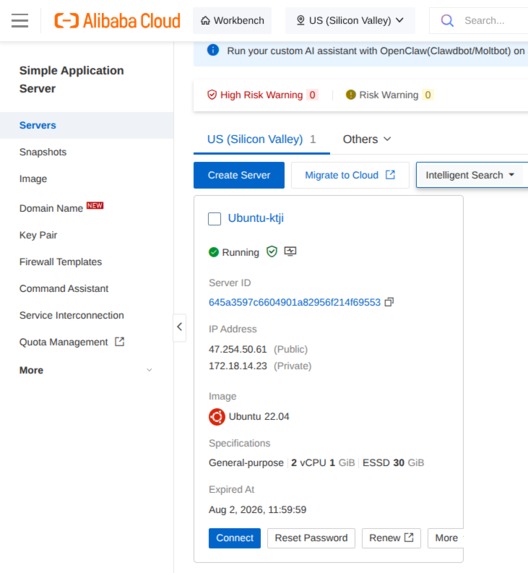
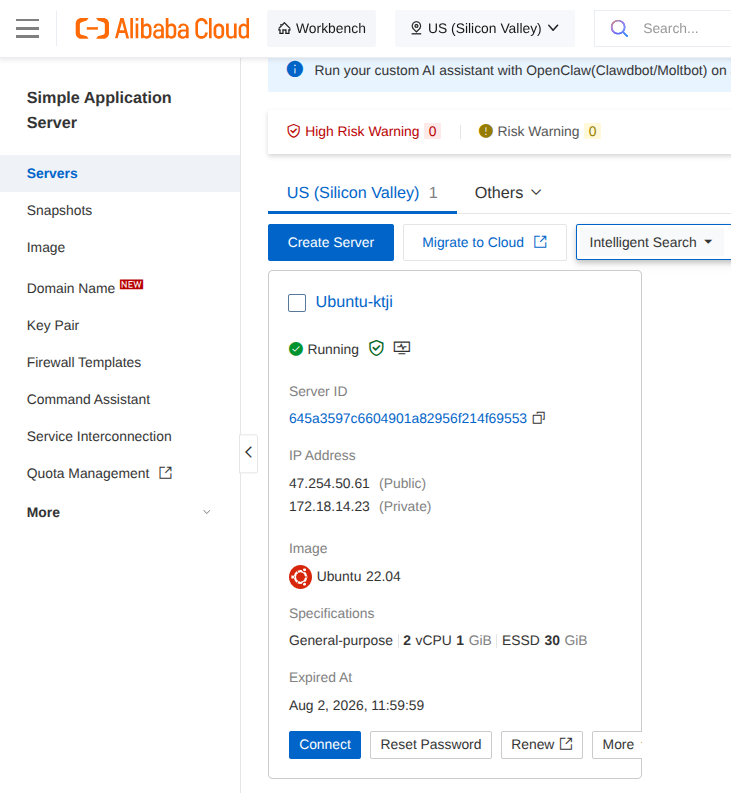
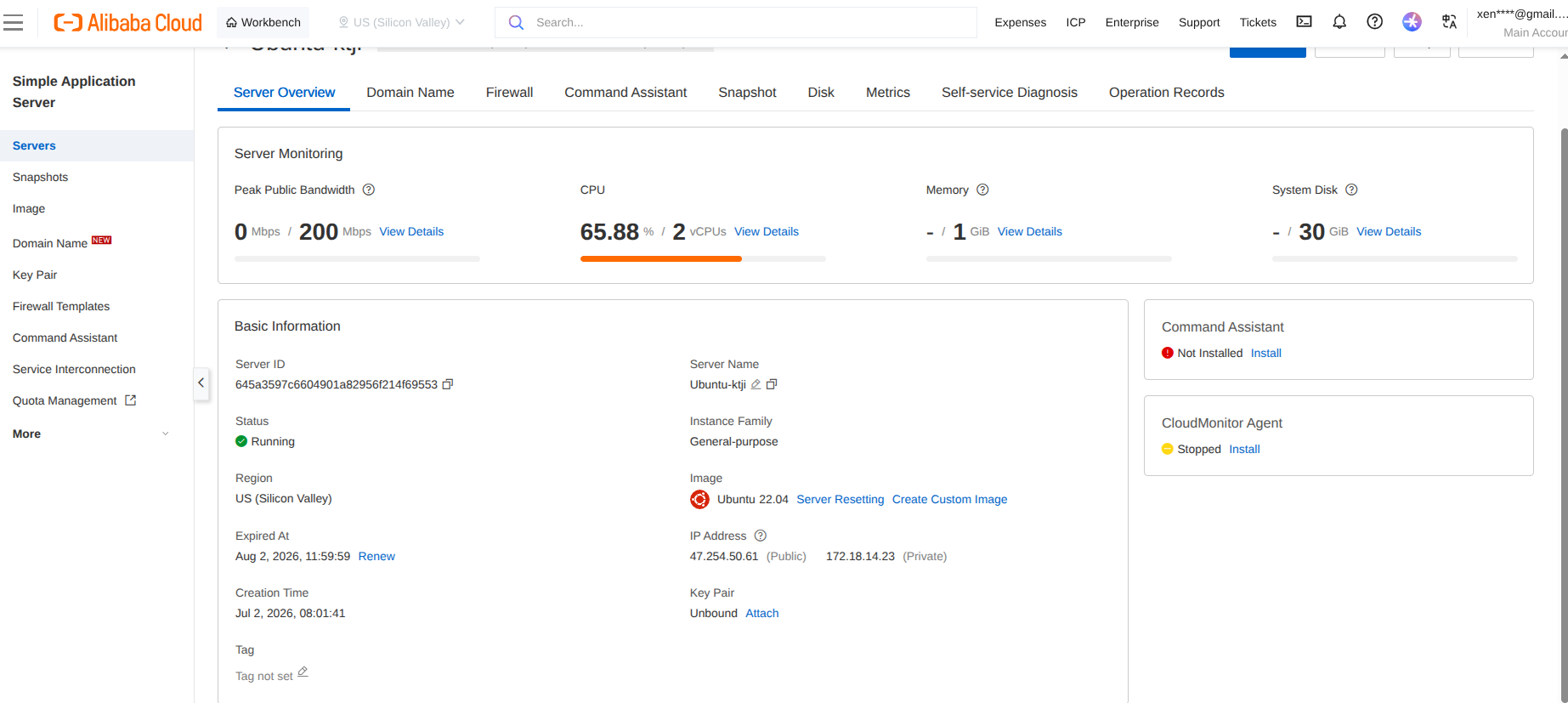
Proof of Deployment 1 Alibaba Cloud
-
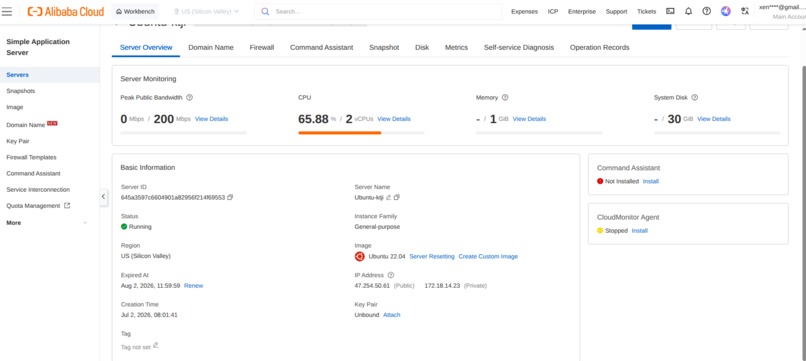
Alibaba workbench
The Inspiration: From Carpentry to AI
AI is radically changing the world we know. Its application across all fields and the way we do things will never be the same from now on.
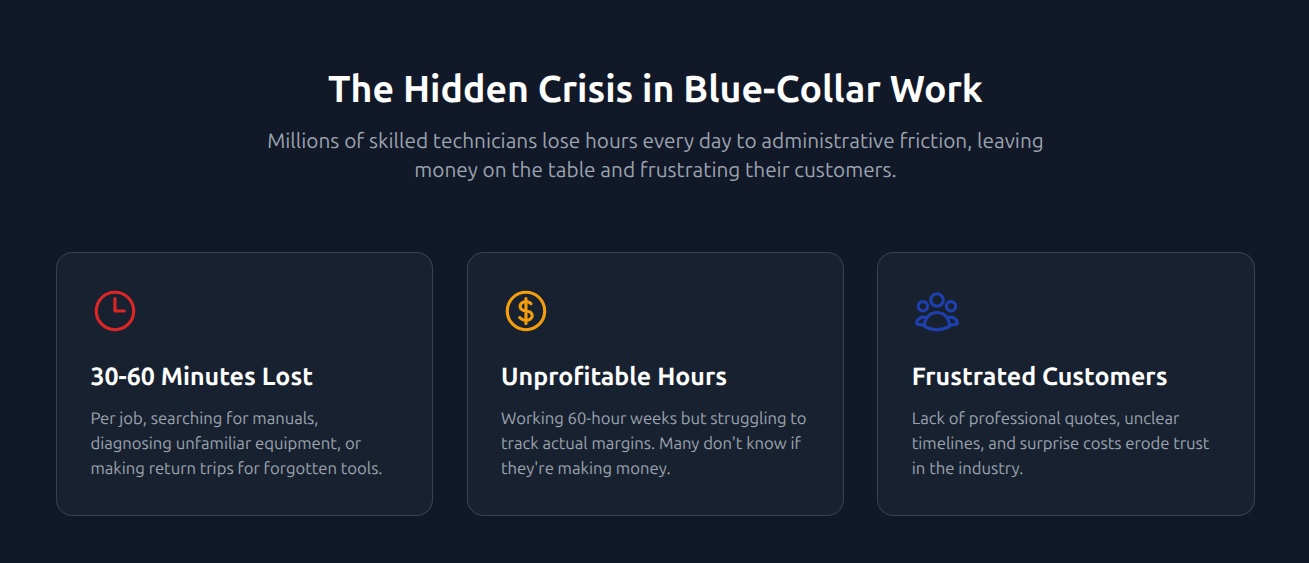
I've been a carpenter for many years, and I love my work. But I'm also fascinated by technology. At first glance, these seem like two completely opposite worlds, and I've asked myself many times: How can AI help me improve my carpentry business? Is AI applicable to what I do? Can they complement each other in a way that enhances my work? Can AI increase the productivity of my workflow?
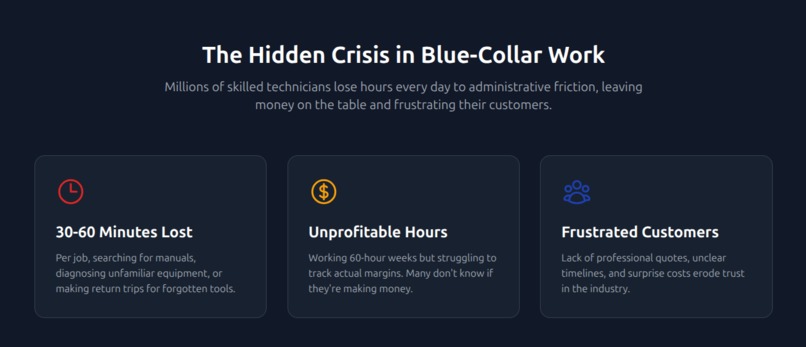
And I found the answer in JING. A team of AI agents that work for me, making my workflow more efficient and allowing me to focus more on the physical and creative parts of the business—like designing better furniture—without having to handle budgets, expense tracking, and client management myself. All the boring stuff: managing finances, chasing clients, checking if they accept proposals, sourcing materials from suppliers—all of that takes away valuable time I could use to deliver work faster.
Having JING—my AI agents—handle planning, support me, and present results in a spectacular way has been transformative.
But why stop at carpentry? What if I bring this concept to all artisans? Electricians, plumbers, welders—so many people who work with their hands but struggle to manage their finances or could significantly improve their workflow and productivity.
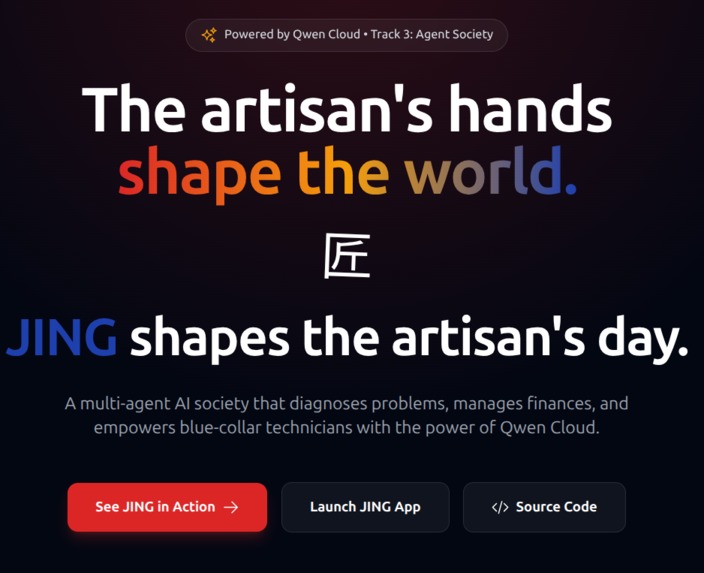
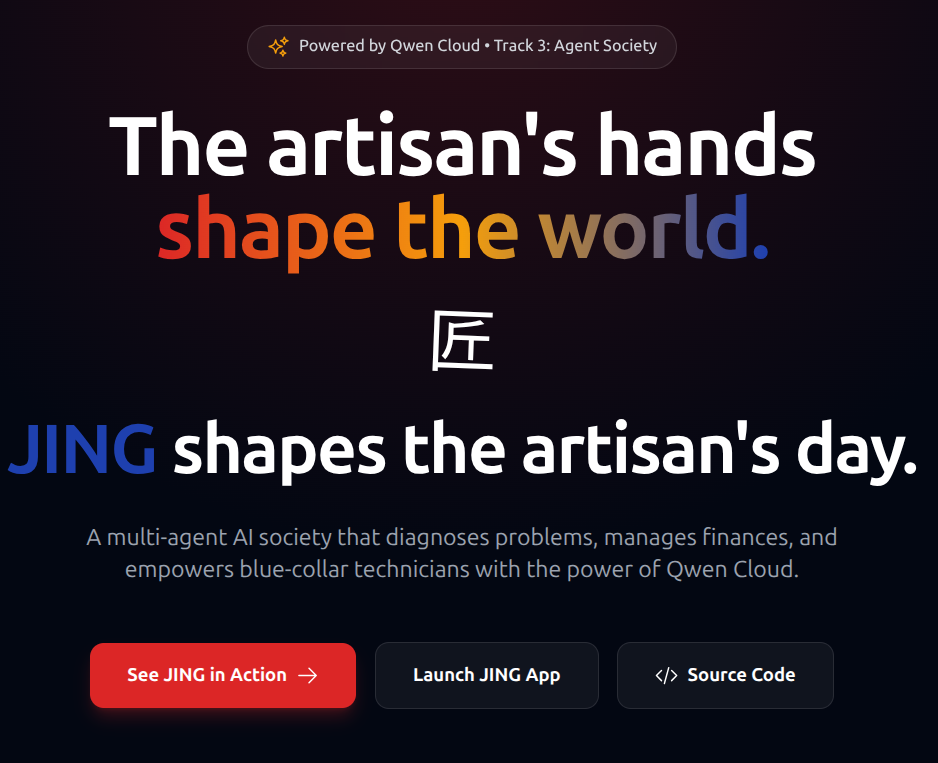
That's why he created JING: a team of specialized AI agents, a society of agents at the service of the workers who shape the world with their hands.
I've had the idea of creating something like Jing for a while now, but what finally gave me the push I needed was the Qwen Cloud hackathon, which helped me shape and bring it to life.
I hope you see its potential as I do, because bringing it to life in this complex world would be a great help to all the artisans who shape the world with their hands.
What it does
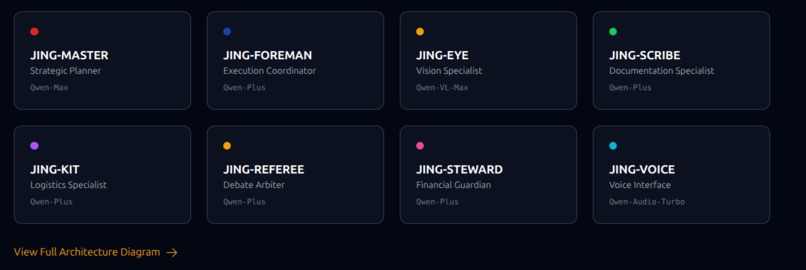
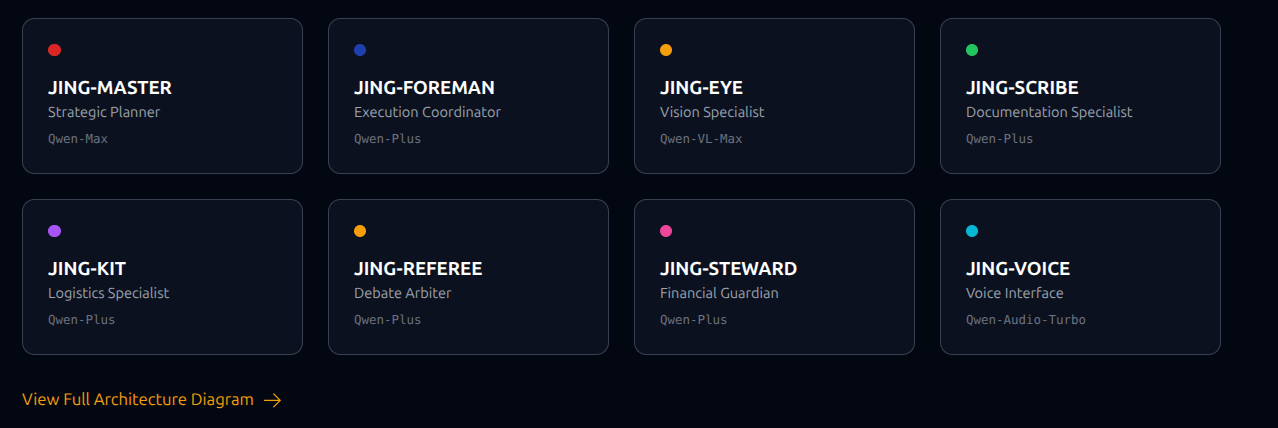
The 8 Agents of JING JING isn't just one AI model. It's a society of 8 specialized agents, each excelling at one specific task, with built-in debate and conflict resolution:
🧠 JING-MASTER: Strategic planner (Qwen-Max) 👷 JING-FOREMAN: Execution coordinator (Qwen-Plus) 👁️ JING-EYE: Vision specialist (Qwen-VL-Max) 📖 JING-SCRIBE: Documentation specialist (Qwen-Plus) 🧰 JING-KIT: Logistics specialist (Qwen-Plus) 💼 JING-STEWARD: Financial guardian (Qwen-Plus) 🔊 JING-VOICE: Voice interface (Qwen-Audio-Turbo) ⚖️ JING-REFEREE: Debate arbiter & consensus builder (Qwen-Plus) Each agent has a clear role, and they work together through task decomposition, structured debate, and coordination—it's the power of AI at the service of people who deal with diverse problems in their daily work, assisting them in finding the best solution.
How i built it
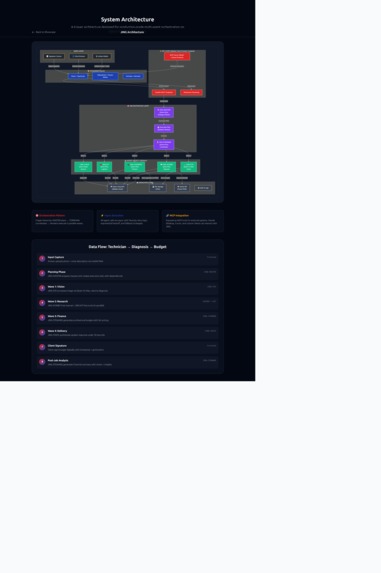
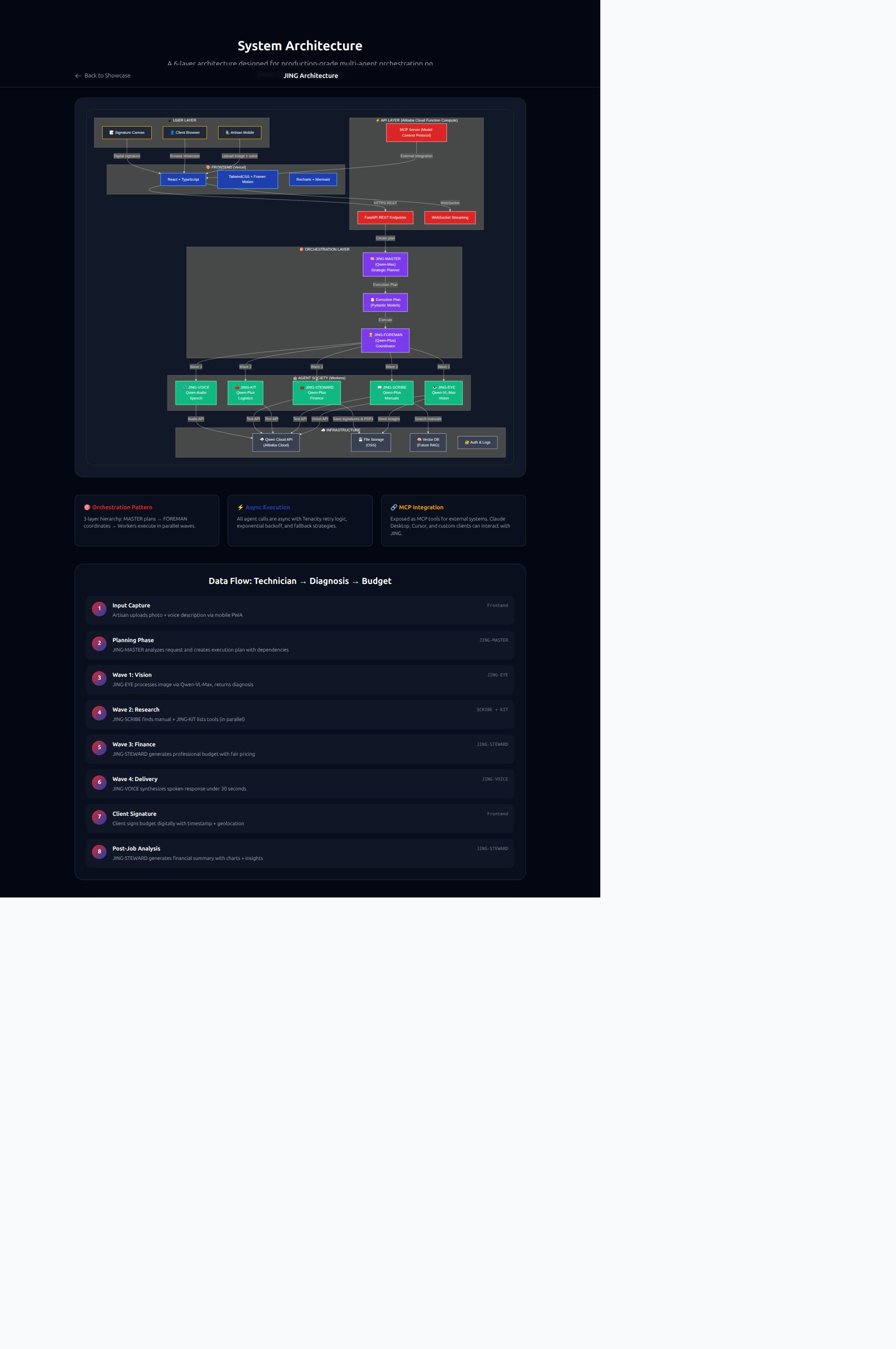
JING is built as a multi-agent society running on Qwen Cloud, with a FastAPI backend orchestrating 8 specialized AI agents and a React 19 + TypeScript frontend. The backend is pure Python with Pydantic v2 for strict typed validation across every agent input/output. The orchestrator runs a 4-wave pipeline: Plan (JING-MASTER on Qwen-Max decomposes the task) → Execute (JING-EYE on Qwen-VL-Max analyzes images, JING-SCRIBE researches manuals, JING-KIT lists tools — all in parallel) → Debate (JING-REFEREE resolves inter-agent conflicts via LLM-mediated consensus) → Financial (JING-STEWARD generates budgets with profitability grades A-F). JING-VOICE delivers the final spoken response using Qwen-Audio-Turbo. Every job and client interaction is persisted to local JSON via a Memory Service — no database needed. The Artisan Dashboard aggregates this data into real-time business intelligence with Recharts visualizations (revenue trends, job status distribution, profit-per-job breakdown) and AI-powered financial suggestions from JING-STEWARD.
What i learned
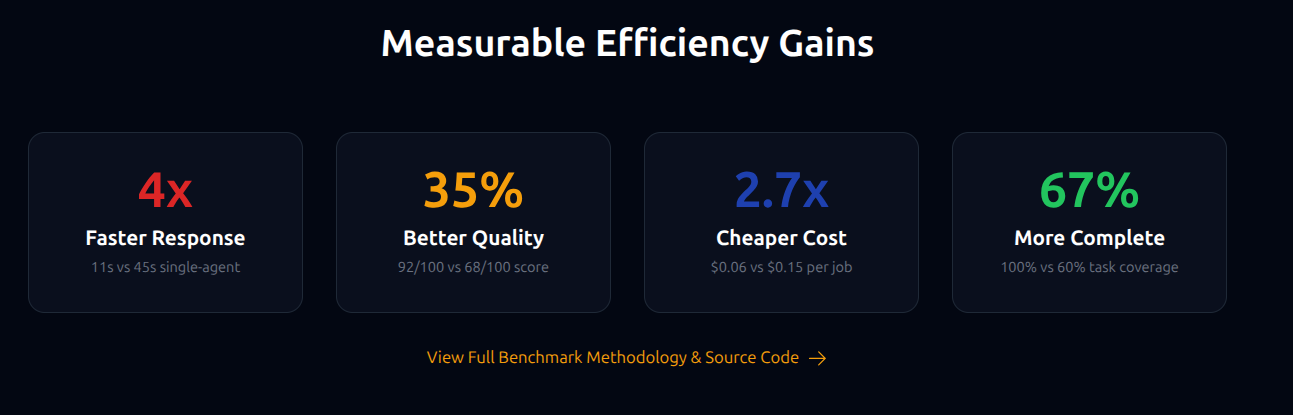
That specialization beats generalization — every time. A team of specialized agents debating and coordinating consistently outperforms a single monolithic model on speed, quality, cost, and completeness. We also learned that artisans don't need more tools — they need fewer, smarter ones. The most valuable feature isn't the AI diagnosis; it's the business dashboard showing an electrician that their average profit margin dropped last month. That's the kind of insight that changes how someone runs their business.
What's next for Jing
- Mobile native app — React Native for true field-ready experience with offline support
- Payment integration — Stripe for in-app invoicing and collection
- Supplier integrations — Direct parts ordering from Home Depot, Lowe's, Amazon
Built With
- fastapi
- pydantic
- python
- qwen-3.7
- qwen-cloud
- react
- typescript


Log in or sign up for Devpost to join the conversation.