Inspiration
Buying a product online or offline often leaves people with fragments of evidence: a package photo, a barcode, a batch number, a receipt, and search results that may conflict. Most tools stop at one signal. Jialeme was built to turn those fragments into a traceable, readable evidence report.
What it does
Jialeme is a WeChat Mini Program for product evidence collection and authenticity-risk assessment.
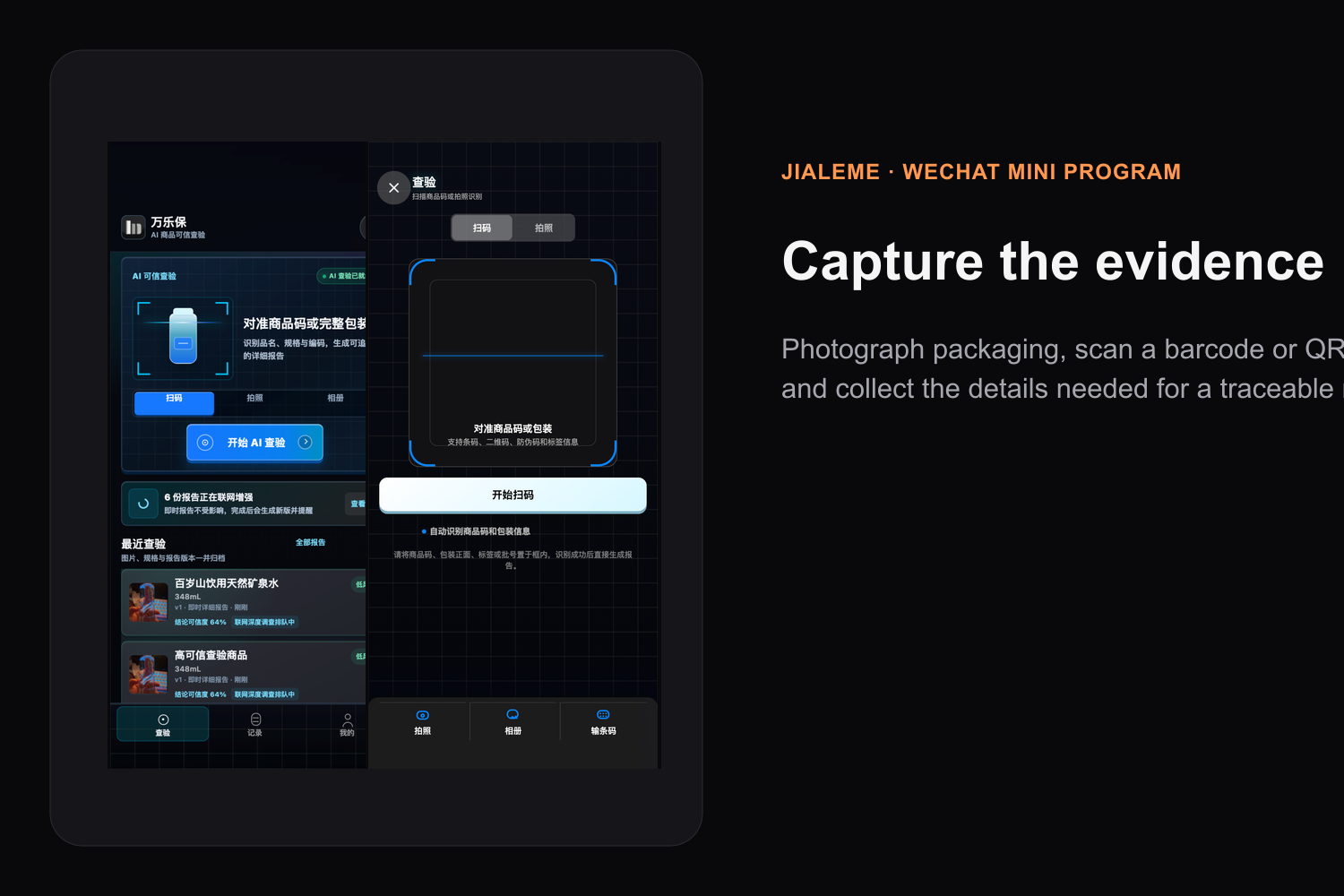
A user can photograph a product, scan a barcode or QR code, and add packaging, label, batch, license, or purchase-proof images. The system combines visual observations, OCR, code parsing, product-library matches, web research, conflicting signals, and missing-evidence checks into a structured report.
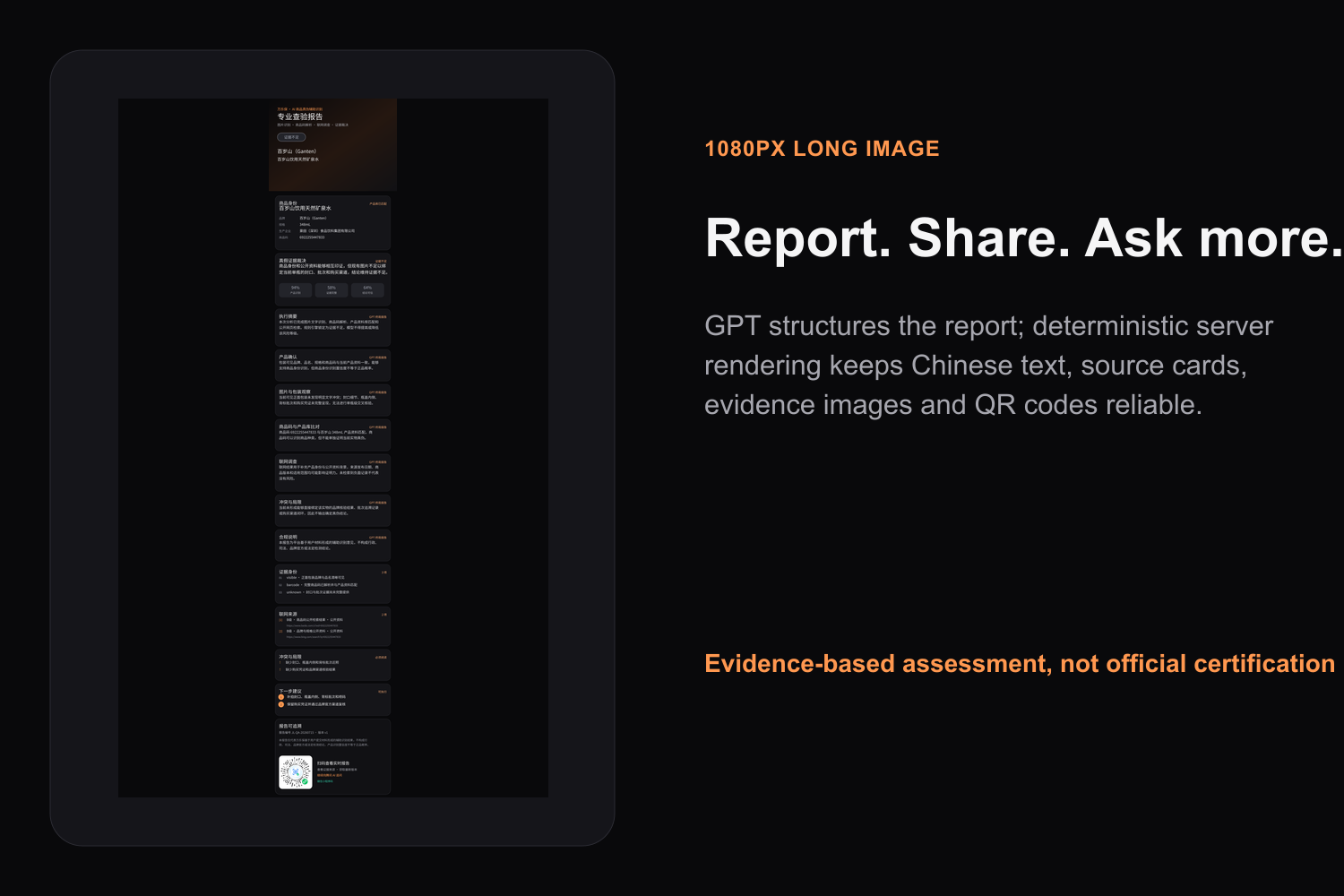
The final result is a high-resolution report long image with:
- product and evidence overview
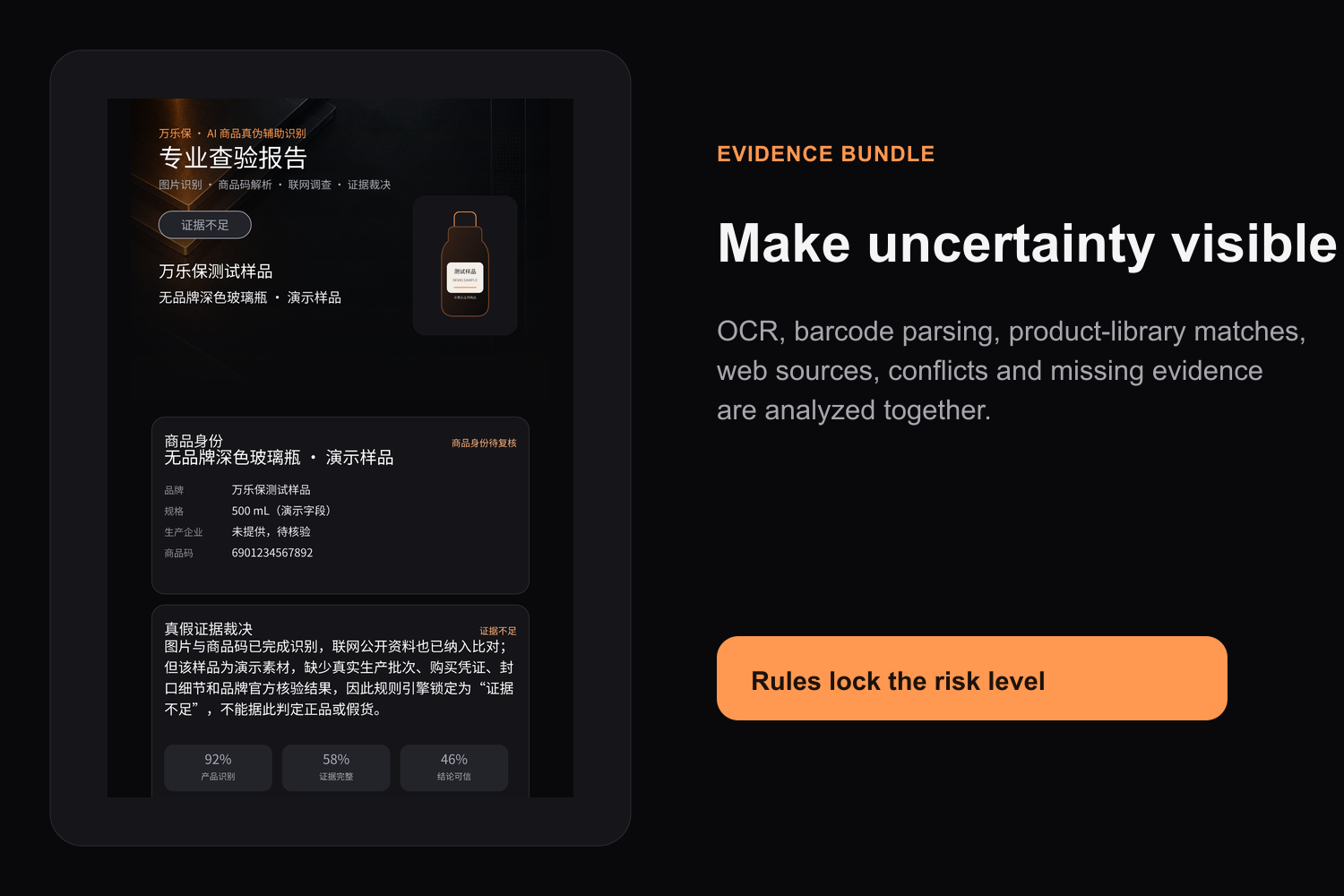
- risk conclusion and confidence indicators
- packaging and image analysis
- web research sources
- conflicts and limitations
- recommended next actions
- a real mini-program QR code for reopening the live report and asking follow-up questions
The report is an evidence-based platform opinion, not an official or legal authenticity certification.
How we built it
The mini program handles image collection, barcode/QR scanning, WeChat login, profile editing, report viewing, and follow-up conversations.
On the server, we build a versioned evidence bundle from image observations, OCR, code parsing, product data, web sources, conflicts, and deterministic rules. GPT generates validated structured report content, while the rule engine keeps the final risk level deterministic.
We use GPT Image 2 only for report visual material. Text, evidence values, original product photos, and mini-program QR codes are composed deterministically with Sharp and SVG, so Chinese copy, numeric evidence, and scannable QR codes remain reliable.
A Tencent model powers report follow-up Q&A using the current report, evidence bundle, and cited sources.
Challenges we ran into
The hardest part was separating visual quality from evidence reliability. Generating a beautiful report is easy; keeping its text, numbers, source links, original photos, and QR code trustworthy is harder.
We solved this by keeping generated visuals separate from factual composition. The model can help summarize and design, but the server owns report layout, evidence references, risk rules, and QR generation.
We also designed for partial evidence. A missing barcode or unclear package should not become a false sense of certainty. Instead, the report explains what is missing and what the user should photograph next.
Accomplishments that we're proud of
- A complete scan/photo/code/search/report workflow inside a WeChat Mini Program
- Deterministic long-image report generation with real mini-program QR codes
- Evidence-aware follow-up Q&A instead of a generic chatbot
- Stable real WeChat OpenID login and persistent user profiles
- Full UI and runtime checks across 41 user pages and 97 visual states
What we learned
We learned that trust products need to make uncertainty visible. A useful result is not only a conclusion; it explains which evidence supports it, where sources disagree, and what the user can do next.
We also learned that AI image generation should not be responsible for critical Chinese text, product facts, numerical evidence, or QR codes. Those elements need deterministic rendering.
What's next for Jialeme
Next we will broaden the verified product library, improve evidence-source coverage, add more category-specific capture guides, and refine report-sharing and merchant collaboration workflows.
Built With
- barcode-scanning
- gpt-image-2
- javascript
- node.js
- ocr
- openai-api
- qr-code
- sharp
- sqlite
- tencent-hunyuan
- web-search
- wechat-mini-program


Log in or sign up for Devpost to join the conversation.