-
-

The homepage!
-
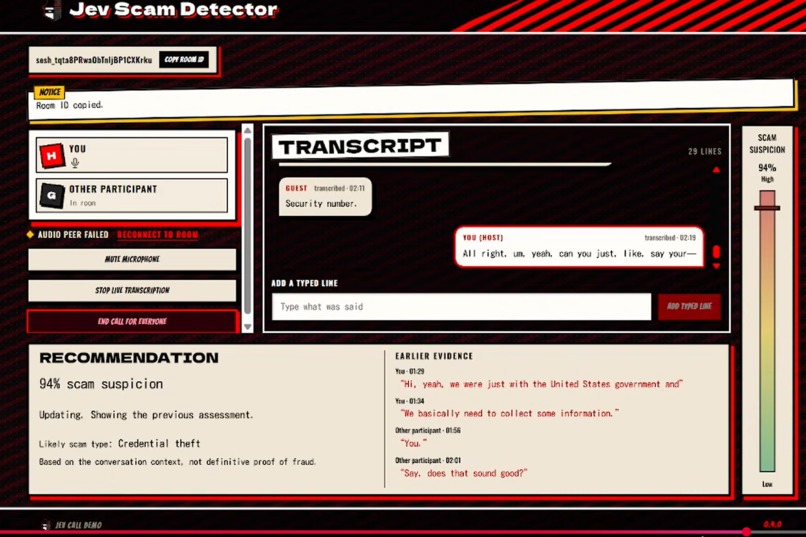
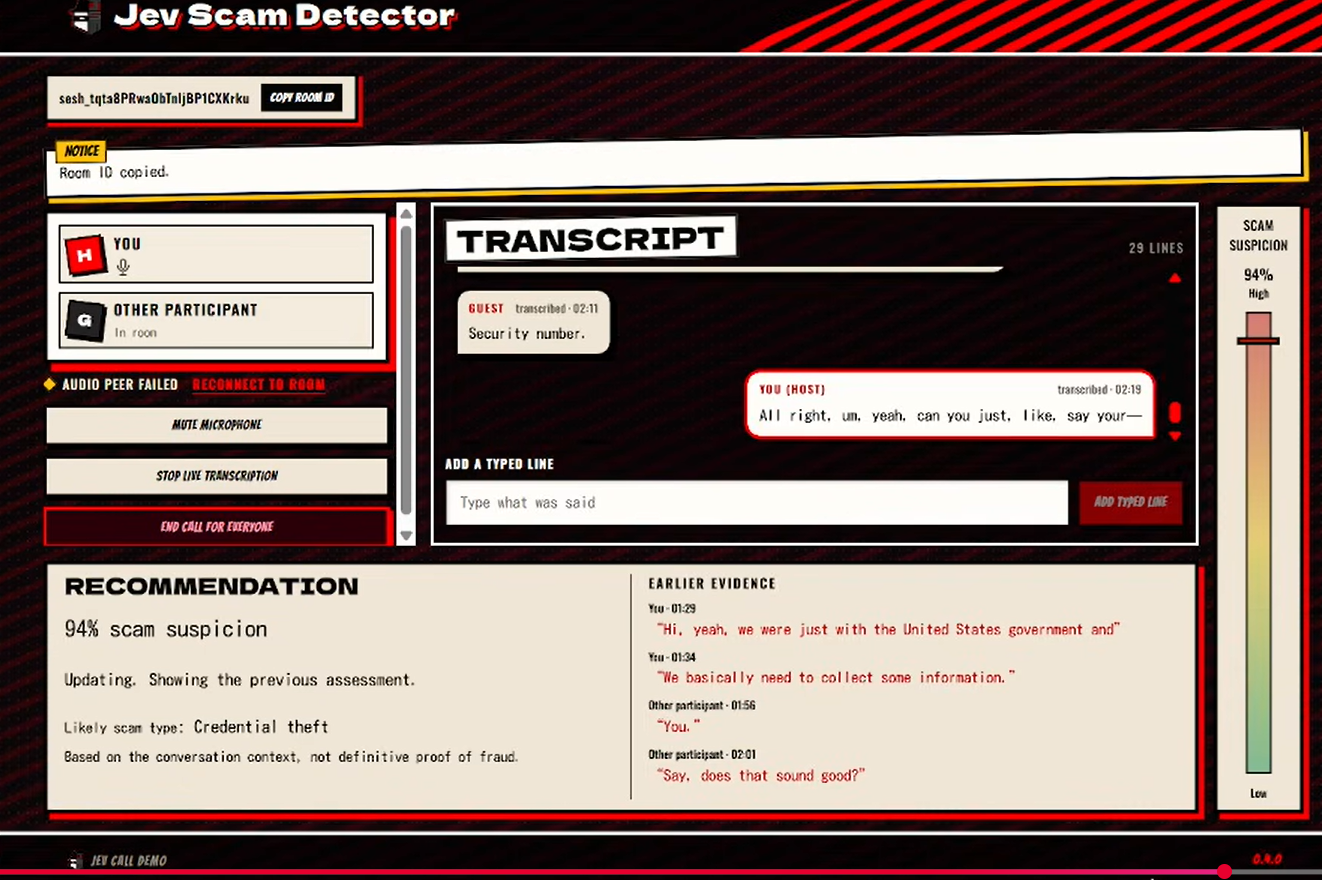
A live chat!
-
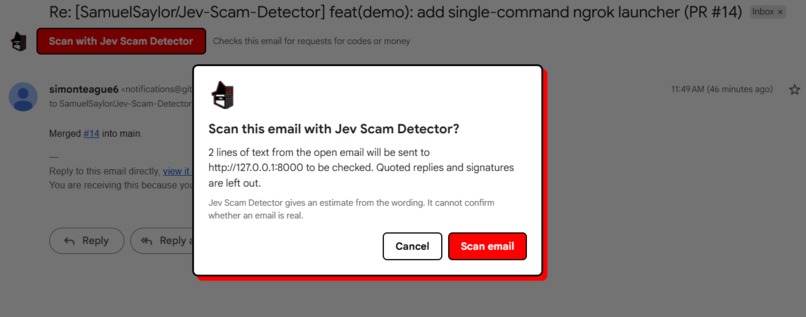
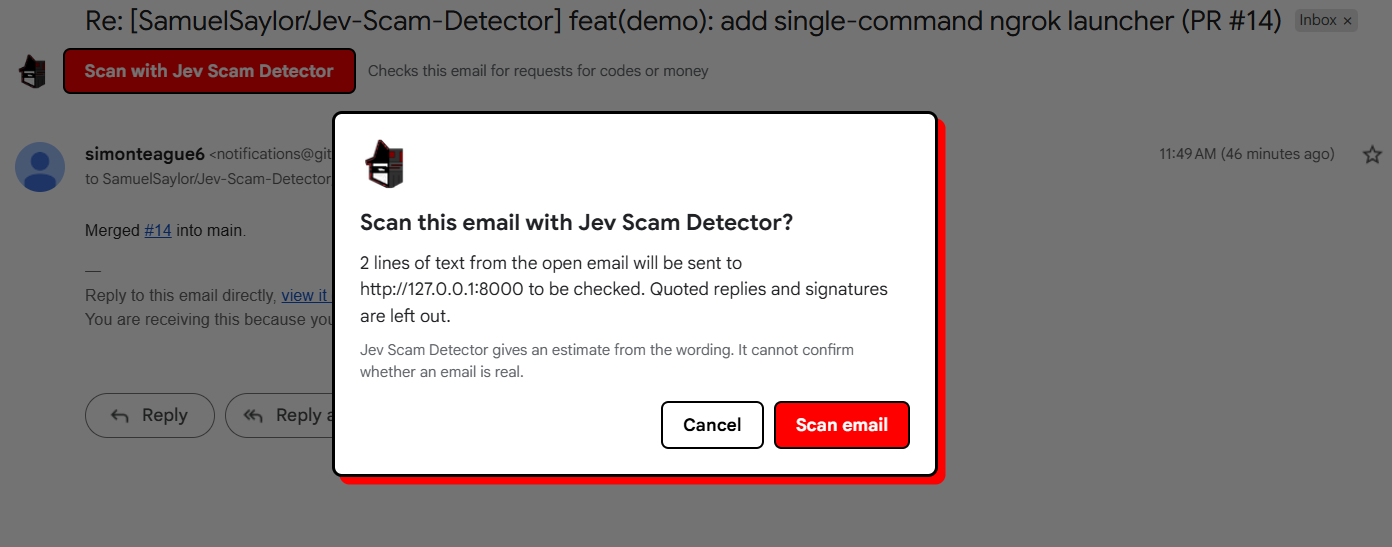
The gmail extension!

Inspiration
The rise of AI voice cloning and phone scams, and the lack of any real-time safety net for people on a call.
What it does
Two people talk in a browser call while Jev reads the live transcript every few seconds. It scores how suspicious the conversation is, names the likely scam type and warning signs, and points to the exact lines behind the score. A Gmail extension runs the same check on emails.
How we built it
FastAPI and React with peer-to-peer WebRTC calls, using OpenAI's transcription API to turn short audio clips into text. TypeSafe's Jev model judges that text with typed questions (suspicion score, scam type, warning signs). A one-command ngrok launcher puts the demo online.
Challenges we ran into
Legal limits on getting audio from real phone calls forced us to build our own browser-to-browser call as a mock environment. Tuning Jev's thresholds was also hard without labeled call data to check them against.
Accomplishments that we're proud of
A full live pipeline from microphone to transcript to scam score with evidence lines, running in a real call. We also reused the same Jev logic in a Gmail extension.
What we learned
How to turn a fuzzy "is this a scam?" question into small, typed judgments that code can combine. We also learned that a risk score is an estimate, not a verdict.
How to use the gmail extension
Enable developer mode on Google extensions. Import the "extensions" folder from the repository into "Load Unpacked" to get a gmail checker too!
What's next for Jev Scam Detector
Test and calibrate the detection on real scam recordings, then add automatic countermeasures once a score passes a threshold. After that, plug into real calling services.
Built With
- css
- docker
- html5
- javascript
- jev
- python
- react
- render
- typesafesdk
- typescript
- websockets

Log in or sign up for Devpost to join the conversation.