Every surgeon learned on somebody's body. Medical students get only as many supervised repetitions as the OR schedule allows. Feedback usually comes from a busy attending as "that was fine". The simulators that give unlimited practice are lab equipment priced in the tens of thousands of dollars.
Before we wrote any coaching code, we surveyed people in the field with a Google Form: six medical students, two pre-med undergrads and one working professional. Nine out of nine said they would use it. Their reasons were consistent. They wanted repetition before touching real patients, feedback on what they actually did, a coach they could question ("why is this suture method better?"), accuracy they could trust, and something they could afford. One wrote that students "should not have to struggle to get their hands on great resources." That became our brief.
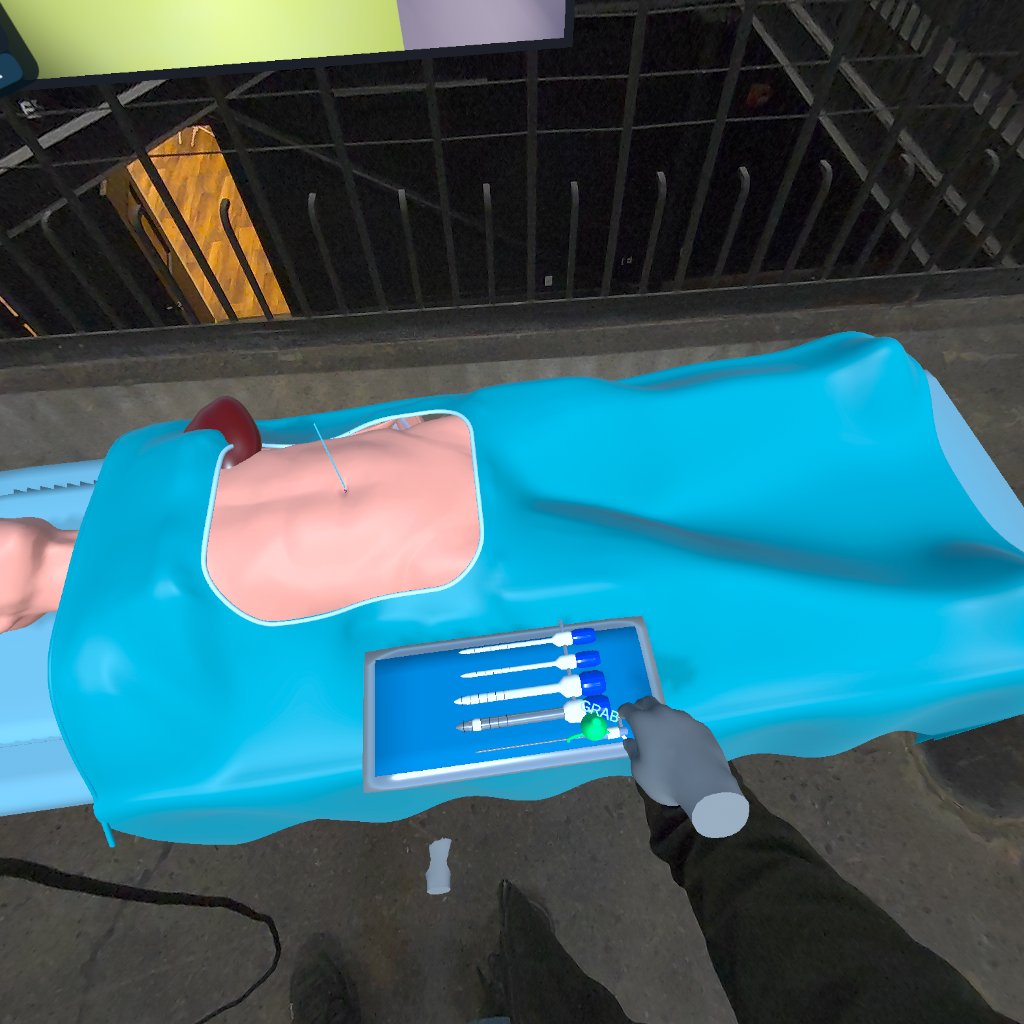
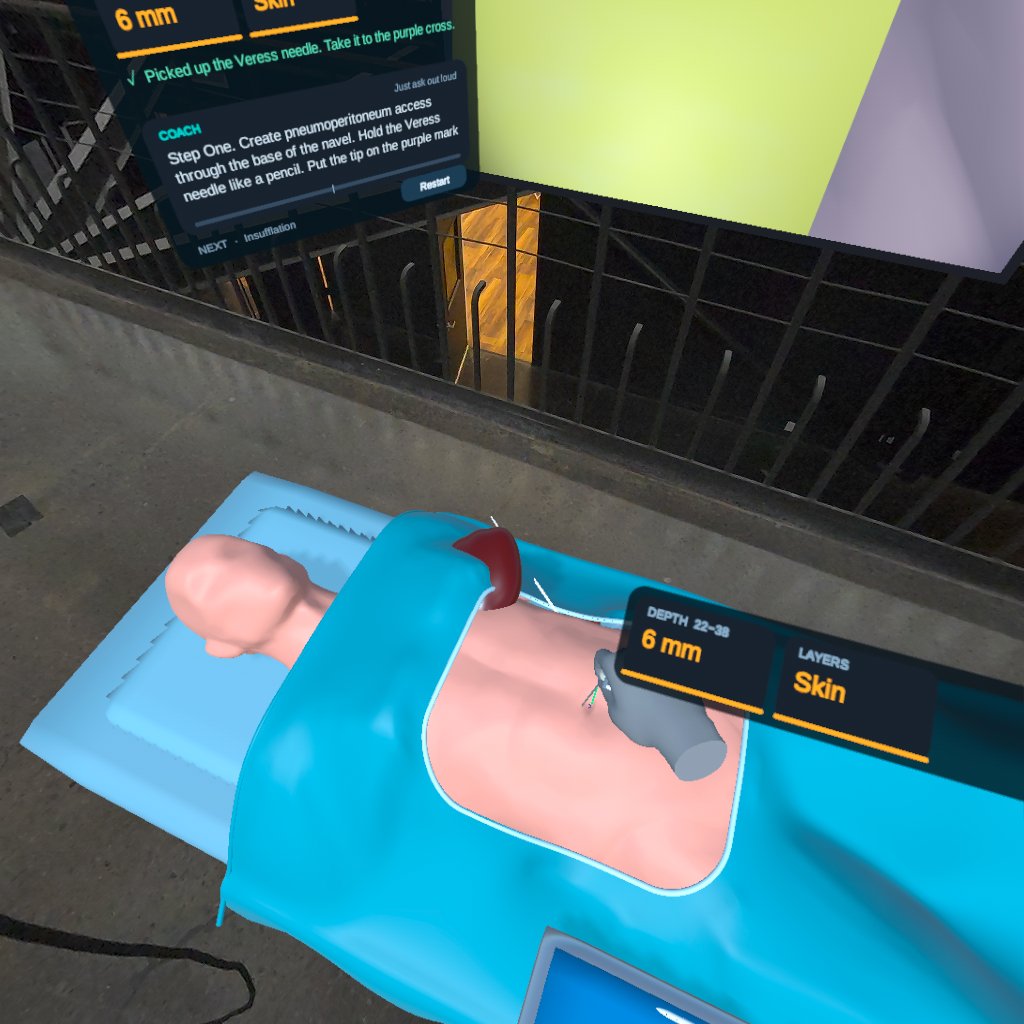
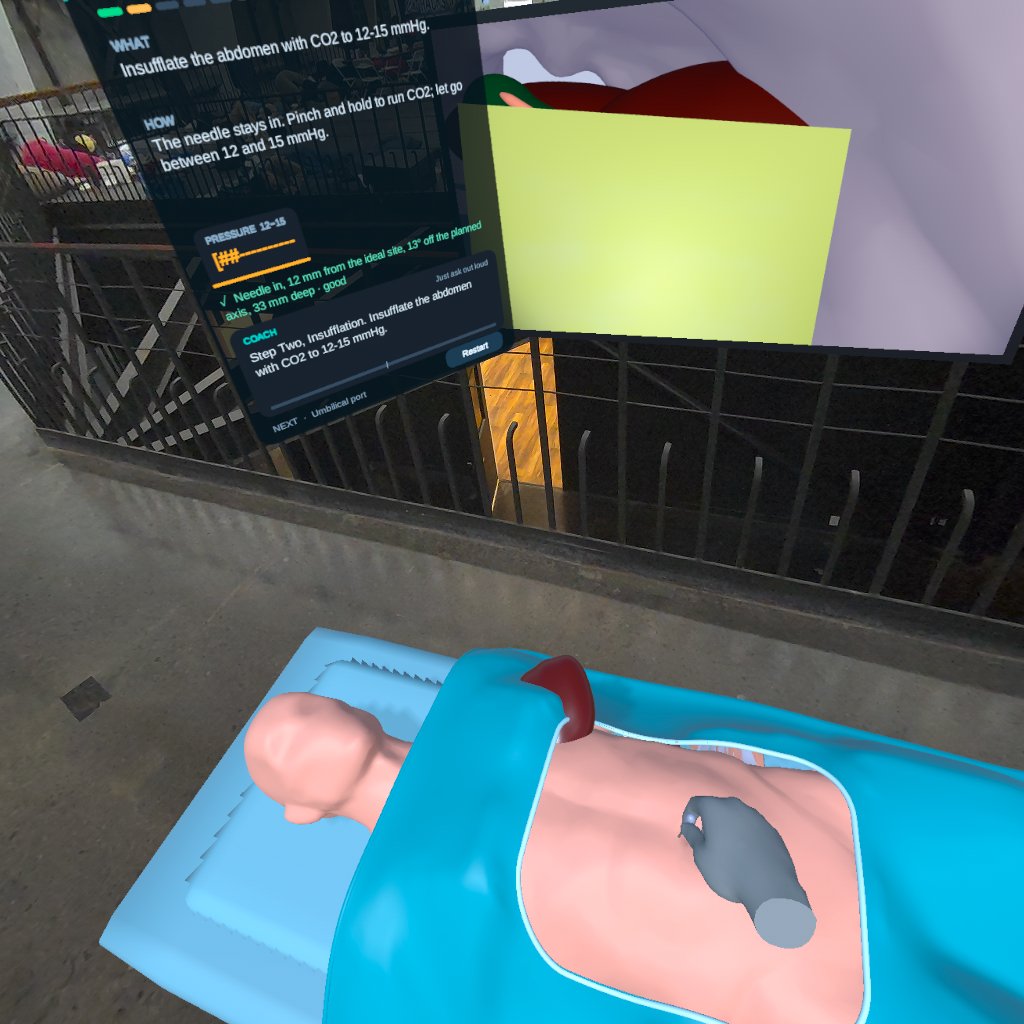
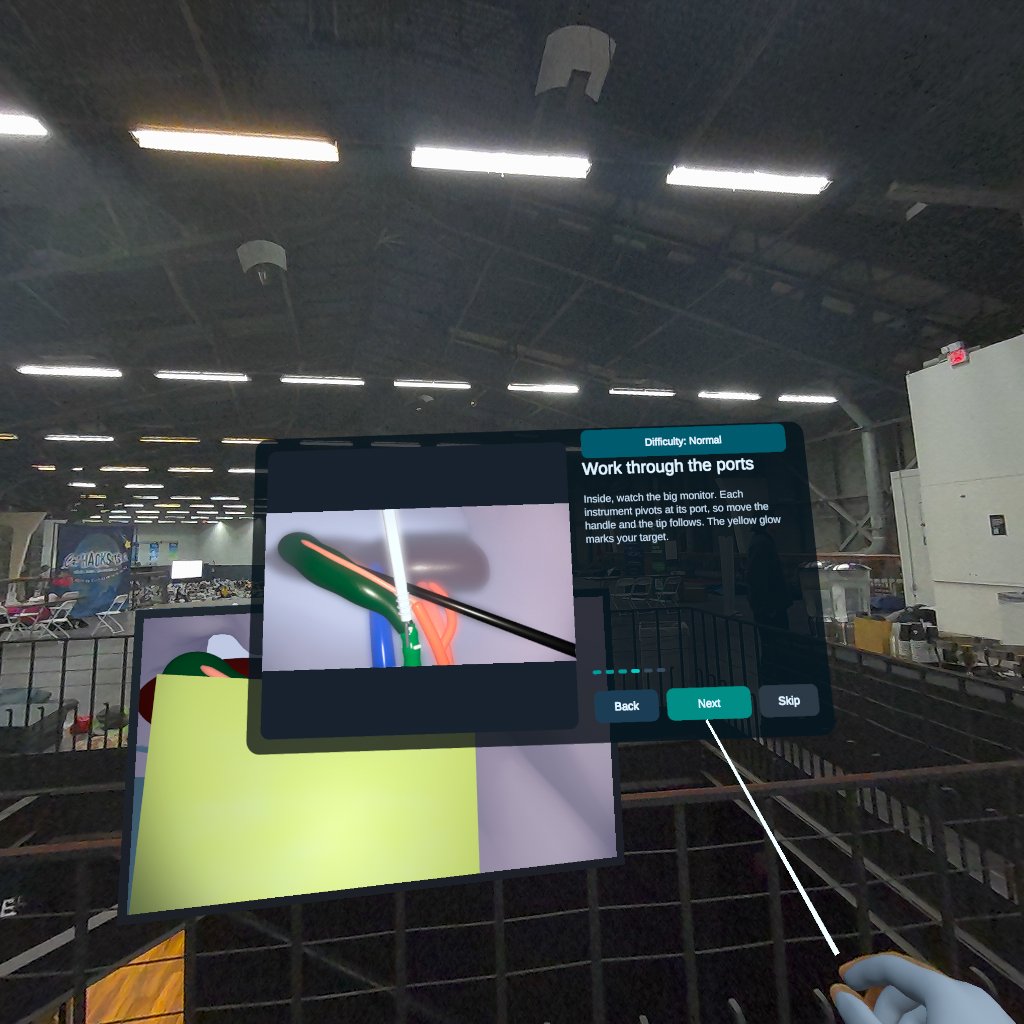
What it does Jeremy.ai puts a laparoscopic cholecystectomy (gallbladder removal) on your desk through a Meta Quest 3 in passthrough. You pick up instruments with your bare hands and work through the procedure: Veress needle, insufflation, four ports, retraction, dissection to the critical view of safety, clipping, and dividing the cystic duct and artery.
A robot guide talks you through it in a Cartesia voice. When you finish, you get a deterministic scorecard and a replay with your errors highlighted. You can ask the coach "why?" out loud. Claude answers from your actual numbers and Cartesia speaks the reply. An instructor can watch live from any browser and send notes, highlights or pauses into your headset. Every mistake gets an itemized, cited estimate of what it would cost in a real OR.
Built With
- anthropic
- api
- apify
- c#
- cartesia
- claude
- convex
- fastapi
- meta
- openxr
- pipeline
- postgresql
- pydantic
- pytest
- python
- quest
- react
- render
- sdk
- sqlite
- typescript
- unity
- vite
- xr


Log in or sign up for Devpost to join the conversation.