-
-
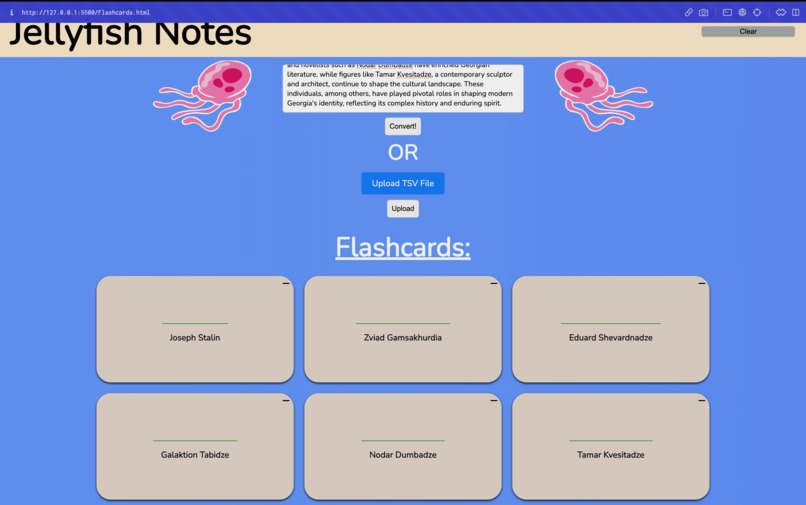
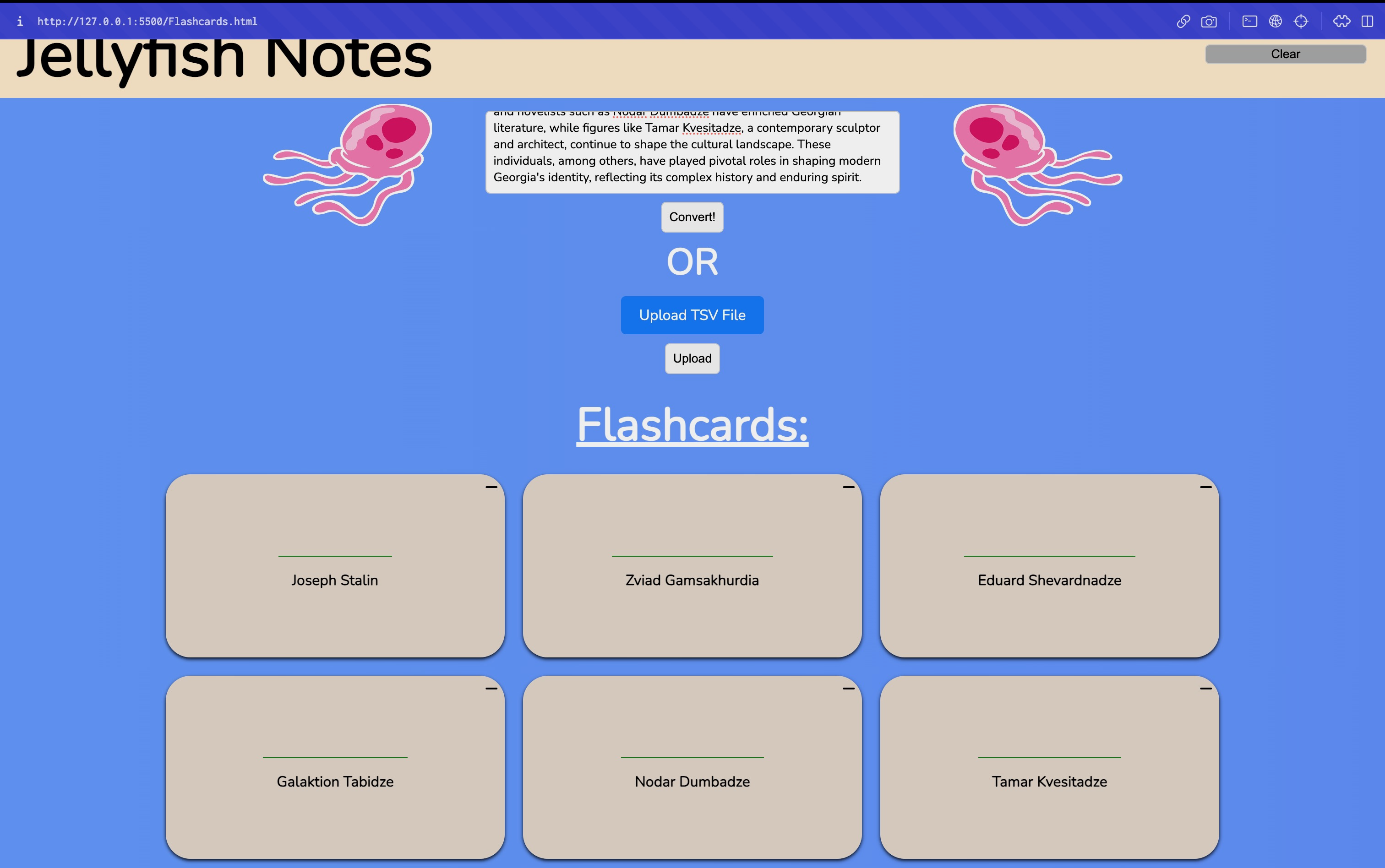
Screenshot of app
-
Working hard or hardly working?
-

Sippin that joe
-

KK and his Pepsi
-
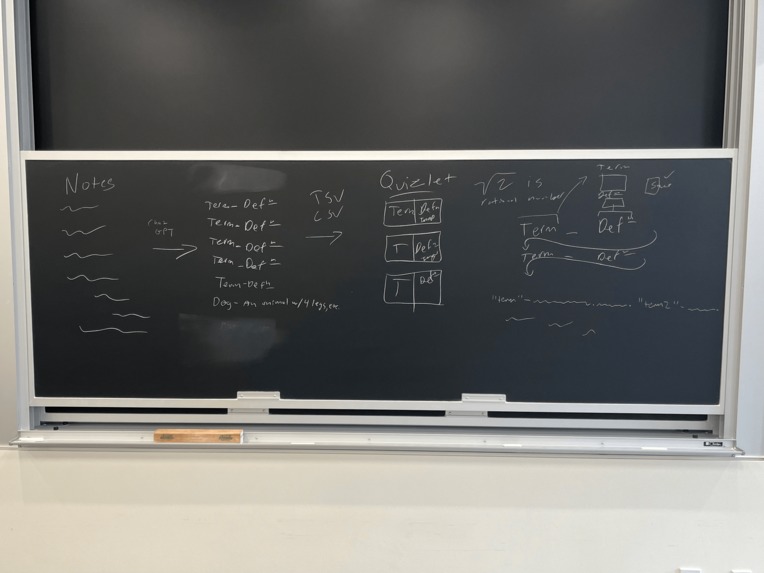
Rough outline



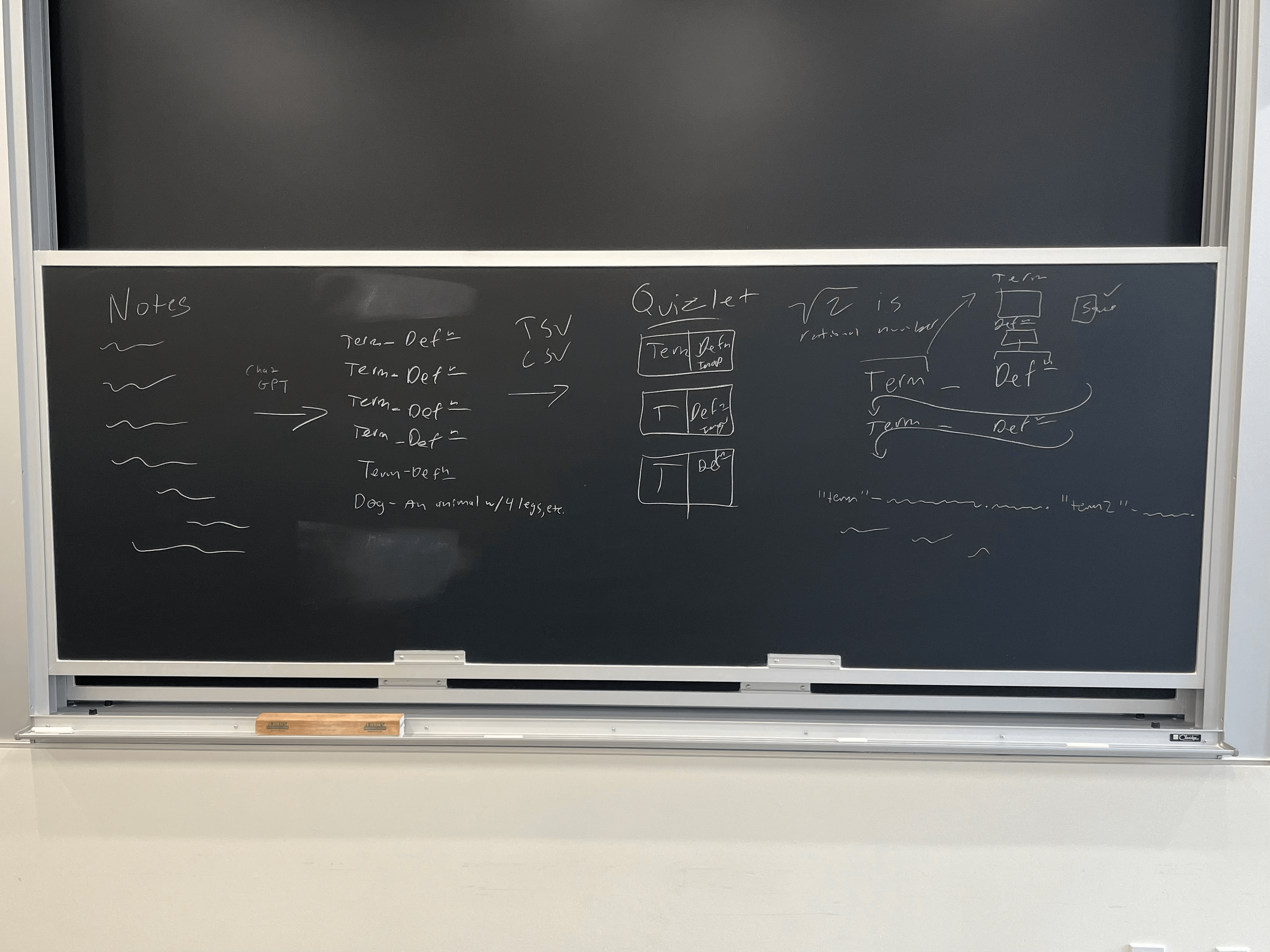
Inspiration
We wanted to make a solution to the problem of students being too lazy to study. With Jellyfish Notes, it takes seconds to come up with AI generated flashcards, ripe and ready to study, based around the inputted notes.
What it does
Jellyfish Notes takes in an input of text, and it's used to call the OpenAI API, which returns a list of terms and definitions crafted from the user's notes. This list is then outputted on the web application in the form of flashcards, where users can "flip" each card to reveal the definition to each term.
How we built it
- Javascript to implement the functionality of the app, such as the interactivity of the flashcards and inputs
- HTML to structure the layout of the app
- CSS for the styling of the app
- OpenAI allows for the assembly of each term and their definition
Challenges we ran into
- The API call to OpenAI
- Formatting the app
- Getting the .tsv file upload button to work and translate into a flashcard -Do to the Github repository being public, the API key to OpenAI can't function
Accomplishments that we're proud of
- How the idea became a reality
- How all our roles were interconnected
- Achieving a functional application and the working API call
What we learned
We learned a lot about web development and the different elements that go into it. Along with this, the formatting and styling of a website is something a couple of us had little to no experience in, so we learned a lot about that, on top of how to program the actual functionality and integration of everything.
The GoDaddy website was relatively easy to use in order to choose a name for the application. The ".study" domain seemed perfect for the nature of our project, so we landed upon "easywayto.study", since Jellyfish Notes is so easy to use.
Built With
- css
- html
- javascript
- openai


Log in or sign up for Devpost to join the conversation.