Inspiration
All of us have worked with big company knowledge bases, and we all had the same experience: the answer was somewhere in there, but finding it took forever. The AI search tools that were supposed to fix that often answered from the wrong page or an out-of-date one, so we stopped trusting them. We decided to build a tool for businesses hosting their own wikis on clunky software.
What it does
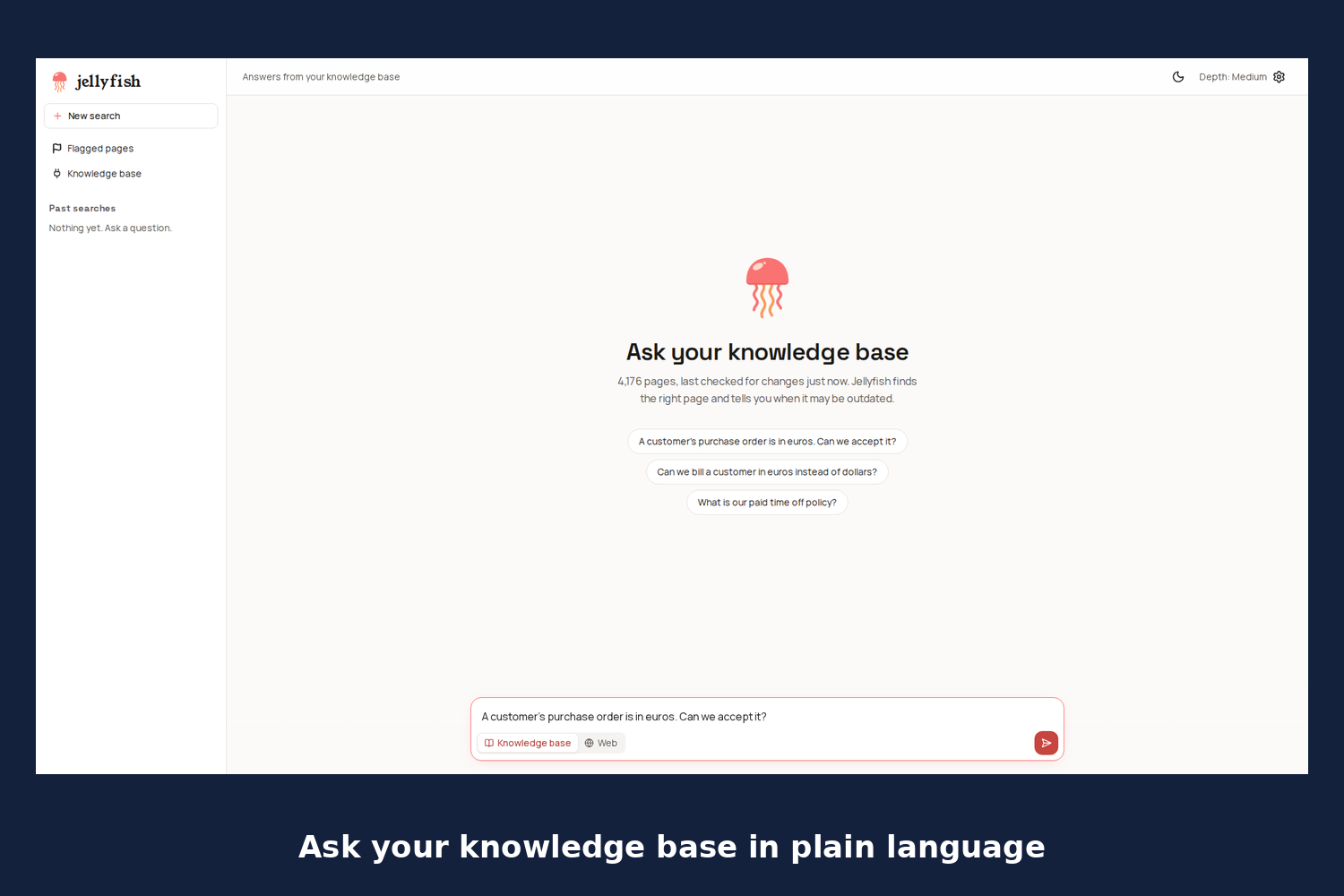
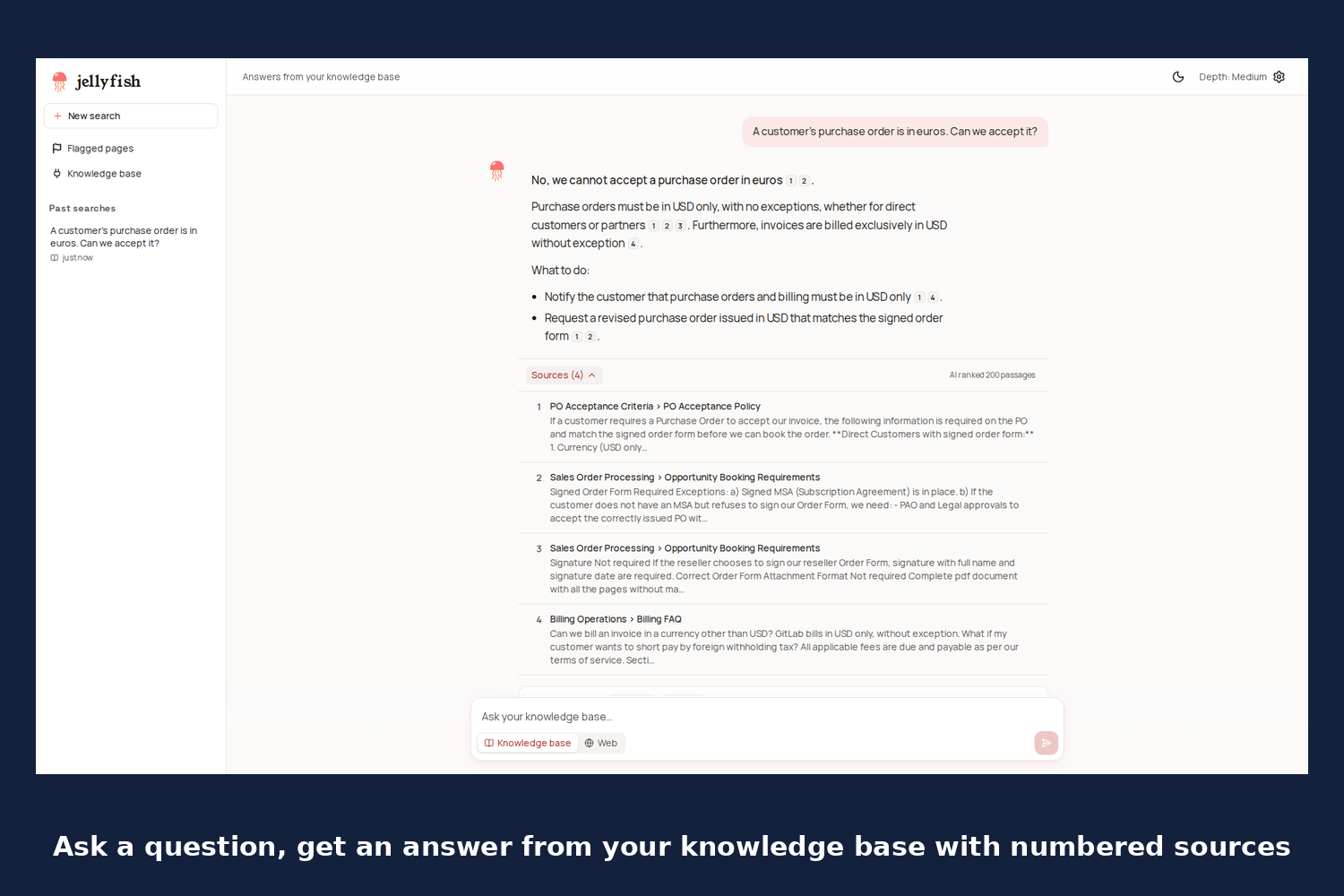
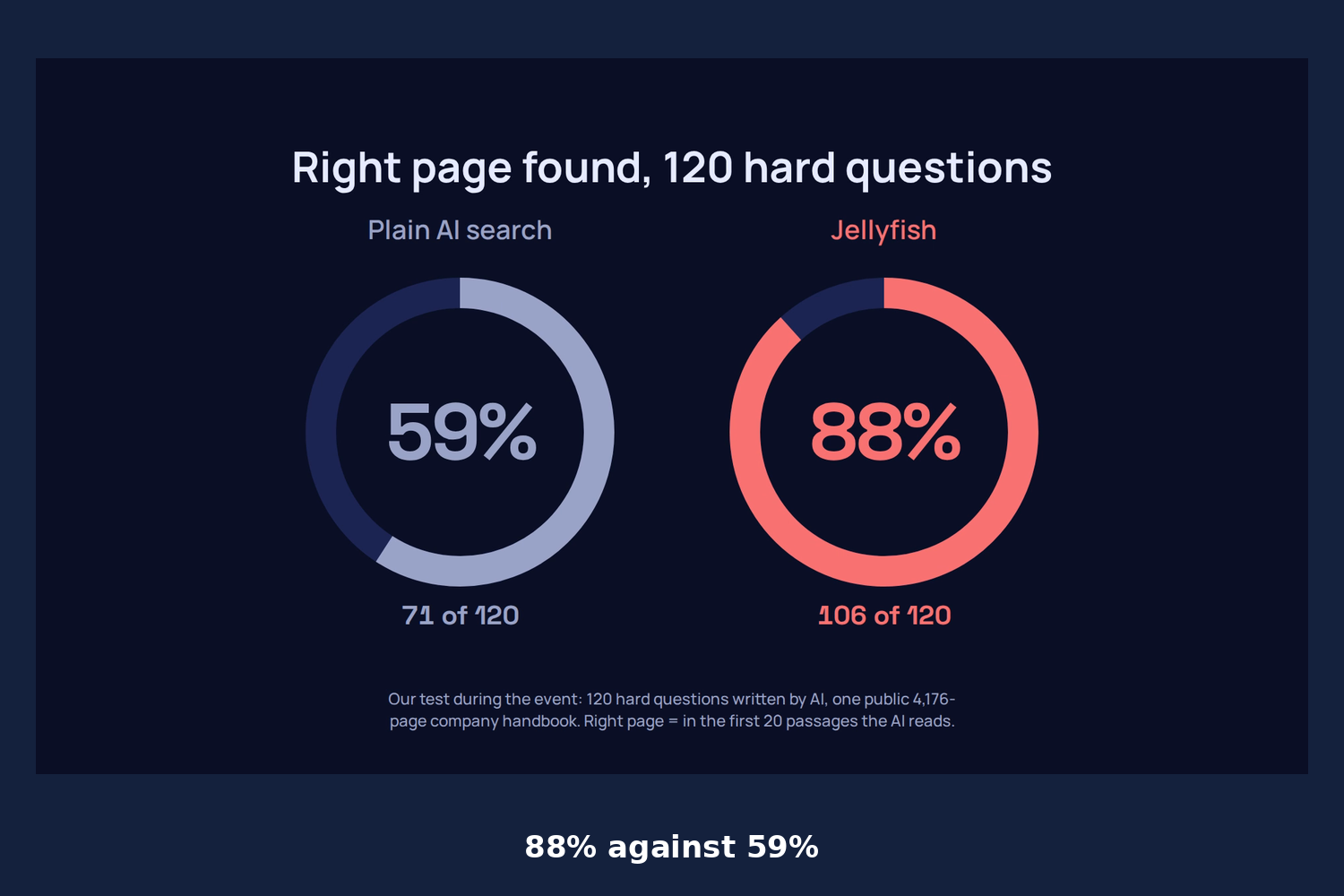
Jellyfish answers questions from a company's knowledge base, using the right page.
- Search: ask a question in plain words. You get an answer with links to the pages it came from.
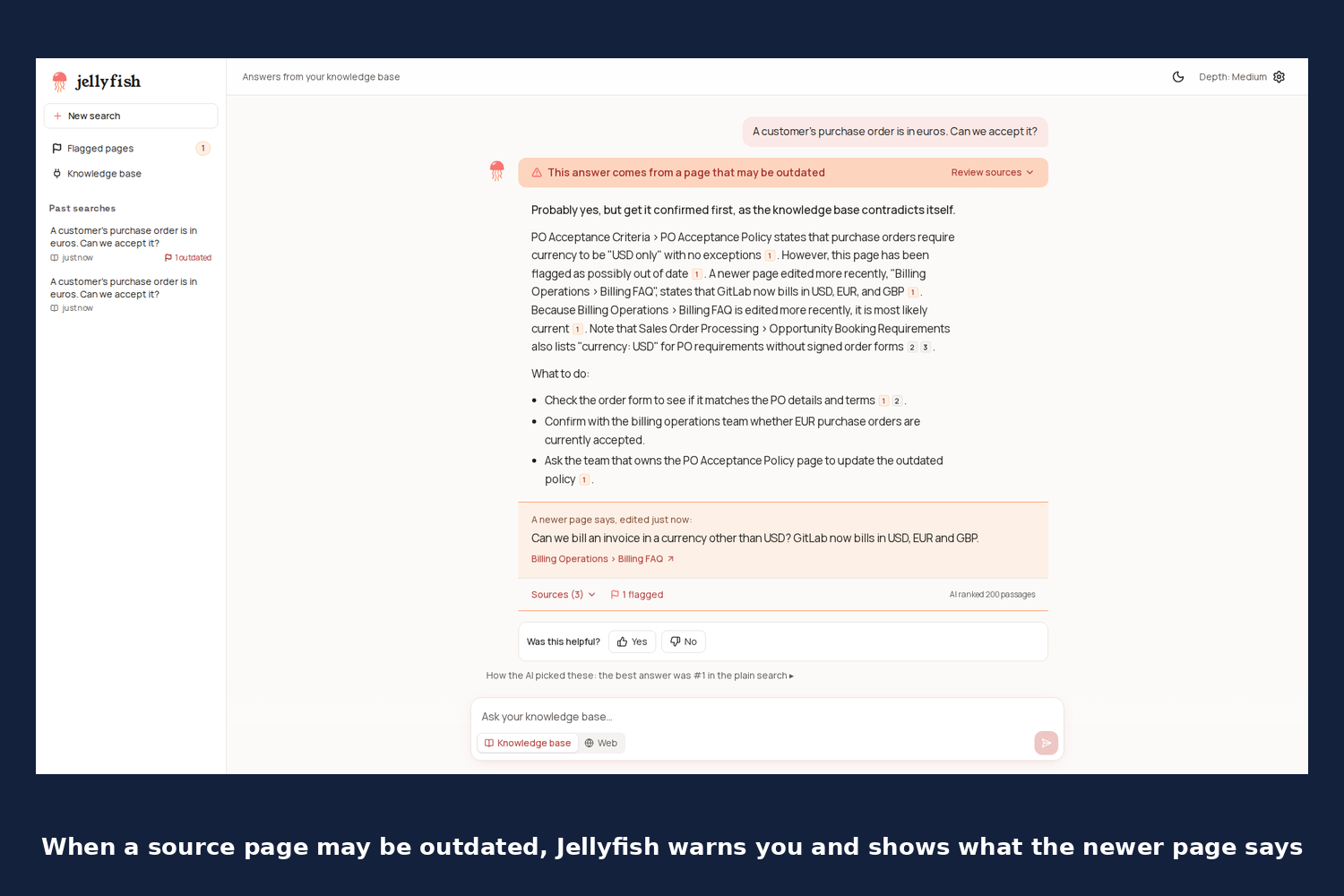
- Flags: when someone edits a page, Jellyfish checks the pages related to that edit and flags any that may now be wrong, for a person to review.
How we built it
- Hybrid search (keyword plus meaning) pulls 200 candidate passages for each question.
- Jev, a ranking model from TypeSafe, makes one yes-or-no call per passage: does it answer the question? The AI writing the answer only reads the top 20.
- The same check runs on edits: after a page changes, Jev asks whether each of the 100 closest passages still holds.
- TypeScript service, an MCP server so Claude can use it, a Confluence connector, and a Next.js website with Google sign-in.
Challenges
We spent a lot of time working out who Jellyfish is for. Since we're all developers, we were initially building with other developers in mind, and our target audience quickly became people like us. 5 hours into BuildFest we realized we were going down the wrong path and decided to restart our entire design process from zero. Because of feedback we received, Jellyfish found its ideal customer, and became a real product.
What we learned
The most important thing we learned was how to create a story. When we started this project, we were only focusing on technical details and features instead of building a cohesive product. We've since learned that with modern AI tools, the challenge of a hackathon is finding a pain point and designing the solution with the user in mind. We received invaluable advice from mentors and judges, and learned skills we will carry for the rest of our careers.
What's next
- Work with internal knowledge bases: companies running their own wiki on their own hardware and software.
- Regular contradiction checking: it works today, with room to improve.
- Host our own wiki service: for businesses that want to move away from self-hosting.
Built With
- better-sqlite3
- confluence
- databricks
- delta-lake
- express.js
- github
- model-context-protocol
- next.js
- ngrok
- node.js
- python
- react
- sqlite
- tailwindcss
- typescript
- unity-catalog
- vitest
- workos
- zod

Log in or sign up for Devpost to join the conversation.