-
-
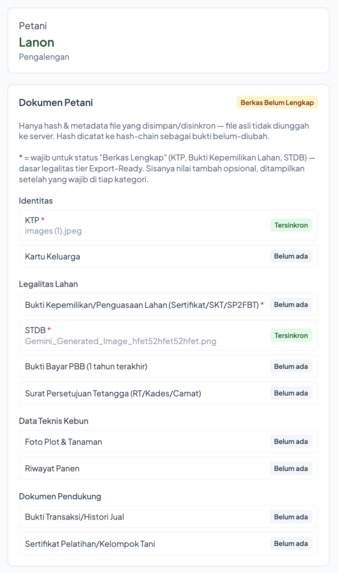
Farmer Information
-
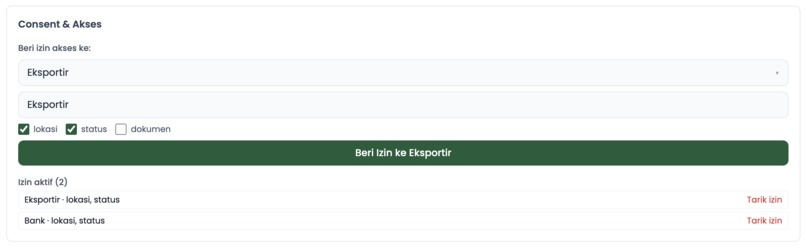
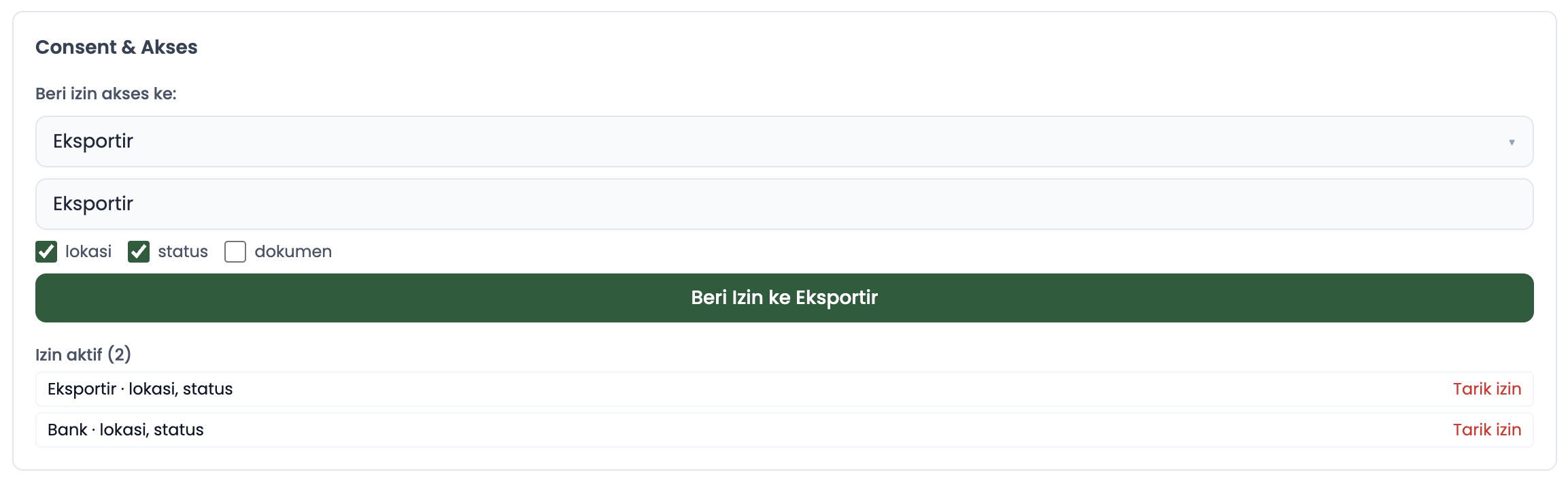
Consesnt & Access
-
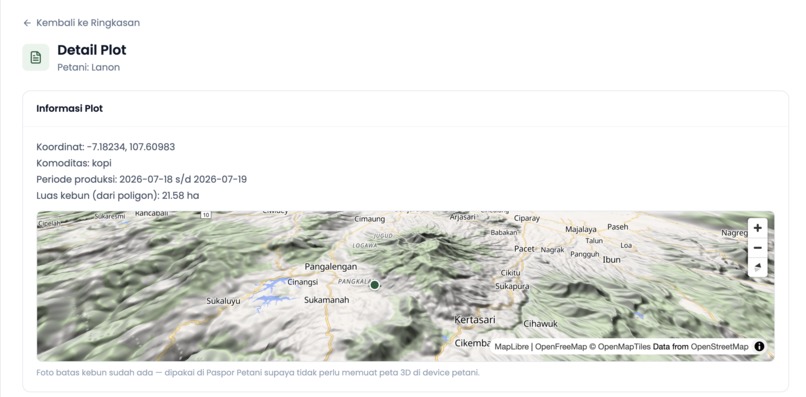
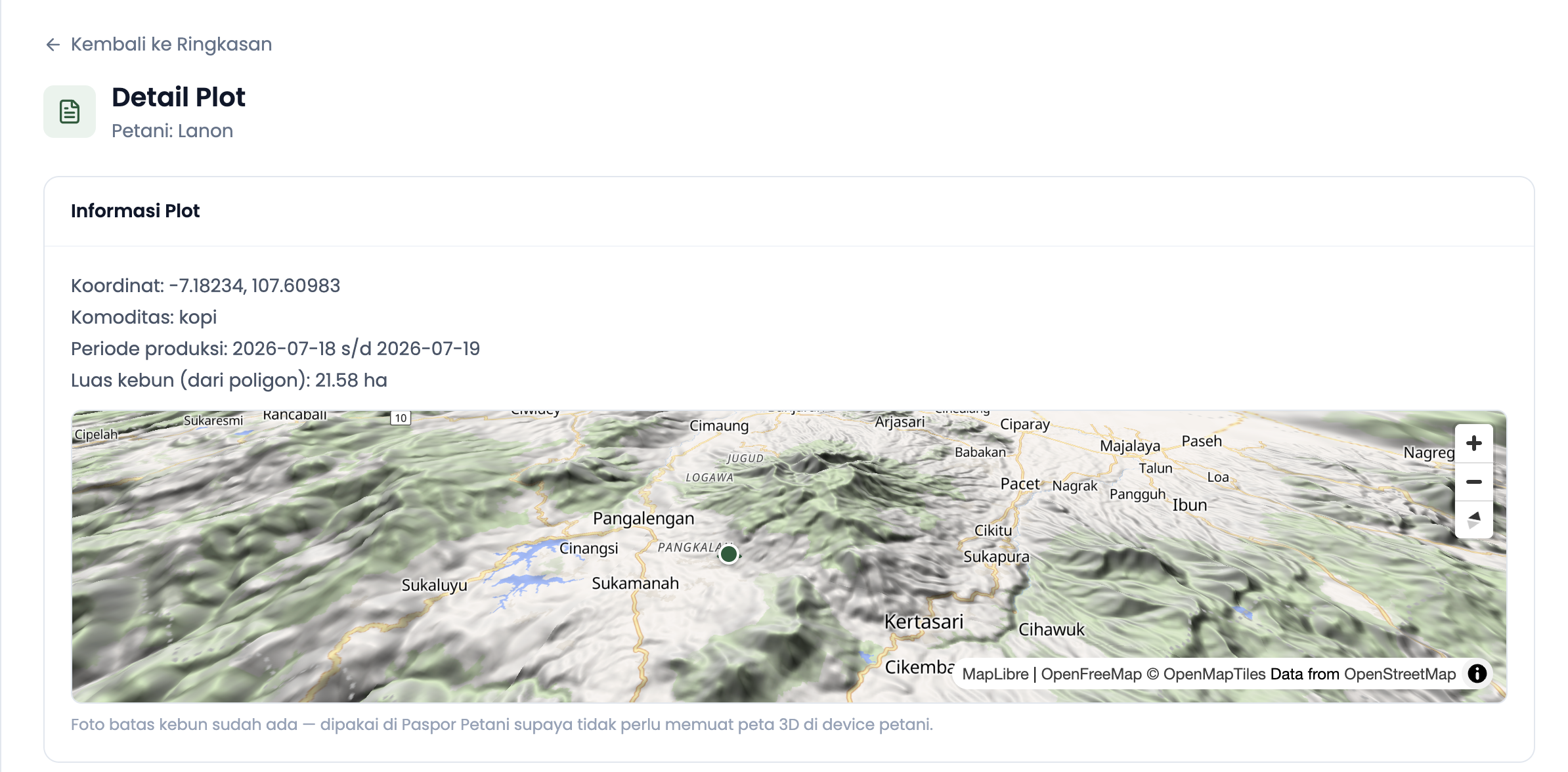
Plot detail
-
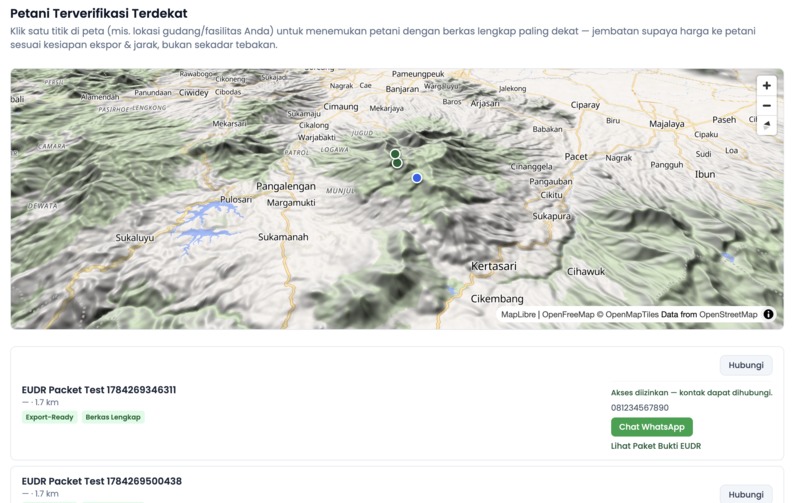
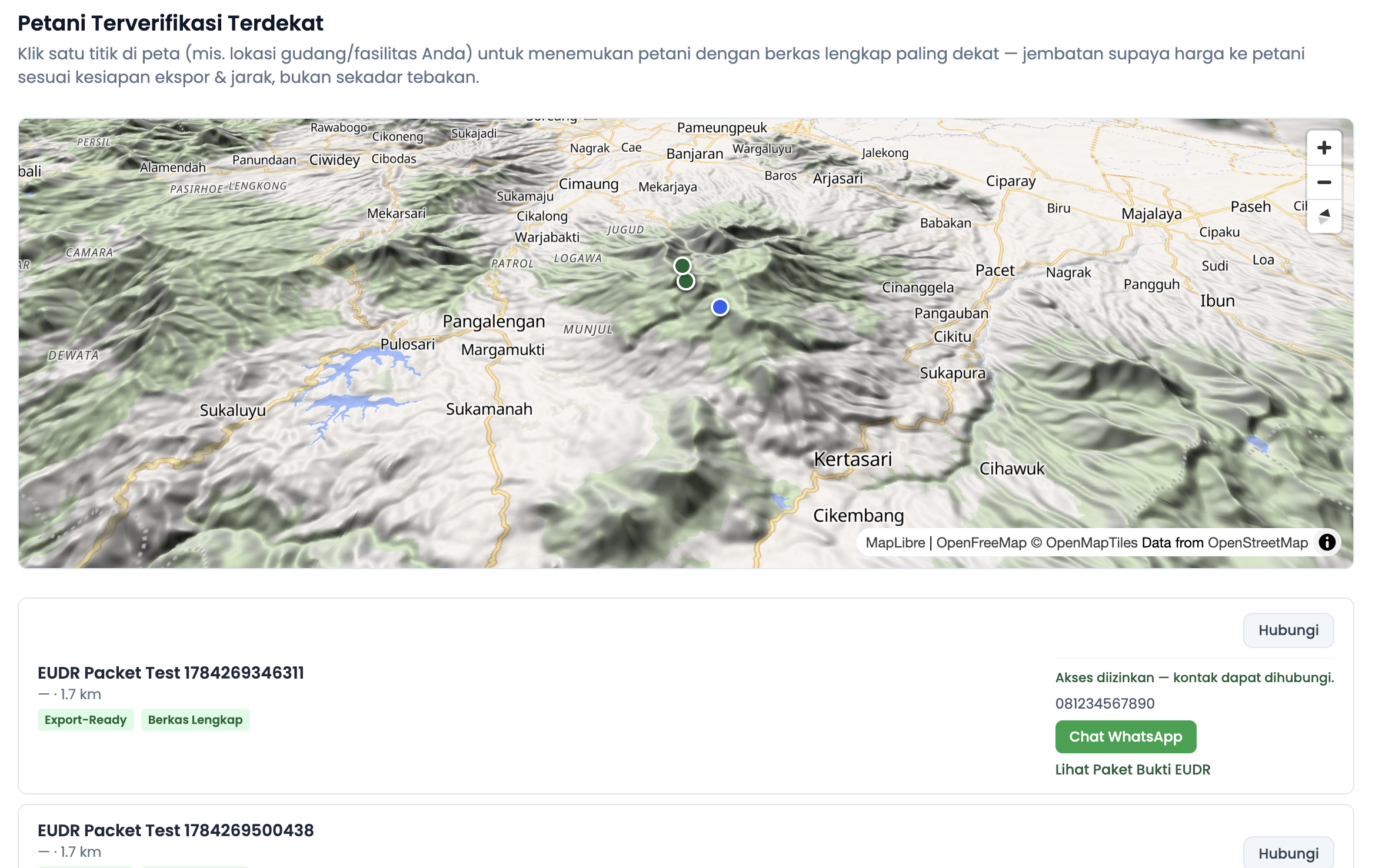
Nearest Verified Farmers
-
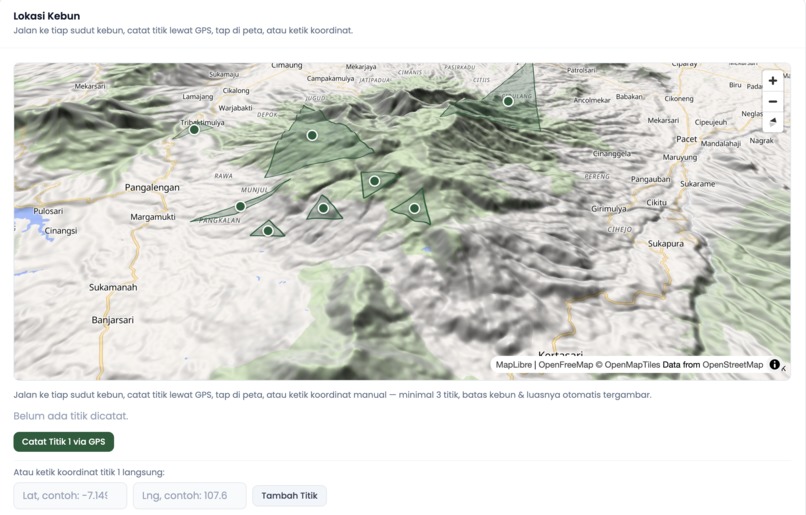
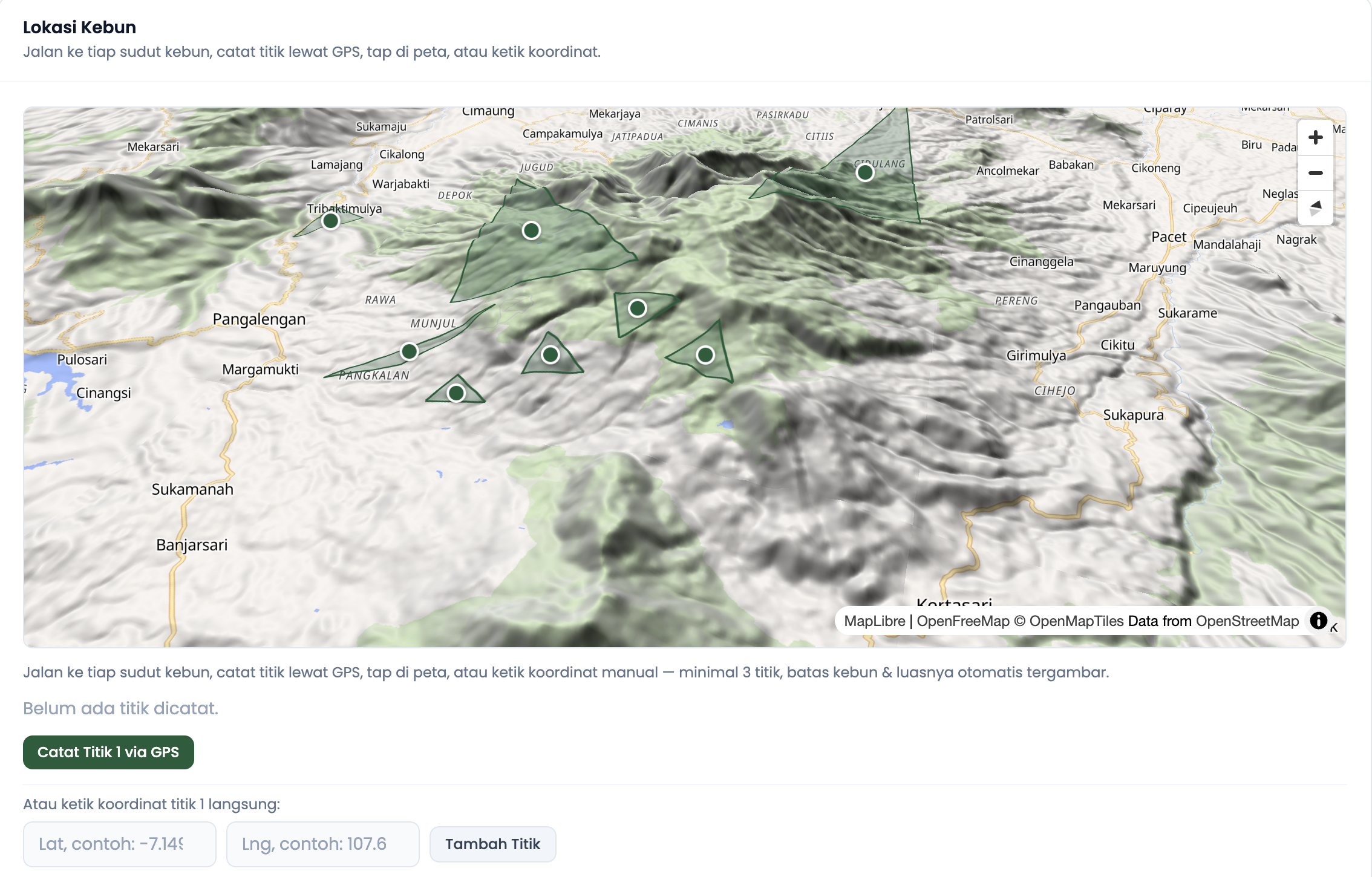
Farm Plot Location
-
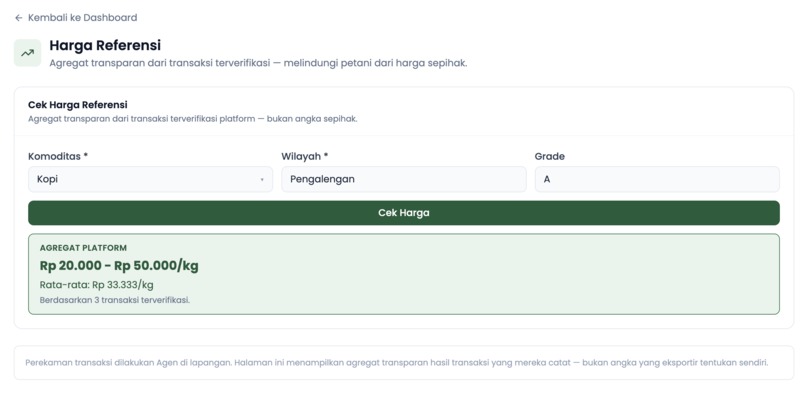
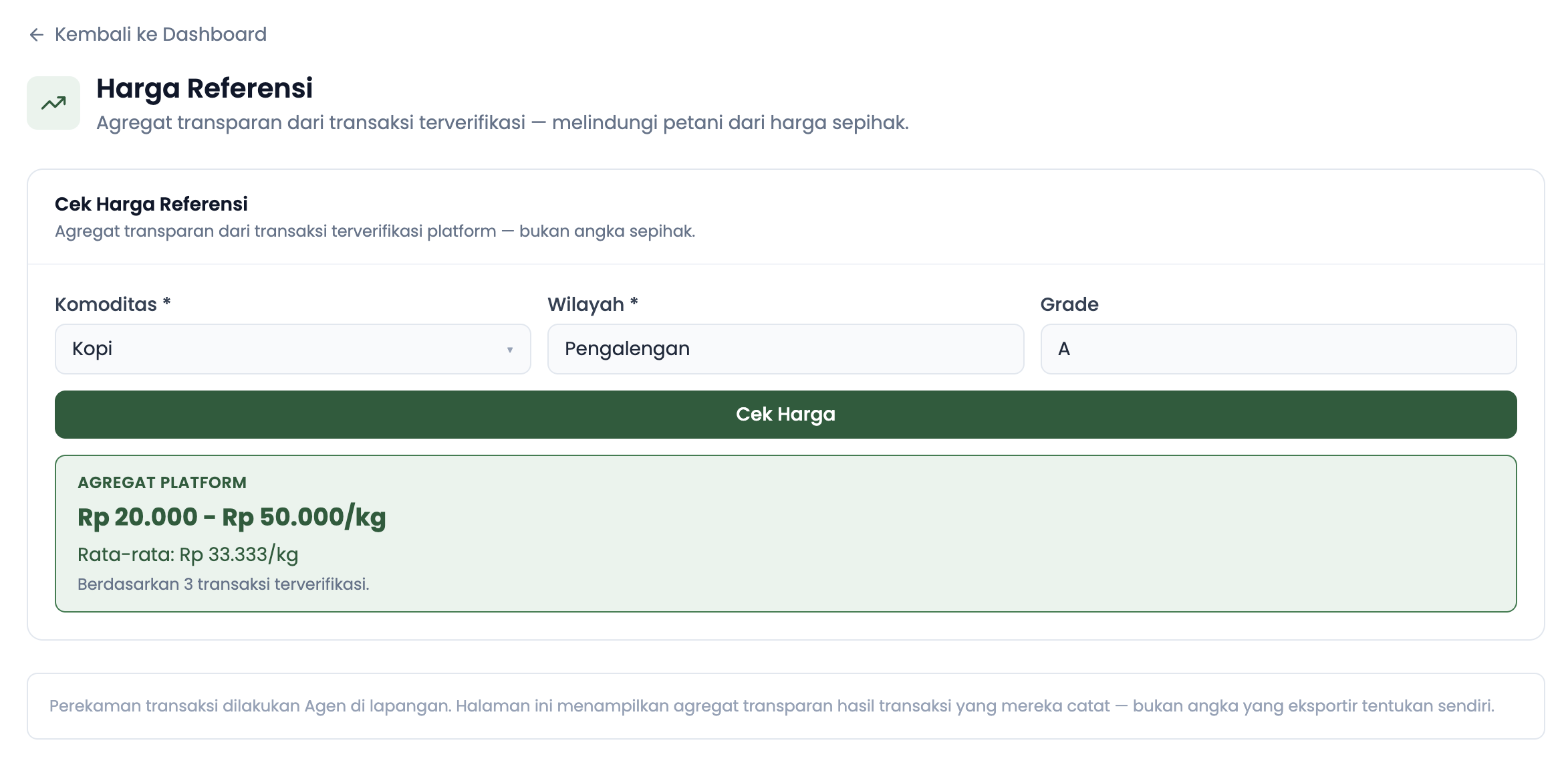
Reference Price as Exporter
-
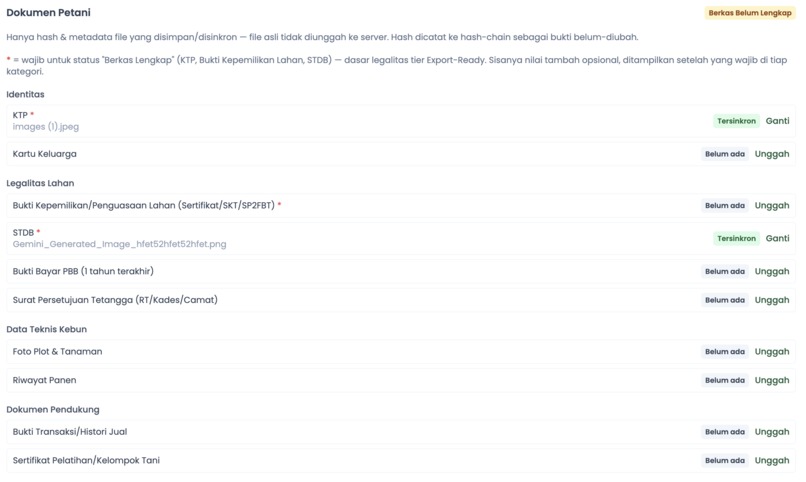
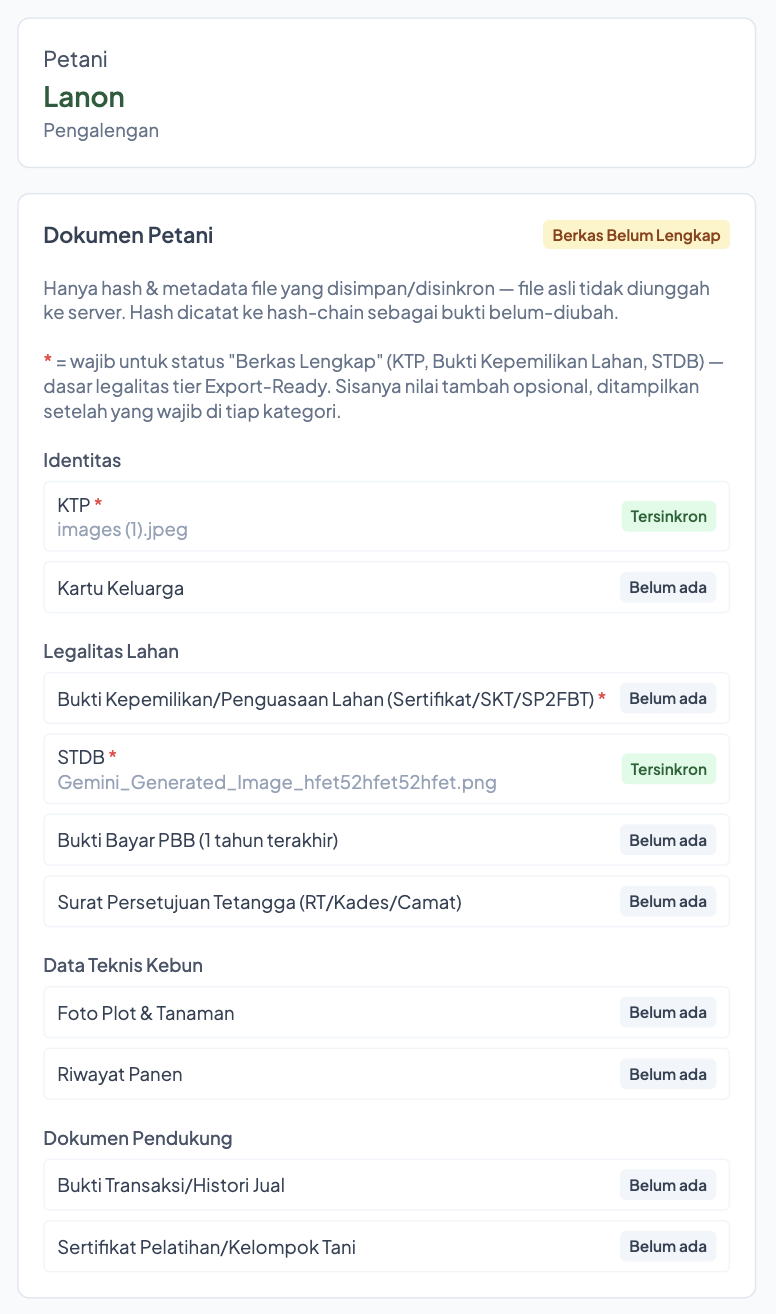
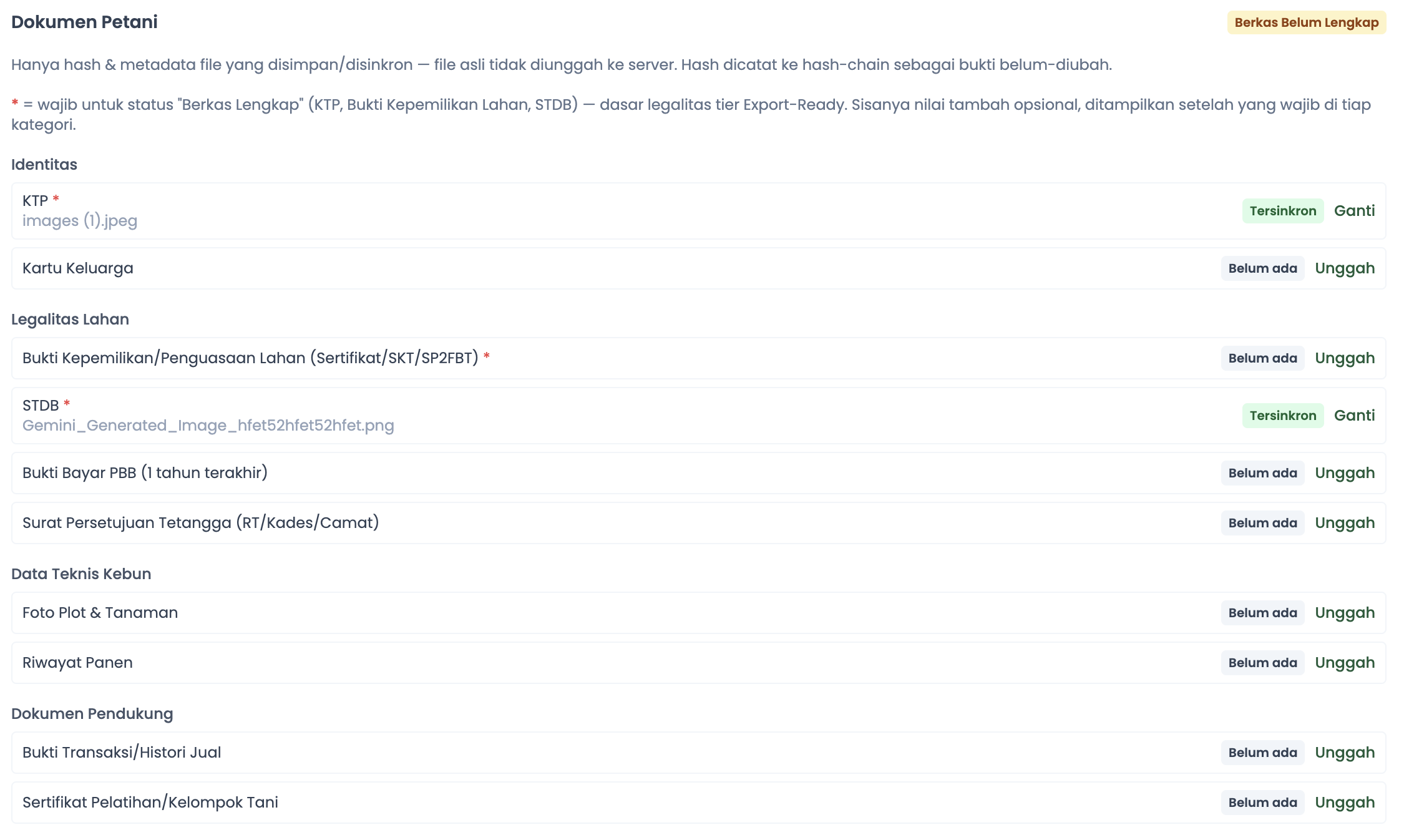
Farmer Document
-
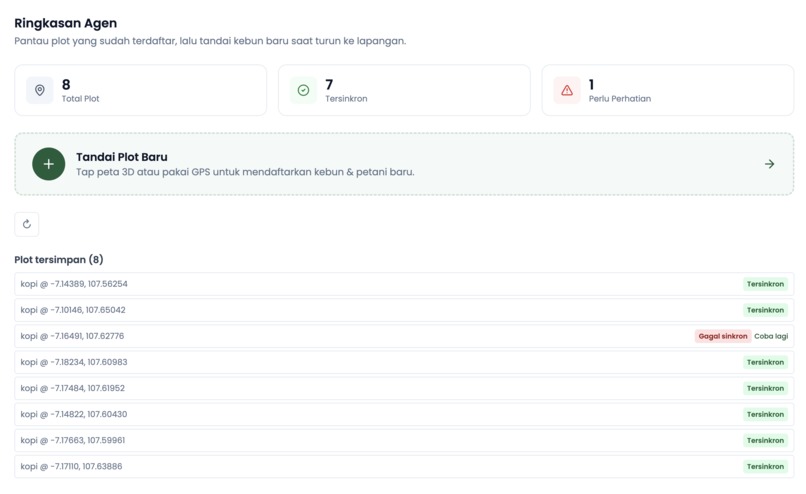
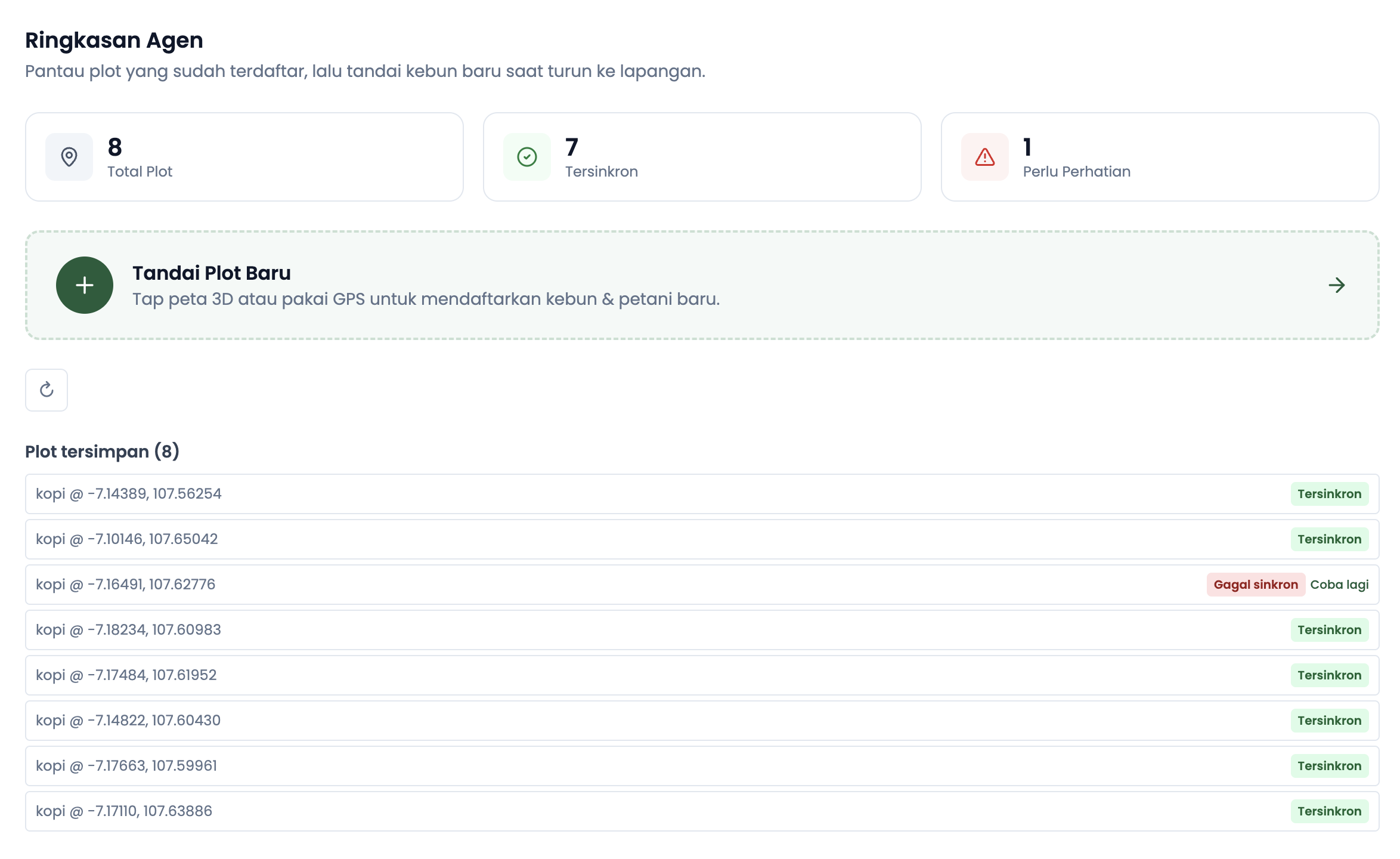
Agent Summary
-
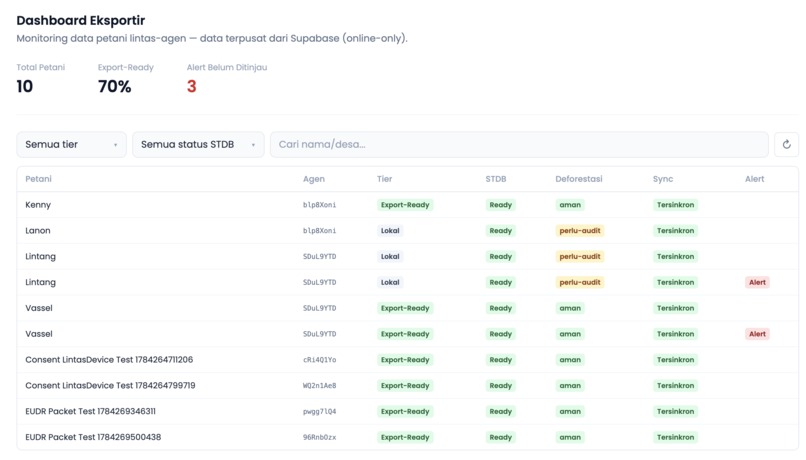
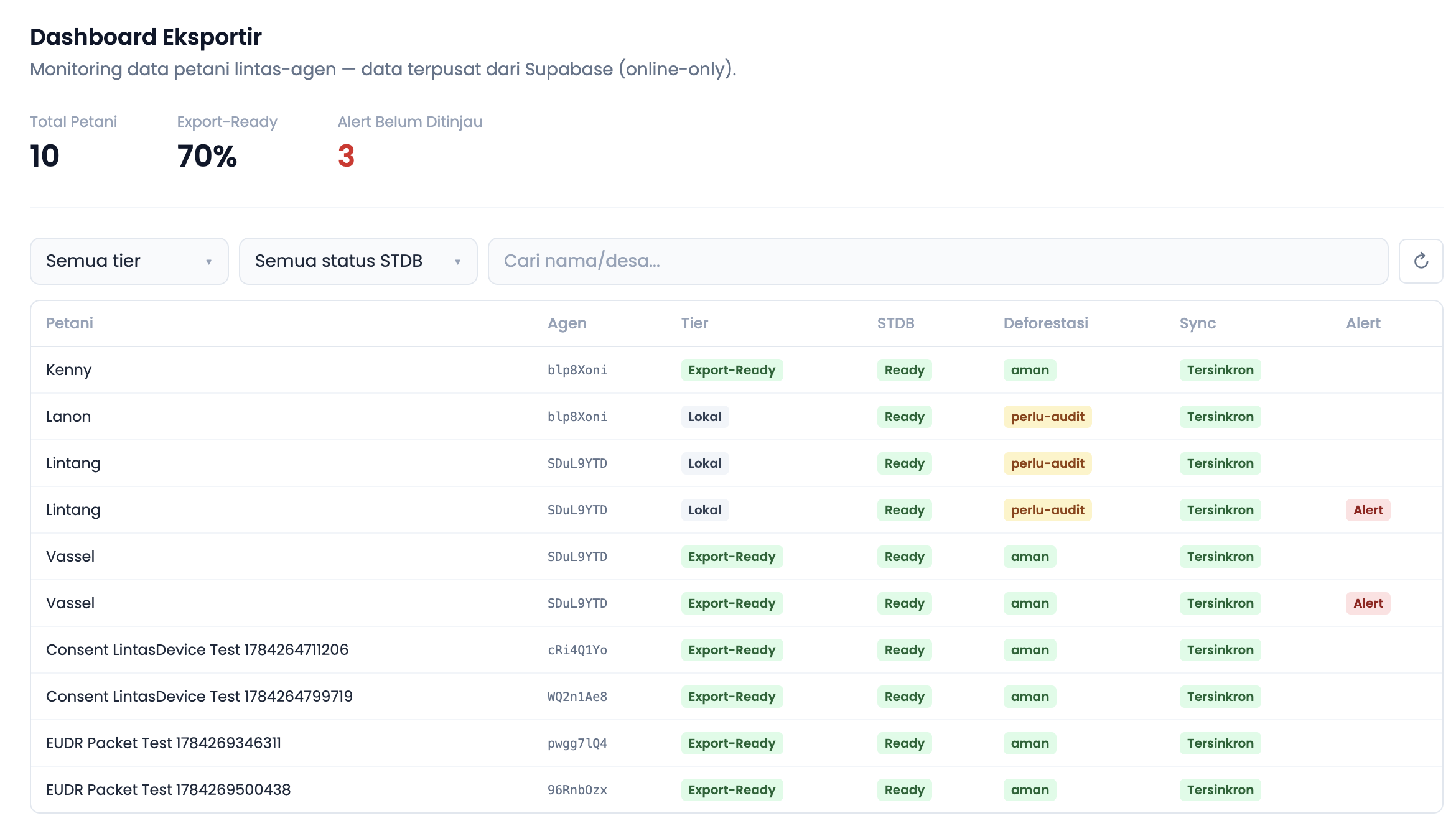
Dashboard Export
-
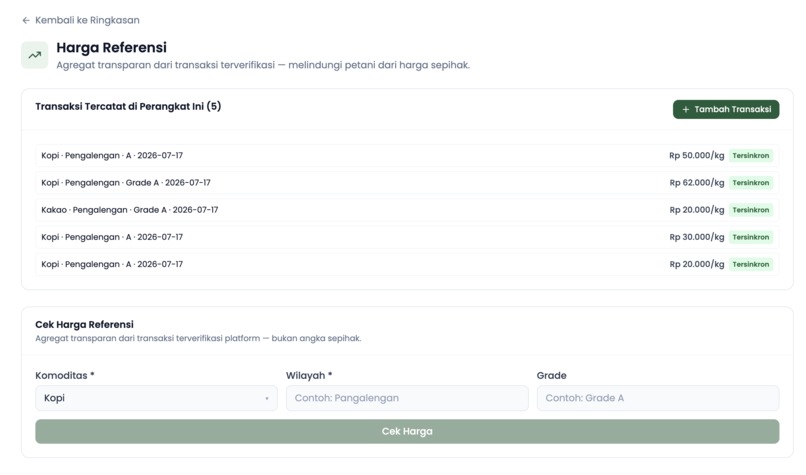
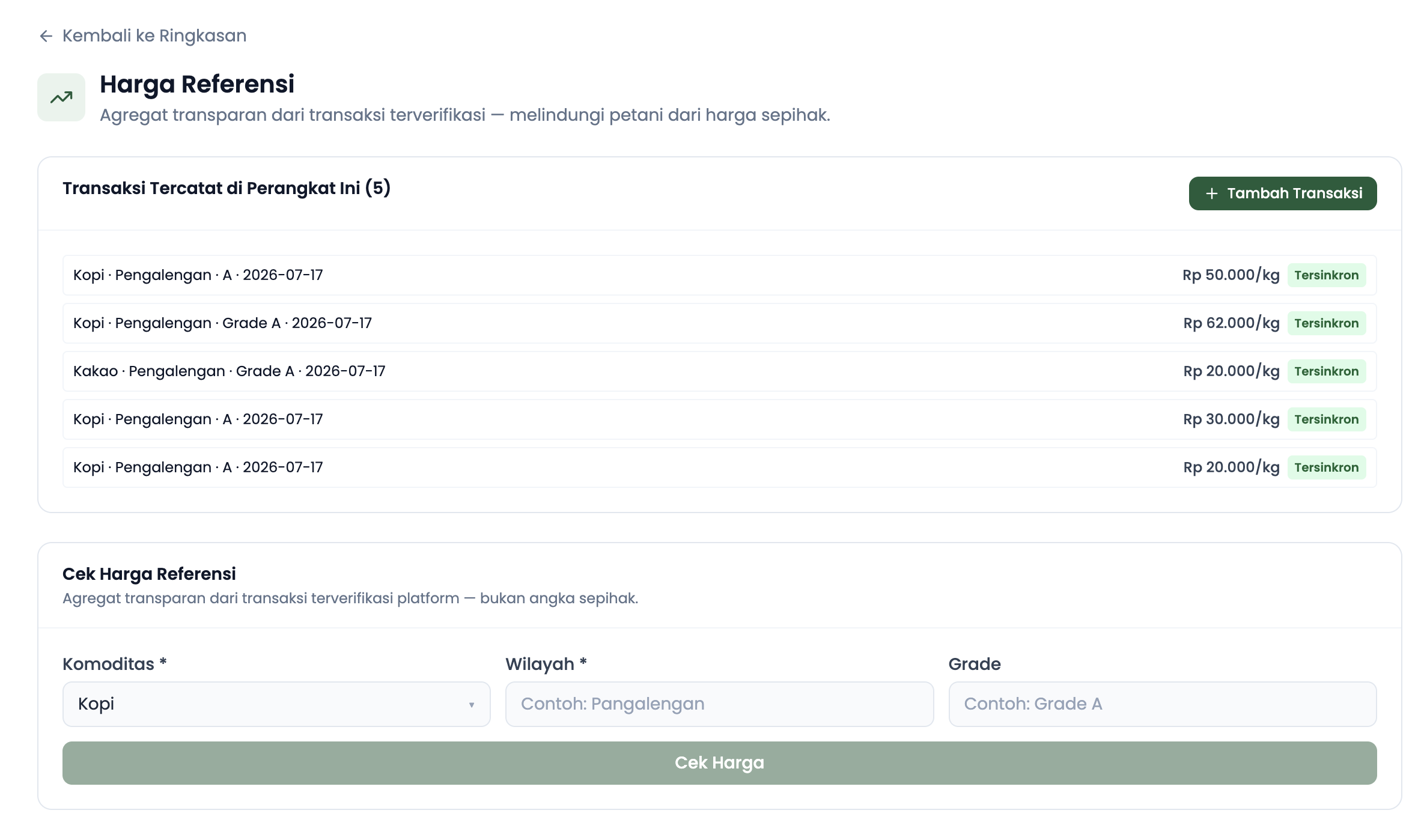
Check Reference Prices as Farmer
The gap we are closing
A smallholder coffee farmer in Indonesia loses on both ends of the same missing thing: verified documents. Without a registered plot, land proof, or a verified identity, a farmer has no bargaining power. They sell to middlemen at ijon prices far below the market, they wait weeks for a KUR loan decision, and their identity can even be misused without them knowing, as it was for hundreds of farmers in the Jember fraud case.
At the other end of the chain, exporters now face the EU Deforestation Regulation. From 2025 to 2026 it requires proof that coffee did not come from land cleared after 2020: precise geolocation, legal land documents like STDB, and a risk assessment for every supplier. Today that audit runs two to three weeks per batch, and most smallholders are not documented at all.
So one missing thing, verified documentation, blocks the farmer from a fair price and blocks the exporter from compliance. That is the gap JejakHijau closes.
What JejakHijau does
JejakHijau is a two sided platform where documentation is the input and economic access is the output. A field officer registers a farmer, verifies the plot and identity, and the app checks the plot against a deforestation map (JRC Global Forest Cover 2020) completely offline. The result is a digital passport the farmer owns.
For the farmer and agent side, that passport unlocks three things. A fair reference price through a WhatsApp bot, so a farmer can text "harga kopi Pangalengan" and stop selling blind. A faster path to KUR credit and subsidy, because the documents come out formatted ready to submit. And real time protection, where the farmer decides who may open their documents and gets a notification the moment anyone tries. That last part is where cases like Jember stop, because access is on the farmer's terms.
For the exporter side, the same passport turns a two to three week manual audit into an EUDR dossier in about an hour: supplier list, JRC based risk assessment, and a tamper evident record. Exporters can also see verified nearby plots and source directly at a fair market price instead of through opaque middlemen.
How it works, honestly
The core is deterministic, not a guessing AI. The plot check (point in raster) runs on the phone with no internet at all. Every document and access event is sealed into a hash chain, so if anyone edits a record later, it shows immediately. We chose a hash chain, not a blockchain, on purpose: same tamper evidence, runs offline, no hype. Access is consent gated, and when there is no signal in the field, new data waits in a local queue and syncs the moment a connection returns.
We are open about the limits. The forest map is about 91 percent accurate with an 18 percent commission error, so shaded coffee under a canopy can read as forest. We show that number and flag those plots for manual audit instead of rejecting them. We mark plot points rather than precise polygons, because GPS drifts 3 to 11 meters under tree cover. Any cross checks to government databases and any AI risk flags are assistive signals, not the decision. JejakHijau is decision support with a human in the loop.
Who pays, and why it lasts
Not the farmer. Exporters carry the cost, because EUDR compliance and supplier trust are their problem to solve, and JejakHijau turns weeks of audit into an hour. The farmer gets a fair price, faster credit, and protection at no cost. We are grounded in a real coffee supply chain in Pangalengan through a family run exporter, so this is not a market we imagined from a desk. To be precise, that is access and pilot interest, not a signed contract yet.
Built With
- claude
- crypto-js
- expo.io
- google-oauth
- indexeddb
- jest
- jrc-global-forest-cover-2020
- maplibre-gl
- node.js
- playwright
- postgresql
- react
- react-native
- row-level-security
- supabase
- tailwindcss
- turf.js
- typescript
- vercel
- vite
- waha
- web-crypto-api

Log in or sign up for Devpost to join the conversation.